日本語文型辞典
Usage 1
Meaning
Basic information
N / Na / A / V じゃないか
A casual form of “ではないか1,” used mainly by men at the end of spoken sentences. Women often use “じゃないの” or “じゃない.” “じゃん” is even more casual and is used by both men and women. Polite forms are “じゃないですか” and “じゃありませんか.” See also ⇾ではないか1
⇾ではないか11
⇾ではないか12
⇾ではないか13
A casual way of saying “V-ようではないか.”
⇾ではないか14
How to use it
…じゃないか [surprise/discovery]
…じゃないか [reproach]
…じゃないか [confirmation]
V-ようじゃないか
In context 8 examples
すごいじゃないか。大発見だね。
That’s amazing, isn’t it? What a discovery.
なんだ、山田君じゃないか。どうしたんだ。こんな所で。
Oh, it’s Yamada! What are you doing in a place like this?
どうしたんだ。遅かったじゃないか。
What’s the matter? You’re late, aren’t you?
約束は守ってくれなきゃ困るじゃないか。
You need to keep your promise, or else we’ll have a problem.
ほら、覚えていないかな。同じクラスに加藤って子がいたじゃないか。
Come on, don’t you remember? There was a kid named Kato in our class, remember?
A:郵便局どこ?
B:あそこに映画館があるじゃないか。あのとなりだよ。A: Where’s the post office? B: There’s a movie theater over there, isn’t there? It’s next to that.
頑張って勝ち抜こうじゃないか。
Let’s persevere and win!
十分注意してやろうじゃないか。
Let’s be very careful as we do it.
Read the original source text
Meaning
基本情報N/Na/A/V じゃないか説明 「ではないか1」のくだけた形で、話しことばの文末で主として男性が使う。女性は「じゃないの」「じゃない」の形を使うことが多い。「じゃん」はさらにくだけた言い方で、男女共に使う。丁寧形は「じゃないですか」「じゃありませんか」参照⇾ではないか1
⇾ではないか11
⇾ではないか12
⇾ではないか13
「V-ようではないか」のくだけた言い方。
⇾ではないか14
How to use it
…じゃないか【驚き・発見】
…じゃないか【非難】
…じゃないか【確認】
V-ようじゃないか
Usage 2
Meaning
Basic information
N / Na (なん) じゃないか; A / V んじゃないか
A casual form of “ではないか2.” “じゃないか” is a masculine expression; women usually use “じゃないの” or “じゃない.” When spoken with rising intonation in conversation, it is used to check the speaker’s conjecture with the listener, as if asking, “Don’t you think so too?” When used like a soliloquy, it expresses the speaker’s uncertain conjecture. In that case, it can also be rephrased as “(ん)じゃないかな/(ん)じゃないかしら.”
Examples: ① Maybe the neighbors are out. ② A: Isn’t something a little strange about what’s going on next door?
B: Yes. I’ll go take a look. ③ A: Isn’t this room a little cold?
B: Yes. Let’s turn on the heat. ④ Maybe it’ll rain starting this afternoon.
See also ⇾ではないか14
Read the original source text
Meaning
基本情報N/Na(なん)じゃないかA/V んじゃないか説明「ではないか2」のくだけた形。「じゃないか」は男性的な言い方で、女性は普通「じゃないの」「じゃない」を使う。会話で上昇調で発音された場合は「あなたもそう思いませんか」と聞き手に自分の推測を確認する用法となる。独り言的な用法では、話し手の不確かな推測を表す。この場合は「(ん)じゃないかな/(ん)じゃないかしら」とも言いかえが可能。例文① 隣、ひょっとして留守じゃないか。② A:隣の家の様子、ちょっと変じゃないか。
B:そうね。ちょっと見て来る。③ A:この部屋、少しさむいんじゃないか。
B:そうね。暖房をいれましょう。④ ひょっとして、昼からは雨になるんじゃないか。参照⇾ではないか14
絵でわかる日本語
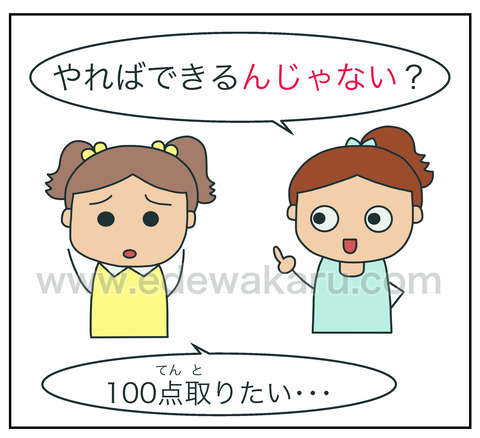
日本語文型辞典 英語版
Meaning
【じゃないか1】[N/Na/A/V じゃないか]This is the casual form of ではないか (Usage 1). It is used at the end of sentences in spoken language, mainly by men. Women tend to use じゃないの or じゃない more often. じゃん is an even more casual expression used by both men and women. The polite forms are じゃないですか and じゃありませんか.
→
→
1
→
2
B:あそこに映画館があるじゃないか。あのとなりだよ。
There’s a movie theater over there, right? It’s next door to that.
→
3
This is the casual form of V-ようではないか.
→
【ではないか1】4
【じゃないか2】[N/Na (なん)じゃないか][A/V んじゃないか]
B:そうね。ちょっと見て来る。
You might be right. I’ll go take a look.
B:そうね。暖房をいれましょう。
Yeah. Let’s turn on the heater.
This is the casual form of ではないか (Usage 2). じゃないか has the flavor of men’s speech, while women usually use じゃないの or じゃない.
When (ん)じゃないか is pronounced with rising intonation, it is being used by the speaker to confirm an assumption with the listener and conveys the meaning “don’t you think so, too?” When the speaker uses it to talk to him/herself, it expresses an assumption that s/he is not entirely sure of. In this case, it is possible to use (ん)じゃないかな or (ん)じゃないかしら instead.
→
【ではないか1】4
How to use it
1. ...じゃないか〈surprise, discovery〉
2. ...じゃないか〈criticism〉
3. ...じゃないか〈confirmation〉
4. V-ようじゃないか
In context 12 examples
すごいじゃないか。大発見だね。
Isn’t that something! Quite a discovery, huh?
なんだ、山田君じゃないか。どうしたんだ。こんな所で。
Well now, if it isn’t Yamada-kun. What are you doing—in a place like this?
どうしたんだ。遅かったじゃないか。
What happened? You’re so late.
約束は守ってくれなきゃ困るじゃないか。
If you don’t keep your promise, it really puts me in a bind.
ほら、覚えていないかな。同じクラスに加藤って子がいたじゃないか。
Hey, don’t you remember? Wasn’t there a girl named Kato in the same class?
A:郵便局どこ?
Where’s the post office?
頑張って勝ち抜こうじゃないか。
How about giving it our best and fighting it out to the end?
十分注意してやろうじゃないか。
How about doing it very carefully?
隣、ひょっとして留守じゃないか。
You know our neighbor—is it possible that she might be away?
A:隣の家の様子、ちょっと変じゃないか。
Isn’t there something a little strange about the house next door?
A:この部屋、少しさむいんじゃないか。
Isn’t this room a little chilly?
ひょっとして、昼からは雨になるんじゃないか。
So is it possible that it’s going to rain after noon?
AIUEO JLPT Grammar
Meaning
“〜じゃないか” is attached to the volitional form of verbs to express a suggestion, proposal, or encouragement to do something together. It conveys the meaning of “Let’s do ~“ and is used to prompt action from others. It is commonly used in casual spoken language and is suitable for light suggestions or invitations among friends. It gives a more casual impression than “〜しませんか.”
How to use it
Verb volitional form + じゃないか
In context 5 examples
一緒に映画を見に行こうじゃないか。
Let’s go watch a movie together.
この問題について、もっと議論しようじゃないか。
Let’s discuss this issue further.
そろそろ帰ろうじゃないか。
Let’s head home soon.
もう少し頑張ろうじゃないか。
Let’s try a bit harder.
一緒にこのプロジェクトに取り組もうじゃないか。
Let’s work on this project together.
Read the original source text
Meaning
“〜じゃないか” is attached to the volitional form of verbs to express a suggestion, proposal, or encouragement to do something together. It conveys the meaning of “Let’s do ~“ and is used to prompt action from others. It is commonly used in casual spoken language and is suitable for light suggestions or invitations among friends. It gives a more casual impression than “〜しませんか.”
How to use it
動詞意向形+じゃないか
Explanation · 日本語
「〜じゃないか」は、動詞の意向形に接続して、提案や勧誘を表現する表現です。「一緒に〜しよう」という意味で使われ、相手に行動を促すニュアンスを持っています。口語でよく使われ、軽い提案や仲間内での誘いに適しています。「〜しませんか」よりもカジュアルな印象を与えます。
Bunpro Grammar Reference
Usage 1
Meaning
Isn't it?, Is it not?
How to use it
Phrase + じゃない + か
Nuance
A casual phrase that presents negated questions.
Explanation
When learning じゃない and ではない, we briefly mentioned that these constructions are regularly partnered with the particle か, in order to form a (usually casual) question. In this lesson, we will further explore this usage.
Unlike じゃない and ではない (which need to come after a noun or な-Adjective), じゃないか is able to be attached to the end of almost any phrase, to indicate a question. This is very similar to finishing a sentence with 'isn't it?' in English.
キヨコはもうすぐ来るんじゃないか。
Isn't Kiyoko coming soon?
そのカメラは高いんじゃないか。
That camera is expensive, isn't it?
この着物は綺麗じゃないか。
This kimono is beautiful, isn't it?
あなたの車は私の車より速いじゃないか。
Your car is faster than my car, isn't it?
When じゃないか is too casual, ではないか will be used instead. Despite being more formal, this may sound a bit stiff at times, so is best only used when politeness is expected.
これは台風の影響ではないか。
This is the typhoon's effect, isn't it?
遊んでないで明日のテストの勉強をした方がいいんではないか。
Without mucking around, wouldn't it be better if you studied for the test tomorrow?
In context 18 examples
- そのことじゃなかったか。
It was about that, wasn't it?
- あなたの車は私の車より速いじゃないか。
Your car is faster than my car, isn't it?
- そのカメラは高いんじゃないか。
That camera is expensive, isn't it?
- この着物は綺麗じゃないか。
This kimono is beautiful, isn't it?
- これは台風の影響ではないか。
This is the typhoon's effect, isn't it?
- 遊んでないで明日のテストの勉強をした方がいいんではないか。
Without mucking around, wouldn't it be better if you studied for the test tomorrow?
- キヨコはもうすぐ来るんじゃないか。
Isn't Kiyoko coming soon?
- もう終わるんじゃないか。
It is already over, isn't it?
- あれカメラじゃないか!
Isn't that a camera!?
- 次の駅で降りるんじゃないか?
The next station is the one we get off at, isn't it?
- この橋を渡るのが怖いんじゃないか?
It is scary crossing this bridge, isn't it?
- 昨日12時ごろ帰って来たんじゃないか?
You came home around midnight last night didn't you?
- 待ち合わせに来るのが早いんじゃないか。
You came a little early for the meeting, didn't you?
- 今日日本語を勉強したほうがいいんじゃないか?
Wouldn't it be better to study Japanese today?
- ハイキングに行くならリュックサックが必要じゃないか。
If you are going hiking, a rucksack is needed, isn't it?
- あなたのお母さんは九時までに帰ってきてと言っていたじゃないですか。
Didn't your mom tell you to be home by nine?
- 風邪を引いたの?明日旅行に行くんじゃないか?
You caught a cold? Isn't it that you leave for a trip tomorrow?
- あの選手が勝ったじゃないか。どうしてメダルをもらっていないんだ?
Isn't that the player that won? Why didn't he get a medal?
Read the original source text
Meaning
Isn't it?, Is it not?
How to use it
Phrase + じゃない + か
Nuance
A casual phrase that presents negated questions.
Explanation
When learning じゃない and ではない, we briefly mentioned that these constructions are regularly partnered with the particle か, in order to form a (usually casual) question. In this lesson, we will further explore this usage.
Unlike じゃない and ではない (which need to come after a noun or な-Adjective), じゃないか is able to be attached to the end of almost any phrase, to indicate a question. This is very similar to finishing a sentence with 'isn't it?' in English.
キヨコはもうすぐ来るんじゃないか。
Isn't Kiyoko coming soon?
そのカメラは高いんじゃないか。
That camera is expensive, isn't it?
この着物は綺麗じゃないか。
This kimono is beautiful, isn't it?
あなたの車は私の車より速いじゃないか。
Your car is faster than my car, isn't it?
When じゃないか is too casual, ではないか will be used instead. Despite being more formal, this may sound a bit stiff at times, so is best only used when politeness is expected.
これは台風の影響ではないか。
This is the typhoon's effect, isn't it?
遊んでないで明日のテストの勉強をした方がいいんではないか。
Without mucking around, wouldn't it be better if you studied for the test tomorrow?
Nuance · 日本語
否定的な質問をする時に使われるカジュアルな表現。
Usage 2
Meaning
Isn't it?, Doesn't it?, Don't you?
How to use it
Phrase + やんか
Nuance
The Kansai version of a casual phrase that presents negated questions.
Explanation
When やん (an expression similar to でしょう) is paired with the sentence ending particle か, it slightly changes the nuance to something similar to じゃないか. This means that it can be translated as 'isn't it?'.
Although やんか is a combination of や (acting as an auxiliary verb), の (shortened to ん), and か (both acting as sentence ending particles), やんかis treated as a stand alone statement that may be attached to the end of almost any sentence, regardless of regular conjugation rules.
Occasionally, か may be replaced by かいさ. やんかいさ is similar to やんか, except that it more strongly conveys that the speaker is looking for an answer, or extra information. Additionally, やんかいさis more common in 京都, as opposed to やんか, which is more common in 大阪 (both cities within the 関西 area.)
Notes
Kansai dialect
In context 14 examples
- あなたは犬が好きじゃないか。
あなたは犬が好きやんか。You like dogs, don't you?
- 田中君、小さいくせに結構食べるやんか。
Tanaka-kun despite being so small, you eat so much, don't you?
- そんな強く殴らんで、痛いやんか。
Don't punch me that hard, it hurts.
- あの人映画に出たやんか。
That person appeared in a movie, didn't they?
- あの猫は隣の猫やんかいさ。
That cat is the neighbor's cat, isn't it?
- 携帯が見つからへんの?お前あほやな、手にもってるやんかいさ。
You can't find your cell phone? You're an idiot. Isn't that your cell phone that you are holding in your hand?
- 金をどう使うかは俺の自由やんか。
I am free to use my money how I want, aren't I? (Why do you care how I use my money?)
- 田中さんは寿司が嫌いじゃないか?そうだったら、誕生日祝いは回転寿司以外でいい。
田中さんは寿司が嫌いやんか?そうやったら、誕生日祝いは回転寿司以外でええ。Tanaka-san doesn't like sushi does he/she? If that is the case, someplace other than kaiten-sushi would be good for birthday celebrations.
- 青りんごじゃないか。赤りんごしか食べないよ。
青りんごやんか。赤りんごしか食べへんで。This is a green apple isn't it? I only eat red apples.
- 難しくなったんじゃないか?
難しくなったやんか?It got hard (to do), didn't it?
- その帽子は私の(帽子)じゃないか。
その帽子は私の(帽子)やんか。That hat is my hat isn't it?
- 一人じゃないか。君の親はどこ?。
一人やんか。君の親はどこ?。You're all by yourself aren't you? Where are your parents?
- これは、東京行きの新幹線の切符じゃないか?大阪に行きたいと言ったんだ。
これは、東京行きの新幹線の切符やんか?大阪に行きたいと言ったんや。These are bullet train tickets to Tokyo aren't they? I said I want to go to Osaka.
- 彼女はアメリカ人じゃないか?
彼女はアメリカ人やんか?She is American isn't she?
Read the original source text
Meaning
Isn't it?, Doesn't it?, Don't you?
How to use it
Phrase + やんか
Nuance
The Kansai version of a casual phrase that presents negated questions.
Explanation
When やん (an expression similar to でしょう) is paired with the sentence ending particle か, it slightly changes the nuance to something similar to じゃないか. This means that it can be translated as 'isn't it?'.
Although やんか is a combination of や (acting as an auxiliary verb), の (shortened to ん), and か (both acting as sentence ending particles), やんかis treated as a stand alone statement that may be attached to the end of almost any sentence, regardless of regular conjugation rules.
Occasionally, か may be replaced by かいさ. やんかいさ is similar to やんか, except that it more strongly conveys that the speaker is looking for an answer, or extra information. Additionally, やんかいさis more common in 京都, as opposed to やんか, which is more common in 大阪 (both cities within the 関西 area.)
Notes
関西弁
Nuance · 日本語
関西弁で否定疑問文を提示する際に使われるカジュアルな表現。