絵でわかる日本語
日本語文型辞典
Meaning
Used to urge or invite the listener. In cases like ③, it encourages the speaker themself. In cases like ④ and ⑤, the functions of urging, inviting, or encouraging, as in ①, ②, and ③, are implicit; they could also be phrased as “Come on, it’s spring. Let’s do our best,” or “Come on, dinner’s ready. Let’s eat / Eat up.” Except for the use in ③, when the situation alone makes the meaning clear, さあ by itself is enough.
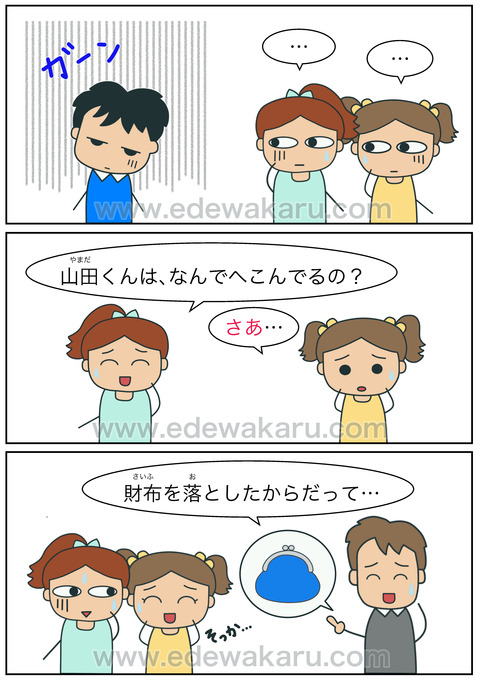
Used in response to a question or situation when the speaker does not know the answer, as in ①, or is unsure what to think, as in ②. Especially with the meaning in ①, saying only さあ is acceptable only with someone close to you.
How to use it
さあ
さあ
In context 7 examples
さあ、いこう。
Come on, let’s go.
さあ、いそいで、いそいで。
Come on, hurry up, hurry up.
さあ、がんばるぞ。
All right, let’s do our best!
さあ、春だ。
Well, it’s spring.
さあ、ごはんができたぞ。
All right, dinner’s ready.
A:あの人、だれ?
B:さあ(、知りません)。A: Who’s that person? B: Hmm, I don’t know.
A:これから、どうする?
B:さあ、どうしようかな。A: What should we do now? B: Hmm, what should we do?
Read the original source text
Meaning
聞き手をうながしたりさそったりするときに使う。③のような場合は自分自身をはげましている。④⑤のような場合には①②③のような「うながし」「さそい」「はげまし」などの機能がかくされており、「さあ、春だ。がんばるぞ」「さあ、ごはんができたぞ。食べよう/食べなさい」のように言うこともできる。③の用法以外で、状況だけで意味がつうじる場合は「さあ」だけでもよい。
質問や状況を受けて、①のように答えがわからない場合や②のように判断にこまったときに使う。特に①の意味のとき「さあ」とだけしか言わないのは、親しい相手の場合だけにゆるされる。
How to use it
さあ
さあ
日本語文型辞典 英語版
Meaning
Used to urge or invite the listener to do something.
(3)
is an example of someone encouraging him/herself. In cases like
(4)
and
(5)
, the functions seen in
(1)
,
(2)
, and
(3)
, such as urging, inviting, or encouraging someone to do something, are concealed. These examples can be paraphrased as さあ、春だ。がんばるぞ (Now, it is spring. I will work hard!) and さあ、ごはんができたぞ。食べよう/食べなさい (Now, dinner is ready. Let’s eat!/Start eating!). With the exception of the usage shown in
(3)
, さあ can also be used by itself when the meaning is clear from the situation.
B:さあ(、知りません)。
Well... (I don’t know).
B:さあ、どうしようかな。
Well, I’m not sure yet.
Used in response to a question or a situation when the speaker does not know the answer, as in
(1)
, or when the speaker has trouble making a judgment, as in
(2)
. さあ is used by itself, particularly with the meaning shown in
(1)
, only when the conversation is between people in a close relationship.
How to use it
1. さあ
2. さあ
In context 7 examples
さあ、いこう。
All right, let’s go.
さあ、いそいで、いそいで。
Come on, hurry up, hurry up.
さあ、がんばるぞ。
OK, I’ll do my best.
さあ、春だ。
Now, it is spring.
さあ、ごはんができたぞ。
Now dinner is ready.
A:あの人、だれ?
Who is that person?
A:これから、どうする?
What are you going to do from now on?
Read the original source text
Meaning
Used to urge or invite the listener to do something.
(3)
is an example of someone encouraging him/herself. In cases like
(4)
and
(5)
, the functions seen in
(1)
,
(2)
, and
(3)
, such as urging, inviting, or encouraging someone to do something, are concealed. These examples can be paraphrased as さあ、春だ。がんばるぞ (Now, it is spring. I will work hard!) and さあ、ごはんができたぞ。食べよう/食べなさい (Now, dinner is ready. Let’s eat!/Start eating!). With the exception of the usage shown in
(3)
, さあ can also be used by itself when the meaning is clear from the situation.
B:さあ(、知りません)。
Well... (I don’t know).
B:さあ、どうしようかな。
Well, I’m not sure yet.
Used in response to a question or a situation when the speaker does not know the answer, as in
(1)
, or when the speaker has trouble making a judgment, as in
(2)
. さあ is used by itself, particularly with the meaning shown in
(1)
, only when the conversation is between people in a close relationship.
How to use it
1. さあ
2. さあ
Bunpro Grammar Reference
Usage 1
Meaning
All right, There we go, Now, You see, Well (I don't know, let me see)
How to use it
さあ + Phrase
(1) さ、さぁ、さあ、さー
Nuance
A short, casual interjection used either to fill silence, or to convey that the following information should be paid attention to.
Explanation
さ is a 感動詞 (interjection) in Japanese that has three primary uses. These are as follows:
誘い、促し - To invite, incite, or draw attention to something.
驚き、当惑 - To express surprise, confusion, or bewilderment.
話の流れを抑える - To control or keep in check the flow of a conversation.
In this lesson, we will be focusing on the first meaning (to invite or draw attention). In English, this is usually translated as 'there we go', 'ok then', or 'well you see'. さ (or sometimes さあ) will come at the beginning of a sentence, before the point that the speaker would like to highlight is explained.
さーさー、遠慮をせずにどんどん食べてください。
There we go! Please eat a lot without holding back.
さあ、そろそろ行きますか。
Okay then, should we go soon?
Caution
This さ and the さ used for expressing confusion or bewilderment are often used interchangeably. When drawing attention, it comes across like 'well you see', but when expressing confusion, it is closer to 'well let me see'. The latter has a slight nuance of 'let me think about my answer first'.
あのさ、昨日は暑さに負けて倒れちゃった。
Well, you see… I lost to the heat yesterday and passed out. (Yesterday, I passed out due to the heat)
さあ、それはどうでしょう?私に聞いてもわからないよ。
Well let me see… I don't know about that. Even if you ask me I wouldn't have a clue.
In context 16 examples
- 「さあ、仕事を始めよう。」
'Alright, let's start working!'
- さーさー、遠慮をせずにどんどん食べてください。
There we go! Please eat a lot without holding back.
- さあ、そろそろ行きますか。
Okay then, should we go soon?
- 「さあ、行きましょう。」
'Alright, let's go!'
- 「あの人、誰?」
「さあ…」'Who is that person?' 'Well… '
- 「足は(どう)?」
「大丈夫よ。さあ早く…」'(How is) your leg?' 'It is ok. Now, quickly (keep moving)…'
- 「さ、早く乗ってください。」
「うん。」'Alright, now quickly get on.' 'Yeah.'
- 「さ、そろそろ帰る時間だぞ。」
'Alright, it's time to go back home now.'
- 「さ、食べて。冷めないうちに。」
'Now, please eat, before it gets cold.'
- 夏休みの後:「さぁ、学校に戻るぞ !」
After summer vacation: 'Well, time to go back to school!'
- 「お腹空いた!」
「無駄な時間を過ごしてる暇はないよ。さあ、急いで!」'I am hungry!' 'We don't have time to waste. Now, hurry up!'
- 「泥棒はどんなふうに中に入ったのかしら。」
「さあ、よくわからないけど…」'I wonder how the thief got inside?' 'Well, I don't know, but…'
- 猫を探すとき:「さかもとさんはどこに行ったんだろう?」
「さあ、知らないね。あの箱を調べたらどう?」When searching for a cat: 'I wonder where Sakamoto-san went?' 'Well, I don't know. How about checking in that box over there?
- 「映画館に一緒に行きたいの?」
「さあどうしようかな。」'Do you want to go to the cinema together?' 'Well, I am not sure…'
- あのさ、昨日は暑さに負けて倒れちゃった。
Well, you see… I lost to the heat yesterday and passed out. (Yesterday, I passed out due to the heat)
- さあ、それはどうでしょう?私に聞いてもわからないよ。
Well let me see… I don't know about that. Even if you ask me I wouldn't have a clue.
Read the original source text
Meaning
All right, There we go, Now, You see, Well (I don't know, let me see)
How to use it
さあ + Phrase
(1) さ、さぁ、さあ、さー
Nuance
A short, casual interjection used either to fill silence, or to convey that the following information should be paid attention to.
Explanation
さ is a 感動詞 (interjection) in Japanese that has three primary uses. These are as follows:
誘い、促し - To invite, incite, or draw attention to something.
驚き、当惑 - To express surprise, confusion, or bewilderment.
話の流れを抑える - To control or keep in check the flow of a conversation.
In this lesson, we will be focusing on the first meaning (to invite or draw attention). In English, this is usually translated as 'there we go', 'ok then', or 'well you see'. さ (or sometimes さあ) will come at the beginning of a sentence, before the point that the speaker would like to highlight is explained.
さーさー、遠慮をせずにどんどん食べてください。
There we go! Please eat a lot without holding back.
さあ、そろそろ行きますか。
Okay then, should we go soon?
Caution
This さ and the さ used for expressing confusion or bewilderment are often used interchangeably. When drawing attention, it comes across like 'well you see', but when expressing confusion, it is closer to 'well let me see'. The latter has a slight nuance of 'let me think about my answer first'.
あのさ、昨日は暑さに負けて倒れちゃった。
Well, you see… I lost to the heat yesterday and passed out. (Yesterday, I passed out due to the heat)
さあ、それはどうでしょう?私に聞いてもわからないよ。
Well let me see… I don't know about that. Even if you ask me I wouldn't have a clue.
Nuance · 日本語
沈黙を埋めるためや、次に述べられることが重要だということを伝えたい時に使われる、短くてカジュアルな感嘆詞。
Explanation · 日本語
「さ」は、主に三つの使い方を持つ感動詞です。
・誰かを誘ったり、行動させようとしたり、注意を引こうとしていることを表す。
・驚いたり、混乱していたり、ためらったりしていることを表す。
・話の流れをコントロールしようとしていることを表す。
ここでは、主に一つ目の使い方について学びましょう。この「さ」または「さあ」は、話し手がこれから言うことに聞き手の注意を向けさせたいときに、文の始まりに使われます。「さ」や「さあ」のあとには、多くの場合、自分や相手に行動を起こさせるような話が続きます。
さーさー、遠慮をせずにどんどん食べてください。
There we go! Please eat a lot without holding back.
さあ、そろそろ行きますか。
Okay then, should we go soon?
注意点
この「さ」と、驚きやためらいを表す「さ」は、はっきりと使い分けられているわけではありません。注目を集めたいときには「ねえ」や「ほら」のような意味になります。ためらいを表すときには「うーん、どうかな…」のように、少し考えながら話している感じになります。また、あまり深く考えないで、ただ「わからない」と相手に言いたいようなときに使われることもあります。
あのさ、昨日は暑さに負けて倒れちゃった。
Well, you see… I lost to the heat yesterday and passed out. (Yesterday, I passed out due to the heat)
さあ、それはどうでしょう?私に聞いてもわからないよ。
Well let me see… I don't know about that. Even if you ask me I wouldn't have a clue.
Usage 2
Meaning
Like, You know, You see, Listen, Uhh
How to use it
Phrase (A) + さぁ(1) + Phrase (B)
(1) さあ、さー、さ
Nuance
A short, casual interjection used to fill silence, in a similar way to like and you know in English.
Explanation
さ is a 感動詞 (interjection) in Japanese that has three primary uses. These are as follows:
誘い、促し - To invite, incite, or draw attention to something.
驚き、当惑し - The express surprise, confusion, or bewilderment.
話の流れを抑える - To control or keep in check the flow of a conversation.
In this lesson, we will be focusing on the second meaning (to express surprise, confusion, or bewilderment). In English, this is used in a very similar way to 'like', 'you know', 'uhh', and other short phrases that are employed when a speaker is searching for the right thing to say, and is filling the silence. This さ may be used in any position within a sentence, simply to create thinking time.
あのさ、私さあ、この前さあ、お金貸したじゃん?あれさあ、返してくれない?
Hey, um… I, uhh, lent you, like, money before, right? You know… can you give that back to me?
ね~聞いてよ。彼女がさ、急に別れたいっていって来たんだけどどうすればいいの。
Heyyy, listen to this. You know my girlfriend? She suddenly came to me saying that she wants to break up with me, what should I do.
The 'confusion' that this さ expresses is not necessarily a bad thing, and is used by many people to simply express that they have not finished talking yet.
来週箱根に行くんだけどさ…どこか美味しいところ知らない?
I am going to Hakone next week, soooo… Do you know any good restaurants?
夜中に急に娘から電話が来てさあ...本当にビックリしたよ。
You know, my daughter suddenly called me in the middle of the night, and… I was really worried.
In context 16 examples
- 「今朝さあ、母さんに怒られたよ。」
'I got scolded by mom in the morning, you know.'
- あのさ、私さあ、この前さあ、お金貸したじゃん?あれさあ、返してくれない?
Hey, um… I, uhh, lent you, like, money before, right? You know… can you give that back to me?
- 来週箱根に行くんだけどさ…どこか美味しいところ知らない?
I am going to Hakone next week, soooo… Do you know any good restaurants?
- 夜中に急に娘から電話が来てさあ...本当にビックリしたよ。
You know, my daughter suddenly called me in the middle of the night, and… I was really worried.
- ね~聞いてよ。彼女がさ、急に別れたいっていって来たんだけどどうすればいいの。
Heyyy, listen to this. You know my girlfriend? She suddenly came to me saying that she wants to break up with me, what should I do.
- 友達との会話:「あのさ、俺、彼女ができたんだ!」
Chat between friends: 'Listen, I got myself a girlfriend!'
- 「あのさぁ、好きな人とかいるの?」
'Listen, do you have someone you like?'
- 「内緒だけどさ、彼宝くじに当たったんだよ。」
'Between us, you see, he won the lottery.'
- A(エー):「私さぁ、明日から5連休なんだ!」
B(ビー):「いいなぁー」A: 'I have, you see, a 5 day weekend starting from tomorrow.' B: 'Lucky!'
- A(エー):「彼ってさとてもいい父親らしいよ。」
B(ビー):「そうなんだぁ。」A: 'Speaking of him, you see, I heard that he is a very good father.' B: 'Is that so?'
- ちずるちゃん:「すがわらくんさぁ、本気でわたしに告白するつもりあるの?」
Chizuru-chan: 'Does Sugawara-Kun, uhh, really plan to confess to me?'
- 怒こっているクライアント:「あのさあ、こっち並んでるんだからさあ、こっちから応対すべきじゃね?」
Angry client: 'Listen. We've been waiting in line here, you see, shouldn't you serve us first?'
- 「あのさぁ、昨日帰るときさぁ、あるやつにクラクションを鳴らされてさぁ…びっくりした。」
'Listen, yesterday, when I was going back home, like, some guy, honked at me, you see... It startled me.'
- 友達との就職についての話、A(エー):「お前さぁ、やる気あるの?」
B(ビー):「俺さぁ、就職じゃなくて、進学しようと思ってる。」A conversation among friends about finding a job, A: 'Listen, man, do you feel like doing it?' B: 'You see, I am not looking for a job, I plan to go to uni.'
- 上司が部下に仕事の進捗を聞く:「あのさ、この前お願いした資料だけど、進捗どう?」
Superior asking a subordinate about work progress: 'Listen, is there any progress with the documents I requested earlier?'
- 息子(大学生):「お母さん、来月さぁ、部活の合宿があるんだけど。」
母:「うん、それで?」
息子:「1万円いるから宜しく」
母:「バイトして貯めなさい。」Son (university student): 'Mom, next month, you see, we have a club training camp…' Mother: 'Yes, so what?' Son: 'I need 10,000 yen, so pretty please…' Mother: 'Get a part-time job and save for it!'
Read the original source text
Meaning
Like, You know, You see, Listen, Uhh
How to use it
Phrase (A) + さぁ(1) + Phrase (B)
(1) さあ、さー、さ
Nuance
A short, casual interjection used to fill silence, in a similar way to like and you know in English.
Explanation
さ is a 感動詞 (interjection) in Japanese that has three primary uses. These are as follows:
誘い、促し - To invite, incite, or draw attention to something.
驚き、当惑し - The express surprise, confusion, or bewilderment.
話の流れを抑える - To control or keep in check the flow of a conversation.
In this lesson, we will be focusing on the second meaning (to express surprise, confusion, or bewilderment). In English, this is used in a very similar way to 'like', 'you know', 'uhh', and other short phrases that are employed when a speaker is searching for the right thing to say, and is filling the silence. This さ may be used in any position within a sentence, simply to create thinking time.
あのさ、私さあ、この前さあ、お金貸したじゃん?あれさあ、返してくれない?
Hey, um… I, uhh, lent you, like, money before, right? You know… can you give that back to me?
ね~聞いてよ。彼女がさ、急に別れたいっていって来たんだけどどうすればいいの。
Heyyy, listen to this. You know my girlfriend? She suddenly came to me saying that she wants to break up with me, what should I do.
The 'confusion' that this さ expresses is not necessarily a bad thing, and is used by many people to simply express that they have not finished talking yet.
来週箱根に行くんだけどさ…どこか美味しいところ知らない?
I am going to Hakone next week, soooo… Do you know any good restaurants?
夜中に急に娘から電話が来てさあ...本当にビックリしたよ。
You know, my daughter suddenly called me in the middle of the night, and… I was really worried.
Nuance · 日本語
沈黙を埋めるための短くてカジュアルな感嘆詞。
Explanation · 日本語
「さ」は、主に三つの使い方を持つ感動詞です。
・誰かを誘ったり、行動させようとしたり、注意を引こうとしていることを表す。
・驚いたり、混乱していたり、ためらったりしていることを表す。
・話の流れをコントロールしようとしていることを表す。
ここでは、二つ目の意味を主に見ていきましょう。この「さ」は、話し手が適切な言葉を探していて、その間に話が止まることを避けるために使われます。この「さ」は、文のどこでも使うことができ、次に言うことを考える時間を作ります。
あのさ、私さあ、この前さあ、お金貸したじゃん?あれさあ、返してくれない?
Hey, um… I, uhh, lent you, like, money before, right? You know… can you give that back to me?
ね~聞いてよ。彼女がさ、急に別れたいっていって来たんだけどどうすればいいの。
Heyyy, listen to this. You know my girlfriend? She suddenly came to me saying that she wants to break up with me, what should I do.
この「さ」が表す「混乱」は、悪い意味とは限りません。単に、まだ話が終わっていないことを表すために使います。
来週箱根に行くんだけどさ…どこか美味しいところ知らない?
I am going to Hakone next week, soooo… Do you know any good restaurants?
夜中に急に娘から電話が来てさあ...本当にビックリしたよ。
You know, my daughter suddenly called me in the middle of the night, and… I was really worried.
Usage 3
Meaning
Casual よ
How to use it
Phrase + さ(1)
(1) さぁ、さあ、さー
Nuance
A short, casual interjection used either to fill silence, or to express that new information has been conveyed.
Explanation
さ is a 感動詞 (interjection) in Japanese that has three primary uses. These are as follows:
誘い、促し - To invite, incite, or draw attention to something.
驚き、当惑し - To express surprise, confusion, or bewilderment.
話の流れを抑える - To control or keep in check the flow of a conversation.
In this lesson, we will be focusing on a specific feature of the first meaning (to draw attention). Unlike other types of drawing attention that さ is able to be used for (see this grammar point), this さ will only appear at the end of sentences. Here, さ is almost identical in meaning to that of よ, with a slight added nuance of high confidence in what one is saying.
彼氏がもう私のことを信用できないってさ。
My boyfriend told me that he can't trust me anymore. (Added confidence gives the nuance of 'can you believe it!')
インスタで見たんだけど、キヨミの赤ちゃんが明日生まれるんだってさ!
I saw it on instagram, but I heard that Kiyomi is going to give birth tomorrow!
そんなこと心配ないさ!俺に任せとけ!
Such a thing is not necessary! Leave it to me! (Trust it to me in advance, so that it is not a problem later)
Caution
This さ is primarily used by men, and can vary in meaning depending on the speaker's tone of voice. However, in almost all situations さ will mean 'what I just said is correct' (sometimes angrily, sometimes informatively, and even sometimes in a completely carefree way).
お前さ...
You… (Are you freaking serious)
たかし君も行きたいってさ。どうしよう?彼も招待する?
Takashi-kun said he wants to go too. What should we do? Should we invite him too?
そんなの俺にだってできるさ。分からないけど。
Although I am not certain, even I would be able to do something like that.
Women may also use さ as a sentence ender, but わよ tends to be more common.
In context 18 examples
- 「僕はNBA(エヌビーエー)でやるつもりさ。」
'I intend to play in the NBA.' (emphasis; softer than よ)
- 彼氏がもう私のことを信用できないってさ。
My boyfriend told me that he can't trust me anymore. (Added confidence gives the nuance of 'can you believe it!')
- インスタで見たんだけど、キヨミの赤ちゃんが明日生まれるんだってさ!
I saw it on instagram, but I heard that Kiyomi is going to give birth tomorrow!
- そんなこと心配ないさ!俺に任せとけ!
Such a thing is not necessary! Leave it to me! (Trust it to me in advance, so that it is not a problem later)
- A(エー):「彼が約束を破ったってさ。」
B(ビー):「そんな人じゃないさ。」A: 'I heard that he broke his word.' B: 'He is not that type of person!' (emphasis; softer than よ)
- 「まぁ、なんとかなるさ。」
'Well, somehow I'll get by.' (emphasis; softer than よ)
- A(エー):「寒い。寒すぎるよ。」
B(ビー):「どうってことないさ。」A: 'It's cold. Soo cold.' B: 'This is nothing.' (emphasis; softer than よ)
- 「テレビで台風がやってくるってさ。」
'They say on TV that a typhoon is coming.' (emphasis; softer than よ)
- 「明日までにこのプロジェクトを終えることができるさ。本当さ。」
'I can finish this project by tomorrow. Really.' (emphasis; softer than よ)
- 「君は真剣に練習していないから、いつも負けるのさ。」
'You don't take training seriously, so we lose all the time!' (emphasis; softer than よ)
- 「マルチプルチョイスのテストなど、適当に番号を選ぶだけさ。」
'For multiple-choice tests, I will just randomly choose the numbers.' (emphasis; softer than よ)
- 「二度目の受験だから、前回の轍を踏まなければ合格できるさ。」
'I will take the exam a second time, so if I don't repeat any mistakes, I will pass.' (emphasis; softer than よ)
- A(エー):「このままだと戻れないんだぞ。現状の深刻さがわからないのか?」
B(ビー):「わかっているさ。プラスに考えようとしているだけさ。」A: 'If it is like that, we cannot come back! Do you understand the seriousness of the situation?' B: 'I understand. I am just trying to think of it as a positive.' (emphasis; softer than よ)
- クラスメイトA(エー):「じゅんいちろうはともちゃんと付き合ってるの?」
クラスメートのじゅんいちろう:「そんなことないさ。」Classmate A: 'Hey, I heard that you are going out with Tomo-chan.' Classmate, Junichirou: 'That's not true.' (emphasis; softer than よ)
- 「きっと、勝てるさ。」
'We can surely win!' (emphasis; softer than よ)
- お前さ...
You… (Are you freaking serious)
- たかし君も行きたいってさ。どうしよう?彼も招待する?
Takashi-kun said he wants to go too. What should we do? Should we invite him too?
- そんなの俺にだってできるさ。分からないけど。
Although I am not certain, even I would be able to do something like that.
Read the original source text
Meaning
Casual よ
How to use it
Phrase + さ(1)
(1) さぁ、さあ、さー
Nuance
A short, casual interjection used either to fill silence, or to express that new information has been conveyed.
Explanation
さ is a 感動詞 (interjection) in Japanese that has three primary uses. These are as follows:
誘い、促し - To invite, incite, or draw attention to something.
驚き、当惑し - To express surprise, confusion, or bewilderment.
話の流れを抑える - To control or keep in check the flow of a conversation.
In this lesson, we will be focusing on a specific feature of the first meaning (to draw attention). Unlike other types of drawing attention that さ is able to be used for (see this grammar point), this さ will only appear at the end of sentences. Here, さ is almost identical in meaning to that of よ, with a slight added nuance of high confidence in what one is saying.
彼氏がもう私のことを信用できないってさ。
My boyfriend told me that he can't trust me anymore. (Added confidence gives the nuance of 'can you believe it!')
インスタで見たんだけど、キヨミの赤ちゃんが明日生まれるんだってさ!
I saw it on instagram, but I heard that Kiyomi is going to give birth tomorrow!
そんなこと心配ないさ!俺に任せとけ!
Such a thing is not necessary! Leave it to me! (Trust it to me in advance, so that it is not a problem later)
Caution
This さ is primarily used by men, and can vary in meaning depending on the speaker's tone of voice. However, in almost all situations さ will mean 'what I just said is correct' (sometimes angrily, sometimes informatively, and even sometimes in a completely carefree way).
お前さ...
You… (Are you freaking serious)
たかし君も行きたいってさ。どうしよう?彼も招待する?
Takashi-kun said he wants to go too. What should we do? Should we invite him too?
そんなの俺にだってできるさ。分からないけど。
Although I am not certain, even I would be able to do something like that.
Women may also use さ as a sentence ender, but わよ tends to be more common.
Nuance · 日本語
沈黙を埋める時や、新しい情報が述べられたことを表現するために使われる、短くてカジュアルな感嘆詞。
Explanation · 日本語
「さ」は、主に三つの使い方を持つ感動詞です。
・誰かを誘ったり、行動させようとしたり、注意を引こうとしていることを表す。
・驚いたり、混乱していたり、ためらったりしていることを表す。
・話の流れをコントロールしようとしていることを表す。
ここでは、一つ目の使い方の中でも、注意を引くときの「さ」を学びます。この「さ」は文の終わりに使われます。「よ」とほとんど同じ意味ですが、「さ」には話し手が自分の言っていることに強い自信を持っているというニュアンスがあります。
彼氏がもう私のことを信用できないってさ。
My boyfriend told me that he can't trust me anymore. (Added confidence gives the nuance of 'can you believe it!')
インスタで見たんだけど、キヨミの赤ちゃんが明日生まれるんだってさ!
I saw it on instagram, but I heard that Kiyomi is going to give birth tomorrow!
そんなこと心配ないさ!俺に任せとけ!
Such a thing is not necessary! Leave it to me! (Trust it to me in advance, so that it is not a problem later)
この「さ」は主に男性が使う表現です。言い方によって、ニュアンスは変わりますが、たいていは「自分の言っていることが正しい」という気持ちを表しています。話し手が「さ」を使うとき、怒っていることもあれば、冷静に情報を伝えていることもあります。また、特に深い意味もなく、軽い気持ちで言っているだけのこともあります。
お前さ...
You… (Are you freaking serious)
たかし君も行きたいってさ。どうしよう?彼も招待する?
Takashi-kun said he wants to go too. What should we do? Should we invite him too?
そんなの俺にだってできるさ。分からないけど。
Although I am not certain, even I would be able to do something like that.
この「さ」は女性が使うこともあります。ただし、「わよ」の方が女性らしい表現とされています。