絵でわかる日本語
Meaning
(The speaker) is considering whether or not to ~.
(The speaker) is unsure whether or not to ~.
How to use it
Verb [volitional form] + ようか
Verb [volitional form] + ようかな
Verb [volitional form] + ようかしら
Explanation
“Volitional form + か,” “volitional form + かな,” and “volitional form + かしら” are sentence patterns used when the speaker is unsure whether or not to do something. They express “I’m still undecided about whether to ~” or “I haven’t decided yet whether to ~” 😊 Use them when you want to emphasize that the speaker is unsure, compared with the plain volitional form 😀
(Review: 〜に比べて [compared with])
[Examples]
じゃあ、行ってみよう
Well then, let’s go and see.
→The intention to “go” is clear.
じゃあ、行ってみようかな
Well then, maybe I’ll go and see.
→I haven’t decided yet whether to go or not.
Also, “か,” “かな,” and “かしら” can be switched, but be careful: only women use “かしら” 😨
[Examples]
じゃあ、行ってみようか
=じゃあ、行ってみようかな
=じゃあ、行ってみようかしら (used by women)
“〜かな・〜かしら” have several meanings, so review them if you’ve forgotten 😊
(Review: 〜かな・〜かしら [grammar])
(Review: 〜かな・〜かしら [colloquial form])
There are few opportunities to study “volitional form + か,” “volitional form + かな,” and “volitional form + かしら,” but they are used a great deal in everyday conversation, so I think it’s good to learn them 😉
In context 4 examples
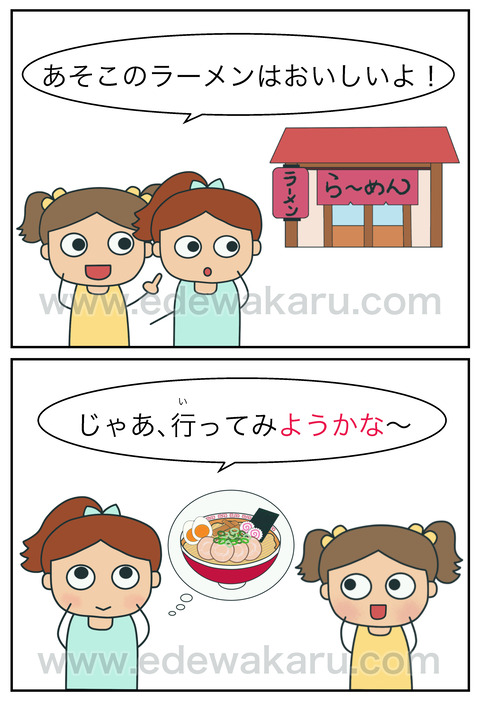
A:あそこのラーメンはおいしいよB:じゃあ、行ってみようかな
→行くか行かないか考えているA: The ramen over there is delicious. B: Well then, maybe I’ll go and try it. →I’m considering whether or not to go.
学校を休もうかな…
→学校を休むか休まないか考えているMaybe I’ll take the day off from school… →I’m considering whether or not to take the day off from school.
夕ご飯は何にしようか
→夕ご飯は何にするか考えているWhat should I have for dinner? →I’m thinking about what to have for dinner.
今日は雨が降るかな…傘を持って行こうかな
→傘を持って行くかどうか迷っている(復習:〜かな・〜かしら(文法))(復習:〜かな・〜かしら(口語形))Maybe it’ll rain today… Maybe I’ll take an umbrella. →I’m unsure whether or not to take an umbrella (Review: 〜かな・〜かしら [grammar]; 〜かな・〜かしら [colloquial form]).
Read the original source text
Meaning
(話者が)〜するかしないか考えている
(話者が)〜するかしないか迷っている
How to use it
動詞[意向形]+ようか
動詞[意向形]+ようかな
動詞[意向形]+ようかしら
Explanation
「意向形+か」「意向形+かな」「意向形+かしら」は「話者が〜するか〜しないか迷っている」と言いたい時に使われる文型です。話者が
「〜するかどうか、まだ迷っている」「〜するかどうか、まだ決めていない」という意味を表す表現です
😊「意向形」に比べて、話者が迷っているという意味を強調したい時に使いましょう😀
(復習:〜に比べて)
[例]
じゃあ、行っ
てみよう
→「行く」という意志がはっきりしている
じゃあ、行っ
てみようかな
→「行く」か「行かない」かまだ決めていない
また、「か」「かな」「かしら」はチェンジできますが、
「かしら」は女性しか使えません
ので気をつけてください😨
[例]
じゃあ、行っ
てみようか
=じゃあ、行っ
てみようかな
=じゃあ、行っ
てみようかしら
(*女性が使用)
「〜かな・〜かしら」にはいくつか意味がありますので、忘れてしまった人は復習をしておいてください😊
(復習:〜かな・〜かしら(文法))
(復習:〜かな・〜かしら(口語形))
「意向形+か」「意向形+かな」「意向形+かしら」 は勉強する機会が少ないですが、日常会話(にちじょうかいわ)でとてもよく使われますので、覚えておくといいと思います😉