文法
Meaning
~ tends to
Used when talking about an undesirable tendency. It cannot be used for natural phenomena. It is characteristic of written language and is hardly used in speech.
❌Example: This time of year, it tends to rain easily.
How to use it
V(dictionary/ない form)+ きらいがある
N + のきらいがある
In context 7 examples
最近の子供はスマホやゲームの影響で夜遅くまで起きるきらいがある。
Children these days tend to stay up late because of smartphones and games.
彼はいつも、現実を甘く見るきらいがある。
He always tends to take reality lightly.
最近の若者は本を読まないきらいがある。
Young people these days tend not to read books.
スマホの普及により、最近の人は新聞を読まないきらいがある。
With the spread of smartphones, people these days tend not to read newspapers.
できない人は上司や先輩のアドバイスをきちんと聞かないきらいがあります。
People who are no good at their jobs tend not to listen properly to advice from their bosses and seniors.
彼はいつも物事を大げさに言うきらいがある。
He always tends to exaggerate things.
一般的に、年をとると誰でも頑固になるきらいがあるそうだ。
Apparently, in general, everyone tends to become stubborn as they get older.
Read the original source text
Meaning
〜の傾向がある
よくない傾向について言う時に使われる。自然現象に使うことはできない。書き言葉的で話す時にはほとんど使わない。
❌例:今の時期は雨が降りやすいきらいがある。
How to use it
V(辞/ない)+ きらいがある
N + のきらいがある
Bunpro Grammar Reference
Meaning
Have a tendency to, Tend to, Be slightly~
How to use it
Verb[る]+ きらいがある
Verb[ない]+ きらいがある
Noun + の + きらいがある
Verb[る]+ きらいがあります
Verb[ない]+ きらいがあります
Noun + の + きらいがあります
Nuance
An expression often used to imply negative tendencies. The hateful (A) exists.
Explanation
嫌いがある is a combination of the noun きらい 'a dislike', the case-marking particle が, and the う-Verb ある 'to be'. It is used to indicate the presence of negative tendencies or habits, and may be translated as 'to have a tendency to (A)', or 'to be prone to (A)'.
This structure will be seen following the dictionary form of verbs, verbs negated with ない, or after nouns ending with の.
彼女は三日坊主だから、何かを始めてもすぐに辞める嫌いがある。
Since she is a quitter, she tends to quit things as soon as she starts them.
彼は自分の意見を言わない嫌いがある。
He tends to not share his own opinions.
お盆休みの間は浅草に行く観光客の数が上昇する嫌いがある。
The number of tourists visiting Asakusa tends to rise during Obon.
As a more literal translation, 嫌いがある can be thought of as 'having the displeasure of (A)', with the actual 'tendency' merely being implied.
Due to 嫌いがある being quite strong, it is frequently used together with words that will slightly soften the meaning, such as 少し 'a little bit', or どうも 'try as one might'.
お父さんは少し強い言い方をする嫌いがあるけど、あまり気にしないでね。
My father tends to use harsh words, but please don't take it personally.
斉藤さんはどうも冬になると家に引きこもる嫌いがあるので、今年の冬は斉藤さんとたくさんお出かけに行く予定です。
Apparently, Saito-san tends to become a hermit during winter, so I made plans to go out a lot with her this winter.
Caution
As 嫌いがある will be used to describe things that are 'displeasurable' from the point of view of the speaker, it will usually not be used in relation to oneself.
私はなんでもすぐ飽きる嫌いがある。
I have a tendency to get bored easily with everything. (Unnatural Japanese)
In context 18 examples
- 近頃の親は過保護のきらいがある。
Parents these days tend to be overprotective.
- 斉藤さんはどうも冬になると家に引きこもる嫌いがあるので、今年の冬は斉藤さんとたくさんお出かけに行く予定です。
Apparently, Saito-san tends to become a hermit during winter, so I made plans to go out a lot with her this winter.
- 彼女は三日坊主だから、何かを始めてもすぐに辞める嫌いがある。
Since she is a quitter, she tends to quit things as soon as she starts them.
- 彼は自分の意見を言わない嫌いがある。
He tends to not share his own opinions.
- お盆休みの間は浅草に行く観光客の数が上昇する嫌いがある。
The number of tourists visiting Asakusa tends to rise during Obon.
- お父さんは少し強い言い方をする嫌いがあるけど、あまり気にしないでね。
My father tends to use harsh words, but please don't take it personally.
- 彼女は彼の気持ちを尊重しないきらいがある。
She has a tendency to not respect his feelings.
- ある人は、民族だけで人の性格を判断してしまうきらいがある。
A certain person tends to judge a person's nature just by their ethnic group.
- お父さんは、困っている人のためには人助けをする。しかし助けてもらった人は、されたことを忘れるきらいがある。
Father always helps people in need. However, the people who received help tend to forget about it.
- 記事:「高血圧のきらいがあることを除けばほとんど健康だった34歳の男性はバクテリアの感染により重体に陥った。」
Article: 'A 34-year-old man, who was mostly healthy, aside for a tendency to have high blood pressure, has fallen seriously ill due to a bacterial infection.'
- 記事:「日本のような先進国では出生率低下のきらいがあり、その結果として諸問題が発生する。」
Article: 'In developed countries such as Japan, there is a tendency for a declining birth rate, and as a result, various problems arise.'
- 妻は何でも独断するきらいがあるため、僕は度々信頼されていないのではないかと悩んでしまう。
Since my wife has a tendency to decide everything on her own, unfortunately I am frequently troubled as to whether I am trusted.
- 考えすぎるきらいがある患者にある薬を処方したところ、患者は心の状態が良くなった事を報告した。
When I was just about to prescribe a certain medication for a patient that has a tendency to overthink, they reported that their mental condition had gotten better.
- 皆から慕われている上司の一言で、業績を鼻にかけるきらいがある同僚の態度が一変しました。
With the brief comment from our boss who is deeply admired by everyone, my colleague who tends to be boastful about his achievements had a complete change in attitude.
- 自分の思い通りにいかないと機嫌を損ねるきらいがある息子をどう教育するべきか夫婦で話し合う。
We talk together as husband and wife about how to raise our son who tends to feel bad when things don't go his way.
- 少数派の意見を無視するきらいがあるその政治家が首相になっては大変なので他の政治家に投票しよう。
Since that politician who tends to ignore the opinions of minorities would be problematic if they became the prime minister, let's vote for another politician.
- 母は自分が研究している分野の話になると話し過ぎるきらいがあるので、その分野の話は避けるべきだ。
If it becomes a conversation about my mom's field of research, since she has a tendency to talk too much, you should avoid conversations about that topic.
- 私はなんでもすぐ飽きる嫌いがある。
I have a tendency to get bored easily with everything. (Unnatural Japanese)
DoJG 日本語文法辞典(全集)
Meaning
Have a tendency to; tend to; have a touch of ~; have a dash of ~; smack of ~; be slightly ~
How to use it
(i) Vinformal | きらいがある | |
| 結論を{急ぐ/急いだ}きらいがある | Someone has/had a tendency to reach a conclusion hastily (literally: to hurry to reach a conclusion) |
| 飲み{すぎる/すぎた}きらいがある | Someone has/had a tendency to drink too much |
(ii) Nounの | きらいがある | |
| 過食のきらいがある | Someone has a tendency toward overeating |
| 誇張のきらいがある | Something smacks of exaggeration |
Explanation
A phrase indicating that someone or something has an undesirable tendency.
In context 13 examples
彼は物事を単純に考えるきらいがある。
He has a tendency to think (about things) in simplistic terms.
彼は独断のきらいがある。
He is slightly dogmatic (literally: has a touch of dogmatism).
我々はとかく自分に都合がいい意見だけに耳を傾けるきらいがある。
We tend to listen only to views that are convenient for us.
今の子供たちは、夜遅くまでコンピュータゲームなどをして寝ないきらいがある。
Children these days have a tendency to stay up late at night playing computer games and doing other things.
主婦は毎日の雑事に追われて、自分の体調管理がおろそかになるきらいがある。
Housewives have a tendency to neglect taking care of their own health because they are busy doing everyday chores.
彼女は親切な人ですが、知らずに人を傷つけることを言うきらいがあります。
She is a kind person, but she has a tendency to say things unwittingly that hurt people.
私たちは、あまりに自分のからだを医者任せにしてきたきらいがあるのではないでしょうか。
Don't you think that we have tended to entrust (the care of) our bodies too much to doctors?
これまでの日本の高等教育は、アジアとの共生を重視しなかったきらいがある。
Japanese higher education so far has tended to attach little importance to Japan's coexistence with Asia.
現在の日本の教育は、子供を社会から保護しすぎるきらいがある。
Education in Japan today tends to overprotect children from society.
彼は家庭環境が複雑なせいか、人間不信のきらいがある。
Because he was brought up in a complicated family setting, he tends not to trust people (literally: tends towards mistrust of humans).
彼は頭もよくて、仕事もばりばりやるけど、八方美人のきらいがある。
He is sharp and works furiously, but he has a tendency to try to be everything to everybody.
健康診断で白内障のきらいがあると医者に言われました。
When I had a physical check-up, the doctor told me that I have cataracts developing.
糖尿病のきらいがあるので、甘いものは控えています。
I have a borderline case of diabetes (literally: have a tendency towards diabetes), so I am refraining from eating sweets.
日本語文型辞典
Meaning
Basic information: Nのきらいがある; V-るきらいがある. Means “has such a tendency” or “is prone to be that way.” Used for undesirable matters. Literary in style. Examples: ① He’s a good-looking man, but tends to exaggerate everything. ② Students these days tend not to look things up for themselves and rely on their teachers right away. ③ That teacher’s lectures are interesting, but tend to turn into bragging before you know it. ④ That politician is capable, but tends somewhat to act arbitrarily and unilaterally.
Read the original source text
Meaning
基本情報NのきらいがあるV-るきらいがある説明そういう傾向を持つ、そうなりやすい、という意味を表す。よくないことがらの場合に用いる。書きことば的。例文① 彼はいい男だが、なんでもおおげさに言うきらいがある。② 最近の学生は自分で調べず、すぐ教師に頼るきらいがある。③ あの先生の講義はおもしろいのだが、いつの間にか自慢話に変わってしまうきらいがある。④ あの政治家は有能だが、やや独断専行のきらいがある。
日本語文型辞典 英語版
Meaning
【きらいがある】[Nのきらいがある][V-るきらいがある]
Expresses that something has a certain tendency. Used for negative things. Has the feel of written language.
In context 4 examples
彼はいい男だが、なんでもおおげさに言うきらいがある。
He is a good man, but he tends to exaggerate everything.
最近の学生は自分で調べず、すぐ教師に頼るきらいがある。
Students today tend not to examine things for themselves but to depend on teachers too readily.
あの先生の講義はおもしろいのだが、いつの間にか自慢話に変わってしまうきらいがある。
That teacher’s lecture is interesting, but it tends to turn to boasting.
あの政治家は有能だが、やや独断専行のきらいがある。
That politician is competent, but he tends to be arbitrary.
くらべてわかる日本語表現文型辞典
Meaning
There is a tendency or disposition to be A.
How to use it
Aきらいがある
[Verb] きらいがある
Explanation
【Comparison 1】
“Aがちだ” (Meaning 2, p. 58)
When it expresses a tendency, the two can be substituted for each other, but when expressing frequency, only “Aがちだ” is used.
○来週1週間は、曇りがちの天気だろう。
×来週1週間は、曇るきらいがある。
Notes
【Note 1】
・A is mainly a bad tendency.
In context 4 examples
彼女は美人だが、自分の意見を主張しすぎるきらいがある。
She is beautiful, but she tends to assert her opinions too strongly.
彼はすぐ感情を顔に出すきらいがある。
He tends to show his feelings on his face right away.
その結論は無理やり考えたきらいがある。
That conclusion seems to have been forced.
昨日の会合は主催者側の意図が十分浸透していないきらいがあった。
At yesterday’s meeting, the organizers’ intentions seemed not to have been fully communicated.
Read the original source text
Meaning
Aという傾向・性格がある。
How to use it
Aきらいがある
[動詞]きらいがある
Explanation
【対比1】
「Aがちだ」(意味2 P.58)
傾向を表す場合は置き換えできるが、頻度を表す場合は「Aがちだ」のみである。
○来週1週間は、曇りがちの天気だろう。
×来週1週間は、曇るきらいがある。
Notes
【注意1】
・Aは主に悪い傾向である。
日本語NET JLPT文法解説まとめ
Meaning
"tend to ~"
Used when talking about an undesirable tendency. It cannot be used for natural phenomena. It is characteristic of written language and is hardly used in speech.
❌ Example: This time of year tends to be rainy.
How to use it
V(dictionary/ない form)+ きらいがある
N + のきらいがある
Explanation
"There is a tendency to ~"
It's used to describe negative trends. It cannot be used for natural phenomena. It's more written than spoken and is rarely used in conversation.
In context 7 examples
最近の子供はスマホやゲームの影響で夜遅くまで起きるきらいがある。
Children these days tend to stay up late because of smartphones and games.
彼はいつも、現実を甘く見るきらいがある。
He always tends to take reality lightly.
最近の若者は本を読まないきらいがある。
Young people these days tend not to read books.
スマホの普及により、最近の人は新聞を読まないきらいがある。
With the spread of smartphones, people these days tend not to read newspapers.
できない人は上司や先輩のアドバイスをきちんと聞かないきらいがあります。
People who are no good at their jobs tend not to listen properly to advice from their bosses and seniors.
彼はいつも物事を大げさに言うきらいがある。
He always tends to exaggerate things.
一般的に、年をとると誰でも頑固になるきらいがあるそうだ。
Apparently, in general, everyone tends to become stubborn as they get older.
Read the original source text
Meaning
"〜の傾向がある"
よくない傾向について言う時に使われる。自然現象に使うことはできない。書き言葉的で話す時にはほとんど使わない。
❌例:今の時期は雨が降りやすいきらいがある。
How to use it
V(辞/ない)+ きらいがある
N + のきらいがある
Explanation
"There is a tendency to ~"
It's used to describe negative trends. It cannot be used for natural phenomena. It's more written than spoken and is rarely used in conversation.
NINJAL 日本語文型データベース
Meaning
Expresses an overall tendency to often “〜” or often become “〜.” It is mainly used to talk about a person or group in connection with something negative.
How to use it
V ordinary form+きらいがある
Nのきらいがある
Notes
It is not often used about the speaker themself.
In context 11 examples
ユキは料理が上手ですが、ともすると作りすぎるきらいがあります。
Yuki is good at cooking, but she does tend to make too much.
あの代議士は、自信のない答弁をするとき、早口になるきらいがある。
That elected representative tends to speak quickly when giving an uncertain answer.
うちの課長は率先力はあるが、とかく人の話を聞かないきらいがある。
Our section chief takes the initiative, but tends not to listen to what others say.
役所の文書などを読むたびに思うのですが、書く側は外国人にもわかりやすい日本語を使うことの大切さを認識していないきらいがあるのではないでしょうか。
Whenever I read government documents and the like, I wonder whether the people who write them tend not to recognize the importance of using Japanese that is easy for foreigners to understand.
このテーマについての従来の議論は、細かいことに執着しすぎていたきらいがあると思う。
I think that previous discussions of this topic tended to focus too much on minor details.
これまでマスコミは、地方のあまり目立たない人たちの活躍を取り上げてこなかったきらいがある。
Until now, the media have tended not to cover the achievements of people in regional areas who are not very prominent.
うちの親は何かと過干渉のきらいがある。早く自由になりたい。
My parents tend to be overprotective about all sorts of things. I want to be free soon.
山口さんは飲み会になると、とかくはしゃぎすぎのきらいがある。
When it comes to parties, Yamaguchi tends to get carried away.
私は先の先まで考えてしまい、心配しすぎてうまくいかないことが多い。心配症のきらいがあるとよく人に言われる。
I think too far ahead and worry too much, so things often don’t go well. People often tell me I tend to be a worrier.
おしゃべりのきらいがある人には社内の複雑な人間関係の話はしないほうがいい。
It’s better not to talk about the complicated relationships at work with someone who tends to be a chatterbox.
この子は小さいときから偏食のきらいがあったが、小学校の給食でだいぶ改善された。
This child tended to be a picky eater from a young age, but school lunches improved that quite a bit.
Read the original source text
Meaning
全体的傾向としてよく~する・よく~になるということを表します。主にある人や集団を話題として、よくない意味のことについて言います。
How to use it
Ⅴ普通形+きらいがある
Nのきらいがある
Notes
話し手自身についてはあまり使いません。
IMABI
Tendency
Read this IMABI lesson ↗Explanation
Tendency: 嫌いがある, が早いか, が最後, & そばから
In this lesson we will learn about speech modals concerning tendency.
嫌いがある
嫌い means “to hate”–it is treated as a 形容動詞 instead of as a verb in Japanese–and is followed by がある to show what someone or something has a tendency of doing. As the word suggests, this is not a good tendency. This tendency has to be somewhat bad, so it doesn’t work with phrases like ぎりぎり間に合う.
1. 依存症の嫌いがあること
To have a tendency of dependence.
2. その生徒は遅刻する嫌いがありました。
That student had a tendency to be late.
3. 彼は酒を飲みすぎる嫌いがある。
He has a tendency of drinking too much sake.
4. 人には自分の聞きたくないことは耳に入れないというきらいがあるのではないか。
Isn’t there are tendency that what one doesn’t want to hear doesn’t get heard?
5. 彼女は優しいですが、無意識に人を傷付けることを言うきらいがある。
She’s nice but, she has a tendency to say things that hurt people without knowing it.
6. 人間は年を取ると、他の人の話を聞かなくなる嫌いがある。
When humans get older, they have a tendency of not wanting to listen to other people.
が早いか
が早いか is best translated as “the instant”. Basically the same as the noun 瞬間(instant). The situation in question must not be of one’s control. It has also become limited to actions done by people. The actions also have to be logically related to each other. が早いか can be used with the non-past or the past tense. However, the former is the most common and some speakers may not like it with the past tense.
7. 彼女は先生を見るが早いか、逃げ出しました。
She started running away the instant she saw the teacher.
8. 「飲んでみよう」と言ったが早いか、彼は全て飲んでしまった。
The instant I said, “Let’s try drinking it”, he completely drank it all.
9. 言うが早いかやってしまった。
No sooner said than done.
10. 弟は、口に押し込んだが早いか、玄関を出ていった。 (△)
My brother left the house just as soon as he shoved it down in his mouth.
11. 初級者向けのIMABIの教科書は店頭に並べられたが早いか、すぐに売れていきました。
The IMABI textbooks for beginners flew off the shelves the instant they were put up in front of the store.
12. ベルを聞くが早いか、生徒達は教室から飛び出していった。
The instant they heard the bell, the students dashed out of the classroom.
The verb must be one that describes something of an instant. It’s not a verb that entails a longer period of time. When you see, ask, arrive, etc. that is 瞬間的. The part of the sentence that comes after is unexpected. Again, this pattern must not be used to show the speaker’s wants or intentions.
~が最後
~が最後 shows that once some starts doing something, there is no end to their action in sight. Due to this, it is very similar to 一旦(いったん) meaning “once”. However, 一旦 doesn’t always have the implications of nonstop.
13. 飲みだしたが最後、止められなかった。
Once I started to drink it, I couldn’t stop.
14. 入ったが最後二度と出てこられなくなる場所に行ったことがありますか。
Have you ever gone to a place where once you entered, you became unable to leave (because it was so awesome)?
15. いったん始めたら、止めてはならない。
Once you start, you must not quit.
16. いったん封を切ると、返品できません。
Once you break the seal, you can’t return it.
そばから
そばから describes an event that repeatedly happens right over again, plain and simple. So, no matter what you do, right when you do it, something messes it up, and this cycle keeps repeating itself. So, it’s usually a bad thing. It’s usually used with the non-past form of a verb, but the past tense is also acceptable.
17. 返事を書いているそばからランスさんが次々とメールを送ってくる。まあ、日本語の勉強に非常に熱心ですね。
Every moment I write a response, but each instant Lance sends a new e-mail one after another. Well, he’s very earnest in his Japanese studies.
18. 妹が掃除するそばから散らかすから、もう諦めたくなりました。
My little sister messes the room up (repeatedly) as soon as I clean it up, so I’ve become tired of doing it.
19. IMABIは漢字が多くて大変ですね。調べたそばから新しい漢字がいつも出てきます。もっとシンプルな漢字でだけ書かれていたらいいのに。
It’s hard that IMABI has a lot of kanji, isn’t it? The moment I look one up, new kanji always show up. If only it were written with just simple kanji.
20. 習うそばから忘れてしまうので、ぜんぜん新しい単語が覚えられない。
Since as soon as I learn it I forget it, I can’t learn any new words.
In context 20 examples
依存症の嫌いがあること
To have a tendency of dependence.
その生徒は遅刻する嫌いがありました。
That student had a tendency to be late.
彼は酒を飲みすぎる嫌いがある。
He has a tendency of drinking too much sake.
人には自分の聞きたくないことは耳に入れないというきらいがあるのではないか。
Isn’t there are tendency that what one doesn’t want to hear doesn’t get heard?
彼女は優しいですが、無意識に人を傷付けることを言うきらいがある。
She’s nice but, she has a tendency to say things that hurt people without knowing it.
人間は年を取ると、他の人の話を聞かなくなる嫌いがある。
When humans get older, they have a tendency of not wanting to listen to other people.
彼女は先生を見るが早いか、逃げ出しました。
She started running away the instant she saw the teacher.
「飲んでみよう」と言ったが早いか、彼は全て飲んでしまった。
The instant I said, “Let’s try drinking it”, he completely drank it all.
言うが早いかやってしまった。
No sooner said than done.
弟は、口に押し込んだが早いか、玄関を出ていった。 (△)
My brother left the house just as soon as he shoved it down in his mouth.
初級者向けのIMABIの教科書は店頭に並べられたが早いか、すぐに売れていきました。
The IMABI textbooks for beginners flew off the shelves the instant they were put up in front of the store.
ベルを聞くが早いか、生徒達は教室から飛び出していった。
The instant they heard the bell, the students dashed out of the classroom.
飲みだしたが最後、止められなかった。
Once I started to drink it, I couldn’t stop.
入ったが最後二度と出てこられなくなる場所に行ったことがありますか。
Have you ever gone to a place where once you entered, you became unable to leave (because it was so awesome)?
いったん始めたら、止めてはならない。
Once you start, you must not quit.
いったん封を切ると、返品できません。
Once you break the seal, you can’t return it.
返事を書いているそばからランスさんが次々とメールを送ってくる。まあ、日本語の勉強に非常に熱心ですね。
Every moment I write a response, but each instant Lance sends a new e-mail one after another. Well, he’s very earnest in his Japanese studies.
妹が掃除するそばから散らかすから、もう諦めたくなりました。
My little sister messes the room up (repeatedly) as soon as I clean it up, so I’ve become tired of doing it.
IMABIは漢字が多くて大変ですね。調べたそばから新しい漢字がいつも出てきます。もっとシンプルな漢字でだけ書かれていたらいいのに。
It’s hard that IMABI has a lot of kanji, isn’t it? The moment I look one up, new kanji always show up. If only it were written with just simple kanji.
習うそばから忘れてしまうので、ぜんぜん新しい単語が覚えられない。
Since as soon as I learn it I forget it, I can’t learn any new words.
どんなときどう使う 日本語表現文型辞典
Meaning
be liable to; be inclined to
How to use it
Vる・Vない/Nの+きらいがある (have a tendency to)
Explanation
~の傾向がある
1)自然にそうなりやすいよくない傾向について批判的に言うときに使う。そのときの外見ではなく、本質的な性質に使われる。
2)「どうも~きらいがある」の形でよく使われる。
2)Often found in the pattern, どうも~きらいがある.
1)Criticism expressing that something naturally has a tendency toward a negative condition. Used not for external appearances but for fundamental essence of an issue.
In context 4 examples
あの人の話はいつも大げさになるきらいがある。
What that person says always tends to become exaggerated.
中年になると、どうも新しいものに興味を持たなくなるきらいがある。
When people reach middle age, they somehow tend to lose interest in new things.
人は自分の聞きたくないことは耳に入れないというきらいがあるのではないか。
Don't people tend to shut out things they don't want to hear?
最近の選挙では投票率低下のきらいがある。
Recent elections have tended to see voter turnout decline.
Read the original source text
Meaning
be liable to; be inclined to
How to use it
Vる・Vない/Nの+きらいがある
Explanation
~の傾向がある
1)自然にそうなりやすいよくない傾向について批判的に言うときに使う。そのときの外見ではなく、本質的な性質に使われる。
2)「どうも~きらいがある」の形でよく使われる。
2)Often found in the pattern, どうも~きらいがある.
1)Criticism expressing that something naturally has a tendency toward a negative condition. Used not for external appearances but for fundamental essence of an issue.
絵でわかる日本語
Meaning
〜has a tendency toward 〜, which is undesirable
How to use it
Verb [dictionary form] + 嫌いがある
Verb [ない-form] + 嫌いがある
Noun [dictionary form] + の嫌いがある
Explanation
“〜嫌いがある” is a grammar pattern meaning “there is an undesirable tendency to 〜” or “an undesirable tendency to 〜 is likely to occur” 😊
It cannot be used for positive tendencies, so be careful 😨 This pattern also cannot be used for natural phenomena.
[Example]
❌ June tends to be rainy.
[“It rains” is a natural phenomenon.]
It is a written expression and is not used much in conversation 😅 Those taking N1 should learn it well for the test.
In context 3 examples
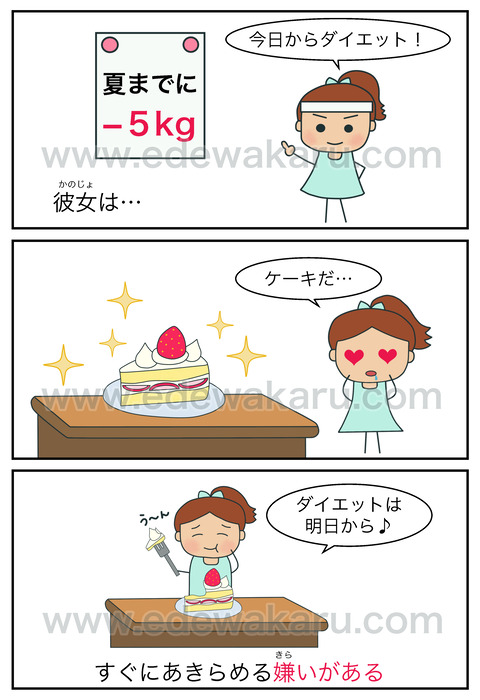
彼女はすぐにあきらめる嫌いがある
→彼女はすぐにあきらめるという傾向があるShe has a tendency to give up quickly. →She has a tendency to give up quickly.
うちの息子は野菜を食べない嫌いがある
→うちの息子は野菜を食べないという傾向があるMy son has a tendency not to eat vegetables. →My son has a tendency not to eat vegetables.
連休は事故がよく起きる嫌いがある
→連休は事故がよく起きるという傾向があるAccidents tend to happen often during long holidays. →Accidents tend to happen often during long holidays.
Read the original source text
Meaning
〜というよくない傾向がある
How to use it
動詞[辞書形]+嫌いがある
動詞[ない形]+嫌いがある
名詞[辞書形]+の嫌いがある
Explanation
「〜嫌いがある」は「〜というよくない傾向がある」「〜というよくない傾向が起こりやすい」という意味で使われる文型です
😊
いい傾向には使用できません
ので気をつけてください😨この文型は
自然現象には使うこともできません。
[例]
❌6月は雨が降る
嫌いがある
【
「雨が降る」のは自然現象】
「〜嫌いがある」は
書き言葉的
で、会話ではあまり使われません😅N1を受ける人はテスト用にしっかりと覚えておきましょう。
毎日のんびり日本語教師
How to use it
Noun + の + きらいがある
Verb dictionary form + きらいがある
Verb ない-form + きらいがある
Explanation
Indicates having an undesirable tendency or trait.
Here, “嫌い” means an undesirable tendency.
In most cases, it is used when describing a person’s personality or inner characteristics.
The similar pattern “【N3 Grammar】~がち” can be used when something happens frequently, but “~きらいがある” cannot.
Notes
Similar pattern: “【N3 Grammar】~がち”
In context 9 examples
彼は物事を独断で考えるきらいがある。(他思考事物有独断的倾向。)
He tends to think about things unilaterally.
現実を甘く見るきらいがある。(我有轻视现实的倾向。)
I tend to take reality too lightly.
今の子供は野菜をあまり食べないきらいがある。(现在的孩子有不太吃蔬菜的倾向。)
Children nowadays tend not to eat many vegetables.
苦労知らずな人ほど、他人を見下すきらいがある。
The less hardship people have known, the more they tend to look down on others.
小さいことからでも深く考えすぎるきらいがある。
I tend to overthink even small things.
彼は人の言うことを何でも信じてしまうきらいがある。
He tends to believe everything people tell him.
君は何でも頑張りすぎるきらいがあるから、そんな時は周りの人に頼ったらいい。
You tend to try too hard at everything, so at times like that, you should rely on the people around you.
自己評価が低すぎるきらいがあるが、それが彼の謙虚さに繋がっている。
He tends to have too low an opinion of himself, but that contributes to his humility.
Aさんは他人の言葉に過剰に反応するきらいがある。
Mr./Ms. A tends to overreact to other people’s words.
Read the original source text
How to use it
名詞+の+きらいがある
動辞形+きらいがある
動ない形+きらいがある
Explanation
良くない傾向や性質があることを表します。
ここでいう「嫌い」とは、良くない傾向のことです。
ほとんどの場合、人の性格や内面的な特徴について述べるときに使います。
似ている文型「【N3文法】~がち」はその回数が多いことに使えますが、「~きらいがある」は使えません。
Notes
似ている文型「【N3文法】~がち」