どんなときどう使う 日本語表現文型辞典
Meaning
be worth
How to use it
〔Plain form〕(na-adjective な・na-adjective である/Noun である)+だけの
Explanation
~に相当する
「~だけのN」の形で、「~に相当するNがある」と言いたいときの表現。
N corresponds to the action.
In context 2 examples
とうとう看護師の免許が取れた。この3年間努力しただけのかいはあった。
At last I got my nursing license. The effort I put in over these three years really paid off.
この本を買いたいが、5,000円払うだけの価値があるだろうか。
I want to buy this book, but is it worth paying 5,000 yen for?
Read the original source text
Meaning
be worth
How to use it
〔普通形〕(ナAな・ナAである/Nである)+だけの
Explanation
~に相当する
「~だけのN」の形で、「~に相当するNがある」と言いたいときの表現。
N corresponds to the action.
絵でわかる日本語
Meaning
enough to 〜
How to use it
Verb [dictionary form] + だけの + noun
Explanation
「AだけのB」 is a sentence pattern meaning “enough B to do A.” It is used to say that there is enough B to do A, or that there is not enough B to do A. A dictionary-form verb goes in 「A」, and a noun goes in 「B」.
Learn 「〜だけのN」 as one of the 「だけ」 series.
In context 5 examples
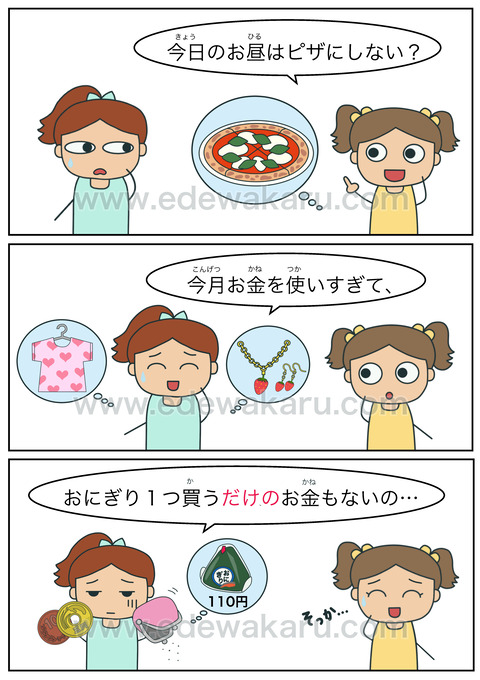
A:今日のランチはピザにしない?B:今月お金を使いすぎて、おにぎり1つ買うだけのお金もないの…
→おにぎり1つ買うのに十分なお金もないの…A: How about pizza for lunch today? B: I’ve spent too much money this month and don’t even have enough to buy one rice ball… →I don’t even have enough money to buy one rice ball…
彼女はアメリカで暮らすだけの英語力がある
→アメリカで暮らすのに十分な英語力があるShe has enough English ability to live in the United States. →She has enough English ability to live in the United States.
あの子はまだ9歳なのに、大学に合格するだけの知識を持っているらしい
→大学に合格するのに十分な知識を持っているらしいApparently, that child has enough knowledge to get into university, even though they’re only nine. →Apparently, they have enough knowledge to get into university.
私には部長の意見に反対するだけの勇気はありませんでした
→反対するのに十分な勇気はありませんでしたI didn’t have enough courage to oppose the department manager’s opinion. →I didn’t have enough courage to oppose it.
妻:今年こそ海外旅行に連れてってよ〜夫:ぼくには海外旅行するだけの語学力はないよ…
→海外旅行するのに十分な語学力はないよ…Wife: Take me on an overseas trip this year, for once~ Husband: I don’t have enough language ability to travel abroad… →I don’t have enough language ability to travel abroad…
Read the original source text
Meaning
〜するのに十分な
How to use it
動詞[辞書形]+だけの+名詞
Explanation
「AだけのB」は「Aするのに十分なB」という意味の文型です。「Aするための十分なBがある」「Aするための十分なBがない」と言いたい時に使われます。「A」には動詞の辞書形が入り、「B」には名詞が入ります。
「〜だけのN」は「だけ」シリーズの1つとして覚えておきましょう。
毎日のんびり日本語教師
Meaning
The amount or ability needed to do something
How to use it
Verb dictionary form + だけの + noun
Explanation
Expresses the amount of something or the degree of ability needed to do something.
“Verb A + だけの + noun B” means “B needed to do A.”
Notes
The 「だけ」series
In context 8 examples
彼女のわがままを全て聞いてあげるだけの包容力は私にはない。
I don't have enough tolerance to indulge all of her selfish demands.
彼はプロチームでも何とかギリギリやっていけるだけの技術はあるが、大成はしないだろう。
He has enough skill to just barely get by even on a professional team, but he probably won't make it big.
先輩にも上司にも恐れず物を言えるだけの度胸がある人間になりたい。
I want to become someone with enough courage to speak my mind without fearing even my seniors or bosses.
神様、勇気をください。彼に話しかけることができるだけの勇気を。
God, please give me courage—the courage I need to be able to talk to him.
今の会社ではギリギリ生活ができるだけの給料しかもらえない。(现在的公司只能挣尽可能多的工资。)
At my current company, I only get paid enough to just barely make a living.
自由気ままに生きられるだけのお金が欲しい。(我想要能够自由自在生活的钱。)
I want enough money to live freely as I please.
私には自分で自分の未来を切り開くだけの力がない。
I don't have the ability to carve out my own future.
重責を担うだけの能力が無い人間が人の上に立ってはいけない。
A person without the ability to shoulder great responsibility should not be in a position of authority over others.
Read the original source text
Meaning
~するために必要な~
How to use it
動辞形+だけの+名詞
Explanation
何かをするために必要な物の量や能力の程度を表します。
「動詞Aだけの名詞B」で「Aをするために必要なB」という意味になります。
Notes
「だけ」シリーズ