絵でわかる日本語
Usage 1
Read this source entry ↗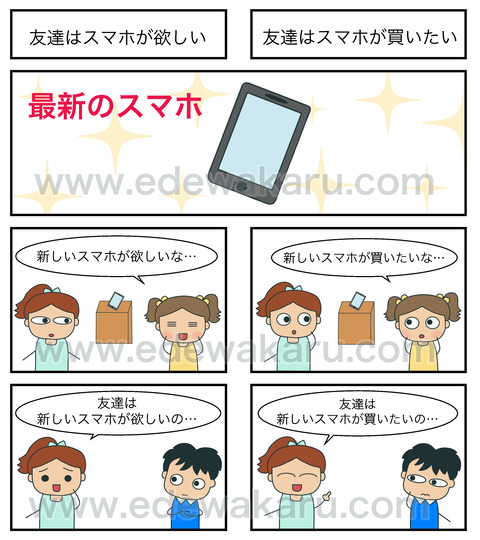
How to use it
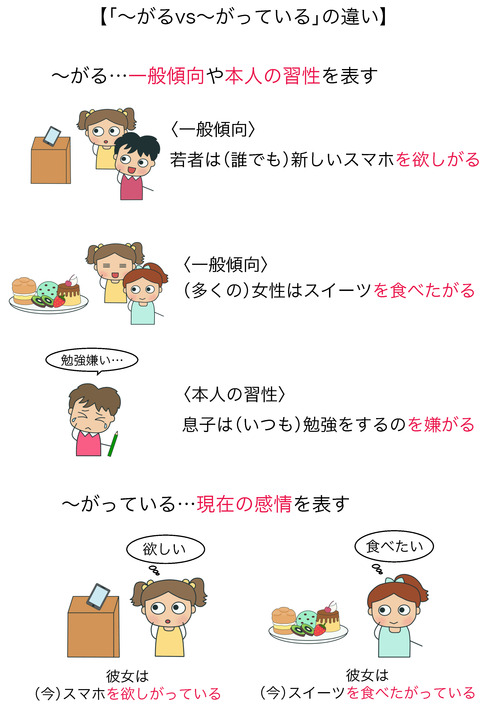
〜欲しい → 〜欲しがる (to seem to want)・〜欲しがっている (to seem to be wanting)
〜たい → 〜たがる (to seem to want to)・〜たがっている (to seem to be wanting to)
This is N4-level grammar for the Japanese Language Proficiency Test, but it is very important and is often used in conversation.
Please learn it well too so you can use it skillfully 😊
Read the original source text
How to use it
〜欲しい→
〜欲しがる
・
〜欲しがっている
〜たい→
〜たがる
・
〜たがっている
これは日本語能力検定N4レベルの文法ですが、とても重要で会話でもよく使用されます。
みなさんもしっかり覚えて上手に使えるようになってくださいね 😊
Usage 3
Read this source entry ↗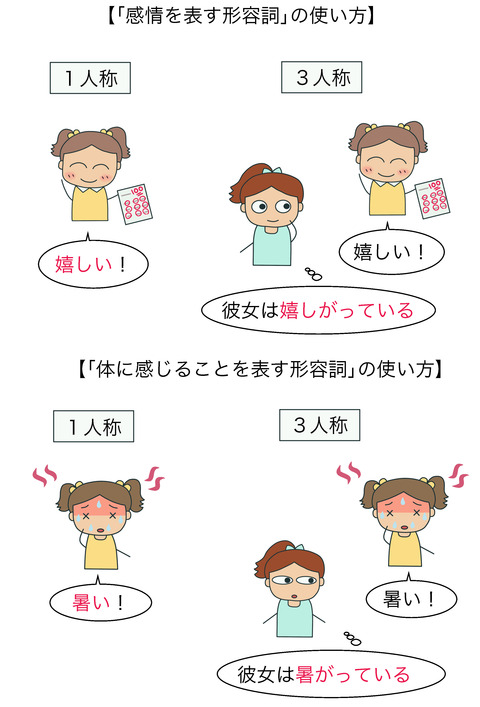
How to use it
Adjective stem: [ーい] [ーな] + がる・がっている
(Examples: 悲しい → 悲しがる (to seem sad)・残念な → 残念がる (to seem disappointed)・痛い → 痛がる (to seem to be in pain))
In addition to using “〜がる・〜がっている,” you can use “〜ようだ” (inference based on the five senses) and “〜そうだ” (appearance/visual inference) to use “〜欲しい・〜たい,” adjectives expressing emotions, and adjectives expressing bodily sensations in the third person 😉
“〜ようだ・〜そうだ” are also among the difficult beginner-level grammar points, so it would be good to review them carefully 😊
Read the original source text
How to use it
形容詞語幹:[ーい][ーな]+がる・がっている
(例:悲しい→
悲しがる
・残念な→
残念がる
・痛い→
痛がる)
「〜がる・〜がっている」を使うほかに「
〜ようだ
(五感推量)・
〜そうだ
(様態・視覚推量)」を使用すると、3人称に「〜欲しい・〜たい」「感情を表す形容詞」「体に感じることを表す形容詞」を使うことができます😉
「〜ようだ・〜そうだ」も難しい初級文法の1つですので、しっかり復習できるといいですね😊
NINJAL 日本語文型データベース
Meaning
Expresses that someone other than the speaker appears to have a particular feeling, impression, or desire.
How to use it
Notes
“〜” is followed by adjectives expressing feelings or impressions, or by “〜たい・〜ほしい・〜てほしい,” which express desire or wishes.
It conjugates like a verb.
Since it implicitly indicates that another person’s desire or feelings can be observed by others, using it about someone above you in status can sometimes be rude.
In context 11 examples
選手たちは、決勝に進めなかったので、すごく悔しがっている。
The athletes are very frustrated that they couldn’t advance to the final.
子どものようにかわいがっていたペットのラブちゃんが死んでしまって、母は寂しがっています。
Our beloved pet Rab-chan, whom we cherished like a child, died, and my mother is lonely.
娘は犬を飼いたがっていますが、うちはマンションだから買えないんです。
My daughter wants to have a dog, but we live in an apartment building, so we can’t get one.
「夏休みはどうするんですか」「家族が北海道に行きたがっているんで、行ってくるよ。佐藤さんはどうするの?」
“What are you doing for summer vacation?” “My family wants to go to Hokkaido, so I’m going there. What about you, Mr. Sato?”
あんなにゴルフをしたがっていた夫なのに、さすがの猛暑でゴルフの「ゴ」の字も言わなくなった。
My husband had wanted to play golf so much, but even he has stopped mentioning golf at all in this extreme heat.
今度中学生になる子どもがスマホをほしがっている。そろそろ持たせてもいいだろうか。
My child, who is about to start middle school, wants a smartphone. I wonder if it’s about time to let them have one.
「ほら、犬が遊んでほしがっているよ。おもちゃを持ってきた」
“Look, the dog wants someone to play with it. I brought a toy.”
息子は私が友達関係のことに口出しするのを嫌がっています。
My son doesn’t like me interfering in his friendships.
夜空の月を見上げて歩きながら、子どもが「どうしてお月様はどこまでもついてくるの?」と、不思議がっている。
As the child walked along looking up at the moon in the night sky, they wondered, “Why does the moon follow me wherever I go?”
「ああ、今年はいよいよ就職活動か……」「不安がっていても仕方がないよ。やれることをやるしかないだろう」
“Ah, it’s finally time to start job hunting this year…” “There’s no point worrying. We just have to do what we can.”
うちの子は前は授業のノートを書くのを面倒がっていたけど、最近はきちんと書いている。
My child used to think writing notes in class was a hassle, but lately they’ve been writing them properly.
Read the original source text
Meaning
話し手以外の人が〜という感情・感想・欲求を持っている様子であることを表します。
How to use it
Notes
「〜」には、感情・感想を表す形容詞や、欲求・願望を表す「〜たい・〜ほしい・〜てほしい」がきます。
動詞と同じ形に変化します。
欲求や感情が他者から観察できるものであることを暗に示すので、目上の人について使うと失礼になることがあります。