くらべてわかる日本語表現文型辞典
Meaning
Meaning 1: Taking X as an example, everything about X is B.
Meaning 2: Considering A, one can infer B. A is an attribute of B.
How to use it
(X is) A からして B
[noun with no particle] からして
Explanation
[Contrast 2]
「A からすると B」 (Meaning 1, p. 68)
A in 「A からして B」 is an attribute of B, whereas A in 「A からすると B」 is a basis for arriving at B.
○彼の考え方からするとこの理論は正しいということになる。 — From his way of thinking, it follows that this theory is correct.
×彼の考え方からしてこの理論は正しいということになる。 — His way of thinking is such that this theory is correct.
Notes
[Note 1]
・It is also used to describe the degree of X, rather than saying that “all of X is B.”
○彼の家は犬小屋からして冷暖房完備だ。(それほど金持ちだ) — Even his doghouse is fully air-conditioned. (He is that rich.)
In context 8 examples
あの人は目付きからして怪しい。
That person looks suspicious just from his expression.
最近の若者は言葉遣いからしてなっていない。
The way young people talk these days is unacceptable from the outset.
この会社は会社案内からしてユニークだ。
This company is unique, starting with its company brochure.
あの店の料理はソースからして違う。
The food at that restaurant is different, starting with the sauce.
この手紙は筆跡からして彼が書いたものに違いない。
Judging from the handwriting, this letter must have been written by him.
「どの人が社長でしょうか?」
「私も知らないんですが、服装からして彼ではないでしょうか。」“Which person is the company president?” “I don’t know either, but judging from his clothes, could it be him?”
よくわからないが、話し声からして隣の部屋にいるのは課長らしい。
I’m not sure, but judging from the voice, it seems the section chief is in the next room.
彼はアクセントからして、東北出身ではないだろう。
Judging from his accent, he probably isn’t from Tohoku.
Read the original source text
Meaning
意味1:XはAを例としてすべてBである。
意味2:Aという面から想像するとBという推測ができる。AはBの属性である。
How to use it
(Xは)AからしてB
[名詞-∅]からして
Explanation
【対比2】
「AからするとB」(意味1 P.68)
「AからしてB」のAはBの属性であるが、「AからするとB」のAはBを導き出す判断材料である。
○彼の考え方からするとこの理論は正しいということになる。
×彼の考え方からしてこの理論は正しいということになる。
Notes
【注意1】
・「XがすべてB」ではなく、Xの程度を言いたい時にも使う。
○彼の家は犬小屋からして冷暖房完備だ。(それほど金持ちだ)
DoJG 日本語文法辞典(全集)
Meaning
Even; judging from
How to use it
Noun | からして | |
| 大統領からして | Even the president |
| 外見からして | Judging from the outward appearance |
Explanation
A phrase that singles out something for emphasis or presents something as a basis for judgment.
In context 7 examples
社長からして会社再建の意欲がないんだから、社員の志気が上がらないのは当たり前だ。
Even the president has no desire to reconstruct the company; so, of course, his employees' morale is low.
あの日本語の話し方からして彼は日本に行ったことがあるに違いない。
Judging from the way he speaks Japanese, he must have been to Japan.
あの男は歩き方からして他の人と違う。
Even in the way he walks, he is different from other people.
プロの銀行員からして、初歩的な経済の分析に必要な数学に弱い。
Even professional bankers are weak in the math necessary for elementary economic analysis.
週末の彼女とのデートでは、待ち合わせの場所からして間違えてしまった。
When I went out on a date with her last weekend, I even got the meeting place wrong.
沈没した原子力潜水艦を引き揚げるのは、その大きさからして技術的な限界に近い。
Judging from its size, pulling up the sunken atomic submarine will be next to impossible technologically.
「車は走る凶器」「飲んだら乗るな」の掛け声も、事故の実態からして死語同然となっている。
Judging from the reality of car accidents, slogans like ""A car is a running weapon,"" and ""Don't drink and drive"" are just empty (literally: dead) words.
日本語文型辞典
Meaning
Used to give an extreme or typical example and convey the feeling that “if even that is so, then needless to say, the same applies to the others.” Often carries a negative evaluation. Also said as にしてからが.
Indicates a basis for judgment. Also expressed as からすると, からみて, or からいって.
How to use it
Nからして【example】
Nからして【grounds】
In context 8 examples
リーダーからしてやる気がないのだから、ほかの人たちがやるはずがない。
If even the leader has no motivation, there’s no way the others will do it.
課長からして事態を把握していないのだからヒラの社員によくわからないのも無理はない。
If even the section chief doesn’t understand the situation, it’s no wonder rank-and-file employees don’t understand it well.
ほら、その君の言い方からして、外国人に対する偏見が感じられるよ。
Look, even the way you put that shows your prejudice against foreigners.
君はいろいろ言うが、まずこの問題には自分はまったく責任がないと信じ込んでいることからして私には理解しかねる。
You say all kinds of things, but I can’t understand the fact that you’re convinced you have absolutely no responsibility for this matter in the first place.
あの言い方からして、私はあの人にきらわれているようだ。
Judging from the way that person spoke, it seems they dislike me.
あの態度からして、彼女は引き下がる気はまったくないようだ。
Judging from that attitude, she seems to have absolutely no intention of backing down.
あの口ぶりからして、彼はもうその話を知っているようだな。
Judging from the way he spoke, it seems he already knows that story.
あの人の性格からして、そんなことで納得するはずがないよ。
Given that person’s personality, there’s no way they would be satisfied with something like that.
Read the original source text
Meaning
極端な例や典型的な例を示して、「それでさえそうなのだから、ましてほかのものは言うまでもない」という気持ちを表すのに用いる。マイナス評価が多い。「にしてからが」とも言う。
判断の手がかりを表す。「からすると」「からみて」「からいって」などとも言う。
How to use it
Nからして【例示】
Nからして【根拠】
絵でわかる日本語
Usage 1
Read this source entry ↗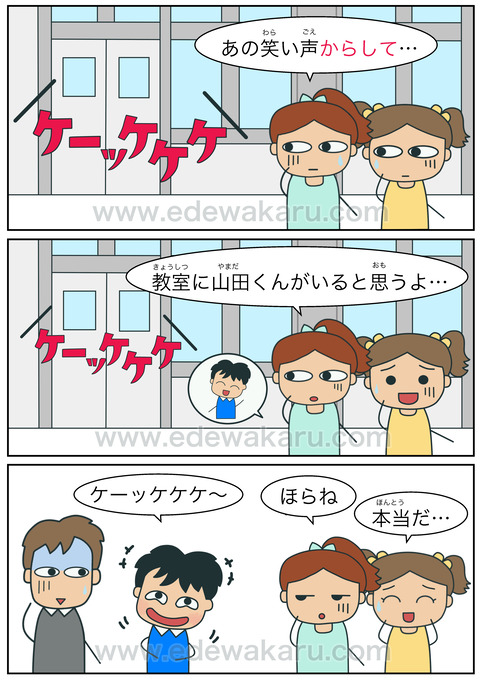
Meaning
Judging from ~, ~.
How to use it
Noun [dictionary form] + からして
Explanation
「〜からして」 means “judging from ~.” This pattern is often used with expressions of conjecture, supposition, and judgment.
[Patterns often used with 「〜からして」]
・〜からして+
〜そうだ
・〜からして+
〜だろう・〜でしょう
・〜からして+
〜に違いない
・〜からして+
〜と思う
etc.
「〜からして」 also has a use giving examples, so learn that as well 😀
In context 5 examples
あの笑い声からして、教室に山田くんがいると思うよ
→あの笑い声から判断すると、教室に山田くんがいると思うよJudging from that laughter, I think Yamada-kun is in the classroom. →Judging from that laughter, I think Yamada-kun is in the classroom.
この本はタイトルからして難しそうだ
→この本はタイトルから判断して、難しそうだと感じるJudging from the title, this book seems difficult. →Judging from the title, I get the feeling it’s difficult.
服装からして、彼女はセレブに違いない
→服装から判断して、彼女はおセレブに違いない(復習:)(復習:〜に違いない)Judging from her clothes, she must be a celebrity. →Judging from her clothes, she must be a real celebrity (review:)(review: “must be” 「〜に違いない」).
あの先生は、話し方からして厳しそうだ
→話し方から判断して、厳しそうだと感じるJudging from the way that teacher speaks, they seem strict. →Judging from the way they speak, I get the feeling they’re strict.
あの様子からして、彼女はN1に合格したんだと思うよ
→あの様子から判断すると、彼女はN1に合格したんだと思うよJudging from her demeanor, I think she passed N1. →Judging from her demeanor, I think she passed N1.
Read the original source text
Meaning
〜から判断すると〜だ
How to use it
名詞[辞書形]+からして
Explanation
「〜からして」は「〜から判断すると〜」という意味を表す文型です。この文型は
【推量・推測】【判断】
などを表す文型とよく使われます。
[「〜からして」とよく使われる文型]
・〜からして+
〜そうだ
・〜からして+
〜だろう・〜でしょう
・〜からして+
〜に違いない
・〜からして+
〜と思う
など
「〜からして」には
【例示】
を表すものもありますので、一緒に覚えておきましょう😀
Usage 2
Read this source entry ↗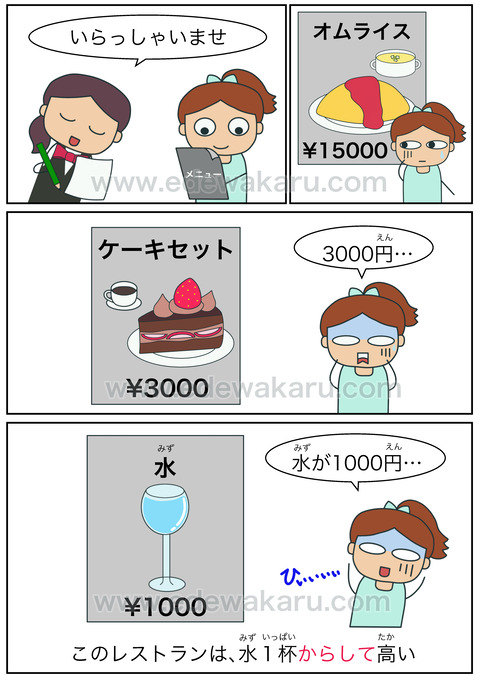
Meaning
Even ~ is ~, so the others are ~ too.
How to use it
Noun [dictionary form] + からして
Explanation
「Aからして」 means “even A is ~, so the others are of course ~ too.” A is something basic, minimal, relatively unimportant, or small. It is used when you want to say, “Even basic A is ~, so everything beyond that is of course ~ too.”
[Examples]
① This restaurant is expensive even for one glass of water
からして
→Even one glass of water is expensive, so the food and desserts are of course expensive too.
② The bread here smells delicious
からして
→It smells delicious even just from the smell, so of course it’ll taste good when you eat it.
③ English is really difficult even in terms of pronunciation
からして
→Even the basic pronunciation is difficult, so grammar and conversation are of course difficult too.
(Review: 「〜など・〜なんか・〜なんて」)
④ I dislike her even based on the way she talks
からして
→I dislike even the way she talks, so of course I dislike her personality and attitude too.
⑤ He can’t even manage a greeting properly
からして
→He can’t even manage a greeting properly, so of course he can’t do his job properly either.
「〜からして」 also has a use expressing judgment, so learn that as well 😀
In context 5 examples
このレストランは、水1杯からして高い
This restaurant is expensive even for one glass of water.
ここのパンは、においからしておいしそうだ
The bread here smells delicious.
英語は発音からしてすごく難しい
English is really difficult even in terms of pronunciation.
彼女の話し方からして嫌いだ
I dislike her just from the way she talks.
彼は、あいさつからしてちゃんとできない
He can’t even manage a greeting properly.
Read the original source text
Meaning
〜も〜だから、他も〜
How to use it
名詞[辞書形]+からして
Explanation
「Aからして」は「Aも〜だから、他はもちろん〜」という意味を表す文型です。「A」には
[一番基本的なもの][最低限のもの][あまり重要ではないもの][小さいもの]
などが入り、「基本的なAも〜だから、それ以外はもちろん〜」と言いたい時に使われます。
[例]
①このレストランは、水1杯
からして
高い
→水1杯で
も
高い
から、
料理やデザート
はもちろん
高い
②ここのパンは、におい
からして
おいしそうだ
→におい
だけでも
おいしそうだと感じる
から、
食べたら
もちろん
おいしいだろう
③英語は発音
からして
すごく難しい
→基本的な発音
も
難しい
から、
文法や会話など
はもちろん
難しい
(復習:〜など・〜なんか・〜なんて)
④彼女の話し方
からして
嫌いだ
→彼女の話し方
も
嫌いだ
から、
性格や態度
はもちろん
嫌いだ
⑤彼は、あいさつ
からして
ちゃんとできない
→あいさつ
も
ちゃんとできない
から、
仕事
はもちろん
ちゃんとできない
「〜からして」には
【判断】
を表すものもありますので、一緒に覚えておきましょう😀
どんなときどう使う 日本語表現文型辞典
Meaning
even
How to use it
N+からして (starting with; judging by)
Explanation
第一の例をあげれば
最も基本的なことや、普通はあまり問題にならないことを取り上げ、「~さえそうなのだからほかのことも…」と言いたいときに使う。マイナスに評価することが多い。
Takes up issues that are most fundamental or not normally problematic (even … is such, so of course everything else is…). Often used in negative appraisals.
In context 3 examples
この職場には時間を守らない人が多い。所長からしてよく遅刻する。
Many people at this workplace don't keep to time. The director himself is often late.
この地方の習慣はわたしのふるさとの習慣とはずいぶん違っている。第一、毎日の食べ物からして違う。
The customs of this region are quite different from those of my hometown. To begin with, even the daily food is different.
この店の雰囲気は好きになれない。まず、流れている音楽からしてわたしの好みではない。
I can't bring myself to like the atmosphere of this shop. For one thing, even the music playing isn't to my taste.
Read the original source text
Meaning
even
How to use it
N+からして
Explanation
第一の例をあげれば
最も基本的なことや、普通はあまり問題にならないことを取り上げ、「~さえそうなのだからほかのことも…」と言いたいときに使う。マイナスに評価することが多い。
Takes up issues that are most fundamental or not normally problematic (even … is such, so of course everything else is…). Often used in negative appraisals.
日本語NET JLPT文法解説まとめ
Meaning
① Used to give one example and say that since that example is ~, other things must also be ~.
② Judging from ~
How to use it
Noun + からして
Explanation
① Used when giving one example and asserting that since that example is ~, others are also ~.
② Judging from ~
Often gives a negative evaluation.
Often gives negative ratings.
In context 4 examples
この家は玄関からして立派だ。きっと、お金持ちが住んでいるんだろう。
Even the entrance to this house is impressive. A rich person must live here.
この本はタイトルからしてつまらなさそうだ。
Even from the title, this book looks boring.
彼は言葉遣いからして生意気だ。
He seems cheeky just from the way he speaks.
新しい先生は顔つきからして怖そうだ。
The new teacher looks scary just from their facial expression.
Read the original source text
Meaning
①1つの例を出して、その例が~なのだから、他も~であると言いたい時に使う。
②〜から判断して
How to use it
N + からして
Explanation
① Used when giving one example and asserting that since that example is ~, others are also ~.
② Judging from ~
マイナスの評価をすることが多い。
Often gives negative ratings.
毎日のんびり日本語教師
How to use it
Noun + からして
Explanation
This grammar looks at one particular element or example to understand the overall situation.
The preceding clause describes something that first catches one's eye or that one notices.
Notes
Nothing in particular.
In context 10 examples
声とかからしてめっちゃモテそう。(听声音好像很受欢迎。)
Even from their voice and things like that, they seem really popular. (Just from hearing their voice, they seem popular.)
彼は服装からして独特だ。
His clothes alone make him seem distinctive.
名前からして面白そうな映画だ。
Even the title makes it seem like an interesting movie.
彼女は雰囲気からして天使みたいな女の子だった。(她散发着天使一样的气息。)
Just from her atmosphere, she seemed like an angelic girl. (She gave off an angel-like aura.)
サイコロで100回連続6を出すのは、確率に支配されたこの世界の仕組みからしてまず実現しないはずだ。()
Given how this world is governed by probability, rolling six a hundred times in a row with a die should be virtually impossible. ()
横浜流星。名前の響きからしてカッコいい。
Ryusei Yokohama. Even the sound of his name is cool.
オリンピック選手と私たちは体のつくりからして違う。
Olympic athletes are different from us even in their physical makeup.
この香水は香りからして他と全然違うのが素人でも分かる。
Even an amateur can tell from the scent alone that this perfume is completely different from the others.
試合前だが、彼のその表情からしてすでに負けは決まっているようなものだ。
The match hasn't started yet, but from that expression of his, it is as good as decided that he has already lost.
その目つきの悪さからしてまともではないことが分かる。生き方や性格は目に表れるものだ。
You can tell from that nasty look in his eyes alone that he isn't decent. A person's way of life and personality show in their eyes.
Read the original source text
How to use it
名詞+からして
Explanation
ある一部分の要素や事例を見て、全体の状況を捉える文法です。
前件ではまず目につくもの、気づいたものについて述べます。
Notes
特になし
日本語文型辞典 英語版
Meaning
Used to present an extreme or typical example and expresses the feeling that “if something is so, then of course other things will also be so.” Often used in negative evaluations. にしてからが can also be used.
Expresses a basis from which to make a judgment. からすると, からみて, からいって are also used to express a similar meaning.
How to use it
1. Nからして〈example〉
2. Nからして〈basis〉
In context 8 examples
リーダーからしてやる気がないのだから、ほかの人たちがやるはずがない。
If the leader doesn’t have motivation, you can’t expect other people to do anything.
課長からして事態を把握していないのだからヒラの社員によくわからないのも無理はない。
If the section chief doesn’t grasp the situation, it’s easy to guess that ordinary employees don’t understand what’s happening either.
ほら、その君の言い方からして、外国人に対する偏見が感じられるよ。
Look, even the way you talk makes me feel your prejudice against people from other countries.
君はいろいろ言うが、まずこの問題には自分はまったく責任がないと信じ込んでいることからして私には理解しかねる。
You say many things about this, but, in the first place, I can’t understand why you believe that you don’t have any responsibility at all.
あの言い方からして、私はあの人にきらわれているようだ。
From the way he spoke, he really seems to dislike me.
あの態度からして、彼女は引き下がる気はまったくないようだ。
From her attitude, she doesn’t intend to back down at all.
あの口ぶりからして、彼はもうその話を知っているようだな。
Judging from the way he talks, he already seems to know about what was said.
あの人の性格からして、そんなことで納得するはずがないよ。
Judging from her character, there’s no way she could be persuaded.
Read the original source text
Meaning
Used to present an extreme or typical example and expresses the feeling that “if something is so, then of course other things will also be so.” Often used in negative evaluations. にしてからが can also be used.
Expresses a basis from which to make a judgment. からすると, からみて, からいって are also used to express a similar meaning.
How to use it
1. Nからして〈example〉
2. Nからして〈basis〉
AIUEO JLPT Grammar
Meaning
This sentence pattern is used when the speaker gives a specific example or element to support a judgment or evaluation about the whole.
How to use it
Noun + から + して
In context 5 examples
あのレストランは、サービスからして良くない。
That restaurant is not good, even judging by the service alone.
この映画は、タイトルからして面白そうだ。
This movie seems interesting just from the title.
彼の発言からして、彼がこの問題を理解していないことが明らかだ。
Judging from his statements, it’s clear that he doesn’t understand this issue.
彼女の表情からして、今日はあまり元気がないようだ。
Judging from her expression, she doesn’t seem very energetic today.
この建物は、外観からしてかなり古いようだ。
Judging from its appearance, this building seems quite old.
Read the original source text
Meaning
This sentence pattern is used when the speaker gives a specific example or element to support a judgment or evaluation about the whole.
How to use it
名詞から+して
Explanation · 日本語
この文型は、ある特定の例や要素を挙げ、それを根拠にして全体について判断や評価を述べる表現です。
文法
Meaning
① Used to give one example and say that since that example is ~, other things must also be ~.
② Judging from ~
How to use it
Noun + からして
Notes
It is often used to give a negative evaluation.
In context 4 examples
この家は玄関からして立派だ。きっと、お金持ちが住んでいるんだろう。
Even the entrance to this house is impressive. A rich person must live here.
この本はタイトルからしてつまらなさそうだ。
Even from the title, this book looks boring.
彼は言葉遣いからして生意気だ。
He seems cheeky just from the way he speaks.
新しい先生は顔つきからして怖そうだ。
The new teacher looks scary just from their facial expression.
Read the original source text
Meaning
①1つの例を出して、その例が~なのだから、他も~であると言いたい時に使う。
②〜から判断して
How to use it
N + からして
Notes
マイナスの評価をすることが多い。
Bunpro Grammar Reference
Meaning
Even..., Judging from, Based on
How to use it
Noun + からして
Nuance
A phrase used when the speaker goes from (A), before giving their preformed opinion about it.
Explanation
からして is a combination of the conjunction particle から 'from', and the て-form of する. It is used to express when the speaker is making a partially objective opinion about (A). This frequently comes across as 'judging from (A)', or 'based on (A)'. The literal meaning is 'going from (A), (B)'. This simply highlights that (A) is the only information or method available from which an assessment can be made, so 'going from that information, (B) can be said', or 'going with that method, (B) can be said'.
からして will appear directly after the noun which indicates either the method or information from which a judgment will then be made.
彼の性格からして、彼と一緒に住むことは無理だろう。
Based on his personality, it is probably impossible for me to live with him.
値段からして、このお店は新鮮な食材を使っているに違いない。
Based on the price, this restaurant must be using fresh ingredients.
このゲームは名前からしてつまらなそうだ。
Judging from the name, this game seems boring.
As からして is partially objective, this just means that the speaker does not have the full information available to say anything with certainty, and is therefore making a guess about (A) based purely on what appears to be true. Due to this, からして sentences often have the nuance of 'from the available piece of information about (A), (B) is likely the whole picture'.
In context 15 examples
- このスープは匂いからして美味しそうだ。
Judging from this soup's smell, it seems delicious.
- このゲームは名前からしてつまらなそうだ。
Judging from the name, this game seems boring.
- 彼の性格からして、彼と一緒に住むことは無理だろう。
Based on his personality, it is probably impossible for me to live with him.
- 値段からして、このお店は新鮮な食材を使っているに違いない。
Based on the price, this restaurant must be using fresh ingredients.
- あの演奏からして、彼は楽器のプロだ。
Judging from that performance, he is a professional with that instrument.
- 私の感覚からして、このスイカは甘いと思う。
Judging from my intuition, I think this watermelon is sweet.
- あの看板からして、店の中もきっとオシャレなのだろう。
Judging from that signboard, surely the inside of that store is also fashionable.
- 稽古の内容からして、あの先生は厳しそうだ。
Judging from the contents of their training, that teacher seems strict.
- 彼女は服装からして若そうだが、実は50歳だ。
Judging from her attire, she looks young, but actually, she is 50 years old.
- カロリーからして、このお菓子を全部食べたら必ず太りますよ。
Judging from the calories, if you eat all of these snacks, you will definitely get fat.
- みんなの感想からして、この商品は良いものだと思います。
Judging from everyone's impressions, I think that this is a good product.
- 行列からして、あのラーメン屋は美味しいに違いない。
Judging from the line, there is no doubt that that ramen shop is delicious.
- 私の給料からして一軒家を買うことは難しいだろう。
Based on my salary, buying a house would be difficult, wouldn't it. (judging from)
- 血圧からして、精密検査を受けた方がいいと思います。
Judging from your blood pressure, I think it would be better if you underwent a thorough examination.
- 原料からして、あまり栄養がなさそうだと分かる。
Judging from the ingredients, it seems like it doesn't really have any nutritional value.
Read the original source text
Meaning
Even..., Judging from, Based on
How to use it
Noun + からして
Nuance
A phrase used when the speaker goes from (A), before giving their preformed opinion about it.
Explanation
からして is a combination of the conjunction particle から 'from', and the て-form of する. It is used to express when the speaker is making a partially objective opinion about (A). This frequently comes across as 'judging from (A)', or 'based on (A)'. The literal meaning is 'going from (A), (B)'. This simply highlights that (A) is the only information or method available from which an assessment can be made, so 'going from that information, (B) can be said', or 'going with that method, (B) can be said'.
からして will appear directly after the noun which indicates either the method or information from which a judgment will then be made.
彼の性格からして、彼と一緒に住むことは無理だろう。
Based on his personality, it is probably impossible for me to live with him.
値段からして、このお店は新鮮な食材を使っているに違いない。
Based on the price, this restaurant must be using fresh ingredients.
このゲームは名前からしてつまらなそうだ。
Judging from the name, this game seems boring.
As からして is partially objective, this just means that the speaker does not have the full information available to say anything with certainty, and is therefore making a guess about (A) based purely on what appears to be true. Due to this, からして sentences often have the nuance of 'from the available piece of information about (A), (B) is likely the whole picture'.
Nuance · 日本語
話し手が(A)の視点に合わせて、自分の意見を言う時に使われる表現。
Explanation · 日本語
「からして」は接続助詞の「から」と「する」のテ形の組み合わせです。これは、話し手が (A) に関して限られた情報をもとに意見を述べるときに使われる表現で、「(A) から判断すると」や「(A) に基づくと」というような意味で使われます。
文字通りの意味は「(A) を起点にして (B)」ですが、これは (A) が判断に使える唯一の情報や方法であり、それをもとに (B) が言えるということを表しています。
「からして」は名詞の後に直接置かれます。この名詞は、話し手が何らかの判断や評価をするための方法や情報を指すものになります。
彼の性格からして、彼と一緒に住むことは無理だろう。
Based on his personality, it is probably impossible for me to live with him.
値段からして、このお店は新鮮な食材を使っているに違いない。
Based on the price, this restaurant must be using fresh ingredients.
このゲームは名前からしてつまらなそうだ。
Judging from the name, this game seems boring.
「からして」は、話し手が (A) に関する全ての情報を持っているわけではなく、手に入る情報の範囲内で推測をしていることを表します。そのため、「からして」を使った文は、部分的に客観的であり、「(A) という一部の情報から考えると、全体としては (B) だと言える」というようなニュアンスが含まれることが多いです。
NINJAL 日本語文型データベース
Usage 1
Meaning
This is used when you take up one criterion for judgment and want to say that the whole is the same.
How to use it
Nからして
Notes
The “〜” slot takes something that serves as a basic viewpoint for evaluation. A sentence expressing the speaker's judgment or impression often follows 「~からして」.
In context 5 examples
ジュンの料理の腕はプロ級だ。野菜の切り方からして私とは違う。
Jun's cooking skills are professional level. Even the way he cuts vegetables is different from mine.
先輩からして試合の日程をしっかり把握できていないのだから、後輩たちがわからなくてもしょうがない。
If even the senior members can't properly keep track of the match schedule, it's no wonder the junior members don't know it.
こんな、タイトルからして難しそうな本を読む気にはなれない。
I don't feel like reading a book like this, whose title alone makes it seem difficult.
小林さんのお宅はとにかくユニークだ。玄関の形からして斬新で人目を引く。
The Kobayashis' house is unique in every way. Even the shape of the entrance is novel and eye-catching.
部長は派手好きだ。シャツの色からしてそうだ。
The department head likes flashy things. You can tell even from the color of his shirt.
Read the original source text
Meaning
判断基準となる~を取り上げ、全体も同様だと言いたいときに使います。
How to use it
Nからして
Notes
「~」には、評価の基礎的な観点になることがきます。「~からして」の後には、話し手の判断や感想を表す文がくることが多いです。
Usage 2
Meaning
This is used when you want to say that an evaluation or judgment is based on a certain viewpoint or grounds. It is a way of speaking without paying particular attention to the existence of other viewpoints.
How to use it
Nからして
Notes
The “〜” slot takes a word indicating the viewpoint or grounds for judgment. After 「〜からして」 comes a sentence expressing a judgment, impression, evaluation, opinion, or inference.
In context 4 examples
「症状からして、インフルエンザではないかと思います。検査してみましょう」
“Judging from the symptoms, I think it might be influenza. Let's run a test.”
店員さん、いないかな。服装からして、あそこにいる人は、店員ではなさそうだけど。
I wonder if there's a store clerk around. Judging from their clothes, the person over there doesn't seem to be one.
我が家の経済状況からして、数年内に新築物件を購入するのは難しい。
Given our household's financial situation, it would be difficult to buy a newly built home within the next few years.
このプロジェクトの趣旨からして、地域住民の生活環境の向上を目指すという方向性は妥当である。
Given the purpose of this project, aiming to improve the living environment of local residents is an appropriate direction.
Read the original source text
Meaning
~に視点をおいた、または〜を根拠にした評価・判断であると言いたいときに使います。別の観点があることは特に意識しないで述べる言い方です。
How to use it
Nからして
Notes
「~」には判断の視点・根拠を表す言葉がきます。「〜からして」の後には、判断・感想・評価・意見・推測などの文がきます。