絵でわかる日本語
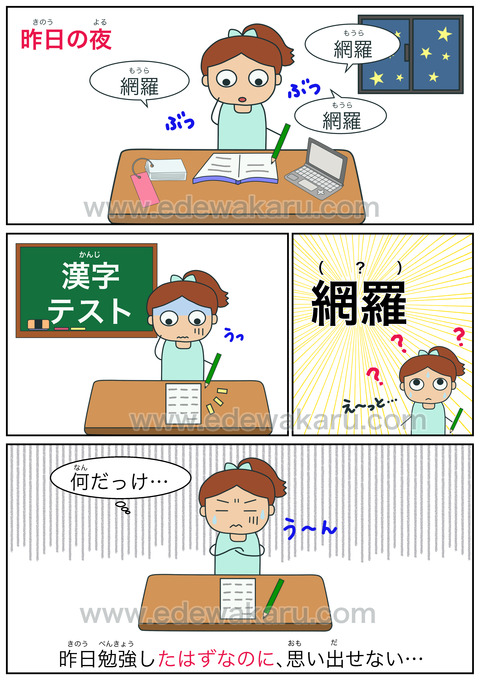
Meaning
I was sure I had 〜, but I hadn’t.
Even though I was sure I had 〜, I haven’t.
How to use it
Verb [た-form] + はず
Verb [た-form] + はずの + noun
Explanation
“〜たはずだが〜・〜たはずなのに〜” is a sentence pattern meaning “I was sure I had done ~, but I hadn’t.” It is used when you thought “I definitely did ~,” but it turned out to be different, and expresses the speaker’s feeling of “That’s strange… I definitely did ~…” 😊
[Examples]
①昨日勉強し
たはずなのに
思い出せない…
→That’s strange… I studied yesterday, but I can’t remember…
②スマホをバッグに入れ
たはずなのに、入っていなかった
→I was sure I had put my smartphone in my bag, but it wasn’t in there.
③出かける前に電気を切っ
たはずなのに、帰ったらついていた
→I was sure I had turned off the lights before going out, but they were on when I got home.
④初級で習っ
たはずの
文法な
のに、なかなかうまく使えない
→It’s grammar I learned at the beginner level, but I just can’t use it very well.
⑤寝る前にドアを閉め
たはずなのに、起きたら開いていたの…
→I was sure I had closed the door before going to bed, but it was open when I woke up.
There are several sentence patterns with “はず,” and they are often used in conversation, so be sure to review them thoroughly. 😉
[Sentence patterns with “はず”]
〜たはずなのに
〜はずがない
〜はずだ(judgment)
〜はずだ(plan)
〜はずだった
In context 5 examples
昨日勉強したはずなのに思い出せない…(復習:「思い出す」と「思いつく」)
I studied yesterday, so I should remember, but I can’t… (Review: “思い出す” and “思いつく”)
スマホをバッグに入れたはずなのに、入っていなかった(復習:〜ている(結果の状態))
I was sure I had put my smartphone in my bag, but it wasn’t in there. (Review: 〜ている (resulting state))
出かける前に電気を切ったはずなのに、帰ったらついていた
I was sure I had turned off the lights before going out, but they were on when I got home.
初級で習ったはずの文法なのに、なかなかうまく使えない(復習:なかなか〜ない)
It’s grammar I should have learned at the beginner level, but I just can’t use it very well. (Review: なかなか〜ない)
A:寝る前にドアを閉めたはずなのに、起きたら開いていたの…B:え!?おばけでもいるんじゃない!?(復習:「鬼」と「おばけ」)(復習:〜でも)(復習:〜んじゃない)
A: I was sure I had closed the door before going to bed, but it was open when I woke up… B: What!? Maybe there’s a ghost or something!? (Review: “鬼” and “おばけ”) (Review: 〜でも) (Review: 〜んじゃない)
Read the original source text
Meaning
絶対に〜したと思っていたが、〜していなかった
絶対に〜したのに、〜ない
How to use it
動詞[た形]+はず
動詞[た形]+はずの+名詞
Explanation
「〜たはずだが〜・〜たはずなのに〜」は「絶対に〜したと思っていたが、〜していなかった」という意味を表す文型です。「絶対に〜だ」と思っていたのに、実際は違っていたという場合に使われ、話し手が「変だな…絶対〜したのに…」という気持ちを表します😊
[例]
①昨日勉強し
たはずなのに
思い出せない…
→変だな…昨日勉強したのに、思い出せない…
②スマホをバッグに入れ
たはずなのに、入っていなかった
→絶対にスマホをバッグに入れたと思っていたのに、入っていなかった
③出かける前に電気を切っ
たはずなのに、帰ったらついていた
→出かける前に、絶対に電気を切ったのに、帰ったらついていた
④初級で習っ
たはずの
文法な
のに、なかなかうまく使えない
→初級で習った文法なのに、なかなかうまく使えない
⑤寝る前にドアを閉め
たはずなのに、起きたら開いていたの…
→寝る前に絶対ドアを閉めたと思っていたのに、起きたら開いていた
「〜はず」がつく文型はいくつかあり、会話でもよく使いますのでしっかりと復習をしておきましょう😉
【「はず」がつく文型】
〜たはずなのに
〜はずがない
〜はずだ(判断)
〜はずだ(予定)
〜はずだった