絵でわかる日本語
Usage 1
Read this source entry ↗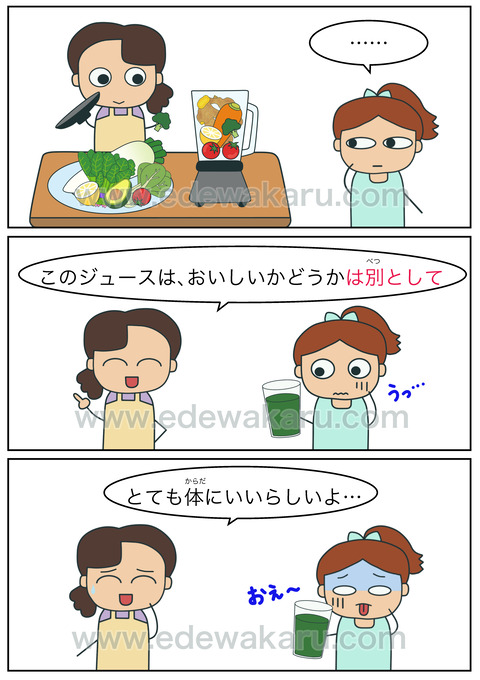
Meaning
not making ... an issue for now
not thinking about ... for now
How to use it
Verb, adjective, or noun [plain form] + かどうかは別として
Question word + か + は別として
Explanation
“Aかどうかは別としてB” is a grammar pattern meaning “I’m not making A an issue for now, but B” or “I’m not thinking about A for now, but B.” It is used when you first want to tell the other person about B, as in “I’m not considering A right now, but B.” This pattern also has a form that places the [dictionary form] and [ない form] side by side: “AかAないかは別としてB.”
[Example]
This juice, whether or not it is tasty, seems to be good for you.
= Whether this juice is tasty or not, it seems to be good for you.
Also, 〜かどうかは別として can be changed to 〜かどうかは別にして.
[Example]
Whether or not it is tasty, it seems to be good for you.
= Whether or not it is tasty, it seems to be good for you.
There are also the forms Nは別として and Nは別にして, so let’s learn them together 😊
[Related patterns]
In context 6 examples
このジュースはおいしいかどうかは別として、とても体にいいらしい
→おいしいかどうかはわからないが、体にいいらしいWhether or not this juice is tasty, it seems to be very good for you. →I don’t know if it’s tasty, but it seems to be good for you.
似合うかどうかは別として、一度ミニスカートをはいてみたいな…
→似合うかどうかはわからないが、一度ミニスカートをはいてみたいWhether or not it suits me, I’d like to try wearing a miniskirt once… →I don’t know if it would suit me, but I’d like to try wearing a miniskirt once.
A:N1は私には難しすぎると思うんだ…B:合格するかどうかは別として、チャレンジしてみれば?
→合格するかはわからないが、チャレンジしてみれば?A: I think N1 is too difficult for me… B: Whether or not you pass, why not give it a try? →I don’t know if you’ll pass, but why not give it a try?
自分の好きなチームが勝つかどうかは別として、サッカーを見るのが大好きだ
→勝つかどうかはわからないが、サッカーを見るのが好きだWhether or not my favorite team wins, I love watching soccer. →I don’t know if they’ll win, but I love watching soccer.
成功するかどうかは別として、挑戦してみることが大事だ
→成功するかどうかは問題ではない。挑戦してみることが大事だWhether or not you succeed, what matters is giving it a try. →Whether you succeed is not the issue. What matters is giving it a try.
A:ふられるかどうかは別として、好きなら告っちゃいなよ!B:ぼくには、告白するだけの勇気はないな…
→ふられるかどうかはわからないが、好きなら告っちゃいなよA: Whether or not he turns me down, if you like him, just tell him! B: I don’t have the courage to confess… →I don’t know if he’ll turn you down, but if you like him, just tell him!
Read the original source text
Meaning
今は〜のことを問題にしないが
今は〜のことを考えないが
How to use it
動詞・形容詞・名詞[普通形]+かどうかは別として
疑問詞+か+は別として
Explanation
「Aかどうかは別としてB」は「今はAのことは問題にしないがB」「今はAのことは考えないがB」という意味の文型です。「Aについては今問題にしないが、Bだ」というように、まず「B」のことを相手に言いたい場合に使われます。この文型には[辞書形]と[ない形]を並べて
「AかAないかは別としてB」
という形もあります。
[例]
このジュースはおいしい
かはどうかは別として、体にいいらしい
=このジュースはおいしい
か
おいしく
ないかは別として、体にいいらしい
また「〜かどうかは別として」は「〜かどうかは別にして」にチェンジすることができます。
[例]
おいしい
かどうかは別として、体にいいらしい
=おいしい
かどうかは別にして、体にいいらしい
「〜は別として・〜は別にして」には「Nは別として・Nは別にして」という形もありますので、一緒に覚えておきましょう😊
【関連文型】
Usage 2
Read this source entry ↗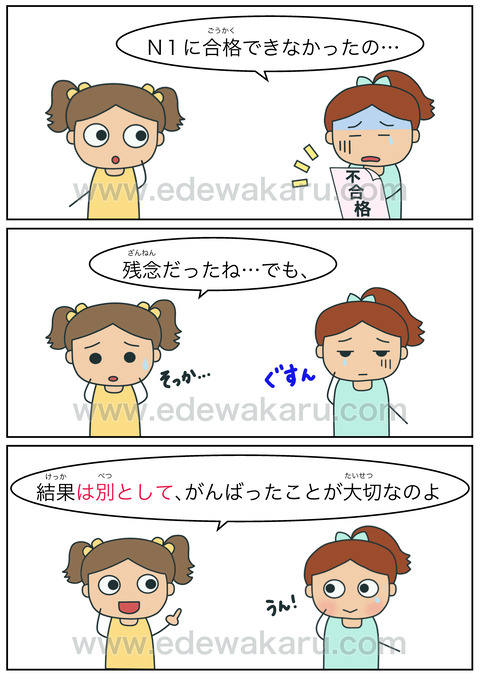
Meaning
... is an exception, but ...
without thinking about ... for now
without making ... an issue for now
How to use it
Noun [dictionary form] + は別として
Noun [dictionary form] + は別にして
Explanation
“〜は別として” is a grammar pattern meaning “... is an exception, but ...,” “without making ... an issue for now,” or “without thinking about ... for now.” It can be changed to 〜は別にして.
[Example]
The result aside, what matters is that you worked hard.
= Setting aside the result, what matters is that you worked hard.
There are also the forms 疑問詞 + か + は別として and 〜かどうかは別として, so let’s learn them together 😊
[Similar patterns]
In context 4 examples
A:N1に合格できなかったの…B:結果は別として、がんばったことが大切なのよ!
→がんばったことが大切だから、今は結果のことは考えなくていいよA: I didn’t pass N1… B: The result aside, what matters is that you worked hard! →What matters is that you worked hard, so you don’t need to think about the result for now.
この店のパンは、味は別としてすごく安い
→味のことは考えなかったら、安いのでいいThe bread at this shop is very cheap, taste aside. →If you don’t think about the taste, it’s good because it’s cheap.
帰国子女は別として、英語が苦手な日本人は多いようだ
→帰国子女は例外だが、英語が苦手な日本人は多いようだ*帰国子女とは、子供の時に海外に住んでいて、日本に帰ってきた人のことExcept for people who grew up overseas and returned to Japan, it seems that many Japanese people are poor at English. →People who grew up overseas and returned to Japan are the exception; it seems that many Japanese people are poor at English. *A returnee is someone who lived overseas as a child and then came back to Japan.
数学は別として、他の教科はまるでダメだ…
→数学は例外だが、他の教科はまるでダメだExcept for math, I’m hopeless at all the other subjects… →Math is the exception; I’m hopeless at all the other subjects.
Read the original source text
Meaning
〜は例外だが〜
今は〜のことは考えないで
今は〜を問題にしないで
How to use it
名詞[辞書形]+は別として
名詞[辞書形]+は別にして
Explanation
「〜は別として」は「〜は例外だが」「今は〜を問題にしないで」「今は〜のことは考えないで」という意味の文型です。「〜は別にして」にチェンジすることができます。
[例]
結果
は別として、がんばったことが大切だ
=結果
は別にして、がんばったことが大切だ
「〜は別として・〜は別にして」には「疑問詞+か+は別として」「〜かどうかは別として」という形もありますので、一緒に覚えておきましょう😊
【類似文型】
毎日のんびり日本語教師
How to use it
Noun + は別にして/は別として
Verb plain form + かどうかは別にして/は別として
い-adjective plain form + かどうかは別にして/は別として
な-adjective plain form + かどうかは別にして/は別として
Explanation
Indicates setting aside the content of the first clause and first addressing the latter clause.
It is the same as 「【N2 Grammar】~はともかく(として)」.
Notes
Nothing in particular.
In context 6 examples
勝ち負けは別にして、ゲームはみんなでやると楽しい。
Putting winning and losing aside, games are fun when everyone plays together.
あの店は、味は別にしてとにかく安い。
That shop is cheap anyway, regardless of the taste.
成功するかどうかは別にして、挑戦してみることで学べることもある。
Regardless of whether you succeed, you can still learn by giving it a try.
この会社は給料は別にして、職場環境は本当に良い。
Setting the salary aside, this company’s work environment is really good.
付き合えるかどうかは別にして、自分の気持ちを伝えることが重要だ。
Regardless of whether you can date them, it’s important to tell them how you feel.
数学と物理は別にして、他の科目はまあまあできる。
Setting math and physics aside, I do reasonably well in the other subjects.
Read the original source text
How to use it
名詞+は別にして/は別として
動詞普通形+かどうかは別にして/は別として
い形容詞普通形+かどうかは別にして/は別として
な形容詞普通形+かどうかは別にして/は別として
Explanation
前項の内容については考えず、まず後項について触れることを表します。
「【N2文法】~はともかく(として)」と同じです。
Notes
特になし