くらべてわかる日本語表現文型辞典
Meaning
Meaning 1: After continuing with A for a while, stop at this point and move on to B.
Meaning 2: Do not discuss A for now; move on to B first. Set A aside and focus on B for now.
How to use it
Explanation
【Contrast 2】
“A wa betsu ni shite B”
“A wa sateoki B” means to discuss B before A, but “A wa betsu ni shite B” does not have this meaning.
○「おなかすいた。何食べようか。」「何を食べるかはさておき、まずビールを飲もうよ。」 — “I’m hungry. What should we eat?” “Setting aside what to eat, let’s have a beer first.”
×「おなかすいた。何食べようか。」「何を食べるかは別にして、まずはビールを飲もうよ。」 — “I’m hungry. What should we eat?” “Putting aside what to eat, let’s have a beer first.”
“A wa tomokaku B” (Meaning 3, p. 284)
They can be substituted for one another.
Notes
【Note 1】
・It is also used in the form “sore wa sateoki B,” with the same meaning.
【Note 2】
・When B contains an evaluation, A has a nuance opposite to that evaluation.
○このホテル、外観はさておきサービスは最低だ。(外観はよい) — This hotel’s exterior aside, the service is terrible. (The exterior is good.)
○彼は言葉遣いはさておき事務能力はある。(言葉遣いは悪い) — He may be poor at speaking, but he does have office skills. (His way of speaking is bad.)
・“Nani wa sateoki B” is an idiomatic expression meaning “first and foremost B.”
○大学の合格通知をもらい、何はさておき両親に電話をかけた。 — After receiving my university acceptance letter, the first thing I did was call my parents.
In context 8 examples
給料は安いし、休みはないし…。まあ、会社のグチはさておき、話を本題に進めましょうか。
The pay is low, and there are no days off… Anyway, setting aside complaints about the company, shall we get to the main topic?
前置きはさておきまして、次にこの商品の説明をさせていただきます。
Setting aside the introduction, I will now explain this product.
冗談はさておき、この問題は早急に解決しなければならないことだ。
Joking aside, this problem needs to be resolved as soon as possible.
名刺交換はさておき、さあ乾杯をしてパーティーを始めましょう。
Setting aside the exchange of business cards, let’s raise a toast and start the party.
「お正月に温泉にでも行こうよ。私、旅館に泊まりたいな。」
「お正月に行くなら、どこに泊まるかはさておき、飛行機だけでも予約しておかないと取れないよ。」“Let’s go to a hot spring for New Year’s. I’d like to stay at a traditional inn.” “If we’re going for New Year’s, setting aside where to stay, we need to book just the flights now, or we won’t get them.”
トム・クルーズってハンサムですよネ。好みはさておき、客観的に見てそう思いませんか。
Tom Cruise is handsome, isn’t he? Setting aside your personal taste, don’t you think so objectively?
この本、内容はさておいて、話題性はありますよ。
Setting aside its content, this book is certainly topical.
多少の例外はさておき、早期発見によりほとんどの乳がんは完治する。
Apart from a few exceptions, most breast cancers can be cured through early detection.
Read the original source text
Meaning
意味1:しばらく続けたAはこの程度でやめて、次にB。
意味2:Aは今、話題にせず先にB。Aは考えずに今はB。
How to use it
Explanation
【対比2】
「Aは別にしてB」
「AはさておきB」には、Aより先にBを話題にするという意味がある
が、「Aは別にしてB」にはこの意味はない。
○「おなかすいた。何食べようか。」「何を食べるかはさておき、まずビールを飲もうよ。」
×「おなかすいた。何食べようか。」「何を食べるかは別にして、まずはビールを飲もうよ。」
「AはともかくB」(意味3 P.284)
置き換え可能である。
Notes
【注意1】
・「それはさておきB」の形で使うこともあるが意味は同じ。
【注意2】
・Bに評価が含まれる場合は、Aはその評価と反対のニュアンスを持つ。
○このホテル、外観はさておきサービスは最低だ。(外観はよい)
○彼は言葉遣いはさておき事務能力はある。(言葉遣いは悪い)
・「何はさておきB」は、まず第一にBという意味の慣用的な表現。
○大学の合格通知をもらい、何はさておき両親に電話をかけた。
絵でわかる日本語
Usage 1
Read this source entry ↗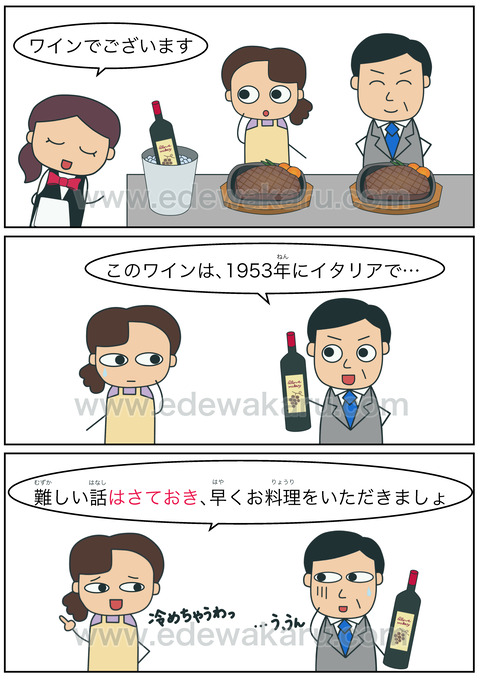
Meaning
Leaving 〜 aside for now
Let’s stop talking about the current topic and 〜
How to use it
Noun [dictionary form] + はさておき
Noun [dictionary form] + はさておいて
Explanation
“AはさておきB” is a pattern meaning “let’s stop talking about the current topic A and move on to B” or “let’s not talk about A for now, and instead talk about B.” It is used when shifting from the topic discussed so far, A, to a more important topic, B.
[For those with time to spare]
There is also the expression “それはさておき,” which is used when changing the subject, so let’s learn it too.
[Example]
A: Have you finished the report yet?
B: Not yet. Putting that aside, want to go to karaoke today?
“〜はさておき” also has a use meaning “without thinking about 〜,” so let’s learn that as well 😊
In context 5 examples
夫:このワインは、1953年にイタリアで…妻:難しい話はさておき、早くお料理をいただきましょ夫:…そうだな
→難しい話はやめて、早くお料理をいただきましょHusband: This wine is from Italy, from 1953… Wife: Leaving the complicated talk aside, let’s hurry up and eat. Husband: …You’re right. →Let’s drop the complicated talk and eat.
仕事の話はさておき、今日は楽しく飲もう!
→仕事の話はやめて、今日は楽しく飲もう!Let’s put work talk aside and enjoy a drink today! →Let’s stop talking about work and enjoy a drink today!
冗談はさておき、これからどうするか話し合いましょう
→冗談はやめて、これからどうするか話し合いましょうJoking aside, let’s discuss what we’re going to do from here. →Let’s stop joking and discuss what we’re going to do from here.
雑談はさておき、そろそろ会議を始めよう
→雑談はやめて、そろそろ会議を始めまようPutting the small talk aside, let’s get the meeting started soon. →Let’s stop chatting and get the meeting started soon.
A:来週提出のレポート、もうできた?B:まだだよ。レポートのことはさておき、カラオケを楽しもうよA:そうだね!
→レポートの話はやめて、カラオケを楽しもうよA: Have you finished the report due next week? B: Not yet. Forget about the report and let’s enjoy karaoke. A: You’re right! →Let’s stop talking about the report and enjoy karaoke.
Read the original source text
Meaning
今は〜のことを話題にしないで
今の話題はやめて〜
How to use it
名詞[辞書形]+はさておき
名詞[辞書形]+はさておいて
Explanation
「AはさておきB」は「今の話題AはやめてB」「今はAのことは話題にしないでB」という意味の文型です。今まで話していた話題「A」から、もっと大切な話題「B」にチェンジする場合に使われます。
【余裕のある人へ】
話題を変える時に使う
「それはさておき」
という表現もありますので、一緒に覚えておきましょう。
[例]
A:レポートはもうできた?
B:まだだよ。
それはさておき、今日カラオケにいかない?
「〜はさておき」には「〜のことは考えないで」という意味の用法もありますので、一緒に覚えておきましょう😊
Usage 2
Read this source entry ↗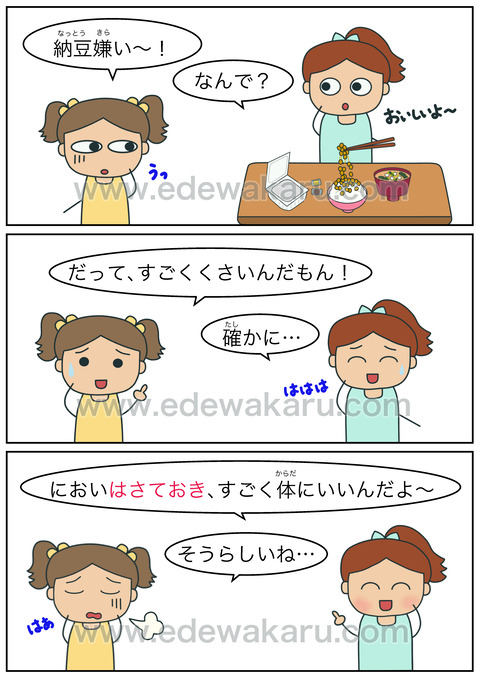
Meaning
Don’t think about 〜 for now
Set 〜 aside as an issue
How to use it
Noun [dictionary form] + はさておき
Noun [dictionary form] + はさておいて
Explanation
“AはさておきB” is a pattern meaning “don’t think about A for now and focus on B” or “set A aside as an issue and focus on B.” It is used to say, “A is not the issue right now; B is what matters.”
[Examples]
① The smell
はさておき, it’s really good for your health.
→It smells bad, but it’s really good for you.
[Smelling bad] matters less than [being good for your health].
② The taste
はさておき, it’s cheap, so I often come here to eat.
→It doesn’t taste good, but it’s cheap, so I often come here to eat.
[Low price] matters more than [taste].
③ The result
はさておき, the fact that you tried so hard is wonderful.
→The result wasn’t good, but the effort you put in was wonderful.
[The effort] matters more than [the result].
④ The price
はさておき, it has lots of good features and is really convenient.
→It’s expensive, but it has lots of good features and is convenient.
[Convenience] matters more than [price].
⑤ Whether you use English at work
はさておき, I think it’s better to be able to speak at least enough for everyday conversation.
→I’m not sure whether you’ll use it, but I think it’s better to be able to speak it.
[Being able to speak it] matters more than [whether you use it].
“〜はさておき” also has a use expressing [a change of topic]. There are several similar patterns, so let’s review them 😉
[Similar patterns]
In context 5 examples
A:納豆はくさいから大嫌いなのB:そっか。でも、においはさておきすごく体にいいんだよ〜
A: I hate natto because it smells bad. B: I see. But putting the smell aside, it’s really good for you.
A:ここのうどんは、あんまりおいしくないね…B:うん。でも、ここのは味はさておき安いからよく食べに来るんだ〜
A: The udon here isn’t very good… B: Yeah. But setting the taste aside, it’s cheap, so I come here to eat it a lot.
娘:大学に合格できなかったわ…母:結果はさておき、努力したことはとてもすばらしいことよ
Daughter: I didn’t get into university… Mother: Whatever the result, the fact that you worked hard is wonderful.
A:新しいスマホ、10万円もしたんだ…B:え!?すごく高いね!!A:うん。でも値段はさておき、いい機能がたくさんあってすごく便利なの
A: The new smartphone cost as much as 100,000 yen… B: What!? That’s so expensive! A: Yeah. But putting the price aside, it has lots of great features and is really convenient.
仕事で英語を使うかどうかはさておき、日常会話(にちじょうかいわ)くらいは話せたほうがいいと思うよ
Whether you use English at work or not, I think it’s better to be able to speak at least enough for everyday conversation.
Read the original source text
Meaning
今は〜のことは考えないで
〜のことは問題にしないで
How to use it
名詞[辞書形]+はさておき
名詞[辞書形]+はさておいて
Explanation
「AはさておきB」は「今はAのことは考えないでB」「Aのことは問題にしないでB」という意味の文型です。「今はAは問題ではない。大切なのはBだ」と言いたい時に使われます。
[例]
①におい
はさておき
すごく体にいいんだよ〜
→くさいが、すごく体にいい
【くさい】ことより【体にいい】ことが大切
②ここのは味
はさておき
安いからよく食べに来るんだ〜
→おいしくないが、安いからよく食べに来る
【味】よりも【安さ】が大切
③結果
はさておき、努力したことはとてもすばらしいことよ
→結果はよくなかったが、努力したことはすばらしい
【結果】よりも【努力したこと】が大切
④でも値段
はさておき、いい機能がたくさんあってすごく便利なの
→高いが、いい機能がたくさんあって便利
【値段】よりも【便利さ】が大切
⑤仕事で英語を使うかどうか
はさておき、日常会話くらいは話せたほうがいいと思うよ
→使うかどうかよりわからないが、話せたほうがいい
【使うかどうか】よりも【話せること】が大切
「〜はさておき」には[話題転換(わだいてんかん)]を表す用法もあります。また、似ている文型がいくつかありますので復習しておきましょう😉
【類似文型】
どんなときどう使う 日本語表現文型辞典
Meaning
leave for the time being
How to use it
Nは + さておき
Explanation
~は今は考えの外に置いて
A:それはさておき、社員旅行のことはどうなっているんだろう。
B:ああ、それは木村さんが中心になって進めているという話ですよ。
「~はさておき…」の形で、「今は~を考えの外にはずして、…を第一に考える」という意味を表す。
Set something aside and not think about it for time being; think of something else first.
In context 3 examples
就職の問題はさておき、今の彼には健康を取り戻すことが第一だ。
Setting aside the question of finding a job, the first priority for him now is to regain his health.
責任がだれにあるのかはさておき、今は今後の対策を考えるべきだ。
Regardless of who is responsible, we should think about what measures to take from now on.
(二人の男の人が仕事の話をした後)
(After two men have talked about work)
Read the original source text
Meaning
leave for the time being
How to use it
Nは+さておき
Explanation
~は今は考えの外に置いて
A:それはさておき、社員旅行のことはどうなっているんだろう。
B:ああ、それは木村さんが中心になって進めているという話ですよ。
「~はさておき…」の形で、「今は~を考えの外にはずして、…を第一に考える」という意味を表す。
Set something aside and not think about it for time being; think of something else first.
日本語NET JLPT文法解説まとめ
Meaning
Setting ~ aside for now
How to use it
N + はさておき
Explanation
Setting aside ~ for now
Used when changing the topic and getting to the main point.
Used when changing the topic and getting to the main point.
In context 3 examples
冗談はさておき、そろそろ本題に入ろう。
Joking aside, let's get to the main point.
見た目はさておき、味はとても美味しいよ。
Putting looks aside, it tastes really good.
誰がミスしたのかはさておき、今後ミスが起きないようにはどうしたら良いかを考えることが大事だ。
Putting aside who made the mistake, it's important to think about how to prevent mistakes from happening in the future.
Read the original source text
Meaning
〜のことは今は置いておいて
How to use it
N + はさておき
Explanation
Setting aside ~ for now
Used when changing the topic and getting to the main point.
話題を変え、本題に入るときなどに使う。
毎日のんびり日本語教師
How to use it
Noun + はさておき
Noun + はさておいて
Explanation
This pattern is used to set aside a topic that need not be addressed or has low priority, and then present the most important issue.
「それはさておき」 is also used simply to change the topic.
Notes
Similar pattern: 「【N2 Grammar】~はともかく(として)」
In context 8 examples
世間の評価はさておき、私は良かったと思う。
Regardless of what people think, I thought it was good.
この事件に関与していたかどうかはさておき、彼は部下の監督不行き届きで処分されるだろう。
Regardless of whether he was involved in this incident, he will probably be disciplined for failing to supervise his subordinates properly.
そんな冗談はさておき、手伝ってくれませんか。
Joking aside, could you help me?
外見はさておき、とても優しい人だった。
Looks aside, he was a very kind person.
うまいかどうかはさておき、人前で歌おうとする根性は凄いと思う。
Whether or not he sings well aside, I think it takes guts to try singing in front of people.
結果はさておき、今年も楽しい一年だった。
Regardless of the results, this was another enjoyable year.
実行するかはさておき、綿密な計画を立てておくことは悪いことではない。
Whether or not you carry it out aside, there's nothing wrong with making a detailed plan.
ジムに通うかどうかはさておき、運動習慣はつけたいと思っている。
Whether or not I go to the gym, I want to make exercise a habit.
Read the original source text
How to use it
名詞+はさておき
名詞+はさておいて
Explanation
取り上げる必要がないか、あるいは優先度が低い話題を後回しにし、最も重要な問題を提示するときに用いる文型です。
単に話題転換として「それはさておき」を使ったりもします。
Notes
似ている文型「【N2文法】~はともかく(として)」
AIUEO JLPT Grammar
Meaning
This sentence pattern is used when temporarily setting aside a topic to focus on a more pressing or prioritized matter. It implies putting something on hold to shift attention to something more important.
How to use it
Noun は + さておき; noun は + さておいて
In context 5 examples
細かいことはさておき、今は重要な部分に集中しよう。
Let’s set aside the details for now and focus on the important part.
予算の問題はさておいて、プロジェクトの方向性を決める必要があります。
Budget issues aside, you need to decide on a direction for your project.
デザインはさておき、機能性が重要だと思う。
Setting aside the design, I think functionality is more important.
外見はさておき、中身が大事です。
Putting aside appearance, what’s inside is what matters.
個人的な感情はさておいて、プロとしての意見を聞かせてください。
Setting aside personal feelings, please give me your professional opinion.
Read the original source text
Meaning
This sentence pattern is used when temporarily setting aside a topic to focus on a more pressing or prioritized matter. It implies putting something on hold to shift attention to something more important.
How to use it
名詞は+さておき名詞は+さておいて
Explanation · 日本語
この文型は、優先すべき話題や問題に集中するために、ある話題を一時的に脇に置くときに使われる表現です。一般的に、何か別の重要な事柄に注目するために、今はそのことを置いておくというニュアンスを含んでいます。
文法
Meaning
Setting ~ aside for now
How to use it
N + はさておき
Notes
Used when changing the topic, moving on to the main subject, and so on.
In context 6 examples
冗談はさておき、そろそろ本題に入ろう。
Joking aside, let's get to the main point.
見た目はさておき、味はとても美味しいよ。
Putting looks aside, it tastes really good.
誰がミスしたのかはさておき、今度ミスが起きないようにはどうしたら良いかを考えることが大事だ。
Putting aside who made the mistake, it’s important to think about what we can do to prevent it from happening again.
誰が発表するかはさておき、先にプレゼンの内容について話し合いましょう。
Regardless of who will give the presentation, let’s discuss the presentation content first.
難しい話かはさておき、みんなで楽しくやりましょう。
Regardless of whether it’s a difficult topic, let’s all have fun.
何はさておき、君に今の気持ちを伝えたい。
First of all, I want to tell you how I feel right now.
Read the original source text
Meaning
〜のことは今は置いておいて
How to use it
N + はさておき
Notes
話題を変え、本題に入るときなどに使う。
Bunpro Grammar Reference
Meaning
(Leaving or putting) aside, Apart
How to use it
Noun + はさておき(1)
Phrase + かどうか(2) + はさておき(1)
(1) はさておいて
(2) か
Nuance
A structure used for leaving aside the general topic of (A), and moving on. Placing (A) aside, let's move to (B).
Explanation
はさておき is an expression which is often translated as 'leaving aside (A)', or 'apart from (A)'. It is a combination of the adverbial particle は, the conjunction さて 'now' (moving on to a new thing), and the conjunctive form of 置く 'to place', or 'to leave', 置き. The more literal 'now putting aside (A)' may also be used.
This structure will be used when (A) is a topic that the speaker would like to move away from, in order to discuss something more important.
はさておき will primarily directly follow nouns.
みんなの感想はさておき、私は美味しいと思ったよ。
Aside from everyone else's opinions, I thought that it was delicious.
そんなことはさておき、仕事をちゃちゃっと終わらせて早く帰りましょうよ。
That aside, let's quickly finish work and go home.
However, it is also common to see はさておき following a phrase that ends with かどうか. This can be translated as 'disregarding whether it is (A) or not, (B)', and will imply that (B) is a more appropriate topic, so (A) should be moved on from.
日本語に自信があるかどうかはさておき、一人で行ったことのない国へ行くのには勇気がいる。
Regardless of whether I am confident in Japanese or not, going to a country you haven't been to alone takes some courage.
彼女がいるかいないかはさておき、普段から清潔にしていたほうがいいと思うよ。
Regardless of whether you have a girlfriend or not, you should be hygienic.
Caution
さて may occasionally appear in either of the kanji forms 扨, or 扠. However, this is quite rare. 置く itself may also be replaced with 措く 'to set aside'.
Fun Fact
冗談はさておき is a set expression that has the meaning of 'jokes aside', or 'moving on to the serious business'.
冗談はさておき、そろそろ会議を始めよう。
Jokes aside, let's start the meeting soon.
In context 17 examples
- それはさておき、会議の本題に移りましょう。
Putting that aside, let’s move to the main topic of the conference.
- 日本語に自信があるかどうかはさておき、一人で行ったことのない国へ行くのには勇気がいる。
Regardless of whether I am confident in Japanese or not, going to a country you haven't been to alone takes some courage.
- 彼女がいるかいないかはさておき、普段から清潔にしていたほうがいいと思うよ。
Regardless of whether you have a girlfriend or not, you should be hygienic.
- みんなの感想はさておき、私は美味しいと思ったよ。
Aside from everyone else's opinions, I thought that it was delicious.
- そんなことはさておき、仕事をちゃちゃっと終わらせて早く帰りましょうよ。
That aside, let's quickly finish work and go home.
- 冗談はさておき、そろそろ真面目にミーティングをしないと。
Jokes aside, we better get this meeting underway seriously.
- この映画は内容はさておき、映像のクオリティは最高でした。
Putting aside the content of this movie, the quality of the picture is superb.
- 品質はさておき、この商品のデザインはどこよりも優れています。
Putting aside the quality, the design of this product is better than anywhere else.
- 目が悪いことはさておき、それ以外は僕の体は完璧だと言ってもいい。
Apart from that my eyes are bad; you could say that the rest of my body is perfect.
- サイズが大きいのはさておき、この商品には本当に沢山の機能があります。
Apart from that the size is big, this product honestly has lots of functions.
- 大胆にデコルテが開いているのはさておき、このワンピースは私の好みのデザインだ。
Apart from that the low-cut is boldly open, this dress is the design type that I like.
- 飲み会、仕事のことだけ話す同僚に:「仕事の話はさておき、改めて乾杯!」
Drinking party, to a co-worker, that only talks about work: 'Work talk aside, cheers!'
- 武さん:「じゃ、エマさんは試験に合格すると思う?」
エマさん:「合格するかどうかはさておき、たくさんのことを学んでよかった。」Takeshi: 'So, what do you think, will you pass the exam?' Ema: 'Leaving aside whether I pass or not, I am glad that I have learned a lot.'
- たけしさん:「たなかさんが腕を折ったと聞いたんだけど・・・」
たなかさん:「そうだけど、大丈夫だよ。嫌なことはさておき、息子さん元気?」Takeshi-san: 'I have heard that you have broken your arm...' Tanaka-san: 'Yeah, but don't worry. Putting unpleasant stuff aside, how is your son?'
- 会社員1:「おそらく失敗するとは思いますが…」
会社員2:「細かいことはさておき、とりあえずやってみましょう。」A company employee 1: 'I think that it will probably fail...' A company employee 2: 'Let's put minor details aside, and try it anyway!'
- 学生1:「そういえば知ってる?トイレのはなこさんが旧校舎に出るってうわさ」
学生2:「はっはっは、誰がそんなことを。冗談はさておき、本気でこのビルには気をつけたほうがいいよ。状態が悪いから危ない。」Student 1: 'Speaking of which, did you know? There are rumors that Hanako-san (the spirit) of the toilet appears in the old school building. Student 2: 'Hahahaha, who says that? Jokes aside, you should be careful around that building. It's dangerous because of its poor condition.'
- 冗談はさておき、そろそろ会議を始めよう。
Jokes aside, let's start the meeting soon.
Read the original source text
Meaning
(Leaving or putting) aside, Apart
How to use it
Noun + はさておき(1)
Phrase + かどうか(2) + はさておき(1)
(1) はさておいて
(2) か
Nuance
A structure used for leaving aside the general topic of (A), and moving on. Placing (A) aside, let's move to (B).
Explanation
はさておき is an expression which is often translated as 'leaving aside (A)', or 'apart from (A)'. It is a combination of the adverbial particle は, the conjunction さて 'now' (moving on to a new thing), and the conjunctive form of 置く 'to place', or 'to leave', 置き. The more literal 'now putting aside (A)' may also be used.
This structure will be used when (A) is a topic that the speaker would like to move away from, in order to discuss something more important.
はさておき will primarily directly follow nouns.
みんなの感想はさておき、私は美味しいと思ったよ。
Aside from everyone else's opinions, I thought that it was delicious.
そんなことはさておき、仕事をちゃちゃっと終わらせて早く帰りましょうよ。
That aside, let's quickly finish work and go home.
However, it is also common to see はさておき following a phrase that ends with かどうか. This can be translated as 'disregarding whether it is (A) or not, (B)', and will imply that (B) is a more appropriate topic, so (A) should be moved on from.
日本語に自信があるかどうかはさておき、一人で行ったことのない国へ行くのには勇気がいる。
Regardless of whether I am confident in Japanese or not, going to a country you haven't been to alone takes some courage.
彼女がいるかいないかはさておき、普段から清潔にしていたほうがいいと思うよ。
Regardless of whether you have a girlfriend or not, you should be hygienic.
Caution
さて may occasionally appear in either of the kanji forms 扨, or 扠. However, this is quite rare. 置く itself may also be replaced with 措く 'to set aside'.
Fun Fact
冗談はさておき is a set expression that has the meaning of 'jokes aside', or 'moving on to the serious business'.
冗談はさておき、そろそろ会議を始めよう。
Jokes aside, let's start the meeting soon.
Nuance · 日本語
(A)という一般的な話題から離れ、他の話題に移る時に使われる表現。(A)を一旦終えて、(B)に移ろう。
Explanation · 日本語
「はさておき」は「(A) は一旦、横に置いて」や「とりあえず (A) は問題にしないで」といった意味で使われる表現です。副助詞「は」、次の話題に移るときに使われる接続詞「さて」、動詞「置く」の連用形「おき」を組み合わせてできています。
この表現は、話し手がもっと大事な話題に移るために、 (A) の話を一旦脇に置きたいときに使われます。
「はさておき」は、主に名詞の後に付いて使われます。
みんなの感想はさておき、私は美味しいと思ったよ。
Aside from everyone else's opinions, I thought that it was delicious.
そんなことはさておき、仕事をちゃちゃっと終わらせて早く帰りましょうよ。
That aside, let's quickly finish work and go home.
また、「はさておき」の前には「かどうか」で終わる句が来ることもあります。この場合は「(A) がどうであるかは関係なく」(B) の話題に移りたいときに使われます。
日本語に自信があるかどうかはさておき、一人で行ったことのない国へ行くのには勇気がいる。
Regardless of whether I am confident in Japanese or not, going to a country you haven't been to alone takes some courage.
彼女がいるかいないかはさておき、普段から清潔にしていたほうがいいと思うよ。
Regardless of whether you have a girlfriend or not, you should be hygienic.
注意点
「さて」には「扨」や「扠」といった漢字表記もありますが、漢字で書かれることはほとんどありません。また「置く」は「措く」と書かれることもあります。
豆知識
「冗談はさておき」は、「冗談はこれくらいにして本題に移りましょう」という意味で使われる決まった表現です。
冗談はさておき、そろそろ会議を始めよう。
Jokes aside, let's start the meeting soon.
NINJAL 日本語文型データベース
Meaning
Used when saying that you will set “~” aside for the moment and give priority to thinking about something else.
How to use it
Nはさておき
その他
Notes
“~” may be a word related to the topic, such as “a difficult subject,” “criticism,” or “a joke”; a pair of words with contrasting meanings, such as “pros and cons,” “right or wrong,” “presence or absence,” “winning or losing,” “good or bad,” “big or small,” or “skillful or unskillful”; or a form such as “~かどうか,” “~か否か,” or “(question word)+~か.”
“何はさておき” is an idiomatic expression.
In context 9 examples
難しい話はさておき、みんなが集まったのだからまずは乾杯しよう。
Let’s set the difficult talk aside; since we’ve all gathered, let’s start with a toast.
政治批判はさておき、各党が主張していることにひとまず耳を傾けてみよう。
Setting political criticism aside for now, let’s first listen to what each party is advocating.
「将来やりたい仕事? 世界中を飛び回るスパイだよ。いや、冗談はさておき、そろそろ就職のこと考えないととは思ってる」
“What kind of job do you want in the future? A spy jetting around the world. No, jokes aside, I do think it’s about time I started thinking about getting a job.”
「このあたりも景色がよさそうだから、時間があれば行ってみたいなあ」「そうだね。まあ、それはさておき、先に宿泊場所の確保をしよう」
“The scenery around here looks nice too, so I’d like to go if we have time.” “Yeah. Anyway, setting that aside for now, let’s secure a place to stay first.”
母は旅行から帰ると、何はさておき鉢植えの花々に水やりをするのが常だった。
Whenever my mother came back from a trip, she would always water the potted flowers before doing anything else.
内容のいい悪いはさておき、一応レポートは書き終えた。
Setting aside whether the content was good or bad, I did finish writing the report.
この歌は作者がわからないらしい。特定の作者が実在したか否かはさておき、いい歌だと思う。
Apparently, the author of this song is unknown. Whether a specific author actually existed or not aside, I think it’s a good song.
これから先、使う機会があるかどうかはさておき、手話を習い始めた。
I started learning sign language, regardless of whether I’ll have a chance to use it in the future.
敬語の使い方が常に適切かどうかはさておき、山田さんの接客スキルはかなり向上している。
Whether Yamada’s use of honorific language is always appropriate or not, his customer service skills have improved considerably.
Read the original source text
Meaning
~は今はひとまず話題から外して、他のことを優先して考えると言いたいときに使います。
How to use it
Nはさておき
その他
Notes
「~」には、「難しい話・批判・冗談」など話題に関連する言葉のほかに、対立する意味の言葉の組み合わせ「賛否・是非・有無・勝ち負け・良し悪し・大小・上手下手」などや、「~かどうか・~か否か・(疑問詞)+~か」などの形がきます。
「何はさておき」は慣用的な言い方です。