絵でわかる日本語
Meaning
(Though it is not actually so) almost the same as...
How to use it
Verb [ない-form] + も同然だ
Verb [た-form] + も同然だ
Noun [dictionary form] + も同然だ
Noun [dictionary form] + 同然だ
Explanation
“Aも同然だ” is a sentence pattern meaning “almost the same as A.” It is used when you want to say, “It is not actually A, but you could say it is almost in the same state as A.” When “A” is a noun, you can omit “も” from “〜も同然だ.” Also, when a noun follows, the form is “〜も同然の + noun.”
[Examples]
Since I never use it, it is practically brand-new.
= Since I never use it, it is as good as brand-new.
Hanako, my cousin, and I are as close as sisters.
= Hanako, my cousin, and I are practically like sisters.
[For those with time to spare]
An idiomatic expression using “〜も同然” is “ただも同然” or “ただ同然.” It means “extremely cheap.”
Wife: Apples were 10 yen each at the supermarket!
Husband: 10 yen!? They’re practically free!
→ 10 yen!? That’s so cheap!
She sold me her old smartphone for practically nothing.
→ She sold me her old smartphone very cheaply.
Remember that “〜も同然だ” is a sentence pattern that often expresses the speaker’s feelings. 😊
In context 5 examples
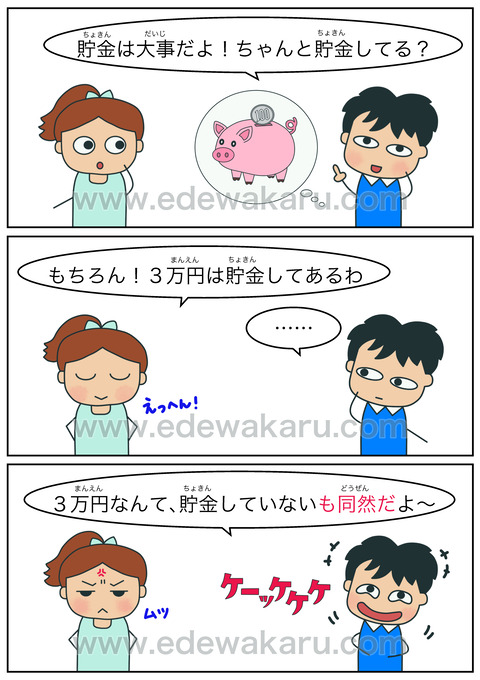
A:貯金は大事だよ!ちゃんと貯金してる?B:もちろん、3万円は貯金してあるわ!A:3万円なんて、貯金していないも同然だよ
→3万円なんて、貯金していないのとほとんど同じだよA: Saving money is important! Are you saving properly? B: Of course, I’ve saved 30,000 yen! A: 30,000 yen? That’s practically the same as having no savings. → 30,000 yen? That’s almost the same as not having any savings.
3年前に辞書を買ったが、まったく使わないので新品も同然だ
→ほとんど新品と同じ状態だI bought a dictionary three years ago, but I never use it, so it is practically brand-new. → It is almost in the same condition as new.
こんなに差があったら、勝ったも同然だ
→ほとんど勝ったのと同じだWith such a big lead, it’s practically as good as a win. → It’s almost the same as having won.
ペットのハチは、私にとって家族も同然だ
→ほとんど家族と同じだMy pet bee is practically family to me. → It’s almost the same as family.
A:スキーをしたことがある?B:20年前に2回くらいしたことがあるよA:それじゃ、初心者も同然だね
→ほとんど初心者と同じ状態だねA: Have you ever skied? B: I went about twice, 20 years ago. A: Then you’re practically a beginner. → You’re almost in the same state as a beginner.
Read the original source text
Meaning
(実際は〜ではないが)ほとんど〜と同じだ
How to use it
動詞[ない形]+も同然だ
動詞[た形]+も同然だ
名詞[辞書形]+も同然だ
名詞[辞書形]+同然だ
Explanation
「Aも同然だ」は「ほとんどAと同じだ」という意味の文型です。「実際にはAではないが、ほとんどAと同じ状態だと言える」と言いたい時に使います。「A」に名詞が入る場合は「〜も同然だ」の「も」を省略することができます。また、後ろに名詞がくる場合は
「〜も同然の+名詞」
になります。
[例]
まったく使わないので新品
も同然だ
=まったく使わないので新品
同然だ
いとこの花子ちゃんとは、姉妹
も同然の
仲だ
=いとこの花子ちゃんとは、姉妹
同然の
仲だ
【余裕がある人へ】
「〜も同然」を使った慣用的表現(かんようてきひょうげん)に「ただも同然」「ただ同然」があります。意味は「値段がすごく安い」という意味です。
妻:スーパーでりんごが1つ10円だったの!
夫:10円!?
ただも同然
だな!
→10円!?すごく安いな!
彼女は使わなくなったスマホを、
ただも同然
で売ってくれた
→使わなくなったスマホを、すごく安く売ってくれた
「〜も同然だ」は、話者の感情的(かんじょうてき)な気持ちを表すことが多い文型だと覚えておきましょう😊
毎日のんびり日本語教師
How to use it
Verb た-form (+ の) + も同然だ/も同然の
Noun + (も) 同然だ/(も) 同然の
Explanation
Although it is actually different, this expresses that, in terms of its qualities or state, it is almost the same.
「~も同然だ」 is used at the end of a sentence, while 「~も同然の」 is followed by a noun.
Notes
Nothing in particular.
In context 8 examples
実の娘同然に育ててくれた母に感謝している。(感谢当自己的女儿一样养大的母亲。)
I’m grateful to the mother who raised me as if I were her own daughter. (感谢当自己的女儿一样养大的母亲。)
討論で何も言わないのはいないも同然だろう。
If you say nothing in a discussion, you might as well not be there.
目標がないなら死んだも同然だ。
If you have no goal, you’re as good as dead.
彼女は自殺ではなく、周囲の人に殺されたも同然だ。
She didn’t die by suicide; she was as good as killed by the people around her.
相手チームに怪我人が多く、我々が勝ったも同然の状況だ。
The opposing team has many injured players, so we’re as good as having won.
引きこもりは人生終わったも同然だ。
If you shut yourself away, your life is as good as over.
少しばかり経験があるものの、初心者同然です。
I have a little experience, but I’m practically a beginner.
この薬を飲みさえすれば治ったも同然だ。
As long as I take this medicine, I’m as good as cured.
Read the original source text
How to use it
動た形(+の)+も同然だ/も同然の
名詞+(も)同然だ/(も)同然の
Explanation
実際は異なるものの、性質や状態から見るとほぼ同じであることを表します。
「~も同然だ」は文末で用い、「~も同然の」は後ろに名詞が接続されます。
Notes
特になし