絵でわかる日本語
Meaning
If 〜 were possible (I’d like to … / I wish you would … / try doing it, if you can)
How to use it
Verb [dictionary form] + ものなら (〜たい / 〜て欲しい / 〜てみろ)
* In many cases, the dictionary form of a potential verb is used.
Explanation
“〜ものなら…たい” is a grammar pattern that expresses a “wish / expectation” about something thought to be impossible to achieve. It has almost the same meaning as the conditional “〜なら” studied at N4, but using “〜ものなら” emphasizes that there is little chance it will come true. Example ④ is an idiomatic expression, so you may hear it in dramas 😀 In most cases, this pattern is used in the form “〜ものなら…たい,” so it’s good to memorize it as is 😉
[For advanced learners]
This pattern attaches to the “dictionary form of a verb,” but that verb is almost always a “stative verb.” You probably studied “stative verbs” in beginner Japanese. Typical examples include “ある,” “いる,” “できる,” and “わかる” 😊 Beginner grammar is more complex and important than N1 grammar. The more advanced you become, the more likely you are to forget beginner grammar, so if you’re aiming even higher, review it thoroughly and keep working so you can speak beautiful Japanese 😆
[The “もの” series]
〜たいものだ・〜てほしいものだ
〜たものだ
〜たものではない
〜というもの (Nというもの)
〜ないものだろうか
〜ないものは〜ない
〜もの・〜んだもの
〜ものか
〜ものがある
〜ものだ (feeling/emotion)
〜ものだ (inherent property / general way of thinking)
〜ものだ・〜ものではない
〜もので・〜ものだから
〜ものと思っていた
〜ものなら
〜ものの
〜ものを
〜ようものなら
In context 4 examples
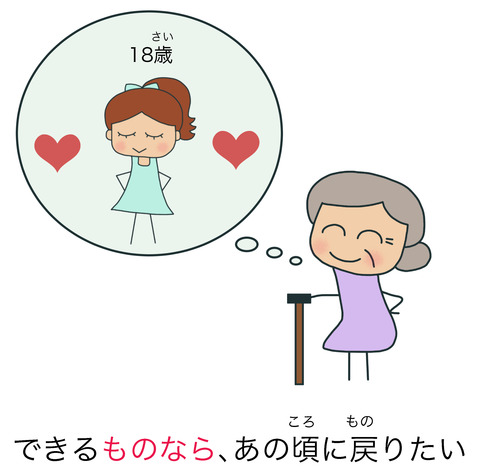
できるものなら、あの頃に戻りたい
→もしできるなら、あの頃(若かった頃)に戻りたいIf I could, I’d like to go back to those days. →If it were possible, I’d like to go back to those days (when I was young).
休めるものなら、1週間くらい休みたい
→もし休むことが可能なら、1週間くらい休みたいIf I could take time off, I’d like to take about a week off. →If taking time off were possible, I’d like to take about a week off.
たばこは高いし体に悪いし、やめられるものならやめたいよ
→たばこは高いし 体に悪いし、やめることが可能ならやめたいよCigarettes are expensive and bad for you, so if I could quit, I’d like to. →Cigarettes are expensive and bad for you, so if quitting were possible, I’d like to.
やれるものならやってみろよ【慣用的表現】
→もしやれると思うなら、やってみろよIf you think you can do it, go ahead and try! [idiomatic expression] →If you think you can do it, go ahead and try!
Read the original source text
Meaning
もし〜が可能なら(…したい/…て欲しい/…てみろ)
How to use it
動詞[原形]+ものなら(〜たい/〜て欲しい/〜てみろ)
*多くの場合「可能動詞の原形」を使う
Explanation
「〜ものなら…たい」は実現が不可能だと思うことに対する「願望・期待」を表す文法です。N4で勉強した仮定形の「〜なら」とほとんど同じ意味ですが、
「〜ものなら」を使うと実現する可能性が少ないということを強調します。 例文④は慣用的表現ですのでドラマなどで聞く機会があるかもしれませんね😀この文法はほとんどの場合
「〜ものなら…たい」
の形で使われますので、そのまま覚えておくといいですね😉
【上級レベルの人へ】
この文法は「動詞の原形」につきますが、その
動詞はほとんど「状態動詞」
です。「状態動詞」は初級日本語で勉強したと思います。代表的なものは「ある」「いる」「できる」「わかる」などですね😊初級の文法はN1のもの以上に複雑で重要です。上級になればなるほど初級文法は忘れがちですので、更に上を目指す人は復習をしっかりして、きれいな日本語を話せるようにがんばってくださいね😆
【「もの」シリーズ】
〜たいものだ・〜てほしいものだ
〜たものだ
〜たものではない
〜というもの(Nというもの)
〜ないものだろうか
〜ないものは〜ない
〜もの・〜んだもの
〜ものか
〜ものがある
〜ものだ(感慨)
〜ものだ(本来の性質・一般的な考え方)
〜ものだ・〜ものではない
〜もので・〜ものだから
〜ものと思っていた
〜ものなら
〜ものの
〜ものを
〜ようものなら