絵でわかる日本語
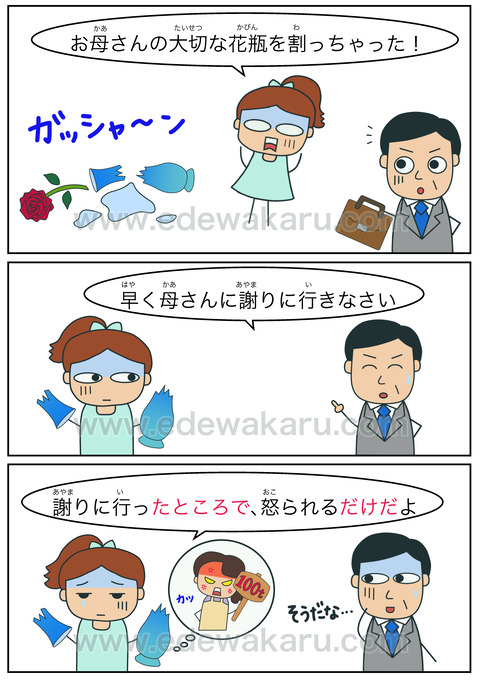
Meaning
even if you 〜, it will end in the bad result of 〜
even if you 〜, all that will happen is 〜
How to use it
Verb [た-form] + ところで + verb [dictionary form] + だけだ
Explanation
「〜たところで〜だけだ」 is a sentence pattern meaning “even if you do 〜, it will only lead to a bad result.” It is used to say, “Even if you do it, it will end in a bad result.”
A similar pattern is 「〜たところで」 (concession). There are many patterns containing 「ところ」 or 「だけ」, so review them 😊
[Related patterns]
In context 5 examples
お母さんに謝りに行ったところで、すごく怒られるだけだよ
→謝りに行っても、すごく怒られて終わるよEven if you go apologize to your mother, all that’ll happen is she’ll get really angry. →Even if you go apologize, you’ll just end up getting really scolded.
無理したところで、病気になるだけだ
→無理しても、病気になって終わるよEven if you push yourself too hard, you’ll only get sick. →Even if you push yourself, you’ll just end up getting sick.
A:田中さんが好きなら、告白すればいいじゃないB:告白したところで、ふられるだけさ
→告白しても、ふられるさA: If you like Tanaka-san, why not confess your feelings? B: Even if I do, I’ll just get rejected. →Even if I confess, I’ll get rejected.
兄:父さんに留学したいって言ってみれば?弟:言ったところで、反対されるだけだと思う
→言っても、反対されると思うOlder brother: Why don’t you tell Dad you want to study abroad? Younger brother: Even if I tell him, I think all that’ll happen is he’ll object. →Even if I tell him, I think he’ll object.
母:もう12時よ!早く寝なさい娘:明日テストがあるから、今日は寝ないで勉強しなきゃ母:一夜漬けしたところで、寝不足になるだけよ
→一夜漬けしても、寝不足になって終わるよMother: It’s already midnight! Go to bed, quick. Daughter: I have a test tomorrow, so I have to stay up and study tonight. Mother: If you cram all night, you’ll only end up sleep-deprived. →Even if you cram all night, you’ll only end up sleep-deprived.
Read the original source text
Meaning
〜ても、〜という悪い結果になる
〜ても、〜で終わる
How to use it
動詞[た形]+ところで+動詞[辞書形]+だけだ
Explanation
「〜たところで〜だけだ」は「〜ても、〜という悪い結果にしかならない」という意味の文型です。 「たとえ〜しても、〜という悪い結果で終わる」と言いたい時に使われます。
似ている文型に「〜たところで(逆接)」があります。「ところ」や「だけ」がつく文型はたくさんありますので、復習をしておきましょう😊
【関連文型】