くらべてわかる日本語表現文型辞典
Meaning
Meaning 1: A nostalgic expression recalling that one used to do A many times or used to be A, along with the feeling that one no longer does so.
Meaning 2: Generalizes that A is a natural course of events, that A is only to be expected.
Meaning 3: An expression that imposes a set of values, saying that one must or must not do something because A is common sense or only natural in society at large.
Meaning 4: States something one feels strongly.
Meaning 5: An expression used to explain or infer an event, often in news reports and newspaper articles.
Meaning 6: An exaggerated expression saying that something is worth or means as much as A.
How to use it
Aものだ
Connection 1:
[Verb—た form] ものだ
Connection 2:
[Verb—dictionary form] ものだ
[Verb—ない form] ないものだ
[i-adjective—い] ものだ
[na-adjective—な] ものだ
Connection 3:
[Verb—dictionary form] ものだ
[Verb—ない form] ないものだ
Connection 4:
[Verb] ものだ
[i-adjective—い] ものだ
[na-adjective—な] ものだ
Connection 5:
[Verb] ものだ
Connection 6:
[Noun—no suffix] ものだ
Explanation
[Contrast 1]
“Aっけ” (Meaning 2, p. 135)
[Contrast 4]
“Aことだ (Aこと)” (Meaning 3, p. 87)
Notes
[Note 3]
・It cannot be used for things that are common sense or only natural but do not express the speaker's values, such as laws.
×人を殺したら、捕まるものだ。 — If you kill someone, you get arrested.
In context 24 examples
学生時代はよくこの道を歩いたものだ。
When I was a student, I used to walk along this road often.
昔はこの辺もにぎやかだったものです。
This area used to be lively, you know.
ダイエットには何度も挑戦しては失敗したものですよ。
I've tried dieting many times and failed, you know.
あなたは子どものころ、よく泣きながら家に帰ってきたものよ。
When you were a child, you often came home crying.
そんなに怒るなよ。子どもは注射が嫌いなものだ。
Don't get so angry. Children naturally dislike getting injections.
赤ん坊は泣くものだ。放っておけ。
Babies cry, as babies do. Just leave it alone.
ふるさとというのは、なつかしいものだ。
There's something nostalgic about one's hometown.
自分の間違いは誰でも認めたくないものだ。
Everyone naturally doesn't want to admit their own mistakes.
食べたら片付けるものよ。
You should clean up after you eat.
男の子は泣かないものだ。
Boys aren't supposed to cry.
人の家に行く時は、手土産の一つも提げていくものだ。
When you visit someone's home, you're supposed to bring at least a small gift.
悪いことをしたと思ったら、まず謝るものだ。
If you think you've done something wrong, you should apologize first.
よくここまで部屋を汚したものだね。
It's amazing how dirty you've managed to make the room.
死ぬまでに一度は富士山に登ってみたいものだ。
I'd love to climb Mount Fuji at least once before I die.
便利なものですねえ。携帯電話って。
Mobile phones sure are convenient.
政治家にはもっと国民の生活を考えてほしいものだ。
I really wish politicians would think more about people's lives.
今回の調査は政府の要請を受けて行うものである。
This investigation is being conducted at the government's request.
A社とB社の合併は業界再編に向けて規模の拡大を図ったものだ。
The merger of Company A and Company B was intended to expand their scale in preparation for industry restructuring.
犯人はA子さんの帰りをこの角で待っていたものに違いありません。
The culprit must have been waiting for Ms. A at this corner to see her return.
この頭部の傷は争ったときにできたものと思われます。
This head wound is thought to have been sustained during a struggle.
ガンの薬が発明されれば、ノーベル賞ものだ。
If a medicine for cancer were invented, it would be worthy of a Nobel Prize.
結婚式に招待した友達が過去の話を持ち出すのではないかと、冷や汗ものだった。
I was nervous, thinking that the friend I invited to the wedding might bring up stories from the past.
新入社員なのに1日3件もの契約を取ってきたとは、表彰ものだね。
For a new employee to bring in as many as three contracts in one day is certainly worthy of an award.
顧客リストを間違って廃棄したのか。それは切腹ものだぞ。
You accidentally threw away the customer list? That's a capital offense.
Read the original source text
Meaning
意味1:昔は何度もAした、Aだったことを、今はしなくなった感慨とともに懐かしむ表現。
意味2:Aであることが自然ななりゆきだ。当然Aだと一般化する。
意味3:世間一般ではAが常識・当然のことだから、しなければならない、してはならないなどと、ある価値観を押しつける表現。
意味4:Aと強く感じていることを述べる。
意味5:出来事の説明や推量を表し、ニュースや新聞記事によく使われる表現。
意味6:Aぐらいの価値・意味があると大げさにいう表現。
How to use it
Aものだ
接続1:
[動詞-た形]ものだ
接続2:
[動詞-る形]ものだ
[動詞-ない形]ないものだ
[イ形-い]ものだ
[ナ形-な]ものだ
接続3:
[動詞-る形]ものだ
[動詞-ない形]ないものだ
接続4:
[動詞]ものだ
[イ形-い]ものだ
[ナ形-な]ものだ
接続5:
[動詞]ものだ
接続6:
[名詞-∅]ものだ
Explanation
【対比1】
「Aっけ」(意味2 P.135)
【対比4】
「Aことだ(Aこと)」(意味3 P.87)
Notes
【注意3】
・常識や当然のことでも、法律など話し手の価値観を表しているとはいえないものには使えない。
×人を殺したら、捕まるものだ。
日本語文型辞典
Meaning
Basic information: Naなものだ A-いものだ Vものだ
Used to express a certain feeling about truths, generally accepted ideas, or essential qualities. Often used with 「本来」. It can also state a general quality as a precept. For example, ⑧ describes the proper attitude for students.
a. …ものだ
Expresses emotion or exclamation.
b. よく(も)…ものだ
Expresses admiration or astonishment about an event or action. In this usage, a sentence often sounds unnatural without 「よく(も)」.
Used with expressions of desire such as 「たい」 and 「ほしい」 to emphasize that desire.
Used to nostalgically recall things that were habitual in the past.
How to use it
…ものだ【essential nature】
…ものだ【emotion】
V-たいものだ
V-たものだ
In context 30 examples
人の心は、なかなかわからないものだ。
It's hard to understand people's hearts.
人間は本来自分勝手なものです。
People are basically self-centered.
赤ん坊は泣くものだ。
Babies cry.
金というのはすぐなくなるものだ。
Money has a way of disappearing quickly.
水は本来低きに流れるものです。
Water naturally flows downhill.
世間とは冷たいものだ。一時は騒いでもすぐに忘れる。
The world is cold. People may make a fuss for a while, but they soon forget.
人生なんて、はかないものだ。
Life is so fleeting.
A:すみません、レポートを書くのを忘れました。
B:学生というのは本来勤勉なものだ。アルバイトばかりしていてはいけないよ。A: I'm sorry, I forgot to write my report. B: Students are supposed to be diligent by nature. You mustn't spend all your time working part-time.
「ステレオがないと生活できない」とは、今の学生はぜいたくなことを言うものだ。
Saying “I can't live without a stereo” is such a luxurious thing for students nowadays to say.
この校舎も古くなったものだ。
This school building has really gotten old.
この町も、昔と違ってきれいになったものだ。
This town has become so much prettier than it used to be.
昔のことを思うと、いい世の中になったものだと思う。
When I think about the past, I feel that the world has become a good place.
あたりを見回して、かれはつくづく遠くへ来たものだと思った。
Looking around, he thought to himself how far he had come.
あんなに負債の大きかった会社の再建がよくできたものだ。
It's amazing that they managed to rebuild a company that had been in such heavy debt.
こんなむずかしい問題が、よく解けたものだ。
It's amazing that they solved such a difficult problem.
昔世話になっていた人に、よくもあんな失礼なことができたものだ。
How could he have done something so rude to someone who had helped him in the past?
完成した作品を見ると、みんなよく頑張ったものだと思う。
Looking at the finished work, I think everyone really gave it their all.
こんな小さい記事がよく見つけられたものだ。
It's amazing that they managed to find such a small article.
あんなに不況のときによく就職できたものだと思う。
I wonder how he managed to find a job during such a severe recession.
そのお話はぜひうかがいたいものです。
I would very much like to hear that story.
それはぜひ見たいものだ。
I would really like to see that.
海外へ行かれるときには、わたしも一度、ご一緒したいものです。
If you're going abroad, I'd very much like to accompany you sometime.
私も彼の好運にあやかりたいものだ。
I wish I could share in his good fortune.
今のわたしを、死んだ両親にみてもらいたいものだ。
I wish my late parents could see how I am now.
このまま平和な生活が続いてほしいものだ。
I hope this peaceful life continues as it is.
学生のころはよく貧乏旅行をしたものでした。
When I was a student, I often went on cheap trips.
彼は、若い頃は周りの人とよくけんかをしたものだが、今はすっかりおだやかになった。
When he was young, he often fought with the people around him, but now he has become completely calm.
小さい頃はよくみんなで近くの森へ遊びに行ったものでした。
When we were little, we often all went to play in the nearby woods.
そのころは週末になると映画館にいりびたったものでした。
In those days, whenever the weekend came, I would spend all my time at the movie theater.
小学校時代、彼のいたずらには、先生たちが手を焼いたものでした。
When he was in elementary school, his teachers had their hands full with his pranks.
Read the original source text
Meaning
基本情報NaなものだA-いものだVものだ
真理、一般的にいわれていること、本来の性質などについて、ある種の感慨をこめて述べるのに用いる。「本来」とともに使うことも多い。一般的な性質として述べて、訓戒とすることもある。たとえば、⑧は、学生のあるべき態度を述べている。
a. …ものだ
感慨・詠嘆を表す。
b. よく(も)…ものだ
あるできごと、行為について感心したり、呆れたりする気持ちを表す。この用法では、「よく(も)」がないと不自然な文になることが多い。
「たい」「ほしい」などの欲求を表す表現とともに使って、その気持ちを強調するのに用いる。
過去において、習慣的に行われていたことを感慨をこめて恒想するのに用いる。
How to use it
…ものだ【本性】
…ものだ【感慨】
V-たいものだ
V-たものだ
絵でわかる日本語
Usage 1
Read this source entry ↗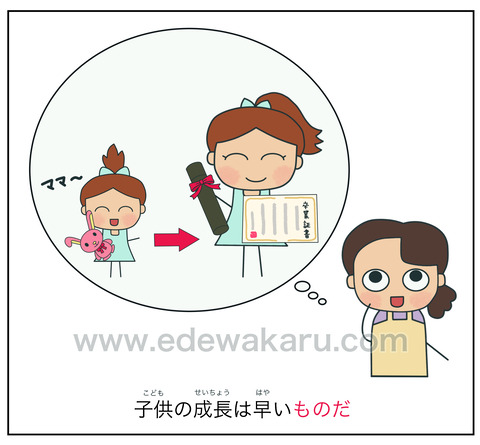
Meaning
(Feeling / exclamation) It really is 〜!
How to use it
Verb / adjective [plain form] + ものだ
* The present affirmative form of な-adjectives becomes “ーなものだ” (Example: 元気なものだ)
Explanation
This “〜ものだ” expresses “It really is 〜” with a feeling of emotion, exclamation, or surprise.
When “よく〜ものだ” is used together with “よく,” it can emphasize surprise, anger, or exasperation 😀
[Example sentence]
After doing something so awful, how can they stay so nonchalant?
→I can’t believe they can stay so nonchalant after doing something so awful.
[Anger / exasperation]
There are many sentence patterns made with “もの,” so be sure to distinguish and memorize them 😊
[The “もの” series]
〜たいものだ・〜てほしいものだ
〜たものだ
〜たものではない
〜というもの (Nというもの)
〜ないものだろうか
〜ないものは〜ない
〜もの・〜んだもの
〜ものか
〜ものがある
〜ものだ (feeling/emotion)
〜ものだ (inherent property / general way of thinking)
〜ものだ・〜ものではない
〜もので・〜ものだから
〜ものと思っていた
〜ものなら
〜ものの
〜ものを
〜ようものなら
In context 3 examples
子供の成長は早いものだ
→子供の成長は本当に早いなぁChildren grow up so fast. →Children really do grow up so fast.
この家も古くなったものだ
→この家も本当に古くなったなぁThis house has gotten old too. →This house has really gotten old.
父はとても頑固だ。困ったものだ…
→父はとても頑固だ。本当に困ったなぁ…My father is very stubborn. What a pain… →My father is very stubborn. What a pain…
Read the original source text
Meaning
(感慨・感嘆)本当に〜だなぁ
How to use it
動詞・形容詞[普通形]+ものだ
*な形容詞の現在肯定形は「ーなものだ」となる(例:元気なものだ)
Explanation
この「〜ものだ」は感慨や感嘆、驚きの気持ちを込めて「本当に〜だ」という意味を表します。
「よく〜ものだ」と「よく」を一緒に使用すると、驚きや怒り、あきれている気持ちを強調できます
😀
[例文]
あんなにひどいことをして、よく平気でいられるものだ
→あんなにひどいことをしたのに、
平気でいられるなんて信じられない
[
怒り・あきれ
]
「もの」が作る文型はたくさんありますのでしっかりと区別して覚えてしまいましょう😊
【「もの」シリーズ】
〜たいものだ・〜てほしいものだ
〜たものだ
〜たものではない
〜というもの(Nというもの)
〜ないものだろうか
〜ないものは〜ない
〜もの・〜んだもの
〜ものか
〜ものがある
〜ものだ(感慨)
〜ものだ(本来の性質・一般的な考え方)
〜ものだ・〜ものではない
〜もので・〜ものだから
〜ものと思っていた
〜ものなら
〜ものの
〜ものを
〜ようものなら
Usage 2
Read this source entry ↗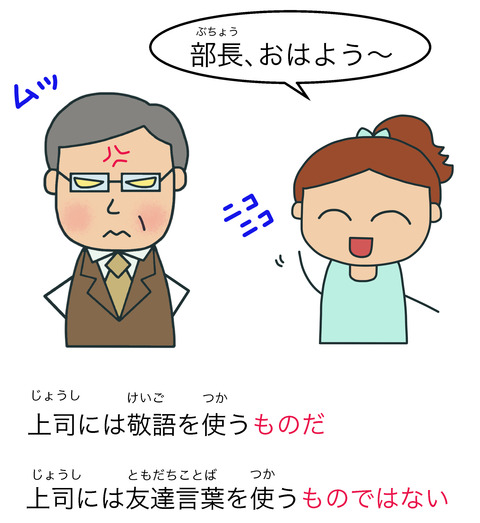
Meaning
(Judging by common sense) It is natural that one does 〜 / One should do 〜
(Judging by common sense) It is natural that one does not do 〜 / One should not do 〜
How to use it
Verb [dictionary form] + ものだ
Verb [dictionary form] + ものではない
Explanation
Today’s “〜ものだ・〜ものではない” expresses [what is natural / an obligation] and is used to mean “(judging by common sense) it is natural that one does 〜 / it is natural that one does not do 〜.” 😊 It is used with almost the same meaning as “〜べきだ・〜べきではない,” which you learned at N3, so it’s good to remember them together 😉
[Additional explanation]
There are many patterns in the “もの” series, but the form used in most of them is fixed, as in “〜ものなら,” “〜もので・〜ものだから,” and “〜たいものだ.” Today’s “〜ものだ・〜ものではない,” however, has exactly the same form as “〜ものだ (feeling/emotion)” and “〜ものだ (inherent property / general way of thinking).” So you need reading comprehension skills to determine which “〜ものだ” is being used. Be careful 😀
[Summary of the “もの” series that require reading comprehension]
① 〜ものだ →
(obligation / what is natural) It is natural, judging by common sense, to do 〜
[The negative form is “〜ものではない”]
② 〜ものだ →
(feeling / exclamation) It really is 〜!
③ 〜ものだ →
Inherent property / general way of thinking [The negative form is “〜ないものだ”]
The forms of the other patterns in the “もの” series are always fixed, so there should be no problem once you’ve memorized them well 😉
[The “もの” series]
〜たいものだ・〜てほしいものだ
〜たものだ
〜たものではない
〜というもの (Nというもの)
〜ないものだろうか
〜ないものは〜ない
〜もの・〜んだもの
〜ものか
〜ものがある
〜ものだ (feeling/emotion)
〜ものだ (inherent property / general way of thinking)
〜ものだ・〜ものではない
〜もので・〜ものだから
〜ものと思っていた
〜ものなら
〜ものの
〜ものを
〜ようものなら
In context 4 examples
上司には敬語を使うものだ
→上司には敬語を使うのが当然だ/ 敬語を使うべきだOne should use honorific language with one’s boss. →It is natural to use honorific language with one’s boss / One should use honorific language.
上司には友達言葉を使うものではない
→上司には友達言葉を使わないのが当然だ/ 友達言葉を使うべきではないOne should not use casual, familiar language with one’s boss. →It is natural not to use casual, familiar language with one’s boss / One should not use casual, familiar language.
学生はしっかり勉強するものだぞ!
→学生はしっかり勉強するのが当然だぞ / しっかり勉強するべきだぞStudents should study hard, you know! →It’s natural for students to study hard / They should study hard.
悪口は言うものではない
→悪口は言わないのが当然だ/言うべきではないOne should not speak ill of others. →It is natural not to speak ill of others / One shouldn’t.
Read the original source text
Meaning
(常識からみて)〜するのが当然だ / 〜するべきだ
(常識からみて)〜しないのが当然だ / 〜するべきではない
How to use it
動詞[原形]+ものだ
動詞[原形]+ものではない
Explanation
今回の「〜ものだ・〜ものではない」は
【当然・義務】 を表すもので、「(常識からみて)〜するのが当然だ・〜しないのが当然だ」という意味で使用されます
😊N3にある「〜べきだ・〜べきではない」とほとんど同じ意味で使われますので、セットで覚えているといいですね😉
【補足説明】
「もの」シリーズはとてもたくさんありますが、ほとんどの文型は「〜ものなら」「〜もので・〜ものだから」「〜たいものだ」というように、使用する形が決まっています。ですが今回の「〜ものだ・〜ものではない」は「〜ものだ(感慨)」「〜ものだ(本来の性質・一般的な考え方)」と形が完全に同じです。ですから、どの「〜ものだ」なのか判断するには読解力が必要となりますので気をつけてくださいね😀
[読解が必要な「もの」シリーズまとめ]
①〜ものだ→
(義務・当然)常識からみて〜するのが当然だ
【
否定形は「〜ものではない」】
② 〜ものだ→
(感慨・感嘆)本当に〜だなぁ
③〜ものだ→
本来の性質・一般的な考え方【否定形は「〜ないものだ」】
その他の「もの」シリーズはいつも形が決まっていますので、しっかり覚えてしまえば問題はないでしょう😉
【「もの」シリーズ】
〜たいものだ・〜てほしいものだ
〜たものだ
〜たものではない
〜というもの(Nというもの)
〜ないものだろうか
〜ないものは〜ない
〜もの・〜んだもの
〜ものか
〜ものがある
〜ものだ(感慨)
〜ものだ(本来の性質・一般的な考え方)
〜ものだ・〜ものではない
〜もので・〜ものだから
〜ものと思っていた
〜ものなら
〜ものの
〜ものを
〜ようものなら
Usage 3
Read this source entry ↗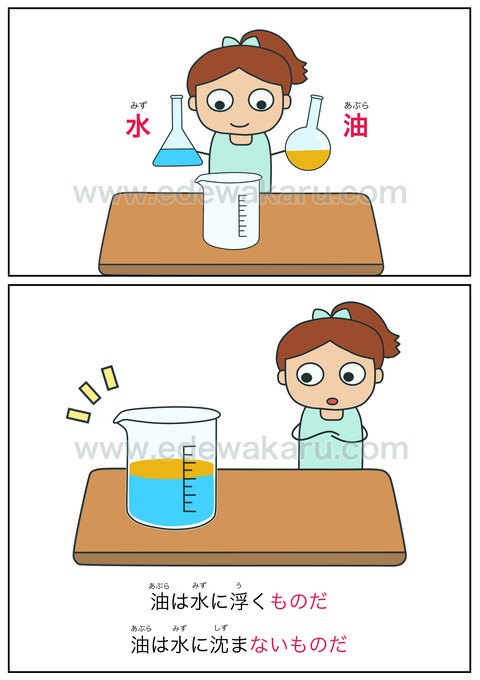
Meaning
An inherent property
An unchanging fact
How to use it
Verb [dictionary form] + ものだ
Verb [ない-form] + ものだ
Explanation
“〜ものだ・〜ないものだ” is a sentence pattern that expresses [inherent properties] and [unchanging facts]. Its negative form is “〜ないものだ.”
“〜ものだ・〜ないものだ” is also used to express [general ways of thinking]. There are many sentence patterns with “もの,” so be sure to distinguish and remember them.
In context 5 examples
油は水に浮くものだ
→油は、水に浮くという性質だOil floats on water. →It is a property of oil that it floats on water.
油は水に沈まないものだ
→油は、水には沈まない性質だOil does not sink in water. →It is a property of oil that it does not sink in water.
太陽は東から昇って、西に沈むものだ
→太陽は東から昇って、西に沈むのは変えることのできない事実だThe sun rises in the east and sets in the west. →The fact that the sun rises in the east and sets in the west is unchangeable.
水は高いところから低いところに流れるものだ
→水は高いところから低いところに流れるという性質だWater flows from high places to low places. →It is a property of water that it flows from high places to low places.
油は水にとけないものだ
→油は水にとけない性質だOil does not dissolve in water. →It is a property of oil that it does not dissolve in water.
Read the original source text
Meaning
本来の性質
変わらない事実
How to use it
動詞[原形]+ものだ
動詞[ない形]+ものだ
Explanation
「〜ものだ・〜ないものだ」は【本来の性質】【変わらない事実】を表す文型です。否定形は「〜ないものだ」となります。
「〜ものだ・〜ないものだ」には、【一般的考え方】を表す用法もあります。また、「もの」がつく文型はたくさんありますので、しっかりと区別をして覚えておきましょう。
Usage 4
Read this source entry ↗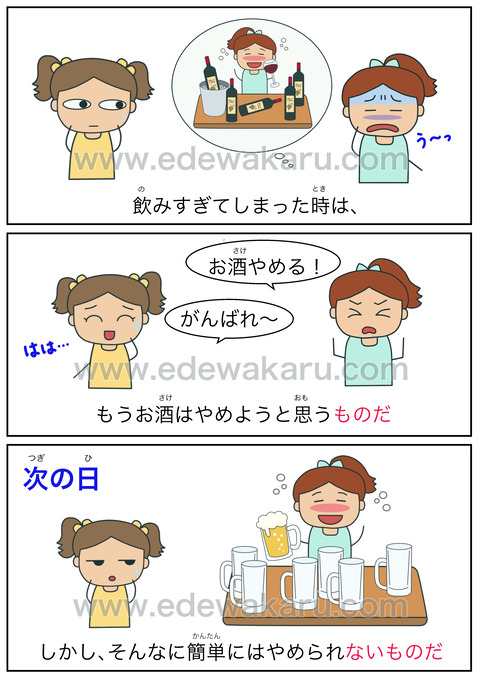
Meaning
~ is normal
Many people think that ~
How to use it
Verb [dictionary form] + ものだ
Verb [ない-form] + ものだ
Explanation
“〜ものだ・〜ないものだ” is a sentence pattern expressing [general ways of thinking], and means “~ is normal” or “normally, ~ is ~.” It is used to state things that are generally said or what many people think. In most cases, the negative form is “〜ないものだ” 😦
[For advanced learners] (A rather detailed explanation 😅)
Most reference books do not give a detailed explanation of the negative forms “〜ないものだ” and “〜ものではない” of “〜ものだ.” In general, “〜ないものだ” is used for the negative of [general views, inherent qualities, unchanging facts], while “〜ものではない” is used for the negative of “〜ものだ” expressing [what is expected or required].
[Examples]
①One does not use casual speech with one’s boss
→Generally speaking, it’s normal not to use casual speech with one’s boss
②One should not use casual speech with one’s boss
→One should not use casual speech with one’s boss
[Explanation]
① states a general principle (common sense),
whereas
② in many cases has a meaning close to prohibition 😀
There are many sentence patterns that include “もの,” and they are quite complex. Those taking the Japanese Language Proficiency Test should review them thoroughly and learn to distinguish them 😊
In context 7 examples
飲みすぎてしまった時は、もうお酒はやめようと思うものだ
→飲みすぎてしまった時は、もうお酒をよめようと多くの人は思うWhen you’ve drunk too much, you think you’ll stop drinking for good. →When you’ve drunk too much, many people think they’ll stop drinking for good.
しかし、そんなに簡単にはやめられないものだ
→しかし、普通はそんなに簡単にやめられないBut it’s not so easy to quit. →But normally, it’s not so easy to quit.
赤ちゃんは泣くものだよ
→赤ちゃんが泣くのは普通のことだよBabies cry; that’s normal. →It’s normal for babies to cry.
人の気持ちは、なかなかわからないものだ
→多くの人は、人の気持ちはなかなかわからないと思っているPeople’s feelings are hard to understand, aren’t they. →Many people think people’s feelings are hard to understand.
面接の時は、誰でも緊張するものだ
→面接の時は、普通誰でも緊張するAnyone gets nervous in an interview. →Normally, anyone gets nervous in an interview.
アイスを食べすぎると、お腹を壊すものだ
→アイスを食べすぎると、お腹を壊すのは普通のことだIf you eat too much ice cream, you get an upset stomach; that’s normal. →It’s normal to get an upset stomach if you eat too much ice cream.
年をとるにつれて、オールできなくなってくるものだ
→年をとるにつれて、オールができなくなってくるのは普通のことだAs you get older, you naturally become unable to stay up all night. →It’s normal to gradually become unable to stay up all night as you get older.
Read the original source text
Meaning
〜は普通のことだ
多くの人は〜だと思っている
How to use it
動詞[原形]+ものだ
動詞[ない形]+ものだ
Explanation
「〜ものだ・〜ないものだ」は[一般的な考え方]を表す文型で、「〜は普通のことだ」「普通、〜は〜だ」という意味で使われます。一般的に言われていることや、多くの人の考え方を言う場合に使用される文型です。否定形はほとんどの場合
「〜ないものだ」
となります😦
【上級レベルの人へ】(かなり細かい説明です😅)
ほとんどの参考書では「〜ものだ」の否定形「〜ないものだ」「〜ものではない」の細かい説明はのっていません。一般的に、[一般的考え方・本来の性質・変わらない事実]の否定形は「〜ないものだ」が使われ、[当然・義務]を表す「〜ものだ」の否定形は「〜ものではない」が使われます。
[例]
①上司には友達言葉を
使わないものだ
→一般的に考えて、友達言葉を
使わないのが普通だ
②上司には友達言葉を
使うものではない
→上司には友達言葉を
使うべきではない
[説明]
①は一般論(常識)を述べている
のに対し、
②は多くの場合禁止に近い意味を表します
😀
「もの」がつく文型はたくさんあり、とても複雑です。日本語能力試験を受ける人は、しっかりと復習をして区別して覚えておきましょう😊
どんなときどう使う 日本語表現文型辞典
Usage 1
Meaning
really…; truly something
How to use it
[plain form] (ナAな) + ものだ (There are no examples of it following N.)
Explanation
ものだ〈感慨〉
ほんとうに~だなあ
1)心に強く感じたことや、驚いたり感心したりしたことを感情を込めて言う。感慨を表す。
2) ❹ の「もんだ」はくだけた会話の言い方。
2)In sentence ❹ , form もんだ is used in informal speech.
1)Expresses emotionally something heartfelt, surprise, or deep impression. Deep emotion.
In context 4 examples
知らない国を旅して、知らない人々に会うのは楽しいものだ。
Traveling to unfamiliar countries and meeting unfamiliar people is a wonderful thing.
タンさんは家族を亡くし、苦労をしながら、今日まで一人でよく生きてきたものだ。
After losing his family and enduring hardship, Tan has somehow managed to live alone until today.
月日のたつのは早いもので、この町に引っ越して来たのはもう20年も前のことだ。
Time flies: it was already twenty years ago that I moved to this town.
小さな子どもがよくこんな難しいバイオリンの曲を弾くものだ。大したもんだ。
It's amazing that such a young child can play such a difficult violin piece. That's really something.
Read the original source text
Meaning
really…; truly something
How to use it
〔普通形〕(ナAな)+ものだ(Nにつく例はない)
Explanation
ものだ〈感慨〉
ほんとうに~だなあ
1)心に強く感じたことや、驚いたり感心したりしたことを感情を込めて言う。感慨を表す。
2) ❹ の「もんだ」はくだけた会話の言い方。
2)In sentence ❹ , form もんだ is used in informal speech.
1)Expresses emotionally something heartfelt, surprise, or deep impression. Deep emotion.
Usage 2
Meaning
used to
How to use it
Vた + ものだ
Explanation
ものだ〈回想〉
よく~したなあ
1)昔よくしたことを思い出して、懐かしんで感情を込めて言うときの表現。
2)「よく~ものだ」の形でよく使う。
2)Used in pattern よく~ものだ.
1)Nostalgic emotion about memory of something often done in past.
In context 3 examples
子どものころ、寝る前に父がよく昔話をしてくれたものだ。
When I was a child, my father would often tell me old folk tales before bed.
小学校時代、兄弟げんかをしてよく祖父にしかられたものだ。
When I was in elementary school, my grandfather used to scold us because my siblings and I often fought.
学生のころは、この部屋で夜遅くまで酒を飲み、歌を歌い、語り合ったものだ。
When I was a student, we used to drink, sing, and talk late into the night in this room.
Read the original source text
Meaning
used to
How to use it
Vた+ものだ
Explanation
ものだ〈回想〉
よく~したなあ
1)昔よくしたことを思い出して、懐かしんで感情を込めて言うときの表現。
2)「よく~ものだ」の形でよく使う。
2)Used in pattern よく~ものだ.
1)Nostalgic emotion about memory of something often done in past.
Usage 3
Meaning
should
How to use it
Vる・Vない + ものだ
Explanation
ものだ〈忠告〉
~するのが当然だ
1)個人の意見ではなく、道徳的、社会的な常識について「そうするのが常識ですよ・そうしないのが常識ですよ」と訓戒したり、説教したりするときの表現である。
2)話し言葉では ❸ のように「もんだ」になることが多い。
2)Often becomes もんだ in spoken language, as in sentence ❸ .
1)Moralizes or exhorts that speaker's opinion to do or not do something is not personal but based on moral and social common sense.
In context 3 examples
元気な若い人は乗り物の中でお年寄りに席を譲るものだ。
Healthy young people should give up their seats to elderly people on public transportation.
病院のお見舞いに、鉢植えの花は持っていかないものですよ。
You shouldn't bring potted flowers when visiting someone in the hospital.
祖父:もう10時だよ。早く寝なさい。子どもは10時前に寝るもんだ。
Grandfather: It's already ten o'clock. Go to bed soon. Children should go to bed before ten.
Read the original source text
Meaning
should
How to use it
Vる・Vない+ものだ
Explanation
ものだ〈忠告〉
~するのが当然だ
1)個人の意見ではなく、道徳的、社会的な常識について「そうするのが常識ですよ・そうしないのが常識ですよ」と訓戒したり、説教したりするときの表現である。
2)話し言葉では ❸ のように「もんだ」になることが多い。
2)Often becomes もんだ in spoken language, as in sentence ❸ .
1)Moralizes or exhorts that speaker's opinion to do or not do something is not personal but based on moral and social common sense.
日本語NET JLPT文法解説まとめ
Usage 1
Read this source entry ↗Meaning
“Naturally / of course…”
Expresses something that is considered to be as it should be. It describes the inherent nature or tendency of something.
How to use it
V (dictionary form / negative form) + ものだ
い-adjective + ものだ
な-adjective + な + ものだ
Explanation
Normally, in general, should ~, must ~
Used to express something that is considered to be common knowledge.
In spoken language, 「もんだ」 is also often used.
The negative form is 「〜ものではない」.
In context 19 examples
たくさん運動したら疲れるものです。
If you exercise a lot, you get tired.
人は疲れたら、眠くなるものです。
People get sleepy when they’re tired.
誰でも、残業はいやなものです。
Everyone dislikes working overtime.
人は誰でも間違いをするものだ。
Everyone makes mistakes.
人は誰でも失敗するものです。
Everyone fails sometimes.
地震の時は誰でも慌てるものです。
Anyone would panic during an earthquake.
プレゼンテーションの前は誰でも緊張するものです。
Everyone gets nervous before a presentation.
赤ちゃんはよく泣くものだから、ちょっとうるさいぐらいで、イライラしてはならない。
Babies cry a lot, so you shouldn’t get irritated just because they’re a little noisy.
人は見かけではわからないものだ。
You can’t tell what a person is like just by their appearance.
留学すると、誰でも一度はホームシックを経験するものです。
When you study abroad, everyone experiences homesickness at least once.
若い人はお年寄りに席を譲るものだ。
Young people should give up their seats to the elderly.
お年寄りには優しくするものだ。
You should be kind to the elderly.
子供は早く寝るもんだよ。
Children should go to bed early.
上司には敬語を使うものだ。
You should use honorific language with your boss.
お金は大切にするもんだよ。無駄遣いばかりしてはいけないよ。
You should be careful with money. You shouldn’t keep wasting it.
話するときは、相手の目を見て話すものだ。
When you talk, you should look the other person in the eye.
人の悪口は言うものじゃない。
You shouldn’t bad-mouth people.
知らない人を簡単に信じるもんじゃないよ。
You shouldn’t trust people you don’t know so easily.
不必要なものをなんでも買うもんじゃないよ。
You shouldn’t buy every unnecessary thing.
Read the original source text
Meaning
"当然〜する"
本来そうだと思われることを表す。物事の本来の性質や傾向などを表す。
How to use it
V(辞書形 / ナイ形)+ ものだ
イA + ものだ
ナAな + ものだ
Explanation
Normally, in general, should ~, must ~
Used to express something that is considered to be common knowledge.
話し言葉では「もんだ」を使うことも多い。
否定形は「〜ものではない」。
Usage 2
Read this source entry ↗Meaning
“It really is ~, isn’t it?”
A way of expressing, with feeling, admiration or surprise.
How to use it
V (plain form) + ものだ
い-adjective + ものだ
な-adjective + な + ものだ
Explanation
"really"
A way of expressing admiration or surprise with heartfelt emotion.
In context 3 examples
いつかは、バックパックを背負って、世界一周してみたいものだなぁ。
Someday, I’d love to backpack around the world.
月日が経つのは早いものだ。もう、あっという間に1年がたってしまった。
Time really does fly. A whole year has already passed in the blink of an eye.
田中さんはまだ若いのに、チームを引っ張っていて頼もしいものだ。
Although Tanaka is still young, it’s impressive how he leads the team; he’s so dependable.
Read the original source text
Meaning
"ほんとうに~だなぁ"
感心したり、驚いたりしたことを気持ちを込めていう言い方。
How to use it
V(普)+ ものだ
イAい + ものだ
ナAな + ものだ
Explanation
"really"
A way of expressing admiration or surprise with heartfelt emotion.
毎日のんびり日本語教師
How to use it
Verb (plain form) + ものだ
な-adjective stem + な/である + ものだ
い-adjective + ものだ
Explanation
It has two meanings.
① Stating the nature or truth of things, or general common sense
② Expressing a strong feeling about something
In either case, the speaker’s own feelings are strongly present.
In colloquial speech, it becomes「~もんだ」.
Notes
The 「ものだ」 series
In context 8 examples
英雄とは、死して初めて歴史に名を残すものだ。
A hero is someone who only leaves their name in history after dying.
自由への行進は逆行できないものだ。
The march toward freedom is something that cannot be reversed.
辛い、行きたくない、辞めたいというが、仕事とはそういうものだ。
People say, “It’s hard, I don’t want to go, I want to quit,” but that’s what work is like.
一緒に泣いた時に、はじめてお互いがどんなに愛し合っているのかが分かるものだ。
Only when we cry together do we first understand how much we love each other.
私は本当に良い友人を持ったものだ。(我真的有好朋友。)
I’m fortunate to have such good friends. (I really do have good friends.)
彼の発想力はすごい。ぜひ見習いたいものだ。
His creativity is amazing. I really want to learn from him.
責任逃れを繰り返しているのは見苦しい。いい加減彼には辞めてもらいたいものだ。
It’s disgraceful that he keeps evading responsibility. I really wish he would quit already.
久しぶりに褒められた。お世辞ではない言葉は本当に嬉しいものだ。
I was complimented for the first time in a while. Sincere words, not flattery, really do make me happy.
Read the original source text
How to use it
動詞普通形+ものだ
な形容詞語幹+な/である+ものだ
い形容詞+ものだ
Explanation
2つの意味があります。
①物事の本質や真理、一般常識を述べる
②物事に対する強い感情を表す
いずれに場合も、話者自らの感情が強く含まれます。
口語では「~もんだ」となります。
Notes
「ものだ」シリーズ
日本語文型辞典 英語版
Meaning
【ものだ】[Na なものだ][A-いものだ][Vものだ]
B:学生というのは本来勤勉なものだ。アルバイトばかりしていてはいけないよ。
A student should essentially be diligent. Just doing your part-time job is not enough!
Used to express the truth/generally accepted thinking/essential qualities of a thing, with strong emotion. It is often used with the phrase 本来. As well as expressing the general nature of a thing, it can also be used as an admonition. For example,
(8)
states the attitude a student should have.
This expresses strong feelings or admiration.
b. よく(も)...ものだ
Expresses a feeling of admiration or amazement at a certain event or action. Often appears unnatural if used without よく(も).
Used with expressions of desire such as たい and ほしい, emphasizes the feeling or emotion of the expression.
Used to reflect with strong emotion on things which occurred on a habitual basis in the past.
How to use it
1. ...ものだ〈true nature〉
2. ...ものだ〈strong feeling〉a. ...ものだ
3. V-たいものだ
4. V-たものだ
In context 30 examples
人の心は、なかなかわからないものだ。
The human heart is not easily understood.
人間は本来自分勝手なものです。
People are essentially selfish.
赤ん坊は泣くものだ。
Babies are meant to cry.
金というのはすぐなくなるものだ。
Money is a thing which soon disappears.
水は本来低きに流れるものです。
Water naturally flows downhill.
世間とは冷たいものだ。一時は騒いでもすぐに忘れる。
It’s a cold world. Even big disturbances are soon forgotten.
人生なんて、はかないものだ。
Life is a transient thing.
A:すみません、レポートを書くのを忘れました。
I’m sorry, I forgot to write the report.
「スマホがないと生活できない」とは、今の学生はぜいたくなことを言うものだ。
Today’s students say extravagant things like “I cannot live without a mobile phone.”
この校舎も古くなったものだ。
This school building has gotten old now.
この町も、昔と違ってきれいになったものだ。
This town has gotten cleaner than in days gone by.
昔のことを思うと、いい世の中になったものだと思う。
Looking back at the past, I think that times have gotten better.
あたりを見回して、かれはつくづく遠くへ来たものだと思った。
Looking around the area, he thought about what a very long way he had come.
あんなに負債の大きかった会社の再建がよくできたものだ。
Restructuring a company that had such large debts was a thing well done.
こんなむずかしい問題が、よく解けたものだ。
Solving such a difficult problem is really something.
昔世話になっていた人に、よくもあんな失礼なことができたものだ。
How dare you do such a rude thing to someone to whom you are indebted!
完成した作品を見ると、みんなよく頑張ったものだと思う。
Looking at the completed work, I think everyone tried really hard.
こんな小さい記事がよく見つけられたものだ。
You did well to find such a small article.
あんなに不況のときによく就職できたものだと思う。
I think you did really well to find a job in such a time of recession.
そのお話はぜひうかがいたいものです。
I would very much like to hear that story.
それはぜひ見たいものだ。
Of course I would want to see that.
海外へ行かれるときには、わたしも一度、ご一緒したいものです。
How wonderful it would be if I could have an opportunity to come along with you when you go on a trip abroad.
私も彼の好運にあやかりたいものだ。
I wish I could share in his good fortune.
今のわたしを、死んだ両親にみてもらいたいものだ。
I wish my late parents could see me now.
このまま平和な生活が続いてほしいものだ。
I want this peaceful life to continue as it is.
学生のころはよく貧乏旅行をしたものでした。
I traveled around a lot on a shoestring budget when I was a student.
彼は、若い頃は周りの人とよくけんかをしたものだが、今はすっかりおだやかになった。
When he was young he often quarreled with the people around him, but now he has completely mellowed.
小さい頃はよくみんなで近くの森へ遊びに行ったものでした。
When we were small, we would often all go to play in the nearby forest.
そのころは週末になると映画館にいりびたったものでした。
At that time, when the weekend came around, we would often hang out at the movie theater.
小学校時代、彼のいたずらには、先生たちが手を焼いたものでした。
When he was in elementary school, the teachers had difficulty dealing with his pranks.
AIUEO JLPT Grammar
Meaning
This sentence pattern is used to express general knowledge, common sense, or deep emotions such as nostalgia or admiration. It is mainly used in emotional explanations or reflections.
How to use it
Verb + ものだ; adjective dictionary form + ものだ; adjectival noun + な + ものだ
In context 5 examples
日本の夏は本当に暑いものだ。
Summers in Japan are really hot.
冬は寒いものだ。
Winters are cold.
卒業とは悲しいものではありません。
Graduation doesn't have to be a sad thing.
生活はシンプルなものです。
Life is simple.
どうですか。勉強とは大変なものでしょう。
What do you think? Studying is hard work, isn't it?
Read the original source text
Meaning
This sentence pattern is used to express general knowledge, common sense, or deep emotions such as nostalgia or admiration. It is mainly used in emotional explanations or reflections.
How to use it
動詞+ものだ形容詞辞書形+ものだ形容動詞な+ものだ
Explanation · 日本語
この文型は、一般的な常識や当然のこと、感慨深い思い出、または感嘆を表現するときに使われる表現です。主に感情を込めた説明や回想に使われます。
Bunpro Grammar Reference
Meaning
Supposed to, Should, That's the way it is
How to use it
Verb + もの(1) + だ(2)
[い]Adjective + もの(1) + だ(2)
[な]Adjective + な + もの(1) + だ(2)
(1) もん
(2) ではない、じゃない
Nuance
A structure that strongly suggests that (A) is what is expected, or how it is supposed to be. It's an (A) thing.
Explanation
もの (or 物 in its kanji form) is classified as a 形式名詞 (dummy noun) in Japanese. This just means a noun that is used in a similar way to 'thing' in English. もの regularly refers to things that do not have their own name, or are difficult to name due to their complexity. When もの is combined with the auxiliary verb だ, it implies that the previously mentioned (A) is something that 'is what it is'. This is often used in relation to customs, conventions, common sense, or to highlight results that would naturally be expected in any given situation.
To use ものだ, attach it to the end of the attributive form of any word/word that ends a phrase that you would like to highlight as being an obvious piece of information.
仕事は一生懸命するものだ。
Work is something you should put all your effort into.
ユウキが自分からプランを立てるのは珍しいものだ。
It is rare for Yuki to plan something out on his own.
こどもは元気なものだ。
Kids should be energetic. (Man, kids are energetic)
ものだ as 'supposed to', or 'the way it is' can also be used to negate a phrase, and say that it is 'something that isn't expected', or 'shouldn't be the case'. To do this, だ will be replaced with ではない, or じゃない.
人生はそんなに簡単な物ではない。
Life is not something that is easy.
家族は捨てるものじゃない。
Family is not something you should throw away.
Caution
もの may sometimes be abbreviated as もん. This is far more common in spoken language, and can make the statement sound a bit more casual overall.
東大に入れたのか?大したもんだ。
You were able to get into Tokyo University? That is impressive.
ゴミを道に捨てるもんじゃない!
You should not throw garbage on the street!
In context 20 examples
- ケーキは甘い物だ。
Cake is supposed to be sweet.
- 家族は捨てるものじゃない。
Family is not something you should throw away.
- こどもは元気なものだ。
Kids should be energetic. (Man, kids are energetic)
- 人生はそんなに簡単な物ではない。
Life is not something that is easy.
- 仕事は一生懸命するものだ。
Work is something you should put all your effort into.
- ユウキが自分からプランを立てるのは珍しいものだ。
It is rare for Yuki to plan something out on his own.
- 親は親切な物だ。
Parents are supposed to be kind.
- 食べ物はムダにする物じゃないよ!
You shouldn't waste food! (not supposed to)
- 悪いことは続く物だ。
Bad things usually continue. (That's just the way it is)
- 子供は父母の言うことを聞く物だ。
Children are supposed to listen to their parents!
- お金はあれば使ってしまう物だ。
Money is something you inevitably use if you have it. (That's just the way it is)
- 通りを渡るとき車に気をつける物だ!
When you cross the street you should look out for cars!
- うまい話は大抵怪しい物だ。
Stories that are too good to be true, are supposed to be suspicious.
- 目上の人と話すときは敬語を使う物だ!
You should use keigo (polite speech) when conversing with superiors!
- 生きるのは大変だ。人生とはそういう物だ。
Life is tough. That is just what life is.
- 仕事は自分から進んでする物だ。
Work is something you should do proactively. (supposed to)
- 親友は困っている時に助けてくれる物だ。
Good friends are supposed to help you when you are in trouble.
- 毎日やっている作業だから、手慣れた物だ。
I am used to this work because I do it every day. (That's just the way it is)
- 東大に入れたのか?大したもんだ。
You were able to get into Tokyo University? That is impressive.
- ゴミを道に捨てるもんじゃない!
You should not throw garbage on the street!
文法
Usage 1
Meaning
How truly ~!
An expression used to express one’s feelings when impressed or surprised by something.
How to use it
V (plain form) + ものだ
い-adjective い + ものだ
な-adjective な + ものだ
In context 3 examples
いつかは、バックアップを背負って、世界一周してみたいものだなぁ。
Someday, I’d love to go around the world with a backpack.
月日が経つのは早いものだ。もう、あっという間に1年がたってしまった。
Time really does fly. A whole year has already passed in the blink of an eye.
田中さんはまだ若いのに、チームを引っ張っていて頼もしいものだ。
Although Tanaka is still young, it’s impressive how he leads the team; he’s so dependable.
Read the original source text
Meaning
ほんとうに~だなぁ
感心したり、驚いたりしたことを気持ちを込めていう言い方。
How to use it
V(普)+ ものだ
イAい + ものだ
ナAな + ものだ
Usage 2
Meaning
Expresses something that is naturally expected to be true; naturally, one does ~.
Describes the inherent nature or tendencies of things.
How to use it
V (dictionary form / negative form) + ものだ
い-adjective + ものだ
な-adjective + な + ものだ
Notes
In spoken language, 「もんだ」 is also often used.
The negative form is 「〜ものではない」.
In context 10 examples
たくさん運動したら疲れるものです。
If you exercise a lot, you get tired.
人は疲れたら、眠くなるものです。
People get sleepy when they’re tired.
誰でも、残業はいやなものです。
Everyone dislikes working overtime.
人は誰でも間違いをするものだ。
Everyone makes mistakes.
人は誰でも失敗するものです。
Everyone fails sometimes.
地震の時は誰でも慌てるものです。
Anyone would panic during an earthquake.
プレゼンテーションの前は誰でも緊張するものです。
Everyone gets nervous before a presentation.
赤ちゃんはよく泣くものだから、ちょっとうるさいぐらいで、イライラしてはならない。
Babies cry a lot, so you shouldn’t get irritated just because they’re a little noisy.
人は見かけではわからないものだ。
You can’t tell what a person is like just by their appearance.
留学すると、誰でも一度はホームシックを経験するものです。
When you study abroad, everyone experiences homesickness at least once.
Read the original source text
Meaning
本来そうだと思われることを表す。当然〜する。
物事の本来の性質や傾向などを表す。
How to use it
V(辞書形 / ナイ形)+ ものだ
イA + ものだ
ナAな + ものだ
Notes
話し言葉では「もんだ」を使うことも多い。
否定形は「〜ものではない」。
Usage 3
Meaning
Should ~
An expression used to say that something should be done as a matter of social common sense.
How to use it
V (dictionary form / nai-form) + ものだ
Notes
In spoken language, 「もんだ」 is also often used.
The negative form is 「〜ものではない」.
In context 9 examples
若い人はお年寄りに席を譲るものだ。
Young people should give up their seats to the elderly.
お年寄りには優しくするものだ。
You should be kind to the elderly.
子供は早く寝るもんだよ。
Children should go to bed early.
上司には敬語を使うものだ。
You should use honorific language with your boss.
お金は大切にするもんだよ。無駄遣いばかりしてはいけないよ。
You should be careful with money. You shouldn’t keep wasting it.
話するときは、相手の目を見て話すものだ。
When you talk, you should look the other person in the eye.
人の悪口は言うものじゃない。
You shouldn’t bad-mouth people.
知らない人を簡単に信じるもんじゃないよ。
You shouldn’t trust people you don’t know so easily.
不必要なものをなんでも買うもんじゃないよ。
You shouldn’t buy every unnecessary thing.
Read the original source text
Meaning
〜すべきだ
社会的常識としてそうすべきだと言いたいときに使う表現。
How to use it
V(辞書形 / ナイ形)+ ものだ
Notes
話し言葉では「もんだ」を使うことも多い。
否定形は「〜ものではない」。
Yokubi — The Common Grammar Guide (https://yoku.bi)
Explanation
わけ is a noun meaning "reason" (as in "why"). It can be used in many different set expressions. It is not possible to list all of them here but just a few common ones.
At the core わけ(だ) states a reason, explanation, fact, logical restatement, or conclusion. This usage can occasionally be replaced with のだ.
わけがない means "there is no way" and implies that something is not even remotely thinkable by the speaker
わけじゃない on the other hand is a roundabout way to negate a situation, circumstance, or logical conclusion.
わけにはいかない means that something is not possible according to general knowledge or social expectations.
Since わけ is a very strong statement, it is often paired with という in the form of というわけ to soften the impact of the expression.
はず expresses that the speaker expects something to factually be true or come true. It can be similar to the English "should" but it does not cover the entire same range of situations. はず also implies that the expectation is based on reasoning and is not pure conjecture.
べき states that the speaker expects a certain behaviour or state to be upheld, because not doing so would be bad, irresponsible, etc.
There are however some situations where using べき isn't always so heavy, especially in questions when asking for someone's wisdom or advice.
When in the past tense like べきだった, it says that an action or state "was" or "would have been" right, usually the latter.
べし is an archaic version of べき. Just be aware it exists.
ものだ can also express "should" with the nuance that it's a general "should" that applies to a lot of people, not just a specific person or a group. It is often used to state the nature of "how things are".
かもしれない is a compound sentence-ender. It attaches the same way as か alone does. It expresses that the speaker thinks the statement is a possibility. Sometimes people attach this to things they know are true for politeness's sake.
かもしれない is often shortened to just かも in casual conversation.
In context 1 examples
子供は親の言う事を聞くものだ。
Children should listen to what their parents say.