絵でわかる日本語
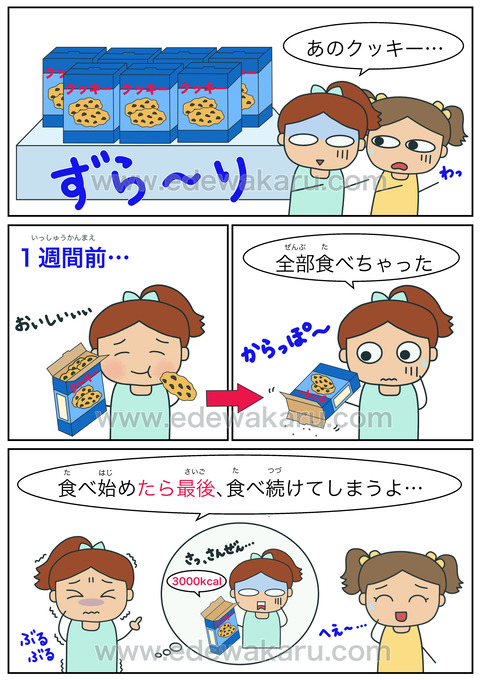
Meaning
If you do ~, it will lead to a bad result like ~
How to use it
Verb [た-form] + たら最後
Verb [た-form] + が最後
Explanation
“〜たら最後・〜が最後” is a sentence pattern meaning “if you do ~, it will lead to a bad result like ~.” It is used when you want to say, “Once you do ~, a bad result like this follows and you can’t go back to how things were.” Remember that what follows is a [bad result] or [something undesirable]. Also, “〜たら最後” can be changed to “〜が最後” 😊
[Examples]
① Once you start eating those cookies, you just keep eating them…
=Once you start eating those cookies, you just keep eating them…
② If you cheat, you’ll get expelled.
=If you cheat, you’ll get expelled.
[For those with time to spare]
“〜たら最後・〜たが最後” also has the forms “〜たら最後だ” and “〜が最後だ.” In these forms, the part expressing the bad result is omitted.
[Examples]
If you cheat, that’s it.
If you lend him money, that’s it…
“〜たら最後” is more colloquial than “〜が最後.” If you’re taking the N1, remember both 😀
Read the original source text
Meaning
〜したら、〜のような悪い結果になる
How to use it
動詞[た形]+たら最後
動詞[た形]+が最後
Explanation
「〜たら最後・〜が最後」は「〜したら、〜のような悪い結果になる」という意味の文型です。これは「一度〜したら〜のような悪い結果になって、元に戻ることができない」と言いたい時に使われます。後ろには
【
悪い結果】【よくないこと】
が入ると覚えておきましょう。また「〜たら最後」は「〜が最後」にチェンジすることができます😊
[例]
①あのクッキーは食べ始め
たら最後、食べ続けてしまうよ…
=あのクッキーは食べ始め
たが最後、食べ続けてしまうよ…
②カンニングなんてし
たら最後、退学になる
=カンニングなんてし
たが最後、退学になる
【余裕がある人へ】
「〜たら最後・〜たが最後」には「〜たら最後だ。・〜が最後だ。」という形もあります。悪い結果を表す部分が省略される形です。
[例]
カンニングなんてし
たら最後だ
彼にお金を貸し
たら最後だ
よ…
「〜たら最後」は「〜が最後」に比べて口語的です。N1を受ける人はどちらも覚えておきましょう😀
くらべてわかる日本語表現文型辞典
Meaning
Meaning 1: Once situation A occurs, it's all over; things cannot go back to how they were.
Meaning 2: Once A begins, the state of A continues from then on.
How to use it
A たが最後 B (A たら最後 B)
[Verb—た form] が最後
Notes
【Notes 1 and 2】
・In spoken language and similar contexts, 「~たら最後」 is used more often.
○失敗したら最後よ。二度とチャンスはないんだから。 — If you fail, that's it. There won't be another chance.
・B is often something that has a negative impact on the speaker.
In context 8 examples
社長の意見に反対したが最後、昇進はもう無理だろう。
If you oppose the president's opinion, that's it; you'll probably never get promoted.
この綱が切れたら最後、全員あの世行きだ。
If this rope breaks, it's all over; we'll all be dead.
落としたら最後もう元には戻らないから気をつけて持ってください。
Be careful as you carry it, because once you drop it, it can never be restored.
無くしたが最後、二度と見つからないでしょう。
Once it's lost, it probably won't ever be found again.
あの子はほしいと言いだしたが最後、買うまで泣き続ける。
Once that child starts saying they want something, they keep crying until they get it.
息子は酒を飲みだしたら最後、酔い潰れるまで飲んでしまう。
Once my son starts drinking, he keeps at it until he passes out.
夫は野球放送を見はじめたら最後、何を言っても動こうとしない。
Once my husband starts watching a baseball broadcast, he won't budge no matter what I say.
このゲームははじめたら最後、仕事も手につかぬほど面白い。
Once you start this game, it's so entertaining that you can't even focus on work.
Read the original source text
Meaning
意味1:Aという状態になったら、もうおしまいだ。もとには戻らない。
意味2:Aが始まったら、それから後はずっとAの状態が続く。
How to use it
Aたが最後B(Aたら最後B)
[動詞-た形]が最後
Notes
【注意1,2】
・話し言葉などでは、「~たら最後」の方を多く使う。
○失敗したら最後よ。二度とチャンスはないんだから。
・Bは話し手にとってマイナスになることが多い。
毎日のんびり日本語教師
How to use it
Verb ta-form + が最後
Verb ta-form + ら最後
Explanation
This is a conditional pattern expressing that once the preceding event occurs, the following event will inevitably occur.
As a rule, the following clause describes something bad, tragic, or desperate.
The sentence may end with phrases such as 「最後だ。」, and the rest can be omitted.
Notes
Nothing in particular.
In context 16 examples
行ったら最後、最低3年は帰って来れないだろう。
Once I go, I probably won’t be able to come back for at least three years.
それは触れたが最後、全身に激しい痛みが襲ってくるほど危険な植物だ。
It’s such a dangerous plant that the moment you touch it, intense pain sweeps over your whole body.
彼はゲームをし出したら最後、ご飯もトイレも行かなくなるくらい没頭してしまう。
Once he starts playing games, he gets so engrossed that he stops even going to eat or use the bathroom.
信頼関係は失ったが最後、取り戻すのは難しい。
Once trust is lost, it’s hard to regain.
浮気も不倫もバレたら最後だ。(见异思迁也好出轨也好如果败露了就完了。)
If an affair or cheating gets found out, it’s over.
この曲は一度聴いたら最後、忘れる事ができなくなるくらい中毒性が高い。
This song is so addictive that once you hear it, you can’t forget it.
このアニメは見たら最後、終わりまで見ないと気が済まなくなる。
Once you start watching this anime, you can’t rest until you’ve watched it to the end.
二度寝したら最後。(一旦睡回笼觉就完了。)
Once you go back to sleep after waking up, it’s over.
人生は山登りのようなもの。上に着いたが最後、たちまち下りが見える。
Life is like climbing a mountain. Once you reach the top, the descent immediately comes into view.
この映画は見たが最後、虚無感に苛まれる。
Once you watch this movie, you’ll be tormented by a sense of emptiness.
道を見失ったが最後、死ぬまで彷徨うはめになるかもしれない。
Once you lose your way, you may end up wandering until you die.
週末帰宅して鍵をかけたが最後、仕事に出かける日まで部屋を出ない。
Once I get home on the weekend and lock the door, I don’t leave my room until the day I go to work.
見つかったら最後。奈良の鹿は鹿せんべいの匂いを嗅ぎ分け行く手を阻んできます。
If they spot you, it’s over. The deer in Nara can sniff out the smell of deer crackers and block your way.
ちょっと一息つこうと思って横になったら最後、爆睡して気づいたら翌日だった。
I lay down thinking I’d take a short break, and that was it—I slept like a log and woke up to find it was the next day.
生まれたら最後。必ず誰かに迷惑がかかる。
Once you’re born, you’re bound to cause someone trouble.
ケツが痛すぎてトイレに深く腰掛けたら最後、立ち上がることができない。
My butt hurts so much that once I sit down deeply on the toilet, I can’t get back up.
Read the original source text
How to use it
動た形+が最後
動た形+ら最後
Explanation
前件が発生したら、必ず後件が発生することを表す仮定の文法です。
後件は原則悪いことで、悲劇的、絶望的なことが述べられます。
「最後だ。」などで文が終わる場合があり、後ろは省略することもできます。
Notes
特になし