絵でわかる日本語
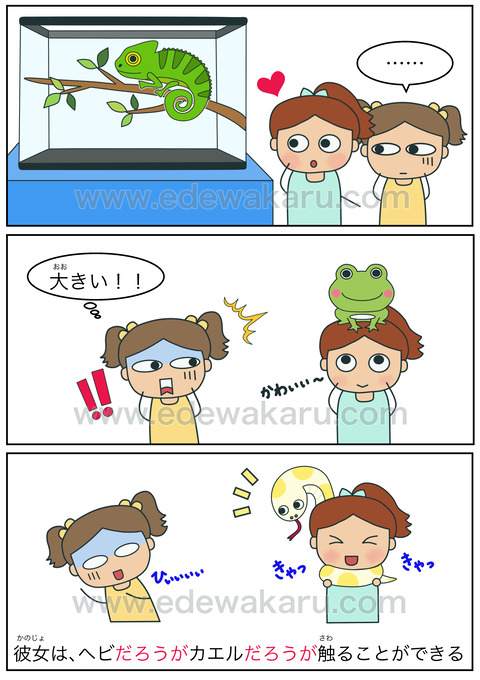
Meaning
〜regardless of whether it is 〜 or 〜
How to use it
Noun [dictionary form] + だろうが + noun [dictionary form] + だろうが
Explanation
“AだろうがBだろうが” is a pattern meaning “regardless of whether it is A or B, anything 〜” or “regardless of whether it is A or B, anyone 〜.” It is also used to say “whether it is A or B, in either case 〜.”
[Examples]
① She can touch snakes
だろうが
frogs
だろうが.
→She can touch any animal, whether it is a snake or a frog.
② Dogs
だろうが
cats
だろうが, I’m generally not fond of animals.
→I’m generally not fond of animals, whether they’re dogs or cats.
③ Apparently the event will be held, whether it’s sunny
だろうが
rainy
だろうが.
→Apparently the event will be held in either case, whether it’s sunny or rainy.
④ Whether they’re teachers
だろうが
students
だろうが, being late is no good.
→Being late is no good, whether you’re a teacher or a student.
⑤ Whether they’re children
だろうが
adults
だろうが, they must follow the rules.
→Children and adults alike must follow the rules.
There are several grammar patterns that include “だろう,” so let’s review them 😉
[Grammar patterns with “だろう”]
[Related patterns]
In context 5 examples
彼女は、ヘビだろうがカエルだろうが触ることができる
She can touch snakes or frogs—any kind of animal.
犬だろうがネコだろうが、動物はだいたい苦手だ
Whether they’re dogs or cats, I’m generally not fond of animals.
晴れだろうが雨だろうが、イベントは行われるそうだ
Apparently the event will be held whether it’s sunny or rainy.
先生だろうが学生だろうが、遅刻してくるのはよくない
Being late is no good, whether you’re a teacher or a student.
子供だろうが大人だろうが、ルールは守らなければいけない
Whether they’re children or adults, they must follow the rules.
Read the original source text
Meaning
〜でも〜でも関係なく
How to use it
名詞[辞書形]+だろうが+名詞[辞書形]+だろうが
Explanation
「AだろうがBだろうが」は「AでもBでも関係なく、何でも〜」「AでもBでも関係なく、誰でも〜」という意味の文型です。「AでもBでも、どちらの場合でも〜」と言いたい時にも使われます。
[例]
①彼女は、ヘビ
だろうが
カエル
だろうが
触ることができる
→ヘビでもカエルでも、どんな動物でも触ることができる
②犬
だろうが
ネコ
だろうが、動物はだいたい苦手だ
→犬でもネコでも、動物はだいたい何でも苦手だ
③晴れ
だろうが
雨
だろうが、イベントは行われるそうだ
→晴れでも雨でも、どちらの場合でもイベントは行われるそうだ
④先生
だろうが
学生
だろうが、遅刻してくるのはよくない
→先生でも学生でも、遅刻してくるのはよくない
⑤子供
だろうが
大人
だろうが、ルールは守らなければいけない
→子供でも大人でも、ルールは守らなければいけない
「だろう」がつく文型は、いくつかありますので復習しておきましょう😉
【「だろう」がつく文型】
【関連文型】
AIUEO JLPT Grammar
Meaning
This sentence pattern expresses that no matter how multiple different conditions or situations are presented, the result or response remains unchanged. It emphasizes that no matter the conditions, one’s actions or will remains firm.
How to use it
Noun + だろうが + Noun + だろうが
In context 5 examples
雨だろうが晴れだろうが、明日の試合は行われる。
Whether it rains or shines, tomorrow’s match will take place.
大人だろうが子供だろうが、このルールは守らなければならない。
Whether you’re an adult or a child, you must follow this rule.
あなたが賛成だろうが反対だろうが、私は自分の意見を変えるつもりはない。
Whether you agree or disagree, I'm not going to change my opinion.
金持ちだろうが貧乏だろうが、人はみな平等であるべきだ。
Whether you’re rich or poor, everyone should be treated equally.
彼は猫だろうが犬だろうが動物なら何でも好きだ。
He likes all animals, whether they be cats or dogs.
Read the original source text
Meaning
This sentence pattern expresses that no matter how multiple different conditions or situations are presented, the result or response remains unchanged. It emphasizes that no matter the conditions, one’s actions or will remains firm.
How to use it
名詞+だろうが+名詞+だろうが
Explanation · 日本語
この文型は、複数の異なる状況や条件を挙げて、どちらにしても結果や対応が変わらないことを強調する表現です。たとえどのような条件であっても、自分の行動や意志が揺るがないことを示します。
NINJAL 日本語文型データベース
Meaning
This is used to strongly state that something is completely unaffected whether “〜” is or is not the case, or whichever of the two cases applies.
The form “〜だろうが[疑問詞]+うが” is also used, expressing that none of the cases of the same kind have any effect at all.
This is the form used with na-adjectives and nouns in “〜うが〜うが.”
How to use it
na-A1だろうが na-A2だろうが (may also take the form “na-A1であろうが na-A2であろうが”)・na-Aだろうが na-Aで(は)なかろうが (may also take the form “na-Aであろうが (na-Aで(は))なかろうが”)
N1だろうが N2だろうが (may also take the form “N1であろうが N2であろうが”)・Nだろうが Nで(は)なかろうが (may also take the form “Nであろうが (Nで(は))なかろうが”)
Other
Notes
The two “〜” slots take the affirmative and negative forms of the same na-adjective or noun, na-adjectives or nouns with opposite meanings, or na-adjectives or nouns that are semantically related. A sentence expressing the speaker’s judgment or intention often follows “〜だろうが〜うが,” but it may also be a fact that has already been established.
In context 11 examples
子どもたちが満足だろうが不満だろうが,私が遺せる財産はこの家だけだ。
Whether the children are satisfied or dissatisfied, the only inheritance I can leave them is this house.
うちには猫が5匹いた。猫好きな母は、私が猫が苦手だろうが猫アレルギーだろうがおかまいなく、よそから次々猫をもらってきた。
We had five cats at home. My mother loves cats, and regardless of whether I was afraid of cats or allergic to them, she kept bringing home more and more cats from other places.
有名であろうが無名であろうが、景色のよさそうな所を探して旅をするのが私の生き甲斐だ。
Whether a place is famous or unknown, traveling in search of somewhere with beautiful scenery is my reason for living.
学歴が立派であろうがなかろうが、この仕事をするには何の関係もないんだ。
Whether you have an impressive academic background or not has nothing to do with doing this job.
試験勉強中だろうが、テレビでサッカーの試合の観戦中だろうが、母は僕に容赦なく家事を言いつける。
Whether I’m studying for an exam or watching a soccer game on TV, my mother unrelentingly orders me to do chores.
このゲームなら、大人だろうが子どもだろうが、男性だろうが女性だろうが、だれもが楽しめると思う。
I think everyone can enjoy this game, whether they’re an adult or a child, a man or a woman.
教授であろうが学生であろうが、論文の盗用は許されない。
Whether you’re a professor or a student, plagiarism in a thesis is unacceptable.
年末だろうが年末でなかろうが、私はいつも追われるように忙しいのです。
Whether it’s the end of the year or not, I’m always busy as if I’m being chased.
学生であろうがなかろうがこの美術館には入場料の割引はない。
There is no discount on admission to this art museum, whether you’re a student or not.
わざとだろうがうっかりだろうが、商品を勝手に持ち帰れば犯罪だ。
Whether you take it deliberately or accidentally, taking merchandise without permission is a crime.
祖父は、年末で世間が多忙だろうがどうだろうがおかまいなしで、今日も碁会所へ碁を打ちに行った。
My grandfather went to the go club to play go again today, completely unconcerned with whether everyone is busy at the end of the year or not.
Read the original source text
Meaning
〜が成立する場合もしない場合も、または、どちらの〜が成立する場合も、それに全く影響されないと強く言いたいときに使います。
「〜だろうが[疑問詞]+うが」の形も使い、同じような場合なら全部全く影響されないことを表します。
「~うが~うが」のナ形容詞と、名詞の場合の形です。
How to use it
na-A1だろうがna-A2だろうが(「na-A1であろうがna-A2であろうが」の形になることもある)・na-Aだろうがna-Aで(は)なかろうが(「na-Aであろうが(na-Aで(は))なかろうが」の形になることもある)
N1だろうがN2だろうが(「N1であろうがN2であろうが」の形になることもある)・NだろうがNで(は)なかろうが(「Nであろうが(Nで(は))なかろうが」の形になることもある)
その他
Notes
2つの〜には、同じナ形容詞または名詞の肯定形と否定形や、反対の意味のナ形容詞または名詞、意味的に関連があるナ形容詞または名詞などがきます。「〜だろうが〜うが」の後には、話し手の判断や意志などを表す文がくることが多いですが、すでに成立した事実でもいいです。