絵でわかる日本語
Yokubi — The Common Grammar Guide (https://yoku.bi)
Explanation
っけ is used when the speaker has forgotten something or is trying to recall something they once knew. It is usually, although not exclusively, used as a question directed to oneself.
っけ is almost never used with non-nouns except in the past tense. When it is, other stuff (like explanatory んだ) is usually put in between.
Similar to っけ, there is also かな. It is usually pronounced with a rising intonation as a question, but just like っけ it is a self-directed one. It simply means the speaker is wondering or unsure or hesitant about something, similar to "I wonder" in English. Needless to say it comes from the union of the question particle か and the sentence ending particle な.
It often comes after the volitional form of a verb to indicate that the speaker is about to decide to do something.
かい is a "friendly" question marker, especially for masculine speakers. Outside of familiar conversation, it can come across as rude/too direct. It's not as common in real life as it is in media. In standard usage, it can only be used to ask yes/no questions.
Parallel to かい, there is also だい. The vibes are pretty much the same, but unlike かい, だい is used to ask questions that expect an actual answer.
じゃない can also be used to ask confirmation questions. Yes, when attached to nouns, it's identical to normal "is not". No, there's no way around it. If you are lucky, there will be a question mark after it.
Note how adding a copula after verbs and い adjectives is technically incorrect but this type of じゃない lives on its own and can show up after them. It's not negating the predicate, it's just adding a negative question nuance ("isn't it?") and behaves like a sentence-ending particle.
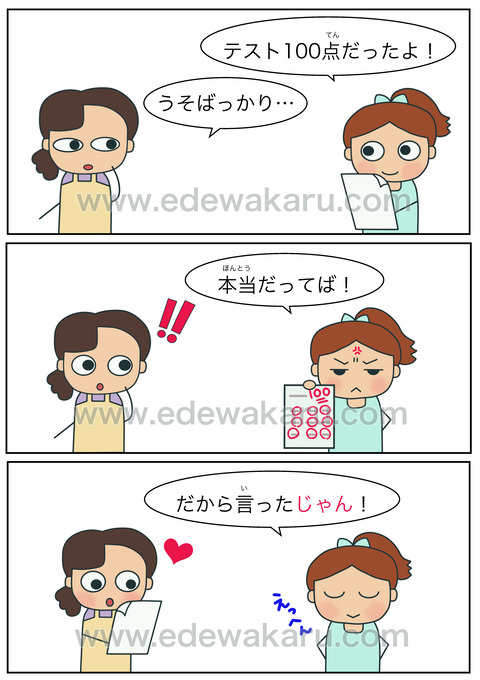
じゃん is a casual contraction of じゃない.
IMABI
語尾 III
Read this IMABI lesson ↗Explanation
語尾 III: かな, かしら, じゃん, い, け, が, こと, & たら
As the curriculum remastering progresses, the goal is to have all final particles given proper discussions, with most receiving their own lessons.
The Final Particle かな & かしら
かな = “I wonder” and is a colloquial variant of ~でしょう. ~ないかな shows wishful thinking by stressing desire for something to happen already. かしら is a feminine version.
1. 終わるかな。
I wonder if it’s going to end.
2. 悲しいかな。
How sad!
3. 窓まどを開けてくれないかな。
Could you open up the window?
Nuance Note: As demonstrated, かな may also elicit a request to people familiar/close to you.
4. 喋しゃべりすぎたのかな。
I wonder if I chatted too much?
5. どのくらい雪が積つもったかしらね。
I wonder how much snow accumulated.
6. どうかしら?
How does it look?
7. これをいただけるかしら?
May I take this?
9. 大丈夫だいじょうぶかしら。
I wonder if he’s OK.
10. あの男、誰だれかしら。
I wonder who that man is.
11a. 売らんかなの宣伝せんでん (慣用句)
11b. 売ってなんぼの姿勢が見え隠れする宣伝 (普通の言い方)
Exploitation/sales talk
Phrase Note: 売らんかな is a set phrase made up of the verb 売る (to sell), the auxiliary verb ~ん, which is a contraction of ~む (a Classical ending that shows guess here), and かな.
13. 「トルコで最もっとも危険な道路」と言われるのもむべなるかなである。
It’s also plausible that it’s called “the most dangerous road in Turkey”.
From 雨天炎天 by 村上春樹.
Phrase Note: むべなるかな is a set phrase made up an old 形容動詞 in its 連体形, むべなる, which is equivalent to もっともな (plausible; quite right), followed by かな.
果 はたせるかな means “just as expected”. It is interchangeable with 果たして, but it may be confusing to some simply because it has かな in it.
14. {果たせるかな・案の定じょう・思った通り}試こころみはことごとく失敗しっぱいしたんだ。
As expected, the experiment failed altogether.
The Final Particle じゃん
じゃん started out as a contraction of じゃないか. Once it reached Tokyo, it reached national stardom. Unlike what it came from, it is quite casual and is by no means blunt.
15. 足元あしもとが危なっかしいじゃん?
Isn’t your footing unsteady?
Word Note: 危なっかしい is not a typo of 危ない (dangerous). The word is very similar and refers to a situation that is either unsteady or dangerous. It is very similar to the word “precarious”.
16. いいじゃん。
Isn’t that good?
The Final Particle い
い is quite explosive and normally rude. It is almost always used by guys but is most importantly used by people of high temperament. It is often seen after だ, や, or じゃ and is also seen often after the 命令形.
17. 当たり前だぜぃ。
That is obvious!
18. おい、こりゃ何だい?
Hey, what is this!?
19. 何か飲むかい?
Will you drink anything?
20. こりゃ何じゃい?
What’s that?
Etymology Note: This particle comes from the particle よ. よ → え → い.
The Final Particle け
(っ)け is casually used in attempt to recall something by jogging one’s memory and perhaps also the listener(s). っけ can only follow either the plain non-past or the plain or polite past forms. So, ですっけ isn’t used. It is most often used with the plain forms, probably due to the fact that it is a contraction. However, with adjectives and verbs in the non-past, んだ is almost always inserted. So, you will see 新しいんだっけ but not 新しいっけ. This, though, may be acceptable in certain dialects.
This restriction stems from the fact that its usage with the past tense has a much longer history. -た can show confirmation in sentences like “what was his name?”. Obviously the person’s name hasn’t changed, but we still use the past tense form of the verb.
Similarly, with interrogatives it solicits a response from the listener, whether it’s something that the listener(s) have actually said before or not. Some situations, then, require the past tense. For instance, if you’re recalling an event that’s already happened, だっけ is wrong.
Examples
21. よく喧嘩けんかしたっけねえ。
We often bickered, didn’t we?
22. このパンはもう賞味期限しょうみきげんが切れてるんだっけ?
Isn’t this bread already passed the expiration date?
23. いつ象ぞうを捕つかまえたっけ?
When did you catch the elephant?
24. アメリカでは、税金ぜいきんが去年ぐーんと引き上げられたっけ。
Weren’t taxes raised straight up in America last year?
25. いつだ(った)っけ。
When is it?
Historical Note: ~たっけ comes from ~たりけり. It does not come from ~たかえ. ~かえ is now old-fashioned, but it is a feature of Eastern Japanese dialects similar to かい without the vulgarity.
26. 出来たかえ。
Could you do it?
From 我輩わがはいは猫である by 漱石.
Dialect Note: In some dialects け can be a ruder or typical version of か.
27. これ要るけ。(京都弁)
Do you need this?
Also, in some dialects け → かいな. In Standard Japanese, though, this is an old ending that stresses a thought with a sense of doubt or is a contraction of そうかな.
28. やったかいな (京都弁) = やったっけ
The Final Particle が
1. The final particle が shows malice by speaking ill of someone. This usage is very rude and may cause sharp backlashes.
29. ガキめが!
You brat!
2. The final particle が may hint at one’s own thoughts rather than what’s at hand.
30. 今日はもう閉店なんですが。
But we’re already closed for today. (Polite)
31. 引っ越こせばよかったんだが。
It would be good if we had moved, but…
32. 僕も注意したんだが。
I also warned them, but…
33. もしもし、鈴木ですが。
Hello, this is Suzuki. (Polite)
34. 社長がお呼びですが。 (Respectful)
The company president has called for you.
The Final Particle たら
This たら brings up something to someone’s attention with a sense of surprise, criticism, or impatience. This has nothing to do with the conditionals, but don’t be surprised when you hear it. It’s not a good thing if such a statement is directed to you.
35. やめてったら!
Stop that!
36. だまってたら!
Shut it!
Multiple 語尾
You will often see more than one 語尾 at once. There are several important combinations that you should be aware that you can make. Exact combinations may not be common in some parts of Japan. Plus, there are plenty of interjectory particles that are very regional.
かね
かな is the combination of か and な. かね is also possible. It works the same way as かな, but it is definitely more common in certain age groups and or dialects in Japanese. It can also be used to soften a criticism like in “どうしてそんなことをしているのかね?” It is softer than かな.
がな
This comes from the archaic particle もがな, which shows wishful thinking. This is equivalent to といいなあ. がな is still occasionally used. It may also be dialectal to emphasize (a reminder).
37. もう済すんだがな!
It should already be done!
かい
かい is a more harsh version of か. Its use is declining and can be associated with foreigner speech as learners tend to overuse it.
38. もういいのかい。
Are you done already?
わい
わい is typical of (older) male speech, and it is more common in dialectical speech, especially in West Japanese Dialects. This ending shows exclamation.
39. こんな老人を目の前にして「お墓」の一語をさらりと口に出すというのはなかなか良い根性をしておるわいと平岡は思い一転して愉快な気分になってきた。
Having such an old man in front of his eyes without hesitation express the word “grave” shows good tenacity, Hiraoka thought, and in turn, he came to feel delightful.
From 不可能 by 松浦寿輝.
40. 困ったことだわい。
I’m troubled.
41. そんなことないわい。
That’s not it at all.
In context 42 examples
終わるかな。
I wonder if it’s going to end.
悲しいかな。
How sad!
窓まどを開けてくれないかな。
Could you open up the window?
喋しゃべりすぎたのかな。
I wonder if I chatted too much?
どのくらい雪が積つもったかしらね。
I wonder how much snow accumulated.
どうかしら?
How does it look?
これをいただけるかしら?
May I take this?
大丈夫だいじょうぶかしら。
I wonder if he’s OK.
あの男、誰だれかしら。
I wonder who that man is.
売らんかなの宣伝せんでん (慣用句)
Exploitation/sales talk
売ってなんぼの姿勢が見え隠れする宣伝 (普通の言い方)
Exploitation/sales talk
「トルコで最もっとも危険な道路」と言われるのもむべなるかなである。
It’s also plausible that it’s called “the most dangerous road in Turkey”.
{果たせるかな・案の定じょう・思った通り}試こころみはことごとく失敗しっぱいしたんだ。
As expected, the experiment failed altogether.
足元あしもとが危なっかしいじゃん?
Isn’t your footing unsteady?
いいじゃん。
Isn’t that good?
当たり前だぜぃ。
That is obvious!
おい、こりゃ何だい?
Hey, what is this!?
何か飲むかい?
Will you drink anything?
こりゃ何じゃい?
What’s that?
よく喧嘩けんかしたっけねえ。
We often bickered, didn’t we?
このパンはもう賞味期限しょうみきげんが切れてるんだっけ?
Isn’t this bread already passed the expiration date?
いつ象ぞうを捕つかまえたっけ?
When did you catch the elephant?
アメリカでは、税金ぜいきんが去年ぐーんと引き上げられたっけ。
Weren’t taxes raised straight up in America last year?
いつだ(った)っけ。
When is it?
出来たかえ。
Could you do it?
これ要るけ。(京都弁)
Do you need this?
やったかいな (京都弁) = やったっけ
やったかいな (Kyoto dialect) = やったっけ (I wonder if I did it / Did I do it?)
The final particle が shows malice by speaking ill of someone. This usage is very rude and may cause sharp backlashes.
You brat!
ガキめが!
You brat!
The final particle が may hint at one’s own thoughts rather than what’s at hand.
But we’re already closed for today. (Polite)
今日はもう閉店なんですが。
But we’re already closed for today. (Polite)
引っ越こせばよかったんだが。
It would be good if we had moved, but…
僕も注意したんだが。
I also warned them, but…
もしもし、鈴木ですが。
Hello, this is Suzuki. (Polite)
社長がお呼びですが。 (Respectful)
The company president has called for you.
やめてったら!
Stop that!
だまってたら!
Shut it!
もう済すんだがな!
It should already be done!
もういいのかい。
Are you done already?
こんな老人を目の前にして「お墓」の一語をさらりと口に出すというのはなかなか良い根性をしておるわいと平岡は思い一転して愉快な気分になってきた。
Having such an old man in front of his eyes without hesitation express the word “grave” shows good tenacity, Hiraoka thought, and in turn, he came to feel delightful.
困ったことだわい。
I’m troubled.
そんなことないわい。
That’s not it at all.
Read the original source text
Explanation
語尾 III: かな, かしら, じゃん, い, け, が, こと, & たら
As the curriculum remastering progresses, the goal is to have all final particles given proper discussions, with most receiving their own lessons.
The Final Particle かな & かしら
かな = “I wonder” and is a colloquial variant of ~でしょう. ~ないかな shows wishful thinking by stressing desire for something to happen already. かしら is a feminine version.
1. 終わるかな。
I wonder if it’s going to end.
2. 悲しいかな。
How sad!
3. 窓まどを開けてくれないかな。
Could you open up the window?
Nuance Note: As demonstrated, かな may also elicit a request to people familiar/close to you.
4. 喋しゃべりすぎたのかな。
I wonder if I chatted too much?
5. どのくらい雪が積つもったかしらね。
I wonder how much snow accumulated.
6. どうかしら?
How does it look?
7. これをいただけるかしら?
May I take this?
9. 大丈夫だいじょうぶかしら。
I wonder if he’s OK.
10. あの男、誰だれかしら。
I wonder who that man is.
11a. 売らんかなの宣伝せんでん (慣用句)
11b. 売ってなんぼの姿勢が見え隠れする宣伝 (普通の言い方)
Exploitation/sales talk
Phrase Note: 売らんかな is a set phrase made up of the verb 売る (to sell), the auxiliary verb ~ん, which is a contraction of ~む (a Classical ending that shows guess here), and かな.
13. 「トルコで最もっとも危険な道路」と言われるのもむべなるかなである。
It’s also plausible that it’s called “the most dangerous road in Turkey”.
From 雨天炎天 by 村上春樹.
Phrase Note: むべなるかな is a set phrase made up an old 形容動詞 in its 連体形, むべなる, which is equivalent to もっともな (plausible; quite right), followed by かな.
果 はたせるかな means “just as expected”. It is interchangeable with 果たして, but it may be confusing to some simply because it has かな in it.
14. {果たせるかな・案の定じょう・思った通り}試こころみはことごとく失敗しっぱいしたんだ。
As expected, the experiment failed altogether.
The Final Particle じゃん
じゃん started out as a contraction of じゃないか. Once it reached Tokyo, it reached national stardom. Unlike what it came from, it is quite casual and is by no means blunt.
15. 足元あしもとが危なっかしいじゃん?
Isn’t your footing unsteady?
Word Note: 危なっかしい is not a typo of 危ない (dangerous). The word is very similar and refers to a situation that is either unsteady or dangerous. It is very similar to the word “precarious”.
16. いいじゃん。
Isn’t that good?
The Final Particle い
い is quite explosive and normally rude. It is almost always used by guys but is most importantly used by people of high temperament. It is often seen after だ, や, or じゃ and is also seen often after the 命令形.
17. 当たり前だぜぃ。
That is obvious!
18. おい、こりゃ何だい?
Hey, what is this!?
19. 何か飲むかい?
Will you drink anything?
20. こりゃ何じゃい?
What’s that?
Etymology Note: This particle comes from the particle よ. よ → え → い.
The Final Particle け
(っ)け is casually used in attempt to recall something by jogging one’s memory and perhaps also the listener(s). っけ can only follow either the plain non-past or the plain or polite past forms. So, ですっけ isn’t used. It is most often used with the plain forms, probably due to the fact that it is a contraction. However, with adjectives and verbs in the non-past, んだ is almost always inserted. So, you will see 新しいんだっけ but not 新しいっけ. This, though, may be acceptable in certain dialects.
This restriction stems from the fact that its usage with the past tense has a much longer history. -た can show confirmation in sentences like “what was his name?”. Obviously the person’s name hasn’t changed, but we still use the past tense form of the verb.
Similarly, with interrogatives it solicits a response from the listener, whether it’s something that the listener(s) have actually said before or not. Some situations, then, require the past tense. For instance, if you’re recalling an event that’s already happened, だっけ is wrong.
Examples
21. よく喧嘩けんかしたっけねえ。
We often bickered, didn’t we?
22. このパンはもう賞味期限しょうみきげんが切れてるんだっけ?
Isn’t this bread already passed the expiration date?
23. いつ象ぞうを捕つかまえたっけ?
When did you catch the elephant?
24. アメリカでは、税金ぜいきんが去年ぐーんと引き上げられたっけ。
Weren’t taxes raised straight up in America last year?
25. いつだ(った)っけ。
When is it?
Historical Note: ~たっけ comes from ~たりけり. It does not come from ~たかえ. ~かえ is now old-fashioned, but it is a feature of Eastern Japanese dialects similar to かい without the vulgarity.
26. 出来たかえ。
Could you do it?
From 我輩わがはいは猫である by 漱石.
Dialect Note: In some dialects け can be a ruder or typical version of か.
27. これ要るけ。(京都弁)
Do you need this?
Also, in some dialects け → かいな. In Standard Japanese, though, this is an old ending that stresses a thought with a sense of doubt or is a contraction of そうかな.
28. やったかいな (京都弁) = やったっけ
The Final Particle が
1. The final particle が shows malice by speaking ill of someone. This usage is very rude and may cause sharp backlashes.
29. ガキめが!
You brat!
2. The final particle が may hint at one’s own thoughts rather than what’s at hand.
30. 今日はもう閉店なんですが。
But we’re already closed for today. (Polite)
31. 引っ越こせばよかったんだが。
It would be good if we had moved, but…
32. 僕も注意したんだが。
I also warned them, but…
33. もしもし、鈴木ですが。
Hello, this is Suzuki. (Polite)
34. 社長がお呼びですが。 (Respectful)
The company president has called for you.
The Final Particle たら
This たら brings up something to someone’s attention with a sense of surprise, criticism, or impatience. This has nothing to do with the conditionals, but don’t be surprised when you hear it. It’s not a good thing if such a statement is directed to you.
35. やめてったら!
Stop that!
36. だまってたら!
Shut it!
Multiple 語尾
You will often see more than one 語尾 at once. There are several important combinations that you should be aware that you can make. Exact combinations may not be common in some parts of Japan. Plus, there are plenty of interjectory particles that are very regional.
かね
かな is the combination of か and な. かね is also possible. It works the same way as かな, but it is definitely more common in certain age groups and or dialects in Japanese. It can also be used to soften a criticism like in “どうしてそんなことをしているのかね?” It is softer than かな.
がな
This comes from the archaic particle もがな, which shows wishful thinking. This is equivalent to といいなあ. がな is still occasionally used. It may also be dialectal to emphasize (a reminder).
37. もう済すんだがな!
It should already be done!
かい
かい is a more harsh version of か. Its use is declining and can be associated with foreigner speech as learners tend to overuse it.
38. もういいのかい。
Are you done already?
わい
わい is typical of (older) male speech, and it is more common in dialectical speech, especially in West Japanese Dialects. This ending shows exclamation.
39. こんな老人を目の前にして「お墓」の一語をさらりと口に出すというのはなかなか良い根性をしておるわいと平岡は思い一転して愉快な気分になってきた。
Having such an old man in front of his eyes without hesitation express the word “grave” shows good tenacity, Hiraoka thought, and in turn, he came to feel delightful.
From 不可能 by 松浦寿輝.
40. 困ったことだわい。
I’m troubled.
41. そんなことないわい。
That’s not it at all.