AIUEO JLPT Grammar
Meaning
This sentence pattern is used when discussing debates, conflicts, or exchanges of opinions related to a particular topic or subject.
How to use it
Noun + を + めぐって; Noun + を + めぐり
In context 5 examples
環境問題をめぐって、さまざまな意見が交わされている。
Various opinions are being exchanged concerning environmental issues.
この法律をめぐって、国会で激しい議論が行われた。
Fierce debates were held in the Diet regarding this law.
彼の発言をめぐり、社内で大きな議論が巻き起こった。
His statement sparked major discussions within the company.
遺産相続をめぐり、家族間で争いが起こった。
A dispute arose among the family over inheritance.
新しいプロジェクトの進め方をめぐって、チーム内で意見が分かれている。
Opinions are divided within the team about how to proceed with the new project.
Read the original source text
Meaning
This sentence pattern is used when discussing debates, conflicts, or exchanges of opinions related to a particular topic or subject.
How to use it
名詞を+めぐって名詞を+めぐり
Explanation · 日本語
この文型は、特定の話題や対象に関連する議論や対立、意見のやり取りがあることを表す表現です。
文法
Meaning
About ~
An expression used to explain what kind of debate, dispute, or difference of opinion is taking place.
How to use it
N + をめぐって
In context 6 examples
残り1つしかないアイスクリームをめぐって、息子たちが喧嘩している。
My sons are fighting over the one remaining ice cream.
このドラマは1人の女性をめぐって、4人の男性が争うストーリーです。
This drama is a story about four men competing over one woman.
高層マンションの建設をめぐり、近隣住民と建設会社が対立している。
Local residents and the construction company are at odds over the construction of a high-rise apartment building.
原発の賛否をめぐって、様々な意見が飛び交っている。
Various opinions are flying back and forth over whether to support or oppose nuclear power.
父の遺産をめぐって、兄弟が争っている。
The siblings are fighting over their father’s inheritance.
子供の親権をめぐって、裁判が行われた。
A trial was held over child custody.
Read the original source text
Meaning
〜について
どんな議論や争い、意見の対立が起きているのかを説明するときに使う表現。
How to use it
N + をめぐって
DoJG 日本語文法辞典(全集)
Meaning
Centering around; in connection with; over; concerning; regarding; with regard to
How to use it
(i) Noun | をめぐって | |
| この報道をめぐって | Concerning this news report |
(ii) Noun1 | をめぐるNoun2 | |
| 基礎研究をめぐる現状 | Current status of (literally: around) basic research |
(iii) Embedded Question | をめぐって | |
| 日本がこの問題にどう対応するべきかをめぐって | Regarding how Japan should handle this problem |
(iv) Noun1かNoun2か | をめぐって | |
| 実行か中止かをめぐって | Concerning whether we should execute something, or hold off on it |
(v) Embedded Question1+Embedded Question2 | をめぐって | |
| 単独で行うかパートナーを探すかをめぐって | Regarding whether we want to do it by ourselves or look for a partner |
Explanation
をめぐって・めぐる A compound particle meaning "concerning; over", which is used with an issue over which different opinions, ideas, etc., are expressed or exchanged.
In context 14 examples
モノレール建設をめぐって市民の意見が対立している。
Citizens' opinions are divided over the monorail construction.
無駄な公共事業をめぐる批判の声が強まっている。
(Voices of) Criticism concerning wasteful public projects is growing stronger.
大学運営は今後どうあるべきかをめぐって活発に意見が交わされた。
Opinions were exchanged actively regarding how universities should be run from now on.
進攻か撤退かをめぐって激しい議論が戦わされた。
There was a heated discussion over whether we should advance or retreat.
新制度に即時切り替えるべきか来年度まで待つべきかをめぐって委員の間で意見が分かれた。
Opinions were divided among the committee members regarding whether we should shift to the new system immediately or wait until next year.
新しい歴史教科書をめぐって激しい議論が続いている。
The fierce debate over the new history textbook continues.
審判の判定をめぐって選手が乱闘し試合が約1時間中断した。
The players had a fight over the umpire's decision, and the game was interrupted for about an hour.
自衛隊派遣の是非をめぐって激しい議論が交わされた。
There were fierce arguments over the pros and cons of dispatching the Self-Defence Forces.
老化のメカニズムをめぐる研究が注目を浴びている。
Research into the mechanism of aging is drawing a lot of attention.
我が県でもITをめぐる働きが加速しそうです。
It looks like the movement toward IT (information technology) will accelerate in our prefecture, too.
本章では、原子力発電をめぐる最近の動向を紹介すると共に、将来の有力なエネルギー源について概観する。
This chapter introduces recent trends in nuclear power generation and gives an overview of promising energy sources for the future.
他の国でもいつ軍隊を引き上げるべきかをめぐって議論が戦わされている。
Just when the army should be withdrawn is hotly debated in other countries, too.
深刻化する少年犯罪が連日のように報道されている中、厳罰主義か更生重視かをめぐって社会の対応が揺れている。
While there are reports almost every day on juvenile crime, which is becoming more serious, society wavers between applying strict punishment and emphasizing rehabilitation.
調停案を受け入れるかこのまま交渉を続けるかをめぐって我々の間で意見が分かれている。
Our opinions are divided over whether we should accept the arbitration plan or continue negotiating.
絵でわかる日本語
Meaning
something is happening around ~
something is taking place nearby concerning ~
How to use it
Noun [dictionary form] + をめぐって
Noun [dictionary form] + をめぐる + noun
Noun [dictionary form] + をめぐっての + noun
Explanation
「〜をめぐって」 means “something is happening around ~.” Many people memorize it as 「〜について=〜に関して=〜をめぐって」 (“about ~”), but the feature of this pattern is that it focuses on what is happening around something, as in “something is happening in connection with ~.” 😮 Also, 「〜をめぐり」 is a more formal way to say 「〜をめぐって」 and has the same meaning.
「〜について・〜に関して」 → the content
「〜をめぐって」 → what is happening around it
It’s good to remember it this way. 😊 Therefore, 「〜をめぐって」 is often used with words such as 「ケンカする」 (fight), 「議論する」 (discuss), 「争う」 (dispute), 「戦う」 (fight), 「戦争が起こる」 (a war breaks out), and 「〜が起こる」 (something happens). 😌 「〜をめぐって」 is written in kanji as 「〜を巡って」, so advanced learners should be sure to remember that. This pattern is characteristic of written language and is not often used in conversation, but you will often hear it in the news. 😀
In context 5 examples
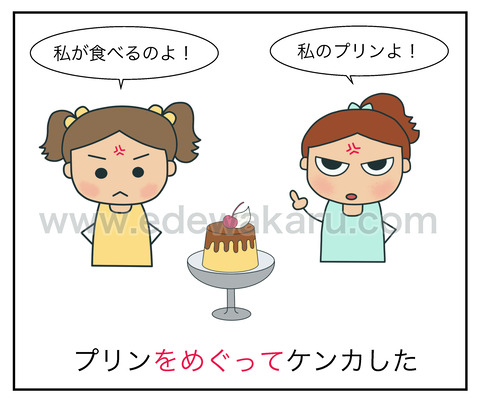
プリンをめぐってケンカした
→どちらがプリンを食べるかについて、ケンカをした【周りで起こっていること:ケンカ】We fought over the pudding. →We fought over who would eat the pudding. [What happened around it: a fight]
犬を飼うことをめぐって、家族みんなで話し合いをした
→犬を飼うか飼わないかについて、家族みんなで話し合いをした【周りで起こっていること:話し合いの発生】The whole family discussed whether or not to get a dog. →The whole family discussed whether or not to get a dog. [What happened around it: a discussion took place]
親の遺産をめぐって、兄弟が争った
→親の遺産を誰がもらうかについて、兄弟が争った【周りで起こっていること:争い】The siblings fought over their parents’ inheritance. →The siblings fought over who would receive their parents’ inheritance. [What happened around it: a dispute]
あの事件をめぐって、様々な捜査がされている
→あの事件に関して、様々な捜査がされている【周りで起こっていること:様々な捜査】Various investigations are being conducted in connection with that incident. →Various investigations are being conducted in connection with that incident. [What happened around it: various investigations]
今日、次のオリンピック開催地をめぐる会議が行なわれている
→今日、次のオリンピック開催地をどこにするかについての会議が行なわれている【周りで起こっていること:会議】A meeting is being held today about where the next Olympics will be hosted. →A meeting is being held today about where the next Olympics will be hosted. [What happened around it: a meeting]
Read the original source text
Meaning
〜に関して、周囲で…が起こっている
〜について、周りで…が発生している
How to use it
名詞[辞書形]+をめぐって
名詞[辞書形]+をめぐる+名詞
名詞[辞書形]+をめぐっての+名詞
Explanation
「〜をめぐって」は「〜について、周りで…が起こっている」という意味の文型です。よく「〜について=〜に関して=〜をめぐって」と覚えている人が多いですが、この文型の特徴は「何かに関して、周囲で何かが発生している」というように、周りで起こっていることに注目しているところです😮また「
〜をめぐり」は「〜をめぐって」よりかたい言い方で意味は同じです。
[〜について・〜に関して]→内容
[〜をめぐって]→周囲で起こっていること
上のように覚えておくといいですね😊ですから、
「〜をめぐって」は後ろに「ケンカする」「議論する」「争う」「戦う」「戦争が起こる」「〜が起こる」などという単語と使われる場合が多いです
😌また「〜をめぐって」は漢字で書くと「〜を巡って」と書きますので、上級レベルの人はぜひ覚えておいてください。この文型は書き言葉的なので、会話で使用することはあまりありませんが、ニュースなどで聞く機会は多いと思います😀
くらべてわかる日本語表現文型辞典
Meaning
Meaning 1: A is the purpose or central theme of doing B.
Meaning 2: In the forms “Aをめぐって~/Aめぐりの~.”
Moving from place to place in succession.
How to use it
AをめぐってB (AをめぐるB/Aめぐり)
[Noun—∅] をめぐって
Explanation
[Contrast 1]
“AについてB” (Meaning 1, p. 247)
When A is the central theme rather than the purpose of B, “AをめぐってB” can be replaced by “AについてB.”
[Contrast 2]
“Aまわり”
“Aめぐり” is used for recreational or voluntary activities, while “Aまわり” is often used for activities involving duties or responsibilities.
○会社をまわって、就職活動をする。 ○得意先まわり — I’m going around to companies to look for a job. ○ visiting clients
×会社をめぐって、就職活動をする。 ×得意先めぐり — I’m going around to companies to look for a job. × visiting clients
Notes
[Note 1]
・Generally, there are multiple people carrying out B.
○この法案をめぐって、話し合いは続いた。 — Discussions continued over this bill.
×この法案をめぐって、私は考えた。 — I thought about this bill.
○優勝カップをめぐって、8チームが争った。 — Eight teams competed for the championship cup.
×我がチームは、優勝カップをめぐって必死に闘った。 — Our team fought desperately for the championship cup.
This does not apply when there are several options concerning a single topic and someone is wavering over them.
○表現ひとつをめぐっても、首相は最後まで大きな抵抗を見せた。 — Even over a single choice of wording, the prime minister showed strong resistance to the very end.
In context 8 examples
彼ら3人は、一人の女性をめぐって争った。
The three of them fought over one woman.
遺産をめぐって、遺族同士の喧嘩が絶えない。
The heirs are constantly fighting over the inheritance.
動物界では縄張りをめぐって、雄同士が闘っている。
In the animal kingdom, males fight over territory.
新入社員の待遇をめぐって、意見の対立がある。
There are conflicting opinions over the treatment of new employees.
彼は諸国をめぐって修業してくるといった。
He said he would travel around various countries to train.
お坊さんが家々をめぐって托鉢している。
A Buddhist monk is going from house to house begging for alms.
心臓から押し出された血液は体内をめぐって、また心臓に戻ってくる。
Blood pumped out from the heart circulates through the body and returns to the heart.
温泉めぐりの旅やお寺めぐりをしたい。
I’d like to take trips visiting hot springs and temples.
Read the original source text
Meaning
意味1:AはBを行うときの目的や中心テーマである。
意味2:「Aをめぐって~/Aめぐりの〜」の形で。
順々に色々な場所へ移動していくこと。
How to use it
AをめぐってB(AをめぐるB/Aめぐり)
[名詞-∅]をめぐって
Explanation
【対比1】
「AについてB」(意味1 P.247)
AがBの目的ではなく、中心テーマになっている場合、「AをめぐってB」は「AについてB」で置き換えられる。
【対比2】
「Aまわり」
「Aめぐり」は娯楽的・自発的に行なうことに使われ、「Aまわり」は義務・責任などを伴うことに用いることが多い。
○会社をまわって、就職活動をする。 ○得意先まわり
×会社をめぐって、就職活動をする。 ×得意先めぐり
Notes
【注意1】
・一般にBをする主体は複数存在している。
○この法案をめぐって、話し合いは続いた。
×この法案をめぐって、私は考えた。
○優勝カップをめぐって、8チームが争った。
×我がチームは、優勝カップをめぐって必死に闘った。
一つのテーマについての選択肢が複数存在し、それについて迷っている場合は、この限りではない。
○表現ひとつをめぐっても、首相は最後まで大きな抵抗を見せた。
日本語NET JLPT文法解説まとめ
Meaning
“Concerning ~”
An expression used to explain what kinds of discussions, disputes, or differences of opinion are taking place.
How to use it
N + をめぐって
Explanation
"regarding / relating to 〜 / concerning 〜 "
Expressions used when explaining what kind of discussions, disputes, or conflicting opinions are occurring.
In context 6 examples
残り1つしかないアイスクリームをめぐって、息子たちが喧嘩している。
My sons are fighting over the one remaining ice cream.
このドラマは1人の女性をめぐって、4人の男性が争うストーリーです。
This drama is a story about four men competing over one woman.
高層マンションの建設をめぐり、近隣住民と建設会社が対立している。
Local residents and the construction company are at odds over the construction of a high-rise apartment building.
原発の賛否をめぐって、様々な意見が飛び交っている。
Various opinions are flying back and forth over whether to support or oppose nuclear power.
父の遺産をめぐって、兄弟が争っている。
The siblings are fighting over their father’s inheritance.
子供の親権をめぐって、裁判が行われた。
A trial was held over child custody.
Read the original source text
Meaning
"〜について"
どんな議論や争い、意見の対立が起きているのかを説明するときに使う表現。
How to use it
N + をめぐって
Explanation
"regarding / relating to 〜 / concerning 〜 "
Expressions used when explaining what kind of discussions, disputes, or conflicting opinions are occurring.
IMABI
About
Read this IMABI lesson ↗Explanation
About: ~について, ~に関して, & ~をめぐって
It normally doesn’t take long to find differences between similar items in Japanese. Sometimes there might be certain forms and meanings of one that the other doesn’t have, or there could be formality differences. These are the kinds of differences that you will learn about in regards to ~について, ~に関して, and ~をめぐって in this lesson.
~について & ~に関して
You have no doubt come across ~について and ~に関して and noticed that each time that they were both translated as “about”. Although this is quite true, most students don’t understand the differences between them, when and when not to attach は, and how to choose an appropriate 連体形 (attribute form).
First, consider the following.
1a. 今から韓国に関して話してください。△
1b. 今から韓国について話してください。〇
From now talk about Korea.
2.
A: 田山さんは家事はやりますか。
B: いえ、家事について、家内任せです。X
B: いえ、家事については、家内任せです。〇
A: Does Mr. Tayama do housework?
B: No, in regards to housework, he leaves it up to his wife.
The fundamental usage of ~について and ~に関して is to emphasize an event/person as the topic/theme. Then, one states something about it. These phrases are also common in forming questions in this manner.
3. 戊辰戦争ぼしんせんそうについて教えていただけませんか。
Could you teach me about the Boshin War?
4. 彼らは貿易ぼうえきに関して議論した。
They argued about trade.
Whereas ~について emphasizes the content at hand, ~に関して includes the surroundings related to it. Also, as ~について comes from the verb 付く, it is used a lot when referring to things being tied to acts of communication via speaking, writing, thinking, etc. As you might gather just from the few examples thus far, ~に関して is more formal and stiff. Given its nuance and formality, you should see why it was wrong in the first example.
5. 駐車違反取締り{〇 についての・Xに関しての}お知らせ
Notice about the management of parking violations
6. 説明会のタイトルは水不足の問題{〇 について・Xに関して}です。
The title of this information session is about the water shortage problem.
Given the defining difference between the two, which do you suppose would be used when a student is giving a speech about his/her home country? The answer is ~について. In fact, ~について is used in the introduction of speeches because you are telling the listeners what your speech is going to be about, not what your speech/content of speech has relation with. Individual examples might be related with something else, but that’s not your introduction either.
読み物: Excerpt from a Student Group Speech about 敬語
「皆さん、こんにちは。私たちのプロジェクトのトピックは敬語です。私たちは日本の方に色々な敬語についての質問をしてみたかったので、今回日本人の敬語の考え方をテーマにして発表することにしました。インタビューした人のうち、13人が女性で、8人が男性でした。大体皆さんは若者でした。たった2人だけが35歳以上でした。主婦しゅふが8人いて、大学生が6人いて、大学院生が4人いて、仕事をしている人が4人いました。
最初に聞いてみた2つの質問は、敬語学習の時期じきについてです。…
日本人の敬語の考え方についていくつか質問しました。その中で私たちが思っていたのと違った答えだったのは、「敬語はフェイクで、敬語を使わなかったら、人ともっと近くなれる」というのでした。日本人がすべて「敬語が必要だ」という主張しゅちょうに一致いっちしていないのにとてもびっくりしました。何故現代の日本社会で敬語が必要なのかは、文化と習慣からだけだというわけではなくて、誠に尊敬の意を表している日本人の心を代表としていると思います。言語は時代と共ともに変わるにもかかわらず、言葉遣ことばづかいに気をつけないと、「日本人じゃない」と思われてしまうこともこの発表の結果を考えると、お分かりいただけるでしょう。敬語の使い方は日本人自身にとっても難しいけれど、この先もずっと大切に使われるであろうと言えるかもしれません。これで、敬語についての発表を終わります。」
1. What were the demographics of the Japanese people interviewed?
2. How many people were college students?
3. What were the first two questions about?
4. What is the attribute form of について?
5. What was the most surprising response?
6. Language changes with time, but what must you always pay attention to?
7. Translate the last two sentences.
8. True or False: 敬語 is thought to be part of Japanese culture and tradition according to the findings of this speech.
In explanation these phrases are essentially interchangeable. The same kinds of words are used with them, and as far as the kinds of sentences they appear in, they’re essentially parallel. So, what mainly causes problems is formality and the nuance difference mentioned earlier.
7. 人種差別主義じんしゅさべつしゅぎに{ついて・関して}の問題は重大です。
The problem against racism is serious.
8. 自由と圧制あっせいについて考察する。
To inquire about freedom and oppression.
9. 彼女の顔についていえば、本当に美しいですね。
Starting with her look, she’s really beautiful, isn’t she?
Variant Usage: Although not related, ~につき (a variant which will be mentioned again) and ~について may also mean “per” with numerical phrases. Lastly, ~につき may be like ~ため to show reasoning in formal situations where it is typically written in 漢字 as ~に就き.
10. 雪雪崩ゆきなだれに就つき電車は不通ふつうです。
Train (service) is suspended due to an avalanche.
11. 牛肉は今一ポンドにつき6ドルだよ。
Meat is six dollars per pound now.
12. 千円につき50円の手数料てすうりょうがかかります。
There is a fifty yen handling fee per one thousand yen.
~については・に関しては
は is added, as one would imagine, to raise something as the topic or thing of contrast.
13.
A: 秘書がお金を受け取ったんでしょう。
B: そのこと{については・関しては}、私は何も知りません。
A: Didn’t the secretary receive the money?
B: I don’t know anything about that.
14. 男性であるか女性であるか、年齢はどうかなど{については・に関しては}、それほど重要ではありません。
Whether it be about them being male or female or their age, it’s not that important.
Formality
You can also find these expressions as ~につきまして and ~に関しまして in more polite settings.
15. ご質問につきましてお答えします。(謙譲語)
I will answer concerning your question.
16. この前の照会しょうかいに関しまして (Very Formal)
Regarding your recent inquiry
Variant Note: について can also be seen as につき in very formal writing.
Attribute Forms
~についての is the attribute form of ~について. As for ~に関して, it has the attribute forms ~に関しての and ~に関する, with the latter being more literary.
17. 政府に関しての討論とうろん。
A debate about the government.
18. 平和に関する北朝鮮の疑惑ぎわくは日本の防衛ぼうえいを脅威きょういに晒さらしている。
North Korean doubts on peace is threatening Japanese security.
19. 平和に関する会合を開く。
To hold a meeting concerning peace.
Meaning Note: ~に関する and ~に関わる have overlapping meanings of “concerning/related to X’. The first shows a connection, but the other shows a direct effect.
A+の+連体形+の
In this pattern it moreover limits something in noting a condition about what is expressed by the noun. It’s very similar to ~に関かんして.
20. コーヒーの冷さめたの
Cold in regards to coffee
21. コーヒーに関しては冷たい。
It’s cold in relation to coffee.
22. オレンジの小振こぶりなの
A comparatively small orange
Meaning Note: The word 小振り is normally only used in reference to things like fruits, fish, etc. However, its usage may be expanded some in speaking. Nevertheless, something like 小振りなテレビ is very weird. You should use 小型こがたのテレビ instead.
~をめぐって・めぐり
~を巡って, also seen as ~を巡り in more stiff, literary language, is typically written with 巡, but this is important in understanding its usage. There are some instances where it is used in a more literal sense of passing through places.
23. 四国四十八ヶ所の名所旧跡めいしょきゅうせきを巡る。
To pass through the 48 famous landmarks of Shikoku.
24. 僕は被災地ひさいちを巡るつもりだ。
I plan to go around the devastated area.
25. 鎌倉の古寺を巡ろう。
Let’s go through the Kamakura temples!
26. 名月や池を巡りて夜もすがら
Going about the full moon and lakes, all night.
From 芭蕉ばしょう.
Conjugation Note: 巡りて is the Classical form of 巡って.
It can also be used in the sense of something that had gone away has returned. In this sense, it can also be written as 廻る.
27. 季節が巡る。
Seasons return.
28a. 血液が体内を巡るのは生きるために必要だ。
28b. 血液が体内を巡らなければ、生きることができない。
Blood returning through the body is necessary in order to be able to live.
29. 悪運が日本に巡ってきたようだ。
It looks like bad luck has reached Japan.
However, what will be used the most with 巡る here concerns the meaning of “surrounding” some X and describing its condition. This is translated as “concerning”. In a sense you are surrounding something in an interest and describing it. One grammatical issue is that the attribute form can only be ~を巡っての when the following noun phrase Y concerns a situation and not a person. This restriction does not exist for the attribute form ~を巡った.
30. ジュリエットを巡る恋敵こいがたきだよ。
They are rivals concerning Juliet.
31. 城しろの周りを巡れ!
Enclose the surroundings of the castle!
32. アメリカでは憲法けんぽうを巡る問題が重なっています。
There are problems concerning the Constitution building up in America.
33. 資金を巡って政府は暗礁あんしょうに乗り上げてしまいました。
(The government) reached a deadlock concerning government funds.
~を巡って VS ~について・に関して
Although largely interchangeable, since ~を巡って is coming from the speaker’s perspective as an onlooker, when one is actually a person concerned with something, ~について・に関して should be used instead.
34. 日本の将来{を巡って・について}、有識者ゆうしきしゃによる討論会とうろんかいが行われました。
There was a debate opened by experts concerning the future of Japan.
35. 健康保険{〇 について・X を巡って}、論議を進めたいと思います。
I would like to proceed with an argument/discussion about health insurance.
36. 来年の企画{〇 について・〇 に関して・ X をめぐって}話し合ってください。
Please talk together about next year’s project.
In context 38 examples
今から韓国に関して話してください。△
From now talk about Korea.
今から韓国について話してください。〇
From now talk about Korea.
戊辰戦争ぼしんせんそうについて教えていただけませんか。
Could you teach me about the Boshin War?
彼らは貿易ぼうえきに関して議論した。
They argued about trade.
駐車違反取締り{〇 についての・Xに関しての}お知らせ
Notice about the management of parking violations
説明会のタイトルは水不足の問題{〇 について・Xに関して}です。
The title of this information session is about the water shortage problem.
What is the attribute form of について?
5. What was the most surprising response?
True or False: 敬語 is thought to be part of Japanese culture and tradition according to the findings of this speech.
In explanation these phrases are essentially interchangeable. The same kinds of words are used with them, and as far as the kinds of sentences they appear in, they’re essentially parallel. So, what mainly causes problems is formality and the nuance difference mentioned earlier.
人種差別主義じんしゅさべつしゅぎに{ついて・関して}の問題は重大です。
The problem against racism is serious.
自由と圧制あっせいについて考察する。
To inquire about freedom and oppression.
彼女の顔についていえば、本当に美しいですね。
Starting with her look, she’s really beautiful, isn’t she?
雪雪崩ゆきなだれに就つき電車は不通ふつうです。
Train (service) is suspended due to an avalanche.
牛肉は今一ポンドにつき6ドルだよ。
Meat is six dollars per pound now.
千円につき50円の手数料てすうりょうがかかります。
There is a fifty yen handling fee per one thousand yen.
男性であるか女性であるか、年齢はどうかなど{については・に関しては}、それほど重要ではありません。
Whether it be about them being male or female or their age, it’s not that important.
ご質問につきましてお答えします。(謙譲語)
I will answer concerning your question.
この前の照会しょうかいに関しまして (Very Formal)
Regarding your recent inquiry
政府に関しての討論とうろん。
A debate about the government.
平和に関する北朝鮮の疑惑ぎわくは日本の防衛ぼうえいを脅威きょういに晒さらしている。
North Korean doubts on peace is threatening Japanese security.
平和に関する会合を開く。
To hold a meeting concerning peace.
コーヒーの冷さめたの
Cold in regards to coffee
コーヒーに関しては冷たい。
It’s cold in relation to coffee.
オレンジの小振こぶりなの
A comparatively small orange
四国四十八ヶ所の名所旧跡めいしょきゅうせきを巡る。
To pass through the 48 famous landmarks of Shikoku.
僕は被災地ひさいちを巡るつもりだ。
I plan to go around the devastated area.
鎌倉の古寺を巡ろう。
Let’s go through the Kamakura temples!
名月や池を巡りて夜もすがら
Going about the full moon and lakes, all night.
季節が巡る。
Seasons return.
血液が体内を巡るのは生きるために必要だ。
Blood returning through the body is necessary in order to be able to live.
血液が体内を巡らなければ、生きることができない。
Blood returning through the body is necessary in order to be able to live.
悪運が日本に巡ってきたようだ。
It looks like bad luck has reached Japan.
ジュリエットを巡る恋敵こいがたきだよ。
They are rivals concerning Juliet.
城しろの周りを巡れ!
Enclose the surroundings of the castle!
アメリカでは憲法けんぽうを巡る問題が重なっています。
There are problems concerning the Constitution building up in America.
資金を巡って政府は暗礁あんしょうに乗り上げてしまいました。
(The government) reached a deadlock concerning government funds.
日本の将来{を巡って・について}、有識者ゆうしきしゃによる討論会とうろんかいが行われました。
There was a debate opened by experts concerning the future of Japan.
健康保険{〇 について・X を巡って}、論議を進めたいと思います。
I would like to proceed with an argument/discussion about health insurance.
来年の企画{〇 について・〇 に関して・ X をめぐって}話し合ってください。
Please talk together about next year’s project.
どんなときどう使う 日本語表現文型辞典
Meaning
centering around; concerning
How to use it
N + をめぐって
Explanation
~を議論や争いの中心点として
1)そのことについて、どんな議論や対立関係が起こっているかを言うときに使う。後には、意見の対立・いろいろな議論・争いなどの意味を持つ動詞が来ることが多い。やや硬い表現。
2)後に名詞が来るときは、 ❹ のように「をめぐるN」という形になる。
2)When followed by a noun, becomes をめぐるN, as in sentence ❹ .
1)Debates and conflicts occurring around certain issue. Often verbs with meanings of conflict in opinion, various debates, or struggles follow. Somewhat formal.
In context 4 examples
この規則改正をめぐって、まだ討論が続いている。
Debate over this rule revision is still ongoing.
土地の利用をめぐって、二つの対立した意見が見られる。
Two opposing opinions can be seen regarding land use.
町の再開発をめぐり、住民が争っている。
Residents are fighting over the town’s redevelopment.
マンション建設をめぐる争いがようやく解決に向かった。
The dispute over the construction of the apartment building has finally begun moving toward a resolution.
Read the original source text
Meaning
centering around; concerning
How to use it
N+をめぐって
Explanation
~を議論や争いの中心点として
1)そのことについて、どんな議論や対立関係が起こっているかを言うときに使う。後には、意見の対立・いろいろな議論・争いなどの意味を持つ動詞が来ることが多い。やや硬い表現。
2)後に名詞が来るときは、 ❹ のように「をめぐるN」という形になる。
2)When followed by a noun, becomes をめぐるN, as in sentence ❹ .
1)Debates and conflicts occurring around certain issue. Often verbs with meanings of conflict in opinion, various debates, or struggles follow. Somewhat formal.
毎日のんびり日本語教師
How to use it
Noun + を巡って/を巡り
Noun + を巡る + noun
Noun + を巡っての + noun
Explanation
「~を巡って」 is an expression that emphasizes how many people are interested in an issue and how it becomes the focus of people’s attention.
The following part takes a verb describing an action involving a large group, such as 「話し合う」 (discuss), 「議論する」 (debate), or 「争う」 (fight over).
◯日本語の副詞に関して質問したいのですが、宜しいですか?
✕日本語の副詞
を巡って質問したいのですが、宜しいですか?
◯日本語の副詞の分類
に関して
研究しています。
✕日本語の副詞の分類
を巡って
研究しています。
◯日本語の副詞の分類
を巡って、研究者の間で議論が行われている。
◯日本語の副詞の分類
に関して、研究者の間で議論が行われている。
In the examples above, actions such as 「質問する」 (ask a question) and 「研究する」 (research) are done by an individual, so using 「~を巡って」 sounds unnatural. By contrast, 「議論」 (debate) is something a large group engages in, so using 「~を巡って」 sounds natural. In these cases, it can be rephrased as 「~に関して」 or 「~について」.
Notes
Nothing in particular.
In context 16 examples
世界一の称号を巡り、今年も世界の強豪たちが一堂に集結した。
This year, too, the world’s strongest competitors gathered in one place to vie for the title of the best in the world.
多くの男性が一人の女性を巡って殺し合う事件が発生した。(发生了很多男性因一名女性而相互残杀的事件。)
An incident occurred in which many men killed one another over a single woman. (Many men killed one another over one woman.)
取締役会では今後の経営方針を巡り意見が分かれているそうだ。
I hear that opinions are divided at the board meeting over future management policy.
グレタさんの存在もあり、今世界中で環境問題を巡る論争が過熱している。
With Greta’s presence as well, the debate over environmental issues is heating up around the world.
スペイン継承戦争とは、18世紀初めにスペイン王位の継承権を巡ってヨーロッパ各地で行われた戦争のことである。
The War of the Spanish Succession was a war fought in various parts of Europe in the early 18th century over the right to inherit the Spanish throne.
彼の処分を巡り、話し合いが進められている。
Discussions are underway concerning his punishment.
エネルギー問題を巡り、原発再稼働の必要性が議論されている。
The necessity of restarting nuclear power plants is being debated in connection with energy issues.
その問題を巡っては様々な意見が出ている。
Various opinions have been expressed on that issue.
若者とお年寄りが優先座席を巡って口論している。
Young people and elderly people are arguing over the priority seats.
子どもたちが子どもたちがチョコを巡り大喧嘩。
The children are having a huge fight over chocolate.
祖父の延命治療の中止を巡って家族内で対立している。
The family is divided over stopping their grandfather’s life-prolonging treatment.
A国は人権問題を巡ってB国との関係が冷え込んでいる。
Country A’s relations with Country B have cooled over human rights issues.
仲の良い兄弟でも、親の遺産を巡って争いになることがある。
Even close brothers can end up fighting over their parents’ inheritance.
次世代自動車産業の覇権を巡る戦いは、日本にとっても絶対負けられない戦いだ。
The battle for dominance in the next-generation automobile industry is one Japan absolutely cannot afford to lose.
エアコンの温度設定を巡る争いが殺人事件に発展した。
A dispute over the air conditioner’s temperature setting escalated into a murder.
日本ではありえないことだが、世界各地では水を巡っての対立や暴動が起きている。
Though this would be unthinkable in Japan, conflicts and riots over water are taking place around the world.
Read the original source text
How to use it
名詞+を巡って/を巡り
名詞+を巡る+名詞
名詞+を巡っての+名詞
Explanation
「~を巡って」はその事柄に対して多くの人が関心を持ち、それが人々の話題の中心に位置することを強調する表現です。
後件には「話し合う」「議論する」「争う」のような、大人数で行われる動作の動詞がきます。
◯日本語の副詞に関して質問したいのですが、宜しいですか?
✕日本語の副詞
を巡って質問したいのですが、宜しいですか?
◯日本語の副詞の分類
に関して
研究しています。
✕日本語の副詞の分類
を巡って
研究しています。
◯日本語の副詞の分類
を巡って、研究者の間で議論が行われている。
◯日本語の副詞の分類
に関して、研究者の間で議論が行われている。
上の例文において「質問する」「研究する」などはその人だけが行う動作ですので「~を巡って」を使うと不自然になります。一方、「議論」は大人数で行うものですので「~を巡って」を使うのが自然です。これらの場合、「~に関して」「~について」などに言い換えることができます。
Notes
特になし