AIUEO JLPT Grammar
Meaning
「わけがわからない」 expresses a state of incomprehension or confusion when something is unclear, difficult, or insufficiently explained.
In context 5 examples
彼の説明はわけがわからない。
His explanation makes no sense.
何が起こったのか、わけがわからなかった。
I had no idea what just happened.
彼女の話はいつもわけがわからないです。
Her stories never make sense.
この映画の結末はわけがわからないでしょう?
The ending of this movie makes no sense, right?
突然彼が怒りだして、わけがわからなかった。
He suddenly got angry, and I had no idea why.
絵でわかる日本語
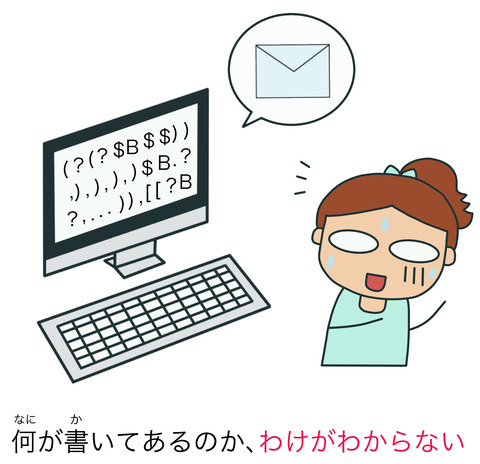
Meaning
(The content/meaning) is completely incomprehensible
Explanation
“わけがわからない” means “I don’t understand at all / I can’t understand it at all.” Like “わけない,” “わけがわからない” is rarely included in textbooks, so there aren’t many opportunities to study it. It is always used in the form “わけがわからない,” so just memorize it as is 😉 Depending on the sentence, “わけ” may be written in kanji as “訳.” It is also commonly used in everyday conversation, so you’ll often come across it in dramas, anime, manga, and so on.
[For advanced learners]
Among friends and family, “わけがわからない” is said as “わけわかんない.” If you often watch dramas, you’ve probably heard it, right? 😊 It would be good to use it alongside the colloquial forms I’ve been posting on the blog recently 😀
[Example]
I don’t know what you’re saying; it makes no sense.
= I don’t understand what you’re saying; it makes no sense.
→I don’t understand what you’re saying at all.
[For those aiming even higher: example] → Japanese people often say this! It means exactly the same as the [example] above 😉
What’re you even saying? It makes no sense.
In conversations between Japanese people, colloquial forms are of course used, and particles are also omitted, so be careful. Keep working so you can use them naturally! 😆
[The “わけ” series]
〜ないわけにはいかない
〜わけ (notional noun)
〜わけがない
〜わけがわからない (notional noun)
〜わけだ (realization)
〜わけではない
〜わけない (notional noun)
〜わけにはいかない
In context 3 examples
何が書いてあるのか、わけがわからない
→何が書いてあるのか、全然わからないI have no idea what’s written here. →I don’t understand at all what’s written here.
何が言いたいのか、わけがわからないよ…
→何が言いたいのか、全然わからないよ…I have no idea what you’re trying to say… →I don’t understand at all what you’re trying to say…
どうしてこうなったのか、わけがわからない
→どうしてこうなったのか、全然わからないI have no idea how this happened. →I don’t understand at all how this happened.
Read the original source text
Meaning
(内容・意味が)全然わからない
Explanation
「わけがわからない」は「全然わからない・全く理解できない」という意味で使われます。「わけがわからない」も「わけない」と同じように参考書に載っていることが少ないので、なかなか勉強する機会がありません。いつも「わけがわからない」の形で使われますので、そのまま覚えてしまいましょう😉文章によっては「訳がわからない」と「わけ」が漢字で書かれている場合もあります。日常会話でもよく使用されますので、ドラマやアニメ、漫画などでもよくでてきます。
【上級レベルの人へ】
「わけがわからない」は友達や家族の間では「わけわかんない」という使い方がされます。ドラマをよく見る人はきっと聞いたことがありますよね?😊最近ブログに載せている口語形などと一緒に応用して使えるといいですね😀
[例]
何言っ
てる
のか、
わけわかんない
よ=何
を
言っ
ている
のか、
わけがわからない
よ
→何を言っているのか、全然意味がわからないよ
[更に上を目指している人への例文]→日本人はよく使います!意味は上の[例]と全く同じです😉
何言っ
てん
のか、
わけわかんない
よ
日本人同士の会話では口語形の使用はもちろん、助詞の省略も発生しますので気をつけてください。自然に使えるようにがんばってくださいね!😆
【「わけ」シリーズ】
〜ないわけにはいかない
〜わけ(実質名詞)
〜わけがない
〜わけだ(納得)
〜わけではない
〜わけない(実質名詞)
〜わけにはいかない