日本語文型辞典
Usage 1
Meaning
Basic information: N/Na なのに; A-い/A-かった のに; V-る/V-た のに
Follows a clause in the form 「XのにY」 to indicate that the result Y differs from what would naturally be expected from X. X and Y express established facts; Y is generally not followed by expressions that are uncertain, such as questions, commands, requests, invitations, intentions, wishes, or conjectures.
a. …のに【contrary result】
Used when there is a causal relationship between X and Y in 「XのにY」, but that causal relationship does not hold. For example, in ③, the usual causal relationship “didn't go out because it was raining” does not hold; instead, contradictory events are presented as happening at the same time. This often conveys the speaker's surprise or doubt about the unexpected result or discrepancy. ⑥ asks about the cause of an unexpected current situation, expressing surprise or doubt. ⑤ is a question, but のに can be used here. This is because the fact that the person is going to work is established, and the question expresses surprise that they are “going to work even though it's Sunday,” asking about this fact with 「のですか」. By contrast, the following question, which lacks 「のだ」 and asks whether the person will go to work, is unnatural.
b. …のに【contrast】
Used when X and Y have no causal relationship and instead form a contrast. For example, ② links X and Y, which contrast “isn't good at Japanese” with “is good at English”; it does not express a causal relationship such as “That Chinese person is good at English because they aren't good at Japanese.” In this use, 「のに」 can be replaced with 「けれども」 or 「が」 as follows. However, while 「けれども」 and 「が」 express a simple contrast, 「のに」 also conveys the speaker's feeling that the connection between X and Y defies normal expectations and is “strange” or “odd.”
c. …のに【unexpected outcome】
Indicates that expectations were disappointed and the result was unexpected. In ①–③, X uses expressions of expectation, intention, or wish, such as 「…と思っていた」, 「つもりだった」, or 「来てほしかった」, and Y states a result contrary to these. In ④, the result in parentheses is omitted from 「せっかくおいでくださったのに、(留守にしていて)申し訳ございません」, and an expression of apology for an outcome contrary to expectations follows directly.
Used at the end of a sentence to express regret that the result differed from what was expected. It is often used to criticize or express dissatisfaction with another person's actions, and, as in ⑤, at the end of counterfactual conditional sentences.
⇾せっかく5
Expresses the reasoning “N should naturally be able to do something, but the outcome was different (I thought an electrician would be able to fix it, but they couldn't). Since even N is in that situation, something less likely is all the more so (if even an electrician couldn't fix it, it would be all the more difficult for you, an amateur).”
How to use it
…のに【within a sentence】
…のに【sentence-final】
せっかく…のに
Nでも…のに
In context 24 examples
(誤) 雨が降っているのに出かけなさい。
雨が降っているのに出かけたい。
雨が降っているのに出かけるだろう。(Incorrect) It's raining, so go out. I want to go out even though it's raining. It will probably go out even though it's raining.
5月なのに真夏のように暑い。
It's as hot as midsummer even though it's May.
家が近いのによく遅刻する。
He often arrives late even though he lives nearby.
雨が降っているのに出かけていった。
They went out even though it was raining.
真夜中過ぎたのにまだ帰ってこない。
It's past midnight, but they still haven't come home.
今日は日曜日なのに会社に行くんですか。
You're going to work even though it's Sunday?
5月なのに何でこんなに暑いんだろう。
Why is it so hot even though it's May?
(誤) 今日は日曜日なのに会社に行きますか。
(Incorrect) Are you going to work even though it's Sunday?
昨日はいい天気だったのに今日は雨だ。
It was nice weather yesterday, but today it's raining.
あの中国人は日本語はあまり上手でないのに、英語はうまい。
That Chinese person isn't very good at Japanese, but is good at English.
お兄さんはよく勉強するのに弟は授業をよくサボる。
The older brother studies hard, but the younger brother often skips class.
(例) あの中国人は日本語はあまり上手でない{けれども/が}、英語はうまい。
(Example) That Chinese person isn't very good at Japanese, but is good at English.
合格すると思っていたのに、不合格だった。
I thought I'd pass, but I failed.
今晩中に電話するつもりだったのに、うっかり忘れてしまった。
I meant to call tonight, but I completely forgot.
和子さんには来てほしかったのに、来てくれなかった。
I wanted Kazuko to come, but she didn't.
せっかくおいでくださったのに、申し訳ございませんでした。
I'm sorry, especially after you went to the trouble of coming.
スピードを出すから事故を起こしたんだ。ゆっくり走れと言っておいたのに。
You caused an accident because you were speeding. I told you to drive slowly.
絶対来るとあんなに固く約束したのに。
After making such a firm promise that you'd definitely come.
もっと早く出発すればよかったのに。
You should have left earlier.
あなたも来ればいいのに。
I wish you'd come too.
あと5秒早ければ始発電車に間に合ったのに。
If only I had been five seconds earlier, I could have caught the first train.
電気屋でも直せないのに、あなたに直せるはずがないじゃないの。
Even an electrician can't fix it, so there's no way you can, is there?
九州でもこんなに寒いのに、まして北海道はどんなに寒いだろう。
Even Kyushu is this cold; Hokkaido must be so much colder.
こんな簡単な問題、小学生でも解けるのに、どうして間違えたりしたの?
Even an elementary school student could solve such an easy problem, so why did you get it wrong?
Read the original source text
Meaning
基本情報N/Na なのにA-い/A-かった のにV-る/V-た のに
節を受け、「XのにY」の形で、Xから当然予測される結果とならず、それとは食い違った結果Yになることを表す。XとYは、確定した事実を表し、Yには事実かどうかが確定していない、疑問、命令、依頼、勧誘、意志、希望、推量などの表現は普通用いられない。
a. …のに【逆原因】
「XのにY」のXとYの間に因果関係がある場合に、その因果関係が成立していない場合の用法。例えば③の例では、「雨が降っているので出かけなかった」という通常の因果関係が成立せず、相反することがらが同時に成立していることを表している。予想外の結果や食い違いに対する話し手の意外感・疑念を伴うことが多い。⑥は予想外の現状の原因を問う形で、意外感・疑念を表している。⑤は疑問文であるが、「のに」が使用可能な場合である。その理由は⑤は、会社に出かけようとしていることが確定している事実で、「日曜日なのに会社に行く」ことを不思議に思い、こうした事実について「のですか」の形で問う疑問文だからである。これに対して「のだ」がつかず、会社へ行くかどうかを問う、次のような疑問文は不自然である。
b. …のに【対比】
XとYが因果関係をもたず、対比的な関係を表す場合の用法。例えば②は、「日本語が上手でない」「英語がうまい」という対比的な関係をもつⅩとYを結び付けているもので、「あの中国人は日本語が上手でないので英語がうまい」のような因果関係をもつものではない。この場合の「のに」は次のように「けれども」や「が」で言いかえが可能であるが、「けれども」や「が」が単なる対比的関係を表すのに対し、「のに」にはXとYの結び付きが通常の予想からはずれていて「おかしい、変だ」と話し手が感じているニュアンスを含む。
c. …のに【予想外】
予想がはずれ、予想外の結果となったことを表す。①~③では、Xに「…と思っていた」「つもりだった」「来てほしかった」のような、予想・意向・希望を表す表現が用いられ、それに反する結果がYで述べられている。④は「せっかくおいでくださったのに、(留守にしていて)申し訳ございません」の結果の( )部分が省略されたもので、期待に反する結果に対するおわびの気持ちを表す表現が直接続いたもの。
文末に用いて、予想した結果とは食い違った結果になって残念だという気持ちを表す。話し手以外の人の行為に対して、非難したり不満を表す場合や、⑤のように反事実条件文の最後によく用いられる。
⇾せっかく5
「Nなら当然そうあるはずのことが、違う結果となった(電気屋なら直せると思っていたのに直せなかった)。Nでさえそうなのだから、それよりも可能性の薄いものはなおいっそう(素人であるあなたが直すのはなおいっそうむずかしい)」という論の展開を表す。
How to use it
…のに【文中】
…のに【文末】
せっかく…のに
Nでも…のに
Usage 2
Meaning
Basic information: V-るのに. Explanation
Follows the dictionary form of a verb and expresses purpose. It can be paraphrased as 「…するために」, but the words that can follow are limited to expressions such as 「使う」, 「必要だ」, and 「不可欠だ」; it is not as freely usable as 「…するために」. Examples: ① This tool is used to cut pipes. ② Heating is essential for spending the winter comfortably. ③ It takes time to persuade him. Example (incorrect): I'm learning English to study abroad. Example (correct): I'm learning English in order to study abroad. Explanation: When a noun is used with the same meaning, use 「Nに」. Example: A dictionary is necessary for language study.
Read the original source text
Meaning
基本情報V-るのに説明動詞の辞書形を受けて、目的を表す。「…するために」に言いかえられるが、後ろに続くことばは「使う」「必要だ」「不可欠だ」などに限られており、「…するために」ほど自由ではない。例文① この道具はパイプを切るのに使います。② 暖房は冬を快適に過ごすのに不可欠です。③ 彼を説得するのには時間が必要です。例文(誤) 留学するのに英語を習っている。例文(正) 留学するために英語を習っている。説明名詞を受けて同じ意味を表すときは「Nに」となる。例文(例) 辞書は語学の勉強に必要だ。
絵でわかる日本語
Usage 1
Read this source entry ↗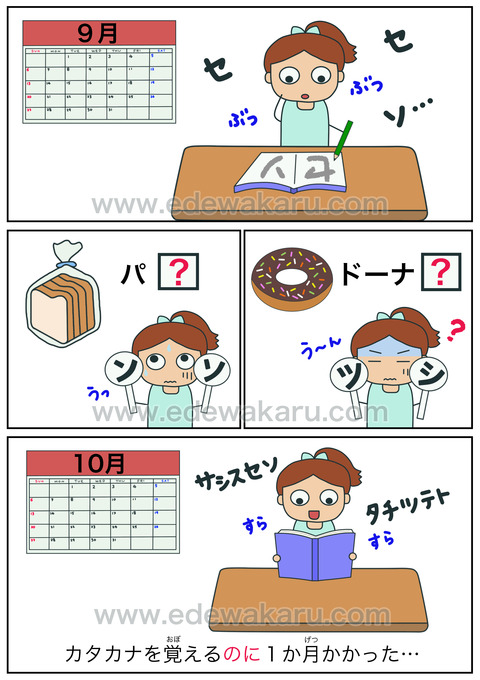
Meaning
~ is necessary in order to ~
How to use it
Verb [dictionary form]+のに
Explanation
「〜のに」is a grammar pattern meaning “~ is necessary in order to ~.” Certain words such as 「かかる」 (take) and 「必要」 (necessary) follow it, so it may help to memorize them 😀
[Words used with 「〜のに」]
・〜のに+
〜かかる (take)
・〜のに +
〜必要 (necessary)
・〜のに+
〜要る (be needed)
Let’s review 「〜かかる」, which is studied at the beginner level 😉
(Review: 〜かかる)
[Uses of 「〜のに」]
〜のに (necessity)
〜のに (evaluation)
〜のに (purpose/use)
In context 5 examples
カタカナを覚えるのに1か月かかった
→カタカナを覚えるために1か月必要だったIt took one month to learn katakana. → One month was necessary in order to learn katakana.
パスポートを作るのに16000円かかる
→パスポートを作るために16000円必要だIt costs 16,000 yen to get a passport. → 16,000 yen is necessary in order to get a passport.
新しいスマホを買うのに8万円以上かかりそうだ
→スマホを買うために8万円以上必要になりそうだ(復習:〜そうだ(可能性))It looks like it will cost over 80,000 yen to buy a new smartphone. → It looks like more than 80,000 yen will be necessary to buy a smartphone. (Review: 〜そうだ (possibility))
A:大阪まで新幹線でどのくらいかかるの?B:大阪まで行くのに2時間半かかるよA:じゃあ、いくらくらい必要なの?B:東京から大阪まで行くのに14000円ぐらい必要だよ〜
→大阪まで行くためには2時間半必要だよ
→大阪まで行くためには14000円必要だよA: How long does it take to get to Osaka by Shinkansen? B: It takes two and a half hours to get to Osaka. A: Then, about how much does it cost? B: It takes about 14,000 yen to get from Tokyo to Osaka~ → You need two and a half hours to get to Osaka. → You need about 14,000 yen to get to Osaka.
絵を描き上げるのに時間が必要です
→絵を描き上げるために時間が必要です(復習:〜上げる)Time is needed to finish a painting. → Time is needed in order to finish a painting. (Review: 〜上げる)
Read the original source text
Meaning
〜するために〜が必要
How to use it
動詞[辞書形]+のに
Explanation
「〜のに」は「〜するために〜が必要」という意味の文型です。
後ろには「かかる」「必要」など、決まった単語がきますので暗記しておくといいと思います😀
[「〜のに」と使う単語]
・〜のに+
〜かかる
・〜のに +
〜必要
・〜のに+
〜要る
初級で勉強する
「〜かかる」
を復習しておきましょう😉
(復習:〜かかる)
【「〜のに」がつく用法】
〜のに(必要)
〜のに(評価)
〜のに(用途)
Usage 2
Read this source entry ↗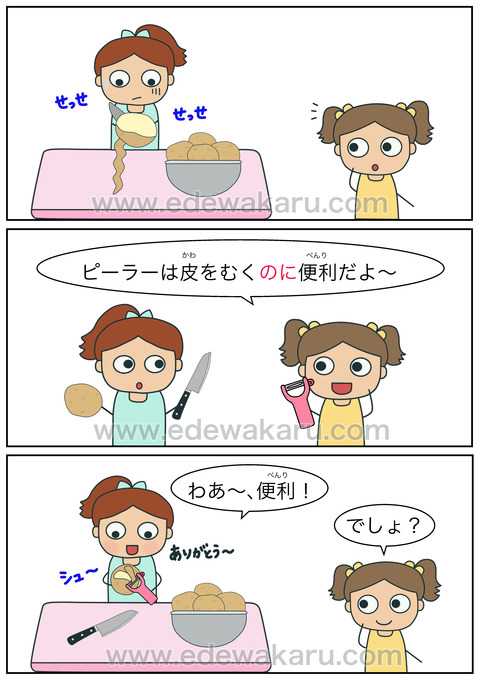
Meaning
Expresses evaluation.
How to use it
Verb [dictionary form]+のに
Noun [dictionary form]+に
Explanation
「〜のに」is a grammar pattern that expresses [evaluation]. In the form 「Aのに〜」, it expresses an evaluation of “A,” as in “~ is good/convenient when doing A.” What follows this pattern is mostly fixed, so it may help to memorize it 😀
[Words often used with 「〜のに」]
・〜のに
いい (good)
・〜のに
便利だ (convenient)
・〜のに
不便だ (inconvenient)
・〜のに
役に立つ (useful)
・〜のに
役立つ (useful)
Also, when 「〜のに」 is used with a noun, the form is 「Noun+に〜」.
[Example]
Dramas are useful for studying Japanese.
→ Dramas are useful for Japanese study.
「〜のに」has several meanings, so let’s learn them together 😉
[Uses of 「〜のに」]
〜のに (necessity)
〜のに (evaluation)
〜のに (purpose/use)
In context 5 examples
ピーラーは、皮をむくのに便利だよ
A peeler is convenient for peeling vegetables.
A:東京はお店がいっぱいあるね!B:うん。買い物するのにいいよね(復習:〜よね?)
A: Tokyo has so many shops! B: Yeah. It’s a good place to go shopping, isn’t it? (Review: 〜よね?)
ドラマは日本語の勉強をするのに役立ちます
Dramas are useful for studying Japanese.
LINEは、友達と連絡を取るのに便利です(復習:「Google」や「Twitter」は日本語でどう読むの?)
LINE is convenient for keeping in touch with friends. (Review: How do you read “Google” and “Twitter” in Japanese?)
駅の近くに住んでいるので、学校に通うのにいい
Since I live near the station, it’s good for commuting to school.
Read the original source text
Meaning
評価を表す
How to use it
動詞[辞書形]+のに
名詞[辞書形]+に
Explanation
「〜のに」は【評価】を表す文型です。「Aのに〜」の形で、「Aする時に、いい・便利だ」というように「A」に対する評価を表します。この文型は、後ろにくるものがほとんど決まっていますので暗記しておくといいと思います😀
[「〜のに」とよく一緒に使う単語]
・〜のに
いい
・〜のに
便利だ
・〜のに
不便だ
・〜のに
役に立つ
・〜のに
役立つ
また「〜のに」は、名詞に使う場合は「名詞+に〜」となります。
[例]
ドラマは日本語の勉強をする
のに
役立ちます
→ドラマは日本語の勉強
に
役立ちます
「〜のに」にはいくつか意味がありますので、一緒に覚えておきましょう😉
【「〜のに」がつく用法】
〜のに(必要)
〜のに(評価)
〜のに(用途)
Usage 3
Read this source entry ↗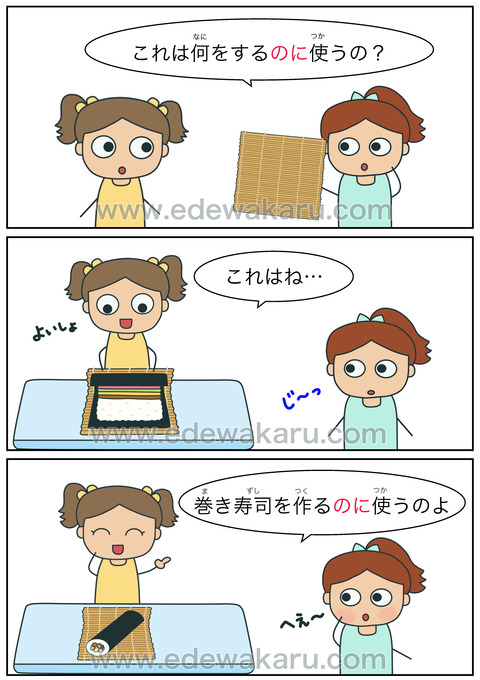
Meaning
Use ~ for ~
~ is needed for ~
How to use it
Verb [dictionary form]+のに
Noun [dictionary form]+に
Explanation
「〜のに」is an expression that indicates [purpose/use], and it is used to mean “use for ~.” 「使う」 (use) follows this pattern, so remember it in the form 「〜のに使う」. When used with a noun, it becomes 「Noun+に〜」.
[Example]
A dictionary is used for studying Japanese.
→ A dictionary is used for Japanese study.
「〜のに」is studied at the beginner level, but it is an important grammar pattern that is used very often. Review it so you can use it well in everyday conversation 😀
[Uses of 「〜のに」]
〜のに (necessity)
〜のに (evaluation)
〜のに (purpose/use)
In context 5 examples
A:これは何をするのに使うの?B:巻き寿司を作るのに使うのよ
→巻き寿司を作るために使うのよA: What is this used for? B: It’s used to make rolled sushi. → It’s used to make rolled sushi.
辞書は日本語を勉強するのに使います
→日本語を勉強するために使いますA dictionary is used for studying Japanese. → It is used to study Japanese.
ナイフはフルーツを切るのに使います
→フルーツを切るために使いますA knife is used to cut fruit. → It is used to cut fruit.
消しゴムは字を消すのに使います
→字を消すために使います(復習:消える・消す)An eraser is used to erase writing. → It is used to erase writing. (Review: disappear and erase)
お箸は、ごはんを食べたり料理をしたりするのに使います
→ごはんを食べたり料理をしたりするために使いますChopsticks are used for eating rice and preparing food. → They are used for eating rice and preparing food.
Read the original source text
Meaning
〜ために使う
〜ために必要
How to use it
動詞[辞書形]+のに
名詞[辞書形]+に
Explanation
「〜のに」は【用途】を表す表現で、「〜ために使う」という意味で使われます。この文型は、後ろに「使う」がきますので「〜のに使う」の形で覚えておきましょう。また、名詞に使う場合は「名詞+に〜」になります。
[例]
辞書は日本語を勉強する
のに
使います
→辞書は日本語の勉強
に
使います
「〜のに」は初級で勉強しますが、とてもよく使う大切な文型です。日常会話(にちじょうかいわ)で上手に使えるように復習をしておきましょう😀
【「〜のに」がつく用法】
〜のに(必要)
〜のに(評価)
〜のに(用途)
どんなときどう使う 日本語表現文型辞典
Usage 1
Meaning
(non-actual supposition) if only
How to use it
〔Plain form〕 present tense + と~(のに)
Explanation
と~(のに)〈反実仮想〉
木村:そうですか。行けなくて、残念でした。
1)「~と、…のに/けれど」の形で、「~と」で事実とは違うことを仮想して、「…」で実現しなかったことについて、残念な気持ちを述べる。
2)文末は「のに・けれど」などの表現が多い。
1)Using the form ~と、…のに/けれど, imagines something contrary to fact and expresses feelings of regret or gladness that fact was not realized.
2)Often words such as のに、orけれどoccur at end of sentence.と
In context 3 examples
伊藤:きのうのパーティーは楽しかったですよ。木村さんも来られるとよかったのに。
Ito: Yesterday’s party was fun. It would have been nice if you could have come too, Kimura.
田中さんは、もう少し友だちの意見を聞くといいのに……。
I wish Tanaka would listen to his friends’ opinions a little more…
(助手をする人について)もっと経験のある人だとよかったんだけれど。
(About someone who will serve as an assistant) It would have been better if they had more experience.
Read the original source text
Meaning
(non-actual supposition) if only
How to use it
〔普通形〕の現在形+と~(のに)
Explanation
と~(のに)〈反実仮想〉
木村:そうですか。行けなくて、残念でした。
1)「~と、…のに/けれど」の形で、「~と」で事実とは違うことを仮想して、「…」で実現しなかったことについて、残念な気持ちを述べる。
2)文末は「のに・けれど」などの表現が多い。
1)Using the form ~と、…のに/けれど, imagines something contrary to fact and expresses feelings of regret or gladness that fact was not realized.
2)Often words such as のに、orけれどoccur at end of sentence.と
Usage 2
Meaning
even though
How to use it
〔Plain form〕(Na-adjective な / Noun な) + のに
Explanation
のに〈対比〉
1)「のに」の前後で、対比している事柄を結んでいる。
2)「が」や「けれども」と同じような使い方であるが、「のに」の場合は話す人の意外な気持ち、疑問などの気持ちが含まれている。
1)Contrasts linked by のに.
2)Same kind of usage as が and けれども, but のに includes speaker's doubts or feeling that something is unexpected.
In context 2 examples
去年の冬は暖かかったのに、今年の冬はとても寒い。
Last winter was warm, and yet this winter is very cold.
田中さんは日本人だが、日本語は下手なのに、英語はうまい。
Tanaka is Japanese, and although he is poor at Japanese, he is good at English.
Read the original source text
Meaning
even though
How to use it
〔普通形〕(ナAな/Nな)+のに
Explanation
のに〈対比〉
1)「のに」の前後で、対比している事柄を結んでいる。
2)「が」や「けれども」と同じような使い方であるが、「のに」の場合は話す人の意外な気持ち、疑問などの気持ちが含まれている。
1)Contrasts linked by のに.
2)Same kind of usage as が and けれども, but のに includes speaker's doubts or feeling that something is unexpected.
Usage 3
Meaning
in spite of the fact
How to use it
〔Plain form〕(Na-adjective な / Noun な) + のに
Explanation
In context 5 examples
わたしが3時間もかけてケーキを焼いたのに、だれも食べません。
I spent as long as three hours baking a cake, and yet no one eats it.
ひろしは暑いのに、窓を開けないで勉強しています。
Even though it’s hot, Hiroshi is studying without opening the window.
冬の山は危険なのに、どうして登るんですか。
Winter mountains are dangerous, so why do you climb them?
夜の12時なのに、電車にはおおぜいの人が乗っていました。
Even though it was midnight, there were lots of people on the train.
(パーティーに遅く来て)マリさんはもう帰ったんですか。会いたかったのに……。
(Arriving late at the party) Has Mari already gone home? I wanted to see her…
Read the original source text
Meaning
in spite of the fact
How to use it
〔普通形〕(ナAな/Nな)+のに
Explanation
Usage 4
Meaning
for
How to use it
Vる + の / Noun made from a suru-verb + に
Explanation
のに〈用途〉
1)物の用途・目的・有用性などを言う言い方。「~のに…」の形で、「~」で用途や目的を言い、「…」で「便利だ・必要だ・役に立つ・使う・かかる」などの意味のことを言う。
2) ❺ のように「する動詞」の場合、「する動詞のN+に」の形でも使う。
3) ❻ のように「のに+は」の形で使う場合に、動詞の後ろの「の」がない使い方もある。
1)Use, purpose, or utility. Use or purpose precedes のに; words meaning convenient, necessary, useful, use, or take (time, money, etc.) follow.
2)When containsする verb, becomes: nominal of する verb + に, as in sentence ❺ .
3) For のに + は, as in sentence ❻ , の after verb can be omitted.
In context 6 examples
このナイフはチーズを切るのに便利です。
This knife is useful for cutting cheese.
電子辞書は言葉の意味を急いで調べるのに役に立ちます。
Electronic dictionaries are useful for quickly looking up the meanings of words.
外国旅行をするのにはパスポートが必要だ。
You need a passport to travel abroad.
ここから空港に行くのには1時間かかる。
It takes an hour to get to the airport from here.
わたしは買い物に、いつもバイクを使っています。
I always use my motorbike for shopping.
東京駅へ行くにはこのバスが便利です。
This bus is convenient for going to Tokyo Station.
Read the original source text
Meaning
for
How to use it
Vる+の/する動詞のN+に
Explanation
のに〈用途〉
1)物の用途・目的・有用性などを言う言い方。「~のに…」の形で、「~」で用途や目的を言い、「…」で「便利だ・必要だ・役に立つ・使う・かかる」などの意味のことを言う。
2) ❺ のように「する動詞」の場合、「する動詞のN+に」の形でも使う。
3) ❻ のように「のに+は」の形で使う場合に、動詞の後ろの「の」がない使い方もある。
1)Use, purpose, or utility. Use or purpose precedes のに; words meaning convenient, necessary, useful, use, or take (time, money, etc.) follow.
2)When containsする verb, becomes: nominal of する verb + に, as in sentence ❺ .
3) For のに + は, as in sentence ❻ , の after verb can be omitted.
Usage 5
Meaning
would have
How to use it
Vば / i-adjective ければ / na-adjective なら(ば) / Noun なら(ば) + ~(のに)
Explanation
ば~(のに)〈反実仮想〉
B:それで遅れたんですか。山崎さんといっしょに来ればよかったのに。
1)「~ば、…のに/けれど」の形で、「~ば」で事実とは違うことを仮想して、「…」で実現しなかったことなどについて、残念な気持ちやよかったという気持ちなどを述べる。
2)ナ形容詞と名詞では「なら(ば)」となる。
3)文末は「よかった・のに・けれど」などの表現が多い。
1)Speaker imagines some event contrary to fact before ば~のに/けれど, then expresses after pattern feelings of regret or gladness that event was not realized.
2)With ナ-adjectives and nouns becomes なら(ば).
3)Often sentence endings take よかった (good), のに (would have been), or けれど (but).ば
In context 3 examples
A:ごめんなさい。きのうは、会議の場所を間違えて、遅くなったんです。
A: I’m sorry. Yesterday, I went to the wrong meeting place and was late.
試合のとき、山田君がもっと元気なら勝てたのに。
If Yamada had been more energetic during the game, we could have won.
店できれいなセーターを見た。もっと安ければ買ったんだけれど……。
I saw a beautiful sweater at the store. If it had been cheaper, I would have bought it…
Read the original source text
Meaning
would have
How to use it
Vば/イAければ/ナAなら(ば)/ Nなら(ば)+~(のに)
Explanation
ば~(のに)〈反実仮想〉
B:それで遅れたんですか。山崎さんといっしょに来ればよかったのに。
1)「~ば、…のに/けれど」の形で、「~ば」で事実とは違うことを仮想して、「…」で実現しなかったことなどについて、残念な気持ちやよかったという気持ちなどを述べる。
2)ナ形容詞と名詞では「なら(ば)」となる。
3)文末は「よかった・のに・けれど」などの表現が多い。
1)Speaker imagines some event contrary to fact before ば~のに/けれど, then expresses after pattern feelings of regret or gladness that event was not realized.
2)With ナ-adjectives and nouns becomes なら(ば).
3)Often sentence endings take よかった (good), のに (would have been), or けれど (but).ば
日本語NET JLPT文法解説まとめ
Usage 1
Read this source entry ↗Meaning
~ although / even though
Expresses a result that differs from what one would expect to happen. It includes the speaker's feelings, such as surprise or dissatisfaction.
How to use it
V (plain form) + のに
いA い + のに
なA + のに
N + なのに
Explanation
"… despite of the 〜"
Often used to show the speaker’s dissatisfaction, regret or feeling that something is unexpected.
In context 33 examples
薬を飲んだのに、全然良くなりません。
Even though I took the medicine, I haven't gotten better at all.
昨日、早くたくさん寝たのに、まだ眠いです。
Even though I went to bed early and slept a lot yesterday, I'm still sleepy.
トムさんは2年日本へ留学したのに、全然日本語が話せません。
Even though Tom studied in Japan for two years, he can't speak Japanese at all.
このステーキは高いのに、おいしくないです。
Even though this steak is expensive, it isn't tasty.
ジェームスさんはイケメンなのに、彼女がいません。
Even though James is handsome, he doesn't have a girlfriend.
彼はカッコよくないのに、女の子からモテます。
Even though he isn't good-looking, girls like him.
彼女は歌手なのに歌が下手です。
Even though she's a singer, she's bad at singing.
息子はテスト前なのに、全然勉強しません。
Even though my son has a test coming up, he isn't studying at all.
この会社は給料が安いのに、仕事がたくさんあって大変です。
Even though this company pays low wages, there's a lot of work, so it's tough.
全然勉強しなかったのに、JLPT N4に合格できました。
Even though I didn't study at all, I passed the JLPT N4.
今日は日曜日なのに、仕事がたまっているので出勤しなければなりません。
Even though it's Sunday today, I have a backlog of work, so I have to go to work.
息子は部屋が汚いのに、全然掃除しません。
Even though my son's room is messy, he doesn't clean it at all.
毎日、運動しているのに、全然痩せません。
Even though I exercise every day, I don't lose weight at all.
頑張って勉強したのに、テストの結果は悪かったです。
Even though I studied hard, I got a bad result on the test.
全然勉強しなかったのに、テストの結果は良かったです。
Even though I didn't study at all, I got a good result on the test.
エアコンをつけているのに、暑いです。
Even though the air conditioner is on, it's hot.
ボタンを押したのに、ジュースが出てきません。
Even though I pressed the button, no juice came out.
夜遅いのに、息子がまだ帰ってきません。
Even though it's late at night, my son still hasn't come home.
彼は行くと言ったのに、来なかった。
He said he would go, but he didn't come.
風呂敷は物を包むのに使います。
A furoshiki is used to wrap things.
この箸はパスタを食べるのに使います。
These chopsticks are used to eat pasta.
これはおにぎりを作るのに使います。
This is used to make rice balls.
これは頭をマッサージするのに使います。
This is used to massage your head.
修正テープは間違いを直すのに使います。
Correction tape is used to fix mistakes.
図書カードは本を借りるのに必要です。
A library card is necessary to borrow books.
田舎は買い物するのに不便です。
The countryside is inconvenient for shopping.
東京は買い物するのに便利です。
Tokyo is convenient for shopping.
東京は電車が多いので、会社に通うのに便利です。
There are lots of trains in Tokyo, so it's convenient for commuting to work.
田舎は電車が少ないので、会社に通うのに不便です。
There are few trains in the countryside, so it's inconvenient for commuting to work.
この靴は運動にいいです。
These shoes are good for exercise.
このカバンは大きいし、旅行に便利です。
This bag is big and convenient for traveling.
タブレットは本を読んだり、映画を見たりするのに役に立ちます。
Tablets are useful for reading books and watching movies.
日本のアニメは日本語を勉強するのに役に立ちます。
Japanese anime is useful for studying Japanese.
Read the original source text
Meaning
〜けれど
「当然〜だろう」と予想される事柄とは違った結果になったことを表す。話の手の驚きや不満などの気持ちが含まれる。
How to use it
V(普通形) + のに
イAい + のに
ナA + のに
N + なのに
Explanation
"… despite of the 〜"
Often used to show the speaker’s dissatisfaction, regret or feeling that something is unexpected.
Usage 2
Read this source entry ↗Meaning
If only ~ had happened, the result would have been different…
An expression of regret or remorse about something that was not done or was not the case.
How to use it
V (conditional form) + 〜のに
イAければ + 〜のに
ナAなら + 〜のに
Nなら + 〜のに
In addition to 「~ば」, other conditional forms such as 「たら」 and 「なら」 can also be used.
Explanation
"would have"
A way of saying you regret what you did not or could not do.
In context 9 examples
あの時、頑張って彼女に好きって言えばよかったのに。
You should have tried harder and told her you liked her back then.
あと5分あれば、全部の問題を解くことができたのに。
If only I had five more minutes, I could have solved all the problems.
もっと早く寝れば、朝起きられたのに、昨日は夜中ゲームしてしまった。
If I had gone to bed earlier, I could have gotten up in the morning, but I ended up playing games late into the night yesterday.
日本語がもっと上手なら、雇ってもらえそうなのになあ。
If only my Japanese were better, it seems like they might hire me.
ジェシカさん、もっと静かにすれば、男性からモテそうなのに。いつもギャーギャーうるさいから・・・。
Jessica, if only you were a little quieter, guys might be attracted to you. You're always yelling so loudly...
アパートがもう少し学校から近ければ、便利なのになあ。
If only the apartment were a little closer to school, it would be convenient.
もう少し安くしてくれれば、買うのになあ。
If only you'd lower the price a little more, I'd buy it.
もうちょっと早く連絡してくれれば、迎えに行ったのに。
If only you had contacted me a little earlier, I would have come to pick you up.
もう少し優しく接してくれれば、いい先生なのに。いつも怒ってばかりで、ストレスだ。
If only you treated me a little more kindly, you'd be a good teacher. You always do nothing but get angry, and it's stressful.
Read the original source text
Meaning
~すれば違う結果になっていたのに・・・。
~しなかったこと、〜でないことを残念に思ったり後悔する言い方。
How to use it
V(条件形) + 〜のに
イAければ + 〜のに
ナAなら + 〜のに
Nなら + 〜のに
「~ば」の他に「たら」や「なら」などの条件形も使うことができる。
Explanation
"would have"
A way of saying you regret what you did not or could not do.
毎日のんびり日本語教師
Meaning
in order to do ~
How to use it
動辞形+のに
Explanation
It expresses purpose.
The first part states the purpose, and the second part states the conditions necessary to achieve that purpose.
The second part often contains verbs such as 「かかる」 (take), 「必要」 (be necessary), and 「役に立つ」 (be useful).
Notes
Similar grammar: 「~には」
In context 5 examples
完成させるのに2時間かかった。
It took two hours to finish it.
ビザを更新するのに3週間もかかる。
It takes as long as three weeks to renew a visa.
申請するのに身分の証明が必要となる。
Proof of identity is required to apply.
部屋を隅々まで掃除するのに一体何時間かかるのだろうか。
I wonder how many hours it will take to clean every corner of the room.
海外で生活するのに役に立つ知識を教えてもらった。
I was taught useful knowledge for living abroad.
Read the original source text
Meaning
~するためには
How to use it
動辞形+のに
Explanation
目的を表します。
前項には目的を、後項にはその目的を達成するために必要な条件を述べます。
後項にはよく「かかる」「必要」「役に立つ」などの動詞がきます。
Notes
似ている文法「~には」
日本語文型辞典 英語版
Meaning
【のに1】[N/Na なのに][A-い/A-かった のに][V-る/V-た のに]
(×)雨が降っているのに出かけなさい。
Even though it’s raining, go out.
(×)雨が降っているのに出かけたい。
Even though it’s raining, I want to go out.
(×)雨が降っているのに出かけるだろう。
Even though it’s raining, I’ll probably go out.
a. ...のに〈converse cause〉
In this use of the pattern XのにY, there is a causal relation between X and Y, but this causal relation is not realized.
For example, のに in
(3)
expresses that the usual causal relation, which is “because it was raining, I didn’t go out,” is not established; rather, two incompatible conditions are realized at the same time. This usage is often accompanied by the speaker’s surprise or doubt regarding an unexpected result or discrepancy.
In
(6)
, のに is used to ask the reason for the current situation, which is unexpected. It expresses the speaker’s sense of surprise and misgiving.
(5)
is an interrogative sentence, but のに can be used in this case. The reason is that the situation of the addressee going to work (= Y) is an established fact. The speaker is astonished that “even though it’s Sunday, you’re going to work,” and this interrogative sentence uses the form のですか to ask a question about this fact.
In contrast, an interrogative sentence without のだ that asks if the addressee is going to work would be unnatural, as below.
(×)今日は日曜日なのに会社に行きますか。
Even though today is Sunday, are you going to work?
b. ...のに〈contrast〉
In this usage, XのにY expresses a contrast between X and Y, not a causal relation.
For example, in
(2)
there is a contrastive relation between X, which is 日本語が上手でない (s/he is not good at Japanese), and Y, which is 英語がうまい (s/he is good at English), and のに links X and Y. The relation between X and Y is not a causal relation, like “because that Chinese person is not good at Japanese, s/he is good at English.”
のに in
(2)
can be paraphrased as けれども or が (see below). However, while けれども and が express a simple contrastive relation between the first and second clauses, のに implies that the relation between X and Y deviates from the one usually expected and that the speaker feels it is “unusual” or “strange.”
(例)あの中国人は日本語はあまり上手でない{けれども/が}、英語はうまい。
That Chinese person isn’t very good at Japanese, but his/her English is good.
c. ...のに〈unexpected〉
Expresses that an outcome is different from what was expected or predicted.
In examples
(1)
-
(3)
, X (in the pattern XのにY) is an expression of expectation, intention, or desire, such as ...と思っていた (I thought...), つもりだった (I intended), or 来てほしかった (I wanted (her) to come). Y describes an outcome that is contrary to X.
(4)
means せっかくお出でくださったのに、(留守にしていて)申し訳ございません (you took the trouble to come all the way here, so I really must apologize (for being out)). However, the outcome 留守にしていて (for being out) is not actually verbalized, and のに is followed immediately by the speaker’s expression of apology for the unexpected outcome.
Used at the end of a sentence to express a feeling of regret regarding a result that differs from what was expected. Often used when the speaker is criticizing or complaining about someone else’s actions, or at the end of a counter-factual conditional sentence, as in
(5)
.
5
Expresses the development of a logical argument, as in “if N, then something is supposed to be such-and-such, but that was not the result (e.g. I thought an electrician would be able to fix it, but s/he couldn’t)” and “even N is such-and-such, so someone/something with less potential than N is all the more such-and-such (e.g. it is even more difficult for you, as a non-professional, to fix it).”
【のに2】[V-るのに]
のに is placed after the dictionary form of a verb and expresses a purpose. Can be paraphrased as ...するために. However, the range of expressions that come after ...るのに is restricted to words/phrases like 使う (use), 必要だ (it’s necessary), and 不可欠だ (it’s indispensable), so this pattern is used less freely than ...するために.
(×)留学するのに英語を習っている。
I’m learning English for to study abroad.
(○)留学するために英語を習っている。
I’m learning English in order to study abroad.
The form Nに (without の) is used with nouns to express the meaning of purpose, as below.
(例)辞書は語学の勉強に必要だ。
Dictionaries are necessary for language learning.
How to use it
1. ...のに〈mid-sentence〉Placed after a clause and used in the pattern XのにY. Expresses that the result Y is not what X would naturally lead one to expect, but something contradictory. Both X and Y express an established fact. This means that expressions indicating a situation that is not established as a fact, such as questions, commands, requests, invitations, intentions, desires, or suppositions, cannot usually appear in Y.
2. ...のに〈sentence-final〉
3. せっかく...のに→
4. Nでも...のに
In context 24 examples
5月なのに真夏のように暑い。
Although it’s May, it’s as hot as the middle of summer.
家が近いのによく遅刻する。
Even though she lives close by, she’s often late.
雨が降っているのに出かけていった。
Despite the rain, I went out.
真夜中過ぎたのにまだ帰ってこない。
It’s already past midnight, but he hasn’t come back yet.
今日は日曜日なのに会社に行くんですか。
Even though today is Sunday, you’re going to work?
5月なのに何でこんなに暑いんだろう。
Why is it so hot, even though it’s still May?
昨日はいい天気だったのに今日は雨だ。
It was nice yesterday, but today it’s raining.
あの中国人は日本語はあまり上手でないのに、英語はうまい。
Even though that Chinese person isn’t very good at Japanese, his English is good.
お兄さんはよく勉強するのに弟は授業をよくサボる。
The older brother studies hard, while the younger one often skips class.
合格すると思っていたのに、不合格だった。
I thought I would pass the exam, but I failed.
今晩中に電話するつもりだったのに、うっかり忘れてしまった。
I intended to make a phone call tonight, but it slipped my mind.
和子さんには来てほしかったのに、来てくれなかった。
I especially wanted Kazuko-san to come, but she didn’t.
せっかくおいでくださったのに、申し訳ございませんでした。
After you took the trouble to come all the way here...I really must apologize.
スピードを出すから事故を起こしたんだ。ゆっくり走れと言っておいたのに。
You had an accident because you drive too fast. I told you before you went out that you should drive slowly!
絶対来るとあんなに固く約束したのに。
After he’d promised so firmly that he would definitely come!
もっと早く出発すればよかったのに。
We should have left earlier.
あなたも来ればいいのに。
You really should come, too!
あと5秒早ければ始発電車に間に合ったのに。
If I’d arrived five seconds earlier, I would have made the first train.
電気屋でも直せないのに、あなたに直せるはずがないじゃないの。
Even an electrician can’t fix it, so how should you be able to fix it?
九州でもこんなに寒いのに、まして北海道はどんなに寒いだろう。
If it’s this cold even in Kyushu, how cold must it be in Hokkaido?
こんな簡単な問題、小学生でも解けるのに、どうして間違えたりしたの?
Even an elementary school student could solve such an easy problem, so why did you get it wrong?
この道具はパイプを切るのに使います。
This tool is used for cutting pipe.
暖房は冬を快適に過ごすのに不可欠です。
It is essential to have heating in order to pass the winter comfortably.
彼を説得するのには時間が必要です。
It will take time to convince him.
AIUEO JLPT Grammar
Usage 1
Meaning
「のに」is a conjunction used to express a contradiction, meaning that the result or situation is contrary to what was expected. It is often used when the speaker feels dissatisfaction or surprise.
How to use it
Verb + のに; adjective + のに; adjectival noun + な + のに; noun + な + のに
In context 5 examples
一生懸命働いたのに、昇進しなかった。
Even though I worked hard, I didn’t get promoted.
毎日運動してるのに、体重が減らない。
Even though I exercise every day, I’m not losing weight.
安いと思ったのに、高かった。
Even though I thought it was cheap, it was expensive.
早く寝たのに、まだ眠い。
Even though I went to bed early, I’m still sleepy.
たくさん勉強したのに、テストの点数が悪かった。
Even though I studied a lot, my test scores were bad.
Read the original source text
Meaning
「のに」is a conjunction used to express a contradiction, meaning that the result or situation is contrary to what was expected. It is often used when the speaker feels dissatisfaction or surprise.
How to use it
動詞+のに形容詞+のに形容動詞な+のに名詞な+のに
Explanation · 日本語
「のに」は、予想に反する結果や、状況が期待とは異なることを表す逆接の意味を表す接続助詞です。話し手が不満や驚きを感じている場合にもよく使われます。
Usage 2
Meaning
This sentence pattern is used when expressing the purpose, evaluation, or necessity of an action or object.
How to use it
Verb dictionary form + のに
In context 5 examples
このハサミは紙を切るのに使います。
These scissors are used for cutting paper.
この辞書は日本語を勉強するのに役立ちます。
This dictionary is useful for studying Japanese.
ここは読書をするのに静かでいい場所です。
This is a nice quiet place for reading.
支度をするのに随分と時間がかかった。
It took quite a while to get ready.
料理を作るのに新鮮な材料が必要です。
You need fresh ingredients to cook.
Read the original source text
Meaning
This sentence pattern is used when expressing the purpose, evaluation, or necessity of an action or object.
How to use it
動詞辞書形+のに
Explanation · 日本語
この文型は、ある行動や物の用途、評価、または必要性を表すときに使われる表現です。
Usage 3
Meaning
This sentence pattern is used when expressing hopes, expectations, or regrets that differ from reality, implying an ideal outcome or situation that would happen if a condition were met, but does not in reality.
How to use it
Verb ば-form + ordinary sentence + のに; adjective ば-form + ordinary sentence + のに; な-adjective なら + ordinary sentence + のに; noun なら + ordinary sentence + のに
In context 5 examples
もっと早く出発すればよかったのに。
I wish we had left earlier.
お金があれば、旅行に行けるのに。
If I had money, I could go on a trip.
雨が降らなければ、ピクニックに行けたのに。
If it hadn’t rained, we could have gone on a picnic.
彼女がもっと優しければ、付き合っていたのに。
If she were kinder, we could have been together.
彼がリーダーなら、もっといい結果が出たのに。
If he were the leader, we would have had better results.
Read the original source text
Meaning
This sentence pattern is used when expressing hopes, expectations, or regrets that differ from reality, implying an ideal outcome or situation that would happen if a condition were met, but does not in reality.
How to use it
動詞ば形+普通文のに形容詞ば形+普通文のに形容動詞なら+普通文のに名詞なら+普通文のに
Explanation · 日本語
この文型は、現実とは異なる希望や期待、または後悔を表すときに使われる仮定形の表現です。仮定の条件が満たされていれば、理想的な結果や状況が実現するという意味を持ちますが、現実にはそうなっていないことを示します。
Bunpro Grammar Reference
Usage 1
Meaning
Despite, Although, Even though
How to use it
Verb + のに
[い]Adjective + のに
[な]Adjective + な + のに
Noun + な + のに
Nuance
A word that often expresses mild frustration that (A) has not led to (B).
Explanation
Although のに is often thought of as a simple combination of the particles の and に, it is actually its own particle, with the meaning of 'despite', or 'in order to'. In this lesson, we will focus primarily on the 'despite' nuance.
Due to のに being a conjunction particle, it can be linked to almost any word type, to show that 'despite (A), (B)'. As with many conjunction particles, な will be required after a noun/な-Adjective, but before のに.
明日テストがあるのに彼は勉強をしないでゲームをしている。
Despite having a test tomorrow, he is playing games without studying.
何で納豆は臭いのに美味しいの?
Why does natto taste good, despite smelling bad?
彼はイケメンなのにいつも汗臭い。
Even though he is a good looking guy, he always smells like sweat.
この車はスポーツカーなのに遅い。
Despite being a sports car, this car is slow.
It is also possible to see だのに, instead of なのに, but this is something that is only seen in certain dialects, and would be considered incorrect by the vast majority of native speakers.
虫歯だのに、チョコレートを食べたから歯が痛い。
I ate chocolate even though I have a cavity, so my tooth hurts.
Fun Fact
Regardless of having two quite different translations ('despite', and 'in order to'), のに always functions in the same way.
In the situation of '(A) のに, (B)', (B) is/will be the result.
The only difference between how the nuance will be read, is whether the (B) statement is a logical conclusion, or an illogical one. When logical, the meaning is usually 'in order to', when 'illogical', the meaning is usually 'despite'.
In context 17 examples
- 無理って言ったのにまだやるの?
Even though I said it was impossible, you're still going to do it? (despite)
- 明日テストがあるのに彼は勉強をしないでゲームをしている。
Despite having a test tomorrow, he is playing games without studying.
- 彼はイケメンなのにいつも汗臭い。
Even though he is a good looking guy, he always smells like sweat.
- この車はスポーツカーなのに遅い。
Despite being a sports car, this car is slow.
- 何で納豆は臭いのに美味しいの?
Why does natto taste good, despite smelling bad?
- 虫歯だのに、チョコレートを食べたから歯が痛い。
I ate chocolate even though I have a cavity, so my tooth hurts.
- 彼は忙しいのに、ゲームをしている。
Despite being busy, he is playing video games. (even though)
- 天気予報は悪かったのに、晴れた。
Despite the weather forecast being bad, it was sunny. (even though)
- あの女の人はきれいなのに、彼氏がいない。
Despite being pretty, that woman doesn't have a boyfriend. (even though)
- あまり牛乳がないのにスーパーに行った時買わなかったの?
Even though we are running low on milk, you didn't buy any when you went to the store? (despite)
- 忙しいのに、駅まで送ってくれるの?ありがとう!
You are going to take me to the station even though you are busy? Thank you! (despite)
- 君の息子が公園で遊びたがっているのに、公園に行かないの?
Despite your son wanting to play in the park, you won't go to the park? (even though)
- 日本に行くって言ったのに結局行かない。
Although you said that you were going to go to Japan, you're not going after all. (despite)
- 鉛筆が必要と書いてあったのに、持って来なかった。
Despite it saying that a pencil was required, I didn't bring one. (even though)
- 子供のころほうれん草が好きだったのに、今は嫌い。
Despite liking spinach when I was a child, I don't like it now. (even though)
- 日本語は難しいのに、頑張って学んでいる。
Despite Japanese being difficult, I am doing my best to learn it. (even though)
- 僕は毎日運動をしているのに、だんだん太ってきた。
Despite exercising everyday, I am gradually gaining weight. (even though)
Usage 2
Meaning
In order to
How to use it
Verb + のに
Nuance
A structure which indicates the desired result of (A), and then what is required to lead toward that end.
Explanation
Regarded as a conjunction particle by itself, のに is simply a fusion of the case marking particles の and に. のに has two primary functions in Japanese. It can be used to show that something is the opposite of what is expected for (A) (translated as 'despite'), or it can be used to show that something is required for (A) to be realized (translated as 'in order to'). We will focus on the 'in order to' meaning in this lesson.
To use のに, simply attach it to the base (non-past) form of a verb that you would like to express as being the 'goal', before following it with the conditions required to meet that goal.
トラックは車と違って、ブレーキをかけてから止まるのに時間がかかる。
Unlike cars, trucks take longer to stop after stepping on the brakes.
風が強すぎて、ピクニックシートを広げるのに苦労した。
The wind was so strong that I struggled to spread out the picnic blanket.
Fun Fact
Although のに can be translated as 'despite', or 'in order to', it actually has the same meaning in each of these situations. の nominalizes what comes before it (turning it into a noun-phrase), while に converts that new noun-phrase into a 'location', or 'goal'. In this way, のに always means 'to that which is (A), (B)'.
さっき食べたばかりなのに、またお腹が空いた。
I just ate earlier, but I am hungry again.
食べるのに時間をかけすぎて寝る時間が遅くなった。
I took so long to eat, so I slept at a later time.
In context 16 examples
- 本を読むのに眼鏡を買った。
I bought glasses in order to read books.
- トラックは車と違って、ブレーキをかけてから止まるのに時間がかかる。
Unlike cars, trucks take longer to stop after stepping on the brakes.
- 風が強すぎて、ピクニックシートを広げるのに苦労した。
The wind was so strong that I struggled to spread out the picnic blanket.
- 背中をかくのに孫の手を使う。
I use my backscratcher in order to scratch my back.
- 宿題をするのに、3時間かかる。
It takes 3 hours in order to do homework.
- 食べるのに時間がかかりすぎて、昼休みが終わってしまった。
It took too long in order for me to eat lunch, so my lunch break unfortunately came to an end.
- お茶を飲むのに必要なコップがありません。
I do not have the necessary cup in order to drink tea.
- 寝るのに時間がない。夜更かししすぎた。
I don't have any time (in order) to sleep. I stayed up too late.
- 連絡するのに連絡先が分からない。
I don't know his contact information in order to get in touch with him.
- 運動をするのに丁度いい靴がない。
I don't have the right shoes (in order) to exercise.
- 靴を履くのに靴べらを使いますか?
Would you like to use a shoe horn in order to put on your shoes?
- 料理を作るのに時間がかかりすぎて、食べる時間が少ししかない。
I took too much time (in order) to cook, so I only have a short time to eat.
- 電車で音楽を聴くのにイヤフォンを忘れてしまいました。
I forgot to bring the earphones I use in order to listen to music on the train.
- 旅行に行くのに何を持って行けばいいですか?
What should I bring in order to go abroad?
- さっき食べたばかりなのに、またお腹が空いた。
I just ate earlier, but I am hungry again.
- 食べるのに時間をかけすぎて寝る時間が遅くなった。
I took so long to eat, so I slept at a later time.
Read the original source text
Meaning
In order to
How to use it
Verb + のに
Nuance
A structure which indicates the desired result of (A), and then what is required to lead toward that end.
Explanation
Regarded as a conjunction particle by itself, のに is simply a fusion of the case marking particles の and に. のに has two primary functions in Japanese. It can be used to show that something is the opposite of what is expected for (A) (translated as 'despite'), or it can be used to show that something is required for (A) to be realized (translated as 'in order to'). We will focus on the 'in order to' meaning in this lesson.
To use のに, simply attach it to the base (non-past) form of a verb that you would like to express as being the 'goal', before following it with the conditions required to meet that goal.
トラックは車と違って、ブレーキをかけてから止まるのに時間がかかる。
Unlike cars, trucks take longer to stop after stepping on the brakes.
風が強すぎて、ピクニックシートを広げるのに苦労した。
The wind was so strong that I struggled to spread out the picnic blanket.
Fun Fact
Although のに can be translated as 'despite', or 'in order to', it actually has the same meaning in each of these situations. の nominalizes what comes before it (turning it into a noun-phrase), while に converts that new noun-phrase into a 'location', or 'goal'. In this way, のに always means 'to that which is (A), (B)'.
さっき食べたばかりなのに、またお腹が空いた。
I just ate earlier, but I am hungry again.
食べるのに時間をかけすぎて寝る時間が遅くなった。
I took so long to eat, so I slept at a later time.
Nuance · 日本語
(A)から得たい結果を提示し、その結果を出すために必要なものを提示するために使われる表現。
Explanation · 日本語
「のに」は、一つの接続助詞とされていますが、実際は格助詞の「の」と「に」の組み合わせです。「のに」には主に二つの使い方があります。一つ目は、「ふつうは (A) のとき、(B) になると思うけれど、違うことが起こった」と言いたいときの使い方です。二つ目は、「(A) の実現に、(B) が必要だ」言いたいときの使い方です。ここでは、二つ目の使い方を見ていきましょう。
「のに」は、実現しようとしている動作を示す動詞の辞書形のうしろに付けて使います。そして、そのあとに、その動作に必要な条件や行動を続けます。
トラックは車と違って、ブレーキをかけてから止まるのに時間がかかる。
Unlike cars, trucks take longer to stop after stepping on the brakes.
風が強すぎて、ピクニックシートを広げるのに苦労した。
The wind was so strong that I struggled to spread out the picnic blanket.
豆知識
「のに」には二つの使い方があると説明しましたが、どちらも文法の働きは同じです。「の」は、前の文を名詞化します。そして、「に」はその名詞が「位置」や「目標」であることを表します。
さっき食べたばかりなのに、またお腹が空いた。
I just ate earlier, but I am hungry again.
食べるのに時間をかけすぎて寝る時間が遅くなった。
I took so long to eat, so I slept at a later time.
文法
Usage 1
Meaning
〜けれど
Indicates that the result turned out differently from what was expected based on something like “Naturally, ~, right?” It includes feelings such as the speaker’s surprise or dissatisfaction.
How to use it
V (plain form) + のに
いA い + のに
なA + のに
N + なのに
In context 15 examples
薬を飲んだのに、全然良くなりません。
Even though I took the medicine, I haven't gotten better at all.
昨日、早くたくさん寝たのに、まだ眠いです。
Even though I went to bed early and slept a lot yesterday, I'm still sleepy.
トムさんは2年日本へ留学したのに、全然日本語が話せません。
Even though Tom studied in Japan for two years, he can't speak Japanese at all.
このステーキは高いのに、おいしくないです。
Even though this steak is expensive, it isn't tasty.
ジェームスさんはイケメンなのに、彼女がいません。
Even though James is handsome, he doesn't have a girlfriend.
彼はカッコよくないのに、女の子からモテます。
Even though he isn't good-looking, girls like him.
彼女は歌手なのに歌が下手です。
Even though she's a singer, she's bad at singing.
息子はテスト前なのに、全然勉強しません。
Even though my son has a test coming up, he isn't studying at all.
この会社は給料が安いのに、仕事がたくさんあって大変です。
Even though this company pays low wages, there's a lot of work, so it's tough.
全然勉強しなかったのに、JLPT N4に合格できました。
Even though I didn't study at all, I passed the JLPT N4.
今日は日曜日なのに、仕事がたまっているので出勤しなければなりません。
Even though it's Sunday today, I have a backlog of work, so I have to go to work.
息子は部屋が汚いのに、全然掃除しません。
Even though my son's room is messy, he doesn't clean it at all.
毎日、運動しているのに、全然痩せません。
Even though I exercise every day, I don't lose weight at all.
頑張って勉強したのに、テストの結果は悪かったです。
Even though I studied hard, I got a bad result on the test.
全然勉強しなかったのに、テストの結果は良かったです。
Even though I didn't study at all, I got a good result on the test.
Read the original source text
Meaning
〜けれど
「当然〜だろう」と予想される事柄とは違った結果になったことを表す。話の手の驚きや不満などの気持ちが含まれる。
How to use it
V(普通形) + のに
イAい + のに
ナA + のに
N + なのに
Usage 2
Meaning
An expression used to describe the purpose of an object.
The verb 「使います」 is often used.
How to use it
V (dictionary form) + のに
N + に
In context 6 examples
風呂敷は物を包むのに使います。
A furoshiki is used to wrap things.
この箸はパスタを食べるのに使います。
These chopsticks are used to eat pasta.
これはおにぎりを作るのに使います。
This is used to make rice balls.
これは頭をマッサージするのに使います。
This is used to massage your head.
修正テープは間違いを直すのに使います。
Correction tape is used to fix mistakes.
図書カードは本を借りるのに必要です。
A library card is necessary to borrow books.
Read the original source text
Meaning
物の用途を述べるときに使う表現。
動詞は「使います」を使うことが多い。
How to use it
V(辞書形) + のに
N + に
Usage 3
Meaning
An expression used to evaluate things, places, and so on.
How to use it
V (dictionary form) + のに
N + に
In context 8 examples
田舎は買い物するのに不便です。
The countryside is inconvenient for shopping.
東京は買い物するのに便利です。
Tokyo is convenient for shopping.
東京は電車が多いので、会社に通うのに便利です。
There are lots of trains in Tokyo, so it's convenient for commuting to work.
田舎は電車が少ないので、会社に通うのに不便です。
There are few trains in the countryside, so it's inconvenient for commuting to work.
この靴は運動にいいです。
These shoes are good for exercise.
このカバンは大きいし、旅行に便利です。
This bag is big and convenient for traveling.
タブレットは本を読んだり、映画を見たりするのに役に立ちます。
Tablets are useful for reading books and watching movies.
日本のアニメは日本語を勉強するのに役に立ちます。
Japanese anime is useful for studying Japanese.
Read the original source text
Meaning
物や場所などを評価するときに使う表現
How to use it
V(辞書形) + のに
N + に
Usage 4
Meaning
If only 〜 had happened, the result would have been different...
An expression of regret or remorse about something one did not do or something that was not the case.
How to use it
V (conditional form) + 〜のに
いAければ + 〜のに
なAなら + 〜のに
Nなら + 〜のに
In addition to 「〜ば」, conditional forms such as 「たら」 and 「なら」 can also be used.
In context 12 examples
あの時、頑張って彼女に好きって言えばよかったのに。
You should have tried harder and told her you liked her back then.
あと5分あれば、全部の問題を解くことができたのに。
If only I had five more minutes, I could have solved all the problems.
もっと早く寝れば、朝起きられたのに、昨日は夜中ゲームしてしまった。
If I had gone to bed earlier, I could have gotten up in the morning, but I ended up playing games late into the night yesterday.
タクシーで行けば、間に合ったのに、バスに乗ってしまったので遅れてしまった。
If I’d taken a taxi, I would have made it on time, but I took the bus and ended up being late.
犬アレルギーさえなければ、家で犬が飼えるのに。
If only I weren’t allergic to dogs, I could have one at home.
日本語がもっと上手なら、雇ってもらえそうなのになあ。
If only my Japanese were better, it seems like they might hire me.
隣のクラスの先生、すごく美人だよな。俺らのクラスの先生ならいいのになあ。
The teacher in the next class is really beautiful. I wish she were our class’s teacher.
ジェシカさん、もっと静かにすれば、男性からモテそうなのに。いつもギャーギャーうるさいから・・・。
Jessica, if only you were a little quieter, guys might be attracted to you. You're always yelling so loudly...
アパートがもう少し学校から近ければ、便利なのになあ。
If only the apartment were a little closer to school, it would be convenient.
もう少し安くしてくれれば、買うのになあ。
If only you'd lower the price a little more, I'd buy it.
もうちょっと早く連絡してくれれば、迎えに行ったのに。
If only you had contacted me a little earlier, I would have come to pick you up.
もう少し優しく接してくれれば、いい先生なのに。いつも怒ってばかりで、ストレスだ。
If only you treated me a little more kindly, you'd be a good teacher. You always do nothing but get angry, and it's stressful.
Read the original source text
Meaning
~すれば違う結果になっていたのに・・・。
~しなかったこと、〜でないことを残念に思ったり後悔する言い方。
How to use it
V(条件形) + 〜のに
イAければ + 〜のに
ナAなら + 〜のに
Nなら + 〜のに
「~ば」の他に「たら」や「なら」などの条件形も使うことができる。
Yokubi — The Common Grammar Guide (https://yoku.bi)
Explanation
のに is related to ので, but it works in the opposite direction. While ので means "because of X, Y", のに means "despite X, Y". Like ので, this is more "objective" than other adversatives. のに also loves being attached to the end of sentences as an emphasis marker of disappointment or discontentment.
Just like ので, のに needs な after nouns and な adjectives
ように essentially means "so as to", as in "walk so as to keep your back hidden". This treads a fine line between "for the purpose of" and "in such a way as".
If it helps, you can think of ように as a noun (よう = "manner") turned into adverb by に. The clause that qualifies よう becomes "adverbial" to the main verb.
ために literally uses the noun ため "purpose" plus に to make a conjunction.
In many situations, ために and ように are interchangeable with the meaning of "for the purpose of", but not always.
ために can also be used to mean "for the sake of" rather than "for the purpose of". The nuance is different in English but in Japanese it is not always obvious. に can also be dropped.
せい is a noun meaning "fault" used to indicate cause/blame/reason. It usually implies that the effect is undesirable.
The opposite of せいで is おかげで, which implies a thankful feeling.
In context 2 examples
もう会えないと思ってたのに、また会うことができた。
Even though I thought I would never meet you again, we could meet again.
少し考えれば、当たり前のことなのに。
It's such an obvious thing if you think about it a bit.. (sounds disappointed)
NINJAL 日本語文型データベース
Usage 1
Meaning
Expresses use or purpose.
How to use it
Vるのに
Notes
“〜” is a verb, and “の” is added to nominalize it. After “〜のに” come verbs such as “use” or “take (time or money),” or words evaluating its usefulness, such as “convenient,” “necessary,” “good,” or “useful.”
In context 5 examples
コンパスは正確な円を描くのに必要です。
A compass is necessary for drawing a perfect circle.
わからない漢字を調べるのに、スマホを使っている人も多い。
Many people use their smartphones to look up kanji they don’t know.
「これ、何?」「それは、にんにくやしょうがをすりつぶすのに使うもので、すごく便利だよ」
“What’s this?” “It’s something you use to crush garlic and ginger, and it’s really handy.”
東京で1か月生活するのにいくらかかりますか。
How much does it cost to live in Tokyo for one month?
骨折してしまった。治るのに4か月ぐらいはかかると医者に言われた。
I broke a bone. The doctor told me it would take about four months to heal.
Read the original source text
Meaning
用途・目的を表します。
How to use it
Vるのに
Notes
「〜」は動詞で、「の」はその動詞を名詞化するために入れます。「〜のに」の後には「使う・(時間・お金が)かかる」などの動詞や、その用途に対する評価の言葉(「便利だ・必要だ・いい・役に立つ」など)がきます。
Usage 2
Meaning
Used to express surprise, dissatisfaction, criticism, and similar feelings about a situation that runs counter to what one would expect from “〜.”
In spoken language, it may also be used in the form “〜のに。” without a following sentence.
How to use it
V普通形+のに
i-A普通形+のに
na-A普通形+のに(ただし、「na-Aだ」→「na-Aな+のに」)
N普通形+のに(ただし、「Nだ」→「Nな+のに」)
Notes
“〜” is a sentence expressing an established fact. After “〜のに” there cannot be a sentence expressing the speaker’s wish, intention, or judgment, a sentence directing the other person to do something, or a question other than one in the form “〜のか.”
In context 25 examples
アメリカに留学して3年にもなるのに、まだ英語がうまく話せません。
Even though I’ve been studying in the United States for as long as three years, I still can’t speak English well.
「あの家、外に洗濯物干してある」「気の毒。こんなに雨、降ってるのにね」
“There’s laundry hanging outside that house.” “Poor things. Even though it’s raining so hard.”
山田さんはいつも、何も知らないのに、知っているみたいに言う。
Yamada always talks as if he knows, even though he doesn’t know anything.
ヒロ君は今日うちに遊びに来るって言ったのに、来なかった。
Hiro-kun said he’d come over to my place to hang out today, but he didn’t come.
「あ、今日、このレストラン休みだって。せっかく来たのに」「そうか。じゃ、どこに行く?」
“Oh, it says this restaurant is closed today. And we came all this way...” “I see. So where shall we go?”
店はそんなに混んでいなかったのに、注文したものが出てくるのがとても遅かった。
The restaurant wasn’t that crowded, but it took a very long time for our order to arrive.
このパソコンは、まだ新しいのに調子が悪い。
This computer is still new, but it’s acting up.
先生は普段は優しいのに、怒るとすごく怖い。
The teacher is usually kind, but gets really scary when angry.
「こんなに寒いのにそんな薄着をしていたら、風邪ひくよ」
“You’ll catch a cold if you dress so lightly when it’s this cold.”
「このケーキ屋、どうして人気があるの? 不思議」「本当だね。特においしくないのにね」
“Why is this cake shop so popular? It’s strange.” “It really is. Even though it’s not especially delicious.”
先週のテストは難しかったのに、みんな点数がよかった。
Even though last week’s test was difficult, everyone got good scores.
昨日はあんなに天気がよかったのに、どこへも出かけなかった。
Even though the weather was so nice yesterday, I didn’t go anywhere.
けがした肩、今日はすごく痛む。昨日はそんなに痛くなかったのに……。
My injured shoulder really hurts today. It didn’t hurt that much yesterday, though...
この料理は簡単なのに、とても豪華に見えます。
Even though this dish is simple to make, it looks very elegant.
冬山は危険なのに、十分な準備や訓練もしないで登る人がいる。問題だ。
Even though winter mountains are dangerous, some people climb them without sufficient preparation or training. It’s a problem.
あ、今日は印鑑が必要なのに、忘れてきてしまった。
Oh, I needed my seal today, but I forgot to bring it.
このアルバイト、全然大変じゃないのに、どうしてみんなやりたがらないのかな。
This part-time job isn’t hard at all, so I wonder why nobody wants to do it.
彼のことがあんなに好きだったのに、今はなんとも思わない。
I used to love him so much, but now I don’t feel anything for him.
この辺りは昔はにぎやかだったのに、今はひっそりしています。
This area used to be lively, but now it’s quiet.
この頃、兄はよく働く。前は真面目じゃなかったのに。
My older brother has been working hard lately. He didn’t use to be serious, though.
息子は受験生なのに、全然勉強しないので困っている。
I’m worried because my son is preparing for entrance exams but isn’t studying at all.
まだ10月なのに、今日は真冬みたいに寒いです。
Even though it’s only October, it’s as cold as midwinter today.
ここは自転車置き場ではないのに、自転車が置いてある。
Even though this isn’t a bicycle parking area, there are bicycles parked here.
この肉、昨日が消費期限だったのに、食べるのを忘れていた。
This meat expired yesterday, but I forgot to eat it.
田中さんは病気じゃなかったのに、うそをついてサッカーの練習に来なかった。
Even though Tanaka wasn’t sick, he lied and didn’t come to soccer practice.
Read the original source text
Meaning
〜から予想されることに反する事態への驚き・不満・非難などを表すときに使います。
話し言葉では、後の文のない「〜のに。」の形で使うこともあります。
How to use it
V普通形+のに
i-A普通形+のに
na-A普通形+のに(ただし、「na-Aだ」→「na-Aな+のに」)
N普通形+のに(ただし、「Nだ」→「Nな+のに」)
Notes
「〜」には、すでに成立している事実を表す文がきます。「〜のに」の後には、話し手の希望・意向・判断を表す文や相手への働きかけの文、「〜のか」の形以外の質問文はきません。
IMABI
The Particle のに
Read this IMABI lesson ↗Explanation
The Particle のに
This particle is very similar in grammar to ので. However, it serves a different function.
The Conjunctive Particle のに
~のに shows that the latter statement differs from the former, “although”. Again, the second clause has to be contrary to what is expected from the first clause. If not, ~が or ~ても should be used. It is not uncommon to see it used as a final particle.
Nouns 犬なのに Must use copula
Adjectives 新しいのに Must not use copula
Adjectival Nouns 簡単なのに Must use copula
Verbs 食べるのに Must not use copula
Grammar Note: ~だのに is used by some speakers and is viewed as being rather dialectical.
1. あら、2杯も食べたのに、またお代かわり? (Feminine)
My goodness, you’ve already had two helpings, but you want another one?
2. 急いでいるのに、バスが来なくて、困りました。
Although I was in a hurry, the bus didn’t come, so I was troubled.
3. 彼はとても年を取っているのに元気ですよ。
Although he’s very old, he’s healthy!
4. あれだけがんばって教えたのに私の生徒たちはみなこの前の試験に合格しませんでした。
Despite after all I did, all my students didn’t pass the last exam.
5. (周囲しゅういの)反対はんたいをおして怪我をしているのに、戦たたかい続けた。
Despite voices of opposition around me and my injuries, I continued to fight.
6. その服、すごくぼろぼろなのに、まだ着てるんだね。
Although those clothes are really worn-out, you’re still wearing them, aren’t you.
7. 姉は75歳になるのに、まだフランス語の家庭教師をやっている。
Although my older sister is turning 75, she still gives French tutorials (to students).
8. 食べないの? せっかく作ったのに。
You’re not going to eat it? Even though I went through all the trouble of making it?
9a. 早く雨が上がるといいなあ。〇
9b. 早く雨が上がるといいのに。△
It would be good for the rain to let up quickly…
~たらいいのに
~たらいいのに shows regret. It is often used with the potential. It can also be used in proposal of ideas. It is normally translated as “if only.”
10. 彼ともう一度会えたらいいのに。
I wish I was able to meet with him one more time.
11. (お)金持ちだったらいいのになあ。
It would be nice if I were rich.
Similarly, when のに is not present, the statement would not indicate regret.
12. 空を飛べたらいいなあ。
Wouldn’t it be nice if I could fly…
~ばいいのに
~ばいいのに・ばいいのだが・ば{なあ・ねえ} are like “although it would be good if you”. This suggests that the person is doing the contrary. “You” doesn’t have to be the only subject. It could be an “it”.
13. そんなに日本語を勉強したいなら、日本へ行けばいいのに。
If you really want to study Japanese so badly, then it’d be good for you to just go to Japan.
14. 雨がやめばいいのだが。
Although it would be nice for the rain to end…
15. 彼はもう少しゴルフがうまければなあ。
If only he could be a little better at golf.
16. 「このごろ太ふとっちゃって…」「もっと運動うんどう(を)すればいいのに。テニスとかバスケとか(して)はどう?」
“I’ve been getting fat recently.” “It would be nice if you exercised more. How about doing tennis, basketball, or something?”
17. 「熟語が覚えられないんです」「辞書じしょを引けばいいのに」
“I can’t remember kanji compounds.” “It would be nice if you used a dictionary.”
18. 「漢字が覚えられないんです」「毎日読めばいいのに」
“I can’t remember Kanji.” “It would be nice if you read.”
19. 前向まえむきに考えればいいのに。
It would be nice if you thought positively.
20. 「試験しけんの点てんが悪くて…」「もっと勉強すればいいのに」
“I did bad on my exam…” “It would be nice if you studied more.”
Nuance Note: ~ばいいのに is a little cold. Try using nicer patterns to suggest things like ~たらどうですか and ~たらいいと思おもいます. You can also add context to make the suggestion more 柔らかい “soft”.
21. 「お金がなくて、困こまってるんだ」 「仕事を探せばいいのに。最低賃金でも一文いちもんなしより(かは)いいだろう」
“I’m troubled because I don’t have any money.” “It would be nice if you got a job. Minimum wage is better than being penniless.”
22. 一日40時間あればいいのに。
I wish there was 40 hours in a day.
23. 雨が激はげしく降ればよかったのに。
I wish it would have poured.
In context 24 examples
あら、2杯も食べたのに、またお代かわり? (Feminine)
My goodness, you’ve already had two helpings, but you want another one?
急いでいるのに、バスが来なくて、困りました。
Although I was in a hurry, the bus didn’t come, so I was troubled.
彼はとても年を取っているのに元気ですよ。
Although he’s very old, he’s healthy!
あれだけがんばって教えたのに私の生徒たちはみなこの前の試験に合格しませんでした。
Despite after all I did, all my students didn’t pass the last exam.
(周囲しゅういの)反対はんたいをおして怪我をしているのに、戦たたかい続けた。
Despite voices of opposition around me and my injuries, I continued to fight.
その服、すごくぼろぼろなのに、まだ着てるんだね。
Although those clothes are really worn-out, you’re still wearing them, aren’t you.
姉は75歳になるのに、まだフランス語の家庭教師をやっている。
Although my older sister is turning 75, she still gives French tutorials (to students).
食べないの? せっかく作ったのに。
You’re not going to eat it? Even though I went through all the trouble of making it?
早く雨が上がるといいなあ。〇
It would be good for the rain to let up quickly…
早く雨が上がるといいのに。△
It would be good for the rain to let up quickly…
彼ともう一度会えたらいいのに。
I wish I was able to meet with him one more time.
(お)金持ちだったらいいのになあ。
It would be nice if I were rich.
空を飛べたらいいなあ。
Wouldn’t it be nice if I could fly…
そんなに日本語を勉強したいなら、日本へ行けばいいのに。
If you really want to study Japanese so badly, then it’d be good for you to just go to Japan.
雨がやめばいいのだが。
Although it would be nice for the rain to end…
彼はもう少しゴルフがうまければなあ。
If only he could be a little better at golf.
「このごろ太ふとっちゃって…」「もっと運動うんどう(を)すればいいのに。テニスとかバスケとか(して)はどう?」
“I’ve been getting fat recently.” “It would be nice if you exercised more. How about doing tennis, basketball, or something?”
「熟語が覚えられないんです」「辞書じしょを引けばいいのに」
“I can’t remember kanji compounds.” “It would be nice if you used a dictionary.”
「漢字が覚えられないんです」「毎日読めばいいのに」
“I can’t remember Kanji.” “It would be nice if you read.”
前向まえむきに考えればいいのに。
It would be nice if you thought positively.
「試験しけんの点てんが悪くて…」「もっと勉強すればいいのに」
“I did bad on my exam…” “It would be nice if you studied more.”
「お金がなくて、困こまってるんだ」 「仕事を探せばいいのに。最低賃金でも一文いちもんなしより(かは)いいだろう」
“I’m troubled because I don’t have any money.” “It would be nice if you got a job. Minimum wage is better than being penniless.”
一日40時間あればいいのに。
I wish there was 40 hours in a day.
雨が激はげしく降ればよかったのに。
I wish it would have poured.