DoJG 日本語文法辞典(全集)
Meaning
Except for; putting/setting aside; whether X or Y
How to use it
(i) NP | は別として | |
| 経験者は別として | Except for those with some experience |
| 決断の是非は別として | Putting aside the question of whether the decision was right or wrong |
(ii) Sinformal か(どうか) | は別として | だ after Adjectiveな stem and Noun is omitted |
| うまくいくか(どうか) は別として | Putting aside the question of whether or not something will go well |
| 便利か(どうか) は別として | Putting aside the question of whether something is convenient (or not) |
(iii) XかYか | は別として | Where X,Y=contrastive words |
Noun1かNoun2かは別として | 英語か日本語かは別として | Putting aside the question of whether something is in English or Japanese |
Adjectiveな1stemか Adjectiveな2stemかは別として | 便利か不便かは別として | Putting aside the question of whether something is convenient or inconvenient |
Adjectiveい1informal nonpast(か) Adjectiveい2informal nonpast(か) は別として | いい(か)悪い(か) は別として | Putting aside the question of whether something is good or bad |
V1informal nonpastか V2informal nonpastかは別として | 行くか留まるかは別として | Putting aside the question of whether someone will go or stay |
(iv) X(affirmative)(か) X(Negative)(か) | は別として | X is usually nonpast |
| 行く(か)行かない(か) は別として | Putting aside the question of whether someone will go or not |
| 高い(か)高くない(か) は別として | Putting aside the question of whether something is expensive or not |
| 上手(か)上手じゃない(か) は別として | Putting aside the question of whether someone is good at something or not |
| 日本人(か)日本人じゃない(か) は別として | Putting aside the question of whether someone is Japanese or not |
(v) Sinformal場合 | は別として | |
Vinformal場合は別として | 一人で{行く/行った}場合は別として | Expect for the case in which someone will go/went alone |
Adjectiveいinformal場合は別として | 授業が{高い/高かった}場合は別として | Except for the case in which the tuition is/was expensive |
Adjectiveなstem {な/だった}場合は別として | 場所が不便{な/だった}場合は別として | Except for the case in which the location is/was inconvenient |
Noun {の/だった}場合は別として | 原稿が英語{の/だった}場合は別として | Except for the case in which the manuscript is/was in English |
Explanation
A phrase used to present an exception or an issue the speaker/writer does not intend to cover as part of a larger statement.
In context 14 examples
特殊な場合は別として、手書きのレポートを書くことは少なくなった。
Except for special cases, there are only a few occasions now in which we write hand-written reports.
実施できるか(どうか)は別として、まず可能な解決策をすべてリストアップしてみよう。
Putting aside the question of whether or not each one is feasible for us to carry out, let's list all possible solutions first.
上手か下手かは別としてその人にまず翻訳してもらおう。
Putting aside the question of whether he is good or bad, let's ask that person to translate it first.
面白い(か)面白くない(か)は別としてこの授業はきっと将来約に立つ。
Putting aside the question of whether it is interesting or not, this class will certainly benefit you in the future.
医師により薬として使用される場合は別として、麻薬は本質的に反社会的なものとされている。
Except for cases in which they are prescribed by doctors as medicines, drugs are considered fundamentally anti-social.
一部の過激派は別として、一般大衆は民主化を望んでいる。
Except for a few extremists, the general public wants democratization.
その映画は、ストーリーは別として、音楽やアクションは楽しめた。
Leaving the story aside, I did enjoy the music and action scenes in the movie.
賛成していただけるかどうかは別として、私の率直な意見を述べさせていただきます。
Setting aside the question of whether or not you will agree with me, let me present my frank opinion.
そういうところが実際にあるかどうかは別として、自分の理想とする会社はどんなところかを書いて下さい。
Putting aside the question of whether or not such a company actually exists, please describe your ideal company.
ケーブル接続かワイヤレスかは別として、今時インターネットに接続されていないコンピュータはほとんどないと思う。
Putting aside the question of whether a wired connection or a wireless connection is used, there are hardly any computers that are not connected to the Internet now.
いい悪いは別として、この国では患者本人に病状の事実を伝えるのが普通だ。
Whether it is good or bad, it is a common practice in this country to tell patients (directly) the facts about their conditions.
この賞は、生活者の目に触れるか触れないかは別として、人々の生活を豊かにする技術や発明に対して与えられる。
This award is given for technologies or inventions that make people's lives richer, whether or not they are readily recognizable (literally: to people in their ordinary daily lives).
単身赴任など仕事上の理由がある場合は別として、夫婦が5年間も別居しているのは尋常ではない。
Except for cases in which there is a business reason such as being sent on assignment alone, it is not ordinary for a married couple to live separately for as long as five years.
掲示板やチャットで発言する際は、ごく親しい仲間内の場合は別として、丁寧な言葉遣いを心がけるべきだ。
When you express your opinions on (Internet) bulletin boards or in chat rooms, except for cases in which you are talking only amongst your close friends, you should try to use polite language.
どんなときどう使う 日本語表現文型辞典
Meaning
putting aside; except for
How to use it
N + は別として
Explanation
~を除外して考えて
1)「~は別として…」の形で「~については後で考えるとして、今は…のことを優先的にする」という使い方や「~という特別な状況を除外して考えれば、…のことが言える」という意味の使い方がある。「は別にして」の形もある。
2) ❹ のように対立関係の言葉を受けることもある。
1)Topic at hand should be considered later; another should be given priority now.Also means "if exclude special circumstances, then something can be said." Also in: は別にして.
2)Also sometimes takes expressions of contrast, such as in sentence ❹ .
In context 4 examples
大都市は別として、各地の市や町では町おこしの計画を進めている。
Aside from big cities, cities and towns in various regions are moving ahead with plans to revitalize their communities.
必要に迫られてする読書は別として、40代、50代になってからの読書は本当に心にしみとおるものがある。
Aside from reading out of necessity, reading in your forties and fifties can truly sink deep into your heart.
具体的にどんな項目について聞くかは別にして、まずアンケートの全体的な枠を決めることが必要だ。
Putting aside which specific items to ask about, first we need to decide on the overall framework of the questionnaire.
協力するかしないかは別として、とにかく話だけは聞きましょう。
Whether you’ll cooperate or not aside, at least let’s hear what they have to say.
Read the original source text
Meaning
putting aside; except for
How to use it
N+は別として
Explanation
~を除外して考えて
1)「~は別として…」の形で「~については後で考えるとして、今は…のことを優先的にする」という使い方や「~という特別な状況を除外して考えれば、…のことが言える」という意味の使い方がある。「は別にして」の形もある。
2) ❹ のように対立関係の言葉を受けることもある。
1)Topic at hand should be considered later; another should be given priority now.Also means "if exclude special circumstances, then something can be said." Also in: は別にして.
2)Also sometimes takes expressions of contrast, such as in sentence ❹ .
絵でわかる日本語
Usage 1
Read this source entry ↗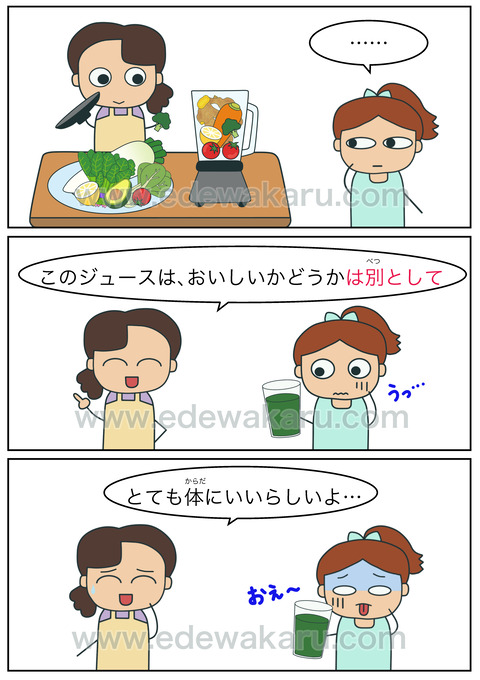
Meaning
not making ... an issue for now
not thinking about ... for now
How to use it
Verb, adjective, or noun [plain form] + かどうかは別として
Question word + か + は別として
Explanation
“Aかどうかは別としてB” is a grammar pattern meaning “I’m not making A an issue for now, but B” or “I’m not thinking about A for now, but B.” It is used when you first want to tell the other person about B, as in “I’m not considering A right now, but B.” This pattern also has a form that places the [dictionary form] and [ない form] side by side: “AかAないかは別としてB.”
[Example]
This juice, whether or not it is tasty, seems to be good for you.
= Whether this juice is tasty or not, it seems to be good for you.
Also, 〜かどうかは別として can be changed to 〜かどうかは別にして.
[Example]
Whether or not it is tasty, it seems to be good for you.
= Whether or not it is tasty, it seems to be good for you.
There are also the forms Nは別として and Nは別にして, so let’s learn them together 😊
[Related patterns]
In context 6 examples
このジュースはおいしいかどうかは別として、とても体にいいらしい
→おいしいかどうかはわからないが、体にいいらしいWhether or not this juice is tasty, it seems to be very good for you. →I don’t know if it’s tasty, but it seems to be good for you.
似合うかどうかは別として、一度ミニスカートをはいてみたいな…
→似合うかどうかはわからないが、一度ミニスカートをはいてみたいWhether or not it suits me, I’d like to try wearing a miniskirt once… →I don’t know if it would suit me, but I’d like to try wearing a miniskirt once.
A:N1は私には難しすぎると思うんだ…B:合格するかどうかは別として、チャレンジしてみれば?
→合格するかはわからないが、チャレンジしてみれば?A: I think N1 is too difficult for me… B: Whether or not you pass, why not give it a try? →I don’t know if you’ll pass, but why not give it a try?
自分の好きなチームが勝つかどうかは別として、サッカーを見るのが大好きだ
→勝つかどうかはわからないが、サッカーを見るのが好きだWhether or not my favorite team wins, I love watching soccer. →I don’t know if they’ll win, but I love watching soccer.
成功するかどうかは別として、挑戦してみることが大事だ
→成功するかどうかは問題ではない。挑戦してみることが大事だWhether or not you succeed, what matters is giving it a try. →Whether you succeed is not the issue. What matters is giving it a try.
A:ふられるかどうかは別として、好きなら告っちゃいなよ!B:ぼくには、告白するだけの勇気はないな…
→ふられるかどうかはわからないが、好きなら告っちゃいなよA: Whether or not he turns me down, if you like him, just tell him! B: I don’t have the courage to confess… →I don’t know if he’ll turn you down, but if you like him, just tell him!
Read the original source text
Meaning
今は〜のことを問題にしないが
今は〜のことを考えないが
How to use it
動詞・形容詞・名詞[普通形]+かどうかは別として
疑問詞+か+は別として
Explanation
「Aかどうかは別としてB」は「今はAのことは問題にしないがB」「今はAのことは考えないがB」という意味の文型です。「Aについては今問題にしないが、Bだ」というように、まず「B」のことを相手に言いたい場合に使われます。この文型には[辞書形]と[ない形]を並べて
「AかAないかは別としてB」
という形もあります。
[例]
このジュースはおいしい
かはどうかは別として、体にいいらしい
=このジュースはおいしい
か
おいしく
ないかは別として、体にいいらしい
また「〜かどうかは別として」は「〜かどうかは別にして」にチェンジすることができます。
[例]
おいしい
かどうかは別として、体にいいらしい
=おいしい
かどうかは別にして、体にいいらしい
「〜は別として・〜は別にして」には「Nは別として・Nは別にして」という形もありますので、一緒に覚えておきましょう😊
【関連文型】
Usage 2
Read this source entry ↗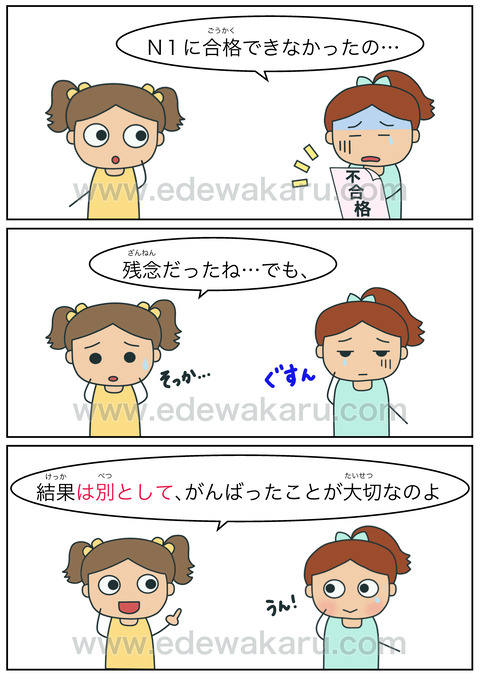
Meaning
... is an exception, but ...
without thinking about ... for now
without making ... an issue for now
How to use it
Noun [dictionary form] + は別として
Noun [dictionary form] + は別にして
Explanation
“〜は別として” is a grammar pattern meaning “... is an exception, but ...,” “without making ... an issue for now,” or “without thinking about ... for now.” It can be changed to 〜は別にして.
[Example]
The result aside, what matters is that you worked hard.
= Setting aside the result, what matters is that you worked hard.
There are also the forms 疑問詞 + か + は別として and 〜かどうかは別として, so let’s learn them together 😊
[Similar patterns]
In context 4 examples
A:N1に合格できなかったの…B:結果は別として、がんばったことが大切なのよ!
→がんばったことが大切だから、今は結果のことは考えなくていいよA: I didn’t pass N1… B: The result aside, what matters is that you worked hard! →What matters is that you worked hard, so you don’t need to think about the result for now.
この店のパンは、味は別としてすごく安い
→味のことは考えなかったら、安いのでいいThe bread at this shop is very cheap, taste aside. →If you don’t think about the taste, it’s good because it’s cheap.
帰国子女は別として、英語が苦手な日本人は多いようだ
→帰国子女は例外だが、英語が苦手な日本人は多いようだ*帰国子女とは、子供の時に海外に住んでいて、日本に帰ってきた人のことExcept for people who grew up overseas and returned to Japan, it seems that many Japanese people are poor at English. →People who grew up overseas and returned to Japan are the exception; it seems that many Japanese people are poor at English. *A returnee is someone who lived overseas as a child and then came back to Japan.
数学は別として、他の教科はまるでダメだ…
→数学は例外だが、他の教科はまるでダメだExcept for math, I’m hopeless at all the other subjects… →Math is the exception; I’m hopeless at all the other subjects.
Read the original source text
Meaning
〜は例外だが〜
今は〜のことは考えないで
今は〜を問題にしないで
How to use it
名詞[辞書形]+は別として
名詞[辞書形]+は別にして
Explanation
「〜は別として」は「〜は例外だが」「今は〜を問題にしないで」「今は〜のことは考えないで」という意味の文型です。「〜は別にして」にチェンジすることができます。
[例]
結果
は別として、がんばったことが大切だ
=結果
は別にして、がんばったことが大切だ
「〜は別として・〜は別にして」には「疑問詞+か+は別として」「〜かどうかは別として」という形もありますので、一緒に覚えておきましょう😊
【類似文型】