絵でわかる日本語
Usage 1
Read this source entry ↗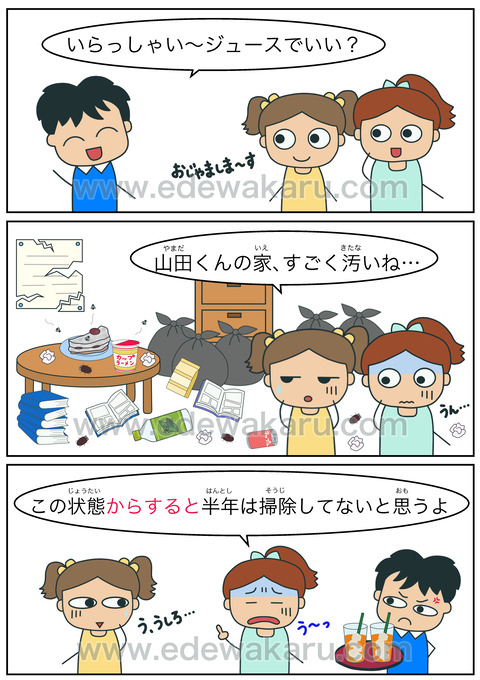
Meaning
judging from ...
judging by looking at ...
How to use it
Noun [dictionary form] + からすると・からすれば
Explanation
〜からすると・〜からすれば is a grammar pattern meaning “judging from ...” It is used when stating a judgment made after seeing or hearing something. It is often followed by 〜だろう, 〜かもしれない, 〜と思う, and similar expressions.
〜からすると・〜からすれば also means “considering it from the standpoint of ...” There are many grammar patterns that include から, so let’s review them 😊
In context 6 examples
A:山田くんの家、すごく汚いね…B:この状態からすると、半年くらい掃除してないと思うよ
→この状態を見て判断すると、半年くらい掃除してないと思うよA: Yamada’s house is really dirty… B: Judging from the state it’s in, I don’t think they’ve cleaned for about six months. →Judging by this state, I don’t think they’ve cleaned for about six months.
彼女の実力からすると、N1に合格できるだろう
→彼女の実力を見て判断すると、N1に合格できると思うJudging from her ability, she’ll probably pass N1. →Judging from her ability, I think she can pass N1.
あの様子からすると、何かいいことがあったんだと思うよ
→あの様子を見て判断すると、何かいいことがあったんだと思うよJudging from the way they look, I think something good must have happened.
A:まだカフェに着かないの?B:…地図からすると、この近くにあるはずなんだけどな
→この地図を見て判断すると、この近くにあるはずなんだけどなA: Aren’t you at the café yet? B: …Judging from the map, it should be somewhere around here.
あの歩き方からすると、彼は足をケガしているんだと思います
→あの歩き方を見て判断すると、彼は足をケガしているんだと思いますJudging from the way he walks, I think he has injured his leg.
あの態度からすると、彼女は私のことが嫌いなようだ
→あの態度から判断すると、彼女は私のことが嫌いなようだJudging from her attitude, it seems she doesn’t like me.
Read the original source text
Meaning
〜から判断すると
〜を見て判断すると
How to use it
名詞[辞書形]+からすると・からすれば
Explanation
「〜からすると・〜からすれば」は「〜から判断すると」という意味の文型です。何かを見たり聞いたりして判断したことを言う時に使われます。後ろには「〜だろう」「〜かもしれない」「〜と思う」などがよく使われます。
「〜からすると・〜からすれば」には「〜の立場から考えると」という意味もあります。また「から」がつく文型はたくさんありますので、復習をしておきましょう😊
Usage 2
Read this source entry ↗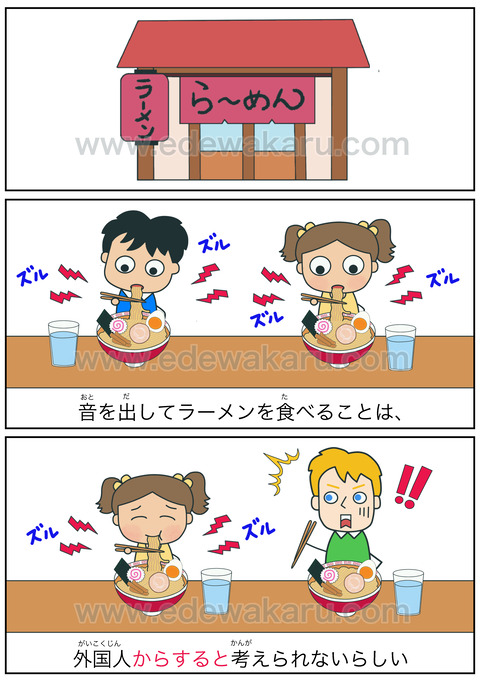
Meaning
considering it from the standpoint of ...
speaking from the standpoint of ...
looking at it from the standpoint of ...
How to use it
Noun [dictionary form] + からすると・からすれば
Explanation
“Aからすると・Aからすれば” is a grammar pattern meaning “considering it from the standpoint of A” or “speaking from A’s standpoint.” It is used to say something from A’s standpoint or point of view.
〜からすると and 〜からすれば also have a use that expresses [judgment]. There are many grammar patterns that include から, so let’s review them.
[Grammar patterns that include から]
In context 5 examples
音を出してラーメンを食べることは、外国人からすると考えられないらしい
→外国人の立場から言うと、考えられないらしいEating ramen noisily seems unthinkable to foreigners. →From a foreigner’s point of view, it seems unthinkable.
日本人からすると、靴をはいたまま家に入るなんてありえない
→日本人の立場から言うと、靴をはいたまま家に入るなんてありえないFrom a Japanese person’s point of view, going into a house with your shoes on is unthinkable.
北海道に住んでいる人からすると、雪なんて全然めずらしくない
→北海道に住んでいる人の立場から言うと、雪なんて全然めずらしくないFrom the point of view of people who live in Hokkaido, snow is not unusual at all.
親からすると、子供のことは何歳になっても心配なものだ
→親の立場から言うと、子供のことは何歳になっても心配なものだFrom a parent’s point of view, you worry about your children no matter how old they get.
太りやすい私からすると、食べても太らないとはうらやましい限りだ
→太りやすい私の立場から言うと、食べても太らないとはうらやましい限りだAs someone who gains weight easily, I couldn’t be more envious of people who don’t gain weight even when they eat.
Read the original source text
Meaning
〜の立場で考えると
〜の立場から言うと
〜の立場から見ると
How to use it
名詞[辞書形]+からすると・からすれば
Explanation
「Aからすると・Aからすれば」は「Aの立場で考えると」「Aの立場から言うと」という意味の文型です。「A」の立場や視点から何かを言う時に使われます。
「〜からすると・〜からすれば」には【判断】を表す用法もあります。また、「から」がつく文型はたくさんありますので、復習しておきましょう。
【「から」がつく文型】
NINJAL 日本語文型データベース
Meaning
This is used when there are various positions or grounds, but you want to say that your evaluation or judgment focuses on one of them. It is a way of speaking that focuses on “〜”.
How to use it
Nからすれば
Notes
The “〜” slot takes a word that serves as a position, grounds for judgment, or criterion. After 「〜からすれば」 comes a sentence stating a judgment, impression, evaluation, opinion, or inference.
In context 4 examples
私は、本を読みたいとき図書館から借りるか、古本を買うかで、新品は買わない。著者からすればあまりありがたくない読者だろう。
When I want to read a book, I either borrow it from the library or buy a used copy; I don't buy new books. From the author's point of view, I must not be a very welcome reader.
親からすれば、素直で手のかからない子はありがたい。だが、そういう子は、大人になってから親を困らせることもあるそうだ。
From a parent's point of view, an obedient child who isn't much trouble is a blessing. But apparently, such children sometimes cause their parents trouble after they grow up.
最近の株価の動きからすれば、この会社の株はしばらく手放さなくてもよさそうだ。
Judging from the recent movement in stock prices, it seems we don't need to sell this company's stock for a while.
85歳という年齢からすれば、祖母は並外れて元気だと言える。
Given her age of 85, my grandmother can be said to be exceptionally energetic.
Read the original source text
Meaning
いろいろな立場・根拠があるが、そのうち〜に焦点をおいた評価・判断であると言いたいときに使います。「〜」に注目して述べる言い方です。
How to use it
Nからすれば
Notes
「~」には、立場・判断の根拠・基準になる言葉がきます。「〜からすれば」の後には、判断・感想・評価・意見・推測などを述べる文がきます。