絵でわかる日本語
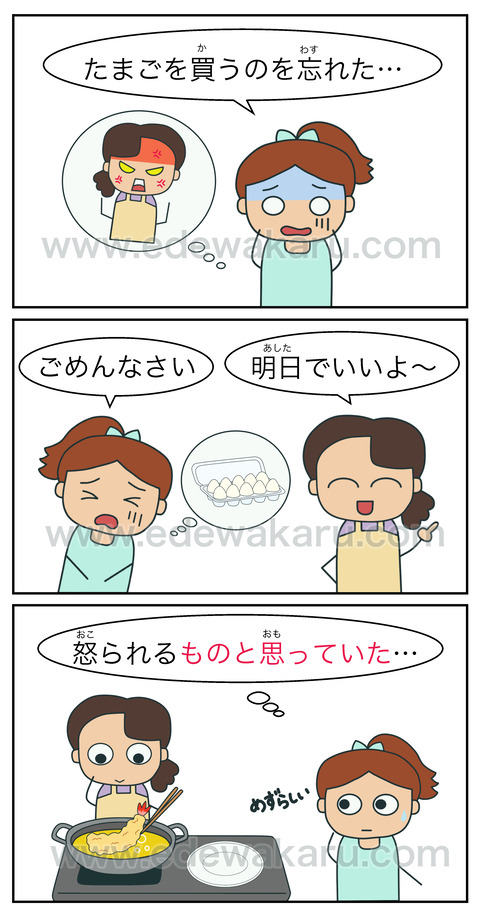
Meaning
I was sure that ~, but it turned out to be different.
How to use it
Verb/adjective [plain form] + ものと思っていた
Explanation
“〜ものと思っていた” is a sentence pattern meaning “I was sure that ~, but it turned out that was not the case.” It is used when you want to say that what you thought or believed was not actually so 😊
“〜とばかり思っていた” is used with almost the same meaning, but remember that “〜ものと思っていた” is not used with nouns 😉
(Review: 〜とばかり思っていた [I was convinced that ~])
[Examples]
⭕️怒られるものと思っていた
I was sure I would be scolded.
⭕️怒られるとばかり思っていた
I was convinced I would be scolded.
⭕️雨が降るものと思っていた
I was sure it would rain.
⭕️雨が降るとばかり思っていた
I was convinced it would rain.
❌テストは明日ものと思っていた
I was sure the test was tomorrow.
⭕️テストは明日だとばかり思っていた
I was convinced the test was tomorrow.
Learn it as one of the “もの series” 😀
(Review: 〜として [as])
[“もの” series]
〜たいものだ・〜てほしいものだ
〜たものだ
〜たものではない
〜というもの(Nというもの)
〜ないものだろうか
〜ないものは〜ない
〜もの・〜んだもの
〜ものか
〜ものがある
〜ものだ (expressing a feeling)
〜ものだ (inherent nature/general way of thinking)
〜ものだ・〜ものではない
〜もので・〜ものだから
〜ものと思っていた
〜ものなら
〜ものの
〜ものを
〜ようものなら
In context 5 examples
怒られるものと思っていた
→絶対に怒られると思っていたが、怒られなかったI was sure I would be scolded. →I was sure I would be scolded, but I wasn’t.
彼は日本語能力試験(にほんごのうりょくしけん)に合格したものと思っていた
→彼は日本語能力試験に合格したと思っていたが、合格していなかったI thought he had passed the Japanese-Language Proficiency Test. →I thought he had passed the Japanese-Language Proficiency Test, but he hadn’t.
今日は雨が降るものと思っていた
→今日は絶対に雨が降ると思っていたが、降らなかったI was sure it would rain today. →I was sure it would rain today, but it didn’t.
日本語は難しいものと思っていた
→日本語は絶対に難しいと思っていたが、難しくなかったI thought Japanese was difficult. →I was sure Japanese was difficult, but it wasn’t.
山田くんはパーティーに来ないものと思っていた
→山田くんはパーティーに絶対に来ないと思っていたが、来たI was sure Yamada-kun wouldn’t come to the party. →I was sure Yamada-kun wouldn’t come to the party, but he did.
Read the original source text
Meaning
絶対に〜だと思っていたが、違っていた
How to use it
動詞・形容詞[普通形]+ものと思っていた
Explanation
「〜ものと思っていた」は「絶対に〜だと思っていたが、実は違っていた」という意味を表す文型です。
自分が思ってたことや信じていたことが、実際はそうではなかったと言いたい時に使います😊
「〜とばかり思っていた」
はほとんど同じ意味で使われますが、
「〜ものと思っていた」は名詞には使わないと覚えておきましょう
😉
(復習:〜とばかり思っていた)
[例]
⭕️怒られる
ものと思っていた
⭕️怒られる
とばかり思っていた
⭕️雨が降る
ものと思っていた
⭕️雨が降る
とばかり思っていた
❌テストは明日
ものと思っていた
⭕️テストは明日だ
とばかり思っていた
「もの」シリーズの1つとして覚えておきましょう😀
(復習:〜として)
【「もの」シリーズ】
〜たいものだ・〜てほしいものだ
〜たものだ
〜たものではない
〜というもの(Nというもの)
〜ないものだろうか
〜ないものは〜ない
〜もの・〜んだもの
〜ものか
〜ものがある
〜ものだ(感慨)
〜ものだ(本来の性質・一般的な考え方)
〜ものだ・〜ものではない
〜もので・〜ものだから
〜ものと思っていた
〜ものなら
〜ものの
〜ものを
〜ようものなら