絵でわかる日本語
Usage 1
Read this source entry ↗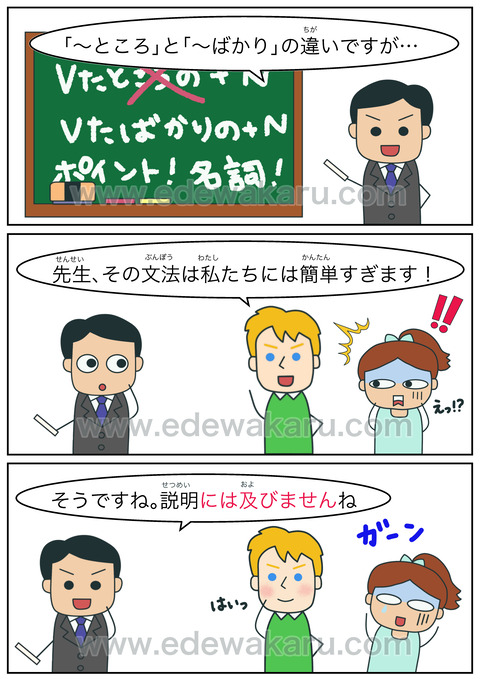
Meaning
There is no need to 〜
There is no need for 〜
How to use it
Verb [dictionary form] + には及ばない
Noun [dictionary form] + には及ばない
Explanation
“〜には及ばない” is a pattern meaning “there is no need to 〜” or “there is no need for 〜.” It is used to tell someone, in response to their concern or offer, “There’s no need to do that” or “It’s not that serious.” “それには及ばない” is used to politely decline by saying, “You don’t need to go that far.”
[Example]
A: I’ll walk you to the station.
B: No, it’s only about a five-minute walk, so there’s no need.
“〜には及ばない” also means “cannot match 〜.” There is also a similar pattern, “〜にはあたらない,” so let’s review them 😊
In context 5 examples
この文法は簡単ですので、説明には及びませんね
→説明する必要はありませんねThis grammar is easy, so there’s no need to explain it. →There’s no need to explain it.
A:昨日会社を休んだそうですね。大丈夫ですか?B:ちょっとかぜをひいただけですので、心配には及びません
→かぜをひいただけですので、心配する必要はありませんよA: I heard you took the day off work yesterday. Are you okay? B: I just caught a little cold, so there’s no need to worry. →I just caught a cold, so there’s no need to worry.
A:駅までお送りしますよB:いいえ、歩いて行けますので、ご心配には及びません
→歩いていけますので、心配いりませんよA: I’ll walk you to the station. B: No, I can walk there, so there’s no need to worry. →I can walk there, so there’s no need to worry.
結果はお電話でお知らせしますので、来ていただくには及びません
→来ていただく必要はありませんWe’ll let you know the result by phone, so there’s no need for you to come. →There’s no need for you to come.
A:今日はありがとうございました。お礼に何かごちそうさせてくださいB:お礼には及びません。当然のことをしたまでですので…
→お礼の必要はありませんA: Thank you for today. Please let me treat you to something as a thank-you. B: There’s no need to thank me. I only did what anyone would do… →There’s no need to thank me.
Read the original source text
Meaning
〜する必要はない
〜の必要はない
How to use it
動詞[辞書形]+には及ばない
名詞[辞書形]+には及ばない
Explanation
「〜には及ばない」は「〜する必要はない」「〜の必要はない」という意味の文型です。相手の気持ちに対して「〜する必要はありませんよ」「〜するほどのことではありませんよ」と言いたい時に使われます。「それには及ばない」は、「そこまでしなくても大丈夫ですよ」と丁寧に断る場合に使われます。
[例]
A:駅までお送りしますよ
B:いいえ、歩いて5分くらいですので、
それには及びません
「〜には及ばない」には「〜には勝てない」という意味もあります。また、類似文型(るいじぶんけい)に「〜にはあたらない」がありますので、復習しておきましょう😊
Usage 2
Read this source entry ↗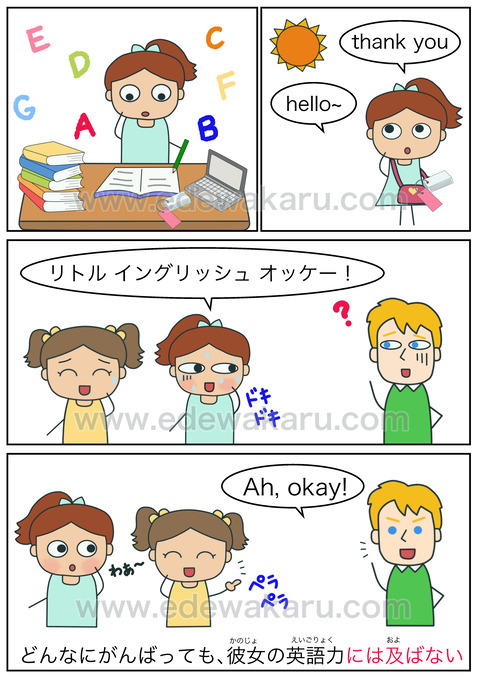
Meaning
Cannot match 〜
How to use it
Noun [dictionary form] + には及ばない
Explanation
“Aには及ばない” means “cannot match A.” In the form “BはAには及ばない,” it is used to say that “A is so impressive that B is not at a level where it can beat A.” The “は” in “〜には及ばない” can be omitted.
[Examples]
① No matter how hard I try, I can’t match her English ability.
[A] Her English ability
[B] My English ability
→No matter how hard I try, I can’t match her English ability.
② Her cooking is very delicious, though it doesn’t match the taste of an upscale restaurant.
[A] An upscale restaurant
[B] Her cooking
→Although her cooking isn’t at the level of an upscale restaurant, it’s very delicious.
③ A: He’s really good at tennis, isn’t he!
B: Yeah. No matter how much I practice, I can’t match him…
[A] Him
[B] Me
→No matter how much I practice, I can’t beat him.
④ When it comes to saving money, no one can match Yamada.
[A] Yamada
[B] Everyone, or anyone other than Yamada
→No one can beat Yamada.
⑤ As for computer knowledge, I can’t compare with him at all.
[A] Him
[B] Me
→He knows a lot about computers, and I can’t match him at all.
“〜には及ばない” also has a use meaning “there is no need to 〜,” so let’s learn that as well 😉
In context 5 examples
どんなにがんばっても、彼女の英語力には及ばない
No matter how hard I try, I can’t match her English ability.
高級レストランの味には及ばないが、彼女の料理はすごくおいしい
Her cooking is very delicious, though it doesn’t match the taste of an upscale restaurant.
A:彼は、すごくテニスが上手いよね!B:うん。どんなに練習しても彼には及ばないんだ…
A: He’s really good at tennis, isn’t he! B: Yeah. No matter how much I practice, I can’t match him…
お金を貯めることに関して言えば、誰も山田くんには及ばない
When it comes to saving money, no one can match Yamada.
パソコンの知識については、まったく彼には及ばない
As for computer knowledge, I can’t compare with him at all.
Read the original source text
Meaning
〜には勝てない
How to use it
名詞[辞書形]+には及ばない
Explanation
「Aには及ばない」は「Aには勝てない」という意味の文型です。「BはAには及ばない」の形で「Aはとてもすごくて、BはAに勝てるレベルではない」と言いたい時に使われます。「〜には及ばない」の「は」は省略することができます。
[例]
①どんなにがんばっても、彼女の英語力
には及ばない
【A】彼女の英語力
【B】私の英語力
→どんなにがんばっても、彼女の英語力には勝てない
②高級レストランの味
には及ばない
が、彼女の料理はすごくおいしい
【A】高級レストラン
【B】彼女の料理
→高級レストランの味に勝てるレベルではないが、彼女の料理はすごくおいしい
③A:彼は、すごくテニスが上手いよね!
B:うん。どんなに練習しても彼
には及ばない
んだ…
【A】彼
【B】私
→どんなにれんしゅうしても彼には勝てない
④お金を貯めることに関して言えば、誰も山田くん
には及ばない
【A】山田くん
【B】みんな・山田くん以外の人たち
→誰も山田くんには勝てない
⑤パソコンの知識については、まったく彼には及ばない
【A】彼
【B】私
→彼はパソコンのことをすごくよく知っていて、まったく勝てない
「〜には及ばない」には「〜する必要がない」という意味の用法もありますので、一緒に覚えておきましょう😉
日本語NET JLPT文法解説まとめ
Meaning
① Not to the extent that one needs to ~ / There is no need to ~
② Not at a level where one can beat ~.
How to use it
V (dictionary form) + には及ばない
N + には及ばない
※N is a verbal noun used with する.
Explanation
① not to the extent of ~ / There's no need to ~
② not at a level to beat ~
In context 7 examples
ちょっと転んだ程度なので、心配には及びません。消毒して絆創膏でも貼っておけば大丈夫でしょう。
It was only a minor fall, so there's no need to worry. You'll probably be fine if you disinfect it and put on a bandage or something.
わざわざ1時間の会議のために、来ていただくには及びません。後日、議事録をメールでお送りいたします。
There is no need for you to come all this way just for a one-hour meeting. I'll email you the minutes later.
皆知っていることなので、説明には及びませんね。
It's something everyone already knows, so there's no need to explain it, right?
こんな遠くまで、お越しいただくには及びません。
There's no need for you to come all the way out here.
レストランの味には及ばないが、彼女が作る料理も十分美味しいです。
It doesn't measure up to the food at a restaurant, but what she makes is delicious enough.
漢字の知識に関していえば、ワンさんにはとうてい及ばない。
When it comes to kanji knowledge, I can't hold a candle to Wang.
A:もうこんな時間ですから、家まで送りますよ。
A: It's already this late, so I'll take you home.
Read the original source text
Meaning
①〜するほどではない / 〜する必要ない
②〜に勝てるレベルではない。
How to use it
V(辞書形)+ には及ばない
N + には及ばない
※Nはする動詞のN
Explanation
① not to the extent of ~ / There's no need to ~
② not at a level to beat ~
毎日のんびり日本語教師
How to use it
Verb dictionary form + に(は)及ばない
Noun + に(は)及ばない
Explanation
① In the pattern 「AはBに(は)及ばない」, this expresses that B is superior to A.
In this usage, it means the same as 「~には敵わない(かなわない)」.
② In response to another person's feelings or suggestion, this expresses a tactful refusal meaning “there's no need to go out of your way to ~.”
Notes
Similar grammar: 「~には当たらない(あたらない)」
Similar grammar: 「~までもない/までもなく」
In context 7 examples
数学で言えば、私は彼に及ばない。
When it comes to mathematics, I don't measure up to him.
彼の洞察力には到底及ばない。(根本无法达到他的洞察力。)
I cannot compare with his powers of insight. (I simply cannot match his insight.)
コンピューターの知識では、彼に全く及ばない。
When it comes to computer knowledge, I don't come close to him at all.
何年練習しても、彼の才能には及ばないだろう。
No matter how many years I practice, I probably won't match his talent.
私は当然のことをしただけなので、お礼には及びません。
I only did what anyone would do, so there's no need to thank me.
帰り道は分かっていますので、心配には及びません。
I know the way home, so there's no need to worry.
わざわざお迎えに来ていただかなくても結構です。それには及びません。
You don't need to go out of your way to come pick me up. There's no need for that.
Read the original source text
How to use it
動辞形+に(は)及ばない
名詞+に(は)及ばない
Explanation
①「AはBに(は)及ばない」の文型で、AよりもBのほうが優れていることを表します。
このとき「~には敵わない(かなわない)」と同じ意味になります。
②相手の気持ちや提案などに対して、「わざわざ~する必要ない」という婉曲的な拒否を表します。
Notes
似ている文法「~には当たらない(あたらない)」
似ている文法「~までもない/までもなく」
文法
Meaning
① Not to the extent that one needs to ~ / There is no need to ~
② Not at a level where one can beat ~.
How to use it
V (dictionary form) + には及ばない
N + には及ばない
※N is a verbal noun used with する.
In context 7 examples
ちょっと転んだ程度なので、心配には及びません。消毒して絆創膏でも貼っておけば大丈夫でしょう。
It was only a minor fall, so there's no need to worry. You'll probably be fine if you disinfect it and put on a bandage or something.
わざわざ1時間の会議のために、来ていただくには及びません。後日、議事録をメールでお送りいたします。
There is no need for you to come all this way just for a one-hour meeting. I'll email you the minutes later.
皆知っていることなので、説明には及びませんね。
It's something everyone already knows, so there's no need to explain it, right?
こんな遠くまで、お越しいただくには及びません。
There's no need for you to come all the way out here.
レストランの味には及ばないが、彼女が作る料理も十分美味しいです。
It doesn't measure up to the food at a restaurant, but what she makes is delicious enough.
漢字の知識に関していえば、ワンさんにはとうてい及ばない。
When it comes to kanji knowledge, I can't hold a candle to Wang.
A:もうこんな時間ですから、家まで送りますよ。
B:いいえ、それには及びません。歩いて5分のところにありますから。A: It's already this late, so I'll drive you home. B: No, there's no need. It's only a five-minute walk.
Read the original source text
Meaning
①〜するほどではない / 〜する必要ない
②〜に勝てるレベルではない。
How to use it
V(辞書形)+ には及ばない
N + には及ばない
※Nはする動詞のN
NINJAL 日本語文型データベース
Meaning
It expresses the meaning that there is no need to do something.
それには及ばない is an idiomatic expression.
How to use it
Vるには及ばない
Nには及ばない
In context 6 examples
お互い知っている間柄なので、わざわざ挨拶するには及ばない。
Since we know each other well, there’s no need to go out of our way to exchange greetings.
明日こちらからうかがうので、お越しいただくには及びません。
I’ll come by tomorrow, so there’s no need for you to come here.
本プロジェクトの目的はこれまでも何度も共有してきて、分かり切ったことなので、説明するにはおよびません。
We have shared the purpose of this project many times before, and it is already clear, so there’s no need to explain it.
すっかり元気になりましたので、ご心配には及びません。
I’ve completely recovered, so there’s no need to worry.
「親切にしていただきありがとうございます」「いえいえ、礼には及びません」
“Thank you for your kindness.” “Oh, there’s no need to thank me.”
「車で空港までお送りしますよ」「いえいえ、予約したタクシーが来るので、それにはおよびません」
“I’ll drive you to the airport.” “No, no, there’s no need; the taxi I booked is coming.”
Read the original source text
Meaning
~する必要がないという意味を表します。
それには及ばないは慣用的な言い方です。
How to use it
Vるには及ばない
Nには及ばない
AIUEO JLPT Grammar
Meaning
This sentence pattern expresses the lack of need for something or insufficient effort or necessity. It implies that a situation does not warrant an action or is not significant enough to be addressed.
How to use it
Verb dictionary form + に及ばない; verb dictionary form + には及ばない; noun + に及ばない; noun + には及ばない
In context 5 examples
心配するには及ばない。すべて順調に進んでいる。
There’s no need to worry. Everything is going smoothly.
わざわざお礼を言うには及ばないよ。
There’s no need to go out of your way to thank me.
この程度の怪我なら、病院に行くには及ばないだろう。
For an injury of this level, there’s no need to go to the hospital.
何度も説明するには及ばない。彼女はもう理解している。
There’s no need to explain it again and again. She already understands.
そのイベントは小規模なので、準備に過剰な時間をかけるには及ばない。
The event is small, so there’s no need to spend excessive time preparing.
Read the original source text
Meaning
This sentence pattern expresses the lack of need for something or insufficient effort or necessity. It implies that a situation does not warrant an action or is not significant enough to be addressed.
How to use it
動詞辞書形に+及ばない動詞辞書形には+及ばない名詞に+及ばない名詞には+及ばない
Explanation · 日本語
この文型は、何かをする必要がないことや、それに対して力や努力が足りないことを表す表現です。状況がそこまで達していないため、わざわざ行う必要がない、または問題にするほどのことではないという意味です。
Bunpro Grammar Reference
Usage 1
Meaning
There is no need to, It is fine if you don’t, Unnecessary
How to use it
Verb + には及ばない
[する]Verb + (する)+ には及ばない
(お)+ 礼 + には及ばない
(ご)+ 心配 + には及ばない
それには及ばない
Verb + には及びません
[する]Verb + (する)+ には及びません
(お)+ 礼 + には及びません
(ご)+ 心配 + には及びません
それには及びません
Nuance
An expression implying that there is no need to (A). To not go as far as (A). It does not reach (A).
Explanation
には及ばない is a polite expression in Japanese used in order to indicate that there is 'no need to (A)', or that '(A) is unnecessary. It is a combination of the case-marking particle に, the adverbial particle は, and the negated form of the う-Verb 及ぶ 'to reach', 及ばない. The literal translation is 'it does not extend to (A)'.
This phrase will appear after nouns, or verbs in their dictionary form.
こちらから以前いただいたアドレスに送るので、こんな遠くまで取りに来ていただくには及びません。
I am going to send it to the email address you gave us last time, so there is no need to come this far to pick it up.
私たちの方からそちらに書類を持っていくので、こちらまでお越しいただくには及びません。
We will bring the documents to you, so there is no need to come here.
ご心配には及びません。これぐらいの怪我なら全然我慢できます。
There is no need to worry. This level of injury is totally bearable.
ここに書かれていることは皆さん既にご存じだと思いますので、ご説明には及びませんね。
I think everyone already knows the contents of this, so there is no need for me to explain.
As this grammar pattern is used in polite speech, the word that it is attached to is often preceded by either お or ご, depending on what type of verb it is.
Caution
When not used as a polite expression, には及ばない may simply show the extent of something. This is usually when a comparison is being made between two things. This use will be translated as '(A) does not reach the extent of (B)', or '(A) cannot be compared to (B)'.
あの有名ラーメン店には及ばないけど、ここのラーメンも結構美味しいと思う。
I think the ramen here is also quite good, though not as good as that famous ramen restaurant.
お宅の息子さんには及ばないかもだけど、私の息子も結構上達してきたと思う。
Maybe not as good as your son, but I think my son has also improved a lot.
In context 19 examples
- 「待って、私も行くよ。」「いえ、それには及びません。」
'Wait, I will go too!' 'No, there is no need for that.'
- ここに書かれていることは皆さん既にご存じだと思いますので、ご説明には及びませんね。
I think everyone already knows the contents of this, so there is no need for me to explain.
- こちらから以前いただいたアドレスに送るので、こんな遠くまで取りに来ていただくには及びません。
I am going to send it to the email address you gave us last time, so there is no need to come this far to pick it up.
- 私たちの方からそちらに書類を持っていくので、こちらまでお越しいただくには及びません。
We will bring the documents to you, so there is no need to come here.
- ご心配には及びません。これぐらいの怪我なら全然我慢できます。
There is no need to worry. This level of injury is totally bearable.
- リモートワークやオンライン会議が主流なのに、わざわざ会議の為にこちらまでお越しいただくには及びません。
Since remote work and online meetings are now the norm, there's really no need for you to come all the way here just for meetings.
- はいだ:「れつこさんの顔色が悪いね。」
れつこ:「ご心配には及びません。ただちょっと元気がないだけです。」Haida: 'Retsuko, you are pale.' Retsuko: 'No need to worry. I am just a bit tired.'
- 普通の人:「ありがとうございました。」
偉い人:「いや、礼には及びません。」Ordinary person: 'Thank you very much.' Person in high position: 'No need to thank me.'
- 小説、バトラー:「気に入ったなら、何か食べるものでもお支度致しましょうか。」
ゲスト:「いいえ、それには及びません。」A novel, butler: 'If you would like I can make something to eat.' Guest: 'No, there is no need for that.'
- 夫:「終電を逃しちゃったけど心配には及ばないよ。走って帰るから!」
Husband: ‘I missed the last train, but there is no need to worry, because I’ll run home!’
- 席を譲った人:「お礼には及びません。人として当たり前の事をしただけですから。」
Person who gave up their seat: ‘There is no need to thank me. I just did what any person naturally would.’
- 夫が妻に:「心配には及ばないよ。ただ少し血圧が高かっただけで他に異常は無いから。」
Husband to wife: ‘There’s no need to worry. My blood pressure is just a bit high, there is nothing else abnormal.’
- 新入社員:「この会社の事でしたら説明には及びません。もう講習を通して全て理解しました。」
New Employee: 'When it comes to the company, I have no need for further explanations; I've already understood everything through the training sessions.'
- セールスを断る:「その保険の事でしたら説明には及びません。私自身も保険会社に勤務していますので。」
Refusing sales: ‘There is no need to explain that insurance, since I myself also work at an insurance company.’
- 申請者:「明日、書類を持って行っても差し支えありませんか?」
公務員:「持って来ていただくには及びません。メールでも大丈夫です。」Applicant: 'Would it be a problem if I bring the documents tomorrow?' Public servant: 'There is no need to bring them. It is ok if you send them via email.'
- 客がお土産を差し出す、客:「いつもお世話になっているので、これ、つまらないものですが…。」
会社員:「いえ、それには及びません。私はただ業務を全うしているだけですから。」A customer giving a souvenir: ‘Since you’re always a help to me, here, I know it’s a bit lame...’ Employee: ‘No, there is no need for that. I am just fulfilling my duties!’
- 社員:「部長、車で本社までお送りします。空港でお待ち下さい。」
部長:「わざわざ車で迎えに来るには及びません。近いので私がそこへ歩いていきます。」Company employee: 'Director, I will drive you to the headquarters. Please, wait at the airport.' Head of the department: 'No need to pick me up by car. It is close, so I will walk there myself.'
- あの有名ラーメン店には及ばないけど、ここのラーメンも結構美味しいと思う。
I think the ramen here is also quite good, though not as good as that famous ramen restaurant.
- お宅の息子さんには及ばないかもだけど、私の息子も結構上達してきたと思う。
Maybe not as good as your son, but I think my son has also improved a lot.
Usage 2
Meaning
To be no match (for), To not compare (with), To fall short (of), To not reach, Cannot win with, To be out of reach (for), To not be on par (with)
How to use it
Noun + には(1) + 及ばない
Set expression:
Noun + の足元にも及ばない
(1) に
Noun + には(1) + 及びません
Set expression:
Noun + の足元にも及びません
(1) に
Nuance
A phrase expressing that something falls short of (A), or is no match for it. To not go as far as (A). It does not reach (A).
Explanation
As mentioned in the には及ばない grammar point lesson as a polite expression, には及ばない may simply show the extent of something. This is usually when a comparison is being made between two things. This pattern is a combination of the case-marking marking particle に, the adverbial particle は, and the negated form of the う-Verb 及ぶ 'to reach', 及ばない. The literal translation is 'it does not extend to (A)'.
This nuance of the phrase will appear after nouns. In this comparative use, the structure may also be translated as 'to be no match for (A)', 'to fall short of (A)', 'to not be on par with (A)'.
この海は沖縄の海には及ばないが、結構綺麗だ。
This beach is no match for the beaches in Okinawa, but it is quite beautiful.
あの一流レストランの味には及ばないが、かなり似ている。
The taste is no match for that top-notch restaurant, but it is very similar.
彼はものすごくギターが上手いが、布袋寅泰には及ばない。
He is very good at playing the guitar, but he is no match for Hotei Tomoyasu.
には及ばない will be used most frequently when (A) is something that is being given extremely high praise. As such, set combinations like (A) の足元には及ばない 'to not even reach the feet of (A)' will often be seen.
どれだけ頑張っても、青木先輩の足元には及ばない。
No matter how hard I try, I am no match for Aoki senpai.
In context 17 examples
- 言うまでもなく真作には及ばないでしょうが、いい贋作です。
Needless to say, it is no match for the original. Even still, it is a good forgery.
- どれだけ頑張っても、青木先輩の足元には及ばない。
No matter how hard I try, I am no match for Aoki senpai.
- この海は沖縄の海には及ばないが、結構綺麗だ。
This beach is no match for the beaches in Okinawa, but it is quite beautiful.
- あの一流レストランの味には及ばないが、かなり似ている。
The taste is no match for that top-notch restaurant, but it is very similar.
- 彼はものすごくギターが上手いが、布袋寅泰には及ばない。
He is very good at playing the guitar, but he is no match for Hotei Tomoyasu.
- 「物理学では、とてもアルバートには及ばない。」
'I am no match for Albert in physics.'
- 続編は立派なものの、明らかに最初の映画には及ばない。
Even though the sequel is splendid, it is clearly not on par with the first movie.
- 小説:「はるこの嗅覚は、犬には及ばないが、普通の人間のよりはるかにすぐれている。」
Novel: 'Haruko's sense of smell was no match for a dog's. However, it was far better than an ordinary human's.'
- 「どんなに練習してもさいたま先生の足元には及ばない。」
'No matter how much I train, I am no match for Saitama-sensei.'
- A(エー):「メアリーは外国人なのに日本語が上手だよね。」
B(ビー):「それに漢字学習にかけては誰もメアリーにも及ばないと思う。」A: 'Mary's Japanese is good for a foreigner!' B: 'What's more, I believe that when it comes to kanji knowledge, no one is a match for her.'
- 弟子:「私の技なんて、もちろん師匠の技のクオリティには及びません…。」
Apprentice: ‘This technique is, of course, a technique that falls short of my master’s.’
- 化学の知識で言えば両親には及ばないが、英語の知識だったら勝てるはずだ。
If we speak in terms of chemistry knowledge, I am no match for my parents, but as for English knowledge, I would surely win.
- 私の洞察力なんて、長年に渡って刑事をしている彼女の洞察力には及びません。
My power of discernment is nothing compared to her power of discernment, as she has spent many years as a detective.
- 娘:「母さんの作る料理には及ばないけどさ、私の料理もなかなか上手でしょ?」
Daughter: ‘It’s nothing compared to my mother’s cooking, but my cooking is pretty good too, right?’
- アニメや漫画の知識について比べるとしたら、誰も彼には及ばないでしょう。
If we were to compare against him in terms of knowledge of anime and manga, then nobody’s a match for him.
- 彼には生まれながらにしてバイオリンの才能がある。どんなに練習しても彼の腕には及ばないだろう。
Even if we assume that he was a violin genius from birth, I’d be no match for him no matter how hard I practiced.
- 節約家として知られる社内の川上さんには及びませんが、私もそれなりに節約術を持ち合わせています。
I cannot compare with Kawakami-san, who is known within the company as being frugal, but I am also somewhat of a thrifty person.