くらべてわかる日本語表現文型辞典
Meaning
When limited to the aspect of A, it is B. From the perspective of A, it is B.
How to use it
A 上 B
[Noun—∅] 上
Explanation
【Contrast 1】
「A うえで B」(Meaning 4, p. 38)
The two can be substituted for each other.
○規則上認められていない。 — It is not permitted under the rules.
○規則の上では認められていない。 — It is not permitted according to the rules.
Since 「A 上」 forms a single word, it can only be used in limited cases.
○話のうえでは ×話上は — 話のうえでは × 話上は
With katakana words, both forms can often be used.
○ルールの上で ○ルール上は — ルールの上で ○ ルール上は
In context 4 examples
未成年者の飲酒は法律上禁止されている。
Under the law, drinking alcohol is prohibited for minors.
この車は構造上、傾斜のきつい道は走れない。
Because of its structure, this car cannot travel on steep roads.
テレビでは報道されないが、ネット上を賑わしている話題がある。
It is not reported on television, but some topics are making a buzz online.
立場上、秘密は口外できない。
Given my position, I cannot reveal the secret.
Read the original source text
Meaning
Aに限定すればBである。Aの観点からはBである。
How to use it
A上B
[名詞-∅]上
Explanation
【対比1】
「AうえでB」(意味4 P.38)
置き換え可能。
○規則上認められていない。
○規則の上では認められていない。
「A上」で一語であるから限られた場合でしか使えない。
○話のうえでは ×話上は
カタカナ語は両方使える場合が多い。
○ルールの上で ○ルール上は
DoJG 日本語文法辞典(全集)
Meaning
From the viewpoint of; for (the sake of); for (the reason); in (terms of); relating to; in –ing
How to use it
Noun | 上 | |
| 衛生上 | From the viewpoint of hygiene |
Explanation
A suffix which indicates the idea of "from the viewpoint of," "for the sake of," "for the reason," or "in terms of".
In context 15 examples
この映画は教育上よくない。
This film is not good from an educational point of view.
便宜上私がこの部屋の鍵を預かっているんです。
I keep the key to this room for the sake of convenience.
時間の制約上細かい説明は省略させていただきます。
I will skip a detailed explanation for lack of time (literally: time limitation).
計算上はこれで正しい。
In terms of calculation, this is correct.
健康上の理由で引退することにした。
I've decided to retire for health reasons (literally: for a reason relating to my health).
「使用上の注意」をよく読んで下さい。
Read "Warnings for Use" carefully.
このような行為は道義上許せない。
Such conduct cannot be forgiven from an ethical point of view.
この条件はこれからの取引上極めて不利だ。
This condition is extremely disadvantageous for our future business.
仕事の都合上こんな高いマンションに住んでいるんです。
I live in such an expensive condominium because it's convenient for commuting to work (literally: for business convenience).
仕事の関係上、今この町を離れるわけにはいかないんです。
For business-related reasons, I cannot leave this town.
理論上はこうなるはずなのだが、実際どうなるかは分からない。
In theory it should turn out like this, but it's not known how it will actually turn out.
法律上は彼の行為は罪にならない。
Legally his conduct is not criminal.
この製品にはデザイン上の欠陥がいくつかある。
This product has some design defects.
彼女は一身上の都合で会社を辞めることになった。
She is going to quit her company for personal reasons.
この部品は製作上いくつかの問題がある。
There are some problems in manufacturing this part.
日本語文型辞典
Usage 1
Meaning
Basic information
N じょう
Means “from that standpoint” or “in that respect.” ⑥ can also be expressed as “都合により” (“due to circumstances”). A formal expression.
Examples: ① Giving money to children is not good from an educational standpoint. ② Because of the nature of work in the service industry, I cannot take time off when other people are off. ③ For safety reasons, you must wear a helmet while working. ④ In my experience, if you skip practice for three days, your body can no longer keep up. ⑤ Given my position, I cannot answer that question. ⑥ We will be closed for the time being due to circumstances related to library organization.
Read the original source text
Meaning
基本情報Nじょう説明「その見地からいうと」「その点で」という意味。⑥は「都合により」とも言える。かたい言い方。例文① 子供にお金を与えるのは教育上よくない。② サービス業という仕事上、人が休みの時は休むわけにはいかない。③ 安全上、作業中はヘルメットを必ずかぶること。④ 経験上、練習を三日休むと体がついていかなくなる。⑤ 立場上、その質問にはお答えできません。⑥ 図書整理の都合上、当分の間閉館します。
Usage 2
Meaning
Attaches to a noun referring to something that can be recorded, such as data or a map, and means “according to that information.”
Means “when doing something” or “in the course of something.” Used to discuss problems, points of caution, and so on that arise in that situation or process.
Means “first do the action expressed by the verb”; it is followed by an expression meaning “then take the next action based on the result.”
Attaches to a word denoting an action that entails some responsibility or commitment, and means “since you are doing/have done that action.” It is followed by an expression meaning “you must act in a way that is appropriate on that basis.” “…からには” and “…以上は.” Formal expression.
Indicates that one state or event is accompanied by an additional state or event. When attached to a noun, it takes the form Nである/だった/であった. そのうえ in ⑥ is used at the beginning of a sentence or clause.
How to use it
Nのうえで(は)
V-るうえで
V-たうえで
V-る/V-たうえは
…うえ(に)
Nであるうえに
Naなうえに
A/V うえに
In context 22 examples
暦の上ではもう春だというのに、まだまだ寒い日が続いている。
Although it is already spring according to the calendar, cold days are still continuing.
データの上では視聴率は急上昇しているが、周りの人に聞いても誰もそんな番組は知らないと言う。
According to the data, viewership is rising sharply, but even when I ask people around me, no one says they know of such a program.
その公園は地図の上では近くてすぐ行けそうに見えるが、実は坂がたくさんあってかなり行きにくい場所なのだ。
On the map, the park looks close and easy to get to, but in fact there are many hills, making it quite hard to reach.
間取りは図面の上でしか確認できなかったが、すぐにそのマンションを借りることに決めた。
I could only check the layout on the floor plan, but I decided to rent that apartment right away.
パソコンを買う上で注意しなければならないことは何ですか。
What should I be careful about when buying a computer?
このプロジェクトを進めていく上で障害となるのが、地元の住民の反対運動だ。
The local residents' protest movement is an obstacle to moving this project forward.
女性が結婚相手を選ぶ上での重要なポイントとして、「三高」ということが言われていた。
“Three highs” was said to be an important factor for women when choosing a marriage partner.
留学生を実際にホームステイさせる上で、おそらく今までに予想もしなかった問題がいろいろ出てくるものと思われますので、そのための相談窓口を設けました。
We have set up a consultation desk for this purpose, since it seems likely that various problems we probably haven't anticipated will come up when we actually host international students for homestays.
では、担当の者と相談した上で、改めてご返事させていただきます。
I'll consult with the person in charge and get back to you.
一応ご両親にお話しなさった上で、ゆっくり考えていただいてけっこうです。
It's perfectly fine to take your time thinking about it after you have spoken with your parents first.
金を貸してやると言ったのは、お前がちゃんと職についてまともな生活に戻った上でのことだ。働かないで遊んでばかりいるやつに金を貸すわけにはいかない。
I said I would lend you money once you got a proper job and returned to a decent life. I can't lend money to someone who doesn't work and just goes out having fun.
やると言ってしまったうえは、何がなんでもやらなければならない。
Now that I've said I'll do it, I have to do it no matter what.
留学を決心した上は、少々のことがあっても一人で乗り越えていけるだけの強さを養ってほしい。
Now that you've decided to study abroad, I hope you'll build up enough strength to overcome anything that comes your way on your own.
みんなに期待されて出馬する上は、どんなことがあっても当選しなければならない。
Now that you're running for office with everyone's expectations behind you, you must win no matter what.
他の仲間を押しのけてレギュラーメンバーになる上は、必ず得点してチームに貢献してみせる。
Now that I've pushed aside my other teammates to become a regular member, I'll definitely score and contribute to the team.
今年は冷夏である上に台風の被害も大きくて、野菜は異常な高値を記録している。
On top of this being a cool summer, typhoon damage has also been severe this year, and vegetables have reached abnormally high prices.
彼女は、就職に失敗した上、つきあっていた人にもふられて、とても落ち込んでいた。
She was very depressed after failing to find a job and being dumped by the person she had been dating.
その選手は日本記録も更新した上に銀メダルももらって、自分でも信じられないという顔をしていた。
The athlete broke the Japanese record and won a silver medal as well, and looked unable to believe it himself.
彼は博士号を持っている上に教育経験も長い。周囲の信頼も厚く教師としては申し分のない人だ。
He has a doctorate as well as extensive teaching experience. He is highly trusted by those around him and is an impeccable teacher.
その壁画は保存状態がいい上に図柄もこれまでにない大胆なもので、考古学者たちの注目の的となっている。
The mural is in good condition, and its design is also unprecedentedly bold, making it the focus of archaeologists' attention.
今年は冷夏であり、そのうえ台風の被害も大きくて、野菜は異常な高値を記録している。
This year the summer has been cool, and on top of that, typhoon damage has been severe, so vegetables have reached abnormally high prices.
このあたりは閑静なうえに、駅にも近く住環境としては申し分ない。
This area is quiet and close to the station, making it an ideal place to live.
Read the original source text
Meaning
データや地図など書き表せるものを表す名詞を受けて、「その情報によると」という意味を表す。
「何かをする場合/過程の中で」という意味。その場合や過程における問題点・注意点などについて述べるのに用いる。
「動詞が表す行動をまず行って」という意味を表し、後ろには「その結果に基づいて次の行動をとる」という意味の表現が続く。
何らかの責任・覚悟を伴う行為を表すことばを受けて、「その行為を行う/行ったのだから」という意味を表す。後ろには、「それに基づいてそれに適した行動をしなければならない」という意味の表現が続く。「…からには」「…以上は」。改まった表現。
ある状態・出来事があり、さらにそれ以上の状態・出来事が重なることを表す。名詞に付く場合は「Nである/だった/であった」の形になる。⑥の「そのうえ」は文や節の頭に用いられる。
How to use it
Nのうえで(は)
V-るうえで
V-たうえで
V-る/V-たうえは
…うえ(に)
Nであるうえに
Naなうえに
A/V うえに
絵でわかる日本語
Meaning
in terms of 〜
from the standpoint of 〜
in the area of 〜
viewed from the perspective of 〜
How to use it
Noun [dictionary form] + 上
Explanation
“〜上” is a sentence pattern meaning “in terms of 〜” or “from the standpoint of 〜.” It is often used with specific nouns, so it is a good idea to learn a few. 😊
[Words used with “〜上”]
・仕事上 (work-wise)
・教育上 (from an educational standpoint)
・歴史上 (historically)
・健康上 (from a health standpoint)
・立場上 (given one’s position)
・法律上 (legally)
・経験上 (from experience)
・安全上 (for safety reasons), etc.
There are many sentence patterns containing “〜上,” but this one is read “じょう.” 😮 Be sure to learn to distinguish between the different patterns that use “〜上.” 😉
・Vた + 上で (Review: 〜上で (Vた + 上で))
・Vる + 上で (Review: 〜上で (Vる + 上で))
・〜上に (Review: 〜上に)
In context 5 examples
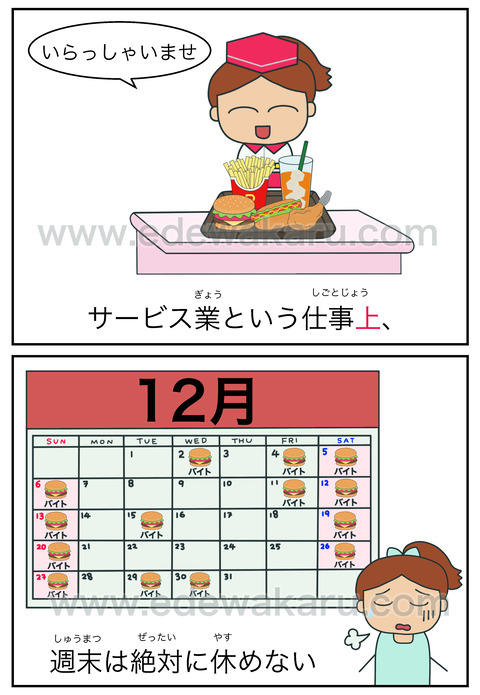
サービス業という仕事上、週末は絶対に休めない
→サービス業という点からいうと、週末は絶対に休めないBecause of my job in the service industry, I absolutely can’t take weekends off. → In terms of working in the service industry, I absolutely can’t take weekends off.
あのアニメは教育上(きょういくじょう)よくない
→あのアニメは教育の点からいうと、よくないThat anime is not good from an educational standpoint. → That anime is not good from an educational standpoint.
徳川家康(とくがわいえやす)は、歴史上とても有名だ
→徳川家康は、歴史の点でとても有名だTokugawa Ieyasu is very famous in history. → Tokugawa Ieyasu is very famous historically.
たばこは健康上(けんこうじょう)よくない
→たばこは健康の点からいうと、よくないSmoking is not good for your health. → From a health standpoint, smoking is not good.
自転車に乗る時は、安全上(あんぜんじょう)ヘルメットをかぶったほうがいい
→自転車に乗る時は、安全の観点からいうとヘルメットをかぶったほうがいいWhen riding a bicycle, it’s best to wear a helmet for safety. → From a safety standpoint, it’s best to wear a helmet when riding a bicycle.
Read the original source text
Meaning
〜の点で
〜の点からいうと
〜の方面で
〜の観点から見て
How to use it
名詞[辞書形]+上
Explanation
「〜上」は「〜の点で」「〜の点からいうと」という意味を表す文型です。
この文型は決まった名詞に使う場合が多いですので、いくつか覚えておくといいと思います😊
[「〜上」に使う単語]
・
仕事上
・
教育上
(きょういくじょう)
・
歴史上
・
健康上
(けんこうじょう)
・
立場上
・
法律上
(ほうりつじょう)
・
経験上
(けいけんじょう)
・
安全上
(あんぜんじょう) など
「〜上」という文型はたくさんありますが、
この文型は「〜じょう」と読みます
😮「〜上」を使う文型は区別して覚えておきましょう😉
・Vた+上で(復習:〜上で(Vた+上で))
・Vる+上で(復習:〜上で(Vる+上で))
・〜上に(復習:〜上に)
どんなときどう使う 日本語表現文型辞典
Meaning
on top of that
How to use it
〔plain form〕(ナAな・ナAである/Nの・Nである)+上(に)
Explanation
うえ(に)
~。それに
1)前の事柄と同じ方向の事柄(プラスとプラス、マイナスとマイナス)を「それに」という気持ちで加える。
2)後に、命令・禁止・依頼・勧誘など、相手への働きかけの文は来ない。
2)Commands, prohibitions, requests, or solicitations do not follow うえ(に).
1)Adds feeling of "also" to phrases expressing occurrences with same directionality as in a previous situation (positives with positives, negatives with negatives).
In context 3 examples
ゆうべは道に迷った上、雨にも降られて大変でした。
Last night, I got lost and on top of that was caught in the rain; it was awful.
この機械は使い方が簡単な上に、小型で使いやすい。
This machine is easy to use, and on top of that, it is compact and convenient.
彼の話は長い上に、要点がはっきりしないから、聞いている人は疲れる。
His stories are long, and on top of that, the main points are unclear, so listeners get tired.
Read the original source text
Meaning
on top of that
How to use it
〔普通形〕(ナAな・ナAである/Nの・Nである)+上(に)
Explanation
うえ(に)
~。それに
1)前の事柄と同じ方向の事柄(プラスとプラス、マイナスとマイナス)を「それに」という気持ちで加える。
2)後に、命令・禁止・依頼・勧誘など、相手への働きかけの文は来ない。
2)Commands, prohibitions, requests, or solicitations do not follow うえ(に).
1)Adds feeling of "also" to phrases expressing occurrences with same directionality as in a previous situation (positives with positives, negatives with negatives).
日本語NET JLPT文法解説まとめ
Meaning
In addition to ... / on top of that ...
How to use it
Plain form + 上に
・V (plain form) + 上に
・I-adjective (plain form) + 上に
・Na-adjective + な + 上に
・Na-adjective + である + 上に
・N + の + 上に
・N + である + 上に
Explanation
on the top of that / in addition
If what comes before 「上に」 is something good, what follows 「上に」 is also something good. Conversely, if what comes before 「上に」 is something bad, what follows 「上に」 is also something bad.
In context 7 examples
最近の携帯は使い方が機能がたくさんある上に、カメラの性能も良いからとても便利だ。
Recent mobile phones are very convenient because they have lots of features and their cameras perform well.
このアニメは迫力がある上に泣けるシーンがたくさんあっておすすめだよ。
I recommend this anime because it’s exciting and has lots of scenes that make you cry.
豊洲の海鮮は安い上に新鮮だ。
The seafood in Toyosu is inexpensive and fresh.
この会社は待遇が悪い上に仕事の量も多いから3年以内に転職する人が多い。
This company offers poor working conditions and has a heavy workload, so many people change jobs within three years.
ユニクロは安い上に質もよく多くの人から愛されているブランドだ。
Uniqlo is a brand loved by many people because it’s inexpensive and good quality.
この国ではトイレが汚い上にトイレットペーパーがないから最悪だ。
This country’s toilets are dirty and there’s no toilet paper, so it’s the worst.
電気で動く車は静かな上に環境に優しいので、注目されつつある。
Electric cars are quiet and environmentally friendly, so they are attracting attention.
Read the original source text
Meaning
~に加えて / それに
How to use it
普通形 + 上に
・V(普)+上に
・イA(普) + 上に
・ナAな + 上に
・ナAである + 上に
・Nの + 上に
・Nである + 上に
Explanation
on the top of that / in addition
「上に」の前が良いことの場合、「上に」の後ろも良いことが来る。逆に「上に」の前が悪いことの場合、「上に」の後ろも悪いことが来る。
毎日のんびり日本語教師
Usage 1
Read this source entry ↗How to use it
Verb plain form + 上に
い-adjective plain form + 上に
な-adjective stem + な/である + 上に
Noun + である + 上に
Explanation
Expresses that, in addition to a certain state or event occurring, something even more extreme than that also occurred.
The latter clause is more pronounced in degree than the preceding clause, and this can be used with either positive or negative content.
「その上」can be used as a conjunction with the same meaning. See examples (2) and (3).
Notes
The 「上」 series
In context 14 examples
今日は寒い上に風が強い。
It's cold today, and on top of that, it's windy.
風が強くてゴミが舞ってるし、その上目に入って痛い。
The wind is so strong that it's blowing trash around, and on top of that, it's getting in my eyes and hurting.
疲労で目が痛いし、その上座りっぱなしで腰も疲れた。
My eyes hurt from fatigue, and on top of that, my lower back is tired from sitting the whole time.
父は腰に持病がある上に、糖尿病まで患っている。
My father has a chronic back problem, and on top of that, he also has diabetes.
糖尿病の治療は困難な上、遺伝する可能性もある。
Treating diabetes is difficult, and it may also be hereditary.
この病は治る可能性は低い上に治療費も高額だ。
There is little chance this disease can be cured, and on top of that, treatment is expensive.
彼は留学経験があって英語もペラペラな上に有名大学まで卒業している。
He has studied abroad and speaks English fluently, and on top of that, he graduated from a famous university.
調味料の量ミスった上にめっちゃ味濃くなった。(调味料的量在失误的基础上变得很浓了。)
I messed up the amount of seasoning, and on top of that, it turned out way too strong. (I got the amount of seasoning wrong, and on top of that, it turned out very strong.)
少子化な上に引きこもりなどで労働力にならない若手が増えたら、一体誰が社会を支えるのでしょう。
With the birthrate declining and more young people becoming unable to work due to things like social withdrawal, who on earth will support society?
酔って頭が痛い上に飯食ってないから腹が減った。
I'm hungover and my head hurts, and on top of that, I haven't eaten, so I'm hungry.
本買いすぎて金欠な上にまだまだ欲しいのが待機してるから震える。
I bought too many books and I'm broke, and on top of that, there's still a whole bunch I want waiting for me, so I'm freaking out.
着ていく服がない上に出かける気にもなれない。
I have nothing to wear, and on top of that, I don't even feel like going out.
あいつは性格が悪い上に見栄っ張り。
That guy has a bad personality and is vain.
本人と会えて握手して貰えた上に、写真も撮って貰えました。
I got to meet them in person and shake their hand, and on top of that, they let me take a photo.
Read the original source text
How to use it
動詞普通形+上に
い形容詞普通形+上に
な形容詞語幹+な/である+上に
名詞+である+上に
Explanation
ある状態や物事の発生に加え、更にそれよりも程度がひどいことが発生したことを表します。
後件は前件よりも程度が高く、良い内容でも悪い内容でも使えます。
「その上」は同じ意味で接続詞として用いることができます。例文(2)(3)。
Notes
「上」シリーズ
Usage 2
Read this source entry ↗How to use it
Noun + 上(じょう)
Explanation
Expresses a scope or standpoint.
It is always read 「じょう」, not 「うえ」.
Notes
The 「上」 series
In context 8 examples
私の好きな歴史上の人物は織田信長だ。
My favorite historical figure is Oda Nobunaga.
ドイツでは法律上、14歳からビールを飲んでもよい。
In Germany, it is legally permitted to drink beer from the age of 14.
サイコロ振って100回連続1を出すのは理論上可能だが、現実的には不可能だ。
In theory, it is possible to roll a one 100 times in a row, but in reality, it is impossible.
部長は形式上私の上司にあたるが、こんなにも無能だと上司と思いたくない。
The department head is technically my superior, but when he's this incompetent, I don't want to think of him as my boss.
彼とは仕事上のお付き合いだけで、それ以上でもそれ以下でもありません。
My relationship with him is strictly work-related, nothing more and nothing less.
家賃は契約上月末までに支払う必要があるようだ。(房租需要在合同上规定的月末之前支付。)
It seems that under the contract, rent must be paid by the end of the month. (The rent must be paid by the contractually stipulated end of the month.)
私の立場上、これ以上は言いにくいので察してください。
Given my position, it's difficult for me to say any more, so please read between the lines.
職業上お年を召した方とも接する機会が多い。
Because of my profession, I often have opportunities to interact with older people.
Read the original source text
How to use it
名詞+上(じょう)
Explanation
範囲や立場を表します。
読み方は「うえ」ではなく、必ず「じょう」です。
Notes
「上」シリーズ
AIUEO JLPT Grammar
Meaning
「〜上」is used with nouns to show a specific aspect or perspective, focusing on a particular viewpoint or evaluation.
How to use it
Noun + 上
In context 5 examples
法律上、この契約は有効です。
Legally, this contract is valid.
健康上の理由で、彼は仕事を辞めました。
For health reasons, he quit his job.
教育上、この方法は効果的です。
Educationally, this method is effective.
倫理上、この行為は容認できません。
Ethically, this behavior is unacceptable.
技術上、この発明は画期的です。
Technologically, this invention is groundbreaking.
Read the original source text
Meaning
「〜上」is used with nouns to show a specific aspect or perspective, focusing on a particular viewpoint or evaluation.
How to use it
名詞+上
Explanation · 日本語
「〜上」は、名詞に接続して、その名詞が示す特定の観点や面においてという意味を表す表現で、特定の状況や視点から見た時の評価や判断を示すときに使われます。
文法
Meaning
In addition to ... / on top of that ...
How to use it
Plain form + 上に
・V (plain form) + 上に
・I-adjective (plain form) + 上に
・Na-adjective + な + 上に
・Na-adjective + である + 上に
・N + の + 上に
・N + である + 上に
Notes
If what comes before 「上に」 is good, what follows 「上に」 is also good. Conversely, if what comes before 「上に」 is bad, what follows 「上に」 is also bad.
In context 8 examples
最近の携帯は使い方が機能がたくさんある上に、カメラの性能も良いからとても便利だ。
Recent mobile phones are very convenient because they have lots of features and their cameras perform well.
このアニメは迫力がある上に泣けるシーンがたくさんあっておすすめだよ。
I recommend this anime because it’s exciting and has lots of scenes that make you cry.
豊洲の海鮮は安い上に新鮮だ。
The seafood in Toyosu is inexpensive and fresh.
この会社は待遇が悪い上に仕事の量も多いから3年以内に転職する人が多い。
This company offers poor working conditions and has a heavy workload, so many people change jobs within three years.
田中さんは頭がいい上に、おもしろいから女性にモテる。
Tanaka is smart and funny, so women like him.
ユニクロは安い上に質もよく多くの人から愛されているブランドだ。
Uniqlo is a brand loved by many people because it’s inexpensive and good quality.
この国ではトイレが汚い上にトイレットペーパーがないから最悪だ。
This country’s toilets are dirty and there’s no toilet paper, so it’s the worst.
電気で動く車は静かな上に環境に優しいので、注目されつつある。
Electric cars are quiet and environmentally friendly, so they are attracting attention.
Read the original source text
Meaning
~に加えて / それに
How to use it
普通形 + 上に
・V(普)+上に
・イA(普) + 上に
・ナAな + 上に
・ナAである + 上に
・Nの + 上に
・Nである + 上に
Notes
「上に」の前が良いことの場合、「上に」の後ろも良いことが来る。逆に「上に」の前が悪いことの場合、「上に」の後ろも悪いことが来る。
Bunpro Grammar Reference
Meaning
From the standpoint of
How to use it
Noun + 上
Nuance
A word that expresses a standpoint of something from the elevated perspective of (A).
Explanation
Attaching to nouns, 上 is a suffix that highlights when something is being presented 'from the standpoint of (A)'. The 'standpoint' that 上 will indicate is usually a specific field or area of concern. The (B) part of the sentence will then go on to describe what exactly is being considered from that standpoint.
法律上、伊勢海老を許可なく釣り上げて持って帰ることが禁止されている。
From a legal standpoint, it is prohibited to fish for lobsters and bring them home without a permit.
規則上、生徒は髪を染めてはいけないのに、髪を染めている生徒が複数います。
From the standpoint of the rules, it is prohibited for the students to dye their hair, but there are a few students that have dyed hair.
上 is fairly formal, and can be interpreted similarly to に関して 'in connection to', in that it is just expressing that (B) is being discussed in relation to (A).
As 上 will be used with matters of concern, it is very frequently seen with words that express broad fields, such as work '仕事', 'education' 教育, 'history' 歴史, 'health' 健康, 'experience' 経験, 'the law' 法律, and other similar things.
Caution
Despite expressing standpoints, 上 cannot be used to indicate an individual person's point of view. Because of this, it cannot be used as a suffix for names of people or organizations that something is being considered from.
鈴木上、会社A(エー)が会社B(ビー)に買収される事はいい事だと思っている。
From the standpoint of Suzuki, he thinks that company A being bought by company B is a good thing. (Unnatural Japanese)
In context 15 examples
- 予算上、その依頼は断るしかない。
From a budget standpoint, I have no choice but to deny that request.
- 法律上、伊勢海老を許可なく釣り上げて持って帰ることが禁止されている。
From a legal standpoint, it is prohibited to fish for lobsters and bring them home without a permit.
- 規則上、生徒は髪を染めてはいけないのに、髪を染めている生徒が複数います。
From the standpoint of the rules, it is prohibited for the students to dye their hair, but there are a few students that have dyed hair.
- あのビルは構造上地震に弱い。
That building, from a construction standpoint, is weak to earthquakes.
- 規則上、このアパートでペットを飼うのは禁止です。
From the standpoint of the rules, this apartment prohibits pets.
- それは飽くまで計算上の話で、実際にはそう簡単にはいきません。
That is a discussion that will only ever be viewed from the standpoint of forecasting. In practice, it wouldn't go that easily.
- 立場上ああいう発言をしたが、個人的には争う気持ちは全くない。
From that (situation's) standpoint, I made that sort of remark, but personally I'm not in the mood to quarrel at all.
- 一応お伝えしておきますが、龍は想像上の生き物です。
I'll go ahead and say this: dragons are only creatures from the standpoint of your imagination.
- 面倒臭いとは思いますが、形式上この書類に全部記入してください。
I think it is bothersome, but for formalities' sake, please fill out all these documents. (From a formality standpoint)
- 正式な野球のルールとは違うが、便宜上盗塁なしでお願いします。
It is different from the official rules of baseball, but from the standpoint of convenience, no stealing bases please.
- 会社の規律上、5時半までは仕事をしなければいけない。
From the standpoint of the workplace's rules, you must work until 5:30.
- 空飛ぶ車はもはや空想上の乗り物ではない。
Flying cars are no longer vehicles of fantasy. (From a fantasy standpoint)
- 法律上、学校は個人情報を漏らしてはいけない。
From a legal standpoint, schools must not leak personal information.
- 採点上あの順位だったが、観客の記憶に残る演技だった。
That rank was from a scoring standpoint, but it was a performance that stayed in the audience's memory.
- 鈴木上、会社A(エー)が会社B(ビー)に買収される事はいい事だと思っている。
From the standpoint of Suzuki, he thinks that company A being bought by company B is a good thing. (Unnatural Japanese)
Read the original source text
Meaning
From the standpoint of
How to use it
Noun + 上
Nuance
A word that expresses a standpoint of something from the elevated perspective of (A).
Explanation
Attaching to nouns, 上 is a suffix that highlights when something is being presented 'from the standpoint of (A)'. The 'standpoint' that 上 will indicate is usually a specific field or area of concern. The (B) part of the sentence will then go on to describe what exactly is being considered from that standpoint.
法律上、伊勢海老を許可なく釣り上げて持って帰ることが禁止されている。
From a legal standpoint, it is prohibited to fish for lobsters and bring them home without a permit.
規則上、生徒は髪を染めてはいけないのに、髪を染めている生徒が複数います。
From the standpoint of the rules, it is prohibited for the students to dye their hair, but there are a few students that have dyed hair.
上 is fairly formal, and can be interpreted similarly to に関して 'in connection to', in that it is just expressing that (B) is being discussed in relation to (A).
As 上 will be used with matters of concern, it is very frequently seen with words that express broad fields, such as work '仕事', 'education' 教育, 'history' 歴史, 'health' 健康, 'experience' 経験, 'the law' 法律, and other similar things.
Caution
Despite expressing standpoints, 上 cannot be used to indicate an individual person's point of view. Because of this, it cannot be used as a suffix for names of people or organizations that something is being considered from.
鈴木上、会社A(エー)が会社B(ビー)に買収される事はいい事だと思っている。
From the standpoint of Suzuki, he thinks that company A being bought by company B is a good thing. (Unnatural Japanese)
Nuance · 日本語
(A)の高められた視点から物事を見る事を表現する時に使われる言葉。
Explanation · 日本語
「上」は名詞に付いて「(A) の点から考えると」を意味する接尾語です。ここでの「点」はふつう、特定の分野や関連する範囲を指しています。そして、文の (B) の部分でその立場から考えられていることが述べられます。
法律上、伊勢海老を許可なく釣り上げて持って帰ることが禁止されている。
From a legal standpoint, it is prohibited to fish for lobsters and bring them home without a permit.
規則上、生徒は髪を染めてはいけないのに、髪を染めている生徒が複数います。
From the standpoint of the rules, it is prohibited for the students to dye their hair, but there are a few students that have dyed hair.
「上」は硬い表現です。(A) に関連して (B) を述べるときに使われるという点では「に関して」に似ています。
「上」は広い分野や範囲に関わる話題に対して使われる表現のため、「仕事」「教育」「歴史」「健康」「経験」「法律」などの言葉と一緒に使われることがほとんどです。
注意点
「上」は個の視点を表す接尾語ではありません。そのため、人の名前や組織の名前に付いて「個の立場や視点から考える」と言いたいときには使えないので気をつけましょう。
鈴木上、会社A(エー)が会社B(ビー)に買収される事はいい事だと思っている。
From the standpoint of Suzuki, he thinks that company A being bought by company B is a good thing. (Unnatural Japanese)
NINJAL 日本語文型データベース
Meaning
Used when you want to say what the judgment is when viewed from the perspective of “〜,” when making a judgment based on “〜,” or when considering something within the scope of “〜.”
It is also used in the form “〜上のN.”
How to use it
N上
Notes
“〜” is often a Sino-Japanese word such as “法律” (law), “健康” (health), “習慣” (custom), “便宜” (convenience), “経済” (economics), or “都合” (circumstances). After “〜上,” a sentence expressing a judgment follows.
In context 6 examples
この車は名義上私のものですが、実際は息子が自分の車のように乗り回しています。
This car is mine in name, but in reality my son drives it around as if it were his own.
計算上、この企画は予算オーバーになる可能性があります。見直しが必要です。
According to the calculations, this project may exceed the budget. It needs to be reviewed.
懇親会につきまして、準備の都合上、4月20日までに出欠席のご返信をいただきたく存じます。
Regarding the reception, due to preparations, I would be grateful if you could let me know whether or not you will attend by April 20.
「これは今日の説明会の参加者名簿です。便宜上、50音順にしてあります」
“This is the list of participants for today’s briefing. For convenience, it is arranged in kana order.”
男女は、法律上は平等だが、実際の暮らしでは不平等だと思っている人も多い。
Many people believe that men and women are equal under the law but unequal in everyday life.
健康上の問題を抱えておりますので、私が会長をお引き受けするのは難しいです。
Because I have health problems, it would be difficult for me to accept the position of chairperson.
Read the original source text
Meaning
~を見て判断すると・~を根拠として判断すると・~の範囲に限定して考えるとどうかを言いたいときに使います。
「〜上のN」の形でも使います。
How to use it
N上
Notes
「~」には「法律・健康・習慣・便宜・経済・都合」などの漢語がくることが多いです。「〜上」の後には、判断を表す文がきます。
IMABI
Nominal Phrases I
Read this IMABI lesson ↗Explanation
Nominal Phrases I: 上 & 分
上
As a basic noun, 上 means “top/surface/above”. In 上に it is used as the native version of 以上に.
1. の上 shows something in concern with X.
2. のうえに it shows the basis for something to be established–upon.
3. した・のうえで means “after” or “as an effect of”.
4. したうえに and な・のうえに mean “in addition to”.
5. Aのうえに(も)A shows the seriousness of the degree of something.
6. かくなるうえは and する・したうえは mean “since it became this such”.
7. の上 is after the calling name of a superior or the wife of an aristocrat.
Usage Note: 上 may also be used as a suffix when placed after family members and is used in respect to a superior’s family.
Orthography Note: Notice the usages below where its left in かな.
Examples
1. 風船が上へ上へと昇った。
The balloon went up and up.
2. 空の上から下界を望む。
To see the world from the sky.
3. 母上
Mother (of a superior)
4. 坂の上に足跡が残っています。
There are footprints remaining on the surface of the slope.
5. 数のうえでは圧倒的な状態だ。
It’s an overwhelming situation concerning the numbers.
6. 今日の繁栄は国民の努力の上に築かれているはずです。
Today’s prosperity should be being built upon the efforts of the people.
7. 十分に事件を勘案したうえで返事します。
I will reply after sufficiently considering the matter.
8. 忙しい上に給料まで減っている。
In addition to being busy, even my wages are going down.
9. ご協力頂けるとは好都合のうえにも好都合でございます。
Receiving your cooperation is beyond expedient.
10. かくなるうえは覚悟を決めよう。
As it has become this, let’s prepare for the worst.
11. この上ともよろしくお願いします。
Please treat me kindly from here on.
12. 二条院の上。
Nijouin
13. 無職であるうえに、家もない。
If you’re unemployed, you also don’t have a house.
分
分 is a tough character to learn how to read correctly. Although ぶん isn’t all that difficult, it does present a challenge. After a number, we know that ~分 is used in fractions. For example, 8分の6 = 6/8.
It can also mean “amount” or “degree” as in “one’s lot”. It is this definition that may cause an advanced student to become confused. In the pattern …分だけ it means “in proportion to”, being based off the latter meaning. The use of だけ is optional, but its appearance could be enough to throw you off.
Examples
14. 彼は飲んだ分だけ、吐いちゃった。
He ended up throwing up just as much as he drank.
15. 皿は洗ったぶんだけきれいに見えるってわけじゃないよ。
It’s not that the dishes look just as clean as they were washed.
16. 君の分はこれだけだ。
Your share is just this.
17. 高く登った分だけ、落ちたとき痛い。
The higher you climb, the harder you fall.
18. この分では終わらないだろう。
At this rate we won’t finish.
In context 25 examples
の上 shows something in concern with X.
の上 indicates something concerning X.
のうえに it shows the basis for something to be established–upon.
のうえに indicates the basis upon which something is established.
した・のうえで means “after” or “as an effect of”.
した・のうえで means “after” or “as an effect of”.
したうえに and な・のうえに mean “in addition to”.
したうえに and な・のうえに mean “in addition to”.
Aのうえに(も)A shows the seriousness of the degree of something.
Aのうえに(も)A indicates the seriousness of the degree of something.
かくなるうえは and する・したうえは mean “since it became this such”.
かくなるうえは and する・したうえは mean “since things have come to this”.
の上 is after the calling name of a superior or the wife of an aristocrat.
の上 follows the name used to address a superior or an aristocrat’s wife.
風船が上へ上へと昇った。
The balloon went up and up.
空の上から下界を望む。
To see the world from the sky.
母上
Mother (of a superior)
坂の上に足跡が残っています。
There are footprints remaining on the surface of the slope.
数のうえでは圧倒的な状態だ。
It’s an overwhelming situation concerning the numbers.
今日の繁栄は国民の努力の上に築かれているはずです。
Today’s prosperity should be being built upon the efforts of the people.
十分に事件を勘案したうえで返事します。
I will reply after sufficiently considering the matter.
忙しい上に給料まで減っている。
In addition to being busy, even my wages are going down.
ご協力頂けるとは好都合のうえにも好都合でございます。
Receiving your cooperation is beyond expedient.
かくなるうえは覚悟を決めよう。
As it has become this, let’s prepare for the worst.
この上ともよろしくお願いします。
Please treat me kindly from here on.
二条院の上。
Nijouin
無職であるうえに、家もない。
If you’re unemployed, you also don’t have a house.
彼は飲んだ分だけ、吐いちゃった。
He ended up throwing up just as much as he drank.
皿は洗ったぶんだけきれいに見えるってわけじゃないよ。
It’s not that the dishes look just as clean as they were washed.
君の分はこれだけだ。
Your share is just this.
高く登った分だけ、落ちたとき痛い。
The higher you climb, the harder you fall.
この分では終わらないだろう。
At this rate we won’t finish.
Read the original source text
Explanation
Nominal Phrases I: 上 & 分
上
As a basic noun, 上 means “top/surface/above”. In 上に it is used as the native version of 以上に.
1. の上 shows something in concern with X.
2. のうえに it shows the basis for something to be established–upon.
3. した・のうえで means “after” or “as an effect of”.
4. したうえに and な・のうえに mean “in addition to”.
5. Aのうえに(も)A shows the seriousness of the degree of something.
6. かくなるうえは and する・したうえは mean “since it became this such”.
7. の上 is after the calling name of a superior or the wife of an aristocrat.
Usage Note: 上 may also be used as a suffix when placed after family members and is used in respect to a superior’s family.
Orthography Note: Notice the usages below where its left in かな.
Examples
1. 風船が上へ上へと昇った。
The balloon went up and up.
2. 空の上から下界を望む。
To see the world from the sky.
3. 母上
Mother (of a superior)
4. 坂の上に足跡が残っています。
There are footprints remaining on the surface of the slope.
5. 数のうえでは圧倒的な状態だ。
It’s an overwhelming situation concerning the numbers.
6. 今日の繁栄は国民の努力の上に築かれているはずです。
Today’s prosperity should be being built upon the efforts of the people.
7. 十分に事件を勘案したうえで返事します。
I will reply after sufficiently considering the matter.
8. 忙しい上に給料まで減っている。
In addition to being busy, even my wages are going down.
9. ご協力頂けるとは好都合のうえにも好都合でございます。
Receiving your cooperation is beyond expedient.
10. かくなるうえは覚悟を決めよう。
As it has become this, let’s prepare for the worst.
11. この上ともよろしくお願いします。
Please treat me kindly from here on.
12. 二条院の上。
Nijouin
13. 無職であるうえに、家もない。
If you’re unemployed, you also don’t have a house.
分
分 is a tough character to learn how to read correctly. Although ぶん isn’t all that difficult, it does present a challenge. After a number, we know that ~分 is used in fractions. For example, 8分の6 = 6/8.
It can also mean “amount” or “degree” as in “one’s lot”. It is this definition that may cause an advanced student to become confused. In the pattern …分だけ it means “in proportion to”, being based off the latter meaning. The use of だけ is optional, but its appearance could be enough to throw you off.
Examples
14. 彼は飲んだ分だけ、吐いちゃった。
He ended up throwing up just as much as he drank.
15. 皿は洗ったぶんだけきれいに見えるってわけじゃないよ。
It’s not that the dishes look just as clean as they were washed.
16. 君の分はこれだけだ。
Your share is just this.
17. 高く登った分だけ、落ちたとき痛い。
The higher you climb, the harder you fall.
18. この分では終わらないだろう。
At this rate we won’t finish.