日本語文型辞典
Meaning
Describes what action someone is doing while coming, or what means of transport they use to come.
Describes a person or thing at a distance approaching the speaker's sphere.
Describes coming after doing some action. In ① and ③, it describes leaving one's current location, doing something, and then returning to the original location. In ④–⑤, it describes doing something somewhere else and coming to one's current location. Both can also be expressed without “てくる,” but “てくる” is used more often. It is an expression that relates something happening elsewhere to the situation in which one is speaking.
Describes a change or action continuing from the past up to the present.
Describes something that did not exist or was not visible until now appearing. Conversely, “ていく” is used to describe something disappearing.
Describes a change occurring.
Describes an action being performed toward the speaker or the person whose viewpoint the speaker has adopted. The person doing the action is expressed with “が,” and the person toward whom it is directed with “に.”
When the action is performed by a noun denoting a place, such as “company,” the place may be expressed with “から.”
These expressions can sometimes be rephrased as passive events, as follows.
In that case, the person doing the action is marked with “から,” and the person receiving the action with “に.”
How to use it
V-てくる [manner during movement]
V-てくる [movement approaching]
V-てくる [sequence]
V-てくる [continuation]
V-てくる [appearance]
V-てくる [beginning]
V-てくる [action directed toward the speaker]
In context 33 examples
ここまで走ってきた。
I ran all the way here.
歩いて来たので汗をかいた。
I got sweaty because I came on foot.
バスは時間がかかるから、タクシーに乗って来て下さい。
The bus takes too long, so please come by taxi.
先月日本に帰ってきました。
I came back to Japan last month.
頂上から戻ってくるのに1時間かかった。
It took an hour to come back from the summit.
船はゆっくりとこちらに向かって来ます。
The ship is slowly coming toward us.
その物体はどんどん近づいて来た。
The object came closer and closer.
ちょっと切符を買ってきます。ここで待っていて下さい。
I'm going to buy a ticket. Please wait here.
A:小川さんいらっしゃいますか。
B:隣の部屋です。すぐ呼んできますから、中に入ってお待ち下さい。A: Is Mr. Ogawa here? B: He's in the next room. I'll go call him right away, so please come inside and wait.
A:どこに行くの?
B:ちょっと友達のうちに遊びに行ってくる。A: Where are you going? B: I’m just going over to a friend’s place to hang out.
おそくなってごめんなさい。途中で本屋に寄ってきたものだから。
Sorry I’m late. It’s because I stopped by the bookstore on the way.
A:かさはどうしたの?
B:あ、電車の中に忘れて来ちゃった。A: What happened to your umbrella? B: Oh, I left it on the train.
この伝統は5百年も続いてきたのだ。
This tradition has continued for five hundred years.
17歳のときからずっとこの店で働いてきました。
I’ve been working at this shop ever since I was seventeen.
今まで一生懸命頑張ってきたんだから、絶対に大丈夫だ。
I’ve worked so hard up to now, so I’ll definitely be fine.
これまで先祖伝来の土地を守り続けてきたが、事業に失敗して手放さなければならなくなった。
I’ve continued to protect the land passed down from my ancestors, but after my business failed, I had no choice but to let it go.
少しずつ霧が晴れて、山が見えてきた。
The fog gradually lifted, and the mountain came into view.
雲の間から月が出てきた。
The moon emerged from between the clouds.
赤ちゃんの歯が生えてきた。
The baby’s teeth have started coming in.
春になって木々が芽吹いてきた。
With the arrival of spring, buds have begun to appear on the trees.
雨が降ってきた。
It started to rain.
最近少し太ってきた。
I’ve put on a little weight recently.
ずいぶん寒くなってきましたね。
It’s gotten quite cold, hasn’t it?
このあいだ買ってあげたばかりのくつが、もうきつくなってきた。
The shoes I only just bought you the other day have already started to feel tight.
問題がむずかしくて、頭が混乱してきた。
The problem was so difficult that my mind started to get confused.
友達が結婚式の日取りを知らせてきた。
My friend let me know the date of the wedding.
化粧品を買った客が苦情を言ってきた。
A customer who bought cosmetics came to complain.
急に犬がとびかかってきた。
A dog suddenly leapt at me.
歩いていたら、知らない人が話しかけてきました。
As I was walking, a stranger came up and spoke to me.
息子は勝手にスーツを買って、請求書を送りつけてきた。
My son bought a suit without asking and sent me the bill.
(例) 山田さんが父に電話をかけてきた。
(Example) Mr. Yamada called my father.
(例) 会社から調査を依頼してきた。
(Example) The company contacted us to request an investigation.
(例) 山田さんから父に電話がかかってきた。
国の家族から衣類や食料が送られてきた。(Example) My father got a phone call from Mr. Yamada. Clothes and food were sent from my family back home.
Read the original source text
Meaning
どんな動作をしながら来るのか、またはどんな手段でくるのかを表す。
離れたところの人やものが、話し手の領域に近づくことを表す。
ある行為を行ってから来ることを表す。①へ/③は、「今いる場所から離れて、ある行為をして、また今の場所へもどる」ことを表す。④~⑤は「ほかの場所であることを行って今の場所に来ている」ことを表す。どちらも「てくる」を使わないで言うことも可能だが、「てくる」を使うことの方が多い。他のところで起こったことを、話している場に関係づける表現である。
変化や動作が過去から続いて今にいたることを表す。
今まで存在しなかったり見えなかったりしたものが、現れることを表す。反対に、消滅することを表すときは「…ていく」を使う。
変化が生じることを表す。
話し手や話し手が視点をおいている人に向かってある動作が行われることを表す。動作をする人は「…が」、動作が向けられる人は「…に」を伴って表される。
動作をするのが「会社」など場所を表す名詞である場合は「…から」で表されることもある。
これらの表現は次のように受身的な出来事として言いかえられる場合がある。
その場合、動作をする人は「…から」、動作を受ける人は「…に」を伴う。
How to use it
V-てくる【移動時の様態】
V-てくる【近づく移動】
V-てくる【継起】
V-てくる【継続】
V-てくる【出現】
V-てくる【開始】
V-てくる【こちらに向かう動作】
絵でわかる日本語
Usage 1
Read this source entry ↗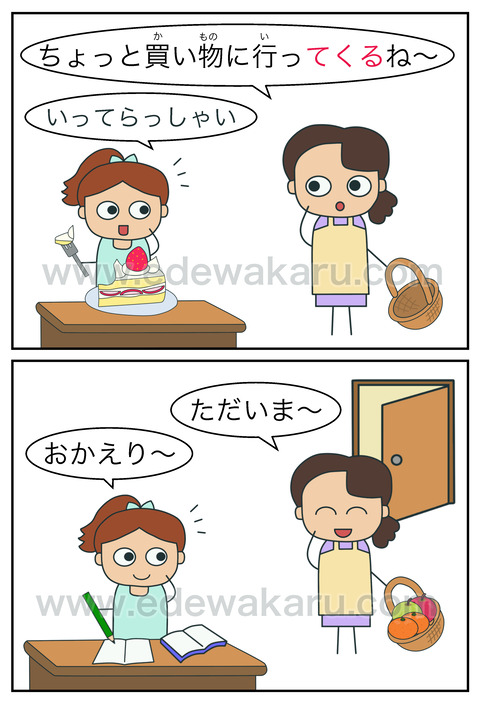
Meaning
to do ~ and then return to where one is now
How to use it
Verb [て-form]+てくる
Explanation
“〜てくる” is a sentence pattern meaning “to do ~ and then return to where one is now.” It is used when you want to say “to leave where you are now, do ~, and return to where you are now.” 😊
[Example]
I’m going to do a little shopping and come back.
[Place now] home
[What I’ll do] shopping
[Place I’ll return to] home
“〜てくる” has several meanings, so learn to distinguish them one by one. 😊
[Patterns using “〜てくる”]
In context 4 examples
お母さん:ちょっと買い物に行ってくるね娘:いってらっしゃい〜
→ちょっと買い物をして、家に戻るねMother: I’m going to do a little shopping and come back. Daughter: See you when you get back~ → I’m going to do a little shopping and come back home.
ジュースを買ってくるから、ここで待っててね
→ジュースを買って、戻るからここで待っててねI’m going to buy some juice and come back, so wait here. → I’m going to buy some juice and come back, so wait here.
スマホを学校に忘れちゃったから、取りに行ってくる
→スマホを学校に忘れちゃったから、取りに行って、ここに戻るねI left my smartphone at school, so I’m going to go get it and come back. → I left my smartphone at school, so I’m going to go get it and come back here.
お母さん:どこに行くの?娘:友達とケーキを食べに行ってくるね
→友達とケーキを食べて、家に戻るねMother: Where are you going? Daughter: I’m going to have cake with a friend and come back. → I’m going to eat cake with a friend and come back home.
Read the original source text
Meaning
〜をして、また今の場所に戻る
How to use it
動詞[て形]+てくる
Explanation
「〜てくる」は「〜てから、また今いる場所に戻る」という意味を表す文型です。「今いる場所から離れて〜をして、また今いる場所に戻る」と言いたい時に使います😊
[例]
ちょっと買い物に行ってくるね
【今いる場所】家
【すること】買い物
【戻る場所】家
「〜てくる」にはいくつか意味がありますので、1つ1つ区別をして覚えておきましょう😊
【「〜てくる」がつく文型】
Usage 2
Read this source entry ↗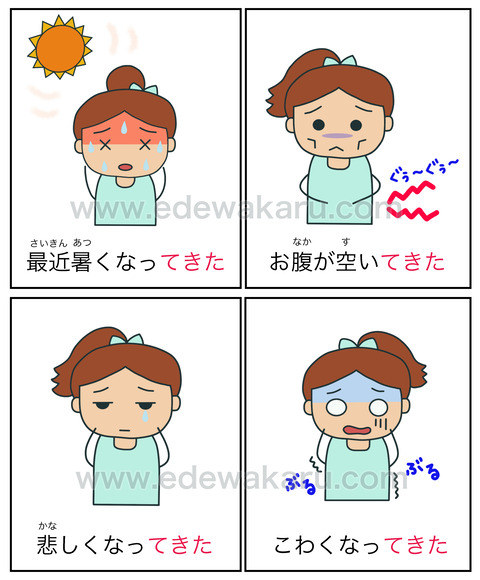
Meaning
the occurrence or beginning of a change (natural, physiological, or psychological phenomenon)
How to use it
Verb [て-form]+くる
Explanation
“〜てくる” is a sentence pattern expressing the occurrence of a change, and is used to talk about the occurrence or beginning of natural phenomena, psychological phenomena, and physiological phenomena. 😀
[Natural phenomena]
It starts to rain.
The wind starts to blow.
It starts to get dark outside.
The temperature starts to drop.
Etc.
[Physiological phenomena]
I start to feel thirsty.
It starts to hurt.
I start to feel sleepy.
My nose starts to run.
Etc.
[Psychological phenomena]
I start to feel happy.
I start to get angry (腹が立つ means to feel like getting angry).
I start to feel happy.
Etc.
Many beginner-level patterns, such as N4 grammar, are used much more often in everyday conversation than advanced-level patterns. 😮 Review them carefully and do your best to use them naturally too 😉
In context 4 examples
最近暑くなってきた【自然現象】
→暑くない状態から暑いという状態に変化It’s gotten hot recently. [Natural phenomenon] → It changed from not being hot to being hot.
お腹が空いてきた【生理現象】
→お腹が空いていない状態から空いたという状態に変化I’ve started to feel hungry. [Physiological phenomenon] → It changed from not feeling hungry to feeling hungry.
悲しくなってきた【心理現象】
→悲しくなかったが悲しい気持ちに変化I’ve started to feel sad. [Psychological phenomenon] → I wasn’t sad, but my feelings changed and I became sad.
こわくなってきた【心理現象】
→(突然)こわいという気持ちに変化I’ve started to feel scared. [Psychological phenomenon] → My feelings changed (suddenly) to feeling scared.
Read the original source text
Meaning
変化(自然現象・生理現象・心理現象)の発生・開始
How to use it
動詞[て形]+くる
Explanation
「〜てくる」は変化の発生を表す文型で、自然現象(しぜんげんしょう)・心理現象(しんりげんしょう)・生理現象(せいりげんしょう)の発生や開始を言う場合に使用されます😀
[自然現象]
雨が降っ
てくる
風が吹い
てくる
外が暗くなっ
てくる
気温が下がっ
てくる
など
[生理現象]
のどがかわい
てくる
痛くなっ
てくる
眠くなっ
てくる
鼻水が出
てくる
など
[心理現象]
嬉しくなっ
てくる
腹が立ってくる(腹が立つ→怒りたい気持ちになること)
楽しい気持ちになっ
てくる
など
N4など、初級の文型は上級の文型よりも日常会話でとてもよく使うものが多いです😮みなさんもしっかりと復習をして自然に使えるようにがんばってくださいね😉
Usage 3
Read this source entry ↗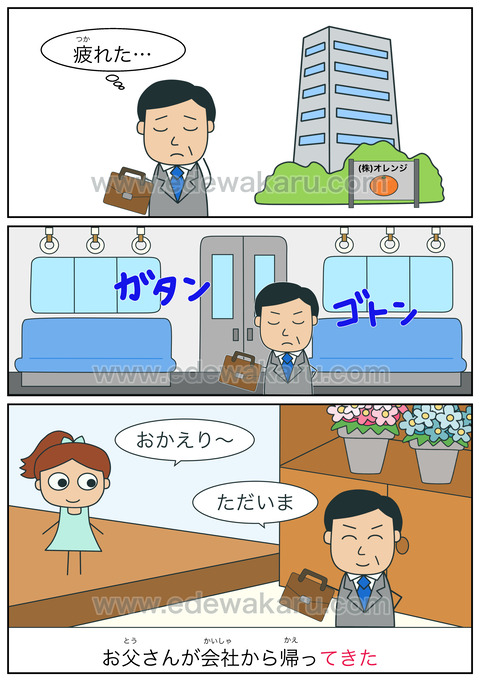
Meaning
Expresses movement toward the speaker.
How to use it
Verb [て-form]+てくる
Explanation
「〜てくる」is a grammar pattern that expresses [movement closer]. It describes a [person, thing, or animal] coming closer to the speaker.
[Examples]
① Dad came home from work.
→ Dad returned from work (far away) to the place where “I” am, home.
② Mom came out of the room.
→ Mom came out of the room (far away) and came to where “I” am.
③ An apple fell from the tree.
→ The apple fell from the tree (far away) down to near “me.”
④ A friend came to visit.
→ My friend came from their home (far away) to where “I” am.
⑤ A dog came closer, and I was scared.
→ The dog that had been far away came to where “I” am.
The opposite of this pattern is [movement away], 「〜ていく」.
「〜てくる」is an N4 grammar pattern, but it has many meanings and is used very often. Review it carefully and do your best to use it in conversation 😊
[Grammar patterns that use 「〜てくる」]
In context 5 examples
お父さんが会社から帰ってきた
Dad came home from work.
お母さんが部屋から出てきた
Mom came out of the room.
木からりんごが落ちてきた
An apple fell from the tree.
友達が訪ねてきた
A friend came to visit.
犬が近づいてきてこわかった
A dog came closer, and I was scared.
Read the original source text
Meaning
話し手に近づくことを表す
How to use it
動詞[て形]+てくる
Explanation
「〜てくる」は[近づく移動]を表す文型で、【人・物・動物】が話し手の方に近づくことを表します。
[例]
①お父さんが会社から帰っ
てきた
→お父さんが会社(遠く)から家「私」がいるところに帰る
②お母さんが部屋から出
てきた
→お母さんが部屋(遠く)から出て、「私」がいるところに来た
③木からりんごが落ち
てきた
→りんごが木の上(遠く)から、「私」の近くに落ちた
④友達が訪ね
てきてた
→友達の家(遠く)から「私」のいるところに来た
⑤犬が近づい
てきて
こわかった
→遠くにいた犬が、「私」のいるところに来た
この文型の反対は【遠ざかる移動】「〜ていく」です。
「〜てくる」はN4の文型ですが、たくさん意味があり、とてもよく使います。しっかりと復習をして会話で使えるようにがんばってくださいね😊
【「〜てくる」がつく文型】
Usage 4
Read this source entry ↗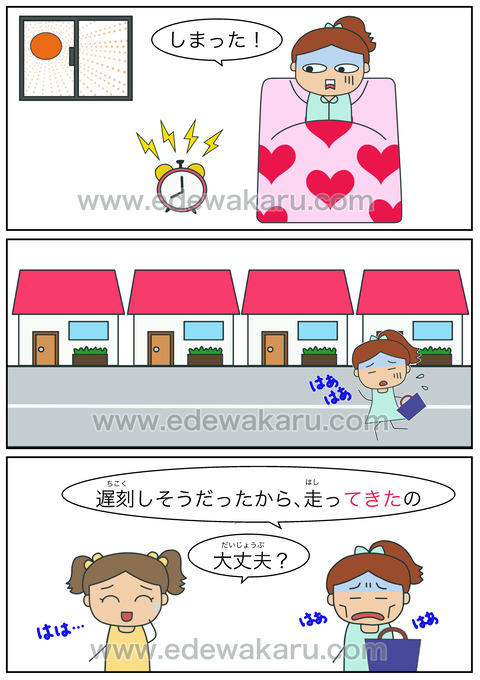
Meaning
Come closer while doing ~
Come closer by means of ~
How to use it
Verb [て-form]+てくる
Explanation
「〜てくる」is used when you want to say that a person, thing, or animal approaches while [continuing in a certain state] or [continuing a certain action]. It expresses “what action they are doing as they come closer” or “what means they are using to come closer.”
[Examples]
① A: What’s wrong?
B: I was going to be late, so I came running.
→ I came to school using the means of “running.”
② A friend brought me a cake.
→ They came while continuing the state of “holding a cake.”
③ Teacher: Did you come to school by bus?
Student: No, I came by bicycle.
→ I came to school using the means of “riding a bicycle.”
④ Apparently, she walks to school every day.
→ She comes to school by means of “walking.”
⑤ The ball came flying toward me, and it startled me.
→ The ball approached in the state of “flying.”
「〜てくる」has many meanings, so let’s review them 😀
[Grammar patterns that use 「〜てくる」]
In context 5 examples
A:どうしたの?B:遅刻しそうだったから、走ってきたの
A: What’s wrong? B: I was going to be late, so I came running.
友達が、ケーキを持ってきてくれた
A friend brought me a cake.
先生:学校までバスに乗ってきましたか?学生:いいえ、自転車に乗ってきました
Teacher: Did you come to school by bus? Student: No, I came by bicycle.
彼女は、毎日学校まで歩いてくるらしいよ
Apparently, she walks to school every day.
ボールが飛んできてびっくりした
The ball came flying toward me, and it startled me.
Read the original source text
Meaning
〜しながら近づいてくる
〜という手段で近づいてくる
How to use it
動詞[て形]+てくる
Explanation
「〜てくる」は人・物・動物が、[ある状態を続けた状態]や[ある動作を続けた状態]で近づくと言いたい時に使います。「どんな動作をした状態で近づいてくるか」や「どんな手段で近づいてくるか」を表します。
[例]
①A:どうしたの?
B:遅刻しそうだったから、走っ
てきた
の
→「走る」という手段を使って学校に来た
②友達が、ケーキを持っ
てきてくれた
→「ケーキを持つ」という状態を続けて来た
③先生:学校までバスに乗っ
てきました
か?
学生:いいえ、自転車に乗っ
てきました
→「自転車に乗る」という手段を使って学校に来た
④彼女は、毎日学校まで歩い
てくる
らしいよ
→学校まで「歩く」という手段を使ってくる
⑤ボールが飛ん
できて
びっくりした
→ボールが「飛ぶ」という状態で近づいた
「〜てくる」にはたくさん意味があるので、復習をしておきましょう😀
【「〜てくる」がつく文型】
Usage 5
Read this source entry ↗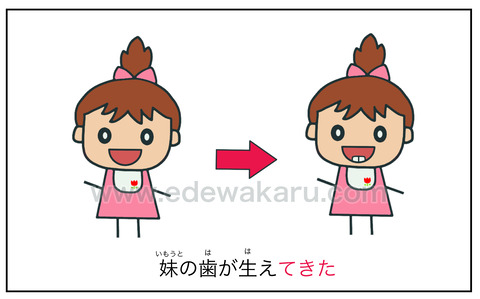
Meaning
the appearance of something that could not be seen
How to use it
Verb [て-form]+てくる
Explanation
“〜てくる” is a sentence pattern that means something that could not be seen has appeared and become visible. It is used when you want to say that something that was not there before, or could not be seen, has appeared. 😊
[Examples]
① My younger sister’s teeth have started coming in.
→ She had no teeth before, but they appeared and became visible.
② The sun has risen.
→ The sun could not be seen, but it appeared and became visible.
[For those who want to learn more]
Remember that the opposite of “〜てくる” for appearance is “〜ていく” for disappearance 😉
(Review: 〜ていく (disappearance))
[Examples]
The sun has risen.
[Appearance]
The sun went down.
[Disappearance]
The sun rises in the east and sets in the west.
[Appearance/disappearance]
(Review: 〜ものだ (inherent qualities, general ways of thinking, unchanging facts))
“〜てくる” is taught at the beginner level, but in fact it has many meanings and is complex. 😨
(Review: 〜ところ (Nのところ))
Learn to distinguish it clearly from the other uses of “〜てくる.”
😀
(Review: 〜てくる (occurrence/beginning))
(Review: 〜てくる (sequence))
In context 4 examples
妹の歯が生えてきた
→妹の歯が生えて見えるようになった(復習:髪が伸びるvs髪が生える)My younger sister’s teeth have started coming in. → My younger sister’s teeth have appeared and become visible. (Review: 髪が伸びる vs 髪が生える)
東の空から太陽が昇ってきた
→太陽が昇って見えるようになったThe sun rose from the eastern sky. → The sun rose and became visible.
雲の間から、月が出てきた
→雲の間から、月が出て見えるようになったThe moon appeared from between the clouds. → The moon came out from between the clouds and became visible.
A:まだ、花の芽が出てこないの…B:もうすぐ出てくると思うよ!
→A:まだ花の芽が出ないの…B:もうすぐ出ると思うよ!A: The flower buds still haven’t appeared… B: I think they’ll come out soon! → A: The flower buds still haven’t come out… B: I think they’ll come out soon!
Read the original source text
Meaning
見えなかったものの出現
How to use it
動詞[て形]+てくる
Explanation
「〜てくる」は見えなかったものが出現し、見えるようになったという意味を表す文型です。今までなかったものや、見えなかったものが現れたと言いたい時に使われます😊
[例]
①妹の歯が生え
てきた
→今まで歯がなかったが、現れて見えるようになった
②太陽が昇っ
てきた
→太陽が見えなかったが、現れて見えるようになった
【余裕のある人へ】
出現の「〜てくる」の反対は消滅の「〜ていく」だと覚えておきましょう😉
(復習:〜ていく(消滅))
[例]
太陽が昇っ
てきた
【出現】
太陽が沈ん
でいった
【消滅】
太陽は東から昇っ
てきて、西に沈ん
でいく
ものだ【出現・消滅】
(復習:〜ものだ(本来の性質・一般的考え方・変わらない事実))
「〜てくる」は初級で勉強する文型ですが、実のところ、たくさん意味があり複雑です😨
(復習:〜ところ(Nのところ))
他の「〜てくる」としっかりと区別をして覚えておきましょう
😀
(復習:〜てくる(発生・開始))
(復習:〜てくる(継起))
Usage 6
Read this source entry ↗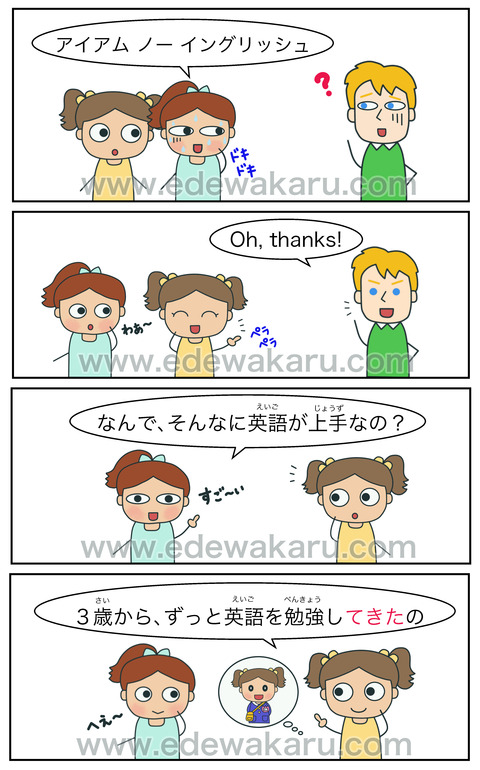
Meaning
Continue doing ~ from the past up to the present.
How to use it
Verb [て-form]+くる
Explanation
「〜てくる」is a grammar pattern that expresses continuation from the past up to the present. It is used when you want to say “have continued doing ~ from the past up to the present.” It is used when an action or change has continued from the past until now, in the form 「〜てきた」.
The opposite pattern to 「〜てくる」is 「〜ていく」. 「〜ていく」expresses continuation from the present into the future 😮
[Example]
I have studied Japanese all this time up to now. I plan to keep studying hard from now on, too.
[Past to present] have studied
[Present to future] plan to keep studying
「〜てくる」has several meanings, so it may be good to review them 😊
[Grammar patterns that use 「〜てくる」]
In context 5 examples
3歳から、ずっと英語を勉強してきたの
→3歳から今まで、ずっと英語を勉強し続けているのI’ve been studying English continuously since I was three. → I’ve continued studying English from when I was three up to now.
日本語能力試験(にほんごのうりょくしけん)のために、今までがんばって準備をしてきた
→過去から今まで、ずっと続けて準備をしているI’ve worked hard to prepare for the Japanese-Language Proficiency Test up to now. → I’ve continued preparing from the past up to now.
小さい頃からピアノを習ってきた
→小さい頃から今まで、ピアノを習い続けているI’ve been taking piano lessons since I was little. → I’ve continued taking piano lessons from when I was little up to now.
今日まで一生懸命(いっしょうけんめい)練習してきたから、きっと勝てると思うよ
→過去から今日までずっと練習を続けているI’ve practiced hard every day up to today, so I’m sure I can win. → I’ve continued practicing all the way from the past up to today.
病気になって以来、毎朝ジョギングをするようにしてきた
→病気になってからずっと、ジョギングを続けているEver since I got sick, I’ve made a point of jogging every morning. → I’ve kept jogging ever since I got sick.
Read the original source text
Meaning
過去から現在まで、〜し続けている
How to use it
動詞[て形]+くる
Explanation
「〜てくる」は過去から現在までの継続を表す文型です。「過去から現在まで〜を続けている」と言いたい時に使います。動作や変化が過去から今まで続いている場合に使用され、
「〜てきた」
の形で使います。
「〜てくる」の反対の文型として「〜ていく」があります。「〜ていく」は現在から未来への継続を表します
😮
[例]
今まで、ずっと日本語を勉強し
てきた。これからもがんばって勉強し
ていく
つもりだ
【過去〜現在】勉強し
てきた
【現在〜未来】勉強し
ていく
つもりだ
「〜てくる」には、いくつか意味がありますので復習をしておくといいと思います😊
【「〜てくる」を使う文型】
どんなときどう使う 日本語表現文型辞典
Usage 1
Meaning
state of movement
How to use it
Vて+くる Vて+いく
Explanation
てくる〈移動の状態〉
移動する手段・状態、移動のときに並行して行うことを表す。
Means of movement, situations, and actions occurring in tandem during motion.
In context 4 examples
飛行機の中で眠ってきました。
I slept on the plane on the way here.
あしたは、お弁当を持ってきてください。
Please bring a packed lunch tomorrow.
荷物が多いから、タクシーに乗っていきましょう。
We have a lot of luggage, so let’s go by taxi.
日曜日に弟を動物園へ連れていきました。
I took my younger brother to the zoo on Sunday.
Read the original source text
Meaning
state of movement
How to use it
Vて+くる Vて+いく
Explanation
てくる〈移動の状態〉
移動する手段・状態、移動のときに並行して行うことを表す。
Means of movement, situations, and actions occurring in tandem during motion.
Usage 2
Meaning
to; into
How to use it
Vて+くる Vて+いく
Explanation
てくる〈方向性〉
1)移動動詞や移動の意味を持つ動詞に方向性を与え、話者や話題にしている人への接近、離反を表す。
2)移動動詞は「歩く・走る・通る・飛ぶ・流れる」など。単独では方向性がないので、方向を示したい場合には「Vてくる・Vていく」の形で使う。
2)Verbs of movement include 歩く, 走る, 通る, 飛ぶ, and 流れる. These words have no intrinsic directionality, so Vてくる or Vていくare appended for directionality.
1)For leaving or approaching speaker or topic by giving directionality to verbs of movement or verbs that have meaning of movement.
In context 6 examples
ほら、マリがこちらの方へ走ってきますよ。
Look, Mari is running this way.
この川は富士山からこの町へ流れてくるのです。
This river flows from Mount Fuji to this town.
美しい女の人がとなりの部屋に引っ越してきました。
A beautiful woman moved into the next room.
ジムが話し始めると、みんながジムのところへ集まってきました。
When Jim started speaking, everyone gathered around him.
秋になると、夏の鳥は南の国へ飛んでいきます。
When autumn comes, the summer birds fly off to southern countries.
わたしが大きな声を出したので、犬は驚いて逃げていきました。
Because I shouted loudly, the dog got startled and ran away.
Read the original source text
Meaning
to; into
How to use it
Vて+くる Vて+いく
Explanation
てくる〈方向性〉
1)移動動詞や移動の意味を持つ動詞に方向性を与え、話者や話題にしている人への接近、離反を表す。
2)移動動詞は「歩く・走る・通る・飛ぶ・流れる」など。単独では方向性がないので、方向を示したい場合には「Vてくる・Vていく」の形で使う。
2)Verbs of movement include 歩く, 走る, 通る, 飛ぶ, and 流れる. These words have no intrinsic directionality, so Vてくる or Vていくare appended for directionality.
1)For leaving or approaching speaker or topic by giving directionality to verbs of movement or verbs that have meaning of movement.
Usage 3
Meaning
has become
How to use it
Vて+くる Vて+いく
Explanation
てくる〈変化〉
1)「Vてくる」は、過去から現在(話す人の見ている時点)まで変わりつづけていることを表す。「Vていく」は、現在(話す人の見ている時点)から未来に向かって変わりつづけることを表す。
2)変化を表す動詞といっしょに使う。
1)Vてくる describes situation continually changing from past to present (speaker's point of view). Vていく is for action that will continue to change from present (speaker's point of view) to future.
2)Used with verbs that express change.
In context 6 examples
日本語の授業はだんだん難しくなってきました。
Japanese class has gradually become difficult.
寒くなって風邪をひく人が増えてきた。
As it has gotten colder, the number of people catching colds has increased.
日本の生活にだいぶ慣れてきました。
I’ve gotten quite used to life in Japan.
(天気予報)今夜から風と雨がだんだん強くなっていくでしょう。
(Weather forecast) The wind and rain will gradually grow stronger from tonight.
日本では子どもの数がだんだん減っていくだろうと言われています。
It is said that the number of children in Japan will gradually decrease.
新しい駅ができたので、この町の人々の生活は少しずつ変わっていくだろう。
Since a new station was built, the lives of the people in this town will probably change little by little.
Read the original source text
Meaning
has become
How to use it
Vて+くる Vて+いく
Explanation
てくる〈変化〉
1)「Vてくる」は、過去から現在(話す人の見ている時点)まで変わりつづけていることを表す。「Vていく」は、現在(話す人の見ている時点)から未来に向かって変わりつづけることを表す。
2)変化を表す動詞といっしょに使う。
1)Vてくる describes situation continually changing from past to present (speaker's point of view). Vていく is for action that will continue to change from present (speaker's point of view) to future.
2)Used with verbs that express change.
Usage 4
Meaning
come to
How to use it
Vて+くる
Explanation
てくる〈話者への接近〉
1)ものや感覚(におい、声など)が話者に接近することを表す。
2)この使い方に「Vていく」の形はない。
2)No Vていく form of this usage.
1)Things or sensations (odors, voices, etc.) approach speaker.
In context 4 examples
となりの部屋から何かいいにおいがしてきます。
Something smells good from the next room.
小学校が近いので、いつも子どもたちの元気な声が聞こえてきます。
Since the elementary school is nearby, I can always hear the children’s lively voices.
九州にいる妹がみかんを送ってきた。
My younger sister in Kyushu sent me some mandarins.
きょうもユキのところにイタリアから電話がかかってきました。
Yuki got another phone call from Italy today.
Read the original source text
Meaning
come to
How to use it
Vて+くる
Explanation
てくる〈話者への接近〉
1)ものや感覚(におい、声など)が話者に接近することを表す。
2)この使い方に「Vていく」の形はない。
2)No Vていく form of this usage.
1)Things or sensations (odors, voices, etc.) approach speaker.
Usage 5
Meaning
start to
How to use it
Vて+くる
Explanation
てくる〈変化の出現〉
1)変化の出現、開始を表す。
2)話す人の意志とは関係なく、自然発生的に起こることに使う。心理的、感覚的現象の体感がある場合が多い。「Vていく」の形はない。
2)Used with natural occurrences regardless of speaker's volition. Often used for psychological or emotive sensations. No Vていく form.
1)Beginning or emergence of change.
In context 3 examples
あ、またおなかが痛くなってきた。
Oh, my stomach is starting to hurt again.
あーあ、眠くなってきた。
Ah, I’m getting sleepy.
寒いと思ったら、ほら、雪が降ってきましたよ。
I was wondering why it felt cold—look, it’s started snowing.
Read the original source text
Meaning
start to
How to use it
Vて+くる
Explanation
てくる〈変化の出現〉
1)変化の出現、開始を表す。
2)話す人の意志とは関係なく、自然発生的に起こることに使う。心理的、感覚的現象の体感がある場合が多い。「Vていく」の形はない。
2)Used with natural occurrences regardless of speaker's volition. Often used for psychological or emotive sensations. No Vていく form.
1)Beginning or emergence of change.
Usage 6
Meaning
have…; will continue
How to use it
Vて+くる Vて+いく
Explanation
てくる〈継続〉
1)時間的継続を表す。
2)「Vてきた」は過去から現在まで続いていること、「Vていく」は現在から未来へ続くことを表す。話す人の視点は現在、またある一定の時にある。よく「今まで・これから」などの言葉とともに使う。
2)Vてきた is present perfect tense; Vていく is for continuation from present to future. Speaker's focus is on present or specified time. Often used with 今まで and これから.
1)Describes temporal continuation.
In context 4 examples
森さんは若いころからずっと、カメラの仕事をしてきました。
Mr. Mori has worked in photography continuously since he was young.
今まで都会で生活してきました。これからはいなかで暮らします。
I’ve lived in the city until now. From now on, I’ll live in the countryside.
これからもこの仕事を続けていくつもりです。
I intend to keep doing this work from now on, too.
今日まで一人でがんばってきました。これからはあなたといっしょになかよくやっていきましょう。
I’ve done my best on my own up to today. From now on, let’s get along and work together.
Read the original source text
Meaning
have…; will continue
How to use it
Vて+くる Vて+いく
Explanation
てくる〈継続〉
1)時間的継続を表す。
2)「Vてきた」は過去から現在まで続いていること、「Vていく」は現在から未来へ続くことを表す。話す人の視点は現在、またある一定の時にある。よく「今まで・これから」などの言葉とともに使う。
2)Vてきた is present perfect tense; Vていく is for continuation from present to future. Speaker's focus is on present or specified time. Often used with 今まで and これから.
1)Describes temporal continuation.
Usage 7
Meaning
approaching or leaving the speaker
How to use it
Vて+くる Vて+いく
Explanation
てくる〈話者への接近・離反〉
1)移動の意味を持つ、対の動詞について、話す人への接近、離反を表す。
2)話す人の視点の位置によって「ていく・てくる」が変わる。話す人は ❶ ❷ では教室の外にいる。 ❸ ❹ では教室の中にいる。移動の意味を持つ、対の動詞とは「入る・出る、上がる・下りる、上る・下る、乗る・降りる」など。
2)Use of ていく or てくる depends on speaker's point of view. In sentences ❶ and ❷ , speaker is outside classroom. In sentences ❸ and ❹ , is in classroom. Verb pairs of motion include 入る, 出る, 上がる, 下りる, のぼる, くだる, 乗る, 降りる, etc.
1)For leaving or approaching speaker for verb pairs of motion.
In context 5 examples
授業が終わって、学生たちが教室から出てきます。
When class ends, the students come out of the classroom.
授業が始まって、学生たちが教室に入っていきます。
When class starts, the students go into the classroom.
授業が始まって、学生たちが教室に入ってきます。
When class starts, the students come into the classroom.
授業が終わって、学生たちが教室から出ていきます。
When class ends, the students leave the classroom.
(電車の中で)電車が駅に着くと、遠足に行く子どもたちがおおぜい乗ってきました。
(On a train) When the train arrived at the station, a large group of children going on an outing got on.
Read the original source text
Meaning
approaching or leaving the speaker
How to use it
Vて+くる Vて+いく
Explanation
てくる〈話者への接近・離反〉
1)移動の意味を持つ、対の動詞について、話す人への接近、離反を表す。
2)話す人の視点の位置によって「ていく・てくる」が変わる。話す人は ❶ ❷ では教室の外にいる。 ❸ ❹ では教室の中にいる。移動の意味を持つ、対の動詞とは「入る・出る、上がる・下りる、上る・下る、乗る・降りる」など。
2)Use of ていく or てくる depends on speaker's point of view. In sentences ❶ and ❷ , speaker is outside classroom. In sentences ❸ and ❹ , is in classroom. Verb pairs of motion include 入る, 出る, 上がる, 下りる, のぼる, くだる, 乗る, 降りる, etc.
1)For leaving or approaching speaker for verb pairs of motion.
Usage 8
Meaning
go and
How to use it
Vて+くる
Explanation
てくる〈行って戻る〉
ちょっとした目的のために一時的にその場を離れることを表す。この使い方には「Vていく」の形はない。
Describes leaving somewhere for temporary time for trivial purpose. No Vていく form of this pattern.
In context 3 examples
えっ、もうお茶の時間ですか。じゃ、ちょっと手を洗ってきます。
What, is it already tea time? Well then, I’ll just go wash my hands.
もう12時ですね。じゃあ、わたしはお弁当を持っていないので、あそこの食堂で食べてきます。
It’s already noon. Well then, since I didn’t bring a packed lunch, I’ll go eat at that cafeteria.
あっ、コーヒー豆がない。ちょっと待っていてください。すぐ近くの店で買ってきますから。
Oh, we’re out of coffee beans. Please wait a moment. I’ll go buy some at a nearby shop.
Read the original source text
Meaning
go and
How to use it
Vて+くる
Explanation
てくる〈行って戻る〉
ちょっとした目的のために一時的にその場を離れることを表す。この使い方には「Vていく」の形はない。
Describes leaving somewhere for temporary time for trivial purpose. No Vていく form of this pattern.
Usage 9
Meaning
first, then
How to use it
Vて+くる Vて+いく
Explanation
てくる〈順次〉
ある地点で何かをして、それから移動することを表す。
Do something somewhere and then move on.
In context 4 examples
森さん、あした、ここへ来るとき駅で地図をもらってきてください。
Mr. Mori, when you come here tomorrow, please pick up a map at the station and bring it.
(会社で)あしたは市役所に寄ってきますから、1時間ぐらい遅くなります。
(At the office) I’ll stop by city hall tomorrow, so I’ll be about an hour late.
中国へ行く前に中国語を勉強していきます。
I’ll study Chinese before going to China.
病院へ行く途中で、お見舞いの花を買っていきましょう。
Let’s buy some flowers to take to the hospital on the way there.
Read the original source text
Meaning
first, then
How to use it
Vて+くる Vて+いく
Explanation
てくる〈順次〉
ある地点で何かをして、それから移動することを表す。
Do something somewhere and then move on.
日本語NET JLPT文法解説まとめ
Usage 1
Read this source entry ↗Meaning
Expresses going temporarily to another place to take care of something, then returning after finishing it.
How to use it
Vて + くる
Explanation
To leave somewhere for temporary time for trivial purpose.
In context 9 examples
牛乳が無いですね。ちょっと、コンビニまで買いに行ってきます。
We're out of milk. I'll go buy some at the convenience store.
ちょっとトイレに行ってきます。
I'll be right back; I'm going to the restroom.
あら、スプーンが無いですね。ちょっと取ってきます。
Oh, there isn't a spoon. I'll go get one.
ちょっとお腹が空いたので、マクドナルドでポテトを買ってきます。
I'm a little hungry, so I'll go get some fries at McDonald's.
あれ、パクさんがまだですね。ちょっと呼んできます。
Oh, Park isn't here yet. I'll go call them.
先生を呼びに行ってきます。
I'll go get the teacher.
あれ、トムさんはまだ来ていませんね。ちょっと探してきます。
Oh, Tom isn't here yet. I'll go look for him.
ちょっと自動販売機でジュースを買ってきます。
I'll go get some juice from the vending machine.
ゴミがたまったので、捨ててきますね。
The garbage has piled up, so I'll go throw it out.
Read the original source text
Meaning
一時的に用事で他の場所へ移動し、用事を済ませ戻って来ることを表す。
How to use it
Vて + くる
Explanation
To leave somewhere for temporary time for trivial purpose.
Usage 2
Read this source entry ↗Meaning
① Taking the present as a reference point, expresses the course of events or changes from the past up to now.
② Expresses that the direction of the verb’s action is toward the speaker’s location.
How to use it
V (te-form) + くる
Explanation
① Used to show, based on the present situation, how things have changed from before until now.
② Used to indicate that the direction of V is towards the speaker.
In context 23 examples
日本を訪れる外国人旅行者の数は年々多くなってきました。
The number of foreign tourists visiting Japan has been increasing year by year.
JLPTを受験する外国人が増えてきました。
The number of foreigners taking the JLPT has been increasing.
授業はだんだん難しくなってきました。
The classes have gradually been getting more difficult.
だんだん寒くなってきましたね。
It’s gradually getting colder, isn’t it?
昔よりも、子供の数がだんだん減ってきています。
The number of children has been gradually decreasing compared to the past.
以前よりも、日本語を学ぶ人が増えてきました。
More people have been learning Japanese than before.
少し太ってきたから、ダイエットを始めようと思います。
I’ve gained a little weight, so I think I’ll start a diet.
社会人になって、全然運動していないので、太ってきた。
Since I became a working adult, I haven’t exercised at all, so I’ve been gaining weight.
20年間、息子を大切に育ててきました。
I have lovingly raised my son for 20 years.
トムさんの行動に対して、だんだん腹が立ってきた。
I’ve gradually become angry at Tom’s behavior.
なんだか明日のパーティーに行くのが嫌になってきた。
For some reason, I’ve started to feel reluctant to go to tomorrow’s party.
毎日、シャドーイングの練習をしたおかげで、綺麗な発音で話せるようになってきた。
Thanks to practicing shadowing every day, I’ve become able to speak with clear pronunciation.
毎日、少しずつ貯金したおかげで、かなりお金がたまってきた。
Thanks to saving a little every day, I’ve built up quite a bit of money.
これまで一生懸命に生きてきました。
I’ve lived earnestly up to now.
3年間、毎日日本語の勉強を続けてきたので、だいぶ上達しました。
I’ve continued studying Japanese every day for three years, so I’ve improved quite a bit.
たくさん勉強したけど、明日のテストが心配になってきた。
I studied a lot, but I’ve started to worry about tomorrow’s test.
あ〜、お腹が空いてきた。
Ah, I’m getting hungry.
インターネットの普及によって、私たちの生活はずいぶんと変わってきた。
Our lives have changed considerably because of the spread of the internet.
アニメを日本語の字幕なしでも、理解できるようになってきた。
I’ve become able to understand anime even without Japanese subtitles.
A:日本の生活にはもう慣れましたか。
A: Have you gotten used to life in Japan yet?
知らない男が、私のほうへ走ってきた。
A strange man came running toward me.
ポチがボールをくわえて、走ってきた。
Pochi came running over with a ball in his mouth.
山田さんの荷物、持ってきましたよ。
I brought Mr. Yamada’s things.
Read the original source text
Meaning
① 今を基準として、以前から今までの推移、変化を表す。
② Vの方向が話し手の位置に向かっていることを表す。
How to use it
V(て形) + くる
Explanation
① Used to show, based on the present situation, how things have changed from before until now.
② Used to indicate that the direction of V is towards the speaker.
毎日のんびり日本語教師
Meaning
There are seven usages.
① [State while moving] Chinese: “arrive by coming”
③ [Continuation of an action (from the past to the present)] Chinese: “have continued all along”
④ [Gradually drawing near] Chinese: “come closer”
⑤ [Beginning of a change in state] Chinese: “start to become” / “has become”
⑦ [One-sided action directed toward here] Chinese: “come” / “come over”
(1) State while moving
(1) Run home.
(2) The weather is bad, so I came by taxi.
(3) The tire went flat, so I pulled the bicycle along.
(4) I came slowly down the stairs.
Attaches to verbs related to movement and expresses what kind of action was used and what means of transportation was used to move.
(2) Sequential actions
(5) I’ll go make a reservation, so please wait here.
(6) I’m going to visit my friend’s house.
(我去朋友家玩。)
(7) I’m late because I happened to meet a friend on the way and stopped to talk.
In the sequential-action usage, 「~てくる」literally means “do ~ and then come.”
In (5), it expresses the order of events: first go make a reservation, and then return (come back).
It always attaches to a volitional verb, and 「来る」takes place after that action has been completed.
(3) Continuation of an action (from the past to the present)
(8) I’ve kept working hard all this time, but I still haven’t gotten results.
(9) We will continue to protect this tradition, which has been carried on for hundreds of years.
(10) I’ve been working here ever since I graduated from university.
Attaches to a volitional verb and expresses that an action has continued from a point in the past up to the present.
It always takes the past-tense form 「~てきた」.
(4) Gradually drawing near
(11) The distance between the two of them has grown closer.
(12) My master has returned.
(13) Our child comes home right away when hungry.
Expresses that the subject gradually draws closer to the speaker.
(11) can be interpreted as referring to emotional distance as well as physical distance.
(5) Beginning of a change in state
(14) The elderly population is steadily increasing.
(老年人口不断增加。)
(15) The heavy snowfall over the past few days has caused snow to pile up.
(16) It has gotten hot recently.
Attaches to a non-volitional verb and expresses that a change has begun.
It is often used in conjunction with adverbs such as どんどん and だんだん.
(6) Appearance
(17) The sun has risen from the horizon.
(18) Teeth have started to grow in.
(19) With the start of the new school year, new students have arrived.
Attaches to a non-volitional verb and expresses that something that did not previously exist, or that was not visible to the speaker, has become visible.
It is often used in conjunction with adverbs such as どんどん and だんだん.
(7) One-sided action directed toward here
(20) A stranger came up and spoke to me.
(21) The cat bit me.
(猫咬了我。)
Expresses that an action is unilaterally directed toward the speaker or someone the speaker is watching.
How to use it
Verb in て-form + くる
Notes
Related grammar: 「[N4 Grammar] ~ていく」
Read the original source text
Meaning
7つの用法があります。
①[移動時の状態]…着来
③[動作の継続(過去から現在まで)]一直…下来
④[少しずつ近づく]…来
⑤[状態変化の開始]…起来/…了
⑦[こちらへの一方的な動作]…来/…过来
(1)移動時の状態
(1) 家まで走って
くる。
(2) 天気が悪いからタクシーに乗って
きた。
(3) タイヤがパンクしたので、自転車を引っ張って
きた。
(4) 階段でゆっくり下りて
きた。
移動に関する動詞に接続して、どのような動作で、どのような手段で移動が行われたかを表します。
(2)順次的動作
(5) 予約をして
きます
ので、ここで待っていてください。
(6) 友達に家に遊びにいって
きます。
(我去朋友家玩。)
(7) 途中偶然友人に会って話して
きた
から遅くなった。
順次的動作の用法の時、「~てくる」は文字通り「~てから来る」という意味です。
(5)ではまず予約をしに行って、そして戻る(来る)という物事の順序を表します。
必ず意志動詞に接続して、その動作が完全に終わった後に「来る」が行われます。
(3)動作の継続(過去から現在まで)
(8) ずっと努力して
きた
のに、なかなか結果が出ない。
(9) 何百年も前から続いて
きた
この伝統を、これからも守っていく。
(10) 大学を卒業して以来、ずっとここで仕事をして
きました。
意志動詞に接続して、その動作が過去のある時点から現在まで持続していることを表します。
必ず過去形「~てきた」の形をとります。
(4)少しずつ近づく
(11) 二人の距離は近づいて
きた。
(12) ご主人様が戻って
こられました。
(13) うちの子はお腹がすくとすぐ帰って
くる。
対象が話し手へと徐々に近づくことを表します。
(11)は物理的な距離のみならず、精神的な距離としても解釈できます。
(5)状態変化の開始
(14) 高齢者人口はどんどん増えて
きて
いる。
(老年人口不断增加。)
(15) ここ数日の大雪で雪が積もって
きた。
(16) 最近暑くなって
きた。
無意志動詞に接続して、変化が開始したことを表します。
どんどん、だんだんなどの副詞と呼応して用いられることが多いです。
(6)出現
(17) 太陽が地平線から昇って
きた。
(18) 歯が生えて
きた。
(19) 新年度になり新しい学生がやって
きた。
無意志動詞に接続して、元々存在していなかった、あるいは話し手が見えていなかったものが見えるようになることを表します。
どんどん、だんだんなどの副詞と呼応して用いられることが多いです。
(7)こちらへの一方的な動作
(20) 知らない人が話しかけて
きた。
(21) 猫が噛み付いて
きた。
(猫咬了我。)
話し手、あるいは話し手が見ている人に対して一方的な動作が行われることを表します。
How to use it
動て形+くる
Notes
関連文法「【N4文法】~ていく」
日本語文型辞典 英語版
Meaning
Expresses a method of traveling and an action undertaken while traveling.
Expresses a situation in which a person or thing far away is approaching the speaker’s location.
B:隣の部屋です。すぐ呼んできますから、中に入ってお待ち下さい。
He’s in the next room. I’ll call him right away, so please wait inside.
B:ちょっと友達のうちに遊びに行ってくる。
I’m going to visit a friend for a little while.
B:あ、電車の中に忘れて来ちゃった。
Oh, dear. I’ve left it on the train.
Expresses doing an action before arriving somewhere.
(1)
to
(3)
mean “depart from the place where one is, conduct an action, and then return to the original location.”
(4)
and
(5)
mean “I’ve come to where I am, having conducted an action in another place.” Both can be expressed without using てくる, but てくる is used more often than not. This expression is used for linking what happened in another place to where the conversation is taking place.
Expresses that a change or an action has been continuing from the past to the present.
Expresses that something that didn’t exist or couldn’t be seen before has emerged. Conversely, ...ていく is used when the thing in question is disappearing.
Expresses that a change is taking place.
This expresses that an action is conducted for the speaker or someone the speaker is focusing on. ...が is used for the person conducting the action, and ...に is used for the person on the receiving end of the action.
(例)山田さんが父に電話をかけてきた。
Yamada-san called my father.
When the agent of the action is an organization, such as a company, rather than an individual, ...から is sometimes used.
(例)会社から調査を依頼してきた。
The company has requested an investigation.
Some of these sentences may be rephrased in a passive sense, where the action happens to the subject, as in the following examples.
(例)山田さんから父に電話がかかってきた。
Father was called by Yamada-san.
(例)国の家族から衣類や食料が送られてきた。
I was sent things like clothes and food by my family back home.
In this case, ...から is used for the person conducting an action and ...に for the person on the receiving end of the action.
How to use it
1. V-てくる〈manner at time of movement〉
2. V-てくる〈movement toward something or someone〉
3. V-てくる〈successive events〉
4. V-てくる〈duration〉
5. V-てくる〈emergence〉
6. V-てくる〈inception〉
7. V-てくる〈action directed toward speaker〉
In context 30 examples
ここまで走ってきた。
I ran all the way here.
歩いて来たので汗をかいた。
I walked here, so I sweated.
バスは時間がかかるから、タクシーに乗って来て下さい。
The bus will take some time, so please come by taxi.
先月日本に帰ってきました。
I came back to Japan last month.
頂上から戻ってくるのに1時間かかった。
It took an hour to come down from the summit.
船はゆっくりとこちらに向かって来ます。
The ship is slowly approaching.
その物体はどんどん近づいて来た。
The object steadily drew near.
ちょっと切符を買ってきます。ここで待っていて下さい。
I’ll go and buy the ticket. Please wait here.
A:小川さんいらっしゃいますか。
Is Ogawa-san here?
A:どこに行くの?
Where are you going?
おそくなってごめんなさい。途中で本屋に寄ってきたものだから。
Sorry to be late. I popped into a bookshop on my way.
A:かさはどうしたの?
What happened to your umbrella?
この伝統は5百年も続いてきたのだ。
This tradition has continued for five hundred years.
17 歳のときからずっとこの店で働いてきました。
I have worked in this shop straight through since I was seventeen.
今まで一生懸命頑張ってきたんだから、絶対に大丈夫だ。
You’ve been giving it your very best until now, so I’m sure you’ll be all right.
これまで先祖伝来の土地を守り続けてきたが、事業に失敗して手放さなければならなくなった。
I had watched over the land inherited from my ancestors until now, but I was forced to let it go because of a business failure.
少しずつ霧が晴れて、山が見えてきた。
The fog is slowly clearing, and I can see the mountain now.
雲の間から月が出てきた。
The moon appeared between the clouds.
赤ちゃんの歯が生えてきた。
The baby’s teeth have started to come in.
春になって木々が芽吹いてきた。
Spring has come and the leaves on the trees are coming out.
雨が降ってきた。
It’s starting to rain.
最近少し太ってきた。
I’ve put on a little weight recently.
ずいぶん寒くなってきましたね。
It’s really gotten cold, hasn’t it?
このあいだ買ってあげたばかりのくつが、もうきつくなってきた。
Those shoes I bought you just the other day are already starting to pinch.
問題がむずかしくて、頭が混乱してきた。
The question is so hard that I’m getting confused.
友達が結婚式の日取りを知らせてきた。
My friend let me know the date of the wedding.
化粧品を買った客が苦情を言ってきた。
A customer who bought some cosmetics has made a complaint.
急に犬がとびかかってきた。
A dog suddenly jumped on me.
歩いていたら、知らない人が話しかけてきました。
I was walking when a stranger spoke to me.
息子は勝手にスーツを買って、請求書を送りつけてきた。
My son bought a suit without asking, and then he sent me the bill.
AIUEO JLPT Grammar
Meaning
「〜てくる」is used to express an action continuing from the past to the present or approaching.
How to use it
Verb て-form + くる
In context 5 examples
行ってくるね。
I'll be back soon.
彼が家に帰ってきた。
He came home.
皆さんはこの一年間よく頑張ってきました。
You have all worked hard over the past year.
長い間待っていたが、彼がついに戻ってきた。
I have been waiting for a long time, but he finally came back.
もうすぐ彼女が帰ってくるでしょう。
She will be back soon.
Read the original source text
Meaning
「〜てくる」is used to express an action continuing from the past to the present or approaching.
How to use it
動詞て形+くる
Explanation · 日本語
「〜てくる」は、ある動作が過去から現在まで続いていること、または近づく動作を表す表現です。
Bunpro Grammar Reference
Meaning
To come to, To become, To continue, To be starting to, Has been ~ing
How to use it
Verb[て]+ くる
Verb[て]+ きます
Nuance
A phrase used when a specific event is coming, or has come to be a certain way.
Explanation
This grammar point is a combination of the conjunction particle て, and the verb 来る 'to come'. To use this grammar point, you will need to attach て to any verb, and then follow it with くる. This nuance is usually that '(A) happened, and then came', or 'will happen, and then come'. In other words, it will depend on whether くる is in present, or past tense.
今日も宿題を持ってくるのを忘れた。
I forgot to bring my homework today too. (To 'come with' homework was forgotten)
パパ〜、じゃが芋を買ってきたよ!
Dad, I bought the potatoes. (Bought and 'came with')
てくる can be used when representing time, or when representing a physical place. When representing a physical place, it is more likely that the kanji structure, 来る will be used. However, this is not a set rule, and depends on the writer.
When used in relation to time, the nuance is usually that something has already come to pass, or will start to happen from now.
最近、日本語が上手くなってきた感じがする。
Recently I feel like I have come to be better at Japanese. (Very similar to 'gotten' in English)
This is the opposite of ていく, which indicates that something will change from the way that it is now, or will continue progressing in a certain way.
Fun Fact
When compared to English, てくる is very similar to the phrase 'to have come to (A)', in relation to time. This means that it focuses on the fact that the speaker will 'become (A)', should things continue in a specific way. In practice though, it is used like 'gotten' in most situations.
In context 15 examples
- すぐ帰ってくるね?
You will come back home soon, right? (Literally - Return and come)
- パパ〜、じゃが芋を買ってきたよ!
Dad, I bought the potatoes. (Bought and 'came with')
- 今日も宿題を持ってくるのを忘れた。
I forgot to bring my homework today too. (To 'come with' homework was forgotten)
- 最近、日本語が上手くなってきた感じがする。
Recently I feel like I have come to be better at Japanese. (Very similar to 'gotten' in English)
- お金がなくなってきた。
I have started to lose money. (has become)
- トイレに行ってきます。
I will go to the bathroom and come back.
- お母さんに似てきたね。
You have come to look like your mother.
- お弁当を持ってきてください。
Please bring a bento with you. (hold and come)
- やっと日本語が上手になってきた。
I finally came to be better at Japanese.
- 私はアメリカに戻ってから、どんどん太ってきた。
Since coming back to America, I have rapidly come to be fatter.
- 君が出来ることが分かってきただろう。
You have come to understand what you are capable of, haven't you?
- ニュースではずっと雨が降ると言っていたけど、晴れてきた。
The news said that it was going to keep on raining, but the weather has come to be clear.
- クリスマスが近づいてきたから、子供たちが色々なものを欲しいと言っている。
Christmas has drawn near(er), so the children are saying that they want various things. (Literally - Has come to be near)
- 朝から家の掃除をしているので、家が綺麗になってきています。
Since I've been cleaning the house from this morning, the house is becoming cleaner.
- この商品がだんだん安くなってきたから、また今度買うつもりです。
This product has gradually started to get cheaper, so I intend to buy it next time. (has come to be)
Read the original source text
Meaning
To come to, To become, To continue, To be starting to, Has been ~ing
How to use it
Verb[て]+ くる
Verb[て]+ きます
Nuance
A phrase used when a specific event is coming, or has come to be a certain way.
Explanation
This grammar point is a combination of the conjunction particle て, and the verb 来る 'to come'. To use this grammar point, you will need to attach て to any verb, and then follow it with くる. This nuance is usually that '(A) happened, and then came', or 'will happen, and then come'. In other words, it will depend on whether くる is in present, or past tense.
今日も宿題を持ってくるのを忘れた。
I forgot to bring my homework today too. (To 'come with' homework was forgotten)
パパ〜、じゃが芋を買ってきたよ!
Dad, I bought the potatoes. (Bought and 'came with')
てくる can be used when representing time, or when representing a physical place. When representing a physical place, it is more likely that the kanji structure, 来る will be used. However, this is not a set rule, and depends on the writer.
When used in relation to time, the nuance is usually that something has already come to pass, or will start to happen from now.
最近、日本語が上手くなってきた感じがする。
Recently I feel like I have come to be better at Japanese. (Very similar to 'gotten' in English)
This is the opposite of ていく, which indicates that something will change from the way that it is now, or will continue progressing in a certain way.
Fun Fact
When compared to English, てくる is very similar to the phrase 'to have come to (A)', in relation to time. This means that it focuses on the fact that the speaker will 'become (A)', should things continue in a specific way. In practice though, it is used like 'gotten' in most situations.
Nuance · 日本語
特定の事象がこれから起こる、またはなってきている時に用いられる表現。
文法
Usage 1
Meaning
Expresses going temporarily to another place to take care of something, then returning after finishing it.
How to use it
Vて + くる
In context 9 examples
牛乳が無いですね。ちょっと、コンビニまで買いに行ってきます。
We're out of milk. I'll go buy some at the convenience store.
ちょっとトイレに行ってきます。
I'll be right back; I'm going to the restroom.
あら、スプーンが無いですね。ちょっと取ってきます。
Oh, there isn't a spoon. I'll go get one.
ちょっとお腹が空いたので、マクドナルドでポテトを買ってきます。
I'm a little hungry, so I'll go get some fries at McDonald's.
あれ、パクさんがまだですね。ちょっと呼んできます。
Oh, Park isn't here yet. I'll go call them.
先生を呼びに行ってきます。
I'll go get the teacher.
あれ、トムさんはまだ来ていませんね。ちょっと探してきます。
Oh, Tom isn't here yet. I'll go look for him.
ちょっと自動販売機でジュースを買ってきます。
I'll go get some juice from the vending machine.
ゴミがたまったので、捨ててきますね。
The garbage has piled up, so I'll go throw it out.
Read the original source text
Meaning
一時的に用事で他の場所へ移動し、用事を済ませ戻って来ることを表す。
How to use it
Vて + くる
Usage 2
Meaning
① Expresses a progression or change from before until now, viewed from the present.
② Expresses that the direction of V is toward the speaker's position.
How to use it
V (te-form) + くる
Notes
[Image]
「~てくる」→ now → 「~ていく」
In context 15 examples
日本を訪れる外国人旅行者の数は年々多くなってきました。
The number of foreign tourists visiting Japan has been increasing year by year.
JLPTを受験する外国人が増えてきました。
The number of foreigners taking the JLPT has been increasing.
授業はだんだん難しくなってきました。
The classes have gradually been getting more difficult.
だんだん寒くなってきましたね。
It’s gradually getting colder, isn’t it?
昔よりも、子供の数がだんだん減ってきています。
The number of children has been gradually decreasing compared to the past.
以前よりも、日本語を学ぶ人が増えてきました。
More people have been learning Japanese than before.
少し太ってきたから、ダイエットを始めようと思います。
I’ve gained a little weight, so I think I’ll start a diet.
社会人になって、全然運動していないので、太ってきた。
Since I became a working adult, I haven’t exercised at all, so I’ve been gaining weight.
20年間、息子を大切に育ててきました。
I have lovingly raised my son for 20 years.
トムさんの行動に対して、だんだん腹が立ってきた。
I’ve gradually become angry at Tom’s behavior.
なんだか明日のパーティーに行くのが嫌になってきた。
For some reason, I’ve started to feel reluctant to go to tomorrow’s party.
毎日、シャドーイングの練習をしたおかげで、綺麗な発音で話せるようになってきた。
Thanks to practicing shadowing every day, I’ve become able to speak with clear pronunciation.
知らない男が、私のほうへ走ってきた。
A strange man came running toward me.
ポチがボールをくわえて、走ってきた。
Pochi came running over with a ball in his mouth.
山田さんの荷物、持ってきましたよ。
I brought Mr. Yamada’s things.
Read the original source text
Meaning
① 今を基準として、以前から今までの推移、変化を表す。
② Vの方向が話し手の位置に向かっていることを表す。
How to use it
V(て形) + くる
Notes
[イメージ]
「~てくる」→ now → 「~ていく」
Yokubi — The Common Grammar Guide (https://yoku.bi)
Explanation
We already touched briefly on the concept of directionality in [Lesson 11](../../Section1/Part1/Lesson11.md) with the giving auxiliary verbs てあげる, てもらう, and てくれる. Let's now dig a bit deeper into this concept and introduce two more auxiliaries: ていく and てくる.
When not used with an auxiliary sense, Vていく and Vてくる simply mean what they spell: "To do V, and then go/come somewhere". However, when used as auxiliaries, their meaning deepens and becomes more than the sum of its parts.
Auxiliary ていく roughly means that some event is ongoing and will "keep going" in a direction away from the speaker, either in place or time (present \-\> future). ていく can be contracted as てく.
Likewise, auxiliary てくる means that some event was ongoing and has continued approaching from away towards the speaker, either in place or time (past \-\> present), and might even go further.
Both ていく and てくる are incredibly nuanced in usage and this lesson doesn't even begin to scratch the surface of the complexity of it, especially when you throw different tenses into the mix.
Let's just look at examples and then we can move on. You will pick up some of the nuances and common phrasings with more experience.
Some verbs **require** to be paired with an auxiliary verb of directionality to make some of the sentences grammatical. For example the verb 引っ越す means "to move (house/residence)", but unlike English it doesn't have an actual connotation of "movement" or dynamism to it. When you want to use it in the sense of "I just moved here" and highlight a state transition, you must use an auxiliary verb of direction. Other verbs like 送る and 歩く work in a similar way.
In context 1 examples
声が背後から聞こえてくる。
I heard a voice coming from behind.
NINJAL 日本語文型データベース
Usage 1
Meaning
[1] Indicates a gradual, one-way change from a point before a certain time (mainly the present) up to that time. It describes a gradual change, not a sudden one.
[2] Indicates the continuation of an action from a point before a certain time (mainly the present) up to that time.
[3] Indicates that something that did not exist before appears, or becomes visible to the speaker. Used especially when wanting to express a sense of it drawing closer to the speaker.
[4] Indicates the occurrence of spontaneous changes, such as psychological or sensory phenomena and weather phenomena.
Used when you want to say that something changes gradually rather than suddenly.
How to use it
Vてくる
Notes
[1] “〜” is followed by verbs expressing change, such as “なる,” “増える,” and “進む.”
[2] “〜” is followed by verbs expressing ongoing actions, such as “働く,” “考える,” and “頑張る.”
[3] “〜” is followed by verbs meaning that something appears or becomes visible, such as “生える” and “浮かぶ.”
[4] “〜” is followed by verbs expressing spontaneous changes, such as “疲れる,” “眠くなる,” and “晴れる.”
In context 21 examples
入社してから1年が過ぎて、最近、だんだん仕事が面白くなってきました。
A year has passed since I joined the company, and lately work has gradually become more interesting.
発表会のために毎日ピアノを練習しているので、だいぶ上手になってきた。
I've been practicing piano every day for the recital, so I've gotten quite good.
日本では、少子高齢化が進んできて、いろいろな問題が起きている。
In Japan, the declining birthrate and aging population have been progressing, and various problems have arisen.
パソコンの動作が遅くなってきたので、そろそろ買い替えないといけないかもしれない。
My computer has been getting slower, so I may have to replace it soon.
あの頃は免許を取ってまだ半年だった。運転には慣れてきていたが、高速道路を走ったことはかった。
Back then, I had only had my license for six months. I was getting used to driving, but I had never driven on an expressway.
私はこの会社で10年働いてきました。
I have worked at this company for ten years.
最後に、この課で勉強してきたことをまとめましょう。
Finally, let's summarize what we've studied in this section.
この村では、高齢化が進んで、何百年もずっと続いてきた伝統の祭りが続けられなくなった。
In this village, the aging population has advanced, and the traditional festival that had continued for hundreds of years can no longer be held.
地震のとき、長年集めてきた食器類の多くが棚から落ちてだめになってしまった。
During the earthquake, many of the dishes I had collected over many years fell from the shelves and were ruined.
進学のため、子どものころから暮らしてきた家を離れて一人暮らしをすることになった。
To go on to further education, I had to leave the home where I had lived since childhood and start living alone.
東京から大阪に向かう新幹線に乗ると、途中、右側に富士山が見えてくる。
When you take the Shinkansen from Tokyo to Osaka, Mount Fuji comes into view on your right along the way.
暖かい時期は、庭に雑草がすぐに生えてくるので、手入れが大変だ。
In warm weather, weeds quickly grow in the garden, so it's hard to keep up with the maintenance.
公園のベンチに座ってぼんやり考えていたら、新しい小説のアイディアが浮かんできた。
As I sat on a park bench, lost in thought, an idea for a new novel came to me.
この映画の後半に出てくるケイっていう女の子が、物語の鍵を握っているらしい。
Apparently, a girl named Kei who appears in the second half of this movie holds the key to the story.
少子化は、女性が安心して働ける環境が整っていないことから現れてきた問題であるとも言える。
It could also be said that the declining birthrate is a problem that has emerged because an environment where women can work with peace of mind has not been established.
温かい飲み物を飲むと、体が温かくなってくる。
When you drink a warm beverage, your body gradually warms up.
ああ。眠くなってきた。もう寝よう。
Ah, I'm getting sleepy. Let's go to bed.
波の音を聞いていたら、気持ちが落ち着いてきた。
As I listened to the sound of the waves, I began to feel calm.
夫は、疲れてくると口をきかなくなる。
When my husband gets tired, he stops talking.
いろいろと考えすぎて、将来自分が何をしたいのか、ますますわからなくなってきました。
I've thought about all kinds of things too much, and I've become even less sure what I want to do in the future.
午前中は大雨だったが、午後からだんだん晴れてきた。
It poured all morning, but it gradually cleared up in the afternoon.
Read the original source text
Meaning
[1] ある時点(主に現在)以前からある時点までの一方向の変化を表します。突然の変化ではなく、だんだん変化することを言います。
[2] ある時点(主に現在)以前からある時点までの行為の継続を表します。
[3] それまで存在しなかったものが現れたり、話し手に見えるようになったりすることを表します。話し手に近づく感じを特に表したいときに使います。
[4] 心理的・感覚的な現象や気象現象など、自然発生的な変化が起こることを表します。
突然にではなく、だんだん変化すると言いたいときに使います。
How to use it
Vてくる
Notes
[1] 「〜」には、「なる・増える・進む」など、変化を表す動詞がきます。
[2] 「〜」には、「働く・考える・頑張る」など、継続的な行為を表す動詞がきます。
[3] 「~」には、「生える・浮かぶ」など、現れる・見えるようになるという意味の動詞がきます。
[4] 「~」には、「疲れる・眠くなる・晴れる」など、自然発生的な変化を表す動詞がきます。
Usage 2
Meaning
[1] Indicates the means of coming, or one's state or action while coming.
[2] Indicates coming to the current location after doing an action “〜” elsewhere. This may mean leaving the current location to go somewhere, doing “〜” there, and then returning here, or doing “〜” somewhere and then coming here.
[3] Indicates movement in a direction approaching the speaker.
How to use it
Vてくる
Vてくる
Notes
[2] “〜” is followed by verbs expressing actions, such as “買う,” “見る,” and “勉強する.”
[3] “〜” is followed by verbs expressing the movement of things, such as “飛ぶ,” “流れる,” and “引越しする.” It may also be followed by verbs expressing the conveyance of feelings or words, such as “伝わる” and “言う,” and verbs expressing actions directed at others, such as “触る” and “にらむ.”
In context 18 examples
あの人は会社の近くに住んでいるので、いつも歩いて来る。
That person lives near the company, so they always walk here.
今朝は大雨だったので、大きい傘をさして来たが、もうやんでしまった。
It was pouring this morning, so I brought a big umbrella, but the rain has already stopped.
半そでの服を着て来てしまった。少し肌寒いので後悔している。
I came wearing a short-sleeved shirt. It's a little chilly, so I regret it.
「来週のパーティーには、ご家族を連れて来てもいいですよ」
“You may bring your family to next week's party.”
「先生、すみません。昨日宿題をしたのに、持って来るのを忘れてしまいました」
“I'm sorry, Teacher. I did my homework yesterday, but I forgot to bring it.”
日差しが強いですから、明日のハイキングには必ず帽子をかぶってきてください。
The sun is strong, so be sure to wear a hat on tomorrow's hike.
「市民ホールはどこだろう。ちょっとあの交番で聞いてきます」
“I wonder where the civic hall is. I'll go ask at that police box.”
「あれ、誰か来たみたい。今手が離せないから、ちょっと見て来て」
“Oh, it seems someone came. I can't step away right now, so go take a look, will you?”
先生「発表のテーマは来週の授業で決めます。うちで考えてきてください」
Teacher: “We'll decide on the presentation topics in class next week. Please think of one at home and bring it with you.”
今日提出する予定の大切な書類をうちに置いて来てしまった。
I left at home an important document that I was supposed to submit today.
「お昼ですけど、おなか、空いてませんか」「昼ご飯は食べてきたので、大丈夫です」
“It's lunchtime. Are you hungry?” “I'm fine; I ate lunch before coming.”
「あ、向こうから帽子が流れて来るよ」
“Oh, a hat is floating toward us from over there.”
まもなくコンサートの開場時間だ。たくさん人が集まって来た。
The concert doors will open soon. A lot of people have gathered.
野球場の観客席で試合を見ていたら、ボールが私の方に飛んで来た。
While I was watching a game from the stands at the baseball stadium, a ball flew toward me.
住所が間違っていたらしく、出した郵便物が戻って来てしまった。
It seems the address was wrong, and the mail I sent was returned to me.
入学試験が近づいてきて、受験生たちは緊張している様子だ。
With the entrance exams approaching, the applicants seem nervous.
あの子の表情から、喜びの気持ちが伝わってきた。
I could sense joy from that child's expression.
「隣のうちの人は、何かあるとすぐ文句を言ってくるんですよ」
“The person next door complains right away whenever something happens.”
Read the original source text
Meaning
[1] 来る手段や来るときの状態・動作を表します。
[2] 別の場所で〜の動作をしてから今いる場所へ来ることを表します。今の場所を離れてある場所へ行って、そこで〜の動作をしてから今の場所へ戻る場合と、ある場所で〜の動作をしてから今いる場所へ来る場合があります。
[3] 話し手に近づく方向への動きであることを表します。
How to use it
Vてくる
Vてくる
Notes
[2] 「~」には、「買う・見る・勉強する」など、動作を表す動詞がきます。
[3] 「〜」には、「飛ぶ、流れる、引越しする」など、事物の移動を表す動詞がきます。また、「伝わる・言う」などの気持ちや言葉などの伝達を表す動詞や、「触る・にらむ」など、他者に対する行為を表す動詞もきます。
IMABI
~ていく & ~てくる
Read this IMABI lesson ↗Explanation
~ていく & ~てくる
These patterns are a little easier than the ones from the last lesson, but these are easier to confuse with each other. So, 注意してください!
~ていく & ~てくる
行く (to go) and 来る (to come) with て creates constructions that are not as straightforward as one would expect. What dictates the usage of ~ていく and ~てくる is highly context driven. It’s rather impossible for even the best linguists to properly define all of the possible situations these phrases can be used in. “Highly context driven” refers to the fact that how you interpret them is not just determined by the transitivity of the verb phrase but by what exactly it is “semantically”.
Categorical properties of what exactly the verb means is very important to keep in mind, and this also means that you can’t just assume that English and Japanese match perfectly on a word-by-word basis. Usually, even this is never the case. After all, the two languages are NOT related to each other.
When physical action is involved, ~ていく and ~てくる show action away and action towards the speaker’s current location respectively. In this case, the verbs are typically written in 漢字, but this is not always the case. At times, these phrases result in sentences that do not sound quite like anything one would say in English. In such cases, think really hard about the real world context in which they are used to better understand the semantic properties at work.
1. ちょっと出かけて来ます。
I’m going out for a bit (and will come back).
2. 公園に歩いて行った。
I went to the park by foot.
Grammar Note: Remember that some て phrases act like adverbs in Japanese, which then can then like in this sentence equate to a prepositional phrase, in this case 歩いて = by foot.
3. 朝ご飯を食べて行きました。
I went having eaten breakfast.
4. 行って来ます。
I’m going and coming back.
Usage Note: The above phrase is used when leaving your residence, knowing that you will be coming back. Though the plain form is acceptable with those you are close to, given its status as a set phrase, the polite form is also used without any repercussions.
5.台所だいどころからいすを取とってきます。
I’m going to get a chair from the kitchen.
6. 10分もすれば、帰ってくる。
If I have but 10 minutes, I’ll come home.
When there is no physical motion involved, ~ていく indicates disappearance whereas ~てくる indicates a process of emergence. Both can show a process of change or continuation, but they are different in this manner. ~ていく would indicate something that will change and continue on into the future whereas ~てくる would represent that has been happening for something and extends to the present.
7. ミルズさんは日本語がうまくなってきましたね。
Mr. Mills has been getting better in Japanese, hasn’t he?
8. 君の英語はきっと上手うまくなっていくでしょう。(Familiar)
Your English will surely get better!
9. 自分勝手じぶんかってに選択せんたくしたい欲よくは、必かならず消えていくのであろう。
Your desire to want to selfishly choose will surely disappear.
10. 囚人達しゅうじんたちは洞窟どうくつからぞろぞろと出てきた。
The prisoners came filtering out of the cave. 11. その木は、芽が出てきた。
The tree has begun to sprout. 12. 最後の希望が消えていく。
There goes our last hope.
Inception
~てくる can also indicate the inception of a process. As this section will show, understanding this can get really tricky. So, pay attention to detail and be open to differences between Japanese and English grammar.
13a. 雪が降ふってきた。
13b. 雪が降り始めた。
It started to snow.
~てくる・~ていく Interchangeability
Tense can be problematic in making ~てくる and ~ていく seem interchangeable. The semantic differences between the verbs of these phrases and differences in the main verbs used are important. For instance, the fact that 消える is used below is very important.
14. 暖炉の火が消えて{きた・いく}。
The fire in the fireplace is about to go out.
The first option indicates inception of a change. The status of the fire gets changed, and the process is “going out”. With ~た, you indicate that the process has just started. A strong wind, cutting off of fuel source, or lots of water put on it would determine how quickly it goes out. Nevertheless, the English can be used in the same situations. The second option indicates a process of disappearance. The flame will shortly start to fade and then go out. In a real world situation, it would be very hard to tell all these details, especially because these judgments are all subjective to what the speaker feels.
When considering the English equivalent, you should be able to see how it could be used for both. For brevity, more literal/less natural English equivalents are not shown. With the information given thus far, you should be able to construct more literal interpretations at your own will.
Consider a less puzzling example. Here we have a sentence in reference to the weather. This,again, is an important detail to keep in mind.
15. 段々暑くなって{くる・いく}。
It will become gradually hotter.
In this case, you could say that the former indicates an inception of a process that is to happen. It’s more vivid and doesn’t feel that it’s going to take long for this change to occur. Once it has become quite hotter, it could just reach a point and stay that way. The latter option doesn’t imply this. Rather, the latter shows a slower, gradual change that will occur and continue on that way. So, even if both sentences were used in the context of the temperature reaching 100F, with the latter, it could just continue to steadily get higher.
More Examples
Variant Note: It is also important to realize that ~ていく is often contracted to ~てく in casual speech in the same way ~ている is contracted to ~てる. Be sure to recognize it in different conjugations. For example, ~てった = ~ていった. However, this contraction is avoided in conjugations in which it might get confused with ~てくる. For instance, ~ていきなさい would accidentally become ~てきなさい if you dropped い.
16. 独ひとりで子供こどもを育そだててきました。
I have brought up my children alone.
17. 帰ってくるまでここで待っててね。(Casual)
Just wait here until I come back.
18. 先生が入はいってくるのを待つ。
To wait for the teacher to come in.
19. 氷がどんどんと迫せまってきた。
The ice steadily approached and came (here).
20. 彼は新聞を持ってくるのを忘れた。
He forgot about bringing the newspaper.
21. 寒くなってきたみたいだ。
It looks like it’s becoming colder.
22. ガスが(回まわって)来きた。
Gas came.
Word Note: 回る in this context emphasizes the circulation of gas.
23. カーテンの後うしろから近づいてくるなんてこわい。
Approaching from behind the curtain like that is scary.
24. 時が矢やのように過すぎていきました。
Time started to pass by like an arrow.
25. 彼は雨の中を駅まで歩いていきました。
He walked to the station through the rain.
26. 持ってきてください。
Please bring it.
27. 持っていってください。
Please take it (away).
28. ペン一本も持ってきませんでした。
I didn’t bring a single pen.
29. プレゼントに銀ドルを持っていきました。
I took a silver dollar as a gift.
30. ちょっとお金を忘れてきちゃった。貸してくれない。(Casual)
I forgot to bring some money. Could you lend me some?
31. 雪が降ってきたかと思うともうやんだ。
Just as I thought it had started to snow, it had already stopped.
Phrase Note: かと思うと = “just as I thought”.
32. 彼を連つれてきてください。
Please bring him.
33. 彼を連れていきなさい。
Take him away.
34. 今夜は岡田さんを連れてきました。
I brought Mr. Okada along tonight.
35. シネコンに行くんだったら、僕も連れて行ってくれない。
If you’re going to the cinema complex, can’t you take me along too?
Word Note: Notice the contrast in definitions between 連れて[いく・くる] and 持って[いく・くる]
36. 彼が東京を発たってから五日後に私は帰ってきた。
I came back home after five days after he left Tokyo.
37.{日常にちじょう・日々}の生活問題せいかつもんだいが{重かさなってくる・積つみ重なる}でしょう。
Normal daily life problems will pile on.
38. ヒマワリの種をまいてから、一週間とたたないうちに芽が出てきました。
After I planted the sunflower seeds, they sprouted in no less than a week.
39. 彼女は先月神戸に(引っ)越こしていきました。
She moved to Kobe last month.
40. これからも頑張っていきたいと思います。
I’d like to continue to do my best from now on.
41a. 彼が私の部屋へやに飛とび込こんできました。
41b. He rushed into my room.
~ていく → ゆく
~ゆく may seldom follow the stem of verbs in a poetic fashion. This is in fact the original form the pattern took, which is why it is deemed poetic/nostalgic. ~てゆく also exists, which is quite nostalgic and is very common in songs and literature.
42. 大事な思い出も記憶から消え(て)ゆくのであろう。
Even important memories will slip from your memory.
43. 花燃えゆく。
Flowers, burn away.
44. 死にゆく。
To be dying.
なってくる VS なっていく
Although the previous information may be sufficient enough to make the differences between these two phrases easy enough to ascertain, given that they are still often misunderstood, it’s best to go through this as an independent point of discussion. First, consider the following.
48. こちらも、こんなに寒くなって{きた・いったX}のですから、そちらは、これからますます寒くなって{いく・くるX}ことでしょうね。
Since it has become cold like this here, it will definitely get steadily cold there after this.
This is a wonderful example of how the two can even be seen in the same complex sentence but yet have zero interchangeability. The first part states the change that it has become cold and still is cold at the speaker’s location. In saying so, the speaker makes a conjecture that it will get cold somewhere else away from the speaker. These distinctions are crucial to keep in mind. Here are some more sentences to consider.
49a. 10月だ。故郷は、もう寒くなってきただろうか。 〇
49b. 10月だ。故郷は、もう寒くなっていっただろうか。X
It’s October. Hasn’t it already gotten cold at our hometown?
50. 5月も半ばだから、そろそろ暑くなってくるね。梅雨が明けると、それこそ、ますます暑くなってくるんだろうけど。
Since it’s already the middle of May, it should be getting hot soon, right? Once the rainy season lifts, that alone should make it get hotter gradually.
51. 6ヶ月もダイエット続けてるのに、太ってくばかりで、ちっともやせてこないんだよ。
Although I’ve been on this diet for 6 months, I’ve only continued to gain and haven’t gotten a bit skinnier!
Though the last may be harder to follow from the free translation, it would be a great mistake to change the speech modals to one or the other. When used with intransitive verbs that express change, you are showing a natural change of events by a given process. When you use ~ていく, you say that at the time the change starts, there will continue to be change from that point onward. ~てくる gives a more punctual feel to the instant of change. So, ~ていった would be like “had been getting…” whereas ~てきた would be like “got”.
In context 48 examples
ちょっと出かけて来ます。
I’m going out for a bit (and will come back).
公園に歩いて行った。
I went to the park by foot.
朝ご飯を食べて行きました。
I went having eaten breakfast.
行って来ます。
I’m going and coming back.
台所だいどころからいすを取とってきます。
I’m going to get a chair from the kitchen.
10分もすれば、帰ってくる。
If I have but 10 minutes, I’ll come home.
ミルズさんは日本語がうまくなってきましたね。
Mr. Mills has been getting better in Japanese, hasn’t he?
君の英語はきっと上手うまくなっていくでしょう。(Familiar)
Your English will surely get better!
自分勝手じぶんかってに選択せんたくしたい欲よくは、必かならず消えていくのであろう。
Your desire to want to selfishly choose will surely disappear.
囚人達しゅうじんたちは洞窟どうくつからぞろぞろと出てきた。
The prisoners came filing out of the cave.
雪が降ふってきた。
It started to snow.
雪が降り始めた。
It started to snow.
暖炉の火が消えて{きた・いく}。
The fire in the fireplace is about to go out.
段々暑くなって{くる・いく}。
It will become gradually hotter.
独ひとりで子供こどもを育そだててきました。
I have brought up my children alone.
帰ってくるまでここで待っててね。(Casual)
Just wait here until I come back.
先生が入はいってくるのを待つ。
To wait for the teacher to come in.
氷がどんどんと迫せまってきた。
The ice steadily approached and came (here).
彼は新聞を持ってくるのを忘れた。
He forgot about bringing the newspaper.
寒くなってきたみたいだ。
It looks like it’s becoming colder.
ガスが(回まわって)来きた。
Gas came.
カーテンの後うしろから近づいてくるなんてこわい。
Approaching from behind the curtain like that is scary.
時が矢やのように過すぎていきました。
Time started to pass by like an arrow.
彼は雨の中を駅まで歩いていきました。
He walked to the station through the rain.
持ってきてください。
Please bring it.
持っていってください。
Please take it (away).
ペン一本も持ってきませんでした。
I didn’t bring a single pen.
プレゼントに銀ドルを持っていきました。
I took a silver dollar as a gift.
ちょっとお金を忘れてきちゃった。貸してくれない。(Casual)
I forgot to bring some money. Could you lend me some?
雪が降ってきたかと思うともうやんだ。
Just as I thought it had started to snow, it had already stopped.
彼を連つれてきてください。
Please bring him.
彼を連れていきなさい。
Take him away.
今夜は岡田さんを連れてきました。
I brought Mr. Okada along tonight.
シネコンに行くんだったら、僕も連れて行ってくれない。
If you’re going to the cinema complex, can’t you take me along too?
彼が東京を発たってから五日後に私は帰ってきた。
I came back home after five days after he left Tokyo.
{日常にちじょう・日々}の生活問題せいかつもんだいが{重かさなってくる・積つみ重なる}でしょう。
Normal daily life problems will pile on.
ヒマワリの種をまいてから、一週間とたたないうちに芽が出てきました。
After I planted the sunflower seeds, they sprouted in no less than a week.
彼女は先月神戸に(引っ)越こしていきました。
She moved to Kobe last month.
これからも頑張っていきたいと思います。
I’d like to continue to do my best from now on.
彼が私の部屋へやに飛とび込こんできました。
41b. He rushed into my room.
大事な思い出も記憶から消え(て)ゆくのであろう。
Even important memories will slip from your memory.
花燃えゆく。
Flowers, burn away.
死にゆく。
To be dying.
こちらも、こんなに寒くなって{きた・いったX}のですから、そちらは、これからますます寒くなって{いく・くるX}ことでしょうね。
Since it has become cold like this here, it will definitely get steadily cold there after this.
10月だ。故郷は、もう寒くなってきただろうか。 〇
It’s October. Hasn’t it already gotten cold at our hometown?
10月だ。故郷は、もう寒くなっていっただろうか。X
It’s October. Hasn’t it already gotten cold at our hometown?
5月も半ばだから、そろそろ暑くなってくるね。梅雨が明けると、それこそ、ますます暑くなってくるんだろうけど。
Since it’s already the middle of May, it should be getting hot soon, right? Once the rainy season lifts, that alone should make it get hotter gradually.
6ヶ月もダイエット続けてるのに、太ってくばかりで、ちっともやせてこないんだよ。
Although I’ve been on this diet for 6 months, I’ve only continued to gain and haven’t gotten a bit skinnier!
Read the original source text
Explanation
~ていく & ~てくる
These patterns are a little easier than the ones from the last lesson, but these are easier to confuse with each other. So, 注意してください!
~ていく & ~てくる
行く (to go) and 来る (to come) with て creates constructions that are not as straightforward as one would expect. What dictates the usage of ~ていく and ~てくる is highly context driven. It’s rather impossible for even the best linguists to properly define all of the possible situations these phrases can be used in. “Highly context driven” refers to the fact that how you interpret them is not just determined by the transitivity of the verb phrase but by what exactly it is “semantically”.
Categorical properties of what exactly the verb means is very important to keep in mind, and this also means that you can’t just assume that English and Japanese match perfectly on a word-by-word basis. Usually, even this is never the case. After all, the two languages are NOT related to each other.
When physical action is involved, ~ていく and ~てくる show action away and action towards the speaker’s current location respectively. In this case, the verbs are typically written in 漢字, but this is not always the case. At times, these phrases result in sentences that do not sound quite like anything one would say in English. In such cases, think really hard about the real world context in which they are used to better understand the semantic properties at work.
1. ちょっと出かけて来ます。
I’m going out for a bit (and will come back).
2. 公園に歩いて行った。
I went to the park by foot.
Grammar Note: Remember that some て phrases act like adverbs in Japanese, which then can then like in this sentence equate to a prepositional phrase, in this case 歩いて = by foot.
3. 朝ご飯を食べて行きました。
I went having eaten breakfast.
4. 行って来ます。
I’m going and coming back.
Usage Note: The above phrase is used when leaving your residence, knowing that you will be coming back. Though the plain form is acceptable with those you are close to, given its status as a set phrase, the polite form is also used without any repercussions.
5.台所だいどころからいすを取とってきます。
I’m going to get a chair from the kitchen.
6. 10分もすれば、帰ってくる。
If I have but 10 minutes, I’ll come home.
When there is no physical motion involved, ~ていく indicates disappearance whereas ~てくる indicates a process of emergence. Both can show a process of change or continuation, but they are different in this manner. ~ていく would indicate something that will change and continue on into the future whereas ~てくる would represent that has been happening for something and extends to the present.
7. ミルズさんは日本語がうまくなってきましたね。
Mr. Mills has been getting better in Japanese, hasn’t he?
8. 君の英語はきっと上手うまくなっていくでしょう。(Familiar)
Your English will surely get better!
9. 自分勝手じぶんかってに選択せんたくしたい欲よくは、必かならず消えていくのであろう。
Your desire to want to selfishly choose will surely disappear.
10. 囚人達しゅうじんたちは洞窟どうくつからぞろぞろと出てきた。
The prisoners came filtering out of the cave. 11. その木は、芽が出てきた。
The tree has begun to sprout. 12. 最後の希望が消えていく。
There goes our last hope.
Inception
~てくる can also indicate the inception of a process. As this section will show, understanding this can get really tricky. So, pay attention to detail and be open to differences between Japanese and English grammar.
13a. 雪が降ふってきた。
13b. 雪が降り始めた。
It started to snow.
~てくる・~ていく Interchangeability
Tense can be problematic in making ~てくる and ~ていく seem interchangeable. The semantic differences between the verbs of these phrases and differences in the main verbs used are important. For instance, the fact that 消える is used below is very important.
14. 暖炉の火が消えて{きた・いく}。
The fire in the fireplace is about to go out.
The first option indicates inception of a change. The status of the fire gets changed, and the process is “going out”. With ~た, you indicate that the process has just started. A strong wind, cutting off of fuel source, or lots of water put on it would determine how quickly it goes out. Nevertheless, the English can be used in the same situations. The second option indicates a process of disappearance. The flame will shortly start to fade and then go out. In a real world situation, it would be very hard to tell all these details, especially because these judgments are all subjective to what the speaker feels.
When considering the English equivalent, you should be able to see how it could be used for both. For brevity, more literal/less natural English equivalents are not shown. With the information given thus far, you should be able to construct more literal interpretations at your own will.
Consider a less puzzling example. Here we have a sentence in reference to the weather. This,again, is an important detail to keep in mind.
15. 段々暑くなって{くる・いく}。
It will become gradually hotter.
In this case, you could say that the former indicates an inception of a process that is to happen. It’s more vivid and doesn’t feel that it’s going to take long for this change to occur. Once it has become quite hotter, it could just reach a point and stay that way. The latter option doesn’t imply this. Rather, the latter shows a slower, gradual change that will occur and continue on that way. So, even if both sentences were used in the context of the temperature reaching 100F, with the latter, it could just continue to steadily get higher.
More Examples
Variant Note: It is also important to realize that ~ていく is often contracted to ~てく in casual speech in the same way ~ている is contracted to ~てる. Be sure to recognize it in different conjugations. For example, ~てった = ~ていった. However, this contraction is avoided in conjugations in which it might get confused with ~てくる. For instance, ~ていきなさい would accidentally become ~てきなさい if you dropped い.
16. 独ひとりで子供こどもを育そだててきました。
I have brought up my children alone.
17. 帰ってくるまでここで待っててね。(Casual)
Just wait here until I come back.
18. 先生が入はいってくるのを待つ。
To wait for the teacher to come in.
19. 氷がどんどんと迫せまってきた。
The ice steadily approached and came (here).
20. 彼は新聞を持ってくるのを忘れた。
He forgot about bringing the newspaper.
21. 寒くなってきたみたいだ。
It looks like it’s becoming colder.
22. ガスが(回まわって)来きた。
Gas came.
Word Note: 回る in this context emphasizes the circulation of gas.
23. カーテンの後うしろから近づいてくるなんてこわい。
Approaching from behind the curtain like that is scary.
24. 時が矢やのように過すぎていきました。
Time started to pass by like an arrow.
25. 彼は雨の中を駅まで歩いていきました。
He walked to the station through the rain.
26. 持ってきてください。
Please bring it.
27. 持っていってください。
Please take it (away).
28. ペン一本も持ってきませんでした。
I didn’t bring a single pen.
29. プレゼントに銀ドルを持っていきました。
I took a silver dollar as a gift.
30. ちょっとお金を忘れてきちゃった。貸してくれない。(Casual)
I forgot to bring some money. Could you lend me some?
31. 雪が降ってきたかと思うともうやんだ。
Just as I thought it had started to snow, it had already stopped.
Phrase Note: かと思うと = “just as I thought”.
32. 彼を連つれてきてください。
Please bring him.
33. 彼を連れていきなさい。
Take him away.
34. 今夜は岡田さんを連れてきました。
I brought Mr. Okada along tonight.
35. シネコンに行くんだったら、僕も連れて行ってくれない。
If you’re going to the cinema complex, can’t you take me along too?
Word Note: Notice the contrast in definitions between 連れて[いく・くる] and 持って[いく・くる]
36. 彼が東京を発たってから五日後に私は帰ってきた。
I came back home after five days after he left Tokyo.
37.{日常にちじょう・日々}の生活問題せいかつもんだいが{重かさなってくる・積つみ重なる}でしょう。
Normal daily life problems will pile on.
38. ヒマワリの種をまいてから、一週間とたたないうちに芽が出てきました。
After I planted the sunflower seeds, they sprouted in no less than a week.
39. 彼女は先月神戸に(引っ)越こしていきました。
She moved to Kobe last month.
40. これからも頑張っていきたいと思います。
I’d like to continue to do my best from now on.
41a. 彼が私の部屋へやに飛とび込こんできました。
41b. He rushed into my room.
~ていく → ゆく
~ゆく may seldom follow the stem of verbs in a poetic fashion. This is in fact the original form the pattern took, which is why it is deemed poetic/nostalgic. ~てゆく also exists, which is quite nostalgic and is very common in songs and literature.
42. 大事な思い出も記憶から消え(て)ゆくのであろう。
Even important memories will slip from your memory.
43. 花燃えゆく。
Flowers, burn away.
44. 死にゆく。
To be dying.
なってくる VS なっていく
Although the previous information may be sufficient enough to make the differences between these two phrases easy enough to ascertain, given that they are still often misunderstood, it’s best to go through this as an independent point of discussion. First, consider the following.
48. こちらも、こんなに寒くなって{きた・いったX}のですから、そちらは、これからますます寒くなって{いく・くるX}ことでしょうね。
Since it has become cold like this here, it will definitely get steadily cold there after this.
This is a wonderful example of how the two can even be seen in the same complex sentence but yet have zero interchangeability. The first part states the change that it has become cold and still is cold at the speaker’s location. In saying so, the speaker makes a conjecture that it will get cold somewhere else away from the speaker. These distinctions are crucial to keep in mind. Here are some more sentences to consider.
49a. 10月だ。故郷は、もう寒くなってきただろうか。 〇
49b. 10月だ。故郷は、もう寒くなっていっただろうか。X
It’s October. Hasn’t it already gotten cold at our hometown?
50. 5月も半ばだから、そろそろ暑くなってくるね。梅雨が明けると、それこそ、ますます暑くなってくるんだろうけど。
Since it’s already the middle of May, it should be getting hot soon, right? Once the rainy season lifts, that alone should make it get hotter gradually.
51. 6ヶ月もダイエット続けてるのに、太ってくばかりで、ちっともやせてこないんだよ。
Although I’ve been on this diet for 6 months, I’ve only continued to gain and haven’t gotten a bit skinnier!
Though the last may be harder to follow from the free translation, it would be a great mistake to change the speech modals to one or the other. When used with intransitive verbs that express change, you are showing a natural change of events by a given process. When you use ~ていく, you say that at the time the change starts, there will continue to be change from that point onward. ~てくる gives a more punctual feel to the instant of change. So, ~ていった would be like “had been getting…” whereas ~てきた would be like “got”.