文法
Meaning
"There is no precedent for ~ / never seen or heard of ~ before"
Expresses the speaker's dissatisfaction or surprise.
How to use it
V(past form)+ ためしがない
Notes
Cannot be said about oneself.
In context 5 examples
彼は一度も、約束の時間通りに来たためしがない。
He has never once arrived at the appointed time.
息子は母の日に、何かしてくれたためしがない。
My son has never done anything for me on Mother’s Day.
毎年、旦那が「今年は当たるかも」といって宝くじを買ってくるが、当たったためしがない。
Every year my husband buys lottery tickets, saying, “Maybe I’ll win this year,” but he’s never won.
これまで異性にモテたためしがない。
I have never been popular with the opposite sex.
彼女は「明日からダイエット始める」と言って、始めたためしがない。
She says, “I’ll start dieting tomorrow,” but she’s never actually started.
Read the original source text
Meaning
"〜という前例がない / 〜ということは一度も見たり・聞いたりしたことがない"
話し手の不満や驚きを表す。
How to use it
V(タ形)+ ためしがない
Notes
自分のことについて言えない
絵でわかる日本語
Meaning
have never 〜 up to now
How to use it
Verb [た-form] + ためしがない
Explanation
「〜たためしがない」 is a sentence pattern meaning “have never 〜 up to now.” Remember that it is used with a sense of reproach 😀
(Review: 〜を込めて・〜を込めた)
If you don’t want to convey reproach, you can use 「〜たことがない」 for experience 😊
[Examples]
She has never stuck with anything she tried.
She has never stuck with anything she tried.
→This reproaches her for never sticking with anything.
This is a pattern you don’t get many chances to study, but it is often used, so learn it 😉
In context 4 examples
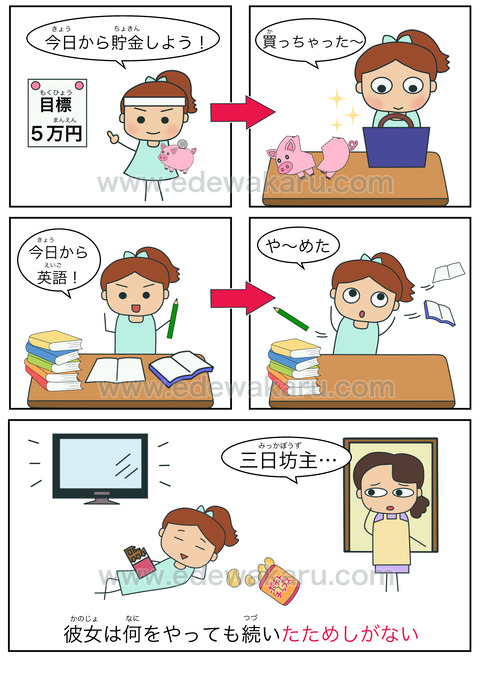
彼女はいつも三日坊主で何をやっても続いたためしがない
→彼女はいつも三日坊主で、今まで何をやっても続いたことがない(復習:三日坊主)She’s always a three-day enthusiast and has never stuck with anything she tried. →She’s always a three-day enthusiast and has never stuck with anything she tried. (Review: 三日坊主)
よく宝くじを買うが、当たったためしがない
→よく宝くじを買うが、今まで当たったことがないI often buy lottery tickets, but I’ve never won. →I often buy lottery tickets, but I’ve never won.
山田君は時間通りに来たためしがない
→山田君は今まで、時間通りに来たことがない(復習:〜通り)Yamada-kun has never arrived on time. →Yamada-kun has never arrived on time. (Review: 〜通り)
彼は約束を守ったためしがない
→彼は今まで、約束を守ったことがないHe has never kept a promise. →He has never kept a promise.
Read the original source text
Meaning
今まで〜だったことがない
How to use it
動詞[た形]+ためしがない
Explanation
「〜たためしがない」は「今まで〜だったことがない」という意味を表す文型です。この文型を使う場合は、
非難する気持ちを込めて使う
と覚えておきましょう😀
(復習:〜を込めて・〜を込めた)
非難の気持ちを入れない場合は経験の「〜たことがない」を使えばOKです😊
[例]
彼女は何をやっても続い
たことがない
彼女は何をやっても続い
たためしがない
→「何をやっても続かない」と非難している
勉強する機会が少ない文型ですが、よく使われますので覚えておきましょう😉
くらべてわかる日本語表現文型辞典
Meaning
The speaker believes that they have never performed or experienced an action A, not even once up to now.
How to use it
Aたためしがない
[Verb—た form] ためしがない
Explanation
【Contrast 1】
“Aたことがない”
“Aたことがない” can also be used for one’s own experiences, but “Aたためしがない” is not used for actions that one performs oneself.
○私は日本に来るまで雪を見たことがなかった。 — I had never seen snow before coming to Japan.
×私は日本に来るまで雪を見たためしがなかった。 — I had never once seen snow before coming to Japan.
In context 4 examples
彼はきちんとした時間に学校に来たためしがない。
He has never once come to school on time.
今までプレゼントをくれたためしがないのに、どうしたの。
You’ve never given me a present before, so what’s gotten into you?
30歳になる今まで、異性にもてたためしがない。
I’ve never been popular with the opposite sex, even up to now, at age 30.
事故にあったためしがないのに母はいつも「気を付けろ」と言う。
Even though I’ve never been in an accident, my mother always says, “Be careful.”
Read the original source text
Meaning
Aという行動・経験は、今まで一度もなかったと話し手が思っている。
How to use it
Aたためしがない
[動詞-た形]ためしがない
Explanation
【対比1】
「Aたことがない」
「Aたことがない」は自分の経験にも使えるが、「Aたためしがない」は自分が主体となって行う行為には使わない。
○私は日本に来るまで雪を見たことがなかった。
×私は日本に来るまで雪を見たためしがなかった。
日本語NET JLPT文法解説まとめ
Meaning
"There is no precedent for ~ / never seen or heard of ~ before"
Expresses the speaker's dissatisfaction or surprise.
How to use it
V(past form)+ ためしがない
Explanation
"There is no precedent for ~ / never seen or heard of ~ before."
Expresses the speaker's dissatisfaction or surprise.
It cannot be used to talk about oneself.
It cannot be used for oneself
In context 5 examples
彼は一度も、約束の時間通りに来たためしがない。
He has never once arrived at the appointed time.
息子は母の日に、何かしてくれたためしがない。
My son has never done anything for me on Mother’s Day.
毎年、旦那が「今年は当たるかも」といって宝くじを買ってくるが、当たったためしがない。
Every year my husband buys lottery tickets, saying, “Maybe I’ll win this year,” but he’s never won.
これまで異性にモテたためしがない。
I have never been popular with the opposite sex.
彼女は「明日からダイエット始める」と言って、始めたためしがない。
She says, “I’ll start dieting tomorrow,” but she’s never actually started.
Read the original source text
Meaning
"〜という前例がない / 〜ということは一度も見たり・聞いたりしたことがない"
話し手の不満や驚きを表す。
How to use it
V(タ形)+ ためしがない
Explanation
"There is no precedent for ~ / never seen or heard of ~ before."
Expresses the speaker's dissatisfaction or surprise.
自分のことについて言えない
It cannot be used for oneself
毎日のんびり日本語教師
How to use it
Verb ta-form + ためしがない
Explanation
It expresses the speaker's dissatisfaction or surprise about a subject concerning something that has never happened before, not even once.
In kanji, it is written “例がない” or “試しがない.” The former is not among the standard-use kanji.
Notes
Nothing in particular.
In context 8 examples
彼は時間通りに来たためしがない。
He has never once arrived on time.
宝くじなんて当たったためしがない。
I've never won the lottery, not even once.
今まで部下を守ってくれる上司には一度も出会ったためしがない。
I've never once met a boss who would stand up for their subordinates.
一旦こうなってしまうと、過去の経験から言って上手くいったためしがない。
Once things get to this point, based on past experience, it has never once gone well.
私は女性との交際が1年以上続いたためしがない。
I've never been in a relationship with a woman that lasted more than a year.
今までいくつものダイエットをしてきたが、成功したためしがない。
I've tried many diets up to now, but I've never once succeeded.
お腹がすいているからいつもよりたくさん食べられるだろうと思って毎回注文するのに、食べ切れたためしがない。
Every time, I order thinking that because I'm hungry, I'll be able to eat more than usual, but I've never once managed to finish it.
小学校の頃からずっとモテたためしがない。
I've never been popular, ever since elementary school.
Read the original source text
How to use it
動た形+ためしがない
Explanation
過去に一度も前例がないことについて、話し手の対象に対する不満や驚きを表します。
漢字なら「例がない」「試しがない」と書きます。前者は常用外です。
Notes
特になし