くらべてわかる日本語表現文型辞典
Meaning
Meaning 1: Emphasizes that one will not do A under any circumstances, or that it is not A.
Meaning 2: In the form “Aたものか.” A is so awful that one cannot (emotionally) bring oneself to do it.
Meaning 3: In the form “Aてなるものか.” Expresses a strong resolve to prevent a situation that would otherwise likely become A if left as it is.
Meaning 4: “Could it be A?” Used when one is unsure.
Meaning 5: In the forms “Aないものか / Aがないものか.” Means wishing for or wanting a state of A, wanting to do A, or wanting to have A.
Meaning 6: In the form “question word + Aものか.” Expresses indecision or uncertainty about the matter indicated by the question word.
Meaning 7: In the form “question word (degree) + Aものか.” Emphasizes the great degree to which something is A.
How to use it
Aものか (Aもんか / Aたものか / question word + Aものか / Aてなるものか / A (が) ないものか)
Connection 1:
[Verb—dictionary form] ものか
[i-adjective—い] ものか
[na-adjective—な / である] ものか
[Noun—な] ものか
Connection 2:
[Verb—potential dictionary form or た form] ものか
Connection 3:
[Verb—て form] なるものか
Connection 4:
[Verb] ものか
[i-adjective—い] ものか
[na-adjective—な / である] ものか
[Noun—な] ものか
Connection 5:
[Verb—ない form] ものか
[Noun—no suffix] がないものか
Connection 6:
[Question word] + [Verb] ものか
Connection 7:
[Question word] + ものか
[Question word] + [i-adjective—い] + ものか
[Question word] + [na-adjective—な] + ものか
Explanation
[Contrast 1]
“だれがAものか” and “なにがAものか”
“だれがAものか” can be used only when the subject of the sentence is a person. “なにがAものか” can be used for both people and things. They mean the same as “Aものか,” but are even more emphatic.
○だれがさびしいものか。 — Who would be lonely?
○こんな料理、なにがおいしいものか。 — What's delicious about food like this?
○あんな人になにがわかるものか。 — What could a person like that possibly know?
“Aまい” (Meaning 2, p. 292)
“Aものか” (Meanings 2 and 3, p. 304)
[Contrast 2]
“Aものか” (Meaning 1, p. 304)
When A is a potential verb form and means that one cannot do A emotionally, “dictionary form + ものか” and “た form + ものか” are interchangeable.
○こんな趣味の悪い服、着られるものか。 — There's no way I'd wear clothes this tasteless.
○こんな趣味の悪い服、着られたものか。 — I couldn't possibly wear clothes this tasteless.
When it means that A is physically impossible, only “dictionary form + ものか” can be used.
○こんな小さい服、着られるものか。 — There's no way I can fit into clothes this small.
×こんな小さい服、着られたものか。 — I couldn't possibly have fit into clothes this small.
“Aものではない” (Meaning 3, p. 310)
[Contrast 3]
“Aものか” (Meaning 1, p. 304)
“Aものか” emphatically says that one will not do A, while “Aてなるものか” expresses a strong will to prevent A.
○何度も注意したのに言うことを聞かない。彼のことなんか、もう知るものか。 — I warned him again and again, but he won't listen. I don't care about him anymore.
×何度も注意したのに言うことを聞かない。彼のことなんか、もう知ってなるものか。 — I warned him again and again, but he won't listen. I won't let myself know anything about him anymore.
[Contrast 4]
“Aものかどうか” (Meaning 2, p. 307)
The meaning is the same. This is an abbreviated form of “Aものかどうか.”
Notes
[Note 1]
・Often used at the end of men's sentences in conversation. In conversation it may take the form “もんか.” Women use “Aもの/もんですか.”
[Note 6]
・The sentence meaning is the same as a sentence with “question word + か,” but “ものか” more strongly expresses the speaker's feelings, such as confusion or irritation.
○どんな服を着ていったらいいか、聞いてみた。 — I asked what clothes I should wear.
○どんな服を着ていったらいいものか、聞いてみた。 — I asked what clothes I should wear, I wondered.
[Note 7]
・The set expression “Aはいかがなものか” expresses the speaker's doubts about the current state of A and their negative view of it.
○中高生が深夜、コンビニに集まっている状況はいかがなものか。 — What should we make of the situation of middle and high school students gathering at convenience stores late at night?
・This question word expresses degree.
In context 28 examples
あの店のサービスは最低だ。二度と行くものか。
The service at that store is the worst. I'll never go there again.
どんなにのどが渇いても、こんな汚い水、飲めるものか。
No matter how thirsty I am, there's no way I'm drinking filthy water like this.
あの人が犯人なもんか。私はずっと一緒にいたんだから。
There's no way that person is the culprit. I was with them the whole time.
こんな料理がおいしいものですか。
How could anyone call food like this delicious?
こんな流行後れの服、着られたものか。
There's no way I'd wear clothes this out of fashion.
小学校時代の成績なんか、他人に見せられたものか。
There's no way I'd show my elementary school grades to someone else.
課長は歌が下手だ。聞けたものか。
The section chief is a terrible singer. It's impossible to listen to him.
大阪の夏は暑い。クーラーなしで寝られるものか。
Summers in Osaka are hot. There's no way I can sleep without air conditioning.
あんな弱いチームに負けてなるものか。
There's no way I'm losing to such a weak team.
盗られてなるものかと、子犬はボールをくわえて走り出した。
The puppy grabbed the ball and ran off, determined not to let it be stolen.
市長の勝手にさせてなるものかと、市民はリコール運動を起こした。
The citizens launched a recall campaign, determined not to let the mayor do as he pleased.
150年続いたこの旅館を私の代でつぶしてなるものか。
There's no way I'll let this inn, which has lasted 150 years, go under on my watch.
ここで待っていていいものか。こんなに人通りが多ければ邪魔だろう。
Is it really all right to wait here? With so many people passing by, we'd be in the way.
大学でこの専門を選んで、将来就職できるものか、心配だ。
I'm worried whether I'll be able to get a job in the future if I choose this specialty at university.
はたして、友達に嘘がつけるものか、よくわからない。
I really don't know whether I could lie to a friend.
本当にあの食品が汚染源なものか、調査の結果が待たれる。
The results of the investigation are awaited to find out whether that food really was the source of contamination.
うちの店でももっといいサービスができないものか。
Couldn't our shop provide better service?
野菜嫌いの子どもが何とか野菜を食べないものか、いろいろ料理を工夫しているのだが…。
I'm trying all sorts of recipes, hoping to somehow get my child, who hates vegetables, to eat them...
夫は残業続きだが、もう少し仕事を減らせないものか。
My husband keeps having to work overtime. Couldn't he cut back on his work a little?
健康的に痩せるいいダイエット方法がないものか。
Isn't there a good way to lose weight healthily?
挨拶ばかり続いて、一体いつ食事が始まるものか、見当がつかない。
With one greeting after another, I have no idea when the meal will finally begin.
日本の結婚式にどんな服を着ていったらいいものか先生に聞いてみないとわからない。
I won't know what clothes to wear to a Japanese wedding until I ask my teacher.
パーティーには何人集まるものか、どれほどの料理を用意したらいいものか、さっぱりわからない。
I have no idea how many people will gather at the party or how much food I should prepare.
どうやって犯人が忍び込んだものか、警察でもつかみかねていた。
Even the police couldn't figure out how the culprit had sneaked in.
この痛みがどれほどのものか、あなたにはわからないだろう。
You probably don't know how intense this pain is.
今回の地震の被害がいかにひどいものか、現地に来て確かめてみろ。
Come to the area and see for yourself just how severe the damage from this earthquake is.
彼女の愛情がどれだけ深いものか、今まで気づかなかった。
Until now, I hadn't realized just how deep her love was.
ふるさとの祭りがどれほどにぎやかなものか、君に見せてあげたい。
I want to show you just how lively the festival in my hometown is.
Read the original source text
Meaning
意味1:何があってもAしないこと、Aではないことを強調する。
意味2:「Aたものか」の形で。とてもひどくて(心情的に)Aできない。
意味3:「Aてなるものか」の形で。そのままにしていたらAになりそうな状態を阻止しようという強い意思を表す。
意味4:Aだろうか。自信がないときに使う表現。
意味5:「Aないものか/Aがないものか」の形で。Aという状態になってほしい、したい、Aがほしいという意味。
意味6:「疑問詞+Aものか」の形で。疑問詞で表している事柄について、決めかねている、わからないという表現。
意味7:「疑問詞(程度)+Aものか」の形で。とてもAと程度の大きさを強調する表現。
How to use it
Aものか(Aもんか/Aたものか/疑問詞+Aものか/Aてなるものか/A(が)ないものか)
接続1:
[動詞-る形]ものか
[イ形-い]ものか
[ナ形-な/である]ものか
[名詞-な]ものか
接続2:
[動詞-可能のる形 と た形]ものか
接続3:
[動詞-て形]なるものか
接続4:
[動詞]ものか
[イ形-い]ものか
[ナ形-な/である]ものか
[名詞-な]ものか
接続5:
[動詞-ない形]ものか
[名詞-∅]がないものか
接続6:
[疑問詞]+[動詞]ものか
接続7:
[疑問詞]+ものか
[疑問詞]+[イ形-い]+ものか
[疑問詞]+[ナ形-な]+ものか
Explanation
【対比1】
「だれがAものか」「なにがAものか」
「だれがAものか」は文の主体が人のときのみ使える。「なにがAものか」は人ともの両方に使える。意味は「Aものか」と同じだが、さらに強調した表現。
○だれがさびしいものか。
○こんな料理、なにがおいしいものか。
○あんな人になにがわかるものか。
「Aまい」(意味2 P.292)
「Aものか」(意味2,3 P.304)
【対比2】
「Aものか」(意味1 P.304)
Aが動詞の可能の形の場合で、心情的にAができないという意味のときは、「ル形ものか」と「タ形ものか」は置き換え可能。
○こんな趣味の悪い服、着られるものか。
○こんな趣味の悪い服、着られたものか。
物理的にAができないという意味のときは「ル形ものか」しか使えない。
○こんな小さい服、着られるものか。
×こんな小さい服、着られたものか。
「Aものではない」(意味3 P.310)
【対比3】
「Aものか」(意味1 P.304)
「Aものか」はAないということの強調で、「Aてなるものか」はAを阻止しようという強い意志をあらわす。
○何度も注意したのに言うことを聞かない。彼のことなんか、もう知るものか。
×何度も注意したのに言うことを聞かない。彼のことなんか、もう知ってなるものか。
【対比4】
「Aものかどうか」(意味2 P.307)
意味は同じ。「Aものかどうか」の略。
Notes
【注意1】
・男性の会話の文末に使うことが多い。会話では「もんか」の形になることもある。女性は「Aもの/もんですか」を使う。
【注意6】
・「疑問詞+か」の文と、文意は同じだが、「ものか」のほうが話し手の困惑やいらだちなどの感情を強く表現している。
○どんな服を着ていったらいいか、聞いてみた。
○どんな服を着ていったらいいものか、聞いてみた。
【注意7】
・「Aはいかがなものか」は慣用的表現で、話し手が現状Aに疑問を投げかけ、否定的にとらえていることを表す。
○中高生が深夜、コンビニに集まっている状況はいかがなものか。
・この疑問詞は程度を表すもの。
DoJG 日本語文法辞典(全集)
Usage 1
Meaning
Wish; wonder if; should
How to use it
(i) {V/Adjectiveい}informal nonpast | ものか | |
| 行くものか | Someone definitely won’t go there |
| 珍しいものか | Something definitely isn’t rare |
(ii) {Adjectiveな stem/Noun} | なものか | |
| 便利なものか | Something is definitely not convenient |
| 病気なものか | Someone is absolutely not ill |
Explanation
ものか (2) A phrase indicating that the speaker wants to do something or is wondering what one he/she should choose.
In context 15 examples
もう少し広い家に住めないもの(だろう)か。
Can't I somehow live in a slightly more spacious house?
I wish to live in a house that is a bit more spacious. (ii) I wonder if I can live in a slightly more spacious house.
I wish to live in a house that is a bit more spacious. (ii) I wonder if I can live in a slightly more spacious house.
修士論文の題目をどのように決めたものか(と)迷っています。
I am at a loss as to how I should choose my MA thesis topic.
もう少し真面目にこの問題に取り組んでくれないもの(だろう)か。
I'm wondering if they can handle this problem a little more seriously.
何とかしてこの原稿を月曜日までに書き終われないものか。
I would like somehow to finish writing this manuscript by Monday.
もう少し自由に休暇が取れないものだろうか。
I'm wondering if I can take time off a bit more freely.
東京の夏はやたらと暑い。もう少し涼しくならないものだろうか。
Tokyo's summer is terribly hot. I wish it were a bit cooler.
日本語を勉強したいんですが、どの大学を選んだものかと考えているところです。
I want to study Japanese, and I'm wondering which university I should choose.
今年の夏は海外旅行をしおうと思っていますが、どの国に行ったものかと思案中です。
We're thinking of making a trip abroad this coming summer, and we are trying to figure out which country to visit.
子供が反抗期に入っている。その期間を問題なく乗り越えるにはどうしたものかと思っている。
Our child has entered the rebellious stage of life. I'm wondering what we should do to get through this period without problems.
このところ体の調子が悪いので、医者に診てもらったものかと考えているところです。
I'm now wondering if I should go see a doctor because I don't feel well these days.
日本の狭い社会から飛び出して海外移住でもしたものかと思っています。
I'm wondering if I should escape from Japan's confining society and live abroad.
人の性格は変わらないものだろうか。
I wonder if a person's character ever changes? (Does a person's character never change?)
私も食事に注意しているのだから、少しはやせないものだろうか。
I'm paying attention to my diet, so I wonder if I will lose some weight.
もうちょっと雨が降らないものだろうか。
I wonder if there will be more rain.
Read the original source text
Meaning
Wish; wonder if; should
How to use it
(i) {V/Adjectiveい}informal nonpast | ものか | |
| 行くものか | Someone definitely won’t go there |
| 珍しいものか | Something definitely isn’t rare |
(ii) {Adjectiveな stem/Noun} | なものか | |
| 便利なものか | Something is definitely not convenient |
| 病気なものか | Someone is absolutely not ill |
Explanation
ものか (2) A phrase indicating that the speaker wants to do something or is wondering what one he/she should choose.
Usage 2
Meaning
Definitely not; absolutely not; impossible
How to use it
(i) {V/Adjectiveい}informal nonpast | ものか | |
| 行くものか | Someone definitely won’t go there |
| 珍しいものか | Something definitely isn’t rare |
(ii) {Adjectiveな stem/Noun} | なものか | |
| 便利なものか | Something is definitely not convenient |
| 病気なものか | Someone is absolutely not ill |
Explanation
ものか (1) A rhetorical question marker that expresses a strong negative intention or disagreement.
In context 10 examples
あんなやつとは二度と会うものか。
I will never see that sort of guy again.
A:彼は5年後には自分でコンピュータの会社をつくるって言っているよ。 B:そんなこと彼にできるもんか。
A: He says he will establish a computer company by himself in five years. B: I bet he can't. (literally: Can he do it?)
あんなケチな男とはもうつき合うものか。
Who really wants to spend more time with such a stingy fellow?
A:鈴木、TOEFLが650点だったってよ。B:まさか!そんなことがあるもんか。
A: I heard that Suzuki got 650 points on the TOEFL. B: Unbelievable! That can't be true.
世話をしてもお礼の一言も言わないの。あんな人、もう世話をするもんですか。
She didn't even thank me when I helped her out. Who really wants to help someone like that again?
A:池田先生、親切な先生?B:親切なもんか。
A: Is Professor Ikeda a kind teacher? B: Definitely not kind.
A:そのパズル、やさしいんだろう。B:やさしいもんか。
A: Isn't that puzzle easy? B: absolutely not.
A:あいつは自分のことをいっぱしの政治家だと思っているようだな。B:あいつは政治家なもんか。政治屋しゃないか。
A: He seems to think that he is a full-fledged politician. B: He is absolutely not a politician. He's just being political.
A:黙って帰ったら彼に悪いだろう。B:かまうもんか。
A: It's not right if we go home without saying a word to him, right? B: Who cares?
A:みんな、あの政治家は信頼できるって言っているよ。B:分かるもんか。
A: Everybody is saying that politician is reliable. B: How do they know?
日本語文型辞典
Usage 1
Meaning
Basic information: Naなものか A-いものか V-るものか
Accompanied by falling intonation, expresses a strong feeling of denial. ④–⑥ express the speaker's strong will not to do something (“…しない”). Used in casual conversation. 「ものか」 is generally used by men, while the polite form 「ものですか」 is used by women.
Expresses the speaker's wish for an event to happen. ② 「…なかったものか」 also conveys perplexity that it did not happen. When followed at the end by 「(と)考える」, it means to consider whether it is possible for it to happen. It is also sometimes used, as in ⑥, as a modest request.
Expresses bewilderment at not knowing how one should act. When there is another person involved, it can also be used as a question.
How to use it
…ものか/…もんか
V-ないものだろうか
どうしたもの(だろう)か
In context 15 examples
A:はさみも持って行く?
B:そんなもの必要なもんか。A: Should I bring scissors too? B: As if we need something like that!
A:藤井さんが一番になった。
B:そんなことがあるもんか。何かの間違いだろう。A: Fujii came in first. B: No way! There must be some mistake.
こんな複雑な文章、訳せるものですか。
How could I possibly translate such a complicated passage?
誘われたって、だれが行くものか。
Even if I'm invited, who would go?
あんな人に、頼むもんか。
There's no way I'd ask someone like that.
誰が人に手渡したりするものですか。
Would I ever hand it directly to someone?
もう少し涼しくならないものかなあ。
I wonder if it could get a little cooler.
もう少し分かりやすく書けなかったものか。
Couldn't they have written it a little more clearly?
何とかして晩までに青森まで行けないものか考えてみよう。
Let's think about whether there's some way we can get to Aomori by evening.
だれかに協力してもらえないものだろうか。
Couldn't we get someone to help us somehow?
2時間の通勤時間を何とか利用できないものかと考えた。
I wondered whether there was some way I could make use of my two-hour commute.
A:彼と話しができないものでしょうか。
B:何とか方法を考えましょう。A: Couldn't I speak with him? B: Let's think of some way.
反対派への説明はどうしたものかね。
What should we do about explaining things to the opposition?
彼らに対する報酬はどうしたものだろうか。
What should we do about their compensation?
今後の資金繰りはどうしたものか、少し考えさせてくれ。
Let me think a little about how to manage our finances going forward.
Read the original source text
Meaning
基本情報NaなものかA-いものかV-るものか
下降調のイントネーションを伴って、強く否定する気持ちを表す。④~⑥は「…しない」という話し手の強い意志を表す。くだけた会話で使う。「ものか」は普通は男性が用いるが、丁寧体の「ものですか」は、女性が用いる。
あるできごとの実現を望む話し手の気持ちを表す。②「…なかったものか」は、実現しなかったことに対して困惑する気持ちが含まれる。また、文末に「(と)考える」を伴う場合は、実現が可能かどうか考えるという意味になる。⑥のようにひかえめな依頼の表現として用いられることもある。
どのように行動すべきか分からずに戸惑う気持ちを表す。相手がいる場合は質問の表現としても用いられる。
How to use it
…ものか/…もんか
V-ないものだろうか
どうしたもの(だろう)か
Usage 2
Meaning
Basic information: …なんかV-るものか. Attaches to various elements such as nouns, verbs, adjectives, or a noun plus particle, and strongly denies what follows while also expressing contempt for the thing singled out by 「なんか」 as “ridiculous, insignificant, or preposterous.” A casual way of saying 「など…ものか」. Example sentences: ① As if I’d go home! ② Who would believe a story like that? ③ As if I’d ever speak to a man like that again! ④ As if I’d teach someone like that! ⑤ As if I could ever feel lonely, even by myself! ⑥ A: How was the lecture? You heard an interesting talk, didn’t you?
B: Interesting? It was an incredibly stupid talk.
Read the original source text
Meaning
基本情報…なんかV-るものか説明名詞・動詞・形容詞や名詞+助詞などのさまざまな成分に付き、次に述べることを強く否定すると同時に「なんか」によって取り立てたものごとを「馬鹿げたもの、取るに足りないもの、とんでもないこと」と軽視する気持ちを表す。「など…ものか」のくだけた言い方。例文① 家になんか帰ってやるものか。② 誰がそんな話なんか信じるものか。③ あんな男となんか二度と口を利いてやるものか。④ あんなひとに教えてなんかやるものか。⑤ 一人でも寂しくなんかあるものか。⑥ A:講演会いかがでしたか。おもしろい話が聞けたでしょう。
B:おもしろくなんかあるものですか。すごくくだらない話でしたよ。
絵でわかる日本語
Usage 1
Read this source entry ↗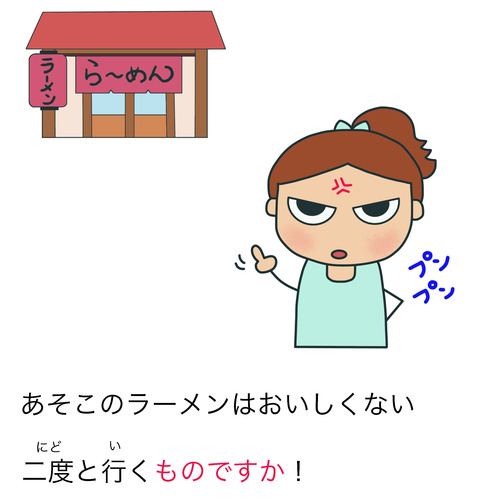
Meaning
Absolutely not 〜
・
Never 〜
How to use it
Verb [dictionary form] + ものか・ものですか
Adjective [dictionary form] + ものか・ものですか
Explanation
“〜ものか” and “〜ものですか” are expressions used to strongly reject someone’s opinion or express a strong determination. They emphasize strong opposition or refusal with meanings like “absolutely not 〜” and “never 〜.” In spoken language, “〜もんか” and “〜もんですか” are used 😊
“〜ものか” and “〜もんか” are masculine speech.
[Example sentences]
The ramen there isn’t good. Do you think I’ll ever go back?!
There’s no way that jerk understands how I feel.
I’ll never forget this frustration.
There are many sentence patterns formed with “もの,” so be sure to memorize them well 😀
[The “もの” series]
〜たいものだ・〜てほしいものだ
〜たものだ
〜たものではない
〜というもの (Nというもの)
〜ないものだろうか
〜ないものは〜ない
〜もの・〜んだもの
〜ものか
〜ものがある
〜ものだ (feeling/emotion)
〜ものだ (inherent property / general way of thinking)
〜ものだ・〜ものではない
〜もので・〜ものだから
〜ものと思っていた
〜ものなら
〜ものの
〜ものを
〜ようものなら
In context 3 examples
あそこのラーメンはおいしくない。二度と行くものですか!
→あそこのラーメンはおいしくない。絶対二度と行かない!The ramen there isn’t good. Do you think I’ll ever go back?! →The ramen there isn’t good. I’m absolutely never going back!
あいつに俺の気持ちがわかるものか
→あいつに俺の気持ちは決してわからないThere’s no way that jerk understands how I feel. →That jerk will never understand how I feel.
あと1点で合格だったのに…この悔しさを忘れるものか
→あと1点で合格だったのに…この悔しさは絶対に忘れないI was only one point short of passing… I’ll never forget this frustration. →I was only one point short of passing… I absolutely won’t forget this frustration.
Read the original source text
Meaning
絶対〜ない
・
決して〜ない
How to use it
動詞[原形]+ものか・ものですか
形容詞[原形]+ものか・ものですか
Explanation
「〜ものか」「〜ものですか」は相手の意見を強く否定したり、強い意志を表す表現です。「絶対〜ない」「決して〜ない」と強い反発や拒絶の感情を強調します。話し言葉では「
〜もんか」「
〜もんですか」が使われます😊
「〜ものか」「〜もんか」は男性言葉となります。
[例文]
あそこのラーメンはおいしくない。二度と行くもんですか!
あいつに俺の気持ちがわかるもんか
この悔しさを忘れるもんか
「もの」が作る文型はたくさんありますのでしっかりと覚えましょう😀
【「もの」シリーズ】
〜たいものだ・〜てほしいものだ
〜たものだ
〜たものではない
〜というもの(Nというもの)
〜ないものだろうか
〜ないものは〜ない
〜もの・〜んだもの
〜ものか
〜ものがある
〜ものだ(感慨)
〜ものだ(本来の性質・一般的な考え方)
〜ものだ・〜ものではない
〜もので・〜ものだから
〜ものと思っていた
〜ものなら
〜ものの
〜ものを
〜ようものなら
Usage 2
Read this source entry ↗Meaning
Absolutely not 〜
・
Never 〜
How to use it
Verb [dictionary form] + ものか・ものですか
Adjective [dictionary form] + ものか・ものですか
Explanation
“〜ものか” and “〜ものですか” are expressions used to strongly reject someone’s opinion or express a strong determination. They emphasize strong opposition or refusal with meanings like “absolutely not 〜” and “never 〜.” In spoken language, “〜もんか” and “〜もんですか” are used 😊
“〜ものか” and “〜もんか” are masculine speech.
[Example sentences]
The ramen there isn’t good. Do you think I’ll ever go back?!
There’s no way that jerk understands how I feel.
I’ll never forget this frustration.
There are many sentence patterns formed with “もの,” so be sure to memorize them well 😀
[The “もの” series]
〜たいものだ・〜てほしいものだ
〜たものだ
〜たものではない
〜というもの (Nというもの)
〜ないものだろうか
〜ないものは〜ない
〜もの・〜んだもの
〜ものか
〜ものがある
〜ものだ (feeling/emotion)
〜ものだ (inherent property / general way of thinking)
〜ものだ・〜ものではない
〜もので・〜ものだから
〜ものと思っていた
〜ものなら
〜ものの
〜ものを
〜ようものなら
Read the original source text
Meaning
絶対〜ない
・
決して〜ない
How to use it
動詞[原形]+ものか・ものですか
形容詞[原形]+ものか・ものですか
Explanation
「〜ものか」「〜ものですか」は相手の意見を強く否定したり、強い意志を表す表現です。「絶対〜ない」「決して〜ない」と強い反発や拒絶の感情を強調します。話し言葉では「
〜もんか」「
〜もんですか」が使われます😊
「〜ものか」「〜もんか」は男性言葉となります。
[例文]
あそこのラーメンはおいしくない。二度と行くもんですか!
あいつに俺の気持ちがわかるもんか
この悔しさを忘れるもんか
「もの」が作る文型はたくさんありますのでしっかりと覚えましょう😀
【「もの」シリーズ】
〜たいものだ・〜てほしいものだ
〜たものだ
〜たものではない
〜というもの(Nというもの)
〜ないものだろうか
〜ないものは〜ない
〜もの・〜んだもの
〜ものか
〜ものがある
〜ものだ(感慨)
〜ものだ(本来の性質・一般的な考え方)
〜ものだ・〜ものではない
〜もので・〜ものだから
〜ものと思っていた
〜ものなら
〜ものの
〜ものを
〜ようものなら
どんなときどう使う 日本語表現文型辞典
Meaning
how could; who could; what could
How to use it
[plain form] (ナAな / Nな) + ものかS
Explanation
決して~ない
1)話者の強い否定の気持ちを表現するときの言い方で、反語を使った、やや感情的な言い方。
2)くだけた会話で使う。
3)「絶対に・決して」などとともによく使う。 ❸ ❹ の「もんか」は「ものか」よりくだけた言い方。
3)Often used with 絶対に,決して, etc. The もんか in sentences ❸ and ❹ is more informal than ものか.
1)Strong negation on part of speaker. Slightly emotional rhetorical question.
2)Used in informal speech.
In context 4 examples
A:一人暮らしは寂しいでしょう?B:寂しいものか。気楽でいいよ。
A: Living alone is lonely, isn't it? B: Lonely? Not at all. It's carefree and great.
あんな失礼な人と2度と話をするものですか。
As if I'd ever talk to such a rude person again.
連休の遊園地なんか人が多くて疲れるばかりだ。もう、2度と行くもんか。
Going to an amusement park during a long weekend just means crowds and getting tired. I'm never going again!
A:デジカメって、使い方が複雑でしょう?B:複雑だって? 複雑なもんか。ちょっと慣れれば、簡単だよ。
A: Digital cameras are complicated to use, aren't they? B: Complicated? Not at all! Once you get a little used to it, it's easy.
Read the original source text
Meaning
how could; who could; what could
How to use it
〔普通形〕(ナAな/Nな)+ものかS
Explanation
決して~ない
1)話者の強い否定の気持ちを表現するときの言い方で、反語を使った、やや感情的な言い方。
2)くだけた会話で使う。
3)「絶対に・決して」などとともによく使う。 ❸ ❹ の「もんか」は「ものか」よりくだけた言い方。
3)Often used with 絶対に,決して, etc. The もんか in sentences ❸ and ❹ is more informal than ものか.
1)Strong negation on part of speaker. Slightly emotional rhetorical question.
2)Used in informal speech.
日本語NET JLPT文法解説まとめ
Meaning
I will never ~ again / I would never ~
Expresses strong denial.
How to use it
V (dictionary form) + ものか
いAい + ものか
なAな + ものか
Nな + ものか
Explanation
Expresses a feeling of strong denial.
「もんか」 is a more casual way of saying 「ものか」.
In context 6 examples
店員の態度は悪いし、料理は美味しくないし、こんな店二度と来るものか。
The staff have a bad attitude and the food isn't tasty. I'll never come to a place like this again.
俺の今の気持ちなんてわかるもんか。
How could you possibly understand how I feel right now?
夏休みの遊園地は人が多いし、アトラクションには1時間待たなければならないこともあるし、絶対に行くものか。
There are lots of people at the amusement park during summer vacation, and sometimes you have to wait an hour for a ride. There’s no way I’m going.
こんなところで、あきらめるものか。絶対にやり遂げてやる。
Do you think I’d give up in a place like this? I’ll see it through, no matter what.
ワン :トムさんってパクさんのことが好きなんでしょ?
Wan: Tom, you like Park, don’t you?
のび太:ねぇ、僕にも見せてよ。
Nobita: Hey, let me see too.
Read the original source text
Meaning
二度と〜ない / 決して〜ない
強い否定を表す
How to use it
V(辞書形)+ ものか
イAい + ものか
ナAな + ものか
Nな + ものか
Explanation
Expresses a feeling of strong denial.
「ものか」よりもくだけた言い方は「もんか」
毎日のんびり日本語教師
Usage 1
Read this source entry ↗How to use it
Verb dictionary form + ものか/もんか/ものですか/もんですか
な-adjective + な + ものか/もんか/ものですか/もんですか
い-adjective + ものか/もんか/ものですか/もんですか
Explanation
This expresses the speaker’s very strong denial or rejection. Because the denial is strong, it conveys a defiant attitude.
「もんか/もんですか」are the colloquial forms of「ものか/ものですか」.
Men generally use「ものか/もんか」, while women often use「ものですか/もんですか」.
Notes
Nothing in particular.
In context 8 examples
あいつに負けてたまるもんか。
As if I’d let that guy beat me!
死など怖いものか。
As if I’m afraid of death!
二度とこんなところに来るものか。
I’ll never come to a place like this again!
私の気持ちがお前に分かるものか。(我的心情你能明白吗?!)
As if you could understand how I feel! (Could you possibly understand how I feel?!)
こんなところで諦められるもんか。
There’s no way I’d give up here!
誰がお前なんかと友達になるものか。
Who would ever become friends with someone like you?!
あの店は店員の態度が悪すぎる。二度と行くものか。
The staff at that shop have a terrible attitude. I’ll never go there again!
大切な思い出、そう易々と忘れるものか。
They’re precious memories; there’s no way I’ll forget them so easily.
Read the original source text
How to use it
動辞形+ものか/もんか/ものですか/もんですか
な形容詞+な+ものか/もんか/ものですか/もんですか
い形容詞+ものか/もんか/ものですか/もんですか
Explanation
話者の非常に強い否定・拒絶の表現です。強い否定のため、反発的な態度を表します。
「もんか/もんですか」は「ものか/ものですか」の口語にあたります。
男性は一般に「ものか/もんか」を使い、女性は「ものですか/もんですか」を使うことが多いです。
Notes
特になし
Usage 2
Read this source entry ↗How to use it
Verb plain form + など + verb dictionary form + ものか
I-adjective plain form + など + verb dictionary form + ものか
Na-adjective plain form + など + verb dictionary form + ものか
Noun + など + verb dictionary form + ものか
Noun + など (+ particle) + verb dictionary form + ものか
Noun (+ particle) + など + verb dictionary form + ものか
Explanation
Expresses strong negation.
It carries the speaker’s feelings of contempt, dismissiveness, or humility.
「~などあろうものか(などあるものか)」 is a set expression.
Notes
The 「など/なんか/なんて」 series
In context 7 examples
自分で決めたことだ。後悔などあろうものか。
I decided this myself. As if I’d ever regret it.
神など居るものか。
As if there were any gods.
私なんかが彼に話しかけていいものかと悩んでいる。
I’m wondering whether someone like me is even allowed to talk to him.
”不可能”なんてあるものか。
As if anything were “impossible.”
あいつなんかに負けるものか。
As if I’d lose to someone like him.
彼女は私のものだ。誰かになんて渡すものか。
She’s mine. As if I’d let her go to someone else.
お前の話なんて、誰が信じるものか。
Who would believe a story like yours?
Read the original source text
How to use it
動詞普通形+など+動辞形+ものか
イ形容詞普通形+など+動辞形+ものか
ナ形容詞普通形+など+動辞形+ものか
名詞+など+動辞形+ものか
名詞+など(+助詞)+動辞形+ものか
名詞(+助詞)+など+動辞形+ものか
Explanation
強い否定を表します。
話者の軽蔑・軽視・謙遜の感情を含みます。
「~などあろうものか(などあるものか)」は定型表現です。
Notes
「など/なんか/なんて」シリーズ
日本語文型辞典 英語版
Usage 1
Meaning
【ものか】[Na なものか][A-いものか][V-るものか]
B:そんなもの必要なもんか。
Why would that be necessary?
B:そんなことがあるもんか。何かの間違いだろう。
That can’t be! There must be some kind of mistake.
With a falling intonation, expresses a feeling of strong denial. Examples
(4)
-
(6)
express the speaker’s strong intention that something will not be done. Used in casual conversation.
Usually, ものか is used by men and the polite ものですか is used by women.
B:何とか方法を考えましょう。
Let me think of some way to do that.
Shows that the speaker wishes for a certain event to take place. The ...なかったものか in example
(2)
contains a feeling of bewilderment that something has not taken place. Also, when used with the sentence ending (と)考える, means that whether or not the realization of an event or occurrence is possible is being considered. Can also be used, as in
(6)
, to make a tentative request.
Expresses a feeling of confusion over what the best course of action is. Can also be used as a question of someone present.
How to use it
1. as if ...; no way ...
2. couldn’t one V-ない?
3. what should one do?; what would be the right thing to do?
In context 15 examples
A:はさみも持って行く?
Are you taking scissors?
A:藤井さんが一番になったそうね。
They say Fujii-san has become number one.
こんな複雑な文章、訳せるものですか。
There is no way such a complicated sentence can be translated.
誘われたって、だれが行くものか。
Even if they invited me, there’s no way I would go.
あんな人に、頼むもんか。
There is no way I would ask such a person a favor.
誰が人に手渡したりするものですか。
There is no way I would hand this over to someone else.
もう少し涼しくならないものかなあ。
I wish it would get a little cooler.
もう少し分かりやすく書けなかったものか。
Couldn’t you have written it (in a way that would have been) a little easier to understand?
何とかして晩までに青森まで行けないものか考えてみよう。
Let’s think if there is a way for us to get to Aomori by evening.
だれかに協力してもらえないものだろうか。
Can’t I get some cooperation from somebody on this?
2時間の通勤時間を何とか利用できないものかと考えた。
I thought about whether there was some way I could take advantage of my two-hour commute.
A:彼と話しができないものでしょうか。
I wonder if we could talk to him.
反対派への説明はどうしたものかね。
How are we supposed to explain this to the opposition?
彼らに対する報酬はどうしたものだろうか。
What should I do to remunerate them?
今後の資金繰りはどうしたものか、少し考えさせてくれ。
Let me think a little about what we should do for funding from now on.
Read the original source text
Meaning
【ものか】[Na なものか][A-いものか][V-るものか]
B:そんなもの必要なもんか。
Why would that be necessary?
B:そんなことがあるもんか。何かの間違いだろう。
That can’t be! There must be some kind of mistake.
With a falling intonation, expresses a feeling of strong denial. Examples
(4)
-
(6)
express the speaker’s strong intention that something will not be done. Used in casual conversation.
Usually, ものか is used by men and the polite ものですか is used by women.
B:何とか方法を考えましょう。
Let me think of some way to do that.
Shows that the speaker wishes for a certain event to take place. The ...なかったものか in example
(2)
contains a feeling of bewilderment that something has not taken place. Also, when used with the sentence ending (と)考える, means that whether or not the realization of an event or occurrence is possible is being considered. Can also be used, as in
(6)
, to make a tentative request.
Expresses a feeling of confusion over what the best course of action is. Can also be used as a question of someone present.
How to use it
1. ...ものか/...もんか
2. V-ないものだろうか
3. どうしたもの(だろう)か
Usage 2
Meaning
【なんか...ものか】[...なんかV-るものか]
B:おもしろくなんかあるものですか。すごくくだらない話でしたよ。
It wasn’t in the least bit interesting. It was a really worthless lecture.
With a variety of elements such as a noun, a verb, an adjective, or a noun + verb, なんか...ない negates the following statement. At the same time, it expresses the speaker’s derogatory feeling towards a thing/state/event mentioned in the phrase with なんか, and means “this is stupid, insignificant, outrageous.” なんか...ない is a casual way of saying など...ものか.
In context 6 examples
家になんか帰ってやるものか。
I never, ever go back home.
誰がそんな話なんか信じるものか。
Who the hell believes such a story?
あんな男となんか二度と口を利いてやるものか。
I won’t talk to such a guy ever again.
あんなひとに教えてなんかやるものか。
It’ll be a long time before I ever teach someone like that.
一人でも寂しくなんかあるものか。
I’m not in the least lonely.
A:講演会いかがでしたか。おもしろい話が聞けたでしょう。
How was the lecture? You must have heard an interesting talk.
AIUEO JLPT Grammar
Meaning
This sentence pattern expresses strong denial or rejection. It is used when the speaker wants to completely deny or reject something, typically with a strong will. 「〜もんか」is a more colloquial expression.
How to use it
Verb + ものか or もんか; adjective + ものか or もんか; na-adjective + な + ものか or もんか
In context 5 examples
こんな難しい問題、簡単に解けるものか!
There’s no way I can solve such a difficult problem easily!
あんな人に負けるもんか!
There’s no way I’ll lose to someone like that!
遅刻なんてするものか。
There’s no way I’ll be late.
彼の言うことなんて、信じるものか。
There’s no way I’m going to believe what he says.
彼女が本気でそんなことを言うもんか。
There’s no way she meant what she said.
Read the original source text
Meaning
This sentence pattern expresses strong denial or rejection. It is used when the speaker wants to completely deny or reject something, typically with a strong will. 「〜もんか」is a more colloquial expression.
How to use it
動詞+ものかorもんか形容詞+ものかorもんか形容動詞な+ものかorもんか
Explanation · 日本語
この文型は、強い否定や拒絶の気持ちを表す表現です。話し手が相手の発言や状況を完全に否定したいときや、強い意志を持って拒絶したいときに使われます。「〜もんか」はより口語的です。
文法
Meaning
I’ll never ~ again / I would never ~
Expresses strong negation.
How to use it
V (dictionary form) + ものか
いAい + ものか
なAな + ものか
Nな + ものか
Notes
「もんか」is a more casual way of saying 「ものか」.
In context 6 examples
店員の態度は悪いし、料理は美味しくないし、こんな店二度と来るものか。
The staff have a bad attitude and the food isn't tasty. I'll never come to a place like this again.
俺の今の気持ちなんてわかるもんか。
How could you possibly understand how I feel right now?
夏休みの遊園地は人が多いし、アトラクションには1時間待たなければならないこともあるし、絶対に行くものか。
There are lots of people at the amusement park during summer vacation, and sometimes you have to wait an hour for a ride. There’s no way I’m going.
こんなところで、あきらめるものか。絶対にやり遂げてやる。
Do you think I’d give up in a place like this? I’ll see it through, no matter what.
ワン :トムさんってパクさんのことが好きなんでしょ?
トム:好きなもんか。僕はもっと、無口で清楚な女性が好きなんだよ。Wang: Tom, you like Park, don’t you? Tom: Like her? No way. I like women who are quieter and more refined.
のび太:ねぇ、僕にも見せてよ。
スネ夫:やーだよ。のび太になんか見せてやるもんか。Nobita: Hey, show me too. Suneo: No way. Like I’d show something to Nobita.
Read the original source text
Meaning
二度と〜ない / 決して〜ない
強い否定を表す
How to use it
V(辞書形)+ ものか
イAい + ものか
ナAな + ものか
Nな + ものか
Notes
「ものか」よりもくだけた言い方は「もんか」
Bunpro Grammar Reference
Meaning
Definitely not, Absolutely not, Impossible, Do you really think~?
How to use it
Verb[る]+ もの(1) + か
[い]Adjective + もの(1) + か
[な]Adjective + な + もの(1) + か
Noun + な + もの(1) + か
(1) もん
Verb[る]+ もの(1) + です + か
[い]Adjective + もの(1) + です + か
[な]Adjective + な + もの(1) + です + か
Noun + な + もの(1) + です + か
(1) もん
Nuance
A phrase which strongly questions that which is (A), coming across as you must be joking, or absolutely not.
Explanation
ものか is a set expression in Japanese that is used to strongly suggest that the previous statement absolutely will not happen, or is definitely not true. It is a combination of the noun もの 'thing', and the adverbial particle use of か for conveying 'doubt' or 'uncertainty'. Common translations include 'definitely not (A)', 'absolutely not (A)', and 'do you really think that (A)'. Literally, the meaning is quite close to 'as if' in English, as ものか just poses a strong question to which the speaker already completely disagrees with.
ものか may appear after any word that could attach to もの, such as a verbs and い-Adjectives, or な-Adjectives and nouns followed by な.
バカ言うな。俺がそんな派手な服を着るものか!
Don't be stupid! Do you really think that I would wear something so flashy?!
仕事?毎日怒られてばかりだから楽しいもんか。
Work? I get yelled at everyday, so I am definitely not having a good time.
私は毎日残業しているし、家に帰ったら家事を全部やっている。元気なものか。
I work overtime every day and when I get home I do all the chores. Do you really think I have any energy left?
お前みたいな奴は友達なものか!
A person like you is absolutely not my friend!
Other forms which may be seen are もんか, もんですか, and ものですか, with women being more traditionally likely to use the もんですか and ものですか variants.
Additionally, when following the た form of verbs, ものか will imply that the speaker cannot bear for (A) to eventuate, due to evaluating it as something highly negative.
一人でこの量の仕事を明日までにできたもんか。
As if it's possible to do this amount of work by tomorrow myself.
こんなまずい飯、食べられたもんか。
As if I could have eaten something so awful.
Caution
There are several other situations in where ものか will be used, but in each of them it may be easiest to think of the primary translation as being 'as if (A)', as it merely implies the speakers shock or disbelief in relation to whatever conditions are presented in the previous statement. These 'conditions' may involve an amount, possibility, or result of (A).
In context 18 examples
- あんなひどいこと言われたんだ。平気なものか。
Such a terrible thing was said. It is impossible to be calm.
- こんなまずい飯、食べられたもんか。
As if I could have eaten something so awful.
- バカ言うな。俺がそんな派手な服を着るものか!
Don't be stupid! Do you really think that I would wear something so flashy?!
- 仕事?毎日怒られてばかりだから楽しいもんか。
Work? I get yelled at everyday, so I am definitely not having a good time.
- 私は毎日残業しているし、家に帰ったら家事を全部やっている。元気なものか。
I work overtime every day and when I get home I do all the chores. Do you really think I have any energy left?
- お前みたいな奴は友達なものか!
A person like you is absolutely not my friend!
- 一人でこの量の仕事を明日までにできたもんか。
As if it's possible to do this amount of work by tomorrow myself.
- 彼が皮肉なんて言うものか。そういう奴じゃない。
He absolutely will not use sarcasm. He is not that kind of a person.
- そんな安っぽい言葉が心に響くものか。
Such insignificant wording absolutely will not make an impression.
- それくらいの研究で理解など深まるものか。
Research to that degree absolutely will not deepen understanding.
- あの山が噴火するものか。あれは火山じゃない。
That mountain absolutely will not erupt. It is not a volcano.
- 君にボーナスなどあげるものか。まじめに働かないんだから。
You absolutely will not get a bonus. Because you don't work diligently.
- 今から行ったって日の出になんか間に合うものか。
Even if we leave now we absolutely will not make it in time for sunrise.
- 失恋なんて、経験のない君にわかるもんか!
You, who has never experienced something like a broken heart, absolutely won't understand it!
- 君に文房具なんてやるものか。どうせ大切にしないんだから。
I absolutely will not give you any stationery, because I have no doubt that you won't use it with care.
- 休日に牧場なんて行くものか。観光客が多すぎる。
It is impossible to go to a farm on a holiday. There are too many tourists.
- 井上:「あなたの男友達が家の前で待っている。」
本田:「彼が何をしようが、かまうものか!」Inoue: 'Your male friend is waiting in front of your house.' Honda: 'I absolutely do not care what he is doing!'
- 永井:「長谷川さんって伊藤と付き合っているらしい。」
長谷川:「違うよ!伊藤さんと付き合うものか!」Nagai: 'Hasegawa-san, I heard that you are going out with Itou-san.' Hasegawa: 'No! I am absolutely not going out with him!'