日本語文型辞典 英語版
Meaning
【こむ】[R-こむ]
Used to make a transitive verb that means putting something into something else, as in
(1)
-
(3)
, an intransitive verb that means entering into something, as in
(4)
-
(6)
, or a verb that means “do something thoroughly/amply,” as in
(7)
-
(9)
.
In context 9 examples
ここに名前を書きこんでください。
Please write your name in this (space).
かばんに本をつめこんで旅にでかけた。
He left on a trip, with books stuffed into his suitcase.
トラックに荷物を積みこむのを手伝った。
I helped to load the baggage into the truck.
その客は家にあがりこんで、もう5時間も帰らない。
It’s been five hours since that visitor came into the house, and he still isn’t leaving.
日本の社会に溶け込むことと自分の文化を見うしなわないこととは両立するのだろうか。
Is it possible to integrate into Japanese society and, at the same time, not lose one’s own culture?
人の部屋に勝手に入り込まないでくれ。
Please don’t come into my room uninvited.
友達と話し込んでいたらいつのまにか朝になっていた。
I talked and talked with my friends, and then before I knew it, it was morning.
サルに芸を教え込むことと子供を教育することとの違いが分かっていない教師がいる。
Some teachers don’t understand the difference between training monkeys and educating children.
部屋の片隅に座り込んで、じっと考え事をしている。
She is sitting down in a corner of the room, thinking intensely.
IMABI
込む
Read this IMABI lesson ↗Explanation
込む
In this lesson we’ll learn all about 込む. It’s interesting to know that the character 込 is a Japanese-made 漢字. This verb and how it’s used often throws people off, especially when trying to translate stuff.
込む
込む means “to be crowded” or “to continue in the same state”. Of all of the compound verb endings in Japanese, -込む is by far one of the most important. This is because it is used to create hundreds of unique verbs. ~込む has four broad usages.
THE 4 USAGES: 1: Going inside 2: Put inside 3: Keep as is 4: Doing enough
(1) To plunge 飛び込む とびこむ (2) To corner into 追い込む おいこむ
(3) To mope 塞ぎ込む ふさぎこむ (4) To drill (teaching) 教え込む おしえこむ
(4) To boil well 煮込む にこむ (3) To age 老け込む ふけこむ
(2) To cram 詰め込む つめこむ (1) To invade 攻め込む せめこむ
(1) To run in yelling 怒鳴り込む どなりこむ (2) To entice 誘い込む さそいこむ
(1) To march in 繰り込む くりこむ (1) To roll in 転がり込む ころがりこむ
(3) To sit down 座り込む すわりこむ (2) To count on 見込む みこむ
Examples
1. 崖がけから海に飛び込むのは危ない。
Plunging into the sea from a cliff is dangerous.
2. 敵てきを窮地きゅうちに追い込むのは重要な戦略せんりゃくです。
Cornering the enemy is an important war strategy.
3. 冷たい空気が流れ込んでいます。
Cold air is flowing in.
4. 我々の大学が徹底的てっていてきに全教科課程を学生の頭に教え込むためには、そういった教授を雇用する必要があります。
It is necessary that our university employ professors that exhaustively drill the curriculum into the minds of their students.
Ending Note: More compound verbs are based off of the solely transitive form ~こめる.
5. 部屋に閉じ込められた。
I was locked in a room.
6. 策動さくどうを封ふうじ込める。(Rare)
To contain a scheme.
込・籠める
1. To load bullets.
8. 実弾を込める。
To hold live fire.
2. To pour emotion into. This is where を込めて mostly applies.
9. 彼は満身の力を込めて大石を投げた。
He threw a great stone with all his strength.
10. 心をこめて持て成す。
To make welcome with (all) one’s heart.
3. To include another item. Using 含める is more common.
11. 消費税を込めた料金
Fee with sales tax included.
4. As an intransitive verb, it means “enshroud (clouds, mist, etc.)”.
12a. 霧が町に込めた。(Old-fashioned)
12b. 霧が町に立ち込めた。(Natural)
Mist enshrouded the village.
~込める
~込める may mean to “put into” or “to do away with”. Examples include the following.
To imprison 閉じ込める
To seal up 塗り込める
To argue down 言い込める
To envelop 立ち込める
To confine 封じ込める
To shut up 押し込める
13. 雲の立ち込めた山を見よ。
Look at the cloud enveloped mountains!
14. 相手を言いこめた。
I argued down my opponent.
15. 強盗は人質を物置に押し込めた。
The burglar pushed the hostages down into a closet.
16. 強盗は人質を物置きに押し込んだ。
The burglar pushed the hostages into the closet.
17. 神社には、壁に塗り込められた経文がある。
There are sutras painted over in walls at shrines.
In context 19 examples
崖がけから海に飛び込むのは危ない。
Plunging into the sea from a cliff is dangerous.
敵てきを窮地きゅうちに追い込むのは重要な戦略せんりゃくです。
Cornering the enemy is an important war strategy.
冷たい空気が流れ込んでいます。
Cold air is flowing in.
我々の大学が徹底的てっていてきに全教科課程を学生の頭に教え込むためには、そういった教授を雇用する必要があります。
It is necessary that our university employ professors that exhaustively drill the curriculum into the minds of their students.
部屋に閉じ込められた。
I was locked in a room.
策動さくどうを封ふうじ込める。(Rare)
To contain a scheme.
実弾を込める。
To hold live fire.
To pour emotion into. This is where を込めて mostly applies.
He threw a great stone with all his strength.
彼は満身の力を込めて大石を投げた。
He threw a great stone with all his strength.
心をこめて持て成す。
To make welcome with (all) one’s heart.
To include another item. Using 含める is more common.
Fee with sales tax included.
消費税を込めた料金
Fee with sales tax included.
霧が町に込めた。(Old-fashioned)
Mist enshrouded the village.
霧が町に立ち込めた。(Natural)
Mist enshrouded the village.
雲の立ち込めた山を見よ。
Look at the cloud enveloped mountains!
相手を言いこめた。
I argued down my opponent.
強盗は人質を物置に押し込めた。
The burglar pushed the hostages down into a closet.
強盗は人質を物置きに押し込んだ。
The burglar pushed the hostages into the closet.
神社には、壁に塗り込められた経文がある。
There are sutras painted over in walls at shrines.
絵でわかる日本語
Usage 1
Read this source entry ↗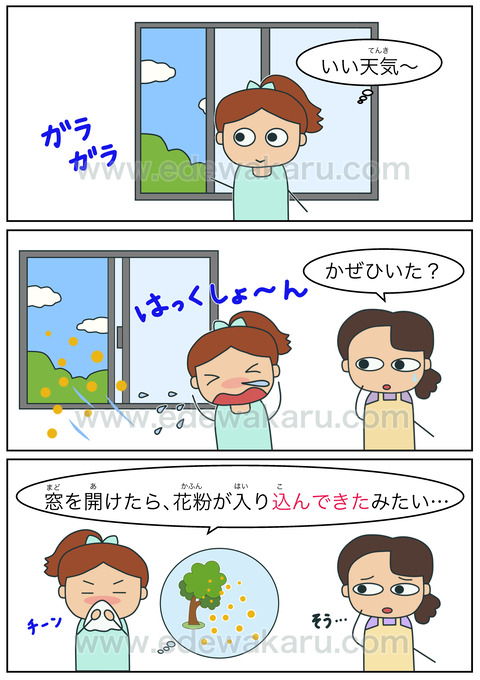
Meaning
enter into ~
put into ~
How to use it
Verb [ます-form] + 込む
Explanation
「〜込む」 means “enter into ~” or “put into ~,” and is a grammatical pattern that expresses movement into the interior. Be sure to review the intransitive verb 「入る」 (enter) and the transitive verb 「入れる」 (put in). 😊
[Examples]
①When I left the window open, it seems pollen came in…
→It seems pollen came into the room.
②Please insert the USB here.
→Please push the USB in here.
③I swallowed a candy and nearly died.
→I swallowed the candy whole and nearly died.
④If you cram that many things into the bag, it’s no wonder it’ll break.
→If you put that many things into the bag, it’s no wonder it’ll break.
⑤He barged into my house without asking, which was really troubling.
→He came into my house without asking, which was really troubling.
「〜込む」 can also mean “do ~ for a long time” or “do ~ thoroughly,” so learn those meanings together too. 😉
In context 5 examples
母:どうしたの?かぜひいた?娘:窓を開けたら、花粉が入り込んできたみたい…
Mother: What’s wrong? Did you catch a cold? Daughter: When I opened the window, it seems pollen came in…
ここにUSBを差し込んでください
Please insert the USB here.
キャンディーを飲み込んでしまい、死にそうになった
I swallowed a candy and nearly died.
A:バッグが壊れちゃったの…B:そんなにたくさん物を詰め込んだら、バッグが壊れるのも無理はないわよ
A: My bag broke… B: If you cram that many things into it, it’s no wonder it broke.
A:昨日、山田くんが連絡なしに家にきてさ…B:え!?迷惑だね…A:うん…勝手に家に上がり込んできて、すごく困ったわ
A: Yamada-kun came over yesterday without letting me know… B: What!? That’s a nuisance… A: Yeah… He barged into my house without asking, and it was really troubling.
Read the original source text
Meaning
〜の中に入る
〜の中に入れる
How to use it
動詞[ます形]+込む
Explanation
「〜込む」は「〜の中に入る」「〜の中に入れる」という意味で、[内部への移動]を表す文型です。入る【自動詞】と入れる【他動詞】の復習をしっかりとしておきましょう😊
[例]
①窓を開けていたら、花粉が入り
込んできた
みたい…
→花粉が部屋の中に入ってきたみたい
②ここにUSBを差し
込んでください
→ここにUSBを差して、中に入れてください
③キャンディーを飲み
込んでしまい、死にそうになった
→キャンディーをそのまま飲んでしまい、死にそうになった
④そんなにたくさん物を詰め込んだら、バッグが壊れるのも無理はないわよ
→そんなにたくさん、物を中に詰めて入れたらバッグが壊れるのも無理ないわよ
⑤勝手に家に上がり
込んできて、すごく困ったわ
→勝手に家の中に入ってきて、すごく困ったわ
「〜込む」には「長い時間〜する」「十分に〜する」という意味もありますので、一緒に覚えておきましょう😉
Usage 2
Read this source entry ↗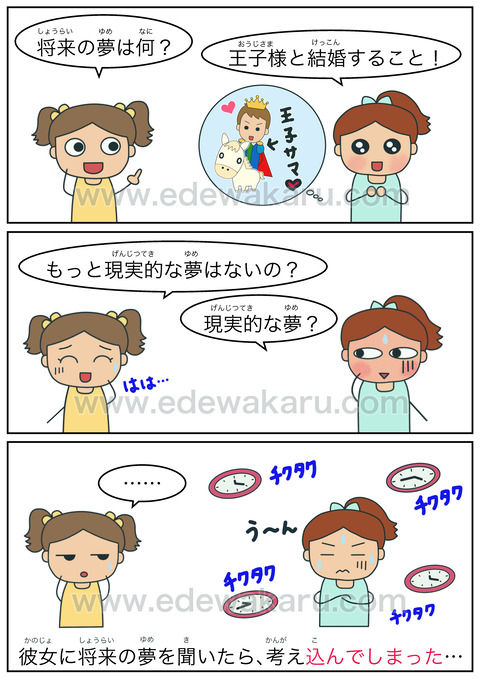
Meaning
do ~ for a long time
do ~ thoroughly
be absorbed in ~
become extremely ~
How to use it
Verb [ます-form] + 込む
Explanation
「A込む」 means “do A for a long time” or “do A thoroughly.” This pattern emphasizes that the degree of A is great. It is also used to mean “be absorbed in A” or “become extremely ~.” The verbs used with 「A」 are mostly fixed.
[Examples]
①When I asked her about her dreams for the future, she got lost in thought…
→When I asked her about her dreams for the future, she thought about it for a long time.
②I was so absorbed in talking with my friend that I missed the last train.
→I missed the last train because I was absorbed in talking with my friend.
③The longer you simmer curry, the tastier it gets~
→The longer you cook curry, the tastier it gets~
④It seems it’ll get very cold from tonight through tomorrow morning.
→Apparently, it’ll get very cold from tonight through tomorrow morning.
⑤It seems like we should buy plenty of food and things in advance.
→It seems like we should buy plenty of food and things in advance.
⑥Apparently, he got fired for using up company money.
→Apparently, he got fired for using a lot of company money.
「〜込む」 also has a use that expresses movement into the interior, so learn that as well. 😊
In context 6 examples
彼女に将来の夢を聞いたら、考え込んでしまった…
When I asked her about her dreams for the future, she got lost in thought…
友達と話し込んでいたら、終電がなくなってしまった
I was so absorbed in talking with my friend that I missed the last train.
カレーは煮込めば煮込むほどおいしくなるよ〜
The longer you simmer curry, the tastier it gets~
今夜から明日の朝にかけてすごく冷え込むそうよ
Apparently, it’ll get very cold from tonight through tomorrow morning.
娘:大きな台風が近づいているんだって!母:じゃあ、食べ物とかを買い込んでおいたほうがよさそうね
Daughter: I heard a big typhoon is approaching! Mother: Then it seems like we should buy plenty of food and things in advance.
彼は会社のお金を使い込んで首になったらしい
Apparently, he got fired for embezzling company money.
Read the original source text
Meaning
長い時間〜する
十分に〜する
〜に熱中する
すごく〜の状態になる
How to use it
動詞[ます形]+込む
Explanation
「A込む」は「長い時間Aする」「十分にAする」という意味の文型です。「A」の程度が深いということを強調する文型です。「Aに熱中する」「すごく〜の状態になる」という意味でも使われます。「A」に使われる動詞は、ほとんど決まっています。
[例]
①彼女に将来の夢を聞いたら、考え込ん
でしまった
…
→将来の夢を聞いたら、長い時間考えていた
②友達と話し
込んでいたら、終電がなくなってしまった
→友達と話しに熱中していたら、終電がなくなってしまった
③カレーは煮
込めば
煮
込む
ほどおいしくなるよ〜
→カレーは長い時煮れば煮るほどおいしくなるよ〜
④今夜から明日の朝にかけてすごく冷え
込む
そうよ
→今夜から明日の朝にかけて、すごく冷えるそうよ
⑤食べ物とかを買い
込んで
おいたほうがよさそうね
→食べ物とかを十分に買っておいたほうがよさそうね
⑥彼は会社のお金を使い
込んで
首になったらしい
→会社のお金をすごく使って首になったらしい
「〜込む」には[内部への移動]を表す用法もありますので、一緒に覚えておきましょう😊
日本語文型辞典
Meaning
Basic information: R-こむ. It forms transitive verbs meaning to put something inside something (examples ①–③), and intransitive verbs meaning to go inside something (examples ④–⑥). It is also used to form verbs meaning “thoroughly” or “fully” do something (examples ⑦–⑨).
Examples:
① Please write your name in here.
② I packed books into my bag and set off on my trip.
③ I helped load the luggage onto the truck.
④ The customer came into the house and hasn’t left for five hours.
⑤ Is it possible both to blend into Japanese society and not lose one’s own culture?
⑥ Don’t just come into someone else’s room without permission.
⑦ I was talking with a friend for so long that before I knew it, morning had come.
⑧ There are teachers who don’t understand the difference between teaching a monkey tricks and educating a child.
⑨ He sat down in the corner of the room and thought quietly.
Read the original source text
Meaning
基本情報R-こむ説明なにかの中にいれるという意味の他動詞を作ったり(用例①~③)なにかの中にはいる、という意味の自動詞を作ったりする(用例④~⑥)。また、「徹底的に/じゅうぶんに…する」という意味の動詞を作るのに用いる(用例⑦~⑨)。例文① ここに名前を書きこんでください。② かばんに本をつめこんで旅にでかけた。③ トラックに荷物を積みこむのを手伝った。④ その客は家にあがりこんで、もう5時間も帰らない。⑤ 日本の社会に溶け込むことと自分の文化を見うしなわないこととは両立するのだろうか。⑥ 人の部屋に勝手に入り込まないでくれ。⑦ 友達と話し込んでいたらいつのまにか朝になっていた。⑧ サルに芸を教え込むことと子供を教育することとの違いが分かっていない教師がいる。⑨ 部屋の片隅に座り込んで、じっと考え事をしている。
日本語NET JLPT文法解説まとめ
Meaning
① To do something for a long time
② Indicates movement into the interior.
How to use it
V (ます-form stem) + 込む
Explanation
① Engage in an activity for a long period of time.
② Indicates movement into the interior.
In context 11 examples
じっくり煮込んだスープは味がしっかりしていて美味しい。
Soup that has been simmered slowly has a rich flavor and is delicious.
トムさん、さっきからずっと考え込んでるよ。
Tom, you’ve been deep in thought for a while now.
今日は1時間走り込んだ。
I ran for a full hour today.
うっかり話し込んでしまった。
I got carried away talking.
息子は東京大学に合格するために勉強に打ち込んでいる。
My son is devoting himself to studying so he can get into the University of Tokyo.
店のオープンと同時に、セール品めがけて、たくさんの人が駆け込んだ。
As soon as the store opened, lots of people rushed in, making a beeline for the sale items.
ここに、カードを差し込んでください。
Please insert your card here.
悪さばかりするので、息子を押し入れにぶち込んだ。
Because he kept misbehaving, I shoved my son into the closet.
これはテストに必ず出るから、しっかり頭に叩き込んでおけよ。
This is sure to be on the test, so make sure you memorize it thoroughly.
薬は噛まずに飲み込んでください。
Please swallow the medicine without chewing it.
知らない男がいきなり家に上がり込んできた。
A man I didn’t know suddenly came barging into my house.
Read the original source text
Meaning
①長い時間〜する
②内部への移動を表す。
How to use it
V(ます形)ます + 込む
Explanation
① Engage in an activity for a long period of time.
② Indicates movement into the interior.
毎日のんびり日本語教師
How to use it
Verb ます-stem + 込む
Explanation
It indicates movement inward, a state reaching an extreme, or the (deep) continuation of an action.
① Movement inward; putting something inside
入れ込む, 詰め込む, 押し込む, はめ込む, 埋め込む, 挿し込む, 教え込む, 叩き込む, 投げ込む, etc.
② A state reaching an extreme
買い込む, 売り込む, 冷え込む, 炊き込む, 投げ込む, etc.
③ Doing something deeply; continuing in that state
考え込む, 眠り込む, 話し込む, etc.
The key point is the sense of “deeply.” For example, 「眠り込む」 means to fall into a deep sleep, while 「考え込む」 means to think something through more deeply.
Notes
「打ち込む」 means to be engrossed in something.
「叩き込む」 is stricter in tone than 「教え込む」.
In context 6 examples
どこか窓が開いているせいか、冷たい風が吹き込んできた。
Perhaps because a window was open somewhere, a cold wind blew in.
社会の矛盾や現体制の問題に鋭く切り込んでいくような政治家が必要だ。
We need politicians who will incisively tackle the contradictions in society and the problems with the current system.
突然の災害に備えて防災用品や非常食を買い込んでおくと安心だ。
It would be reassuring to stock up on emergency supplies and food in preparation for a sudden disaster.
USBを差し込む。(插上USB。)
Plug in the USB. (Insert the USB.)
深く考え込むのも重要だが、行動に移すことも重要だ。
It's important to think things through deeply, but it's also important to take action.
今日は200球投げ込んだ。
I threw 200 pitches today.
Read the original source text
How to use it
動ます形+込む
Explanation
内部への移動、状態が極まること、動作の(深い)継続を表します。
①内部への移動、中へ入れる
入れ込む、詰め込む、押し込む、はめ込む、埋め込む、挿し込む、教え込む、叩き込む、投げ込む等…
②状態が極まること
買い込む、売り込む、冷え込む、炊き込む、投げ込む等…
③深く~する、その状態をずっと続ける
考え込む、眠り込む、話し込む等…
「深く」というのがポイントです。例えば「眠り込む」なら深い眠りに落ちたことを意味しますし、「考え込む」ならより深いところまで考え巡らすという意味になります。
Notes
「打ち込む」は熱中するの意。
「叩き込む」は「教え込む」よりも厳しめ。