絵でわかる日本語
Meaning
Expresses a plan or intention.
How to use it
Verb [volitional form] + と思っている
Explanation
“〜ようと思っている” is a sentence pattern that expresses [intention] or [plans]. It is used to express something planned or considered for some time. When used in the form “〜ようと思っていますか,” it is used to ask about the other person’s intention.
There is also the form “〜ようと思う,” so learn them together 😉
In context 6 examples
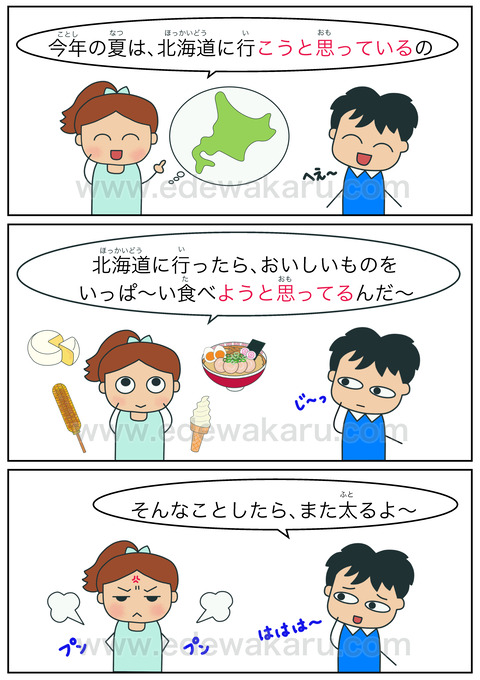
今年の夏休みは、北海道に旅行しようと思っているよ
→北海道に旅行する予定だよI’m planning to travel to Hokkaido during summer vacation this year. → I’m planning to travel to Hokkaido.
大学を卒業したら、アメリカに留学しようと思っています
→アメリカに留学する予定ですAfter I graduate from university, I’m planning to study abroad in America. → I’m planning to study abroad in America.
今の仕事をやめようと思っている
→仕事をやめる予定ですI’m planning to quit my current job. → I’m planning to quit my job.
先生:卒業したら、どうするつもりですか?学生:アメリカに帰り、日本語の先生になろうと思っています
Teacher: What are you planning to do after you graduate? Student: I’m planning to return to America and become a Japanese teacher.
将来、どんな仕事をしようと思っていますか?
What kind of job are you planning to do in the future?
A:彼女の誕生日プレゼントは何にするつもりなの?B:指輪をあげようと思っているよ〜
A: What are you planning to get your girlfriend for her birthday? B: I’m thinking of giving her a ring~
Read the original source text
Meaning
予定や意志を表す
How to use it
動詞[意向形]+と思っている
Explanation
「〜ようと思っている」は[意志]や[予定]を表す文型です。この文型は以前から計画していたことや、前から考えていた予定などを表す時に使われます。「〜ようと思っていますか」の形で使われる場合は、相手の意志を聞く場合に使用されます。
「〜ようと思う」という形もありますので、一緒に覚えておきましょう😉