AIUEO JLPT Grammar
Meaning
This sentence pattern expresses discomfort or distress caused by something unbearable, either mentally or physically. It is often used to complain or convey dissatisfaction, including mild grievances.
How to use it
Verb te form てはかなわない; adjective te form てはかなわない; adjectival noun ではかなわない; noun ではかなわない
In context 5 examples
毎日残業してはかなわないよ。
I can’t stand working overtime every day.
文句ばかり言われてはかなわない。
I can’t stand being complained to all the time.
こんなに騒がれてはかなわないです。
I can’t stand this much noise.
こんなに宿題が多くてはかないません。
I can't handle having so much homework.
商品が壊れていてはかないません。
It's no good if the product is broken.
Read the original source text
Meaning
This sentence pattern expresses discomfort or distress caused by something unbearable, either mentally or physically. It is often used to complain or convey dissatisfaction, including mild grievances.
How to use it
動詞て形ては+かなわない形容詞て形ては+かなわない形容動詞では+かなわない名詞では+かなわない
Explanation · 日本語
この文型は、何かが不快で、精神的・肉体的に耐えられない、あるいは困っていることを表す表現です。特に、話し手が強く不満を感じている場合や、繰り返される状況に対するストレスを訴えるときに使われます。軽い愚痴や文句を述べるときにも適しています。
Bunpro Grammar Reference
Meaning
It's unbearable when, It'd be unbearable if, I can't stand it when, I couldn’t stand it if
How to use it
Verb[られる][て̶]+ては(1)+かなわない
[い]Adjective[い̶]+くては(1)+かなわない
[な]Adjective+では(2)+かなわない
Noun+では(2)+かなわない
(1) ちゃ
(2)じゃ
Verb[られる][て̶]+ては(1)+かないません
[い]Adjective[い̶]+くては(1)+かないません
[な]Adjective+では(2)+かないません
Noun+では(2)+かないません
(1) ちゃ
(2)じゃ
Nuance
A somewhat old-fashioned grammar point, expressing that it is unbearable when (A). I cannot face it when (A).
Explanation
In order to convey that something is undesirable, the grammar structure てはかなわない may be used. This combines the conjunction particle て, the adverbial particle は, and the negative form of the う-Verb 叶う ‘to grant (a wish)’, or ‘to realize (a goal)’. This may be interpreted as ‘it’s unbearable when (A)’, or ‘I can’t stand it when (A)’. However, the literal translation is ‘it’s not a dream come true for (A)’.
When used following verbs, the (A) verb is often in the passive. This indicates that the speaker does not like being the target or victim of (A). However, standard verb structures may also be seen.
明日充電器を忘れてはかなわないから、今のうちに鞄に入れておこう。
It’d be unbearable if I forgot my charger tomorrow, so I am going to put it in my bag right now.
こう頭が痛くてはかなわない。
It’s unbearable when my head aches like this.
息子に竿を折られてはかなわないから、手が届かないところに置いておこう。
It’d be unbearable if my son breaks my fishing rod, so I am going to put it out of reach.
今繁忙期だしこんな時にやめられてはかなわない。
It’d be unbearable if they quit during peak season.
In addition to this, てはかなわない may follow the conjunctive form of い-Adjectives, or appear as ではかなわない when following な-Adjectives.
電車で隣に座っている人がくさくてはかなわない。
It is unbearable when the person sitting next to you on the train smells.
そうあやふやではかなわない。
It’s unbearable when you are vague like that.
Caution
Although many grammar structures frequently appear in hiragana, making their original kanji hard to identify, it will be important not to mix up 叶う ‘to grant’ with 敵う ‘to be a match for’. Grammatically, these verbs are both used quite differently.
漢字とくると彼女にはかなわない。
She is no match for me when it comes to kanji.
In context 13 examples
- こう寒くてはかなわない。
It's unbearable when it's cold like this.
- 明日充電器を忘れてはかなわないから、今のうちに鞄に入れておこう。
It’d be unbearable if I forgot my charger tomorrow, so I am going to put it in my bag right now.
- こう頭が痛くてはかなわない。
It’s unbearable when my head aches like this.
- 息子に竿を折られてはかなわないから、手が届かないところに置いておこう。
It’d be unbearable if my son breaks my fishing rod, so I am going to put it out of reach.
- 今繁忙期だしこんな時にやめられてはかなわない。
It’d be unbearable if they quit during peak season.
- 電車で隣に座っている人がくさくてはかなわない。
It is unbearable when the person sitting next to you on the train smells.
- そうあやふやではかなわない。
It’s unbearable when you are vague like that.
- 雨に降られてはかなわない。
I can't stand getting rained on.
- 上の部屋の人がうるさくてはかなわない。
It's unbearable when the people upstairs are noisy.
- 話をしている時、非常識なひとに邪魔されてはかなわない。
It's unbearable when I am interrupted by a thoughtless person when I am speaking.
- 毎日こんなに蒸し暑くてはかなわない。
It's unbearable when it is so humid every day like this.
- 毎日勉強させられてばかりではかなわない。
It's unbearable when I am just studying every single day.
- 漢字とくると彼女にはかなわない。
She is no match for me when it comes to kanji.
どんなときどう使う 日本語表現文型辞典
Usage 1
Meaning
doesn't like; be vexed; be more than one can bear
How to use it
Vては/い-adjectiveくては/な-adjectiveでは/Nでは+かなわない
Explanation
~のはいやだ、困る
1)現時点での苦情、不満を言うときの表現。「こう・こんなに」などの言葉といっしょに現時点での状態を言うことが多い。その状態を「ては・では」で受けて、それは困るという意味の「かなわない」をつけた言い方。
2) ❹ ❺ のようにくだけた会話では「ては」は「ちゃ」、「では」は「じゃ」となる。
1)Complaint of current grievances and disappointments. Often used with こう or こんなに to describe present situation. The meaning of "distressing" of かなわないis appended using ては、ではfor situation.
2)In informal speech ては becomes ちゃ, and では becomes じゃ, as in sentences ❹ and ❺ .
In context 5 examples
課長にこう毎晩のように飲みに誘われてはかなわない。
I can’t stand being invited out for drinks by the section chief almost every night like this.
辛い料理はきらいではないけど、こんなに辛くてはかなわない。
I don’t dislike spicy food, but this is unbearably spicy.
説明書がこんなに複雑ではかなわない。もっと易しい説明書はないかな。
This instruction manual is so complicated it’s unbearable. I wonder if there’s an easier one.
毎日こう暑くちゃかなわないね。
It’s unbearable having it this hot every day.
毎日残業ばかりじゃかないませんよ。たまには早く帰りたいですよ。
I can’t keep working overtime every day. I’d like to go home early once in a while.
Read the original source text
Meaning
doesn't like; be vexed; be more than one can bear
How to use it
Vては/イAいくては/ナAでは/Nでは+かなわない
Explanation
~のはいやだ、困る
1)現時点での苦情、不満を言うときの表現。「こう・こんなに」などの言葉といっしょに現時点での状態を言うことが多い。その状態を「ては・では」で受けて、それは困るという意味の「かなわない」をつけた言い方。
2) ❹ ❺ のようにくだけた会話では「ては」は「ちゃ」、「では」は「じゃ」となる。
1)Complaint of current grievances and disappointments. Often used with こう or こんなに to describe present situation. The meaning of "distressing" of かなわないis appended using ては、ではfor situation.
2)In informal speech ては becomes ちゃ, and では becomes じゃ, as in sentences ❹ and ❺ .
Usage 2
Meaning
doesn't like; be vexed; be more than one can bear
How to use it
Vては/い-adjectiveくては/な-adjectiveでは/Nでは+かなわない
Explanation
てはかなわない
~のはいやだ、困る
1)現時点での苦情、不満を言うときの表現。「こう・こんなに」などの言葉といっしょに現時点での状態を言うことが多い。その状態を「ては・では」で受けて、それは困るという意味の「かなわない」をつけた言い方。
2) ❹ ❺ のようにくだけた会話では「ては」は「ちゃ」、「では」は「じゃ」となる。
1)Complaint of current grievances and disappointments. Often used with こう or こんなに to describe present situation. The meaning of "distressing" of かなわないis appended using ては、ではfor situation.
2)In informal speech ては becomes ちゃ, and では becomes じゃ, as in sentences ❹ and ❺ .てはかなわない
In context 5 examples
課長にこう毎晩のように飲みに誘われてはかなわない。
I can’t stand being invited out for drinks by the section chief almost every night like this.
辛い料理はきらいではないけど、こんなに辛くてはかなわない。
I don’t dislike spicy food, but this is unbearably spicy.
説明書がこんなに複雑ではかなわない。もっと易しい説明書はないかな。
This instruction manual is so complicated it’s unbearable. I wonder if there’s an easier one.
毎日こう暑くちゃかなわないね。
It’s unbearable having it this hot every day.
毎日残業ばかりじゃかないませんよ。たまには早く帰りたいですよ。
I can’t keep working overtime every day. I’d like to go home early once in a while.
Read the original source text
Meaning
doesn't like; be vexed; be more than one can bear
How to use it
Vては/イAいくては/ナAでは/Nでは+かなわない
Explanation
てはかなわない
~のはいやだ、困る
1)現時点での苦情、不満を言うときの表現。「こう・こんなに」などの言葉といっしょに現時点での状態を言うことが多い。その状態を「ては・では」で受けて、それは困るという意味の「かなわない」をつけた言い方。
2) ❹ ❺ のようにくだけた会話では「ては」は「ちゃ」、「では」は「じゃ」となる。
1)Complaint of current grievances and disappointments. Often used with こう or こんなに to describe present situation. The meaning of "distressing" of かなわないis appended using ては、ではfor situation.
2)In informal speech ては becomes ちゃ, and では becomes じゃ, as in sentences ❹ and ❺ .てはかなわない
絵でわかる日本語
Meaning
It would be a problem if ~.
I don’t want ~ to happen.
How to use it
Verb [て-form] + てはかなわない
い-adjective [ーく] + てはかなわない
な-adjective [ーで] + はかなわない
Explanation
“〜てはかなわない” is a sentence pattern meaning “It would be a problem if ~” or “I don’t want ~ to happen.” It is often used with the [passive form], and in the form “〜てはかなわないので〜,” it means “because it would be a problem if ~.”
The colloquial forms of “〜ては” and “〜では” in “〜てはかなわない” are “〜ちゃ” and “〜じゃ.”
[Example]
ケンカをされ
てはかなわない
→ケンカをされ
ちゃかなわない
A similar pattern is “〜てかなわない.” Be sure to learn how to distinguish them.
In context 5 examples
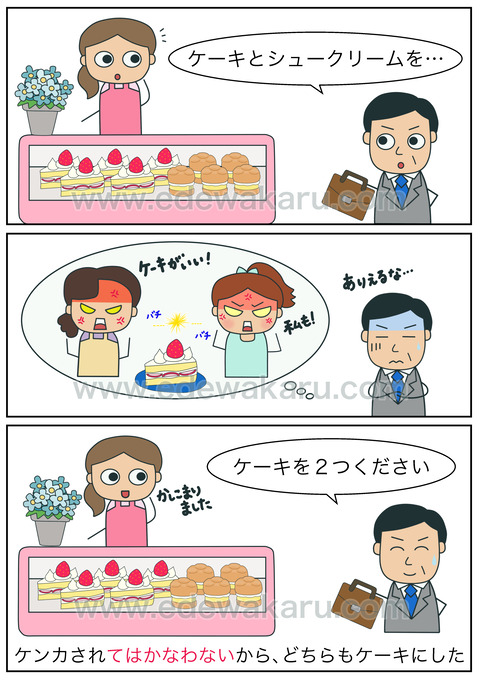
ケンカをされてはかなわないから、どちらもケーキにした
→ケンカをされては困るから、どちらもケーキにしたI chose cake for both of them because it would be a problem if they got into a fight. →I chose cake for both of them because it would be a problem if they got into a fight.
試験に遅れてはかなわないので、今日は早く寝よう
→試験に遅れては困るので、今日は早く寝ようI’d better go to bed early today, because it would be a problem if I were late for the exam. →I’d better go to bed early today, because it would be a problem if I were late for the exam.
忙しいからといって、毎日残業させられてはかなわない
→毎日残業させられては困るEven if you’re busy, it’s a problem to be made to work overtime every day. →It’s a problem to be made to work overtime every day.
高いグラスを割られてはかなわないから、しまっておこう
→割られたら困るので、しまっておこうI’d better put away the expensive glasses, because it would be a problem if they were broken. →I’d better put them away, because it would be a problem if they were broken.
A:うちのお母さんは何かにつけて文句を言ってくるの!B:そっか…お母さんは心配してくれてるんだと思うよA:うん。でも毎日文句ばかり言われてはかなわないよ…
→毎日文句ばかり言われたら嫌になるよ…A: My mom complains about everything! B: I see… I think your mom is worried about you. A: Yeah. But I can’t stand being complained at every day… →I’d hate being complained at every day…
Read the original source text
Meaning
〜ては困る
〜ては嫌だ
How to use it
動詞[て形]+てはかなわない
い形容詞[ーく]+てはかなわない
な形容詞[ーで]+はかなわない
Explanation
「〜てはかなわない」は「〜ては困る」「〜ては嫌だ」という意味の文型です。よく[受身形]と一緒に使われ、
「〜てはかなわないので〜」の形で「〜ては困るから〜」という意味になります。
また「〜てはかなわない」の「〜ては」「〜では」の口語形は「〜ちゃ」「〜じゃ」になります。
[例]
ケンカをされ
てはかなわない
→ケンカをされ
ちゃかなわない
類似文型(るいじぶんけい)に
「〜てかなわない」
があります。区別をして覚えておきましょう。
くらべてわかる日本語表現文型辞典
Meaning
The speaker cannot accept, cannot come to terms with, or is troubled by an unpleasant, unbearable state A befalling them.
How to use it
Aてはかなわない
[Verb—て-form] はかなわない
Explanation
[Contrast 1]
“Aてはたまらない”
The meaning is the same. They can be substituted for each other.
In context 4 examples
一生懸命貯めた金を募金したんだから、無駄に使われてはかなわない。
I donated money I had saved with great effort, so I can’t have it used wastefully.
食中毒になってはかなわないので、よく消費期限を見て買っている。
I check the expiration date carefully before buying, because I can’t afford to get food poisoning.
車内マナーの悪い人に注意して、逆に暴力を振るわれてはかなわないと、黙って見過ごす人は多いだろう。
Many people probably say nothing and let it pass when they see someone with bad manners in a car, because they can’t bear to warn them and then be assaulted in return.
留守中に泥棒に入られてはかなわないからカギを二つもつけた。
I put on two locks because I can’t have burglars break in while I’m away.
Read the original source text
Meaning
Aという嫌な、耐えがたい状態が話し手に降りかかることが許せない、納得できない、困る。
How to use it
Aてはかなわない
[動詞-て形]はかなわない
Explanation
【対比1】
「Aてはたまらない」
意味は同じ。置き換え可能。
毎日のんびり日本語教師
How to use it
Verb て-form + (は)かなわない
い-adjective stem + くて(は)かなわない
な-adjective stem + で(は)かなわない
Noun + で(は)かなわない
Explanation
Emphasizes the speaker’s subjective feeling that something is unbearable or intolerable.
「やりきれない」 can also be used on its own, as in example (8).
When words such as 「こんなに」 (“this”) appear with it, 「は」 is often required, as in 「~ては敵わない/ては遣り切れない」 (“it’s unbearable when ~”).
It originally comes from the verb 「(に)適う/敵わない」. It means to have or lack the strength to contend with something. See examples (9) and (10).
Notes
Nothing in particular.
In context 10 examples
歯が痛くてかなわない。(牙疼的受不了。)
My tooth hurts so much I can’t stand it. (My tooth hurts unbearably.)
彼と一緒にいると気まずいし、会話が続かなくてかなわない。
It’s awkward being with him, and I can’t stand how the conversation doesn’t flow.
ダイエットしたいが、毎晩断食ではかなわない。
I want to lose weight, but I can’t keep fasting every night.
近隣に住む若者がうるさくて敵わない。(住在附近的年轻人吵得让人受不了。)
The young people living nearby are so noisy I can’t stand it. (The young people living nearby are unbearably noisy.)
こんなに寒くては敵わない。
I can’t stand weather this cold.
毎日残業続きではやりきれない。(每天加班可真受不了。)
I can’t take working overtime every day. (Working overtime every day is unbearable.)
悲しくてやりきれない。(悲伤得受不了。)
I’m so sad I can hardly bear it. (I’m unbearably sad.)
このやりきれない気持ちを誰かに伝えたい。
I want to tell someone about this unbearable feeling.
誰も君の可愛さには敵わないよ。
No one can match your cuteness.
あいつには敵わない。
I can’t compete with that guy.
Read the original source text
How to use it
動て形+(は)かなわない
イ形語幹+くて(は)かなわない
ナ形語幹+で(は)かなわない
名詞+で(は)かなわない
Explanation
我慢できない、耐えられないという主観的な感情を強調します。
「やりきれない」は例文(8)のように単独でも用いることができます。
「こんなに」等の語が呼応すると、「~ては敵わない/ては遣り切れない」のように「は」が必要になる場合が多いです。
元々は動詞「(に)適う/敵わない」です。対抗する力がある/ないといいう意味を持ちます。例文(9)(10)。
Notes
特になし