絵でわかる日本語
Usage 1
Read this source entry ↗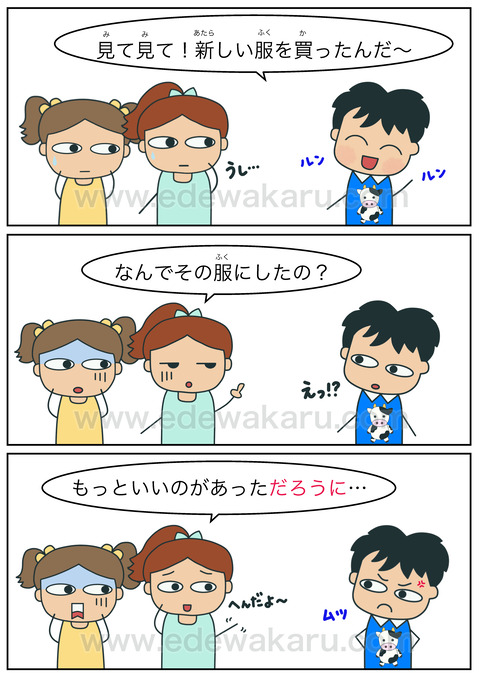
Meaning
Surely 〜, though.
Probably 〜, though.
How to use it
Verb, adjective, or noun [plain form] + だろうに
Explanation
“〜だろうに” is a pattern meaning “surely 〜, though” or “probably 〜, though.” In many cases, it is used to express the speaker’s [sympathy] or [criticism], but it can also be used to express [surprise] or [gratitude and admiration], among other feelings.
[Examples]
① There were surely better clothes available, so why did you choose that?
→There must have been better clothes, so why did you choose that?
[Criticism]
② She probably wanted to be angry, but she forgave him when he apologized.
→She probably wanted to be angry, but she forgave him when he apologized.
[Surprise]
③ My husband must be tired from work, yet he always helps with the housework.
→He must be tired from work, but he always helps out.
[Gratitude and admiration]
④ To think he did all this work alone! It must have been hard…
→It must have been hard, and yet he did all this work alone!
[Sympathy]
⑤ It must have been cold, and yet they walked all the way here—10 kilometers…
→They must have been cold, but to think they walked 10 kilometers…
[Sympathy]
“〜だろうに” also has a use meaning “regret that something did not actually happen,” so let’s learn that as well 😉
[Grammar patterns with “だろう”]
In context 5 examples
もっといい服があっただろうに、なんでそれにしたの?
There must have been better clothes, so why did you choose that?
本当は怒りたかっただろうに、謝ったら許してくれた
She probably wanted to be angry, but she forgave him when he apologized.
A:うちの主人は仕事で疲れているだろうに、いつも家事を手伝ってくれるのB:まあ、いいわね〜
A: My husband must be tired from work, yet he always helps with the housework. B: Oh, that’s nice.
一人でこれだけの仕事をしたとは!大変だっただろうに…
To think he did all this work alone! It must have been hard…
寒かっただろうに、10キロも歩いてきたなんて…
It must have been cold, and yet they walked all the way here—10 kilometers…
Read the original source text
Meaning
きっと〜のに
たぶん〜のに
How to use it
動詞・形容詞・名詞[普通形]+だろうに
Explanation
「〜だろうに」は「きっと〜のに」「たぶん〜のに」という意味の文型です。多くの場合、話し手の
[同情]
や
[批判]
を表す場合に使われますが、
[驚き]
や
[感激]
などに使用されることもあります。
[例]
①もっといい服があった
だろうに、なんでそれにしたの?
→きっと、もっといい服があったのに、なんでそれにしたの?
【批判】
②本当は怒りたかった
だろうに、謝ったら許してくれた
→たぶん怒りたかったのに、謝ったら許してくれた
【驚き】
③うちの主人は仕事で疲れている
だろうに、いつも家事を手伝ってくれるの
→きっと仕事で疲れているのに、いつも手伝ってくれる
【感激】
④一人でこれだけの仕事をしたとは!大変だった
だろうに
…
→きっと大変だったと思うが、一人でこれだけの仕事をしたとは!
【同情】
⑤寒かった
だろうに、10キロも歩いてきたなんて…
→きっと寒かったと思われるが、10キロも歩いてきたなんて…
【同情】
「〜だろうに」には「実際には起こらなかったことを残念に思う」という意味の用法もありますので、一緒に覚えておきましょう😉
【「だろう」がつく文型】
Usage 2
Read this source entry ↗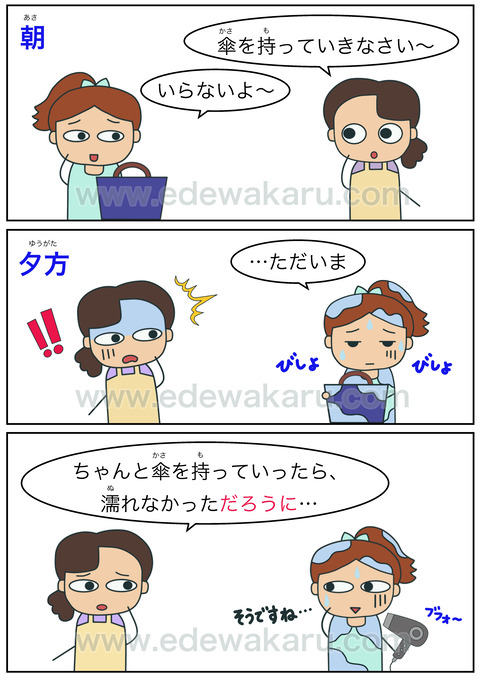
Meaning
If someone had done 〜, 〜 would have happened.
If someone had not done 〜, 〜 would have happened.
How to use it
Verb [plain form] + だろうに
Explanation
“〜だろうに” is a pattern meaning “If someone had done 〜, 〜 would have happened” or “If someone had not done 〜, 〜 would have happened.” It emphasizes regret about something that did not actually happen, expressing that it would have been better to do something but it was not done, or that someone should have done something but did not.
“〜だろうに” also has a use that expresses [sympathy or criticism], so let’s learn that as well 😉
[Grammar patterns with “だろう”]
In context 4 examples
ちゃんと傘を持っていったら、濡れなかっただろうに…
→傘を持っていったら、濡れなかったのに…If you had taken an umbrella with you, you wouldn’t have gotten wet… →If you had taken an umbrella, you wouldn’t have gotten wet…
もう少し早く家を出ていたら、遅刻せずにすんだだろうに
→もう少し早く家を出ていたら、遅刻しないですんだのにIf you had left home a little earlier, you would have avoided being late. →If you had left home a little earlier, you wouldn’t have been late.
A:なんでこんな簡単な問題を間違えたの?B:残り時間が5分しかなくて、ちゃんと読んでなかったのA:落ち着いて読んでいたら、間違えなかっただろうに
→落ち着いて読んでいたら、間違えなかったのにA: Why did you get such an easy question wrong? B: There were only five minutes left, so I didn’t read it carefully. A: If you’d read it calmly, you wouldn’t have gotten it wrong. →If you’d read it calmly, you wouldn’t have gotten it wrong.
妻:あんな言い方をしたら、あの子が泣くに決まってるでしょ!夫:…すまん妻:もっとやさしい言い方があっただろうに
→もっとやさしい言い方をしたら、あの子は泣かなかったと思うわよWife: If you talk to that child like that, of course they’ll cry! Husband: …Sorry. Wife: You could have said it more kindly. →If you’d said it more kindly, I don’t think the child would have cried.
Read the original source text
Meaning
〜したら、〜だったのに
〜しなかったら、〜だったのに
How to use it
動詞[普通形]+だろうに
Explanation
「〜だろうに」は「〜したら、〜だったのに」「〜しなかったら、〜だったのに」 という意味の文型です。実際には起こらなかったことに対して「〜したほうがよかったのに、〜しなかった」「〜するべきだったのに、〜しなかった」というように、残念に思う気持ちを強調します。
「〜だろうに」には[同情・批判]を表す用法もありますので、一緒に覚えておきましょう😉
【「だろう」がつく文型】
毎日のんびり日本語教師
How to use it
Sentence plain form + だろうに
Explanation
There are two meanings.
① It expresses the speaker’s sympathy toward another person’s actions or circumstances.
The following clause gives an evaluation of them, but it can be omitted.
② It expresses regret that something one should have done was left undone, or about something that did not actually happen (a hypothetical contrary to fact).
The following clause can be omitted.
Notes
Nothing in particular.
In context 12 examples
時間なんてたくさんあるだろうに、有効に使わない人こそ少ないと嘆く。
They have so much time, and yet I lament that so few people make good use of it.
こんなことをされたら周りが可哀想だろうに。
If this were done to them, the people around them would feel sorry for them.
子育てで疲れているだろうに、妻は家事も頑張ってくれている。
My wife must be exhausted from raising the children, and yet she still works hard at the housework.
リスクはあるだろうに、なぜ続けているのか話を聞いてみたい。
There must be risks, and yet I’d like to hear why they’re continuing.
このお見合い写真はひどすぎる。もっと別の写真があっただろうに。
This matchmaking photo is awful. There must have been a better one.
体臭改善にはお風呂とは言わずとも、シャワーを浴びるだけでも違うだろうに。
For improving body odor, even if you don’t take a bath, just taking a shower would make a difference.
2人以上で尾行していれば彼を見失うことはなかっただろうに。
If two or more people had been following him, they wouldn’t have lost sight of him.
悪意があって発言したわけではなかっただろうに、言葉尻を捕まえられて可哀想だ。
He probably didn’t speak with malicious intent, and yet it’s sad that his words were seized upon.
うまくやればバレなかっただろうに、ついぼろが出てしまったみたいだ。
If they’d handled it well, it probably wouldn’t have been found out, but it seems they let something slip.
この問題ちゃんと読めば解けただろうに、急いでいたからかミスしてしまった。
I could have solved this problem if I’d read it properly, but maybe because I was in a hurry, I made a mistake.
謝るにも言い方ってものがあるだろうに。
There’s a way to apologize, you know.
彼に出会わなければ、私はもっとまともな人生を歩めただろうに。
If I hadn’t met him, I could have lived a more decent life.
Read the original source text
How to use it
文の普通形+だろうに
Explanation
意味は2つあります。
①他人の行為や境遇に対する話し手の同情を表します。
後項ではそれに対する評価が述べられますが、省略することができます。
②やるべきことをしなかったことや、実際に起きなかったこと(事実に反する仮想)に対する残念な気持ちを表します。
後項は省略することができます。
Notes
特になし
NINJAL 日本語文型データベース
Meaning
This expresses feelings about something that one expected to happen but that did not actually happen.
It can also be used as “〜だろうに。” without a following sentence.
How to use it
V plain form + だろうに
i-A plain form + だろうに
na-A plain form + だろうに (however, “na-Aだ” becomes “na-Aだろうに”)
N plain form + だろうに (however, “Nだ” becomes “Nだろうに”)
Notes
“〜” conveys the speaker’s conjecture, sympathy, or criticism.
In context 16 examples
ちゃんと説明書を読めばわかるだろうに、山田さんはまた作り方を間違えてしまった。
Yamada could have figured it out by reading the instructions carefully, but he got the method wrong again.
課長は普段そんなひどいことを言わないだろうに、残業続きで機嫌が悪かったせいか、部下を泣かせてしまった。
The section chief normally wouldn’t say something so awful, but perhaps because he was in a bad mood after working overtime so many days in a row, he made one of his subordinates cry.
店長「田中さん、レポートで疲れていただろうに、今日のバイトも遅くまでお疲れ様でした。」
Manager: “Tanaka, you must have been tired from working on your report, but thank you for staying late for your part-time shift today too.”
山本さんは身内に不幸があって落ち込んでいただろうに、それでも笑顔で仕事をしていた。
Yamamoto must have been depressed after a death in the family, but still worked with a smile.
朝起きるのはつらいだろうに、和子さんは朝のバイトに遅刻したことがない。
Getting up in the morning must be hard, but Kazuko has never been late for her morning part-time job.
あの店はいつもなら平日は忙しくないだろうに、金曜日の今日はお客さんでいっぱいだ。
That shop usually wouldn’t be busy on weekdays, but today, Friday, it’s packed with customers.
外は寒かっただろうに、よくお越しくださいました。
It must have been cold outside, but thank you for coming all this way.
あの野球チーム、今季の試合は、負けてばかりだ。昨年はここまで弱くなかっただろうに。
That baseball team keeps losing this season. They weren’t this weak last year, surely.
井上さんはお子さんが何人もいて子育てが大変だろうに、休まずに働いている。
Inoue must have a hard time raising several children, but she works without taking a day off.
課長は、自分の仕事も多く暇じゃないだろうに、部下のことをいつも気にかけてくれる。
The section chief has a lot of his own work and must not have much free time, but he always looks out for his subordinates.
中村さんは、若いころは裕福じゃなかっただろうに、よく貯金して起業しようと思ったものだ。
Nakamura probably wasn’t well off when he was young, but somehow he managed to save money and decided to start a business.
森さん、手先が器用じゃなかっただろうに、木工教室で習って、小さい棚を完成させたそうだ。
Mori probably wasn’t very handy, but she learned at a woodworking class and completed a small shelf.
明日は雨だろうに、子どもたちは予定通りサイクリングに行くと言ってはりきって準備をしている。
It’ll probably rain tomorrow, but the children are excitedly getting ready, saying they’ll go cycling as planned.
飯塚さんは担当じゃないだろうに、お客様の質問に真摯に対応していた。
Iizuka probably isn’t the person in charge, but he responded sincerely to the customer’s question.
田中選手が抜けたのが痛手だっただろうに、どうにかチームは優勝した。
Losing player Tanaka must have been a blow, but somehow the team won the championship.
吉田選手は体調が万全ではなかっただろうに、よく試合に出たものだ。
Yoshida probably wasn’t in perfect health, but he still managed to play in the match.
Read the original source text
Meaning
そうなるように考えていたのに、実際には起こらなかったことへの気持ちを表します。
後の文のない「〜だろうに。」の形で使うこともあります。
How to use it
V普通形+だろうに
i-A普通形+だろうに
na-A普通形+だろうに(だたし、「na-Aだ」→「na-Aだろうに」)
N普通形+だろうに(だたし、「Nだ」→「Nだろうに」)
Notes
「~」には話し手の推量や同情や批判の気持ちが入ります。