AIUEO JLPT Grammar
Meaning
「〜がする」is used to express sensations such as sounds, smells, tastes, or subjective feelings and inferences.
How to use it
Noun + が + する
In context 5 examples
台所からいい匂いがする。
A nice smell is coming from the kitchen.
コンピュータから変な音がする。
The computer is making a strange noise.
今日は雨が降る気がします。
I have a feeling it will rain today.
悪いことを言った気がしました。
I felt like I said something wrong.
今日はいいことが起こりそうな気がする。
I have a feeling something good will happen today.
Read the original source text
Meaning
「〜がする」is used to express sensations such as sounds, smells, tastes, or subjective feelings and inferences.
How to use it
名詞が+する
Explanation · 日本語
「〜がする」は、音や匂い、味などの感覚を表したり、主観的な感じや推測を表したりするときに使われる表現です。
Bunpro Grammar Reference
Meaning
To give off, Smell, Sound, Taste, Sensation
How to use it
Noun + が + する
Noun + が + します
Nuance
An expression used to highlight that something is causing a specific sensory experience, or that that sense is going.
Explanation
In Japanese, describing things that can be experienced with the senses (excluding visual), is a little bit different to the way that we would convey it in English. Traditionally, we would use unique verbs for each of these situations, such as 'smells like (A)', 'tastes like (A)', 'feels like (A)', etc. While this is still possible in Japanese, it is not the most common way.
がする is a grammar construction that focuses on the source of the smell, sound, taste, or feeling, and makes the sensory experience itself the subject of the sentence. To use がする, simply attach it to the end of any phrase that expresses which type of 'sense' is being created/given off by the subject.
この石鹸はバラの匂いがするから好きです。
I like this soap because it smells like roses. (Literally, 'it gives off a rose smell')
誰かが階段を上がっている音がする。
I hear someone coming up the stairs. (Literally, 'the sound of someone coming up the stairs is being made')
このバナナが変な味がする。
This banana tastes weird. (Literally, 'it gives off a strange flavor')
誰かに見られている感じがする。
It feels like I'm being watched by someone. (Literally, 'the feeling of being watched is happening')
Fun Fact
Japanese often uses 気 'energy', 'spirit', as something that can be perceived with the senses. Due to this, there are many phrases which use ~気がする in the same way as this grammar point.
ヤバい、鍵をかけるのを忘れた気がする。
Shoot, I feel like I forgot to lock my door. (Literally, 'my attention is being drawn to that I may have forgotten to lock the door')
なんか忘れた気がする。
I feel like I forgot something. (Literally, 'my attention is being drawn to that something was forgotten')
In context 18 examples
- 車の音がする。
A car is making a sound.
- 誰かに見られている感じがする。
It feels like I'm being watched by someone. (Literally, 'the feeling of being watched is happening')
- 誰かが階段を上がっている音がする。
I hear someone coming up the stairs. (Literally, 'the sound of someone coming up the stairs is being made')
- この石鹸はバラの匂いがするから好きです。
I like this soap because it smells like roses. (Literally, 'it gives off a rose smell')
- このバナナが変な味がする。
This banana tastes weird. (Literally, 'it gives off a strange flavor')
- この部屋はコーヒーの匂いがします。
This room is giving off a coffee smell.
- この料理は塩の味がします。
This food gives off a salty taste.
- 変な味がするのでこれを捨てます。
This gives off an odd flavor, so I will throw it away.
- お砂糖を入れ過ぎたから、甘い味がする。
I put too much sugar in, so it gives off a sweet taste.
- 風が吹いて、いい匂いがした。
As the wind blew, it made a good smell.
- 誰かがギターを弾いている音がする。
The sound of someone playing the guitar can be heard. (Literally 'the sound is being made')
- お母さんが料理しているでしょう。いい匂いがします。
Mom is cooking, right? It's making a nice smell.
- このコーヒーは苦い味がするから、お砂糖を入れてください。
Because this coffee gives off a bitter taste, please use sugar.
- この食べ物は嫌な味がするので、犬にあげましょう。
Since this food gives off an unpleasant taste, let's give it to the dog.
- あの人と一緒に居るだけで、変な感じがする。
Just being with him gives off a weird feeling.
- 爆発音がしたから、テーブルの下に隠れた。
Because the sound of an explosion rang out, I hid under the table.
- ヤバい、鍵をかけるのを忘れた気がする。
Shoot, I feel like I forgot to lock my door. (Literally, 'my attention is being drawn to that I may have forgotten to lock the door')
- なんか忘れた気がする。
I feel like I forgot something. (Literally, 'my attention is being drawn to that something was forgotten')
Read the original source text
Meaning
To give off, Smell, Sound, Taste, Sensation
How to use it
Noun + が + する
Noun + が + します
Nuance
An expression used to highlight that something is causing a specific sensory experience, or that that sense is going.
Explanation
In Japanese, describing things that can be experienced with the senses (excluding visual), is a little bit different to the way that we would convey it in English. Traditionally, we would use unique verbs for each of these situations, such as 'smells like (A)', 'tastes like (A)', 'feels like (A)', etc. While this is still possible in Japanese, it is not the most common way.
がする is a grammar construction that focuses on the source of the smell, sound, taste, or feeling, and makes the sensory experience itself the subject of the sentence. To use がする, simply attach it to the end of any phrase that expresses which type of 'sense' is being created/given off by the subject.
この石鹸はバラの匂いがするから好きです。
I like this soap because it smells like roses. (Literally, 'it gives off a rose smell')
誰かが階段を上がっている音がする。
I hear someone coming up the stairs. (Literally, 'the sound of someone coming up the stairs is being made')
このバナナが変な味がする。
This banana tastes weird. (Literally, 'it gives off a strange flavor')
誰かに見られている感じがする。
It feels like I'm being watched by someone. (Literally, 'the feeling of being watched is happening')
Fun Fact
Japanese often uses 気 'energy', 'spirit', as something that can be perceived with the senses. Due to this, there are many phrases which use ~気がする in the same way as this grammar point.
ヤバい、鍵をかけるのを忘れた気がする。
Shoot, I feel like I forgot to lock my door. (Literally, 'my attention is being drawn to that I may have forgotten to lock the door')
なんか忘れた気がする。
I feel like I forgot something. (Literally, 'my attention is being drawn to that something was forgotten')
Nuance · 日本語
何かが特定の感覚を引き起こしている、又はその感覚が続いていることを表す表現。
どんなときどう使う 日本語表現文型辞典
Meaning
feel; hear; smell; taste
How to use it
Nが+する
Explanation
音・声・味・におい・香り・感じなどの感覚を表したいときの言い方。
Senses of sound, voice, taste, smell, or feeling.
In context 5 examples
どこかでねこの鳴き声がします。
I can hear a cat meowing somewhere.
いいにおいがしますね。きょうのご飯は何ですか。
Something smells good. What's for dinner today?
となりの部屋で変な音がします。どうしたのでしょう。
I can hear a strange sound in the next room. I wonder what happened.
このお菓子、紅茶の味がしますね。
This snack tastes like black tea, doesn't it?
星を見ていると、なんだか夢のような感じがします。
When I look at the stars, it somehow feels like a dream.
Read the original source text
Meaning
feel; hear; smell; taste
How to use it
Nが+する
Explanation
音・声・味・におい・香り・感じなどの感覚を表したいときの言い方。
Senses of sound, voice, taste, smell, or feeling.
絵でわかる日本語
Meaning
to sense ~
How to use it
Noun [dictionary form] + がする
Explanation
“〜がする” means “to sense ~” and is used to describe things perceived through the five senses.
Nouns used with it include “taste,” “smell,” “voice,” “sound,” “feeling,” and “air/feeling,” among others. 😊
[For intermediate to advanced learners]
Remember that it can also be used with words such as “寒気” (chills) and “吐き気” (nausea), in addition to the five senses. 😌
[Usage]
I have chills.
…Maybe I’ve caught a cold. (Review: 〜かな・〜かしら)
I drank a little too much…
I feel nauseous.
This expression is used very frequently in conversation, so be sure to learn it well 😀
In context 3 examples
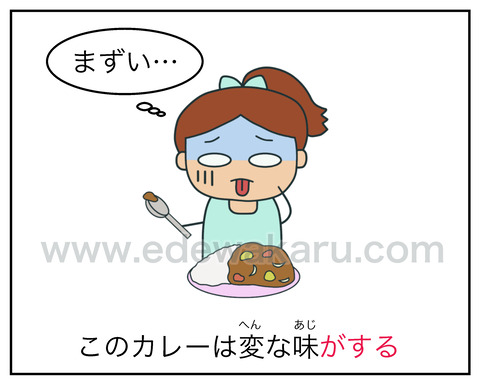
このカレーは変な味(復習:「味」と「におい」)がする
→このカレーは変な味だと感じるThis curry has a strange taste. → I sense that this curry has a strange taste. (Review: “味” and “におい”)
雨が降っている音がする
→雨が降っている音が聞こえるI can hear the sound of rain falling. → The sound of rain falling is audible.
パン屋さんの前を通るといいにおい(復習:「味」と「におい」)がする
→パン屋さんのまえを通るといいにおいだと感じるWhen I pass in front of a bakery, there’s a nice smell. → When I pass in front of a bakery, I sense a nice smell. (Review: “味” and “におい”)
Read the original source text
Meaning
〜を感じる
How to use it
名詞[辞書形]+がする
Explanation
「〜がする」は「〜を感じる」という意味で、五感で感じるものを表す場合に使われます。
使う名詞は
「味」「におい」「声」「音」「〜感じ」「〜気」
などが使われます😊
【中級〜上級レベルの人へ】
五感のほかに、
「寒気」「吐き気」
などにも使えると覚えておいてください😌
[使い方]
寒気がする
…カゼをひいたかな(復習:〜かな・〜かしら)
ちょっと飲みすぎた…
吐き気がする
会話でとてもよく使う表現ですので、しっかりと覚えておきましょう😀
日本語NET JLPT文法解説まとめ
Meaning
A way of speaking used when expressing sensations such as sounds, voices, tastes, smells, fragrances, and impressions.
How to use it
N + がします
Explanation
"can hear / see / smell etc (noun)."
Used to express the notion that the speaker can perceive a sound, voice, taste, smell, fragrance or feeling.
In context 9 examples
どこかでいい匂いがしますね。
There’s a nice smell coming from somewhere, isn’t there?
キッチンから、カレーの匂いがしてきます。
I can smell curry coming from the kitchen.
ジェシーさんの髪からシャンプーのいい匂いがします。
Jesse’s hair smells nice, like shampoo.
隣の部屋から変な音がします。何の音なんでしょう。
There’s a strange noise coming from the next room. I wonder what it is.
このお菓子、コーヒーの味がしますね。
This snack tastes like coffee, doesn’t it?
この飴はりんごの味がします。
This candy tastes like apple.
この景色を見ていると、なんだか夢のような感じがします。
When I look at this scenery, it somehow feels like a dream.
家の外で大きな音がした。
There was a loud noise outside the house.
遠くで、犬の声がしますね。
I can hear a dog barking in the distance, can’t I?
Read the original source text
Meaning
音、声、味、匂い、香り、感じなど感覚を表したいときの言い方。
How to use it
N + がします
Explanation
"can hear / see / smell etc (noun)."
Used to express the notion that the speaker can perceive a sound, voice, taste, smell, fragrance or feeling.
毎日のんびり日本語教師
How to use it
Noun + がする
Explanation
Used with nouns that express things related to the five senses, such as sounds, voices, smells, and tastes, as well as nouns that express sensations, such as “~感じ,” chills, and feelings.
Notes
Nothing in particular.
In context 10 examples
遠くからピアノの音がする。
I can hear the sound of a piano from far away.
頭の中で声がする。(脑海里好像有一种声音。)
I hear a voice in my head.
キッチンからカレーの匂いがする。
I can smell curry coming from the kitchen.
腐っているのか、変な味がする。
I wonder if it’s gone bad; it tastes strange.
その言い方はやや硬い感じがする。
That way of putting it feels somewhat stiff.
妙に寒気がする。(感觉奇怪的发冷。)
I feel strangely chilled.
雨が降りそうな気がする。(感觉好像要下雨。)
I have a feeling it’s going to rain.
この先は危ない感じがする。(前面好像有危险。)
I have a feeling it’s dangerous up ahead.
体に悪い感じがする。
It feels bad for my health.
良い夢を見たから、良い事が起こりそうな気がする。
I had a good dream, so I have a feeling something good is going to happen.
Read the original source text
How to use it
名詞+がする
Explanation
音、声、匂い、味などの五感に関するものや、~感じ、寒気、気などの感覚的なものを表す名詞に接続して用います。
Notes
特になし
NINJAL 日本語文型データベース
Meaning
Expresses perceiving things through hearing, taste, smell, and other senses, as well as having sensations such as physical symptoms or feelings.
How to use it
N がする
Notes
“〜” is followed by words that refer to the object of a perception or sensation, such as “sound,” “taste,” “smell,” “fragrance,” or “feeling,” or to a symptom such as “headache” or “chills.”
Words referring to the object of a sensation are usually used with descriptive words, as in “a strange sound,” “a nice smell,” or “a fragrance I know well.”
In context 7 examples
どこかで子どもが泣いている声がする。
I can hear a child crying somewhere.
初めてこのお菓子を食べましたが、何だか懐かしい味がします。
I tried this snack for the first time, but somehow it tastes nostalgic.
変なにおいがするものは、食べないで捨てたほうがいい。
If something smells strange, you should throw it away without eating it.
あの人の言い方は乱暴で、ちょっと嫌な感じがした。
That person’s way of speaking was rough, and it gave me a slightly unpleasant feeling.
ちょっと寒気がする。風邪かな?
I have a slight chill. Am I coming down with a cold?
バスに酔ったのか、吐き気がした。
Perhaps because I got carsick on the bus, I felt nauseous.
急に立ち上がったらめまいがした。
When I stood up suddenly, I felt dizzy.
Read the original source text
Meaning
聴覚・味覚・嗅覚などの知覚や、病状・気持ちなどの感覚を持つことを表します。
How to use it
Nがする
Notes
「~」には、「音・味・におい・香り・感じ」など知覚・感覚の対象や「頭痛・寒気」など病状を表す言葉がきます。
感覚の対象を表す言葉には、ふつう「変な音・いいにおい・よく知っている香り」のように、説明の言葉をつけて使います。
文法
Meaning
A way of speaking used when expressing sensations such as sounds, voices, tastes, smells, fragrances, and impressions.
How to use it
N + がします
In context 9 examples
どこかでいい匂いがしますね。
There’s a nice smell coming from somewhere, isn’t there?
キッチンから、カレーの匂いがしてきます。
I can smell curry coming from the kitchen.
ジェシーさんの髪からシャンプーのいい匂いがします。
Jesse’s hair smells nice, like shampoo.
隣の部屋から変な音がします。何の音なんでしょう。
There’s a strange noise coming from the next room. I wonder what it is.
このお菓子、コーヒーの味がしますね。
This snack tastes like coffee, doesn’t it?
この飴はりんごの味がします。
This candy tastes like apple.
この景色を見ていると、なんだか夢のような感じがします。
When I look at this scenery, it somehow feels like a dream.
家の外で大きな音がした。
There was a loud noise outside the house.
遠くで、犬の声がしますね。
I can hear a dog barking in the distance, can’t I?
Read the original source text
Meaning
音、声、味、匂い、香り、感じなど感覚を表したいときの言い方。
How to use it
N + がします