AIUEO JLPT Grammar
Meaning
This sentence pattern is used to express a situation where something happens without performing an action, particularly in written language.
How to use it
Verb dictionary form + ことなく
In context 5 examples
彼は一度も振り返ることなく、前に進んで行った。
He moved forward without ever looking back.
彼女は涙を見せることなく、最後まで強く立ち続けた。
She stood strong until the end without showing any tears.
彼は困難な状況においても、夢を捨てることなく継続した。
Even in difficult situations, he never gave up on his dream.
その問題については、何も知らされることなく会議が終了した。
The meeting ended without being informed about that issue.
彼らは一度も諦めることなく、夢を追い続けた。
They continued to pursue their dreams without ever giving up.
Read the original source text
Meaning
This sentence pattern is used to express a situation where something happens without performing an action, particularly in written language.
How to use it
動詞辞書形+ことなく
Explanation · 日本語
この文型は、何かをしないで別の行動や結果を表す場合に使われる表現で、主に書き言葉で用いられます。
文法
Meaning
Without doing ~
Because this is a formal expression, using it for everyday things can sometimes make a sentence sound unnatural.
(Example) When I drink coffee, I drink it without adding sugar.
How to use it
V (dictionary form) + ことなく
In context 8 examples
プロジェクトの進捗が遅れているので、休日も休むことなく働いている。
Since the project is behind schedule, I’m working without taking even weekends off.
同僚は同期にも相談することなく会社を辞めてしまった。
My colleague quit the company without even consulting their fellow hires.
ロウソクの火は消えることなく、朝までついていた。
The candle flame stayed lit until morning without going out.
納期が近いので、土日も休むことなく働いています。
Since the deadline is near, I’m working without taking Saturday or Sunday off.
彼は最後まであきらめることなく、頑張った。
He kept working hard without giving up until the very end.
夫は私に相談することなく、勝手に保険の契約をした。
My husband signed an insurance contract on his own without consulting me.
この時計は10年止まることなく、動き続けている。
This clock has kept running for ten years without stopping.
他の会社から今の給料より高い金額でオファーが来たので、迷うことなく会社を辞めた。
I received an offer from another company for a salary higher than my current one, so I quit without hesitation.
Read the original source text
Meaning
〜ないで
硬い表現なので、日常的なことに使うと違和感のある文になる場合がある。
(例)私はコーヒーを飲むとき、砂糖を入れることなく飲みます。
How to use it
V(辞書形)+ことなく
Bunpro Grammar Reference
Meaning
Without ~ing
How to use it
Verb + ことなく
Nuance
A formal expression indicating that the thing which is (A) will end without happening, or literally with not having happened.
Explanation
Like ないで 'without', ことなく is an expression used in Japanese following verbs that expresses (B) being done 'without (A)'. However; ことなく is used in more formal situations, and when there is some contrast between (A) and (B). This may appear in one of two ways, which we will discuss in a moment.
ことなく is a mix of こと, and なく, the adverbial form of ない. It will follow the dictionary form of verbs.
The first contrastive use of ことなく illustrates that (A) is something negative, to which (B) should be done as a preventative measure, or was able to be done while avoiding (A).
怪我人を出すことなく、人質を全員救出する事ができたそうです。
They were able to rescue all the hostages without injuring anyone.
遅刻することなく、職場に着いた。
I was able to arrive at work without being late.
The second use of ことなく highlights when (A) is something that was or would be wished for, but unfortunately (B) happened without it being realized. In this way, (A) is frequently some kind of unmet desire.
犯人が捕まることなく10年が経つ。
Ten years pass without the culprit being caught.
彼は社長に何も言うことなく会社を辞めた。
He quit his job without telling the boss.
In context 16 examples
- 何ごとも理解されることなく終わる。
It will end without me understanding anything.
- 犯人が捕まることなく10年が経つ。
Ten years pass without the culprit being caught.
- 遅刻することなく、職場に着いた。
I was able to arrive at work without being late.
- 彼は社長に何も言うことなく会社を辞めた。
He quit his job without telling the boss.
- 怪我人を出すことなく、人質を全員救出する事ができたそうです。
They were able to rescue all the hostages without injuring anyone.
- 真実を知ることなく終わる。
It will end without me knowing the truth.
- 遅れることなく到着した。
To arrive without being late.
- 耕すことなく種を植えても、うまくいくはずがない。
Without tilling, even if you plant seeds, there is no way it will turn out well.
- うちの子には、散らかすことなく遊ぶという特技があります。
Our child has a special skill where they can play without leaving things untidy.
- 対立することなく話し合いを終えることができました。
The discussion was able to come to a close without confrontation. (without ~ing)
- 挨拶をしたのに、友人は立ち止まることなく行ってしまった。
Despite saying hello, my friend went without stopping.
- この洗剤を使えば、セーターが縮むことなく洗えるからおすすめですよ。
If you use this detergent, you can wash a sweater without it shrinking, so I recommend it.
- 彼の長所を知ることなく、別れの時がきてしまった。
It has come time for us to part ways without knowing his strong points.
- ネットショップなら、直接話すことなく注文できて楽だ。
If you shop online, you can comfortably order without speaking to anyone directly.
- あの選手は、準備体操をすることなく試合に出るらしい。
I heard that athlete plays without doing warming up exercises.
- 貴乃花は一門に属することなく引退してしまった。
Takanohana retired without ever joining an ichimon (a group of sumo stables).
Read the original source text
Meaning
Without ~ing
How to use it
Verb + ことなく
Nuance
A formal expression indicating that the thing which is (A) will end without happening, or literally with not having happened.
Explanation
Like ないで 'without', ことなく is an expression used in Japanese following verbs that expresses (B) being done 'without (A)'. However; ことなく is used in more formal situations, and when there is some contrast between (A) and (B). This may appear in one of two ways, which we will discuss in a moment.
ことなく is a mix of こと, and なく, the adverbial form of ない. It will follow the dictionary form of verbs.
The first contrastive use of ことなく illustrates that (A) is something negative, to which (B) should be done as a preventative measure, or was able to be done while avoiding (A).
怪我人を出すことなく、人質を全員救出する事ができたそうです。
They were able to rescue all the hostages without injuring anyone.
遅刻することなく、職場に着いた。
I was able to arrive at work without being late.
The second use of ことなく highlights when (A) is something that was or would be wished for, but unfortunately (B) happened without it being realized. In this way, (A) is frequently some kind of unmet desire.
犯人が捕まることなく10年が経つ。
Ten years pass without the culprit being caught.
彼は社長に何も言うことなく会社を辞めた。
He quit his job without telling the boss.
Nuance · 日本語
(A)というものが起こらずに終わる、又は言葉通りに、(A)が起こらなかったということを示す丁寧な表現。
Explanation · 日本語
「ことなく」は、「ないで」のように、動詞の後に続いて「(A) せずに (B) をする」ことを表す表現です。これは「ないで」よりもフォーマルな場面で、(A) と (B) の対比を表す場合に使われます。この表現には二つの用法があるので、後で説明します。
「ことなく」は「こと」と「ない」の連用形で副詞的に使われる「なく」を合わせたもので、動詞の辞書形に続いて使われます。
「ことなく」の一つ目の用法は、望まれない結果である (A) を予防するために (B) を行うべきだ、または (A) を避けて (B) を行うことができた、というような意味を表します。
怪我人を出すことなく、人質を全員救出する事ができたそうです。
They were able to rescue all the hostages without injuring anyone.
遅刻することなく、職場に着いた。
I was able to arrive at work without being late.
二つ目の用法は、(A) が望まれていたが、残念ながらそれが実現しないまま (B) が起こったという意味です。そのため、(A) にはよく叶えられない願いなどが入ります。
犯人が捕まることなく10年が経つ。
Ten years pass without the culprit being caught.
彼は社長に何も言うことなく会社を辞めた。
He quit his job without telling the boss.
絵でわかる日本語
Meaning
Do ・・・ without doing 〜
How to use it
Verb [dictionary form] + ことなく
Explanation
“〜ことなく” is used to mean “without doing 〜 (do ・・・)” 😊
[For advanced learners]
In contrast to “〜ことなく,” meaning “do ・・・ without doing 〜,” there is the pattern “〜ことなくして・・・ない.” It means “unless 〜, absolutely not ….” This is the noun phrase connection form of the N1 grammar “N+なくして・・・ない” 😉 Be careful, because the sentence ending must always be negative 😊
[Example sentence]
There is no success without making an effort.
→If you do not make an effort, you will never succeed.
[The “こと” series]
〜こと (command)
〜ことか
〜ことから
〜ことがある
〜ことができる (possibility)
〜ことができる (ability)
〜ことこの上ない
〜ことだ・〜ないことだ
〜ことだから
〜ことだし
〜ことで (Nのことで)
〜こととて
〜ことなしに
〜ことなく
〜ことに
〜ことにしている
〜ことにする
〜ことになっている
〜ことになる・〜こととなる
〜ことには
〜ことは〜が① (adjectives / nouns)
〜ことは〜が② (verbs)
〜ことはない
〜ことはならない
〜たことがある (experience)
〜だこと!
(〜は)〜てのこと
〜ても〜すぎることはない
〜ということだ
〜とのことだ
〜ないこともない
〜ないことには
〜なかったことがある
In context 3 examples
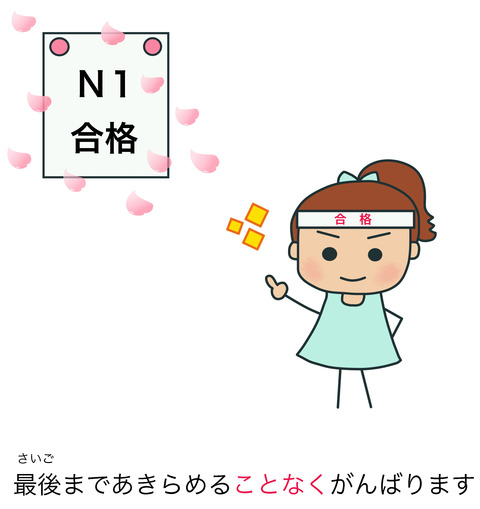
最後まであきらめることなくがんばります
→最後まであきらめないでがんばりますI’ll keep going without giving up until the very end. →I’ll keep going without giving up until the very end.
今月は忙しかったので、土日も休むことなく働いた
→今月は忙しかったので、土日も休まないで働いたI was busy this month, so I worked even on Saturdays and Sundays without taking a day off. →I was busy this month, so I worked even on Saturdays and Sundays without taking a day off.
今年の夏は涼しいので、クーラーをつけることなく過ごせそうだ
→今年の夏は涼しいので、クーラーをつけなくても過ごせそうだThis summer is cool, so it looks like I can get by without turning on the air conditioner. →This summer is cool, so it looks like I can get by without turning on the air conditioner.
Read the original source text
Meaning
〜しないで・・・する
How to use it
動詞[原形]+ことなく
Explanation
「〜ことなく」は「
〜しないで(・・・する)」という意味で使用されます😊
【上級レベルの人へ】
「〜ことなく」が「〜しないで・・・する」というのに対して、「
〜ことなくして・・・ない」という文型が存在します😮意味は「
〜しなければ決して・・・ない」という意味です。N1文法の「名詞+なくして・・・ない」の名詞句接続形ですね😉文末には必ず否定形を取りますので気を付けましょう😊
[例文]
努力することなくして成功はない
→
努力しなければ、決して
成功はしない
【「こと」シリーズ】
〜こと(命令)
〜ことか
〜ことから
〜ことがある
〜ことができる(可能)
〜ことができる(能力)
〜ことこの上ない
〜ことだ・〜ないことだ
〜ことだから
〜ことだし
〜ことで(Nのことで)
〜こととて
〜ことなしに
〜ことなく
〜ことに
〜ことにしている
〜ことにする
〜ことになっている
〜ことになる・〜こととなる
〜ことには
〜ことは〜が①(形容詞・名詞)
〜ことは〜が②(動詞)
〜ことはない
〜ことはならない
〜たことがある(経験)
〜だこと!
(〜は)〜てのこと
〜ても〜すぎることはない
〜ということだ
〜とのことだ
〜ないこともない
〜ないことには
〜なかったことがある
日本語文型辞典
Meaning
Basic information: V-ることなく. As in ③, it also occurs in the form …こともなく. It is similar to …ないで and …ず(に), but …ことなく is written language. In terms of meaning, it conveys that although something could have happened—in the examples, being delayed, changing, or looking back—it did not.
Examples:
① Though the snowfall was heavy, the train arrived in Kyoto without being delayed.
② We will remain friends forever without changing.
③ The child, without even looking back at us, waved both hands, held their head high, and disappeared over the mountain pass.
Read the original source text
Meaning
基本情報V-ることなく説明③のように「…こともなく」の形もある。「…ないで」や「…ず(に)」にちかいが、「…ことなく」は書きことばで、また意味的には、例で言えばそれぞれ「おくれる・かわる・ふりかえる」可能性もあるのに、そういうこともなく、というような意味あいで使われる。例文① ひどいゆきだったが、列車はおくれることなく京都についた。② われわれは、いつまでもかわることなくともだちだ。③ その子は、もうこちらをふりかえることもなく、両手を振り、胸を張って、峠の向こうに消えて行った。
日本語文型辞典 英語版
Meaning
【ことなく】[V-ることなく]
Also takes the form ...こともなく, as in
(3)
. Similar to ...ないで and ...ず(に), but ...ことなく is used in written language. In terms of meaning, as shown in the respective examples above, ...ことなく implies that although there is a possibility that something or someone will be late (おくれる), or change (かわる), or turn around (ふりかえる), this does not happen.
In context 3 examples
ひどいゆきだったが、列車はおくれることなく京都についた。
Despite the heavy snow, the train arrived at Kyoto without delay.
われわれは、いつまでもかわることなくともだちだ。
We will always remain friends.
その子は、もうこちらをふりかえることもなく、両手を振り、胸を張って、峠の向こうに消えて行った。
Without turning around in our direction, the child disappeared over the mountain pass, arms swinging and head held high.
くらべてわかる日本語表現文型辞典
Meaning
Meaning 1: B happens without the undesirable situation A occurring.
Meaning 2: B happened without the desirable situation A occurring.
How to use it
AことなくB
[Verb—dictionary form] ことなく
Explanation
【Comparison 1】
“AことなしにB” (Meaning 1, p. 90)
In context 8 examples
これからも、健康を損なうことなく、体調維持に努めたい。
From now on, too, I want to work to maintain my health without harming it.
銀行の支援を受けることなく、借金ゼロでなんとかやってこられた。
We somehow managed to get by with no debt, without receiving support from the bank.
彼はひるむことなく、敵に向かっていった。
He went toward the enemy without flinching.
彼女は何度失敗してもあきらめることなく、研究を続けた。
No matter how many times she failed, she continued her research without giving up.
彼は一度も日本の土を踏むことなく、この世を去った。
He passed away without ever setting foot on Japanese soil.
親に報告することなく、二人は婚姻届を出してしまった。
The two of them submitted their marriage registration without telling their parents.
何度も受験したが、ついに合格することなく、あきらめてしまった。
I took the exam many times, but finally gave up without ever passing.
彼らは言葉を交わすことなく、別れていった。
They parted without exchanging a word.
Read the original source text
Meaning
意味1:Aという悪い事態にならないで、B。
意味2:望ましいAという事態にならないで、Bになった。
How to use it
AことなくB
[動詞-る形]ことなく
Explanation
【対比1】
「AことなしにB」(意味1 P.90)
日本語NET JLPT文法解説まとめ
Meaning
Without ~ing
Because it is a formal expression, using it for everyday things can sometimes make a sentence sound unnatural.
(Example) When I drink coffee, I drink it without adding sugar.
How to use it
V (dictionary form) + ことなく
Explanation
"without"
This is a formal expression, so using it for everyday situations might feel awkward.
In context 8 examples
プロジェクトの進捗が遅れているので、休日も休むことなく働いている。
Since the project is behind schedule, I’m working without taking even weekends off.
同僚は同期にも相談することなく会社を辞めてしまった。
My colleague quit the company without even consulting their fellow hires.
ロウソクの火は消えることなく、朝までついていた。
The candle flame stayed lit until morning without going out.
納期が近いので、土日も休むことなく働いています。
Since the deadline is near, I’m working without taking Saturday or Sunday off.
彼は最後まであきらめることなく、頑張った。
He kept working hard without giving up until the very end.
夫は私に相談することなく、勝手に保険の契約をした。
My husband signed an insurance contract on his own without consulting me.
この時計は10年止まることなく、動き続けている。
This clock has kept running for ten years without stopping.
他の会社から今の給料より高い金額でオファーが来たので、迷うことなく会社を辞めた。
I received an offer from another company for a salary higher than my current one, so I quit without hesitation.
Read the original source text
Meaning
〜ないで
硬い表現なので、日常的なことに使うと違和感のある文になる場合がある。
(例)私はコーヒーを飲むとき、砂糖を入れることなく飲みます。
How to use it
V(辞書形)+ことなく
Explanation
"without"
This is a formal expression, so using it for everyday situations might feel awkward.
毎日のんびり日本語教師
How to use it
Verb dictionary form + ことなく
Verb dictionary form + ことなしに
Verb dictionary form + こともなく
Explanation
Expresses the negation of an action or state, or an accompanying circumstance.
Notes
Related grammar: “【N5 Grammar】~ないで/ずに”
In context 12 examples
気温も湿度も下がることなく、蒸し暑い1日でした。
It was a hot and humid day, with neither the temperature nor the humidity dropping.
怒りとはダムのようなもので、一度決壊が生じれは後は止まることなく流れ出す。
Anger is like a dam: once a breach occurs, it flows out without stopping.
久しぶりに朝まで1度も起きることなく眠れた。
For the first time in a long while, I slept until morning without waking up even once.
単位を落とすことなく無事に前期を終えた。
I finished the first semester safely without failing any courses.
どんな実業家も、人に応援してもらうことなしには、成功することはできない。
No entrepreneur can succeed without other people’s support.
ファッションとはあなたが身につけた何かです。着ることなしにファッションは意味を持ちません。
Fashion is something you wear. Fashion has no meaning unless you wear it.
苦難に耐えることなしに、成功など、決してあり得ない。
Success is never possible without enduring hardship.
結婚の理想は互いに相手を束縛することなしに、しかも緊密に結びついていることだ。
The ideal marriage is for the two people to be closely connected without restricting each other.
金額を意識することなしに豪遊する。
Spending lavishly without thinking about the cost.
このサイトでは大人気マンガが一話から最新話までお金がかかることもなく読めます。
On this site, you can read popular manga from the first installment to the latest without paying.
部下と呼ばれる人は自分の知恵を疑ったり心配することもなく、ただ上司から求められることをやればいい。
People called subordinates don’t need to doubt or worry about their own judgment; they just need to do what their boss asks of them.
難しいあれこれを考えることもなく、心の赴くままにただ泣いたり笑ったりして生きたい。
I want to live, simply crying and laughing as my heart desires, without thinking about all sorts of difficult things.
Read the original source text
How to use it
動辞形+ことなく
動辞形+ことなしに
動辞形+こともなく
Explanation
動作・状態の否定、付帯状況を表します。
Notes
関連文法「【N5文法】~ないで/ずに」
NINJAL 日本語文型データベース
Meaning
Generally ~ happens, but in this case it means that it happens without ~.
How to use it
Vることなく
In context 5 examples
今日は忙しくて、休むことなく8時間も働いた。
I was busy today and worked for as long as eight hours without taking a break.
親の援助があったおかげで、経済的に苦労することなく大学を卒業できた。
Thanks to my parents’ support, I was able to graduate from university without financial hardship.
歓楽街の光は24時間消えることなく輝いていた。
The lights of the entertainment district shone without going out for 24 hours.
新幹線は一切遅れることなく運行している。
The Shinkansen is operating without a single delay.
戦争の惨状を忘れることなく、語り継がなければならない。
We must pass on accounts of the horrors of war without forgetting them.
Read the original source text
Meaning
一般的に~するが、この場合は~しないでという意味を表します。
How to use it
Vることなく
IMABI
Negative Patterns
Read this IMABI lesson ↗Explanation
More Negative Patterns: ~ないことには, ~なし・なき, ~なしで(は), ~なしに(は), ~なくして(は), ~ことなく, & 甲斐もなく
This lesson will introduce you to more patterns that utilize ~ない or derivations of it.
~ないことには(~ない)
AないことにはB means “if…don’t/in not…; unless”. So, if you don’t do A, you get stuck with B. B could be positive or negative depending on the outcome that you wish to express. It can be used with verbs, adjectives, or the copula, but don’t forget how to properly use ない! This pattern must be only used in declarative sentences.
品詞 接続 例
名詞 N+でないことには 人でないことには
形容詞 Adj → く-連用形 + ないことには 高くないことには
形容動詞 Adj + でないことには 精密でないことには
動詞 Adj → 未然形 + ないことには しないことには
1. 泳がないことには、海岸に行けなくなった。
In not swimming, I became unable to go to the beach.
2. 急がないことには、間に合わなくなる。
In not hurrying, you won’t make it in time.
3. 勝たないことには、試合しあいに負ける。
If you don’t win, you lose in the tournament.
4. がんばらないことには、今度の韓国語の試験に合格できないよ。
Unless you try hard, you won’t pass this next Korean exam.
Grammar Note: Do not confuse this with …ないことには where は is simply emphatic. The phrase discussed in this section is conjunctive in nature, whereas this is not.
5. 自分に関わりのないことには口を出すなよ。
Don’t interfere in things that don’t concern you!
~なし
無なし means “without” and is after nominal phrases. If なし for some reason is placed before a noun, it becomes 無き. There is more behind this form of ない. The problem lies with how to use ~なしに(は), ~なしで(は), and ~なくして(は). These phrases show that if something were not to happen, a certain event won’t be. These phrases show necessity, and there is a negative phrase in the next clause.
6. コーヒーなしに過ごせない。
I can’t go on without coffee.
7. 涙なしに語ることができない。(書き言葉的)
I can’t tell it without tears coming.
8. 国民の理解と協力なしには実行できない。(書き言葉)
We can’t act forth without the understanding and cooperation of the citizens.
9. 政府開発援助なしではこの革新的な医学研究は続けることができない。
Without government development aid, this groundbreaking medical research can’t continue.
10. しっかりと準備することなくしては成功できぬ。 (硬い書き言葉)
Without properly preparing, you can’t succeed.
11. 先生方のご指導なくして私の大学合格は有り得ませんでした。(とても丁寧; Useful expression)
Without the guidance of my teachers, my college success wouldn’t have been possible.
12. 政治家せいじかはテレプロンプター(原稿)なしで話せない。
Politicians can’t talk without a teleprompter.
13.百害ひゃくがいあって一利いちりなし。(Set phrase/proverb)
To do no good but a lot of harm.
14. 「憲法を改正することなくして、軍事大国になれない」と考える人が増えているそうだ。
It sounds that the number of people who think that without revising the constitution, [Japan] won’t be able to become a military power is growing.
Grammar Note: Also seen as ~ずして(は), ~なくして(は) is a more old-fashioned/archaic equivalent of ~なしに(は), but it can be used in plus and or negative situations.
~なしで(は) VS ~なしに(は)
Although both present a premise X, which makes Y possible, they are slightly different.
1. ~なしで(は) is used with a noun that shows a general condition, and the listener is told that there must be X. Thus, the speaker can use this when pointing out a ban or the need for evasion.
2. ~なしに(は) can’t be used directly towards the listener to get that person working. When these expressions are interchangeable, the former shows an individual cause whereas the latter shows a more obvious situation that is deemed to be evident and necessary. Thus, it is more suited for the written language.
15. スペイン語?無理いうなや。辞書なし{で・に}は、分からんわ。(ちょっと関西弁っぽい)
Spanish? Don’t be unreasonable. I can’t understand it without a dictionary.
16. 客商売だから、ネクタイなし{〇 で・X に}は、困るんだけども。(話し言葉)
Since it’s business (client-oriented), it’d be troubling without a tie.
17. 届け出なし{〇 に・△ で}外泊するのは、キャンプの規則に違反することになります。
Sleeping outdoors is now a violation of camp rules without notification.
18. ノックなしに(は)、ドアを開けないでください。
Don’t open the door without knocking.
Grammar Note: は in the last situation would make it fit well, but the message was probably written on the door rather than spoken. Had the sentence been spoken, with ノックしないで being more common, ~なしに would exemplary demonstrate consideration to the listener.
~ないことには~ない VS ~ことなしに(は)~ない VS ~ことなく
XないことにはYない shows that for the realization of Y, X is necessary. X can be a positive or negative situation. However, ~ことなしに(は)~ない and ~ことなく can only be used with verbs whereas the former pattern is also seen with nouns and adjectives. Furthermore, these latter expressions show that “for Y to realize, X is unavoidable”. So, it’s not positive.
19a. 努力どりょく{することなしには・しないことには}、成功はできない。
19b. 成功するためには、努力を避さけていることはできない。
You cannot succeed unless you put in effort.
20. 「憲法を変え{・ることなしには・ないことには}、軍事大国になれないと考える人が増えている」といわれますが、本当かどうかよく分かりませんね。
It’s said that the number of people that think that without changing the constitution, [Japan] won’t be able to come a military power is growing, but I don’t really know if that’s true.
21. 優しい人でないことには、お金があっても、結婚できませんよ。
You can’t get married even if you have money if you’re not a nice person.
Other things to keep in mind is that both ~ことなしに(は)~ない and ~ことなく are more likely to appear in the written language; however, the former is even more 硬かたい because it has the old なし in it. You do still see ~こと(も)なく in the spoken language, though, in which it has interchangeability with 連用形+もしないで.
22a. 多少のリスクを負わないことには、ビジネスなんかできないよ。とうてい避けられないもんだから。〇
22b. 多少のリスクを負う{ことなく・ことなしに}、ビジネスなんかできないよ。とうてい避けられないもんだから。X
Without taking some risk, you can’t do business. That’s because you can’t avoid it no matter what.23. 石に躓つまづいて転ころんだ子供が{泣くこともなく・泣きもしないで}、笑顔えがおで立ち上がったなんてびっくりしたよ。
I was surprised that the kid who tripped and fell on the rocks got up with a smile without even crying.
24. しょうことなく、メザキさんと並んで、いくら行っても太くもならないし細くもならない道を、長く歩いた。
With it not being helped, I went along with Mr. Mezaki, and we walked a long ways down the road, which no matter how much you go neither widens nor thins.
From 溺レる by 川上弘美.
Phrase Note: しょうことなく = しょうことなしに = やむを得ず.
25. ためらうことなく、消防士は燃えている家に入った。
The firefighters went into the burning house without hesitation.
26. 福田社長はしょうことなしに謝罪をした。
Company President Fukuda apologized with little choice.
27. 試験に合格することなしに、この会社には入れません。
It is not possible to get into this company without passing the exam.
甲斐(かい)もなく
甲斐かい means “avail” and 甲斐かいもなく, thus, means “to no avail/in vain”. Just as in English, it is not really casual.
28. 私たちは練習れんしゅうした甲斐かいもなく負けてしまった。
We lost despite practicing.
29. わざわざフランスから出かけてきた甲斐がありました。
It was worth our while to have come all the way from France.
30. 勉強した甲斐もなく落ちてしまいました。
I ended up failing to no avail of studying.
31. 働はたらき甲斐がい
Just the value of working
32. 年甲斐としがいもなく
Unbecoming to one’s age
In context 35 examples
泳がないことには、海岸に行けなくなった。
In not swimming, I became unable to go to the beach.
急がないことには、間に合わなくなる。
In not hurrying, you won’t make it in time.
勝たないことには、試合しあいに負ける。
If you don’t win, you lose in the tournament.
がんばらないことには、今度の韓国語の試験に合格できないよ。
Unless you try hard, you won’t pass this next Korean exam.
自分に関わりのないことには口を出すなよ。
Don’t interfere in things that don’t concern you!
コーヒーなしに過ごせない。
I can’t go on without coffee.
涙なしに語ることができない。(書き言葉的)
I can’t tell it without tears coming.
国民の理解と協力なしには実行できない。(書き言葉)
We can’t act forth without the understanding and cooperation of the citizens.
政府開発援助なしではこの革新的な医学研究は続けることができない。
Without government development aid, this groundbreaking medical research can’t continue.
しっかりと準備することなくしては成功できぬ。 (硬い書き言葉)
Without properly preparing, you can’t succeed.
先生方のご指導なくして私の大学合格は有り得ませんでした。(とても丁寧; Useful expression)
Without the guidance of my teachers, my college success wouldn’t have been possible.
政治家せいじかはテレプロンプター(原稿)なしで話せない。
Politicians can’t talk without a teleprompter.
百害ひゃくがいあって一利いちりなし。(Set phrase/proverb)
To do no good but a lot of harm.
「憲法を改正することなくして、軍事大国になれない」と考える人が増えているそうだ。
It sounds that the number of people who think that without revising the constitution, [Japan] won’t be able to become a military power is growing.
~なしで(は) is used with a noun that shows a general condition, and the listener is told that there must be X. Thus, the speaker can use this when pointing out a ban or the need for evasion.
Spanish? Don’t be unreasonable. I can’t understand it without a dictionary.
~なしに(は) can’t be used directly towards the listener to get that person working. When these expressions are interchangeable, the former shows an individual cause whereas the latter shows a more obvious situation that is deemed to be evident and necessary. Thus, it is more suited for the written language.
Spanish? Don’t be unreasonable. I can’t understand it without a dictionary.
スペイン語?無理いうなや。辞書なし{で・に}は、分からんわ。(ちょっと関西弁っぽい)
Spanish? Don’t be unreasonable. I can’t understand it without a dictionary.
客商売だから、ネクタイなし{〇 で・X に}は、困るんだけども。(話し言葉)
Since it’s business (client-oriented), it’d be troubling without a tie.
届け出なし{〇 に・△ で}外泊するのは、キャンプの規則に違反することになります。
Sleeping outdoors is now a violation of camp rules without notification.
ノックなしに(は)、ドアを開けないでください。
Don’t open the door without knocking.
努力どりょく{することなしには・しないことには}、成功はできない。
You cannot succeed unless you put in effort.
成功するためには、努力を避さけていることはできない。
You cannot succeed unless you put in effort.
「憲法を変え{・ることなしには・ないことには}、軍事大国になれないと考える人が増えている」といわれますが、本当かどうかよく分かりませんね。
It’s said that the number of people that think that without changing the constitution, [Japan] won’t be able to come a military power is growing, but I don’t really know if that’s true.
優しい人でないことには、お金があっても、結婚できませんよ。
You can’t get married even if you have money if you’re not a nice person.
多少のリスクを負わないことには、ビジネスなんかできないよ。とうてい避けられないもんだから。〇
Unless you take on some risk, you can’t do business. It’s something you simply can’t avoid. 〇
多少のリスクを負う{ことなく・ことなしに}、ビジネスなんかできないよ。とうてい避けられないもんだから。X
You can’t do business without taking on some risk. It’s something you simply can’t avoid. X
しょうことなく、メザキさんと並んで、いくら行っても太くもならないし細くもならない道を、長く歩いた。
With it not being helped, I went along with Mr. Mezaki, and we walked a long ways down the road, which no matter how much you go neither widens nor thins.
ためらうことなく、消防士は燃えている家に入った。
The firefighters went into the burning house without hesitation.
福田社長はしょうことなしに謝罪をした。
Company President Fukuda apologized with little choice.
試験に合格することなしに、この会社には入れません。
It is not possible to get into this company without passing the exam.
私たちは練習れんしゅうした甲斐かいもなく負けてしまった。
We lost despite practicing.
わざわざフランスから出かけてきた甲斐がありました。
It was worth our while to have come all the way from France.
勉強した甲斐もなく落ちてしまいました。
I ended up failing to no avail of studying.
働はたらき甲斐がい
Just the value of working
年甲斐としがいもなく
Unbecoming to one’s age
Read the original source text
Explanation
More Negative Patterns: ~ないことには, ~なし・なき, ~なしで(は), ~なしに(は), ~なくして(は), ~ことなく, & 甲斐もなく
This lesson will introduce you to more patterns that utilize ~ない or derivations of it.
~ないことには(~ない)
AないことにはB means “if…don’t/in not…; unless”. So, if you don’t do A, you get stuck with B. B could be positive or negative depending on the outcome that you wish to express. It can be used with verbs, adjectives, or the copula, but don’t forget how to properly use ない! This pattern must be only used in declarative sentences.
品詞 接続 例
名詞 N+でないことには 人でないことには
形容詞 Adj → く-連用形 + ないことには 高くないことには
形容動詞 Adj + でないことには 精密でないことには
動詞 Adj → 未然形 + ないことには しないことには
1. 泳がないことには、海岸に行けなくなった。
In not swimming, I became unable to go to the beach.
2. 急がないことには、間に合わなくなる。
In not hurrying, you won’t make it in time.
3. 勝たないことには、試合しあいに負ける。
If you don’t win, you lose in the tournament.
4. がんばらないことには、今度の韓国語の試験に合格できないよ。
Unless you try hard, you won’t pass this next Korean exam.
Grammar Note: Do not confuse this with …ないことには where は is simply emphatic. The phrase discussed in this section is conjunctive in nature, whereas this is not.
5. 自分に関わりのないことには口を出すなよ。
Don’t interfere in things that don’t concern you!
~なし
無なし means “without” and is after nominal phrases. If なし for some reason is placed before a noun, it becomes 無き. There is more behind this form of ない. The problem lies with how to use ~なしに(は), ~なしで(は), and ~なくして(は). These phrases show that if something were not to happen, a certain event won’t be. These phrases show necessity, and there is a negative phrase in the next clause.
6. コーヒーなしに過ごせない。
I can’t go on without coffee.
7. 涙なしに語ることができない。(書き言葉的)
I can’t tell it without tears coming.
8. 国民の理解と協力なしには実行できない。(書き言葉)
We can’t act forth without the understanding and cooperation of the citizens.
9. 政府開発援助なしではこの革新的な医学研究は続けることができない。
Without government development aid, this groundbreaking medical research can’t continue.
10. しっかりと準備することなくしては成功できぬ。 (硬い書き言葉)
Without properly preparing, you can’t succeed.
11. 先生方のご指導なくして私の大学合格は有り得ませんでした。(とても丁寧; Useful expression)
Without the guidance of my teachers, my college success wouldn’t have been possible.
12. 政治家せいじかはテレプロンプター(原稿)なしで話せない。
Politicians can’t talk without a teleprompter.
13.百害ひゃくがいあって一利いちりなし。(Set phrase/proverb)
To do no good but a lot of harm.
14. 「憲法を改正することなくして、軍事大国になれない」と考える人が増えているそうだ。
It sounds that the number of people who think that without revising the constitution, [Japan] won’t be able to become a military power is growing.
Grammar Note: Also seen as ~ずして(は), ~なくして(は) is a more old-fashioned/archaic equivalent of ~なしに(は), but it can be used in plus and or negative situations.
~なしで(は) VS ~なしに(は)
Although both present a premise X, which makes Y possible, they are slightly different.
1. ~なしで(は) is used with a noun that shows a general condition, and the listener is told that there must be X. Thus, the speaker can use this when pointing out a ban or the need for evasion.
2. ~なしに(は) can’t be used directly towards the listener to get that person working. When these expressions are interchangeable, the former shows an individual cause whereas the latter shows a more obvious situation that is deemed to be evident and necessary. Thus, it is more suited for the written language.
15. スペイン語?無理いうなや。辞書なし{で・に}は、分からんわ。(ちょっと関西弁っぽい)
Spanish? Don’t be unreasonable. I can’t understand it without a dictionary.
16. 客商売だから、ネクタイなし{〇 で・X に}は、困るんだけども。(話し言葉)
Since it’s business (client-oriented), it’d be troubling without a tie.
17. 届け出なし{〇 に・△ で}外泊するのは、キャンプの規則に違反することになります。
Sleeping outdoors is now a violation of camp rules without notification.
18. ノックなしに(は)、ドアを開けないでください。
Don’t open the door without knocking.
Grammar Note: は in the last situation would make it fit well, but the message was probably written on the door rather than spoken. Had the sentence been spoken, with ノックしないで being more common, ~なしに would exemplary demonstrate consideration to the listener.
~ないことには~ない VS ~ことなしに(は)~ない VS ~ことなく
XないことにはYない shows that for the realization of Y, X is necessary. X can be a positive or negative situation. However, ~ことなしに(は)~ない and ~ことなく can only be used with verbs whereas the former pattern is also seen with nouns and adjectives. Furthermore, these latter expressions show that “for Y to realize, X is unavoidable”. So, it’s not positive.
19a. 努力どりょく{することなしには・しないことには}、成功はできない。
19b. 成功するためには、努力を避さけていることはできない。
You cannot succeed unless you put in effort.
20. 「憲法を変え{・ることなしには・ないことには}、軍事大国になれないと考える人が増えている」といわれますが、本当かどうかよく分かりませんね。
It’s said that the number of people that think that without changing the constitution, [Japan] won’t be able to come a military power is growing, but I don’t really know if that’s true.
21. 優しい人でないことには、お金があっても、結婚できませんよ。
You can’t get married even if you have money if you’re not a nice person.
Other things to keep in mind is that both ~ことなしに(は)~ない and ~ことなく are more likely to appear in the written language; however, the former is even more 硬かたい because it has the old なし in it. You do still see ~こと(も)なく in the spoken language, though, in which it has interchangeability with 連用形+もしないで.
22a. 多少のリスクを負わないことには、ビジネスなんかできないよ。とうてい避けられないもんだから。〇
22b. 多少のリスクを負う{ことなく・ことなしに}、ビジネスなんかできないよ。とうてい避けられないもんだから。X
Without taking some risk, you can’t do business. That’s because you can’t avoid it no matter what.23. 石に躓つまづいて転ころんだ子供が{泣くこともなく・泣きもしないで}、笑顔えがおで立ち上がったなんてびっくりしたよ。
I was surprised that the kid who tripped and fell on the rocks got up with a smile without even crying.
24. しょうことなく、メザキさんと並んで、いくら行っても太くもならないし細くもならない道を、長く歩いた。
With it not being helped, I went along with Mr. Mezaki, and we walked a long ways down the road, which no matter how much you go neither widens nor thins.
From 溺レる by 川上弘美.
Phrase Note: しょうことなく = しょうことなしに = やむを得ず.
25. ためらうことなく、消防士は燃えている家に入った。
The firefighters went into the burning house without hesitation.
26. 福田社長はしょうことなしに謝罪をした。
Company President Fukuda apologized with little choice.
27. 試験に合格することなしに、この会社には入れません。
It is not possible to get into this company without passing the exam.
甲斐(かい)もなく
甲斐かい means “avail” and 甲斐かいもなく, thus, means “to no avail/in vain”. Just as in English, it is not really casual.
28. 私たちは練習れんしゅうした甲斐かいもなく負けてしまった。
We lost despite practicing.
29. わざわざフランスから出かけてきた甲斐がありました。
It was worth our while to have come all the way from France.
30. 勉強した甲斐もなく落ちてしまいました。
I ended up failing to no avail of studying.
31. 働はたらき甲斐がい
Just the value of working
32. 年甲斐としがいもなく
Unbecoming to one’s age
どんなときどう使う 日本語表現文型辞典
Meaning
without
How to use it
Vる+ことなく (without doing)
Explanation
~ないで
「普通は~する、または~してしまうが、この場合は~しないで」という意味を表す。硬い言葉なので、日常的なことには使わない。
◆ △うっかりして、切手をはることなくポストへ入れてしまった。
"(I) usually do… (or) end up doing…, but in this case (I) didn't." Formal pattern, not used with everyday expressions.
In context 4 examples
ニコさんの部屋の電気は3時を過ぎても消えることなく、朝までついていた。
The light in Niko's room stayed on until morning without going out, even after 3 o'clock.
彼らは生活のため、休日も休むことなく働いた。
They worked without taking days off, even on holidays, to make a living.
敵に知られることなく、島に上陸するのは難しい。
It is difficult to land on the island without being discovered by the enemy.
タノムさんは先生にも友だちにも相談することなく、学校をやめて帰国してしまった。
Without consulting either his teacher or friends, Mr. Tanomu quit school and went back to his country.
Read the original source text
Meaning
without
How to use it
Vる+ことなくW
Explanation
~ないで
「普通は~する、または~してしまうが、この場合は~しないで」という意味を表す。硬い言葉なので、日常的なことには使わない。
◆ △うっかりして、切手をはることなくポストへ入れてしまった。
"(I) usually do… (or) end up doing…, but in this case (I) didn't." Formal pattern, not used with everyday expressions.