絵でわかる日本語
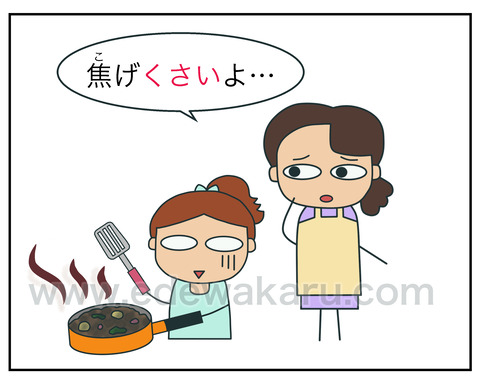
Meaning
smells of 〜
How to use it
Noun [dictionary form] + くさい
Explanation
This sentence pattern means “smells of 〜.” 「〜くさい」 is written with the kanji 「〜臭い」. Since it includes 「臭い」 (“stinky”), when it describes a smell, it is not used in a positive sense.
「〜くさい」 has other uses too, so review them 😉
In context 5 examples
ちょっと、焦げくさいわよ!
→焦げたにおいがするわよ!Hey, it smells a little burnt! →It smells burnt!
娘:お父さん、お酒くさい〜父:すまん…
→お酒のにおいがするDaughter: Dad, you smell like alcohol. Father: Sorry… →It smells like alcohol.
なんだか汗くさいな…着替えてから遊びに行こっと
→汗のにおいがするな…I smell kind of sweaty… I’ll change before going out to play. →It smells sweaty…
A:あれ?ガスくさいよ!B:えっ!?ガス栓が閉まってるかどうか見てくるね!!
A: Huh? It smells like gas! B: What!? I’ll go check whether the gas valve is shut!!
彼女:この部屋、たばこくさいわ…彼氏:ごめん、窓を開けるね!
Girlfriend: This room smells like cigarettes… Boyfriend: Sorry, I’ll open the window!
Read the original source text
Meaning
〜のにおいがする
How to use it
名詞[辞書形]+くさい
Explanation
「〜のにおいがする」という意味の文型です。「〜くさい」は漢字で書くと「〜臭い」と書きます。「臭い」ですから、[におい]を表す用法では、いい意味で使われることはありません。
「〜くさい」には、他の用法もありますので復習しておきましょう😉
日本語文型辞典 英語版
Meaning
Refers to the smell of something. Used for bad smells.
Expresses that “something is very much like something else.” Used in a pejorative sense.
Attaches to adjectives with negative connotation and emphasizes their meaning.
How to use it
1. Nくさい〈smell〉
2. Nくさい〈appearance〉
3. Na/A くさい〈emphasis〉
In context 9 examples
あれ? ガスくさいよ!
What? I smell gas!
この部屋はなんだかカビくさい。
It’s musty in this room.
昨日火事があったところは、焦げくさい臭いが充満していた。
The place where the fire broke out yesterday was filled with a charred, acrid smell.
インチキくさい商品だなあ。
These goods look fake.
子供たちに信頼される教師になりたいのなら、そのインテリくさいしゃべり方を止めろ。
If you want to be a teacher trusted by children, you shouldn’t talk like such a high-and-mighty intellectual.
彼女はバタ臭い顔立ちをしている。
She’s got the face of a foreigner!
あんた、いつまでそんな古くさいこと言っているつもり?
How long do you intend to keep telling me such outdated things?
そんな面倒くさいことは、だれか別の人に頼んでくれ。
Please ask someone else to do such a troublesome job.
彼はけちくさいことばかり言うので、嫌われている。
People dislike him because he always says such narrow-minded things.
くらべてわかる日本語表現文型辞典
Meaning
Meaning 1: It gives an unpleasant impression of A.
Meaning 2: It has a bad or unpleasant smell like A.
How to use it
Aくさい
[Noun—∅] くさい
Explanation
【Comparison 1】
“Aっぽい” (Meaning 2, p. 138)
Notes
【Note 1】
・It can also be used when viewing a good aspect of the thing in a favorable light.
○彼は芸能界で、素人くさいところがうけて人気者になった。
○彼の作品に登場する人物はみんな人間くさい。
In context 8 examples
誕生日なんだから割引券で食事に行くなんて、ケチくさいこと言うな。
It’s your birthday, so don’t say something so stingy as going out to eat with a discount coupon.
彼の話はどうも嘘くさい。
His story seems rather fishy.
あの店の服って、何となく田舎くさいと思わない?
Don’t you think the clothes from that shop seem kind of provincial?
そんな陰気くさい顔をしていないで、もっと笑って。
Don’t make such a gloomy face; smile more.
この部屋、ガスくさくない?窓をあけましょう。
Doesn’t this room smell of gas? Let’s open the window.
車から降りてきた彼の息は酒くさかった。
His breath smelled of alcohol when he got out of the car.
汗くさい服を着ていたら、彼女に嫌われるよ。
If you wear clothes that smell of sweat, your girlfriend will dislike you.
エンジンをかけたら、ガソリンくさい匂いがした。
When I started the engine, I smelled gasoline.
Read the original source text
Meaning
意味1:好ましくないAという感じがする。
意味2:Aのような悪い、嫌な匂いがする。
How to use it
Aくさい
[名詞-∅]くさい
Explanation
【対比1】
「Aっぽい」(意味2 P.138)
Notes
【注意1】
・そのものの良い面を好意的に捉える場合もある。
○彼は芸能界で、素人くさいところがうけて人気者になった。
○彼の作品に登場する人物はみんな人間くさい。
日本語文型辞典
Meaning
Means that something has such a smell. Used for unpleasant smells.
Means that something is very much like that or has that appearance. Often used for things that are not considered very good.
Attached to adjectives with negative meanings to intensify them.
How to use it
Nくさい【smell】
Nくさい【appearance】
Na/A くさい【intensifier】
In context 9 examples
あれ?ガスくさいよ!
Huh? It smells like gas!
この部屋はなんだかカビくさい。
This room smells kind of musty.
昨日火事があったところは、焦げくさい臭いが充満していた。
The place where there was a fire yesterday was filled with a burnt smell.
インチキくさい商品だなあ。
That product seems kind of fake.
子供たちに信頼される教師になりたいのなら、そのインテリくさいしゃべり方を止めろ。
If you want to become a teacher the children trust, stop talking in that pretentious intellectual way.
彼女はバタ臭い顔立ちをしている。
She has Western-looking features.
あんた、いつまでそんな古くさいこと言っているつもり?
How long are you going to keep saying such old-fashioned things?
そんな面倒くさいことは、だれか別の人に頼んでくれ。
Ask somebody else to take care of that kind of troublesome thing.
彼はけちくさいことばかり言うので、嫌われている。
He is disliked because he always says such petty things.
Read the original source text
Meaning
そのような臭いがするという意味を表す。よくない臭いの場合に用いる。
いかにもそのような様子であるという意味を表す。あまりよいと思われていないものに使われることが多い。
よくない意味を表す形容詞に付いて、その意味を強めるのに用いる。
How to use it
Nくさい【臭い】
Nくさい 【様子】
Na/A くさい【強め】
毎日のんびり日本語教師
How to use it
Noun + くさい
い-adjective stem + くさい
な-adjective stem + くさい
※ Verb た-form + くさい (痛めたくさい)
Explanation
「臭い(くさい)」 originally refers to a bad smell. When attached to nouns that emit some kind of smell, as in ガス臭い, かび臭い, 魚臭い, and 小便臭い, it can indicate that the smell is foul. It can also indicate something contrived, as in 「くさい芝居」, or something suspicious, as in 「あの人はどうもくさい」.
When used attached to い-adjectives or な-adjectives that have a derogatory meaning toward the target, it intensifies that meaning.
面倒くさい (a pain), 邪魔くさい (a nuisance), アホくさい (stupid), 貧乏くさい (tacky/poverty-stricken), 馬鹿くさい (ridiculous), 胡散くさい (suspicious), 古くさい (old-fashioned), ケチくさい (stingy), 微妙くさい (questionable)…
When attached to other nouns, it indicates that something seems characteristic of or like that noun, just like 「~のよう/みたい/っぽい」. In many cases, it attaches to nouns with negative connotations.
Notes
Nothing in particular.
In context 9 examples
耳触りの良い言葉ばかり並べるとどうにも嘘臭く聞こえてしまう。
When you string together only nice-sounding words, they end up sounding awfully false.
出来栄えを見る限り、細部に凝ってないし偽物臭い。
Judging by the workmanship, they didn't pay attention to the details, and it looks fake.
まだ若いのに、彼の食べ方はおっさんくさい。
He's still young, but the way he eats is like an old man's.
階段を踏み外して足を痛めたくさい。(踩空楼梯摔疼了脚。)
It seems I missed a step on the stairs and hurt my foot.
勧誘され話だけでも聞いてみることにしたが、詐欺臭い話だったので逃げてきた。
I was approached and decided to hear them out, but it sounded like a scam, so I got away.
それは素人臭い発想だったが、その道のプロでは到底考え付かない斬新なものだった。
It was an amateurish idea, but it was so novel that a professional in that field would never have thought of it.
人間関係が希薄化する現代社会で、彼の人間臭いところは逆に取り柄になるだろう。
In today's society, where human relationships are growing more superficial, his down-to-earth side may actually be an asset.
うちの会社は社員に価値観の共有を強い、どうにも宗教臭い感じがする。
Our company forces employees to share its values, and it feels awfully cult-like.
占い全般は今でもインチキ臭いと思っている。
Even now, I think fortune-telling in general seems like a scam.
Read the original source text
How to use it
名詞+くさい
い形容詞語幹+くさい
な形容詞語幹+くさい
※動た形+くさい(痛めたくさい)
Explanation
「臭い(くさい)」は元々悪いニオイを指す語で、ガス臭い、かび臭い、魚臭い、小便臭いなど、何らかのニオイを発する名詞に付くことで、そのニオイが悪臭であることを表すことができます。他にも「くさい芝居」のようにわざとらしさを表したり、「あの人はどうもくさい」のように疑わしいことを表すこともできます。
対象を貶す意味を持つイ形容詞やナ形容詞に接続して用いる場合は、その程度を強調する用法になります。
面倒くさい、邪魔くさい、アホくさい、貧乏くさい、馬鹿くさい、胡散くさい、古くさい、ケチくさい、微妙くさい…
その他の名詞に接続する場合は、「~のよう/みたい/っぽい」などと同じく、それらしい感じがすることを表します。多くの場合は良くない名詞につきます。
Notes
特になし