文法
Meaning
Without worrying about ~
Used when you want to say, “Without worrying about something one would normally care about.”
How to use it
V (plain form) + のもかまわず
いA (plain form) + のもかまわず
なAな / である + もかまわず
N + もかわらず
In context 6 examples
あの男は人目もかまわず、電車の中で弁当を食べている。
That man is eating a boxed lunch on the train without caring about what people think.
トムさんは明日試験があるのもかまわず、友達とカラオケに行ってしまった。
Even though Tom has an exam tomorrow, he went to karaoke with his friends without caring.
病院であるのもかまわず、あの女性は携帯電話で大きな声で話している。
Even though they're in a hospital, that woman is talking loudly on her cell phone.
彼女は夜遅いと、身なりもかまわず出かけることがあるので、やめて欲しい。
When it gets late at night, she sometimes goes out without caring about her appearance, so I want her to stop.
父は服が汚れるのもかまらず、公園で犬と遊んでいる。
My father plays with the dog in the park without caring that his clothes get dirty.
雨が降っていたが、キムさんは濡れるのもかまわず走って帰ってしまった。
It was raining, but Kim ran home without caring that he was getting wet.
Read the original source text
Meaning
〜も気にしないで
「普通は気にすることだが、それを気にしないで」と言いたい時に使う。
How to use it
V(普通形) + のもかまわず
イA(普通形)+ のもかまわず
ナAな / である + もかまわず
N + もかわらず
どんなときどう使う 日本語表現文型辞典
Meaning
with disregard for
How to use it
N / [plain form] (ナAな・ナAである / Nな・Nである) + の + もかまわず
Explanation
~も気にしないで
「普通は注意を払うことだが、それを気にしないで」という意味を表す。慣用的に、 ❶ の「人目もかまわず」の形でよく使う。
Someone disregards what they normally should pay attention to. Often used idiomatically, as in sentence ❶ (without regard for what people think).
In context 4 examples
最近は電車の中で人目もかまわず化粧している女の人をよく見かけます。
Lately, I often see women putting on makeup on the train without caring who sees them.
父は身なりもかまわず出かけるので、いっしょに歩くのが恥ずかしい。
My father goes out without caring about his appearance, so I'm embarrassed to walk with him.
彼女は雨の中を、服がぬれるのもかまわず歩き去って行った。
She walked away in the rain, not caring that her clothes were getting wet.
アパートのとなりの人はいつも夜遅いのもかまわず、大きな音で音楽を聞いている。
The person next door in my apartment building always listens to music loudly late at night, without caring how late it is.
Read the original source text
Meaning
with disregard for
How to use it
N/〔普通形〕(ナAな・ナAである/Nな・Nである)+の+もかまわず
Explanation
~も気にしないで
「普通は注意を払うことだが、それを気にしないで」という意味を表す。慣用的に、 ❶ の「人目もかまわず」の形でよく使う。
Someone disregards what they normally should pay attention to. Often used idiomatically, as in sentence ❶ (without regard for what people think).
絵でわかる日本語
Meaning
without caring about ...
ignoring ...
How to use it
Verb or い-adjective [plain form] + のもかまわず
な-adjective [〜な] + のもかまわず
Noun [dictionary form] + もかまわず
Explanation
“〜もかまわず” is a grammar pattern meaning “without caring about ..., do ... without hesitation.” It is used when you want to say that someone does something without caring about something that people would normally care about. Learn these idiomatic expressions that use 〜もかまわず.
・人目もかまわず
[Meaning] without caring about people watching
・なりふりかまわず
[Meaning] without caring about one’s appearance or behavior
・ところかまわず
[Meaning] without caring where, in any place
When written in kanji, 〜もかまわず is written 〜も構わず, so learn that too 😊
In context 6 examples
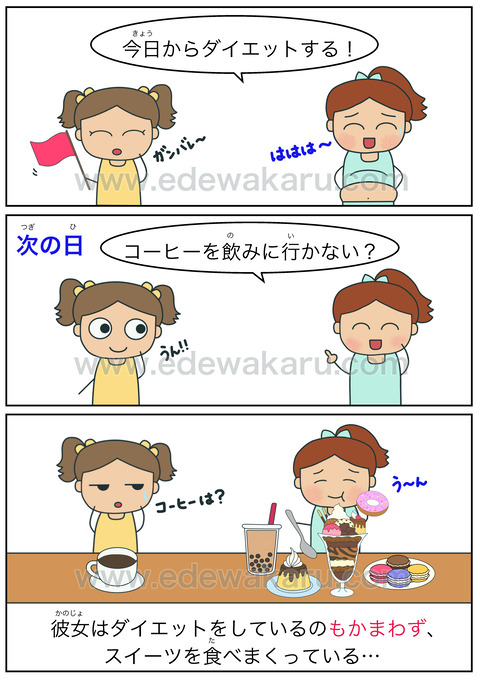
彼女はダイエットをしているのもかまわず、スイーツをたくさん食べている
→ダイエットをしているのを気にしないで、スイーツをたくさん食べているEven though she’s on a diet, she eats lots of sweets without caring.
明日テストがあるのもかまわず、飲みに行ってしまった
→テストがあるのを気にしないで、飲みに行ってしまったI went out drinking, not caring that I had a test the next day.
みんなが見ているのもかまわず、大声で泣いた
→みんなが見ているのを気にしないで、大声で泣いたI cried loudly without caring that everyone was watching.
雨が降っているのに、子供たちは濡れるのもかまわず遊んでいる
→濡れるのを気にしないで遊んでいるEven though it’s raining, the children are playing without caring that they’ll get wet.
彼女はお母さんの心配もかまわず、夜遅くまで帰らなかった
→お母さんの心配を気にしないで、遅くまで帰らなかったShe stayed out until late without caring that her mother was worried.
山田くんは、時間もかまわず電話をしてくるので困る…
→何時でも気にしないで電話をしてくるので困るIt’s a problem because Yamada calls me at any time without caring what time it is…
Read the original source text
Meaning
〜を気にしないで
〜を無視して
How to use it
動詞・い形容詞[普通形]+のもかまわず
な形容詞[ーな]+のもかまわず
名詞[辞書形]+もかまわず
Explanation
「〜もかまわず」は「〜を気にしないで、平気で〜する」という意味の文型です。これは「普通なら気にすることを、気にしないで〜する」と言いたい時に使われます。「〜もかまわず」が使われている慣用表現(かんようひょうげん)がありますので覚えておきましょう。
・人目もかまわず
[意味]人の目も気にしないで
・なりふりかまわず
[意味]自分の服装や態度を気にしないで
・ところかまわず
[意味]どんな場所でも気にしないで
「〜もかまわず」は漢字で書くと「〜も構わず」と書きますので、一緒に覚えておきましょう😊
日本語文型辞典
Meaning
Basic information: N(に)もかまわず / Vの(に)もかまわず. Explanation: Means “without caring about ….” It is often used in the idiomatic expression 人目もかまわず (“without regard for what people think”). Examples: ① Overwhelmed with joy, I threw my arms around them without caring who saw. ② Despite calls from board members urging a cautious response, the president decided to enter a new field. ③ Despite facing harsh criticism from public opinion, the legislator ran for office again.
Read the original source text
Meaning
基本情報N(に)もかまわずVの(に)もかまわず説明「…を気にかけないで」という意味を表す。「人目もかまわず」という慣用句的な表現で用いられることが多い。例文① 喜びのあまり、人目もかまわず抱きついた。② 役員たちから慎重な対応を求める声が上がっているのもかまわず、社長は新分野への参入を決断した。③ 世論から厳しい批判を浴びせられているのにも構わず、その議員は再び立候補した。
日本語文型辞典 英語版
Meaning
【もかまわず】[N(に)もかまわず][Vの(に)もかまわず]
Means “to take no notice of....” Often used in the idiomatic phrase 人目もかまわず.
In context 3 examples
喜びのあまり、人目もかまわず抱きついた。
Overwhelmed by happiness, they embraced without caring who was watching.
役員たちから慎重な対応を求める声が上がっているのもかまわず、社長は新分野への参入を決断した。
Paying no heed to the cautionary voices of his staff, the company president decided to enter the new field.
世論から厳しい批判を浴びせられているのにも構わず、その議員は再び立候補した。
With no regard for the harsh criticism being heaped upon her by the public, that member of the Diet announced her candidacy again.
くらべてわかる日本語表現文型辞典
Meaning
B without paying heed to A, which one would normally care about.
How to use it
AもかまわずB (AてもかまわずB / AにもかまわずB)
[Verb] + の + もかまわず
[Verb—て form] もかまわず
[Noun—no suffix] + に + もかまわず
Explanation
[Contrast 1]
“AにもかかわらずB” (Meaning 1, p. 262)
“AにもかかわらずB” expresses that the result B in situation A is unexpected to the speaker. “AもかまわずB” means doing B without paying heed to A, which one would normally care about.
○雨が降っているにもかかわらず、彼は出かけた。(出かけたことが意外) — Despite the rain, he went out. (The fact that he went out was unexpected.)
○雨が降っているのもかまわず、彼は出かけた。(雨が降っていることを気にしないで) — He went out without caring that it was raining. (He paid no heed to the rain.)
In context 4 examples
子供たちはあちこちに絵の具が飛び散るのもかまわず、遊びに興じた。
The children threw themselves into playing without caring that paint was splattering everywhere.
どしゃ降りの雨にもかまわず、父は出かけていった。
Despite the torrential rain, Father went out.
子どもが同乗していてもかまわず、彼はタバコを吸い続けた。
He kept smoking without caring that a child was riding in the car with him.
酔っ払った若者は、時間もかまわず大声で歌い騒いだ。
The drunk young man sang and shouted loudly, regardless of the time.
Read the original source text
Meaning
普通なら気にするAも気にせずB。
How to use it
AもかまわずB(AてもかまわずB/AにもかまわずB)
[動詞]+の+もかまわず
[動詞-て形]もかまわず
[名詞-∅]+に+もかまわず
Explanation
【対比1】
「AにもかかわらずB」(意味1 P.262)
「AにもかかわらずB」は、Aという状況でのBという結果が話し手にとって意外だということを表す。「AもかまわずB」は、普通は気にする
Aを気にしないでBという表現。
○雨が降っているにもかかわらず、彼は出かけた。(出かけたことが意外)
○雨が降っているのもかまわず、彼は出かけた。(雨が降っていることを気にしないで)
日本語NET JLPT文法解説まとめ
Meaning
Without caring about ~
Used when you want to say, "normally one would care about it, but without caring about it".
How to use it
V (plain form) + のもかまわず
いA (plain form) + のもかまわず
なAな / である + もかまわず
N + もかわらず
In context 6 examples
あの男は人目もかまわず、電車の中で弁当を食べている。
That man is eating a boxed lunch on the train without caring about what people think.
トムさんは明日試験があるのもかまわず、友達とカラオケに行ってしまった。
Even though Tom has an exam tomorrow, he went to karaoke with his friends without caring.
病院であるのもかまわず、あの女性は携帯電話で大きな声で話している。
Even though they're in a hospital, that woman is talking loudly on her cell phone.
彼女は夜遅いと、身なりもかまわず出かけることがあるので、やめて欲しい。
When it gets late at night, she sometimes goes out without caring about her appearance, so I want her to stop.
父は服が汚れるのもかまらず、公園で犬と遊んでいる。
My father plays with the dog in the park without caring that his clothes get dirty.
雨が降っていたが、キムさんは濡れるのもかまわず走って帰ってしまった。
It was raining, but Kim ran home without caring that he was getting wet.
Read the original source text
Meaning
〜も気にしないで
「普通は気にすることだが、それを気にしないで」と言いたい時に使う。
How to use it
V(普通形) + のもかまわず
イA(普通形)+ のもかまわず
ナAな / である + もかまわず
N + もかわらず
NINJAL 日本語文型データベース
Meaning
This is used when you want to say that someone does something without caring about something. It describes behavior that is unexpected and goes against common sense.
How to use it
Nもかまわず
Notes
「~」 is filled by a word expressing something that people would ordinarily care about or pay attention to.
It is often said about a third party's actions, rather than the speaker's own.
If 「~」 is a sentence, attach 「の」 to make it a noun before connecting.
In context 7 examples
私の一言で、林さんは人目もかまわず、路上で大声で泣きだした。
Because of one thing I said, Mr. Hayashi started crying loudly in the street, not caring who saw him.
久しぶりにゆり子と食事した。彼女が値段もかまわず、次々に高い料理を注文するのには驚いた。
I had a meal with Yuriko for the first time in a while. I was surprised that she ordered one expensive dish after another without regard for the price.
あの二人、周囲の迷惑もかまわず、さっきから大声で何か言い合っている。
Those two have been arguing loudly about something for a while, without caring that they're disturbing everyone around them.
松井さんは、周りの人が戸惑うのもかまわず自分のことばかり話す癖がある。
Mr. Matsui has a habit of talking only about himself, regardless of how uncomfortable it makes the people around him.
リーさんは夜遅いのも朝早いのもかまわず、思いついたらすぐに電話をかける人だ。
Mr. Lee is the kind of person who calls as soon as something comes to mind, regardless of whether it's late at night or early in the morning.
咲子は編み物が好きらしいが、上手ではない。編み目が不ぞろいなのもかまわず、どんどん編んでいく。
Sakiko seems to like knitting, but she isn't very good at it. She keeps knitting away regardless of how uneven the stitches are.
母は時々、食材が賞味期限切れなのも構わず調理するから、心配だ。
My mother sometimes cooks with ingredients even though they've passed their use-by date, which worries me.
Read the original source text
Meaning
~を気にしないで何かをすると言いたいときに使います。常識的ではない、意外感のある行動を説明する言い方です。
How to use it
Nもかまわず
Notes
「~」には、常識的には気にしたり注意を払ったりすることを表す言葉がきます。
話し手自身のことではなく、第三者の行為について言う場合が多いです。
「~」が文の場合は「の」を使って名詞にして接続します。
IMABI
Disregard IV
Read this IMABI lesson ↗Explanation
Disregard IV: {に・も}構わず, をよそに, & にもめげず(に)
In this fourth and final installation of expressions concerning disregard, we will cover expressions that revolve around the subject not caring about “X” when doing “Y.”
{に・も}かまわず
The verb 構う means “to mind/be concerned with.” Typically, it is used as an intransitive verb, which is why it takes に in most of the following examples.
1. 私わたしは全然構ぜんぜんかまいません。
I don’t mind at all.
2. 私わたしに構かまわないでください。
Don’t bother me.
3. 他人たにんのことに構かまっていられない。
I have too many of my own problems to deal with the problems of others.
In the expression {に・も}構わず, it is used to show that one doesn’t care about “X” as one goes about doing “Y.” The use of も makes the verb transitive, and it is also makes the expression more emphatic overall.
4. 母親ははおやは合鍵あいかぎを持もっているので、時間じかんに構かまわず押おしかけてくることもあります。
My mother has a duplicate key, so she often comes intruding on me regardless of the time.
5. 彼かれは雨あめに濡ぬれるのもかまわずお店みせへ歩あるき続つづけた。
He continued walking to the store whilst not caring about getting wet.
6. あの男性だんせいは、近所きんじょの人ひとの迷惑めいわくも構かまわず、毎晩遅まいばんおそくまで騒さわいでいる。
That man makes racket late into the night every evening without caring about the trouble it causes his neighbors.
7. 彼女かのじょは人目ひとめもかまわず泣なき出だした。
She burst into tears without caring about attention from others.
8. ぎっくり腰ごしは場所ばしょも時間じかんもかまわず襲おそってくるものです。
A strained back attacks irrespective of place and time.
9. あの店みせの常連客じょうれんきゃくのほとんどは、値段ねだんも構かまわず高価こうかな商品しょうひんを買かい求もとめる老婦人ろうふじんだ。
Most of the regular customers of that shop are old women who buy expensive products without caring about price.
10. 彼かれは家族かぞくの心配しんぱいもかまわず、実家じっかを出でて上京じょうきょうした。
He left his parents’ home and went to Tokyo without caring about his family’s worries.
11. 彼女かのじょは給料きゅうりょうもかまわずに好すきな仕事しごとをやることにした。
She decided to work that she liked without carrying about the salary.
12. 何なんにも構かまわずに、ありのままで自分じぶんになるんだ。
I will be my true self without carrying about anything.
13. 所構ところかまわずゴミを捨すてる人ひとが気きになります。
People who throw trash away indiscriminately of place bother me.
14. 私わたしにかまわず、お先さきにどうぞ。
Please don’t mind me. Go on ahead.
15. 彼かれらは周囲しゅうい{に・も}かまわずキスしたりイチャイチャしたりしていた。
They were kissing and making out without regard to their surroundings.
~をよそに
The expression をよそに is used to show that one completely disregards and shoves “X” as one goes ahead and does “Y.” It is often used with words like 批判 (criticism), 反対 (opposition), 心配 (worry), etc.
16. 国民こくみんの反対はんたいの声こえをよそに、改正案かいせいあんが可決かけつされた。
Despite voices of opposition from the people, the reform bill was passed.
17. 県民けんみんの抗議こうぎをよそに、軍事基地ぐんじきちの建設計画けんせつけいかくが進すすめられている。
Despite protest from the people of the prefecture, construction plans for the military base are underway.
18. 親おやの心配しんぱいをよそに、腕うでが折おれてギプスをしている憲太郎けんたろうはまたも友達ともだちと遊あそびに出でかけてしまった。
Kentaro, who broke his arm which is in a cast, went out again to have fun with friends despite his parents’ worries.
19. 共和党きょうわとうは、国民こくみんの批判ひはんをよそに、今年ことしも増税法案ぞうぜいほうあんを提出ていしゅつした。
The Republican Party has submitted a tax increase bill this year as well despite criticism from the people.
20. 先生せんせいに怒鳴どなられて皆みなが緊張きんちょうしているのをよそに、彼氏かれしだけぼんやりと馬鹿ばかみたいに天井てんじょうを向むいていた。
Only my boyfriend is the one looking up at the ceiling aimlessly like an idiot despite everyone being nervous from being shouted at by the teacher.
21. 彼かれは両親りょうしんの心配しんぱいをよそに、ゲームに没頭ぼっとうしている。
He has lost himself in gaming despite his parents’ worries.
22. 雨あめの予報よほうをよそに、傘かさを持もたずにタイミングよく素晴すばらしい晴天せいてんで、彼氏かれしと一緒いっしょに湖みずうみのほとりを散歩さんぽすることができた。
I was able to walk along the lake together with my boyfriend without bringing umbrellas under wonderful clear skies thanks to good timing despite the forecast for rain.
23. 住民じゅうみんの不安ふあんをよそに、知事ちじが原発げんぱつの再稼働さいかどうを認みとめた。
Despite uneasiness that the residents have, the governor has approved the resuming operations of nuclear power.
24. 家族かぞくの期待きたいをよそに、弟おとうとは結局大学けっきょくだいがくには入はいらずにアルバイト生活せいかつを続つづけている。
My little brother, despite the family’s expectations, ended up not getting into college and continues being a part-time worker.
25. お祭りの渋滞をよそに、素通りして帰宅した。
I passed by the congestion from the festival when I returned home.
26. 彼は医者の忠告をよそに、毎日お酒を飲んでいる。
Despite his doctor’s warning, he drinks every day.
27. 核兵器禁止条約かくへいききんしじょうやくをよそに、北朝鮮きたちょうせんやイランなどといった国くには核実験かくじっけんを行おこない続つづけている。
There are nations such as North Korea and Iran that continue performing nuclear tests despite the Nuclear Weapons Convention.
28. 国民こくみんの非難ひなんをよそに、その汚職政治家おしょくせいじかはまたしても議席ぎせきに返かえり咲ざいた。
The corrupt politician made yet another comeback to his seat despite reproach from the people.
The word よそ, especially when written as 他所・余所, may also mean “elsewhere.”
29. 他所よその店みせに行ぎょうきな!
Go to another store!
30. 今夜こんやは他所よしょに泊とまらなきゃ。
I have to stay somewhere else tonight.
にもめげず(に)
The pattern にもめげず(に) is used after nouns that relate to personal adversity that the speaker then overcomes somehow in situation Y. This phrase is typically literary, but the subject of the action is painted in a very positive light.
31. 彼は度重たびかさなる不幸ふこうにもめげず、いつも前向まえむきだった。
He was always positive in the face of repeated sorrows.
32. この町まちの梨なしは、悪条件あくじょうけんにもめげず、立派りっぱに美味しいです。
This town’s peaches are splendidly delicious even with unfavorable conditions.
33. 彼かれはどんな困難こんなんにもめげずに夢ゆめを諦あきらめなかった。
He didn’t give up on his dreams despite whatever hardship.
34. その選手せんしゅは、苦境くきょうにもめげず、試合しあいに向むかってメダルを勝かち取とった。
The athlete thought nothing of his predicament, faced the match, and won the medal.
35. 田中たなかはどんな不幸ふこうや不運ふうんにもめげず、いつも笑顔えがおを絶たやさない。
Tanaka never stops smiling, not discouraged by whatever sorrow or misfortune.
36. 数々かずかずの試練しれんにもめげず、ヒロインひろいんが未来みらいを切きり開ひらいていく。
Not discouraged by numerous trials, the heroine opens up the future.
37. 大地震おおじしんにもめげずに 元気げんきで健気けなげな島しまの人々ひとびとにほっとした。
I was relieved with how the people of the island were gallant and vigorous, and not discouraged by the great quake.
38. 台風たいふうにもめげずに沖縄おきなわから行いってきました。
I’ve returned from Okinawa despite the typhoon.
39. 彼は病気びょうきにもめげず、多忙たぼうな毎日まいにちにもへこたれずに楽たのしく生いきている。
He lives happily and not discouraged even as each day is busy despite his illness.
40. 日本にほんのモノづくり企業きぎょうは、どんな逆風ぎゃくふうにもめげず、知恵ちえと忍耐力にんたいりょくで克服こくふくしてきた。
Japan’s manufacturers have overcome all sorts of adversity with wit and perseverance.
In context 40 examples
私わたしは全然構ぜんぜんかまいません。
I don’t mind at all.
私わたしに構かまわないでください。
Don’t bother me.
他人たにんのことに構かまっていられない。
I have too many of my own problems to deal with the problems of others.
母親ははおやは合鍵あいかぎを持もっているので、時間じかんに構かまわず押おしかけてくることもあります。
My mother has a duplicate key, so she often comes intruding on me regardless of the time.
彼かれは雨あめに濡ぬれるのもかまわずお店みせへ歩あるき続つづけた。
He continued walking to the store whilst not caring about getting wet.
あの男性だんせいは、近所きんじょの人ひとの迷惑めいわくも構かまわず、毎晩遅まいばんおそくまで騒さわいでいる。
That man makes racket late into the night every evening without caring about the trouble it causes his neighbors.
彼女かのじょは人目ひとめもかまわず泣なき出だした。
She burst into tears without caring about attention from others.
ぎっくり腰ごしは場所ばしょも時間じかんもかまわず襲おそってくるものです。
A strained back attacks irrespective of place and time.
あの店みせの常連客じょうれんきゃくのほとんどは、値段ねだんも構かまわず高価こうかな商品しょうひんを買かい求もとめる老婦人ろうふじんだ。
Most of the regular customers of that shop are old women who buy expensive products without caring about price.
彼かれは家族かぞくの心配しんぱいもかまわず、実家じっかを出でて上京じょうきょうした。
He left his parents’ home and went to Tokyo without caring about his family’s worries.
彼女かのじょは給料きゅうりょうもかまわずに好すきな仕事しごとをやることにした。
She decided to work that she liked without carrying about the salary.
何なんにも構かまわずに、ありのままで自分じぶんになるんだ。
I will be my true self without carrying about anything.
所構ところかまわずゴミを捨すてる人ひとが気きになります。
People who throw trash away indiscriminately of place bother me.
私わたしにかまわず、お先さきにどうぞ。
Please don’t mind me. Go on ahead.
彼かれらは周囲しゅうい{に・も}かまわずキスしたりイチャイチャしたりしていた。
They were kissing and making out without regard to their surroundings.
国民こくみんの反対はんたいの声こえをよそに、改正案かいせいあんが可決かけつされた。
Despite voices of opposition from the people, the reform bill was passed.
県民けんみんの抗議こうぎをよそに、軍事基地ぐんじきちの建設計画けんせつけいかくが進すすめられている。
Despite protest from the people of the prefecture, construction plans for the military base are underway.
親おやの心配しんぱいをよそに、腕うでが折おれてギプスをしている憲太郎けんたろうはまたも友達ともだちと遊あそびに出でかけてしまった。
Kentaro, who broke his arm which is in a cast, went out again to have fun with friends despite his parents’ worries.
共和党きょうわとうは、国民こくみんの批判ひはんをよそに、今年ことしも増税法案ぞうぜいほうあんを提出ていしゅつした。
The Republican Party has submitted a tax increase bill this year as well despite criticism from the people.
先生せんせいに怒鳴どなられて皆みなが緊張きんちょうしているのをよそに、彼氏かれしだけぼんやりと馬鹿ばかみたいに天井てんじょうを向むいていた。
Only my boyfriend is the one looking up at the ceiling aimlessly like an idiot despite everyone being nervous from being shouted at by the teacher.
彼かれは両親りょうしんの心配しんぱいをよそに、ゲームに没頭ぼっとうしている。
He has lost himself in gaming despite his parents’ worries.
雨あめの予報よほうをよそに、傘かさを持もたずにタイミングよく素晴すばらしい晴天せいてんで、彼氏かれしと一緒いっしょに湖みずうみのほとりを散歩さんぽすることができた。
I was able to walk along the lake together with my boyfriend without bringing umbrellas under wonderful clear skies thanks to good timing despite the forecast for rain.
住民じゅうみんの不安ふあんをよそに、知事ちじが原発げんぱつの再稼働さいかどうを認みとめた。
Despite uneasiness that the residents have, the governor has approved the resuming operations of nuclear power.
家族かぞくの期待きたいをよそに、弟おとうとは結局大学けっきょくだいがくには入はいらずにアルバイト生活せいかつを続つづけている。
My little brother, despite the family’s expectations, ended up not getting into college and continues being a part-time worker.
お祭りの渋滞をよそに、素通りして帰宅した。
I passed by the congestion from the festival when I returned home.
彼は医者の忠告をよそに、毎日お酒を飲んでいる。
Despite his doctor’s warning, he drinks every day.
核兵器禁止条約かくへいききんしじょうやくをよそに、北朝鮮きたちょうせんやイランなどといった国くには核実験かくじっけんを行おこない続つづけている。
There are nations such as North Korea and Iran that continue performing nuclear tests despite the Nuclear Weapons Convention.
国民こくみんの非難ひなんをよそに、その汚職政治家おしょくせいじかはまたしても議席ぎせきに返かえり咲ざいた。
The corrupt politician made yet another comeback to his seat despite reproach from the people.
他所よその店みせに行ぎょうきな!
Go to another store!
今夜こんやは他所よしょに泊とまらなきゃ。
I have to stay somewhere else tonight.
彼は度重たびかさなる不幸ふこうにもめげず、いつも前向まえむきだった。
He was always positive in the face of repeated sorrows.
この町まちの梨なしは、悪条件あくじょうけんにもめげず、立派りっぱに美味しいです。
This town’s peaches are splendidly delicious even with unfavorable conditions.
彼かれはどんな困難こんなんにもめげずに夢ゆめを諦あきらめなかった。
He didn’t give up on his dreams despite whatever hardship.
その選手せんしゅは、苦境くきょうにもめげず、試合しあいに向むかってメダルを勝かち取とった。
The athlete thought nothing of his predicament, faced the match, and won the medal.
田中たなかはどんな不幸ふこうや不運ふうんにもめげず、いつも笑顔えがおを絶たやさない。
Tanaka never stops smiling, not discouraged by whatever sorrow or misfortune.
数々かずかずの試練しれんにもめげず、ヒロインひろいんが未来みらいを切きり開ひらいていく。
Not discouraged by numerous trials, the heroine opens up the future.
大地震おおじしんにもめげずに 元気げんきで健気けなげな島しまの人々ひとびとにほっとした。
I was relieved with how the people of the island were gallant and vigorous, and not discouraged by the great quake.
台風たいふうにもめげずに沖縄おきなわから行いってきました。
I’ve returned from Okinawa despite the typhoon.
彼は病気びょうきにもめげず、多忙たぼうな毎日まいにちにもへこたれずに楽たのしく生いきている。
He lives happily and not discouraged even as each day is busy despite his illness.
日本にほんのモノづくり企業きぎょうは、どんな逆風ぎゃくふうにもめげず、知恵ちえと忍耐力にんたいりょくで克服こくふくしてきた。
Japan’s manufacturers have overcome all sorts of adversity with wit and perseverance.
毎日のんびり日本語教師
How to use it
Noun + も構わず
Noun + にも構わず
Verb (plain form) + のも構わず
Verb (plain form) + のにも構わず
Explanation
Expresses doing something without caring about things one would normally be concerned about, such as disadvantages, risks, or dangers.
「人目も構わず」(without caring about others’ eyes),「所構わず」, and「なりふり構わず」are set phrases.
Notes
The “構わない” series
In context 8 examples
お互い駆け寄って人目も構わず抱き合った。
They ran toward each other and embraced without caring who saw.
夜も構わず作業を続ける。
I keep working regardless of the late hour.
土日も構わず働く。
I work even on Saturdays and Sundays.
電気がついていても構わず寝てしまった。
I fell asleep without minding that the light was on.
叱られているのも構わず、へらへら笑っている。
He is laughing foolishly, not caring that he is being scolded.
膝の痛みもかまわず、痛み止めを注射しながらフルマラソンした。
Despite the pain in my knees, I ran a full marathon while getting painkiller injections.
他人の迷惑も考えず、場所も構わず感情を爆発させる人は子供っぽいと思う。
I think people who vent their emotions regardless of the place, without considering the inconvenience to others, are childish.
隣人は人の迷惑もかまわず毎晩大声で騒いでいる。
My neighbor makes a racket loudly every night, not caring that they’re bothering others.
Read the original source text
How to use it
名詞+も構わず
名詞+にも構わず
動詞普通形+のも構わず
動詞普通形+のにも構わず
Explanation
デメリットやリスク、危険性などの通常気にするようなことを気にせずに何らかの動作を行うことを表します。
「人目も構わず(不顾及别人的目光)」「所構わず」「なりふり構わず」は慣用句です。
Notes
「構わない」シリーズ