絵でわかる日本語
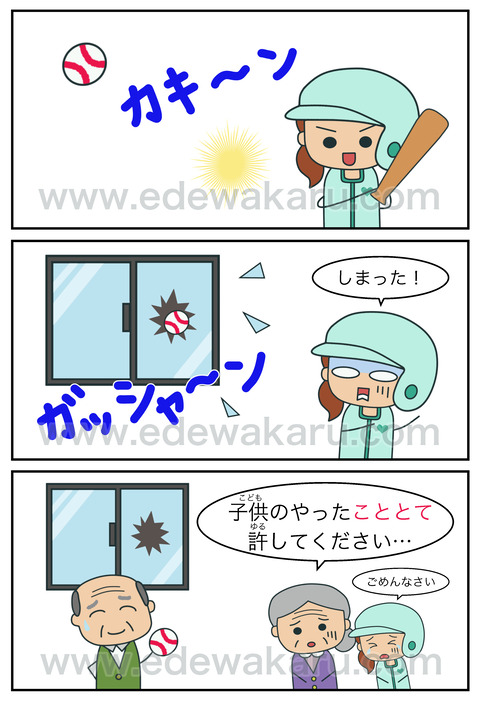
Meaning
〜because it is 〜
Even if it is 〜
How to use it
Verb [plain form] + こととて
Noun [dictionary form] + のこととて
Explanation
“〜こととて” is a grammar pattern that expresses [cause] or [reason], as in “〜ことだから” (“because it is 〜”). It is a very formal expression used in letters and written language. (Review: 〜として) In conversation, “〜ことだから” and “〜ことなので” are commonly used 😀 In most cases, an expression of [apology] or the like follows, and it is used when you want to tell someone the reason for your apology 😊
[Additional explanation]
“〜こととて” is very formal, so it is often used with “〜ぬ,” an old form of “〜ない.” In example ②, “慣れない” can be changed to “慣れぬ” 😉
[Examples]
Since I was not used to it, I made a mistake.
Since I was unused to it, I made a mistake.
I made a mistake because I didn’t know; I’m very sorry.
I made a mistake because I was unaware; I’m very sorry.
[For those who want to learn more]
In most cases, “〜こととて” is used to mean “〜ことだから,” but it can also be used with a concessive meaning, “even though it is 〜” 😮
[Example]
I cannot forgive it, even though a child did it.
→I cannot forgive it, even if a child did it.
You may have a chance to hear this in NHK historical dramas and the like, but it is hardly ever used in conversation 😅 Those taking N1 should make sure to learn it for the test 😀
In context 3 examples
子供のやったこととて許してください
→子供のやったことなので許してくださいPlease forgive it, since it was something a child did. →Please forgive it, because it was something a child did.
慣れないこととて失敗してしまいました
→慣れないことだったので失敗してしまいましたI made a mistake because I wasn’t used to it. →I made a mistake because it was something I wasn’t used to.
10年前のこととて、何も覚えていません…
→10年前のことなので、何も覚えていません…It was ten years ago, so I don’t remember anything… →It was something from ten years ago, so I don’t remember anything…
Read the original source text
Meaning
〜ことだから
〜ことであっても
How to use it
動詞[普通形]+こととて
名詞[辞書形]+のこととて
Explanation
「〜こととて」は「〜ことだから」というように【原因】【理由】を表す文型です。とてもかたい言い方で、手紙や書き言葉として使われます。(復習:〜として)会話では「〜ことだから」「〜ことなので」がよく使われます😀ほとんどの場合は、後ろに【謝罪】を表す表現などがきて、相手に謝る理由を言いたい時などに使用されます😊
【補足説明】
「〜こととて」はとてもかたい言い方ですので、「〜ない」の古い言い方の「〜ぬ」ともよく使われます。
例文②は「慣れない」を「慣れぬ」にチェンジすることができます😉
[例]
慣れない
こととて失敗してしまいました
慣れぬ
こととて失敗してしまいました
知らない
こととて失敗し、申し訳ありませんでした
知らぬ
こととて失敗し、申し訳ありませんでした
【余裕のある人へ】
「〜こととて」はほとんどの場合は「〜ことだから」の意味で使われますが、「〜ことであっても」と逆接の意味で使われることもあります😮
[例]
子供がやった
こととて
許せません
→子供がやった
ことであっても
許せません
NHKの大河ドラマなどでは聞く機会があると思いますが、会話で使われることはほとんどありません😅N1を受ける人はテストのためにしっかりと覚えておきましょう😀
日本語文型辞典
Meaning
Basic information: Nのこととて; Vこととて. Used to explain the reason for an apology, followed by an apology or a request for forgiveness. This is a somewhat old-fashioned expression. V-ぬ in ③ and ④ is a literary form equivalent to V-ない.
Examples:
① Since it was something a child did, would you please overlook it?
② Since I’m an old person, please forgive me if I make a mistake.
③ I’m sorry for my rudeness; I’m not used to this.
④ I’m sorry for causing you trouble; I didn’t know.
Read the original source text
Meaning
基本情報Nのこととて Vこととて説明後半に謝罪や許しを求める言葉をともなって、その謝罪の理由を述べるのに用いる。少し古めかしい表現。③④の「V-ぬ」は「V-ない」に相当する文語表現。例文① 子供のやったこととて、大目に見てはいただけませんか。② なにぶんにも年寄りのこととて、そそうがあったらお許しください。③ 慣れぬこととて、失礼をいたしました。④ 知らぬこととて、ご迷惑をおかけして申しわけございません。
AIUEO JLPT Grammar
Meaning
This sentence pattern is a highly formal expression used when explaining reasons or excuses, often appearing in contexts of apology or justification. It is somewhat old-fashioned and not commonly used in modern daily conversation.
How to use it
Verb + こととて; adjective + こととて; adjectival noun な + こととて; noun の + こととて
In context 5 examples
慣れないこととて、失礼がありましたらお許しください。
Since I am inexperienced, please forgive any rudeness.
急なこととて、ご連絡が遅れたことをお詫び申し上げます。
Since it was a sudden matter, I apologize for the delay in contacting you.
何分にも初めてのこととて、ご理解いただければ幸いです。
Since this is my first time, I would appreciate your understanding.
急な依頼のこととて、準備が間に合わなかった。
Since it was a sudden request, I couldn’t prepare in time.
予期せぬ出来事のこととて、混乱が生じたことをお詫びいたします。
Since it was an unexpected event, I apologize for the confusion.
Read the original source text
Meaning
This sentence pattern is a highly formal expression used when explaining reasons or excuses, often appearing in contexts of apology or justification. It is somewhat old-fashioned and not commonly used in modern daily conversation.
How to use it
動詞+こととて形容詞+こととて形容動詞な+こととて名詞の+こととて
Explanation · 日本語
この文型は、理由や言い訳を説明するときに使われる非常にフォーマルな表現で、謝罪や弁解の文脈でよく使用され、特に状況や事情を理解してほしいと伝えるときに使われます。現代の日常会話ではあまり使われない、やや古風な表現です。
文法
Meaning
Because ~ / Since ~
Used to give a reason for an apology.
How to use it
V(plain form)+こととて
イA(plain form)+こととて
ナA(plain form)な+こととて
Nの+こととて
Notes
① An old-fashioned expression.
② When it follows the negative form of a verb, there are two ways to say it: 「〜ないこととて」 and 「〜ぬこととて」.
In context 5 examples
慣れないこととて、あまり上手に作れませんでした。
Since I'm not used to it, I couldn't make it very well.
子供のやったこととて、どうや許してやってください。
Since it was something a child did, please somehow forgive them.
突然のこととて、まだ準備ができておりません。
Since it happened so suddenly, we are not yet prepared.
プレゼンは初めてのこととて、緊張してしまいうまく話せなかった。
Since it was my first presentation, I got nervous and couldn't speak well.
そんなの昔のこととて、覚えておりませんよ。
That was such a long time ago, so I don't remember.
Read the original source text
Meaning
〜だから / 〜なので
謝罪の理由を表す時に使われる。
How to use it
V(普通形)+こととて
イA(普通形)+こととて
ナA(普通形)な+こととて
名詞の+こととて
Notes
①古い表現。
②動詞の否定形と接続する場合「〜ないこととて」と「〜ぬこととて」の2通りの言い方がある。
Bunpro Grammar Reference
Meaning
Due to, Since, On account of, Because
How to use it
Verb + こととて
Verb[な̶い̶]+ ぬ(1) + こととて
Noun + の + こととて
(1) ない
Nuance
A formal, old-fashioned, particle-based expression, meaning on account of (A), (B). Even when (A)'s the thing, (B).
Explanation
こととて is a combination of the noun こと 'thing', and the binding (adverbial) particle とて, which is used for presenting reasons. It will be translated as 'due to (A)', or 'because of (A)'. This is a fairly old-fashioned expression, and will almost exclusively be used in writing in modern Japanese.
To use こととて, attach it to the end of a verb, or a noun followed by the case-marking particle の.
あの事件は20年前に起こったこととて、世間からは忘れられているだろう。
Due to that incident happening 20 years ago, it probably has been forgotten by the public.
商品についてあまり知らぬこととて、お客様の信頼を失ってしまった。
Due to me lacking knowledge about the product, I unfortunately lost credibility.
新人のこととて、まだ分からないことがたくさんありますが、これからよろしくお願いいたします。
Since I am still new, there are many things I don't know, but please take good care of me.
突然のこととて、前の車を避けきれませんでした。
Due to it being a sudden event, I was not able to avoid the car in front of me.
こととて will primarily be used when asking for forgiveness for something. Due to this, when appearing after verbs, the verb will usually be in past tense, or have been negated with either ない or ぬ. This highlights something that was done and shouldn't have been, or wasn't done and should have been.
In many cases, (A) will be something for which the negative result of (B) is obvious, or to be expected.
Fun Fact
とて is thought to either be a combination of the case-marking particle と and the conjunction particle て, or the conjunctive form of the classical auxiliary verb たり, と, and the conjunction particle て. As the origin is unclear, it will be best to think of it as its own structure, that carries its own original meaning.
In context 17 examples
- 時代劇、A(エー):「あなたのお父さんによろしくお伝えください。」
B(ビー):「お父さんは遥か昔に亡くなりました。」
A(エー):「そうでしたか。知らぬこととて、失礼をお許しください。」A period drama, A: 'Please, send my greetings to your father.' B: 'My father passed away long ago.' A: 'Is that so? Please, forgive my rudeness due to my lack of knowledge.'
- あの事件は20年前に起こったこととて、世間からは忘れられているだろう。
Due to that incident happening 20 years ago, it probably has been forgotten by the public.
- 突然のこととて、前の車を避けきれませんでした。
Due to it being a sudden event, I was not able to avoid the car in front of me.
- 商品についてあまり知らぬこととて、お客様の信頼を失ってしまった。
Due to me lacking knowledge about the product, I unfortunately lost credibility.
- 新人のこととて、まだ分からないことがたくさんありますが、これからよろしくお願いいたします。
Since I am still new, there are many things I don't know, but please take good care of me.
- 古い手紙:「取り込み中のこととてご迷惑をおかけしましたがなにとぞご寛容のほどお願い申し上げます。」
Old letter: 'I have caused you a lot of trouble due to being busy, but I would kindly ask for your understanding.'
- 「仕事になれぬこととて間違いをしてしまいました。申し訳ございません。」
'I made a mistake due to not being accustomed to the work. For that I am awfully sorry.'
- 「田舎のこととて年齢や学年に関係なく生徒が勉強する教室が1教室だけしかなかった。」
Since it was the countryside, there was only one classroom where school children studied, regardless of their age or grade.
- 「子供がやったこととて、親としてお詫び申し上げます。」
'Since my child did it, I would like to apologize as their parent.'
- 小説:「春の最中のこととて、早咲きの花のかすかな香りが漂っていた、肌に心地よいそよ風が吹いた。」
Novel: 'Since it was mid-spring, the pleasant soft wind that carried a faint aroma of flowers blew.'
- 耳が生まれつき悪いこととて、さっきの話がほとんど聞き取れなかったのです…。
On account of my ears being bad since birth, I couldn’t catch most of the conversation from a moment ago...
- 生徒:「集会で話すのは初めてのこととて、声が震えるほどに緊張をしております。」
Student: ‘Due to it being my first time speaking at an assembly, I am so nervous that my voice is shaking.’
- 電話対応をする従業員:「すみませんが、その件を扱う担当者が席を外しているとのこととて、後で掛け直させて下さい。」
Staff member answering a phone call: ‘I do apologize, but on account of the person responsible for handling that case being away, please allow me to call you back later.’
- 刑事:「お前はあの時、何をしていたんだ?」
ある男:「そんなの昔のこととて、覚えているわけがないだろ。」Detective: ‘What were you doing at that time? A certain man: ‘On account of that being in the past, there’s no way I remember it, right?’
- 店員に相談をする:「彼氏が出来たのは初めてのこととて、何をプレゼントするべきなのか分からないんです…。」
Discussing with a staff member: ‘Due to it being my first time getting a boyfriend, I have no idea what I ought to get as a present.’
- プロポーズされた女性:「突然のこととて、まだ考えが整理出来ていないのです。お返事まで時間を下さい。」
A woman that has been proposed to: ‘On account of the suddenness, I haven’t been able to get my thoughts together. Please give me some time until I answer.’
- 上司が後輩のミスを庇う:「なにせ新人なもので…慣れないこととてミスをしてしまったようです。私からも謝らせて下さい。」
A boss covering for their junior’s mistake: ‘In any case it’s a newbie thing… It seems like the error is on account of them not being used to it. Please let me apologize on my behalf as well.’
どんなときどう使う 日本語表現文型辞典
Meaning
on account of the fact that
How to use it
〔Plain form〕(ナAな/Nの)+こととて (because; being)
Explanation
ことだから
改まったやや古い硬い言い方。謝罪の理由を述べるときや許しを求めるときによく用いられる。ほかに「慣れぬこととて・高齢のこととて」などの例がある。
Formal and slightly old expression. Often used to give reasons for apologies or to seek forgiveness. Also found in expressions: 慣れぬこととて (on account of not being accustomed to) and 高齢のこととて (on account of being elderly).
In context 3 examples
世間知らずの若者のしたこととて、どうぞ許してやってください。
Please forgive him, as what he did was the act of an inexperienced young man.
山の中の村のこととて上等な料理などございませんが……。
Being in a village in the mountains, we have no fine dishes or anything like that, but...
子どものこととて、何を聞いても泣いてばかりいる。
Because they are children, they just keep crying no matter what you ask them.
Read the original source text
Meaning
on account of the fact that
How to use it
〔普通形〕(ナAな/Nの)+こととてF
Explanation
ことだから
改まったやや古い硬い言い方。謝罪の理由を述べるときや許しを求めるときによく用いられる。ほかに「慣れぬこととて・高齢のこととて」などの例がある。
Formal and slightly old expression. Often used to give reasons for apologies or to seek forgiveness. Also found in expressions: 慣れぬこととて (on account of not being accustomed to) and 高齢のこととて (on account of being elderly).
日本語文型辞典 英語版
Meaning
【こととて】[Nのこととて][Vこととて]
Used to state the reason for an apology or a request for forgiveness. Followed in the latter half of the sentence by words that express the apology or ask for forgiveness. A somewhat old-fashioned expression. V-ぬ, as in
(3)
and
(4)
, is the written-language equivalent of V-ない.
In context 4 examples
子供のやったこととて、大目に見てはいただけませんか。
Since it was a child who did it, couldn’t we ask you to overlook it?
なにぶんにも年寄りのこととて、そそうがあったらお許しください。
As I am getting on in years, please excuse me if I make mistakes.
慣れぬこととて、失礼をいたしました。
I’m sorry for my discourtesy—I am not used to this.
知らぬこととて、ご迷惑をおかけして申しわけございません。
I’m sorry to have put you to such trouble—I didn’t know.
日本語NET JLPT文法解説まとめ
Meaning
"because ~ / since ~"
Used to give a reason for an apology.
How to use it
V(plain form)+こととて
イA(plain form)+こととて
ナA(plain form)な+こととて
Nの+こととて
Explanation
Used to express a reason for an apology.
① An old-fashioned expression.
② When connected to the negative form of verbs, there are two ways to say it: "〜ないこととて" and "〜ぬこととて."
① An old-fashioned expression.
② When connecting with the negative form of verbs, there are two ways to say it: "〜ないこととて" and "〜ぬこととて."
Read the original source text
Meaning
"〜だから / 〜なので"
謝罪の理由を表す時に使われる。
How to use it
V(普通形)+こととて
イA(普通形)+こととて
ナA(普通形)な+こととて
名詞の+こととて
Explanation
Used to express a reason for an apology.
① 古い表現。
② 動詞の否定形と接続する場合「〜ないこととて」と「〜ぬこととて」の2通りの言い方がある。
① An old-fashioned expression.
② When connecting with the negative form of verbs, there are two ways to say it: "〜ないこととて" and "〜ぬこととて."
毎日のんびり日本語教師
Meaning
Because…
Since…
How to use it
Verb ない-form + こととて
Noun + の + こととて
Explanation
This is a pattern that expresses a reason.
It means the same as “~だから,” but is somewhat formal.
“急なこととて” is an idiomatic expression.
The negative form of a verb may also use “~ぬ.”
It is readily used in situations involving an apology or asking for permission.
Notes
Nothing in particular.
In context 10 examples
7年前のこととて、何も憶えてない。
Since it was seven years ago, I don’t remember anything.
戦時中のこととて少年は甘いものに飢えていた。
Because it was wartime, the boy was starved for sweets.
小さい地震なら日本人はいつものこととて全く動じない。
For Japanese people, a small earthquake is nothing unusual, so they are not fazed by it at all.
急なこととて何のおもてなしもできず申し訳ありません。
As this was so sudden, I’m sorry we couldn’t offer you any hospitality.
週末のこととて、幹線道路は渋滞が始まっていた。
Since it was the weekend, traffic had begun to build up on the main road.
深夜のこととて、昼間はうるさい蟬も静まりかえっている。
Since it was the middle of the night, even the cicadas that are noisy during the day had fallen completely silent.
当時のこととて新幹線もなく、青森から東京へは丸一日かかった。
Since it was back then and there was no Shinkansen, getting from Aomori to Tokyo took a whole day.
普段話すことはないが、隣人のこととて放ってはおけない。
I don’t usually talk with my neighbor, but since they’re my neighbor, I can’t just leave them be.
慣れないこととて、レシピを見ても上手には作れなかった。
Since I wasn’t used to it, I couldn’t make it well even by following the recipe.
こちらが知らぬこととて、ご迷惑おかけいたしました。
I apologize for the trouble I caused, as I was unaware.
Read the original source text
Meaning
~だから
~なので
How to use it
動ない形+こととて
名詞+の+こととて
Explanation
理由を表す文型です。
意味は「~だから」と同じですが、こちらはやや硬い表現です。
「急なこととて」は慣用表現です。
動詞の否定形は「~ぬ」を使う場合もあります。
謝罪や許可を得るような場面で使いやすいです。
Notes
特になし
NINJAL 日本語文型データベース
Meaning
Used when giving a reason. It is often used when apologizing or asking for forgiveness.
How to use it
Notes
After 「〜こととて」 comes a clause describing a situation or state, or a clause apologizing or asking for forgiveness.
In context 12 examples
親「この度は、うちの子がお店の物を壊してしまい、誠に申し訳ありませんでした。子どものしたこととて、どうかお許しいただけないでしょうか」
Parent: “I am truly sorry that our child broke something in your store. Since it was something a child did, would you please forgive them?”
部下「申し訳ございません。急な変更が生じたこととて、お客様の要望に十分に対応することができませんでした。今後はもっと柔軟に対応できるよう準備しておきます」
Employee: “I sincerely apologize. Since an unexpected change arose, we were unable to respond adequately to the customer’s request. We will prepare so that we can respond more flexibly from now on.”
この度の事故は予期せぬこととて、ご迷惑をおかけいたしました。申し訳ございませんでした。
Because this accident was unforeseen, we caused you trouble. We sincerely apologize.
会議の議事録作成に3時間もかかってしまった。慣れないこととて仕方がないが、次からはもっと効率的にやろう。
It took three hours to prepare the meeting minutes. Since I’m not used to it, I suppose it couldn’t be helped, but I’ll work more efficiently next time.
親「うちの子は視力が弱いこととて、黒板の字が見にくいんです。教室でのタブレットの使用を認めていただけませんか」
Parent: “Because my child has poor eyesight, it’s hard for them to see the writing on the blackboard. Could you allow them to use a tablet in class?”
上司「新入社員は経験が少ない事とて、失敗することもあるだろう。先輩社員としてフォローをしっかり頼むよ」
Supervisor: “Since the new employees have little experience, they’re bound to make mistakes sometimes. As senior employees, make sure you support them.”
昨日の来客には、急なこととて何のおもてなしもできませんでした。
Because the visitors came unexpectedly yesterday, I was unable to offer them any hospitality.
上司「A社とのオンライン会議は、特別な事とて事前によく準備をしておくように」
Supervisor: “Since the online meeting with Company A is a special occasion, make sure to prepare well in advance.”
不測の事態のこととて、部長も寛容な判断をしてくださるだろう。
Because this was an unforeseen circumstance, the department head will probably make a lenient decision too.
地元の人「この町も田舎のこととて、近所付き合いが大事でね。慣れないかもしれないけど、許してね」
Local resident: “Since this town is in the countryside, relationships with neighbors are important. You may not be used to it, but please bear with us.”
世間知らずな弟のこととて、どうかご無礼をお許しください。
Given that my younger brother is naive about the ways of the world, please forgive his rudeness.
故意ではなかった事とて、今回の事故に対する処分は厳重注意で済んだ。
Since it was not intentional, the penalty for this accident was limited to a severe warning.
Read the original source text
Meaning
理由を言うときに使います。謝ったり、許しを求めたりするときによく使います。
How to use it
Notes
「〜こととて」の後には、状況や状態を表す文や、謝罪や許しを求める文がきます。