日本語文型辞典 英語版
Meaning
Asserts that something is the best. Often preceded by a なら or たら clause.
Means that a problem is not limited to just one thing. Generally used with respect to negative matters and expresses that “this applies not only in this case but also in many others.”
How to use it
1. ...にかぎる[Nにかぎる][Na なのにかぎる][Aのにかぎる][V-るにかぎる]
2. Nにかぎったことではない
3. ...とはかぎらない→
4. ...ともかぎらない→
In context 9 examples
和菓子ならこの店にかぎる。
This is really the only shop for Japanese sweets.
疲れた時は温泉に行くにかぎるね。
Going to a hot spring resort is the thing to do when you are tired, you know.
せっかくテレビを買いかえるのなら、画面がきれいなのにかぎる。
If you’re going to buy a new TV, then it has to be one with good picture quality.
ヨーロッパを旅行するなら電車にかぎるよ。安くて快適だしね。
Train is the only way to travel in Europe. It’s cheap and comfortable.
家族みんなで楽しみたかったら、ディズニーランドに行くに限る。
If you want to have fun with your whole family, going to Disneyland is best.
あの人が遅刻するのは今日にかぎったことではない。
Today is not the only day that he’s been late.
レポートのできが悪いのはこの学生にかぎったことではない。
It is not just this student whose reports are poorly written.
日本の物価の高さはなにも食料品にかぎったことではない。
It is not only groceries that are expensive in Japan.
エンジンの故障が多いのはこの車種に限ったことではないらしく、同じメーカーの他の車種でも同じようなトラブルが起こっているということだ。
It is not only this model which has had all sorts of engine trouble; other models of this car manufacturer are also having the same sort of trouble.
Read the original source text
Meaning
Asserts that something is the best. Often preceded by a なら or たら clause.
Means that a problem is not limited to just one thing. Generally used with respect to negative matters and expresses that “this applies not only in this case but also in many others.”
How to use it
1. ...にかぎる[Nにかぎる][Na なのにかぎる][Aのにかぎる][V-るにかぎる]
2. Nにかぎったことではない
3. ...とはかぎらない→
4. ...ともかぎらない→
日本語文型辞典
Meaning
Used to assert that “…is the best.” It is often preceded by “…なら/たら.”
Means “it is not a problem limited to that alone.” Generally used with negatively evaluated matters to mean that this is not the only instance, and that it is common elsewhere too.
⇾とはかぎらない
⇾ともかぎらない
How to use it
…にかぎる
Nにかぎる
Naなのにかぎる
Aのにかぎる
V-るにかぎる
Nにかぎったことではない
…とはかぎらない
…ともかぎらない
In context 9 examples
和菓子ならこの店にかぎる。
For Japanese sweets, this shop is the best.
疲れた時は温泉に行くにかぎるね。
When you're tired, going to a hot spring is the best.
せっかくテレビを買いかえるのなら、画面がきれいなのにかぎる。
If you're going to replace the TV after all, you might as well get one with a beautiful screen.
ヨーロッパを旅行するなら電車にかぎるよ。安くて快適だしね。
If you're traveling around Europe, going by train is the best. It's cheap and comfortable.
家族みんなで楽しみたかったら、デイズニーランドに行くに限る。
If you want the whole family to enjoy themselves, going to Disneyland is the best.
あの人が遅刻するのは今日にかぎったことではない。
That person isn't late only today.
レポートのできが悪いのはこの学生にかぎったことではない。
This student isn't the only one who writes poor reports.
日本の物価の高さはなにも食料品にかぎったことではない。
The high cost of things in Japan isn't limited to food.
エンジンの故障が多いのはこの車種に限ったことではないらしく、同じメーカーの他の車種でも同じようなどラブルが起こっているということだ。
Apparently, frequent engine trouble isn't limited to this car model; similar problems occur in other models made by the same manufacturer.
Read the original source text
Meaning
「…が一番だ」ということを主張するのに使う。「…なら/たら」を前に伴うことが多い。
「それだけに関する問題ではない」という意味。一般的にマイナス評価のことがらについて、それはこの場合だけではなく他にもよくあることだ、という意味を表す。
⇾とはかぎらない
⇾ともかぎらない
How to use it
…にかぎる
Nにかぎる
Naなのにかぎる
Aのにかぎる
V-るにかぎる
Nにかぎったことではない
…とはかぎらない
…ともかぎらない
絵でわかる日本語
Meaning
It is not only a problem of …
It is not limited to …; there are other cases, too.
How to use it
Noun[dictionary form]+に限ったことではない
Explanation
“〜に限ったことではない” is a sentence pattern meaning “it is not only a problem of ….” It is used to emphasize that “this is not limited to this one case.” 😊 In most cases, it is used for something negative. 😮 “〜に限ったことではない” can also be changed to “〜に限ったことじゃない.”
(Review: 〜ちゃ・〜じゃ)
[Example]
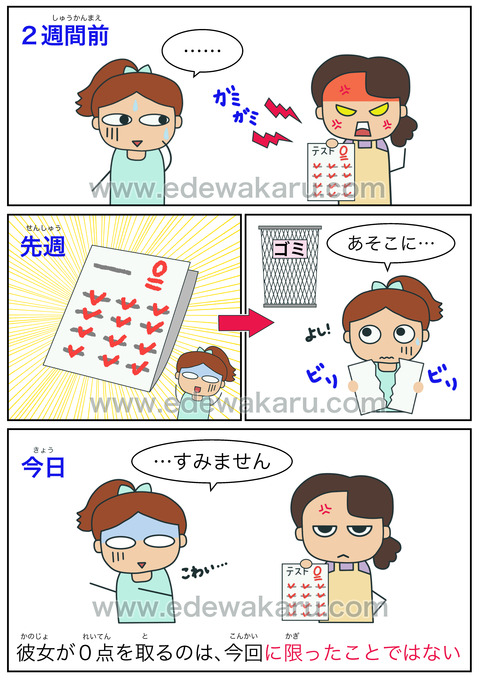
彼女が0点を取るのは、今回
に限ったことではない
=彼女が0点を取るのは、今回
に限ったことじゃない
She did not get zero points only this time; she has done so before as well.
“〜に限ったことではない” is an emphatic form of “〜に限らない.”
Remember it as one item in the “限る” series. 😉
【“限る” series】
〜限り(limit)
〜限り
〜限りだ
〜限りで・N限りのN(limitation)
〜限りでは(scope)
限りなく〜に近い
〜とは限らない
〜ない限り
〜に限ったことではない
〜に限らず(〜も)
〜に限る
〜を限りに
In context 5 examples
彼女が0点を取るのは、今回に限ったことではない
→彼女が0点を取ったのは、今回だけでなく他の日にも取ったことがあるHer getting zero points is not limited to this time. →She got zero points not only this time; she has also gotten them on other days.
山田くんが遅刻するのは、今日に限ったことではない
→山田くんが遅刻をしたのは、今日だけでなく、よくするYamada being late is not limited to today. →He was late not only today; he is often late.
N1が難しいと感じているのは、君に限ったことではないよ
→君だけが難しいと感じているのではなく、他の人もそう感じているYou are not the only one who finds N1 difficult. →You are not the only one who finds it difficult; other people feel that way, too.
ゴミ問題は、日本に限ったことではない
→日本だけの問題ではなく、他の国でも問題になっているThe garbage problem is not limited to Japan. →It is not only a problem in Japan; it is also an issue in other countries.
忘れっぽくなったのは、最近に限ったことではない
→最近発生した問題ではなく、昔から忘れっぽい(復習:〜っぽい)My becoming forgetful is not something that has only happened recently. →It is not a problem that started recently; I have been forgetful for a long time. (Review: 〜っぽい)
Read the original source text
Meaning
〜だけの問題ではない
〜だけではなく、他にもある
How to use it
名詞[辞書形]+に限ったことではない
Explanation
「〜に限ったことではない」は「〜だけの問題ではない」という意味を表す文型です。「〜は、この場合だけではない」と強調して言いたい時に使われます😊ほとんどの場合は、マイナスのことに対して使用されます😮また
「〜に限ったことではない」は「〜に限ったことじゃない」にチェンジすることもできます。
(復習:〜ちゃ・〜じゃ)
[例]
彼女が0点を取るのは、今回
に限ったことではない
=彼女が0点を取るのは、今回
に限ったことじゃない
「〜に限ったことではない」は「〜に限らない」を強調した文型です。
「限るシリーズ」の1つとして覚えておきましょう😉
【「限る」シリーズ】
〜限り(限界)
〜限り
〜限りだ
〜限りで・N限りのN(限定)
〜限りでは(範囲)
限りなく〜に近い
〜とは限らない
〜ない限り
〜に限ったことではない
〜に限らず(〜も)
〜に限る
〜を限りに
くらべてわかる日本語表現文型辞典
Meaning
X is not only A; there are other similar instances as well. This carries the nuance that X is not particularly unusual.
How to use it
(X wa) A ni kagitta koto dewa nai
[Noun - ∅] ni kagitta koto dewa nai
Explanation
【Contrast 1】
“(X wa) A dake dewa nai”
“(X wa) A dake dewa nai” simply means that there are cases or times when X is something other than A, and it can be used broadly.
○試験は面接だけではない。 — The exam is not just an interview.
×試験は面接に限ったことではない。 — The exam is not limited to an interview.
“A ni kagirazu B” (Meaning 1, p. 221)
“A ni kagirazu B” means not only A but also B over a wider range.
“(X wa) A ni kagitta koto dewa nai” does not limit the range.
○この仕事は日曜日に限らず平日も忙しい。(平日も忙しい) — This job is busy on weekdays as well as Sundays. (It is also busy on weekdays.)
○この仕事が忙しいのは、日曜日に限ったことではない。(日曜日が特別ではない) — This job’s being busy is not limited to Sundays. (Sunday is not exceptional.)
In context 4 examples
このような失敗は今回に限ったことではない。
This kind of failure is not limited to this time.
制服の着用を義務づけているのは、わが校に限ったことではない。
Our school is not the only one that requires students to wear uniforms.
我が家で赤飯を食べるのはお祝いの日に限ったことではない。
In our family, we don’t eat sekihan only on celebratory occasions.
この仕事が忙しいのは、何も日曜日に限ったことではない。
This job’s being busy is not limited to Sundays.
Read the original source text
Meaning
XはAだけではなく、ほかにも同じようなことがあることを表す。Xはさほど珍しくないというニュアンスを含んでいる。
How to use it
(Xは)Aに限ったことではない
[名詞-∅]に限ったことではない
Explanation
【対比1】
「(Xは)Aだけではない」
「(Xは)Aだけではない」は単にXはA以外の場合・時もあるという意味で、使用範囲は広い。
○試験は面接だけではない。
×試験は面接に限ったことではない。
「Aに限らずB」(意味1 P.221)
「Aに限らずB」はAだけでなく、より広い範囲のBも、の意味である。
「(Xは)Aに限ったことではない」は範囲を限定しない表現である。
○この仕事は日曜日に限らず平日も忙しい。(平日も忙しい)
○この仕事が忙しいのは、日曜日に限ったことではない。(日曜日が特別ではない)