Bunpro Grammar Reference
Meaning
Most・mostly, Adequately・generally, For the most part, Roughly・approximately, In the first place
How to use it
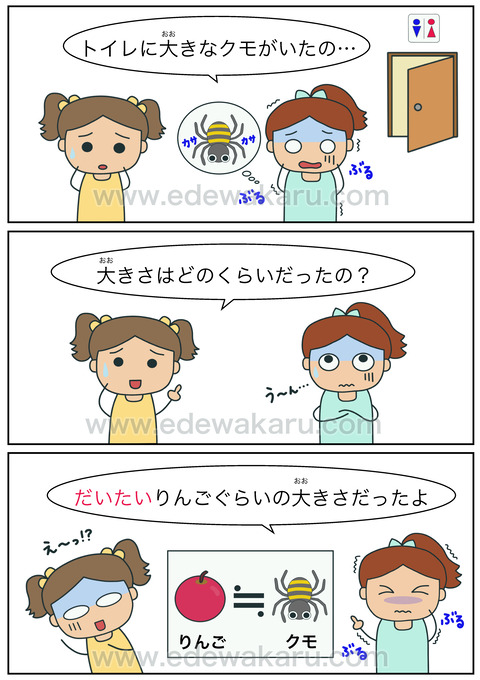
だいたい + Phrase
だいたい + Number(1)
だいたい + の + Noun
(1) Degree
Nuance
A word implying that something is, for the most part, (A).
Explanation
大体 is an adverb that is used to highlight the 'main point' of something in Japanese, and therefore has several different nuances. 大体 will regularly be translated as 'mostly', 'generally', or 'for the most part'.
As with other adverbs that highlight amounts, 大体 can be used to modify entire phrases, or can be used directly before a noun as 大体の + noun.
だいたいでいいから何時くらいに着くか教えて。
Since a general time is okay, can you let me know around when you will arrive?
水曜日はだいたい5時に起きています。
On Wednesdays, I generally wake up at 5 o'clock.
だいたいの人たちが薔薇という漢字を書けません。
Most people do not know how to write the kanji 'bara'. (薔薇(ばら) is the kanji for 'rose')
In a similar way to そもそも, a noun/adverb which means 'in the first place', 大体 can also have this meaning. This nuance is frequently quite obvious, as the rest of the sentence will highlight a desired outcome that unfortunately did not happen.
だいたいなんでお前がここにいるの?
Why are you here in the first place? (No one wants you here)
Although these 2 primary uses of 大体 may seem quite different, they are both just expressing what is 'essentially' correct, most common, the original, etc.
Fun Fact
A common synonym for 大体 is 根本, a noun which means 'the source', or 'the origin' of something. In this way, 大体 just expresses the way something is, without receiving any alterations (regardless of whether any subsequent alterations are positive or negative). This is where the 'in essence' meaning comes from.
と言うことは私たちが言っていることはだいたい一緒なのね。
In that case, what we are both saying is the same in essence.
In context 17 examples
- 「日本語が大体わかる。」
'I roughly understand Japanese.' (for the most part)
- だいたいの人たちが薔薇という漢字を書けません。
Most people do not know how to write the kanji 'bara'. (薔薇(ばら) is the kanji for 'rose')
- 水曜日はだいたい5時に起きています。
On Wednesdays, I generally wake up at 5 o'clock.
- だいたいなんでお前がここにいるの?
Why are you here in the first place? (No one wants you here)
- だいたいでいいから何時くらいに着くか教えて。
Since a general time is okay, can you let me know around when you will arrive?
- 「大体3時間くらいでできます。」
'It will be ready in approximately 3 hours.' (roughly)
- 「彼女は大体の状況を知っています。」
'She has the general idea of the situation.' (adequate・mostly)
- 焼きたてパンについて話しているカップル、
彼女:「どう?」
彼氏:「大体いいと思うんだけど、」Couple talking about freshly baked bread: Girlfriend: 'How is it?' Boyfriend: 'I think it is mostly good, but…'
- 電話にでている子供:「父は大体5時ごろ帰ります。」
Child answering the phone: 'Dad usually comes home around 5.'
- このサイトにいる人は、大体真面目な人だと思う。外国語を学ぶときはそれが必要だからね。
I think that people on this site are mostly diligent. Because you need that when learning a foreign language. (generally)
- 文化祭の準備をしている生徒:「大体でいいから、午前中までにはおわらせておいて。」
Students preparing for the school festival: 'Adequately is good enough, so can you finish it during the morning?' (mostly)
- お客さんと話しているテクニカルサポートスタッフ:「大体は、スマートフォンをリセットすればOK(オーケー)です。」
Tech support staff speaking with a customer: 'Generally, if you reset your smartphone it will be OK.' (generally)
- 友達との話:「彼女は大体28歳くらいかな。」
Chat between friends: 'I would guess that she is roughly about 28 years old.' (approximately)
- 家族との話:「母は大体スマホを使えるようになった。」
Chat with family: 'For the most part, my mom has come to be able to use a smartphone.' (mostly・adequately)
- 論説:「大体の人は食べたり寝たりするのが好きです。」
Editorial: 'Most people enjoy doing such things like eating and sleeping.' (generally・for the most part)
- 「大体、太郎が一人でそこへ行ったことが間違いなんです。」
'In the first place, it was a mistake for Tarou to go there by himself.'
- と言うことは私たちが言っていることはだいたい一緒なのね。
In that case, what we are both saying is the same in essence.
絵でわかる日本語
日本語文型辞典 英語版
Meaning
B:だいたいね、注意してやらない君が悪いんだよ。
You’re the one to blame, because you never remind him.
B:だいたいだね、君は今まで時間通りに来たことがない。
The thing is, you’ve never arrived on time.
Means “mostly; the greater part” in examples
(1)
and
(2)
. Can be used to convey a sense of reproach or criticism when the speaker is stating a judgment about something that is 無理 (impossible) or 非常識 (thoughtless), as in
(3)
and
(4)
. May also be used to preface criticisms, grievances, or complaints against another person, as in
(5)
,
(6)
, and
(7)
.
In context 7 examples
大体のことは伝えておきます。
I will convey the main points.
だいたいわかりました。
I understand, more or less.
この本をひとりで日本語に翻訳するのはだいたい無理な話だ。
It’s almost impossible for one person to translate this book into Japanese.
こんな時間に電話するなんてだいたい非常識な人だ。
Calling people at such an hour shows that he has practically no common sense.
A:あの子、いつも忘れものをするらしいの。
Apparently he always forgets to take something (to school).
だいたいぼくよりあいつの方が給料がいいなんて変だよ。
To begin with, the fact that his salary is higher than mine is just crazy.
A:すみません、遅れまして。
I’m sorry to be late.
日本語文型辞典
Meaning
Basic information: ① and ② mean “mostly” or “for the most part.” It is also used to express the speaker’s judgment about something “impossible” or “unreasonable,” as in ③ and ④, often with a critical or disapproving attitude. It is also used as an introduction when complaining to or criticizing someone, as in ⑤, ⑥, and ⑦. Examples: ① I’ll pass along most of the information. ② I understand most of it. ③ Translating this book into Japanese by oneself is basically impossible. ④ Calling at this hour is utterly inconsiderate. ⑤ A: Apparently that child is always forgetting things. B: Come on, you’re the one at fault for not reminding them. ⑥ It’s ridiculous that he gets paid more than me in the first place. ⑦ A: Sorry I’m late. B: The thing is, you’ve never been on time once.
Read the original source text
Meaning
基本情報説明①②はほとんど、大部分の意味。また、③④のように「無理」なこと、「非常識」なことなどについての話し手の判断を述べるときに非鞋、批判の気持ちをこめて使われる。また、⑤⑥⑦のように相手に文句や苦情をいったり、非難したりするときの前置きとしても使う。例文① 大体のことは伝えておきます。② だいたいわかりました。③ この本をひとりで日本語に翻訳するのはだいたい無理な話だ。④ こんな時間に電話するなんてだいたい非常識な人だ。⑤ A:あの子、いつも忘れものをするらしいの。
B:だいたいね、注意してやらない君が悪いんだよ。⑥ だいたいぼくよりあいつの方が給料がいいなんて変だよ。⑦ A:すみません、遅れまして。
B:だいたいだね、君は今まで時間通りに来たことがない。