どんなときどう使う 日本語表現文型辞典
Meaning
whether to…or not
How to use it
Vよう + か + Vる + まいか (For Group II and III verbs, Vない + まいか is also used. For する, すまいか is also used.)
Explanation
ようか~まいか
~をしようか、するのはやめようか
1)話者がどちらがいいかと迷ったり、考えたりするときに使う。3人称が主語の場合は、「迷っている」などの後に「ようだ・らしい・のだ」などをつけて使う。
2)「Vまい」は「Vよう」の否定形。「まい」は古い言葉ではあるが、決まった言い方として、現在でも使われる。
1)Speaker is confused about which of two choices to do, or is still thinking. When subject is in the third person, sentence ending takes ようだ, らしい, or のだ after verbs such as 迷っている.
2)Vまい is negative of Vよう. Form まい is old-fashioned, but still used today in certain expressions.
In context 4 examples
この季節には、かさを持っていこうかいくまいかと毎朝迷ってしまう。
At this time of year, I find myself wondering every morning whether to take an umbrella or not.
9月に大切な試験があるので、夏休みに国へ帰ろうか帰るまいか、考えています。
I have an important exam in September, so I'm thinking about whether to go back to my country during summer vacation or not.
今晩11時からのテレビの特別番組を見ようか見まいか、迷っています。
I'm undecided about whether to watch the special TV program at 11 tonight or not.
彼は展示会の開催を延期しようかするまいかと迷っているようだ。
It seems he's wondering whether or not to postpone holding the exhibition.
Read the original source text
Meaning
whether to…or not
How to use it
Vよう+か+Vる+まいか(動詞Ⅱ・Ⅲは「Vない+まいか」もある。「する」は「すまいか」もある)
Explanation
ようか~まいか
~をしようか、するのはやめようか
1)話者がどちらがいいかと迷ったり、考えたりするときに使う。3人称が主語の場合は、「迷っている」などの後に「ようだ・らしい・のだ」などをつけて使う。
2)「Vまい」は「Vよう」の否定形。「まい」は古い言葉ではあるが、決まった言い方として、現在でも使われる。
1)Speaker is confused about which of two choices to do, or is still thinking. When subject is in the third person, sentence ending takes ようだ, らしい, or のだ after verbs such as 迷っている.
2)Vまい is negative of Vよう. Form まい is old-fashioned, but still used today in certain expressions.
絵でわかる日本語
Meaning
(The speaker) is considering whether or not to ~.
(The speaker) is unsure whether or not to ~.
How to use it
Verb [volitional form] + ようか
Verb [volitional form] + ようかな
Verb [volitional form] + ようかしら
Explanation
“Volitional form + か,” “volitional form + かな,” and “volitional form + かしら” are sentence patterns used when the speaker is unsure whether or not to do something. They express “I’m still undecided about whether to ~” or “I haven’t decided yet whether to ~” 😊 Use them when you want to emphasize that the speaker is unsure, compared with the plain volitional form 😀
(Review: 〜に比べて [compared with])
[Examples]
じゃあ、行ってみよう
Well then, let’s go and see.
→The intention to “go” is clear.
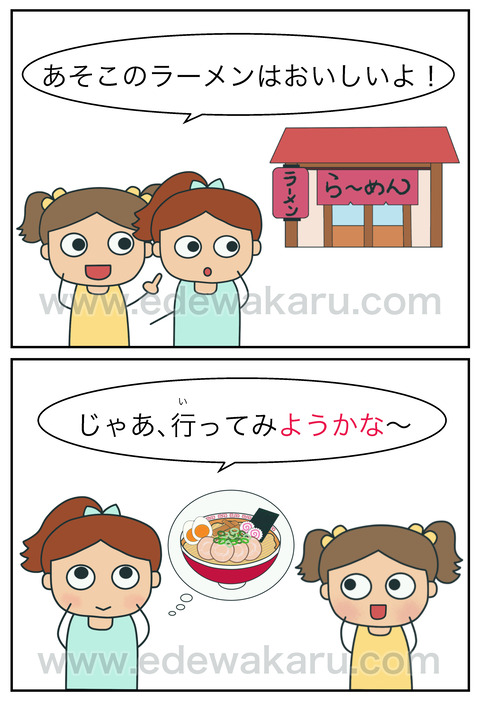
じゃあ、行ってみようかな
Well then, maybe I’ll go and see.
→I haven’t decided yet whether to go or not.
Also, “か,” “かな,” and “かしら” can be switched, but be careful: only women use “かしら” 😨
[Examples]
じゃあ、行ってみようか
=じゃあ、行ってみようかな
=じゃあ、行ってみようかしら (used by women)
“〜かな・〜かしら” have several meanings, so review them if you’ve forgotten 😊
(Review: 〜かな・〜かしら [grammar])
(Review: 〜かな・〜かしら [colloquial form])
There are few opportunities to study “volitional form + か,” “volitional form + かな,” and “volitional form + かしら,” but they are used a great deal in everyday conversation, so I think it’s good to learn them 😉
In context 4 examples
A:あそこのラーメンはおいしいよB:じゃあ、行ってみようかな
→行くか行かないか考えているA: The ramen over there is delicious. B: Well then, maybe I’ll go and try it. →I’m considering whether or not to go.
学校を休もうかな…
→学校を休むか休まないか考えているMaybe I’ll take the day off from school… →I’m considering whether or not to take the day off from school.
夕ご飯は何にしようか
→夕ご飯は何にするか考えているWhat should I have for dinner? →I’m thinking about what to have for dinner.
今日は雨が降るかな…傘を持って行こうかな
→傘を持って行くかどうか迷っている(復習:〜かな・〜かしら(文法))(復習:〜かな・〜かしら(口語形))Maybe it’ll rain today… Maybe I’ll take an umbrella. →I’m unsure whether or not to take an umbrella (Review: 〜かな・〜かしら [grammar]; 〜かな・〜かしら [colloquial form]).
Read the original source text
Meaning
(話者が)〜するかしないか考えている
(話者が)〜するかしないか迷っている
How to use it
動詞[意向形]+ようか
動詞[意向形]+ようかな
動詞[意向形]+ようかしら
Explanation
「意向形+か」「意向形+かな」「意向形+かしら」は「話者が〜するか〜しないか迷っている」と言いたい時に使われる文型です。話者が
「〜するかどうか、まだ迷っている」「〜するかどうか、まだ決めていない」という意味を表す表現です
😊「意向形」に比べて、話者が迷っているという意味を強調したい時に使いましょう😀
(復習:〜に比べて)
[例]
じゃあ、行っ
てみよう
→「行く」という意志がはっきりしている
じゃあ、行っ
てみようかな
→「行く」か「行かない」かまだ決めていない
また、「か」「かな」「かしら」はチェンジできますが、
「かしら」は女性しか使えません
ので気をつけてください😨
[例]
じゃあ、行っ
てみようか
=じゃあ、行っ
てみようかな
=じゃあ、行っ
てみようかしら
(*女性が使用)
「〜かな・〜かしら」にはいくつか意味がありますので、忘れてしまった人は復習をしておいてください😊
(復習:〜かな・〜かしら(文法))
(復習:〜かな・〜かしら(口語形))
「意向形+か」「意向形+かな」「意向形+かしら」 は勉強する機会が少ないですが、日常会話(にちじょうかいわ)でとてもよく使われますので、覚えておくといいと思います😉
NINJAL 日本語文型データベース
Meaning
Used to say that you cannot decide whether or not to do something, or that you are unsure.
How to use it
Notes
The same verb expressing a volitional action, such as “行く・辞める・参加する,” comes in both instances of “~.” A sentence meaning that the speaker is unsure or thinking follows “〜うか〜まいか.”
In context 6 examples
髪を短く切ろうか切るまいか、迷っている。
I’m wondering whether to cut my hair short or not.
オークションサイトでほしい本を見つけたが、少し高いので、買おうか買うまいか考えている。
I found a book I want on an auction site, but it’s a little expensive, so I’m thinking about whether to buy it or not.
「山口さん、最近よく考え事してるね」「どうやら会社を辞めようか辞めるまいか本気で考えているみたいだよ」
“Yamaguchi, you’ve been lost in thought a lot lately.” “Apparently he’s seriously thinking about whether to quit the company or not.”
歌手になる夢を諦めようか諦めまいか、この頃悩んでしまう。
Lately I find myself worrying about whether to give up on my dream of becoming a singer or not.
友達に教えてもらったアルバイト、勤務時間帯の問題で応募しようかするまいかまだ決心がつかない。
I still can’t decide whether to apply for the part-time job my friend told me about, because of the work hours.
今日のライブ、すごい演奏でしたね。最近忙しかったので、今日は来ようか来るまいか迷ったんですが、来て良かったです。
That live show today was amazing. I’ve been busy lately, so I was unsure whether to come or not, but I’m glad I came.
Read the original source text
Meaning
~するかしないか決められない・迷うと言いたいときに使います。
How to use it
Notes
2つの「~」には、「行く・辞める・参加する」など、意志的な行為を表す同じ動詞がきます。「〜うか〜まいか」の後には、迷っている・考えているという意味の文がきます。