絵でわかる日本語
Usage 1
Read this source entry ↗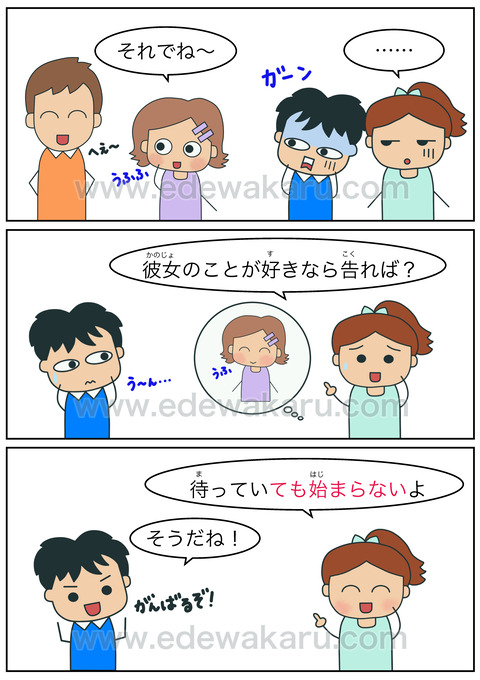
Meaning
There’s no point in doing 〜
Doing 〜 is useless
It’s too late to do 〜
Even if you keep doing 〜, the situation won’t change
How to use it
Verb [て-form] + ても始まらない
Explanation
“〜ても始まらない” is a sentence pattern meaning “there’s no point in doing 〜” or “even if you keep doing 〜, nothing new will happen.” It is often used when you want to say “the situation won’t progress and there’s no point in continuing to do 〜, so it would be better to do something” or “doing 〜 won’t solve the problem.” The colloquial form “〜たって” can also be used with “〜ても始まらない,” as in “〜たって始まらない.”
[Example]
There’s no point in waiting.
→ There’s no point in waiting.
“〜ても始まらない” is also often used in conversation, so be sure to learn it 😉
In context 5 examples
彼女のことが好きなら告れば?待っていても始まらないよ
→待っていても、状況はかわらないよIf you like her, why not tell her? Nothing will change if you keep waiting. → The situation won’t change if you keep waiting.
終わったことを今さら後悔しても始まらない
→今さら後悔しても、もう遅いThere’s no point regretting what’s already over now. → It’s too late to regret it now.
泣いても始まらないから、何か解決する方法を考えましょう
→泣いていても状況は変わらないから、何か解決する方法を考えましょうThere’s no point crying, so let’s think of a way to solve the problem. → The situation won’t change if we keep crying, so let’s think of a way to solve the problem.
もう決まったことだから、文句を言っても始まらない
→文句を言っても無駄だよIt’s already been decided, so there’s no point complaining. → Complaining is pointless.
A:また失敗して、部長に怒られたの…B:いつまでもへこんでいても始まらないよ。A:そうね。次は失敗しないようにしなきゃ
→いつまでもへこんでいても状況は変わらないよA: I made another mistake and the department manager got mad at me… B: There’s no point staying depressed forever. A: You’re right. I have to make sure I don’t make a mistake next time. → The situation won’t change if you stay depressed forever.
Read the original source text
Meaning
〜ても意味がない
〜ても無駄だ
〜ても、もう遅い
〜していても、状況は変わらない
How to use it
動詞[て形]+ても始まらない
Explanation
「〜ても始まらない」は「〜ても意味がない」「〜ていても、新しいことは起こらない」という意味の文型です。「〜していても状況は進展しないし意味がないから、何かしたほうがいい」「〜することは問題解決(もんだいかいけつ)にならない」と言いたい時によく使います。「〜ても始まらない」は[口語形]の「〜たって」を使って、「〜たって始まらない」と言うこともできます。
[例]
待ってい
ても始まらない
よ
→待ってい
たって始まらない
よ
「〜ても始まらない」は、会話でもよく使われますので覚えておきましょう😉
Usage 2
Read this source entry ↗Meaning
There’s no point in doing 〜
Doing 〜 is useless
It’s too late to do 〜
Even if you keep doing 〜, the situation won’t change
How to use it
Verb [て-form] + ても始まらない
Explanation
“〜ても始まらない” is a sentence pattern meaning “there’s no point in doing 〜” or “even if you keep doing 〜, nothing new will happen.” It is often used when you want to say “the situation won’t progress and there’s no point in continuing to do 〜, so it would be better to do something” or “doing 〜 won’t solve the problem.” The colloquial form “〜たって” can also be used with “〜ても始まらない,” as in “〜たって始まらない.”
[Example]
There’s no point in waiting.
→ There’s no point in waiting.
“〜ても始まらない” is also often used in conversation, so be sure to learn it 😉
In context 5 examples
彼女のことが好きなら告れば?待っていても始まらないよ
→待っていても、状況はかわらないよIf you like her, why not tell her? Nothing will change if you keep waiting. → The situation won’t change if you keep waiting.
終わったことを今さら後悔しても始まらない
→今さら後悔しても、もう遅いThere’s no point regretting what’s already over now. → It’s too late to regret it now.
泣いても始まらないから、何か解決する方法を考えましょう
→泣いていても状況は変わらないから、何か解決する方法を考えましょうThere’s no point crying, so let’s think of a way to solve the problem. → The situation won’t change if we keep crying, so let’s think of a way to solve the problem.
もう決まったことだから、文句を言っても始まらない
→文句を言っても無駄だよIt’s already been decided, so there’s no point complaining. → Complaining is pointless.
A:また失敗して、部長に怒られたの…B:いつまでもへこんでいても始まらないよ。A:そうね。次は失敗しないようにしなきゃ
→いつまでもへこんでいても状況は変わらないよA: I made another mistake and the department manager got mad at me… B: There’s no point staying depressed forever. A: You’re right. I have to make sure I don’t make a mistake next time. → The situation won’t change if you stay depressed forever.
Read the original source text
Meaning
〜ても意味がない
〜ても無駄だ
〜ても、もう遅い
〜していても、状況は変わらない
How to use it
動詞[て形]+ても始まらない
Explanation
「〜ても始まらない」は「〜ても意味がない」「〜ていても、新しいことは起こらない」という意味の文型です。「〜していても状況は進展しないし意味がないから、何かしたほうがいい」「〜することは問題解決(もんだいかいけつ)にならない」と言いたい時によく使います。「〜ても始まらない」は[口語形]の「〜たって」を使って、「〜たって始まらない」と言うこともできます。
[例]
待ってい
ても始まらない
よ
→待ってい
たって始まらない
よ
「〜ても始まらない」は、会話でもよく使われますので覚えておきましょう😉
毎日のんびり日本語教師
How to use it
Verb te-form + も始まらない
Explanation
Indicates that the preceding matter is of no help whatsoever in moving the situation forward.
Notes
Nothing in particular.
In context 8 examples
留学先でどうなるかなんて心配していても始まらないし、実行あるのみだ。
There’s no point worrying about what might happen while studying abroad; all we can do is go ahead with it.
今さら終わったことを後悔しても始まらない。
There’s no point regretting something that’s already over.
泣き言言っても始まらない。(发牢骚也无济于事。)
There’s no point in complaining.
自分にはどうにもならないことでくよくよしても始まらない。(因为自己无能为力而郁闷是无济于事的。)
There’s no point in brooding over something you can’t do anything about.
否定ばかりしていても始まらないし、新しいことを受け入れていくことも重要だ。
There’s no point in doing nothing but deny everything, and it’s also important to accept new things.
自分を責めても始まらないと分かっているが、今でもあの光景が脳裏から離れない。
I know there’s no point blaming myself, but even now that scene won’t leave my mind.
愚痴を言っていても始まらない。
There’s no point in complaining.
じっとしていても何も始まらない。(一动不动也无济于事。)
Nothing will get started if you just sit still.
Read the original source text
How to use it
動て形+も始まらない
Explanation
前件が事態の進展に何の役にも立たないことを表します。
Notes
特になし