絵でわかる日本語
Meaning
As if it were 〜
As if 〜
Like 〜
How to use it
Noun [dictionary form] + の + ごとし
Noun [dictionary form] + の + ごとく
Noun [dictionary form] + の + ごとき + noun
Explanation
「〜ごとし・〜ごとく・〜ごとき」 is a sentence pattern meaning “as if 〜,” “as if 〜ly,” or “like 〜.” These are very formal expressions used in writing. In modern usage, they are most often found in [proverbs] and [idioms]. 😊 The uses of 「〜ごとし・〜ごとく・〜ごとき」 are the same as 「〜ようだ・〜ように・〜ような」. It’s helpful to remember 「〜ごとし = 〜ようだ」「〜ごとく = 〜ように」「〜ごとき = 〜ような」. 😉
(Review: まるで〜)
(Review: 〜として)
(Review: 〜ておく)
[Examples]
〜ごとし.
〜ごとく + adjective or verb
〜ごとき + noun
Also, 「〜ごとし・〜ごとく・〜ごとき」 are written in kanji as 「〜如し・〜如く・〜如き」.
This pattern is classical Japanese, so it is very rarely used in conversation. 😅 In everyday conversation, 「〜ようだ・〜ように・〜ような」 are used in most cases, but people taking N1 should learn this as one of the important patterns. 😀
In context 6 examples
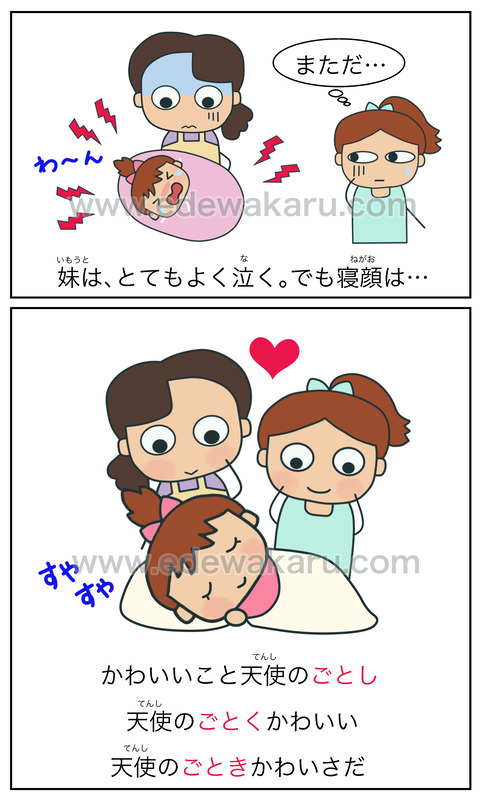
かわいいこと天使のごとし
→かわいいことまるで天使のようだShe is as cute as an angel. → She is cute, just like an angel.
天使のごとくかわいい
→まるで天使のようにかわいいCute like an angel. → Cute as if she were an angel.
天使のごときかわいさだ
→まるで天使のようなかわいさだShe has angel-like cuteness. → She has cuteness like an angel.
彼は、風のごとく速く走ることができる
→彼は、まるで風のように速く走ることができるHe can run fast like the wind. → He can run as fast as the wind.
社長に、鬼のごとき顔で怒られた
→社長に、まるで鬼のような顔で怒られたThe president scolded me with a face like a demon’s. → The president scolded me with a face as if he were a demon.
【ことわざ】光陰矢のごとし
→月日は矢のように速く経つ*「月日が経つのは速い」という意味[Proverb] Time flies like an arrow. → The days and months pass quickly like an arrow. *This means “time passes quickly.”
Read the original source text
Meaning
まるで〜のようだ
まるで〜のように
まるで〜のような
How to use it
名詞[辞書形]+の+ごとし
名詞[辞書形]+の+ごとく
名詞[辞書形]+の+ごとき+名詞
Explanation
「〜ごとし・〜ごとく・〜ごとき」は「まるで〜ようだ・〜ように・〜ような」という意味の文型です。「〜ごとし・〜ごとく・〜ごとき」はとてもかたい言い方で、書き言葉として使われます。現代では多くの場合【ことわざ】や【慣用句】で使用されます😊「〜ごとし・〜ごとく・〜ごとき」の使い方は、「〜ようだ・〜ように・〜ような」と同じです。「〜ごとし=〜ようだ」「〜ごとく=〜ように」「〜ごとき=〜ような」と覚えておくといいと思います😉
(復習:まるで〜)
(復習:〜として)
(復習:〜ておく)
[例]
〜ごとし。
〜ごとく+形容詞・動詞
〜ごとき+名詞
また
「〜ごとし・〜ごとく・〜ごとき」は漢字で書くと「〜如し・〜如く・〜如き」となります。
この文型は古語ですので、会話で使われることはとても少ないです😅
日常会話(にちじょうかいわ)では「〜ようだ・〜ように・〜ような」が使われることがほとんどです
が、N1を受ける人は大切な文型の1つとしてしっかりと覚えておきましょう😀
日本語文型辞典
Meaning
Basic information: A literary expression that nowadays is used only in writing. ごとし is used at the end of a sentence, and inflects in forms such as ごときN and ごとくV.
Used to make a comparison, meaning “…like.” The form Nごとき attaches to a noun and is normally followed by another noun, as in NごときN, but it can also be used by itself as a noun, as in ③. This usage is limited to cases with a negative evaluation. Except in proverbs and set phrases, ようだ is more commonly used today.
It follows a sentence, but with nouns and na-adjectives it is preceded by である rather than だ, as in ③ and ④. Means that something is not actually so, but appears as if it were. Today かのようだ is more commonly used. The dictionary form かのごとし is now especially rare.
How to use it
ごとし
Nのごとし
Nであるがごとし
…かのごとし
In context 7 examples
光陰矢のごとし。
Time flies like an arrow.
時間というものは、矢のごとくはやくすぎさっていくものだ。
Time passes by quickly, like an arrow.
山田ごときに負けるものか。
As if I’d lose to someone like Yamada!
彼女はそのことを知っているはずなのに、まったく聞いたことがないかのごとき態度だった。
Although she should know about it, she acted as if she had never heard of it.
そのふたりはまずしかったが、世界中が自分たちのものであるかのごとくしあわせであった。
The two of them were poor, but they were happy as if the whole world belonged to them.
「盗作する」とは、他人の作品を自分の作品であるかのごとく発表することである。
“Plagiarizing” means presenting another person’s work as though it were your own.
あの政治家は、いつも優柔不断であるかのごとくふるまってはいるが、実はそうかんたんには真意を見せないタヌキである。
That politician always acts as if he were indecisive, but in fact he’s a sly fox who doesn’t reveal his true intentions so easily.
Read the original source text
Meaning
基本情報説明文語で現在では書きことばにしか用いない。「ごとし」は文末に用いられる形で、「ごときN」、「ごとくV」のように活用する。
「…のようだ」となにかにたとえるときに使う。「Nごとき」の形は名詞に続く形で、「NごときN」となるのが普通だが、③のように「Nごとき」だけで、名詞として使われることもある。このような使い方はマイナス評価を帯びた意味を表す場合に限られる。ことわざや慣用句をのぞけば、現在では「ようだ」のほうをよく使う。
文につづくが、名詞・ナ形容詞の場合は③④のように「だ」でなく「である」につづく。事実はそうではなし)がまるでそうであるかのようだ、という意味。現在では「かのようだ」の方をよく使う。特に辞書形の「かのごとし」は今ではほとんど使わない。
How to use it
ごとし
Nのごとし
Nであるがごとし
…かのごとし
DoJG 日本語文法辞典(全集)
Meaning
Like; look like
How to use it
(i) Nounの | ごとし | |
| 魚のごとし | Someone/something is like (a) fish |
(iii) Vinformal nonpast{が/かの} | ごとし | |
| 夢見る{が/かの} | It is like dreaming/as if someone were dreaming |
(iii) Noun(か)の | ごとく | |
| 魚のごとく泳ぐ | Someone swims like a fish |
| 魚かのごとく泳ぐ | Someone swims as if he/she were a fish |
(iv) Noun(か)の | ごとき | |
| 夢のごとき人生 | Life like a dream |
| 夢かのごとき人生 | Life like a dream |
(v) {Vinformal nonpast/Nounである}{が/かの} | ごときNoun | |
| 山に登る{が/かの}ごとき人生 | Life like climbing a mountain |
| 夢である{が/かの}ごとき人生 | Life like a dream |
Explanation
An auxiliary adjective that indicates a resemblance of something/someone to something/someone or indicates how something/someone appears to speaker/writer.
In context 15 examples
人生は旅のごとし。
Life is like a journey.
その無謀な行為は火中に飛び込む{が/かの}ごとし。
Acting recklessly like that is like jumping into the fire.
彼女はモナリザのごとくいつも微笑んでいる。
She is like Mona Lisa, always smiling.
x氏は超人のごとき人だ。
Mr. X is like a superman.
彼女は僕のことを全然覚えていないかのごとき様子だった。
She looked as if she didn't remember me at all.
光陰矢のごとし。
Time flies like an arrow. (literally: Time is like an arrow.)
人生は航海のごとし。
Life is like a voyage.
東京人は万人走っているかのごとし。
Tokyoites all look as if they were always running.
日本の経済は、上述のごとく、今後しばらくは回復しない見込みである。
As stated above, the Japanese economy is not expected to recover for some time.
彼女は女王のごとく芸能界に君臨している。
She dominates the show business world as if she were a queen.
課長は当然のごとく女性の職員にお茶くみをさせている。
The section chief has female staff members serve tea as if it were in their job description (literally: as if it were a matter of course).
夢のごとき新婚生活の後に悲劇が訪れた。
Their dream-like, newly-wedded bliss was followed by tragedy.
彼は平社員なのに社長であるかのごとき言動をするのでみんなに嫌われている。
He is just a regular employee, but he talks and acts as if he were the president, so nobody likes him.
皮膚の色だけで差別するがごとき行為は絶対にあってはならぬ。
Behaviour such as discriminating against people merely on the basis of skin colour simply shouldn't exist.
子供が大人のような犯罪を犯すがごとき風潮は何が原因なのだろうか。
I wonder what causes trends such as children committing adult crimes.
日本語文型辞典 英語版
Meaning
【ごとし】A literary expression that is now used only in written language. ごとしis the form that is used at the end of a sentence, and the conjugated forms are ごときN and ごとくV.
Used to compare one thing to another, like ...のようだ. The form Nごとき is usually followed by a noun to create the pattern NごときN, but sometimes Nごとき is used by itself as a noun, as in
(3)
. This usage is limited to cases in which the meaning is accompanied by a negative evaluation. With the exception of proverbs and idioms, ようだ is now used more often than ごとし.
This is used after a sentence, but in the case of nouns and na-adjectives, as in
(3)
and
(4)
, it follows である and not だ. Means that something is not actually so, but looks as if it is. Now かのようだ is used more often. In particular, the dictionary form かのごとし is almost never used nowadays.
How to use it
1. ごとし[Nのごとし][Nであるがごとし]
2. ...かのごとし
In context 7 examples
光陰矢のごとし。
Time flies like an arrow.
時間というものは、矢のごとくはやくすぎさっていくものだ。
Time passes by quickly, just as an arrow flies.
山田ごときに負けるものか。
I’ll never lose to someone like Yamada.
彼女はそのことを知っているはずなのに、まったく聞いたことがないかのごとき態度だった。
Though she should have known about it, she acted as if she had heard nothing at all.
そのふたりはまずしかったが、世界中が自分たちのものであるかのごとくしあわせであった。
Although the two of them were poor, they were as happy as if everything in the world belonged to them.
「盗作する」とは、他人の作品を自分の作品であるかのごとく発表することである。
Toosaku-suru (plagiarize) means to publish or present someone else’s work as if it were your own.
あの政治家は、いつも優柔不断であるかのごとくふるまってはいるが、実はそうかんたんには真意を見せないタヌキである。
That politician always acts as if he can’t make a decision, but he is really a sly fox who doesn't readily reveal his true intentions.
Read the original source text
Meaning
【ごとし】A literary expression that is now used only in written language. ごとしis the form that is used at the end of a sentence, and the conjugated forms are ごときN and ごとくV.
Used to compare one thing to another, like ...のようだ. The form Nごとき is usually followed by a noun to create the pattern NごときN, but sometimes Nごとき is used by itself as a noun, as in
(3)
. This usage is limited to cases in which the meaning is accompanied by a negative evaluation. With the exception of proverbs and idioms, ようだ is now used more often than ごとし.
This is used after a sentence, but in the case of nouns and na-adjectives, as in
(3)
and
(4)
, it follows である and not だ. Means that something is not actually so, but looks as if it is. Now かのようだ is used more often. In particular, the dictionary form かのごとし is almost never used nowadays.
How to use it
1. ごとし[Nのごとし][Nであるがごとし]
2. ...かのごとし