AIUEO JLPT Grammar
Meaning
「ただでさえ」 highlights an already difficult, burdensome, or challenging situation, emphasizing that additional negative factors exacerbate it.
In context 5 examples
ただでさえ難しい試験なのに、時間制限も厳しい。
The exam is already difficult, and the time limit is strict as well.
ただでさえ高い物価が、最近さらに上がっている。
Prices are already high, and they’ve been rising even more recently.
ただでさえ人手が足りないのに、さらに辞める人が出た。
We’re already short-staffed, and now even more people are leaving.
ただでさえお金がないのに、車の修理代までかかるなんて。
I’m already low on money, and now I have to pay for car repairs too.
ただでさえ難しい状況で、今はその上に問題が重なっている。
The situation is already difficult, and now more problems are piling up.
絵でわかる日本語
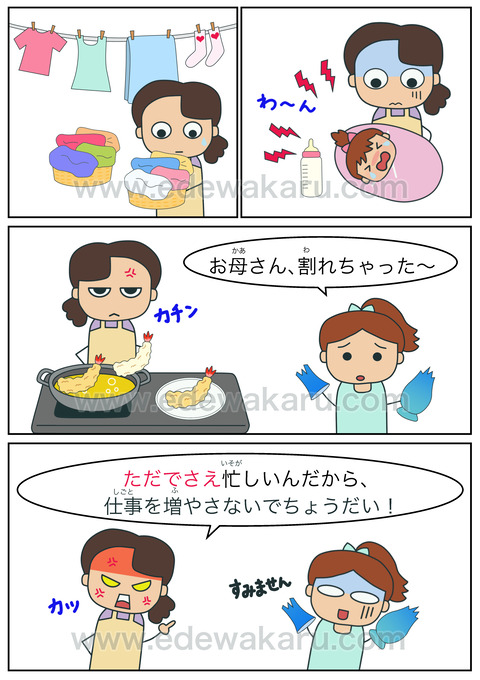
日本語文型辞典
Meaning
Basic information
Means “even under ordinary circumstances,” and is used to say that something is already so even normally, and is even more so under unusual circumstances.
Examples
① Dad is noisy as it is, so if he got sick, he’d probably be telling us to do this and that, and it would be a lot to deal with.
② We’re already having trouble because we don’t have enough staff. If three people quit all at once at a tiny company like this, we’d be at a loss.
Read the original source text
Meaning
基本情報説明「普段の場合でも」の意で、普段でもそうなのに、普通でない状態の時はもっとそうだということを述べるのに使う。例文① お父さんはただでさえうるさいのだから、病気にでもなったらああしろ、こうしろと大変だろうね。② ただでさえ人手がたりなくて困っているのに、こんな小さな会社で一度に三人もやめられたらどうしようもない。
日本語文型辞典 英語版
Meaning
Means “something is such-and-such under normal circumstances.” Used to say that since something is or has a tendency of being a certain way under normal circumstances, extraordinary circumstances would aggravate the situation.
In context 2 examples
お父さんはただでさえうるさいのだから、病気にでもなったらああしろ、こうしろと大変だろうね。
Father is demanding as it is, so if he got sick or something he’d always be saying “do this, do that” and it would be awful.
ただでさえ人手がたりなくて困っているのに、こんな小さな会社で一度に三人もやめられたらどうしようもない。
We have a shortage of staff as it is. If three people all quit such a small company at the same time, we wouldn’t know what to do.
毎日のんびり日本語教師
How to use it
ただでさえ~
Explanation
The following clause often pairs with words such as 「~のに」 (“even though”), in which case it describes an even worse situation under circumstances that are already beyond normal.
Notes
Nothing in particular.
In context 1 examples
女の子は可愛い可愛いと褒めると、ただでさえ可愛い人も更に可愛くなっていく。
When you praise girls by telling them how cute they are, even those who are already cute become even cuter.
Read the original source text
How to use it
ただでさえ~
Explanation
後件には「~のに」等の語が呼応することが多く、その場合、後件では普段の状況を超えた状況下における更に良くない事態が述べられます。
Notes
特になし