日本語文型辞典
Meaning
Basic information: いっこうにV-ない
Means “not at all …,” emphasizing the negative. Used in a situation where, despite continuing to do something in the hope that an event will occur, it shows no sign of happening; it conveys feelings such as irritation or suspicion. A formal expression. Example sentences: ① I waited for 30 minutes, but he still hasn't appeared. ② I'm taking medicine, but my fever shows no sign at all of going down. ③ I practice every day, so why am I not improving at all? ④ I've sent her letter after letter, but she hasn't replied at all.
Read the original source text
Meaning
基本情報いっこうにV-ない説明「全然…ない」という意味で、否定の意味を強調する。あることが起こるのを期待してなにかをし続けているにもかかわらず、それが起こりそうにないという状況で用いられ、それに対する苛立ちや不審感などの気持ちが伴う。かたい表現。例文① 30分待ったが、彼はいっこうに現れない。② 薬を飲んでいるが、熱はいっこうに下がる気配がない。③ 毎日練習しているのに、いっこうに上手にならないのはどういうわけだろう。④ 何度も手紙を出しているのに、彼女はいっこうに返事をよこさない。
日本語文型辞典 英語版
Meaning
【いっこうに】[いっこうに V-ない]
Means “not at all” and emphasizes the meaning of negation. Used in situations in which nothing seems to happen, in spite of the fact that a person continues doing something (in the expectation that something will happen). Conveys a feeling of irritation or suspicion about the situation at hand, and is a rather formal expression.
In context 4 examples
30 分待ったが、彼はいっこうに現れない。
I’ve been waiting for thirty minutes, but there’s been absolutely no sign of him.
薬を飲んでいるが、熱はいっこうに下がる気配がない。
I’m taking medicine, but it doesn’t seem like my temperature has gone down at all.
毎日練習しているのに、いっこうに上手にならないのはどういうわけだろう。
I wonder how come I can’t improve even a little, in spite of the fact that I practice every day.
何度も手紙を出しているのに、彼女はいっこうに返事をよこさない。
I’ve sent letters to her many times, but she hasn’t written a word back.
絵でわかる日本語
Meaning
not at all ~
How to use it
一向に + verb [ない-form]
Explanation
“一向に〜ない” is a sentence pattern used to mean “not at all ~.” It is used with a feeling of anger or anxiety, as in “I keep doing ~, expecting something, but it’s not happening at all.” 😊 (Review: 〜を込めて・〜を込めた)
[Examples]
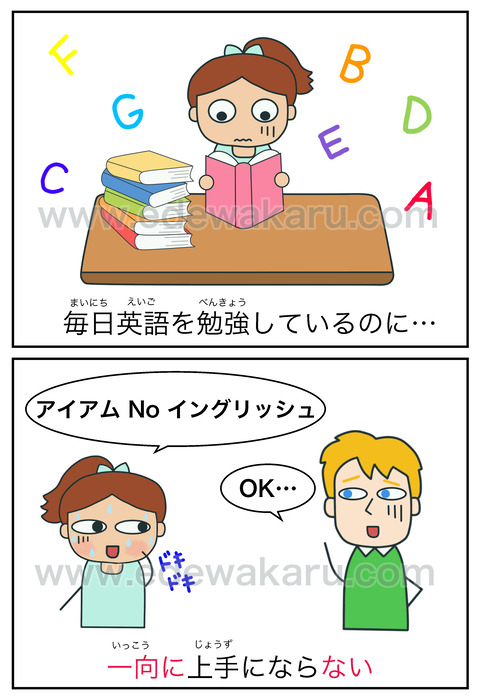
① Even though I study English every day, I’m not getting any better at all.
[What I expect] To become good at English
[What I keep doing] Studying
→ Even though I keep studying, expecting to become good at English, I’m not getting any better at all.
② Even though I’m taking medicine, my fever isn’t going down at all.
[What I expect] For my fever to go down
[What I keep doing] Taking medicine
→ Even though I keep taking medicine, expecting my fever to go down, it isn’t going down at all.
Also, example ④’s “一向に構わない” is an idiomatic expression meaning “not a problem at all.”
・一向に構いません
・一向に構わない
・一向に構わん (Review: colloquial form “〜ん”)
This is a formal expression, so learn to understand it when you hear it 😉
In context 4 examples
毎日英語を勉強しているのに、一向に上手にならない
→毎日英語を勉強しているのに、全然上手にならないEven though I study English every day, I’m not getting any better at all. → Even though I study English every day, I’m not getting any better at all.
薬を飲んでいるのに、一向に熱が下がらない
→薬を飲んでいるのに、全然熱が下がらないEven though I’m taking medicine, my fever isn’t going down at all. → Even though I’m taking medicine, my fever isn’t going down at all.
ダイエットをしているが、体重は一向に減らない
→ダイエットをしているが、体重は全然減らないI’m dieting, but my weight isn’t going down at all. → I’m dieting, but my weight isn’t going down at all.
少し遅れても、一向に構いません
→少し遅れても、全然問題ではありませんEven if you’re a little late, it’s not a problem at all. → Even if you’re a little late, it’s not a problem at all.
Read the original source text
Meaning
全然〜ない
How to use it
一向に+動詞[ない形]
Explanation
「一向に〜ない」は「全然〜ない」という意味で使われる文型です。
「〜を期待して続けているのに、全然〜にならない」と怒りたい気持ちや不安を込めて使います
😊(復習:〜を込めて・〜を込めた)
[例]
①毎日英語を勉強しているのに、
一向に
上手になら
ない
[期待していること]英語が上手になること
[続けていること]勉強
→上手になること
を期待して
勉強を
続けているのに、
全然
上手になら
ない
②薬を飲んでいるのに、
一向に
熱が下がら
ない
[期待していること]熱が下がること
[続けていること]薬を飲むこと
→熱が下がること
を期待して
薬を飲み
続けているのに、
全然
下がら
ない
また、例文④の
「一向に構わない」は慣用的表現(かんようてきひょうげん)で「全然問題ない」という意味になります。
・一向に構いません
・一向に構わない
・一向に構わん(復習:口語形「〜ん」)
かたい言い方ですので、聞いてわかるようにしておきましょう😉
毎日のんびり日本語教師
How to use it
一向に + Verbない-form + ない
Explanation
Expresses that, despite waiting and hoping for a long time for something to happen or come about, it ultimately did not happen.
It is characterized by conveying feelings of impatience or doubt that it will happen.
「一向に構わない」 (“It doesn’t matter; I don’t mind”) is an idiomatic expression and does not have the meaning described above.
The latter clause must be in the negative form.
Notes
Nothing in particular.
In context 7 examples
二人の関係が一向に進展しないのでじれったくなる。
Their relationship is making no progress at all, and it’s getting frustrating.
夏休みの宿題は一向に進んでない。
I’m making no progress at all on my summer vacation homework.
もうすぐ2時なのに一向に寝れない。
It’s almost two o’clock, but I still can’t fall asleep at all.
物理は苦手で一向にできる気がしない。
I’m bad at physics and can’t imagine being able to do it at all.
入社してから1年経ったが、営業スキルは一向に成長していない。
A year has passed since I joined the company, but my sales skills haven’t improved at all.
懸命に記憶を辿っているが、一向に思い出せない。
I’m desperately trying to trace my memories, but I can’t remember at all.
練習もして、動画見て研究もしているのに一向に上達しない。
I practice and study by watching videos, but I’m not improving at all.
Read the original source text
How to use it
一向に+動ない形+ない
Explanation
ある物事が発生・実現することを長い時間努力をして待ち望んでいたのにも関わらず、結局実現しなかったことを表します。
実現しなかったことに対する焦りや疑念の感情を含むのが特徴です。
「一向に構わない(没关系,不在乎)」は慣用表現で、上記のような意味はありません。
後件には必ず否定形を伴います。
Notes
特になし