AIUEO JLPT Grammar
Meaning
This sentence pattern expresses that without a certain action or state, another thing cannot be established. It is used to emphasize the negative meaning that something must be done to achieve a result or purpose.
How to use it
Verb dictionary form + ことなしに
In context 5 examples
努力することなしに、成功はあり得ない。
Without effort, success is impossible.
準備することなしに、会議に臨むことはできない。
You cannot attend the meeting without preparing.
十分な計画を立てることなしに、大きなプロジェクトを進めるのは危険だ。
It’s risky to move forward with a big project without making a proper plan.
頑張ることなしに、目標を達成することはできない。
You cannot achieve your goals without making an effort.
この問題は、慎重に考えることなしに解決することはできない。
This problem cannot be solved without careful consideration.
Read the original source text
Meaning
This sentence pattern expresses that without a certain action or state, another thing cannot be established. It is used to emphasize the negative meaning that something must be done to achieve a result or purpose.
How to use it
動詞辞書形+ことなしに
Explanation · 日本語
この文型は、ある行動や状態が無いままで、別の事が成立しないことを表す表現です。この構文は、あることを行わないと、その結果や目的が達成されない、または成立しないという否定的な意味を強調するために使われます。
絵でわかる日本語
Meaning
Do 〜 without doing 〜 (state)
How to use it
Verb [dictionary form] + ことなしに
Explanation
“〜ことなしに” is a grammar pattern meaning “do 〜 without doing 〜.” As in example ①, when a negative expression follows in the form “〜ことなしに〜ない,” it means “unless one does 〜, one cannot 〜” 😮
[Examples]
It is impossible to pass N1 without making an effort.
→It is impossible to pass N1 unless one makes an effort.
It is impossible to win without practicing.
(Review: 〜得る・〜得ない)
→It is impossible to win unless one practices.
This is a formal expression, so “〜ないで” is commonly used in conversation. Those taking N1 should learn this well for the test 😊
[“こと” series]
〜こと (command)
〜ことか
〜ことから
〜ことがある
〜ことができる (possibility)
〜ことができる (ability)
〜ことこの上ない
〜ことだ・〜ないことだ
〜ことだから
〜ことだし
〜ことで (about N)
〜こととて
〜ことなしに
〜ことなく
〜ことに
〜ことにしている
〜ことにする
〜ことになっている
〜ことになる・〜こととなる
〜ことには
〜ことは〜が① (adjectives and nouns)
〜ことは〜が② (verbs)
〜ことはない
〜ことはならない
〜たことがある (experience)
〜だこと!
(〜は) 〜てのこと
〜ても〜すぎることはない
〜ということだ
〜とのことだ
〜ないこともない
〜ないことには
〜なかったことがある
In context 3 examples
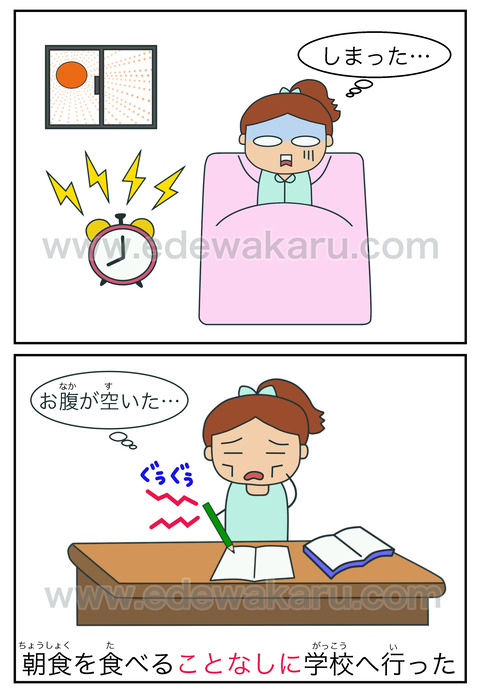
今日は朝食を食べることなしに学校へ行った
→今日は朝食を食べないで学校へ行ったToday I went to school without eating breakfast. →Today I went to school without eating breakfast.
昨日は外出することなしに1日中家でごろごろしていた
→昨日は外出しないで、1日中家でごろごろしていたYesterday I stayed home all day, lounging around without going out. →Yesterday I stayed home all day, lounging around without going out.
努力することなしにN1に合格はできない
→努力しないでN1に合格はできないIt is impossible to pass N1 without making an effort. →It is impossible to pass N1 without making an effort.
Read the original source text
Meaning
〜しない(状態)で〜する
How to use it
動詞[辞書形]+ことなしに
Explanation
「〜ことなしに」は「〜ないで〜する」という意味を表す文型です。例文①のように
「〜ことなしに〜ない」と後ろに否定表現がくると「〜しなければ〜できない」という意味を表します
😮
[例]
努力する
ことなしに
N1に合格は
できない
→努力し
なければ
N1に合格は
できない
練習する
ことなしに、優勝はあり
得ない
(復習:〜得る・〜得ない)
→練習し
なければ、優勝はあり
得ない
かたい言い方なので、会話では「〜ないで」を使うのが一般的です。N1を受ける人はテストのためにしっかりと覚えておきましょう😊
【「こと」シリーズ】
〜こと(命令)
〜ことか
〜ことから
〜ことがある
〜ことができる(可能)
〜ことができる(能力)
〜ことこの上ない
〜ことだ・〜ないことだ
〜ことだから
〜ことだし
〜ことで(Nのことで)
〜こととて
〜ことなしに
〜ことなく
〜ことに
〜ことにしている
〜ことにする
〜ことになっている
〜ことになる・〜こととなる
〜ことには
〜ことは〜が①(形容詞・名詞)
〜ことは〜が②(動詞)
〜ことはない
〜ことはならない
〜たことがある(経験)
〜だこと!
(〜は)〜てのこと
〜ても〜すぎることはない
〜ということだ
〜とのことだ
〜ないこともない
〜ないことには
〜なかったことがある
日本語文型辞典
Meaning
Basic information: V-ることなしに. As in XすることなしにYできない, it is followed by an expression that denies possibility and means “If you don’t do X, you can’t do Y,” or “If you want to do Y, doing X is unavoidable.” This is a formal expression.
Examples:
① Success is impossible without making an effort.
② No one can live without hurting other people.
③ It would be impossible to break new ground without taking risks.
Read the original source text
Meaning
基本情報V-ることなしに説明「XすることなしにYできない」のように後ろに可能性を否定する表現を伴って、「XをしなければYができない」、つまり「Yをしようと思ったら、Xをすることは避けられない」という意味を表す。かたい表現。例文① 努力することなしに成功はありえない。② 誰しも他人を傷つけることなしには生きていけない。③ リスクを負うことなしに新しい道を切り開くことはできないだろう。
日本語文型辞典 英語版
Meaning
【ことなしに】[V-ることなしに]
Followed by expressions that deny the possibility of something, in the pattern XすることなしにYできない. Means “without doing X, it’s impossible to do Y” (XをしなければYができない), or in other words, “if one intends to do Y, then doing X is unavoidable” (Yをしようと思ったら、Xをすることは避けられない). A formal expression.
In context 3 examples
努力することなしに成功はありえない。
Success is impossible without effort.
誰しも他人を傷つけることなしには生きていけない。
No one can live without hurting others.
リスクを負うことなしに新しい道を切り開くことはできないだろう。
A new trail cannot be blazed without taking risks.
くらべてわかる日本語表現文型辞典
Meaning
Normally A accompanies B, but B occurs without A. An expression that says A should ordinarily accompany B, but does not.
How to use it
AことなしにB
[Verb—dictionary form] ことなしに
[Noun—∅] なしに
Explanation
【Comparison 1】
“AことなくB” (Meaning 1, p. 89)
“AことなしにB” can be replaced with “AことなくB.” “AことなしにB” means that A normally accompanies B, but “AことなくB” does not have this meaning.
○彼はひるむことなく、敵に向かっていった。
×彼はひるむことなしに、敵に向かっていった。
“AなしにB” (Meaning 1, p. 199)
“AなしでB” (Meaning 1, p. 198)
Notes
【Note 1】
・When A is a verb, it takes the formal noun “こと,” but an ordinary noun can also replace the formal noun “こと.”
○努力なしに成功はありえない。
In context 4 examples
不治の病にかかったら、苦しむことなしに死にたいものだ。
If I contract an incurable disease, I’d like to die without suffering.
この問題は会社側と争うことなしに解決したい。
I want to resolve this problem without fighting with the company.
当社の許可を得ることなしに、この文の使用を禁ず。
Use of this text without our company’s permission is prohibited.
宅配便を利用して、大きい荷物を運ぶことなしにスキーに行く人が多くなった。
More and more people are going skiing without having to carry large pieces of luggage, by using home delivery services.
Read the original source text
Meaning
普通BにはAがつきものだが、Aを伴わずにB。本来BをするときはAもするはずだが、それがないという表現。
How to use it
AことなしにB
[動詞-る形]ことなしに
[名詞-∅]なしに
Explanation
【対比1】
「AことなくB」(意味1 P.89)
「AことなしにB」から「AことなくB」への置き換え可能。「AことなしにB」は、BにはAがつきものという意味だが、「AことなくB」にはその意味はない。
○彼はひるむことなく、敵に向かっていった。
×彼はひるむことなしに、敵に向かっていった。
「AなしにB」(意味1 P.199)
「AなしでB」(意味1 P.198)
Notes
【注意1】
・Aが動詞の場合は、形式名詞の「こと」がつくが、形式名詞の「こと」のかわりに普通名詞が入ることもある。
○努力なしに成功はありえない。
毎日のんびり日本語教師
How to use it
Verb dictionary form + ことなしに
Explanation
There are two uses.
① Hypothetical condition
Indicates that if the first clause were absent, the second clause would not hold true.
The second clause is often accompanied by a negative form.
② Accompanying circumstance
Indicates doing the second clause while the action in the first clause is not taking place.
“言うことなし” (“beyond reproach”) is an idiomatic expression unrelated to this grammar pattern.
(Example) There’s nothing to say about this movie. It was a wonderful work.
Notes
Nothing in particular.
In context 8 examples
この世界は、傷つくことなしに生きることは不可能だ。
In this world, it is impossible to live without getting hurt.
他人に迷惑をかけることなしには、生きてはいけない。
It is impossible to live without inconveniencing other people.
挫折を経験することなしに成果は出せない。
You can’t achieve results without experiencing setbacks.
人は何かを失うことなしに何かを得ることはできない。
People cannot gain something without losing something.
いつも深く考えることなしに行動を起こしてしまう。
I always end up acting without thinking things through.
数学とか物理は学生時代頑張ることなしに諦めた。
I gave up on subjects like math and physics in school without ever trying hard at them.
結婚の理想は互いに相手を束縛することなしに、しかも緊密に結びついていることだ。
The ideal marriage is for the two people to be closely connected without restricting each other.
成功とは、情熱を失うことなしに失敗を繰り返すことで出来上がっているものだ。
Success is built by repeating failures without losing your passion.
Read the original source text
How to use it
動辞形+ことなしに
Explanation
2つの用法があります。
①仮定条件
もし前項が無ければ、後項は成り立たないことを表します。
後件は多くの場合否定形を伴います。
②付帯状況
前件の動作がない状態で、後件を行うことを表します。
「言うことなし(无可非议)」はこの文法と関係のない慣用句です。
(例)この映画は言うことなしだ。素晴らしい作品だった。
Notes
特になし
NINJAL 日本語文型データベース
Meaning
Expresses that if one intends to do something, ~ is absolutely necessary.
How to use it
Vることなしに
Notes
After 「〜ことなしに」 comes something related to negation or difficulty.
In context 5 examples
努力することなしに成長はありえない。
There can be no growth without making an effort.
語学学習は、練習することなしに上達することはない。
In language learning, there is no improvement without practice.
リスクを負うことなしに大きなことは成し遂げられない。
Nothing great can be accomplished without taking risks.
人間は、他者の助けを得ることなしに生きていくことはできない。
People cannot live without receiving help from others.
一生懸命に働くことなしに、お金を稼ぐことはできない。
You cannot earn money without working hard.
Read the original source text
Meaning
あることをしようと思ったら、~のことは絶対に必要であるということを表します。
How to use it
Vることなしに
Notes
「〜ことなしに」の後には、否定や困難に関することがきます。