AIUEO JLPT Grammar
Meaning
This sentence pattern expresses that a result occurs due to certain conditions or situations. It is used when the expected outcome or action is emphasized because the conditions are met.
How to use it
Verb と + あって; i-adjective (dictionary form) と + あって; na-adjective と + あって; Noun と + あって
In context 5 examples
開店セールとあって、店内は多くの客で賑わっていた。
Because of the grand opening sale, the store was crowded with many customers.
彼は有名な俳優とあって、どこに行っても注目される。
Since he’s a famous actor, he gets attention wherever he goes.
特別ゲストが来るとあって、イベントは大盛況だった。
Because a special guest was coming, the event was a great success.
久しぶりの再会とあって、二人は大喜びだった。
As it was a long-awaited reunion, both of them were very happy.
人気商品とあって、すぐに売り切れた。
Since it was a popular product, it sold out quickly.
Read the original source text
Meaning
This sentence pattern expresses that a result occurs due to certain conditions or situations. It is used when the expected outcome or action is emphasized because the conditions are met.
How to use it
動詞と+あって形容詞辞書形と+あって形容動詞と+あって名詞と+あって
Explanation · 日本語
この文型は、特定の状況や条件が原因で、ある結果が生じることを示す表現で、条件が整ったことによって、予想される結果や行動が強調される場合に使われます。
Bunpro Grammar Reference
Meaning
Since...(it is no wonder that), Because...(it is no wonder that), Due to...(it is no wonder that)
How to use it
Verb + とあって
[い]Adjective + とあって
[な]Adjective + (だ)+ とあって
Noun + (だ)+ とあって
Nuance
A formal expression, implying that because (A) exists, it is no wonder that (B). (A) often expresses rarity, while (B) shows popularity.
Explanation
とあって is a formal grammar expression that combines the case marking particle と with the て-form of ある 'to be'. It is used to present an unusual situation from which an obvious result will or has occurred. It is often translated as 'since (A), it is no wonder that (B)', or 'because of (A), it's natural that (B)'.
とあって is usually seen following almost any word in their standard forms, but な-Adjectives will require a だ to come between them and とあって.
あのグループの卒業ライブが行われるとあって、この会場は大勢のファンで溢れている。
Since a farewell concert of that group is about to take place, this venue is filled with a large number of fans.
北海道は夏の間でも涼しいとあって、冬の間だけでなく夏にも多くの観光客が訪れるらしい。
I heard that Hokkaido attracts many tourists not only during winter, but also summer since it is cool there even during the summer months.
あの街は便利だとあって、土地の値段が高い。
Since that city is convenient, the price of land is expensive.
お盆の最終日とあって、高速道路だけでなく、下道もものすごく混んでいる。
Both the toll free road and the expressway are extremely crowded since it is the last day of Obon.
This construction can be thought of as similar to として 'as', but with focus more on 'what (A) is or is viewed as', emphasized through ある, rather than 'how (A) conducts itself or is conducted', emphasized through する.
Caution
とあって is only used objectively, and will not refer to the speaker or writer themselves.
私はハンサムとあって、友達が作りやすい。
Since I am handsome, it is easy to make friends. (Unnatural Japanese)
In context 17 examples
- いつもより講演の参加者が多いとあって、発表者はいつも以上にソワソワしています。
Since many people attended the lecture, it is no wonder that the speakers are uneasy.
- 北海道は夏の間でも涼しいとあって、冬の間だけでなく夏にも多くの観光客が訪れるらしい。
I heard that Hokkaido attracts many tourists not only during winter, but also summer since it is cool there even during the summer months.
- あの街は便利だとあって、土地の値段が高い。
Since that city is convenient, the price of land is expensive.
- お盆の最終日とあって、高速道路だけでなく、下道もものすごく混んでいる。
Both the toll free road and the expressway are extremely crowded since it is the last day of Obon.
- あのグループの卒業ライブが行われるとあって、この会場は大勢のファンで溢れている。
Since a farewell concert of that group is about to take place, this venue is filled with a large number of fans.
- ニュースサイト:「日本で初上映とあって、大人から子どもまで多くの人が集まりました。」
News: 'Since it premiered in Japan, (it is no wonder that) many people of all ages gathered.'
- 記事:「この都市で唯一のイタリアンが食べれるレストランとあって、自然と大人気になった。」
Article: 'Since it is the only restaurant in this city where one can eat Italian cuisine, (it is no wonder that) it naturally became very popular.'
- 今日はスーパーの特売日とあって、開店する三十分も前から長蛇の列が出来ています。
Because today is a special sale at the supermarket, it is no wonder that there is already a long line 30 minutes before the store opens.
- ニュースサイト:「 気軽に鹿などの野生動物が撮影できるとあって、大変人気の撮影スポットの一つになっています。」
News site: 'Since one can easily photograph wild animals such as deer, (it is no wonder that) it has become one of the most popular photography spots.'
- ニュース:「今日は元日とあって、神社には初詣に来て、お賽銭をお供えする人がいっぱいです。」
News: 'Since it is the first day of the new year, (it is no wonder that) there are many people who have come to the shrine(s) for hatsumode to pay their respects and offer money.'
- ニュース:「今日だけ無料でレベルの高い洋菓子が楽しめるとあって、客が行列を作りました。」
News: 'Since today is the only day that you can enjoy high-quality western confectionery free of charge, (it is no wonder that) customers formed a long queue.'
- 今日は祝日とあって、遊園地や水族館はいつもより倍近く混んでいます。
Since today is a public holiday, it is no wonder that amusement parks and aquariums are nearly twice as crowded as usual..
- 世界的に人気な女優が来日するとあって、空港には多くのファンが集まっている。
Due to a globally famous actress coming to Japan, it is no wonder that many people are gathering at the airport.
- 彼は大富豪の息子として育ったとあって、金銭感覚が一般人とはだいぶ違うようだ。
Because he was raised as the son of an extremely rich person, it is no wonder that his sense of money is largely different to regular people.
- 先日テレビで紹介されたとあって、行きつけの喫茶店の予約が急に取りづらくなってしまった。
Due to it being advertised on TV yesterday, it is no wonder that it has suddenly become difficult to get a reservation at my favorite coffee shop.
- 記事:「沖縄は日本の他のところと比べて冬でも暖かいとあって、夏休みにとどまらず一年中日本全国から多くの人が訪れる。」
Article: 'Since even winters in Okinawa are mild compared to other parts of Japan, (it is no wonder that) it is visited by many people from all over the country not only in summer but all year round.'
- 私はハンサムとあって、友達が作りやすい。
Since I am handsome, it is easy to make friends. (Unnatural Japanese)
DoJG 日本語文法辞典(全集)
Meaning
Because ~, ~ as expected; because ~, naturally ~; because
How to use it
(i) NP | とあって | |
| 病気とあって | Because someone is ill |
(ii) Sinformal | とあって | だ after Adjectiveなstem and Noun is omitted |
| 韓国語ができるとあって | Because someone can speak Korean |
| タクシーの方が安いとあって | Because a taxi is cheaper |
| ノートパソコンの方が便利とあって | Because a laptop computer is more convenient |
| 父親が医者とあって | Because someone’s father is a doctor |
Explanation
A phrase that introduces a reason when the speaker/writer considers it natural that someone does something or is in some state, or that something takes place for that reason.
In context 8 examples
ボーナス後の連休とあって、観光地はどこも人でいっぱいだ。
Because this is the series of holidays after the bonus season, (not surprisingly) all the tourist spots are crowded.
夏休みが始まったとあって、子供たちはみんな嬉しそうだ。
Summer vacation has begun, so the children all look happy.
優勝を争うチーム同士の対決とあって、スタジアムは超満員だ。
Because this is the match between the teams competing for the championship, the stadium is packed beyond capacity.
人気作家のサイン会とあって、本屋にはサインを求める人たちが長い列を作った。
Because it was the autograph session for a popular writer, people (who wanted his autograph) made a long line at the bookstore.
レポートの締め切りがあさってとあって、学生たちはみんな焦っている。
Because the deadline for the paper is the day after tomorrow, the students are all panicking.
掃除が終わったらお菓子がもらえるとあって、子供たちは一生懸命手伝っている。
Because they know they'll get sweets after they finish cleaning, the children are doing their very best to help out.
中途半端な訓練では実社会で通用しないとあって、この語学学校の指導は非常に厳しい。
Because slapdash training does not help students function in the real world, the teaching at this language institution is very strict.
この社会人プログラムは、科目を低額で聴講できるだけでなく、自習室や図書館も自由に利用できるとあって、かなりの応募があります。
Because this program for professionals not only allows students to audit courses cheaply but lets them use study rooms and the library freely, we receive quite a few applications.
どんなときどう使う 日本語表現文型辞典
Meaning
being
How to use it
N / 〔Plain form〕 + とあって
Explanation
~という状況なので/~ので
「~とあって、…」の形で、「~」では特別な様子や状況について述べ、「…」ではそれが理由となって起こることについて言う。話者の観察したことを述べることが多い。ニュースなどでよく使われる。
Special situation or appearance is described before pattern; resultant situation is described following pattern. Often used to describe speaker's observations. Often used in news.
In context 4 examples
アフリカへ行くのは初めてとあって、会員たちは興奮気味であった。
Since it was their first trip to Africa, the members were rather excited.
夏物の売り出しが始まったが、景気が上向きとあって、商店街の人出はよかった。
The summer clothing sale had begun, and with the economy picking up, the shopping district was bustling.
久しぶりの晴天の休日とあって、山は紅葉を楽しむ人でいっぱいだ。
Since it was a sunny holiday after a long spell, the mountain was full of people enjoying the autumn leaves.
苦しい練習を乗り越えての優勝とあって、どの選手の顔も喜びにあふれていた。
Because they had won after overcoming grueling training, joy filled every athlete’s face.
Read the original source text
Meaning
being
How to use it
N/〔普通形〕+とあって
Explanation
~という状況なので/~ので
「~とあって、…」の形で、「~」では特別な様子や状況について述べ、「…」ではそれが理由となって起こることについて言う。話者の観察したことを述べることが多い。ニュースなどでよく使われる。
Special situation or appearance is described before pattern; resultant situation is described following pattern. Often used to describe speaker's observations. Often used in news.
絵でわかる日本語
Meaning
〜because the situation is 〜
How to use it
Verb・noun [plain form] + とあって
Explanation
“〜とあって” is a grammar pattern used when you want to say “because the situation or circumstances are 〜.” It is used to convey “because it is a special situation, (naturally) 〜 happened” 😊
It is a written expression, so it is not often used in conversation, but you may hear it on the news 😉
[Take care]
“〜とあって” is a grammar pattern used for something that has already happened or is happening now, so you cannot use “〜でしょう・〜だろう” or “〜かもしれない” after it 😨
In context 3 examples
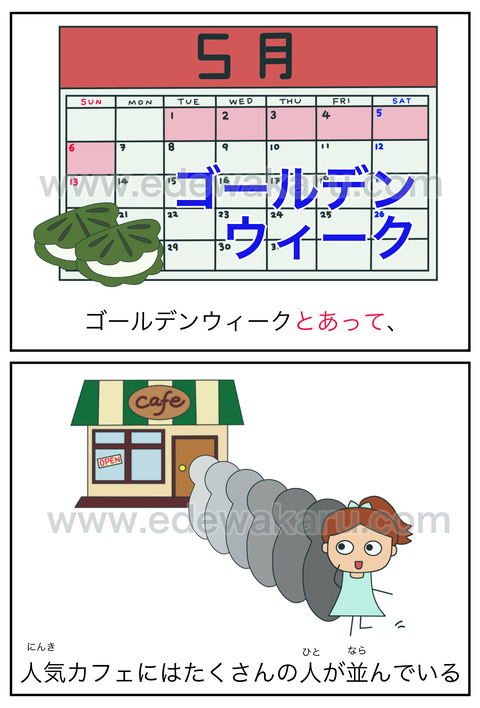
ゴールデンウィークとあって、人気カフェにはたくさんの人が並んでいる
→ゴールデンウィークという状況なので、人気カフェにはたくさんの人が並んでいるSince it’s Golden Week, lots of people are lining up at the popular cafe. →Because it’s Golden Week, lots of people are lining up at the popular cafe.
ラーメン1杯100円とあって、30分で完売した
→ラーメン1杯100円という状況だったので、30分で完売したSince a bowl of ramen cost 100 yen, it sold out in 30 minutes. →Because a bowl of ramen cost 100 yen, it sold out in 30 minutes.
アイドルが来日するとあって、空港にはファンがたくさん集まっていた
→アイドルが来日するという状況だったので、空港にはファンがたくさん集まっていたSince an idol was coming to Japan, lots of fans had gathered at the airport. →Because an idol was coming to Japan, lots of fans had gathered at the airport.
Read the original source text
Meaning
〜という状況なので
How to use it
動詞・名詞[普通形]+とあって
Explanation
「〜とあって」は「〜という状況・事態なので」と言いたい時に使用される文型です。
「〜という特別な状況なので、(当然)〜という状況が起こった」 という意味を込めて使われます😊
書き言葉的
ですので、会話ではあまり使われませんがニュースなどで聞く機会があると思います😉
【注意しましょう】
「〜とあって」はすでに起こったこと、または今起こっていることに使う文型ですので、後ろには「〜でしょう・〜だろう」「〜かもしれない」を使うことができません😨
日本語文型辞典
Meaning
It means “because the situation is ….” It is used in special circumstances and carries the implication that what would naturally happen in that situation, or the action one should take, will be stated afterward. Written style; used in news reports and similar contexts.
It means “if the situation is ….” It is used in special circumstances to state afterward what would naturally happen or what one should do in that situation. For example, in ① it is used in a situation where Mr. Ito is important to the speaker and therefore cannot naturally be refused. It is a somewhat formal expression, but is also used in speech.
How to use it
…とあって
N とあって
V とあって
…とあっては
In context 9 examples
今日は三連休とあって、全国の行楽地は家族連れの観光客で賑わいました。
Since today is part of a three-day weekend, tourist spots across the country were bustling with families.
一年に一回のお祭りとあって、村の人はみんな神社へ集まっていた。
Since it was the village's annual festival, everyone in the village had gathered at the shrine.
めったに聞けない彼の生演奏とあって、狭いクラブは満員になった。
Since it was a rare chance to hear him perform live, the small club was packed.
大型の台風が接近しているとあって、どの家も対策におおわらわだ。
Since a large typhoon is approaching, every household is frantically preparing.
名画が無料で見られるとあって、席ははやばやと埋まってしまった。
Since people could see famous paintings for free, the seats filled up early.
伊藤さんの頼みとあっては、断れない。
Since it is Mr. Ito asking, I can't refuse.
彼が講演するとあっては、何とかして聞きに行かねばならない。
Since he is giving a lecture, I have to find some way to go and hear him.
高価なじゅうたんが定価の一割で買えるとあっては、店が混雑しないはずがありません。
Since expensive carpets are available for a tenth of the list price, there's no way the store won't be crowded.
最新のコンピュータ機器がすべて展示されるとあっては、コンピューターマニアの彼が行かないわけがない。
Since all the latest computer equipment will be on display, there's no way he, a computer enthusiast, won't go.
Read the original source text
Meaning
「…という状況なので」という意味を表す。特別の状況の場合に用いられ、後にその状況で当然起こることがらやとるべき行動を述べるという含みがある。書きことばで、ニュースなどで使う。
「…という状況であるなら」という意味を表す。特別な状況の場合に用いられ、後にその状況で当然起こることがらやとるべき行動を述べるのに使う。たとえば①の例では、伊藤さんが自分にとって重要な人物であるから当然断れないといった状況で用いる。ややかたい表現だが、話しことばでも使う。
How to use it
…とあって
Nとあって
Vとあって
…とあっては
日本語文型辞典 英語版
Meaning
Means “due to such-and-such a situation.” Used to indicate special circumstances and implies that a statement of something that will naturally occur under those circumstances, or a statement of an action that should be taken, will follow. A written language expression used in news broadcasts and so on.
Means “because this is the situation.” Used for special circumstances and is followed by a statement of something that will naturally occur under those circumstances, or a statement of an action that should be taken. For example,
(1)
would be used in a situation where a refusal is unthinkable because Ito-san is a very important person to the speaker. Although this is a somewhat formal expression, it can be used in spoken language.
How to use it
1. ...とあって[Nとあって][Vとあって]
2. ...とあっては
In context 9 examples
今日は三連休とあって、全国の行楽地は家族連れの観光客で賑わいました。
Since today is part of a three-day holiday, the nation's leisure spots are bustling with family vacationers.
一年に一回のお祭りとあって、村の人はみんな神社へ集まっていた。
This being the only festival of the year, the villagers all gathered at the shrine.
めったに聞けない彼の生演奏とあって、狭いクラブは満員になった。
As he rarely performed live, the tiny club was filled to capacity.
大型の台風が接近しているとあって、どの家も対策におおわらわだ。
With the huge typhoon drawing near, every household was frantic with preparations.
名画が無料で見られるとあって、席ははやばやと埋まってしまった。
Since the famous film could be seen for free, every seat was soon filled.
伊藤さんの頼みとあっては、断れない。
Since it's a request from Ito-san, I cannot refuse.
彼が講演するとあっては、何とかして聞きに行かねばならない。
He’s the one giving the lecture, so I have to find some way to go hear it.
高価なじゅうたんが定価の一割で買えるとあっては、店が混雑しないはずがありません。
With such an expensive carpet being sold for a tenth of its list price, I wouldn't expect the store not to be packed with people.
最新のコンピューター機器がすべて展示されるとあっては、コンピューターマニアの彼が行かないわけがない。
With all the latest computer equipment on display, there's no way a computer geek like him wouldn't go.
Read the original source text
Meaning
Means “due to such-and-such a situation.” Used to indicate special circumstances and implies that a statement of something that will naturally occur under those circumstances, or a statement of an action that should be taken, will follow. A written language expression used in news broadcasts and so on.
Means “because this is the situation.” Used for special circumstances and is followed by a statement of something that will naturally occur under those circumstances, or a statement of an action that should be taken. For example,
(1)
would be used in a situation where a refusal is unthinkable because Ito-san is a very important person to the speaker. Although this is a somewhat formal expression, it can be used in spoken language.
How to use it
1. ...とあって[Nとあって][Vとあって]
2. ...とあっては
くらべてわかる日本語表現文型辞典
Meaning
Because there is an objective fact A, B occurs as expected. B is an objective fact.
How to use it
AとあってB
[Verb] とあって
[i-adjective—plain form] とあって
[na-adjective—だ/である/だった/ではない] とあって
[Noun—∅/ではない/だった] とあって
Explanation
[Contrast 1]
“AだけあってB” (Meaning 1, p. 114)
“AだけあってB” puts emphasis on B and expresses the speaker’s admiration for B and feeling that it is, as one would expect, because of A. Except in special cases, B is not a negative expression. “AとあってB” means that the objective situation B occurs because of the fact A; B is not a subjective expression.
○今場所は横綱が欠場するとあって、人の入りはいまひとつだ。 — With the yokozuna absent from this tournament, attendance is rather low.
×今場所は横綱が欠場するだけあって、人の入りはいまひとつだ。 — With the yokozuna absent from this tournament, attendance is rather low. [Using “欠場するだけあって”]
○ここは郊外だけあって、空気がうまいね。 — As you’d expect of a suburban area, the air is fresh here.
×ここは郊外とあって、空気がうまいね。 — Since this is a suburban area, the air is fresh here. [Using “郊外とあって”]
○連休最後の日曜日だけあって、行楽地はどこも満員だ。(行楽地はどこも満員だ。やっぱり連休最後の日曜日だからだ) — As you’d expect on the last Sunday of a long weekend, every tourist spot is packed. (Every tourist spot is packed. As you’d expect, it’s the last Sunday of a long weekend.)
○連休最後の日曜日とあって、行楽地はどこも満員だ。(連休最後の日曜日だから、行楽地は満員だ。) — Since it is the last Sunday of a long weekend, every tourist spot is packed. (Every tourist spot is packed because it is the last Sunday of a long weekend.)
“AだけにB” (Meaning 1, p. 115)
With A in “AとあってB,” it is difficult to state a fact concerning the speaker, whereas “AだけにB” can also be used to describe something about the speaker.
○勉強しなかっただけに、テストは悪かった。(しなかったのは「話し手・ほかの人」どちらでもよい) — Because I didn’t study, I did poorly on the test. (The one who didn’t study could be “the speaker or someone else.”)
○勉強しなかったとあって、テストは悪かった。(しなかったのは「ほかの人」) — Because the other person didn’t study, they did poorly on the test. [Using “勉強しなかったとあって”; the one who didn’t study is “someone else.”]
“AとあってはB” (Meaning 1, p. 151)
In context 4 examples
第1試合に地元勢が出るとあって、ファンは続々と球場につめかけた。
With local players competing in the first game, fans flocked to the stadium one after another.
連休最後の日曜日とあって、行楽地はどこも満員だ。
Since it’s the last Sunday of the long weekend, all the tourist spots are packed.
あの市場は安くて品質もいいとあって、遠くから買いに来る人も多い。
Since that market is cheap and its goods are good quality, many people come from far away to shop there.
一人暮らしには慣れているとあって、部屋はきれいに片づいていた。
Since he was used to living alone, the room was neatly tidied.
Read the original source text
Meaning
Aという客観的な事実があるから予想通りBだ。Bは客観的事実。
How to use it
AとあってB
[動詞]とあって
[イ形-普]とあって
[ナ形-だ/である/だった/ではない]とあって
[名詞-∅/ではない/だった]とあって
Explanation
【対比1】
「AだけあってB」(意味1 P.114)
「AだけあってB」はBに重点があり、Bに感心し、やっぱりAだからだという話し手の感情が入った表現。Bにマイナス表現が来ることは特別な場合を除いてない。「AとあってB」は、Aという事実があるからBという客観的事態が起こるという意味であり、Bに主観的な表現は来ない。
○今場所は横綱が欠場するとあって、人の入りはいまひとつだ。
×今場所は横綱が欠場するだけあって、人の入りはいまひとつだ。
○ここは郊外だけあって、空気がうまいね。
×ここは郊外とあって、空気がうまいね。
○連休最後の日曜日だけあって、行楽地はどこも満員だ。(行楽地はどこも満員だ。やっぱり連休最後の日曜日だからだ)
○連休最後の日曜日とあって、行楽地はどこも満員だ。(連休最後の日曜日だから、行楽地は満員だ。)
「AだけにB」(意味1 P.115)
「AとあってB」のAでは話し手に関する事実は述べにくいが、「AだけにB」は話し手に関することでも述べることができる。
○勉強しなかっただけに、テストは悪かった。(しなかったのは「話し手・ほかの人」どちらでもよい)
○勉強しなかったとあって、テストは悪かった。(しなかったのは「ほかの人」)
「AとあってはB」(意味1 P.151)
毎日のんびり日本語教師
Meaning
Because it is a special situation
How to use it
Verb plain form + とあって
い-adjective plain form + とあって
な-adjective plain form + (だ)とあって
Noun + (だ)とあって
Explanation
This is used to indicate that an unusual phenomenon occurs because the situation is special.
The preceding clause describes the special circumstances, and the following clause describes a phenomenon that occurs under those circumstances.
It is used for objective, social topics. It is difficult to use for personal topics.
It can only be used for things that have already occurred.
Notes
Nothing in particular.
In context 8 examples
ゴールデンウィークとあって高速道路は渋滞しているようだ。
Since it's Golden Week, it seems the expressways are congested.
韓国から人気のアイドルが来日するとあって、空港には多くのファンが詰め寄せた。
Since a popular idol is coming to Japan from Korea, many fans have flocked to the airport.
新年とあって、外は爆竹の音で賑やかだ。
Since it's New Year, the outdoors are lively with the sound of firecrackers.
今世紀最大の天文ショーとあって、天文学者のみならず、世界中の人々が空に注目している。
Since it's the greatest astronomical spectacle of this century, people all over the world, not just astronomers, are watching the sky.
久しぶりの新曲とあって、世間の注目度が高い。
Since it's a new song released after a long time, it's attracting a lot of public attention.
海の日とあって、結構な人が海水浴を楽しんでいます。
Since it's Marine Day, quite a lot of people are enjoying swimming in the sea.
京都の祇園は世界的に有名な観光地とあってとても綺麗だ。
Gion in Kyoto is a world-famous tourist destination, so it's very beautiful.
ここは果物屋さんの直営店とあって、取れたての果物がたくさん置いてある。
Since this is a shop directly run by a fruit seller, it has lots of freshly picked fruit.
Read the original source text
Meaning
(特別な状況)なので
How to use it
動詞普通形+とあって
イ形容詞普通形+とあって
ナ形容詞普通形+(だ)とあって
名詞+(だ)とあって
Explanation
特別な状況だからいつもとは違う現象が起きることを表すときに用います。
前件には
特殊な状況、後件にはその状況下で起きる現象を述べます。
客観的かつ社会的な話題に対して用います。個人的な話題には使いにくいです。
既に発生したことにだけ使えます。
Notes
特になし
NINJAL 日本語文型データベース
Meaning
Used when you want to say that because the situation is special, a special result that would naturally be expected in that situation occurs.
How to use it
V plain form + とあって
i-A plain form + とあって
na-A plain form + とあって (「na-Aだ」 often takes the form 「na-A+とあって」)
N plain form + とあって (「Nだ」 often takes the form 「N+とあって」)
Notes
「〜」 is followed by a word or phrase describing something unusual or a special situation. After 「~とあって」 comes a sentence explaining the result.
Not used when talking about the speaker's own personal circumstances.
In context 19 examples
免税品店はブランド物が安く買えるとあって、人気が高い。
The duty-free shop is very popular because brand-name goods can be bought there cheaply.
内閣支持率が急落しているとあって、首相に焦りの色が見え始めた。
With the Cabinet's approval rating plummeting, signs of anxiety have begun to show on the prime minister's face.
大型台風が近づいているとあって、早めに帰宅する人が多いようだ。
With a large typhoon approaching, it seems many people are heading home early.
彩り豊かな太巻き寿司は、この地方の祭りやお祝いの席には欠かせないとあって、多くの家庭でたくさん作られている。
Colorful thick sushi rolls are indispensable at local festivals and celebrations, so many households make a lot of them.
2019年、理論上の存在であったブラックホールが史上初めて撮影されたとあって、大きな話題になった。
In 2019, a black hole, which had only existed in theory, was photographed for the first time in history, making headlines.
期待されていた場面でいい結果を残せなかったとあって、山川選手はインタビューで悔しさをにじませた。
Having failed to achieve a good result at a moment when much was expected of him, player Yamakawa showed his frustration in an interview.
近代美術館で開催されているピカソ展は最終日が近いとあって、とても混雑している。
With the final day approaching, the Picasso exhibition at the Modern Art Museum is extremely crowded.
このホテルは、サービスがよく、宿泊料もそれほど高くないとあって、非常に人気がある。
This hotel is extremely popular because the service is good and the accommodation isn't all that expensive.
今回の試験は予想以上に問題数が多かったとあって、受験者はみな苦戦したようだ。
Because this exam had more questions than expected, all the test takers seem to have struggled.
このところ猛暑日続きだったが、今日は日中もあまり暑くなかったとあって、公園にも人が多かった。
It had been extremely hot for days, but since it wasn't very hot during the day today, there were many people in the park too.
山口さんは英語が得意とあって、海外とのやりとりの業務をすべて任されている。
Since Mr. Yamaguchi is good at English, he has been entrusted with all the work involving communication with overseas contacts.
雨の降り方が尋常ではないとあって、住民は避難勧告に従って避難し始めた。
Because the rain was falling exceptionally heavily, residents began evacuating in response to the evacuation advisory.
テストが簡単だったとあって、学生たちはみんなうれしそうな顔をしている。
Since the test was easy, all the students look happy.
江戸時代の初期まで、砂糖は輸入品のみで安価ではなかったとあって、一般庶民が容易に口にできるものではなかった。
Until the early Edo period, sugar was available only as an import and was not cheap, so ordinary people could not easily afford to eat it.
いつも学生でいっぱいのこの時間帯のバスも、学校が夏休みとあって、空いている。
Even the bus that is usually full of students at this time is empty because school is on summer vacation.
結婚式の司会をするのは初めての経験だとあって、林さんは緊張している様子だった。
Since it was his first time emceeing a wedding, Mr. Hayashi seemed nervous.
この大会でいい記録を出せばオリンピック出場も夢ではないとあって、選手たちはみな気合いが入っている。
Since a good result in this competition would make Olympic participation no mere dream, all the athletes are fired up.
前日が徹夜仕事だったとあって、弟は夕方まで寝ていた。
Since my younger brother had worked all night the day before, he slept until evening.
新商品が思ったような売れ行きではなかったとあって、社長は落胆している。
Because the new product didn't sell as well as expected, the company president is disappointed.
Read the original source text
Meaning
〜という特別な状況なので、その状況で当然だと考えられる特別な結果が生じると言いたいときに使います。
How to use it
V普通形+とあって
i-A普通形+とあって
na-A普通形+とあって(「na-Aだ」→「na-A+とあって」の形になることが多い)
N普通形+とあって(「Nだ」→「N+とあって」の形になることが多い)
Notes
「〜」には、普段と違うことや特別な状況を表す言葉がきます。「~とあって」の後には、結果を説明する文がきます。
話し手自身についての個人的な事情を言うときには使いません。
IMABI
と Combination Particles II
Read this IMABI lesson ↗Explanation
と Combination Particles II
In the next two lessons we will learn about more combination particles with と.
とも とあって とあれば といっ{た・て}
とも
とも is an emphatic version of the case particle と. Do not confuse with the conjunctive/final particle とも.
1. 君とも逢あえなくなるだろう。
I probably won’t be able to see you.
とあって
とあって means “because under the circumstances that/due to the fact that”.
2. 三連休とあって、すごい人出だ。
There is a turnout due to the fact that it is a three-day weekend.
3. 先生の頼みとあっては、お断りできません。
Because it is at your request, I cannot decline.
4. 素晴らしいホテルとあって、サービスは素晴らしい。
Since it is a wonderful hotel, the service is wonderful.
5. 休日とあって人出が多い。
It is also that there is a lot of people out on the holidays.
といって・といった
{と・そう}いった is placed after a list of nouns that are listed with particles like や, と, and とか to mean “such as”. といって means “however”. When not at the beginning of the sentence, it is often translated as “because” or “that…”. Though these phrases are from 言う, they are normally written in かな.
8. うちの息子は、科学や世界史といった科目が得意です。(From a mother)
Our son is good at subjects such as chemistry and world history.
9. 日本は、確かに経済大国となりました。{と言って・しかし}、国民一人一人の暮らしが豊かになったわけではあ りません。
Japan has certainly become an “economic giant”. However, that doesn’t mean that the way of life for each individual citizen has become wealthy.
Sentence Note: といって would not suitable for writing, but it would be fine in speech.
10a. 私は同意しました。だからといって、(私が)満足まんぞくしているわけではありません。
10b. 私は同意しましたが、満足しているわけではありません。
I agreed, but that doesn’t mean I am satisfied.
11a. そのように感じたからといって、誰も彼らを非難できませんよ。(Less natural ordering)
11b. 彼らがそのように感じたからといって、誰も非難できませんよ。
Nobody can blame them that they felt that way.
12. 今はこれといってすることがない。
I have nothing particular to do now.
13. 試験が終ったからといって努力を怠おこたってはいけない。
You mustn’t give up your efforts because the exam is over.
14. 彼女はケーキとかそういったものを焼いた。
She baked cakes and stuff like that.
15. 「真理」とか「美び」といった抽象的ちゅうしょうてきな言葉
Abstract words such as “truth” and “beauty
~からといって means “while it’s true that/even though/just because”. It normally sends a message of warning. The clause that follows should be negative in some way, either grammatically or in perspective. Don’t let translation confuse you.
A similar phrase is からに, which means “just by/from” and is used with the non-past. からには, on the other hand, expresses determination and is equivalent to “now that.”
16. 天才てんさいだからといって威張いばるなよ。
Don’t brag just because you’re a genius.
17. 皆みなそういうからには怖こわい話だよ。
Just by everyone saying it, it’s a scary story!
18. 彼は約束やくそくしたからには必かならずやる(男だ)。
He will surely do it just from promising.
Variant Notes:
1. からといって may be からって(ー) in colloquial speech or からとて in formal texts.
2. からには may be からは in literary language.
とあれば
Also as とあらば, which is more poetic/nostalgic and old-fashioned, it shows a case established in a latter event(s) and is best translated as “if it is the case that”.
19. お望みとあらば、今すぐ。(Slightly archaic)
(Go) right now if it is your wish.
20. 必要とあればすぐに伺います。(A little old-fashioned)
I will come immediately if it is necessary.
In context 22 examples
君とも逢あえなくなるだろう。
I probably won’t be able to see you.
三連休とあって、すごい人出だ。
There is a turnout due to the fact that it is a three-day weekend.
先生の頼みとあっては、お断りできません。
Because it is at your request, I cannot decline.
素晴らしいホテルとあって、サービスは素晴らしい。
Since it is a wonderful hotel, the service is wonderful.
休日とあって人出が多い。
It is also that there is a lot of people out on the holidays.
うちの息子は、科学や世界史といった科目が得意です。(From a mother)
Our son is good at subjects such as chemistry and world history.
日本は、確かに経済大国となりました。{と言って・しかし}、国民一人一人の暮らしが豊かになったわけではあ りません。
Japan has certainly become an “economic giant”. However, that doesn’t mean that the way of life for each individual citizen has become wealthy.
私は同意しました。だからといって、(私が)満足まんぞくしているわけではありません。
I agreed, but that doesn’t mean I am satisfied.
私は同意しましたが、満足しているわけではありません。
I agreed, but that doesn’t mean I am satisfied.
そのように感じたからといって、誰も彼らを非難できませんよ。(Less natural ordering)
Nobody can blame them that they felt that way.
彼らがそのように感じたからといって、誰も非難できませんよ。
Nobody can blame them that they felt that way.
今はこれといってすることがない。
I have nothing particular to do now.
試験が終ったからといって努力を怠おこたってはいけない。
You mustn’t give up your efforts because the exam is over.
彼女はケーキとかそういったものを焼いた。
She baked cakes and stuff like that.
「真理」とか「美び」といった抽象的ちゅうしょうてきな言葉
Abstract words such as “truth” and “beauty
天才てんさいだからといって威張いばるなよ。
Don’t brag just because you’re a genius.
皆みなそういうからには怖こわい話だよ。
Just by everyone saying it, it’s a scary story!
彼は約束やくそくしたからには必かならずやる(男だ)。
He will surely do it just from promising.
からといって may be からって(ー) in colloquial speech or からとて in formal texts.
からといって may appear as からって(ー) in colloquial speech, or as からとて in formal texts.
からには may be からは in literary language.
からには may appear as からは in literary language.
お望みとあらば、今すぐ。(Slightly archaic)
(Go) right now if it is your wish.
必要とあればすぐに伺います。(A little old-fashioned)
I will come immediately if it is necessary.
Read the original source text
Explanation
と Combination Particles II
In the next two lessons we will learn about more combination particles with と.
とも とあって とあれば といっ{た・て}
とも
とも is an emphatic version of the case particle と. Do not confuse with the conjunctive/final particle とも.
1. 君とも逢あえなくなるだろう。
I probably won’t be able to see you.
とあって
とあって means “because under the circumstances that/due to the fact that”.
2. 三連休とあって、すごい人出だ。
There is a turnout due to the fact that it is a three-day weekend.
3. 先生の頼みとあっては、お断りできません。
Because it is at your request, I cannot decline.
4. 素晴らしいホテルとあって、サービスは素晴らしい。
Since it is a wonderful hotel, the service is wonderful.
5. 休日とあって人出が多い。
It is also that there is a lot of people out on the holidays.
といって・といった
{と・そう}いった is placed after a list of nouns that are listed with particles like や, と, and とか to mean “such as”. といって means “however”. When not at the beginning of the sentence, it is often translated as “because” or “that…”. Though these phrases are from 言う, they are normally written in かな.
8. うちの息子は、科学や世界史といった科目が得意です。(From a mother)
Our son is good at subjects such as chemistry and world history.
9. 日本は、確かに経済大国となりました。{と言って・しかし}、国民一人一人の暮らしが豊かになったわけではあ りません。
Japan has certainly become an “economic giant”. However, that doesn’t mean that the way of life for each individual citizen has become wealthy.
Sentence Note: といって would not suitable for writing, but it would be fine in speech.
10a. 私は同意しました。だからといって、(私が)満足まんぞくしているわけではありません。
10b. 私は同意しましたが、満足しているわけではありません。
I agreed, but that doesn’t mean I am satisfied.
11a. そのように感じたからといって、誰も彼らを非難できませんよ。(Less natural ordering)
11b. 彼らがそのように感じたからといって、誰も非難できませんよ。
Nobody can blame them that they felt that way.
12. 今はこれといってすることがない。
I have nothing particular to do now.
13. 試験が終ったからといって努力を怠おこたってはいけない。
You mustn’t give up your efforts because the exam is over.
14. 彼女はケーキとかそういったものを焼いた。
She baked cakes and stuff like that.
15. 「真理」とか「美び」といった抽象的ちゅうしょうてきな言葉
Abstract words such as “truth” and “beauty
~からといって means “while it’s true that/even though/just because”. It normally sends a message of warning. The clause that follows should be negative in some way, either grammatically or in perspective. Don’t let translation confuse you.
A similar phrase is からに, which means “just by/from” and is used with the non-past. からには, on the other hand, expresses determination and is equivalent to “now that.”
16. 天才てんさいだからといって威張いばるなよ。
Don’t brag just because you’re a genius.
17. 皆みなそういうからには怖こわい話だよ。
Just by everyone saying it, it’s a scary story!
18. 彼は約束やくそくしたからには必かならずやる(男だ)。
He will surely do it just from promising.
Variant Notes:
1. からといって may be からって(ー) in colloquial speech or からとて in formal texts.
2. からには may be からは in literary language.
とあれば
Also as とあらば, which is more poetic/nostalgic and old-fashioned, it shows a case established in a latter event(s) and is best translated as “if it is the case that”.
19. お望みとあらば、今すぐ。(Slightly archaic)
(Go) right now if it is your wish.
20. 必要とあればすぐに伺います。(A little old-fashioned)
I will come immediately if it is necessary.