どんなときどう使う 日本語表現文型辞典
Meaning
as a sideline; besides
How to use it
Vる/Nの+かたわら
Explanation
~一方で、別に
1)「~かたわら、…」の形で、「~をする一方で、並行して…もしている」という表現。
2)「かたわら」は「ながら」に比べ、長期間続いていることに使う。職業や立場などを両立させている場合によく使われる。
3)「~」がその人が本来していることである。
2)Compared to -ながら, used for action continued over a long interval. Often used when balancing work and separate role.
3) Phrase preceding -かたわら indicates person's main activity.
1)Continue to do one thing while doing another in tandem.
In context 3 examples
市川氏は役所で働くかたわら、ボランティアとして外国人に日本語を教えている。
Mr. Ichikawa works at the government office while also teaching Japanese to foreigners as a volunteer.
田中さんは銀行に勤めるかたわら、作曲家としても活躍している。
Mr. Tanaka works at a bank while also being active as a composer.
あの人は大学院での研究のかたわら、小説を書いているそうです。
I hear that person writes novels alongside their research at graduate school.
Read the original source text
Meaning
as a sideline; besides
How to use it
Vる/Nの+かたわら
Explanation
~一方で、別に
1)「~かたわら、…」の形で、「~をする一方で、並行して…もしている」という表現。
2)「かたわら」は「ながら」に比べ、長期間続いていることに使う。職業や立場などを両立させている場合によく使われる。
3)「~」がその人が本来していることである。
2)Compared to -ながら, used for action continued over a long interval. Often used when balancing work and separate role.
3) Phrase preceding -かたわら indicates person's main activity.
1)Continue to do one thing while doing another in tandem.
絵でわかる日本語
Meaning
In parallel with ~
While doing ~, do ~ when you have time
How to use it
Verb [dictionary form] + かたわら
Noun [dictionary form] + のかたわら
Explanation
“AかたわらB” is a sentence pattern meaning “do B in parallel with A” or “while doing A, do B when you have time.” A and B are done at different times, and the pattern is used for habitual activities that have continued for a long time. In most cases, A is a regular job or main occupation, and B is something else the person does or a side job.
[Examples]
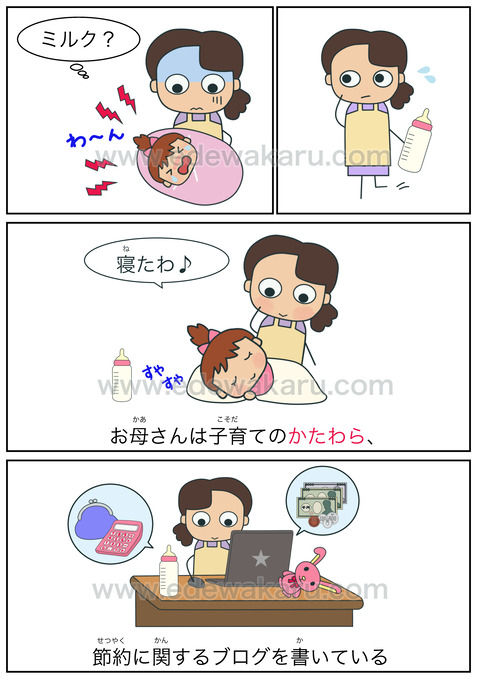
① My mother writes a blog about saving money on the side while raising children.
[What she usually does] Raising children
[What else she does] Blogging
→She raises children and writes a blog when she has time.
② He teaches children soccer on weekends while working as a salaried employee.
[Main occupation] Salaried employee
[What else he does] Teaches soccer
→He works as a salaried employee and teaches soccer on weekends, when he has time.
③ She works as a model while attending university.
[Main occupation] Student
[What else she does] Modeling
→She is a student and also works as a model.
④ Mr. Tanaka is also active as a manga artist while working as a Japanese teacher.
[Main occupation] Japanese teacher
[Side job] Manga artist
→He works as a Japanese teacher and is also a manga artist.
⑤ He works part-time to pay his tuition while attending a Japanese language school.
[Main occupation] Student
[What else he does] Part-time work
→He attends school and works part-time.
The key points of “AかたわらB” are that [A and B are done at different times] and that it is used for [habitual activities that have continued for a long time]. If you’re taking the N1, make sure to remember this 😊
In context 5 examples
お母さんは子育てのかたわら、節約に関するブログを書いている
My mother writes a blog about saving money on the side while raising children.
彼はサラリーマンとして働くかたわら、週末は子供にサッカーを教えている
He teaches children soccer on weekends while working as a salaried employee.
彼女は大学に通うかたわら、モデルとして活動している
She works as a model while attending university.
田中さんは日本語教師をしているかたわら、漫画家としても活躍している
Mr. Tanaka is also active as a manga artist while working as a Japanese teacher.
彼は日本語学校に通うかたわら、学費のためにアルバイトをしている
He works part-time to pay his tuition while attending a Japanese language school.
Read the original source text
Meaning
〜と並行して
〜しながら、時間がある時に〜する
How to use it
動詞[辞書形]+かたわら
名詞[辞書形]+のかたわら
Explanation
「AかたわらB」は「Aと並行してBする」「Aしながら、時間がある時にBする」という意味を表す文型です。この文型は「A」と「B」は違う時間に行われ、長く続けている習慣的(しゅうかんてき)なことに使われます。ほとんどの場合「A」にはいつもしている仕事や本業が入り、「B」にはその他にしていることや副業が入ります。
[例]
①お母さんは子育てのかたわら、節約に関するブログを書いている
【いつもしていること】子育て
【他にしていること】ブログ
→子育て
をしながら、時間がある時に
ブログを書いている
②彼はサラリーマンとして働く
かたわら、週末は子供にサッカーを教えている
【本業】サラリーマン
【他にしていること】サッカーを教える
→サラリーマン
をしながら、(時間がある)週末は
サッカーを教えている
③彼女は大学に通う
かたわら、モデルとして活動している
【本業】学生
【他にしていること】モデル
→学生
をしながら、
モデルもしている
④田中さんは日本語教師をしている
かたわら、漫画家としても活躍している
【本業】日本語教師
【副業】漫画家
→日本語教師
をしながら、漫画家もしている
⑤彼は日本語学校に通うかたわら、学費のためにアルバイトをしている
【本業】学生
【他にしていること】アルバイト
→学校に通い
ながら、アルバイトをしている
「AかたわらB」のポイントは、【「A」と「B」は違う時間に行うこと】と【長く続けている習慣的なこと】に使うというところです。N1を受ける人はしっかりと覚えておきましょう😊
毎日のんびり日本語教師
How to use it
Noun + のかたわら
Verb dictionary form + かたわら
Explanation
Expresses doing something else while engaged in a social activity such as work or school.
In many cases, it refers to the relationship between a main job and a side job. The preceding clause describes the central activity (main job), so the subject of the preceding and following clauses must be the same.
It is often used in introductions to people on programs such as the news.
While 「~ついでに」and 「~しながら」refer to two actions performed over a short period, 「~かたわら」refers to a long period.
Notes
The series of parallel actions
In context 8 examples
彼女はモデルのかたわら、歌手でも活躍している。
Besides being a model, she is also active as a singer.
大学に通うかたわら、会社の社長をしている。
He is the president of a company while attending university.
母は家事のかたわら、ピアノを教えている。
My mother teaches piano while doing housework.
会社に勤めるかたわら、夜は家でも副業をしている。
While working at a company, I also do a side job at home in the evenings.
彼は小説家のかたわら、ボランティアなどの慈善活動にも熱心だ。
Besides being a novelist, he is also active in charitable work such as volunteering.
私は本業のかたわらブログを書いています。
I write a blog alongside my main job.
就職してからは勤務するかたわら、小説を書いていました。
After I got a job, I wrote novels while working.
農業のかたわらバンド活動しています。用法② 対比
I do band activities alongside farming. Usage ②: contrast
Read the original source text
How to use it
名詞+のかたわら
動辞形+かたわら
Explanation
仕事や学校などの社会的活動をしながら、別のこともしていることを表します。
多くの場合は本業と副業の関係に触れます。前件が中心的動作(本業)です。なので前件と後件は同一主語でなければいけません。
ニュースなど番組の人物紹介で用いられることが多いです。
「~ついでに」や「~しながら」は短期間で2つの動作が行われるのに対し、「~かたわら」は長期間です。
Notes
動作の並立シリーズ