日本語文型辞典
Meaning
Means “in either case.” It is often followed by an expression indicating that the situation remains unchanged. It can be paraphrased as “…であれ…であれ.” Used in formal speech and formal writing. It is mainly used with nouns, but can also be used with na-adjectives. With i-adjectives, the form is “…かろうと…かろうと,” as in “あつかろうとさむかろうと” and “よかろうとわるかろうと.”
Means “whether that is the case or not.” It is followed by content meaning “it's the same either way.”
How to use it
Nであろうと、Nであろうと
…であろうとなかろうと
N/Na であろうとなかろうと
In context 7 examples
雨であろうと、雪であろうと、当日は予定通り行う。
Whether it's rain or snow, we'll proceed as scheduled on the day.
トラックであろうと、軽自動車であろうと、ここを通る車はすべてチェックするようにという指令が出ている。
Instructions have been issued to check every vehicle that passes through here, whether it's a truck or a small car.
猫であろうと、虎であろうと、動物の子供がかわいいのは同じだ。
Whether it's a cat or a tiger, baby animals are equally cute.
休日であろうとなかろうと、わたしの仕事には何も関係ない。
Whether it's a holiday or not, it makes no difference to my work.
観光地であろうとなかろうと、休暇が楽しく過ごせればどこでもいい。
It doesn't matter where we go, whether it's a tourist spot or not, as long as we enjoy our vacation.
仕事であろうとなかろうと、彼は何ごとにも全力をつくさないと気がすまない。
Whether it's work or not, he can't be satisfied unless he gives everything his all.
彼が有名であろうとなかろうと、つり仲間としてはほかの人と同じだ。
Whether he is famous or not, as a fishing companion he's no different from anyone else.
Read the original source text
Meaning
「どちらの場合であっても」の意味。後ろには事態に変わりがないことを示す表現が続くことが多い。「…であれ…であれ」と言いかえられる。かたい話しことばやフォーマルな書きことばで使う。主として名詞が用いられるが、ナ形容詞を用いることもある。イ形容詞の場合は「あつかろうとさむかろうと」「よかろうとわるかろうと」のように「…かろうと…かろうと」の形になる。
「そうでもそうでなくても」の意味。後ろには「どちらでも同じだ」という内容が続く。
How to use it
Nであろうと、Nであろうと
…であろうとなかろうと
N/Na であろうとなかろうと
絵でわかる日本語
Usage 1
Read this source entry ↗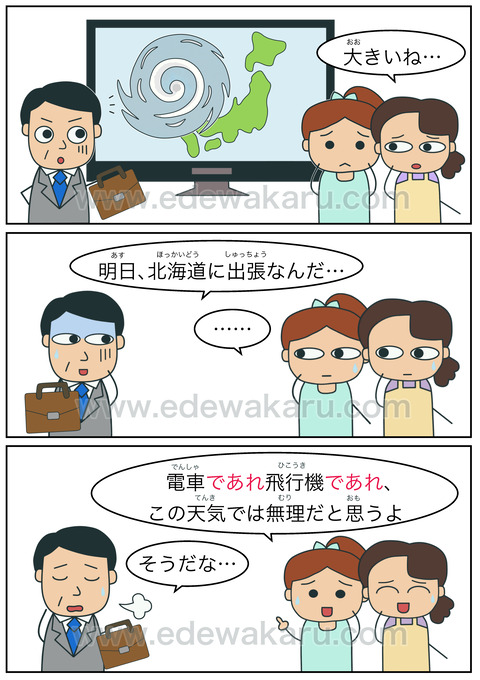
Meaning
Whether 〜 or 〜, in either case
How to use it
Noun [dictionary form] + であれ + noun [dictionary form] + であれ
Noun [dictionary form] + であろうと + noun [dictionary form] + であろうと
Explanation
“AであれBであれC” is a sentence pattern meaning “Whether A or B, C in either case.” It is used when you want to say, “C remains true in either case, A or B.” “〜であれ〜であれ” can be changed to “〜であろうと〜であろうと.”
[Example]
Whether by train or by plane, I think it’s impossible in this weather.
= Whether by train or by plane, I think it’s impossible in this weather.
“〜であれ〜であれ” is somewhat formal, but is also used in conversation, so remember it. 😊
[Related grammar patterns]
In context 5 examples
電車であれ飛行機であれ、この天気では無理だと思うよ
→電車でも飛行機でも、どちらの場合でも無理だと思うよWhether by train or by plane, I think it’s impossible in this weather. → I think it’s impossible either way, by train or plane.
晴れであれ雨であれ、イベントは予定通り行います
→晴れでも雨でも、どちらの場合でも予定通り行いますWhether it’s sunny or rainy, we’ll hold the event as scheduled. → We’ll hold it as scheduled in either case, whether it’s sunny or rainy.
大人であれ子供であれ、人に迷惑をかけてはいけない
→大人も子供も、どちらも人に迷惑をかけてはいけないWhether adults or children, people must not cause trouble for others. → Neither adults nor children should cause trouble for others.
学生であれ先生であれ、遅刻をするべきではない
→学生も先生も、どちらも遅刻をするべきではないWhether students or teachers, they should not be late. → Neither students nor teachers should be late.
彼女はケーキであれクッキーであれ、甘いものには目がない
→ケーキでもクッキーでも、甘いものには目がないWhether cake or cookies, she can’t resist sweet things. → She can’t resist sweet things, whether they’re cake or cookies.
Read the original source text
Meaning
〜でも〜でも、どちらの場合でも
How to use it
名詞[辞書形]+であれ+名詞[辞書形]+であれ
名詞[辞書形]+であろうと+名詞[辞書形]+であろうと
Explanation
「AであれBであれC」は「AでもBでも、どちらの場合でもC」という意味の文型です。この文型は
「A・Bどちらの場合でもCなのは変わらない」
と言いたい時に使われます。「〜であれ〜であれ」は
「〜であろうと〜であろうと」
にチェンジすることができます。
[例]
電車
であれ
飛行機
であれ、この天気では無理だと思うよ
=電車
であろうと
飛行機
であろうと、この天気では無理だと思うよ
「〜であれ〜であれ」は、少しかたい言い方ですが会話でも使われますので覚えておきましょう😊
【関連文型】
Usage 2
Read this source entry ↗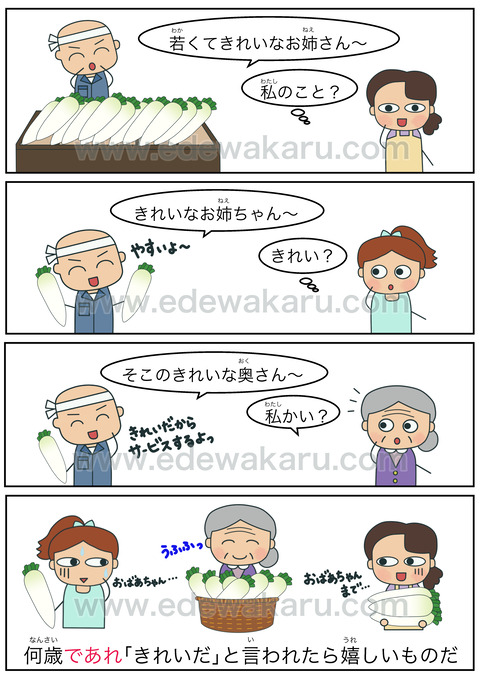
Meaning
Even...
Even if...
How to use it
Noun [dictionary form] + であれ
Noun [dictionary form] + であろうと
Explanation
“〜であれ” is a sentence pattern meaning “even...” or “even if....” It is often used together with words such as “どんな” (whatever kind of) and “たとえ” (even if), and is used when stating the speaker’s opinion, judgment, or conjecture. “〜であれ” can be changed to “〜であろうと.”
[Example]
No matter how old you are, it feels good to be told, “You’re beautiful.”
= No matter how old you are, it feels good to be told, “You’re beautiful.”
There is also the related pattern “〜であれ〜であれ,” so learn it at the same time. 😊
In context 5 examples
何歳であれ「きれいだ」と言われたら嬉しいものだ
→何歳でも「きれいだ」と言われたら嬉しいものだNo matter how old you are, it feels good to be told, “You’re beautiful.” → Even if you’re any age, it feels good to be told, “You’re beautiful.”
理由が何であれ、うそをつくのはよくない
→理由が何でも、うそをつくのはよくないWhatever the reason, lying is not good. → Whatever the reason, lying is not good.
誰であれ、人には言えない秘密を持っているだろう
→誰であっても、人には言えない秘密を持っているだろうWhoever they are, they probably have secrets they can’t tell anyone. → Even whoever they are, they probably have secrets they can’t tell anyone.
どんな悪い状況であれ、あきらめないことが大切だ
→どんな悪い状況でも、あきらめないことが大切だNo matter how bad the situation, it is important not to give up. → Even in the worst situation, it is important not to give up.
たとえ仲がいい友達であれ、お金の貸し借りはしないほうがいい
→たとえ仲がいい友達であっても、お金の貸し借りはしないほうがいい*「貸し借り」とは、お金を貸したり借りたりすることですEven if they are close friends, it is better not to lend or borrow money. → Even if they are close friends, it is better not to lend or borrow money. *“Lending and borrowing” means lending or borrowing money.
Read the original source text
Meaning
〜でも
〜であっても
How to use it
名詞[辞書形]+であれ
名詞[辞書形]+であろうと
Explanation
「〜であれ」は「〜でも」「〜であっても」という意味の文型です。この文型は「どんな」や「たとえ」などとよく一緒に使われ、
話者の意見や判断、推量を言う時
に使われます。「〜であれ」は
「〜であろうと」
にチェンジすることができます。
[例]
何歳
であれ
「きれいだ」と言われたら嬉しいものだ
=何歳
であろうと
「きれいだ」と言われたら嬉しいものだ
関連文型に「〜であれ〜であれ」がありますので、一緒に覚えておきましょう😊
日本語文型辞典 英語版
Meaning
Means “either way.” Often followed by expressions that indicate that the situation hasn’t changed. Can be replaced by ...であれ...であれ. Used in formal conversation and written language. Nouns are mainly used, but occasionally na-adjectives are also used. When i-adjectives are used, they take the form ...かろうと...かろうと, as in あつかろうとさむかろうと (be it hot or cold) and よかろうとわるかろうと (be it good or bad).
Means “whether or not it is a certain way.” Followed by expressions that indicate “it is the same either way.”
How to use it
1. Nであろうと、Nであろうと、
2. ...であろうとなかろうと[N/Na であろうとなかろうと]
In context 7 examples
雨であろうと、雪であろうと、当日は予定通り行う。
Whether it rains or snows, the day will proceed as planned.
トラックであろうと、軽自動車であろうと、ここを通る車はすべてチェックするようにという指令が出ている。
Whether it’s a truck or a small car, there is an order to check all the cars which pass this point.
猫であろうと、虎であろうと、動物の子供がかわいいのは同じだ。
Whether it’s a cat or a tiger, all animal offspring are just as cute.
休日であろうとなかろうと、わたしの仕事には何も関係ない。
Whether it’s a holiday or not, it doesn’t have anything to do with my job.
観光地であろうとなかろうと、休暇が楽しく過ごせればどこでもいい。
Whether it’s a resort or not, anywhere I can enjoy my time off would be fine.
仕事であろうとなかろうと、彼は何ごとにも全力をつくさないと気がすまない。
Whether it’s his job or not, he’s not content unless he gives a hundred percent in anything he does.
彼が有名であろうとなかろうと、つり仲間としてはほかの人と同じだ。
Whether he’s famous or not, among his fishing buddies he’s the same as everyone else.
Read the original source text
Meaning
Means “either way.” Often followed by expressions that indicate that the situation hasn’t changed. Can be replaced by ...であれ...であれ. Used in formal conversation and written language. Nouns are mainly used, but occasionally na-adjectives are also used. When i-adjectives are used, they take the form ...かろうと...かろうと, as in あつかろうとさむかろうと (be it hot or cold) and よかろうとわるかろうと (be it good or bad).
Means “whether or not it is a certain way.” Followed by expressions that indicate “it is the same either way.”
How to use it
1. Nであろうと、Nであろうと、
2. ...であろうとなかろうと[N/Na であろうとなかろうと]
NINJAL 日本語文型データベース
Usage 1
Meaning
Used to state the speaker’s judgment or determination strongly that even in the case of “〜,” it will not be affected by it. When “〜” is a question word (such as “何・どこ・だれ”), it indicates that the same result holds under any condition.
How to use it
na-Aであろうと
Nであろうと
Notes
“〜” takes a word expressing an extreme case. “〜” may refer to a fact or a hypothetical situation. After “〜であろうと” comes a clause expressing the speaker’s judgment, strong intention, or the like.
In context 9 examples
いかに困難であろうと、小説家になる夢を諦めたくない。
No matter how difficult it may be, I don’t want to give up my dream of becoming a novelist.
才能がどんなに豊かであろうと、それを認めてくれる人がいなければ世に出られない。
No matter how great one’s talent may be, one cannot make it in the world without someone who recognizes it.
たとえ当選が確実であろうと、私は政治家として立候補したくはない。
Even if my election were certain, I wouldn’t want to run for office as a politician.
たとえ今どんなに無力であろうと、平和を願う我々の信念は実を結ぶと信じている。
Even if we are powerless now, no matter how powerless, I believe that our conviction in wishing for peace will bear fruit.
どんな達人であろうと、日々研鑽が必要だ。
No matter how masterful someone may be, daily practice and improvement are necessary.
たとえ流行の品であろうと、今使わない物は欲しくない。
Even if it’s a fashionable item, I don’t want things I won’t use now.
うちの子は相手が誰であろうと物おじしない。
My child isn’t intimidated, no matter who they’re dealing with.
高齢であろうと、何らかの社会貢献をしたいと高橋さんは言っている。
Mr. Takahashi says that even in old age, he wants to make some kind of contribution to society.
たとえ今、無名であろうと、諦めてはいけない。いつか花咲くこともあろう。
Even if I’m unknown now, I mustn’t give up. One day, I may blossom.
Read the original source text
Meaning
〜の場合もそれに影響されないという話し手の判断や決意を強く述べるときに使います。「~」に疑問詞(「何・どこ・だれ」など)がくるときは、どのような条件の場合にも同じ結果になることを表します。
How to use it
na-Aであろうと
Nであろうと
Notes
「~」には、極端な場合を表す言葉がきます。「~」は事実でも仮定のことでもいいです。「~であろうと」の後には、話し手の判断、強い意志などを表す文がきます。
Usage 2
Meaning
Used to name two conditions that may seem to lead to different results and strongly assert that the same thing applies under either condition.
The form “〜であろうと[疑問詞]+であろうと” is also used to indicate that the same thing applies under all similar conditions.
How to use it
N1であろうとN2であろうと
Notes
The two “〜” may belong to different parts of speech.
“〜” takes words that are semantically related or have opposite meanings. After “~であろうと~であろうと” comes a clause expressing the speaker’s judgment that is common to both “〜” conditions.
There are usually two instances of “〜であろうと” in a sentence, but there may be three or more.
In context 6 examples
男であろうと女であろうと、家事はできないよりできたほうがいい。
Whether a man or a woman, it’s better to be able to do housework than not to be able to.
日本人であろうと外国人であろうと、労働条件は同じであるべきだ。
Whether Japanese or foreign, working conditions should be the same.
紛争中の国であろうと厳寒の地であろうと、取材のためなら私はどこへでも赴く覚悟だ。
Whether in a country at war or in a freezing-cold region, I am prepared to go anywhere for reporting.
大企業であろうと中小企業であろうと、熱意をもって仕事ができる職場であるかどうかが大事だ。
Whether it’s a large corporation or a small or medium-sized business, what matters is whether it’s a workplace where you can work with enthusiasm.
「夜中であろうと早朝であろうと、往診は可能ですから、何かあったら連絡してください」
“We can make house calls whether it’s the middle of the night or early morning, so please contact us if anything happens.”
勉強であろうと遊びであろうと何であろうと、全力でやりなさいというのが父の教えだった。
My father’s teaching was that whether it’s studying, playing, or anything else, you should give it your all.
Read the original source text
Meaning
結果に違いがあるように思える2つの条件を挙げて、どちらの条件でも同じことが言えると強く言いたいときに使います。
「〜であろうと[疑問詞]+であろうと」の形も使い、同じような条件なら全部同じことが言えることを表します。
How to use it
N1であろうとN2であろうと
Notes
2つの「〜」には異なる品詞がくる場合もあります。
「~」には、意味的に関連のある言葉、または対立する意味の言葉がきます。「~であろうと~であろうと」の」後には、「〜」のどちらにも共通する話し手の判断を表す文がきます。
「〜であろうと」は1文中にふつう2つですが、3つ以上のこともあります。
AIUEO JLPT Grammar
Meaning
This sentence pattern expresses that no matter the situation or condition, the conclusion or result remains the same. It emphasizes strong will or unchanging belief, often used when comparing two different situations.
How to use it
Noun で + あろうと + Noun で + あろうと
In context 5 examples
金持ちであろうと貧乏であろうと、礼儀を守るべきだ。
Whether you’re rich or poor, you should still observe proper manners.
若者であろうと年寄りであろうと、この仕事は誰にとっても大変だ。
Whether you’re young or old, this job is tough for everyone.
学生であろうと社会人であろうと、時間を守ることは重要だ。
Whether you’re a student or a working professional, being punctual is important.
男性であろうと女性であろうと、この仕事に向いているかは関係ない。
Whether you’re a man or a woman, it doesn’t matter whether you’re suited for this job.
プロであろうと初心者であろうと、努力は欠かせない。
Whether you’re a professional or a beginner, effort is essential.
Read the original source text
Meaning
This sentence pattern expresses that no matter the situation or condition, the conclusion or result remains the same. It emphasizes strong will or unchanging belief, often used when comparing two different situations.
How to use it
名詞で+あろうと+名詞で+あろうと
Explanation · 日本語
この文型は、どんな状況や条件であっても、その結論や結果が変わらないことを表す表現です。異なる二つの状況を挙げて、どちらの場合でも同じだということを強調します。強い意志や不変の信念を示す場合に使われます。