絵でわかる日本語
Meaning
not do ~ at all
How to use it
Verb [ます-form] + もしない
Explanation
“〜もしない” is a sentence pattern meaning “not do 〜 at all,” “not do 〜 in the least,” or “cannot do 〜.” In many cases, it is used to express the speaker’s dissatisfaction or to convey a feeling of reproach toward someone.
“〜もしない” is also often used in conversation, so be sure to learn it 😉
In context 5 examples
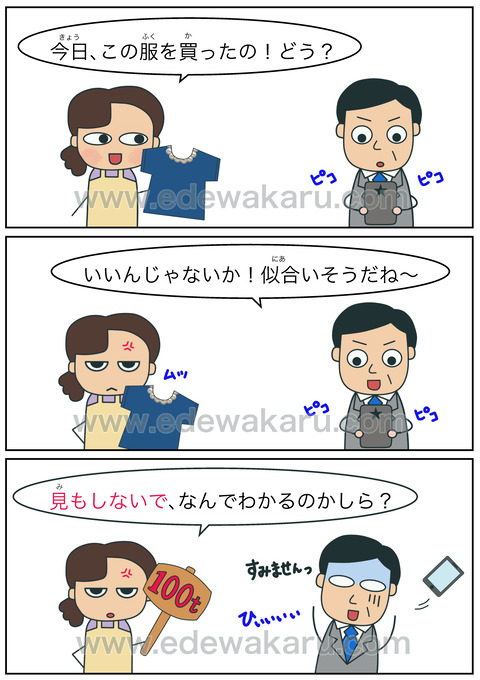
見もしないで、なんでわかるのかしら?
→全然見ていないのに、なんでわかるのかしら?How can you know when you haven’t even looked? → How can you know when you haven’t looked at all?
A:これ、すごくまずそうだよ…B:食べもしないで文句を言わないで!
→全く食べないで文句を言わないで〜A: This looks really awful… B: Don’t complain when you haven’t even tried it! → Don’t complain without eating any at all~
こんなことになるなんて思いもしなかった…
→こんなことになるなんて、全然思わなかったI never even imagined this would happen… → I never imagined at all that this would happen.
あの大変だった日々のことは忘れもしない
→あの大変だった日々のことは忘れられないI will never forget those difficult days. → I can’t forget those difficult days.
悪口を言っているのを聞かれていたなんて、気づきもしなかった…
→悪口を言っているのを聞かれていたなんて、全く気づかなかった…I never even realized that someone had heard me badmouthing them… → I didn’t realize at all that someone had heard me badmouthing them…
Read the original source text
Meaning
全然〜しない
How to use it
動詞[ます形]+もしない
Explanation
「〜もしない」は「全然〜しない」「全く〜しない」「〜できない」という意味の文型です。多くの場合、話し手が不満に思っていることを表したり、相手を非難する気持ちを表す時に使われます。
「〜もしない」は、会話でもよく使われますので覚えておきましょう😉