どんなときどう使う 日本語表現文型辞典
Meaning
though (I) thought…, it wasn't the case
How to use it
See 3).
Explanation
~かと思ったが、そうではなく
1)「~と思いきや」の形で「普通に予想すると~だが、この場合は~ではなかった」と意外な気持ちを表す。
2)やや古い感じの表現だが、軽妙に言い表す場合に使われることが多く、公式の文や論文などの硬い文章には使われない。
3)引用の「と」で受けるので、前にはさまざまな形が来る。
3)Takes と of quotation so various forms precede it.
1)Surprise at something that does not turn out as expected.
2)Slightly old-fashioned, but often used for humor. Not for formal language or essays.
In context 3 examples
父は頑固だから兄の結婚には反対するかと思いきや、何も言わずに賛成した。
My father is stubborn, so I thought he would oppose my older brother’s marriage, but unexpectedly he agreed without saying anything.
彼はマリに会いたがっていたから、帰国したらすぐに彼女のところに行くかと思いきや、なかなか行かない。どうしたんだろう。
He had been eager to see Mari, so I thought he would go straight to her as soon as he returned home, but he still hasn’t gone. I wonder what happened.
お兄さんが大酒飲みだから彼もたくさん飲むのだろうと思いきや、1滴も飲めないんだそうだ。
I thought he would drink a lot because his older brother is a heavy drinker, but apparently he can’t drink even a single drop.
Read the original source text
Meaning
though (I) thought…, it wasn't the case
How to use it
3)参照
Explanation
~かと思ったが、そうではなく
1)「~と思いきや」の形で「普通に予想すると~だが、この場合は~ではなかった」と意外な気持ちを表す。
2)やや古い感じの表現だが、軽妙に言い表す場合に使われることが多く、公式の文や論文などの硬い文章には使われない。
3)引用の「と」で受けるので、前にはさまざまな形が来る。
3)Takes と of quotation so various forms precede it.
1)Surprise at something that does not turn out as expected.
2)Slightly old-fashioned, but often used for humor. Not for formal language or essays.
絵でわかる日本語
Meaning
just when I thought ~, unexpectedly ~ was the case
just when I thought ~, unexpectedly ~ happened
How to use it
Verb, adjective, or noun [plain form] + と思いきや
* When using the present affirmative form of a な-adjective or noun, use 「ーだと思いきや」
(e.g. 元気だと思いきや 学生だと思いきや)
Verb, adjective, or noun [plain form] + かと思いきや
* When attaching to the present affirmative form of a な-adjective or noun, use 「dictionary form + かと思いきや」
(e.g. 元気かと思いきや 学生かと思いきや)
Explanation
「〜と思いきや」 and 「〜かと思いきや」 are used when the outcome is the opposite of what was expected or predicted. 😌 This pattern is used when the result has already become clear, so the key point when using it is that it must be followed by the past tense, as in 「〜と思いきや…した」 or 「〜と思いきや…だった」. 😀 Also remember the form 「〜かと思いきや」, which adds 「か」 before 「〜と思いきや」.
Be careful, because the way it connects changes with な-adjectives and nouns. 😉
Many N1 grammar patterns are characteristic of written language… 😮 Advanced learners, work on using conversational patterns and written-language patterns appropriately. 😆
In context 5 examples
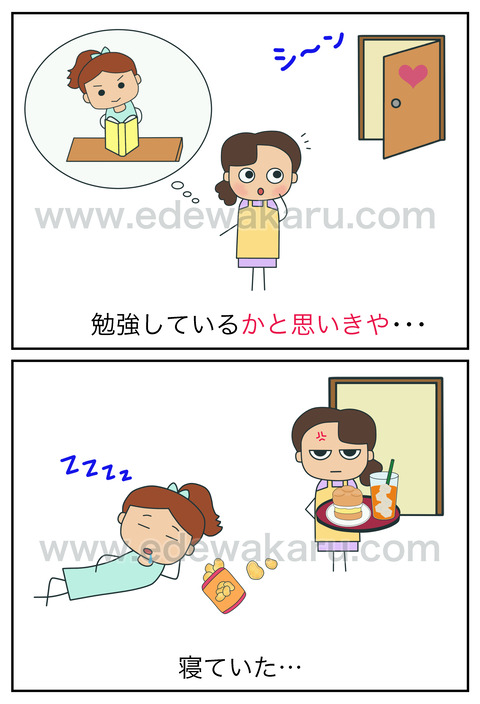
勉強しているかと思いきや、寝ていた
→勉強しているだろうと思ったら、実際は寝ていたJust when I thought he was studying, he was asleep. →I thought he was studying, but in fact he was asleep.
今日はずっといい天気だと思いきや、急に雨が降ってきた
→今日はずっといい天気だろうと思っていたら、急に雨が降ってきたJust when I thought the weather would stay nice all day, it suddenly started raining. →I thought the weather would stay nice all day, but then it suddenly started raining.
人気のパン屋さんだったのでおいしいかと思いきや、そうでもなかった
→人気のパン屋さんだったのでおいしいだろうと思ったら、そうでもなかったSince it was a popular bakery, I thought the food would be good, but it wasn’t really. →Since it was a popular bakery, I thought the food would be good, but it wasn’t really.
欲しがっていた(「〜欲しがっている」)指輪をあげたので喜ぶかと思いきや、なぜか怒りだした
→欲しがっていた指輪をあげたので、喜ぶだろうと思ったが、 なぜか怒りだしたI gave her the ring she’d wanted, so I thought she’d be happy, but for some reason she started getting angry. →I gave her the ring she’d wanted, so I thought she’d be happy, but for some reason she started getting angry.
20点以上の差があったのでAチームが優勝すると思いきや、Bチームが逆転勝利した
→20点以上の差があったのでAチームが優勝すると思っていたら、Bチームが逆転勝利したSince Team A was ahead by more than 20 points, I thought they would win, but Team B staged a comeback and won. →Since Team A was ahead by more than 20 points, I thought they would win, but Team B staged a comeback and won.
Read the original source text
Meaning
〜だろうと思ったら、意外にも…だった
〜だろうと思ったら、意外にも…した
How to use it
動詞・形容詞・名詞[普通形]+と思いきや
*な形容詞・名詞の現在肯定形を使用する場合は「ーだと思いきや」になる
(例:元気だと思いきや 学生だと思いきや)
動詞・形容詞・名詞[普通形]+かと思いきや
*な形容詞・名詞の現在肯定形につく場合は「辞書形+かと思いきや」になる
(例:元気かと思いきや 学生かと思いきや)
Explanation
「〜と思いきや」「〜かと思いきや」は予想・予測していたことと反対の結果が起こった時に使用されます😌この文型は、すでに結果が現れていることに使われますので、使用するときのポイントは、「〜と思いきや…した」「〜と思いきや…だった」というように、
後ろには必ず「た形」がくることです
😀また、「〜と思いきや」の前に「か」を入れて「〜かと思いきや」という形もありますので一緒に覚えておいてください。
な形容詞の場合と名詞は接続が変わりますので、気をつけてください
😉
N1の文法は書き言葉的なものが多いですね…😮上級レベルの人は会話でよく使う文型と、書き言葉の文型をうまく使い分けられるようにがんばってくださいね😆
くらべてわかる日本語表現文型辞典
Meaning
Meaning 1: I thought A, but in fact B. Expresses the speaker’s surprise, unexpectedness, astonishment, disappointment, and the like.
Meaning 2: Just when one thinks one has escaped a difficult situation A, another difficult situation B arises.
How to use it
In context 8 examples
電車に間に合ったと思いきや、目の前でドアが閉められた。
Just when I thought I’d caught the train, the doors closed right in front of me.
試験は難しくてできないと思いきや、やってみると簡単だった。
I thought the exam was so difficult I couldn’t do it, but when I tried it, it was easy.
静かに勉強していると思いきや、気持ちよさそうに寝ていた。
I thought he was quietly studying, but he was sleeping soundly.
今日は雨だと思いきや、朝起きたらいい天気だった。
I thought it was going to rain today, but when I woke up in the morning, the weather was lovely.
宿題が全部終わったと思いきやカバンの中にまだ残っていた。
I thought all the homework was finished, but there was still some left in my bag.
ひどい風邪が何とか治ったと思いきやまた風邪を引いた。
Just when I thought I’d finally gotten over a bad cold, I caught another one.
洗濯物を片付けたと思いきや、子どもが泥だらけで帰ってきた。
Just when I’d finished putting away the laundry, the children came home covered in mud.
うるさい顧客の機嫌がようやく直ったと思いきや、また部下が不始末をしでかした。
Just when the fussy customer had finally calmed down, my subordinate messed up again.
Read the original source text
Meaning
意味1:Aだと思ったが、実際はB。話し手の驚き・意外・あきれ・落胆などの気持ちを表す。
意味2:困難な状況Aを脱したと思ったら、別の困難な状況Bになった。
How to use it
NINJAL 日本語文型データベース
Meaning
Used when you want to say that you expected “〜,” but in reality that was not the case. It conveys the speaker’s surprise or sense that something was unexpected.
How to use it
V plain form + と思いきや
i-A plain form + と思いきや
na-A plain form + と思いきや (sometimes takes the form “na-Aだ” → “na-Aと思いきや”)
N plain form + と思いきや (sometimes takes the form “Nだ” → “N+と思いきや”)
Other
Notes
A sentence expressing the speaker’s expectation comes before “〜.” A sentence stating the facts follows “~と思いきや.”
In context 21 examples
パスポートはすぐに見つかると思いきや、しまってあるはずの引き出しの中になくて、焦ってしまった。
I thought I would find my passport right away, but it wasn’t in the drawer where it was supposed to be, and I panicked.
子どもはぐっすり寝ていると思いきや、いきなり目を開けたのでびっくりした。
I thought the child was fast asleep, but suddenly they opened their eyes, which startled me.
開店前なのでまだ客はいないと思いきや、すでに何人もの人が並んでいた。さすが人気店だ。
I thought there wouldn’t be any customers yet because the store hadn’t opened, but several people were already lined up. It really is a popular place.
大きな仕事が終わってやっと休みが取れたと思いきや、急ぎで別の仕事を頼まれてしまい、何もできませんでした。
I thought I’d finally be able to take a break after finishing a big job, but I was asked to do another job urgently, so I couldn’t do anything.
乗ろうとしていた電車に間に合わなかったと思いきや、電車はまだホームにいて、ぎりぎりで乗れた。
I thought I’d missed the train I was trying to catch, but it was still at the platform, and I just barely made it.
店内は狭いと思いきや、奥のほうに広い部屋があって、意外とゆったりしていた。
I thought the inside of the store would be cramped, but there was a large room in the back, so it was surprisingly spacious.
バイオリンは難しいと思いきや、習ってみたらそうでもなかった。
I thought the violin would be difficult, but when I tried learning it, it wasn’t really that hard.
引越しの荷物はそれほど多くないと思いきや、箱詰めしてみるとかなりの量になった。
I thought I didn’t have that much stuff to move, but when I packed it into boxes, it turned out to be quite a lot.
公園の入り口近くの桜はまだつぼみで、見に来るのが少し早かったと思いきや、奥に進むと咲き始めている木もたくさんあった。
The cherry trees near the park entrance were still in bud, so I thought I’d come a little too early to see them; but as I went farther in, I found many trees that had started to bloom.
テストに書いた答えに○がついていたので、この答えは正しくなかったと思いきや、これは日本では正しいという意味なのだそうだ。私の国では○は正しくないという意味なのだけれど。
I saw a circle marked next to the answer I wrote on the test, so I thought the answer was wrong, but apparently in Japan it means the answer is correct. In my country, a circle means it’s wrong, though.
今日からデータ入力のアルバイトを始めた。仕事は簡単だと思いきや、意外と複雑で時間がかかった。
I started a part-time data-entry job today. I thought the work would be easy, but it was surprisingly complicated and took a long time.
この店のカレーはマイルドと思いきや、食べた後からけっこうな辛さが舌にくる。
I thought this restaurant’s curry was mild, but after eating it, quite a bit of heat hits your tongue.
こうちゃんは魚はあまり好きじゃないと思いきや、今日の魚料理は意外と喜んで食べた。
I thought Ko-chan didn’t really like fish, but today they seemed to enjoy the fish dish more than I expected.
読解の問題が難しかったので、JLPTの合格は今回も無理だったと思いきや、ぎりぎりで合格していた。
The reading comprehension questions were difficult, so I thought I wouldn’t pass the JLPT this time either, but I passed by the skin of my teeth.
この辺りは昔からそれほどにぎやかではなかったと思いきや、かなり栄えていた時期もあったらしい。
I thought this area had never been particularly lively, but apparently there was a time when it was quite prosperous.
普通の風邪と思いきや高熱が出て、病院に行くとインフルエンザと診断された。
I thought it was an ordinary cold, but I developed a high fever, and when I went to the hospital, I was diagnosed with influenza.
朝の状況では今日は一日中雨だと思いきや、昼にはやんで雲ひとつない晴天になった。
Based on the morning’s conditions, I thought it would rain all day, but by noon it had stopped and the sky was clear, without a cloud.
病院の待合室にはたくさんの人がいるので、まだまだ私の順番ではないと思いきや、もう名前が呼ばれている。
There are a lot of people in the hospital waiting room, so I thought it still wouldn’t be my turn for a while, but they’re already calling my name.
久しぶりに同窓会で会った夏美と話が弾んだ。中学生のとき夏美が好きだったのは山本君だったと思いきや、なんと谷君だったのだそうだ。
I had a lively conversation with Natsumi, whom I met at a class reunion for the first time in ages. I thought the boy Natsumi liked in middle school was Yamamoto, but surprisingly, apparently it was Tani.
はじめ聞いたことのないメロディーで、私の探していたのはこの曲ではなかったと思いきや、曲調が変わって、やっぱりこれだったとわかった。
At first, the melody was unfamiliar, so I thought this wasn’t the song I had been looking for, but then the tune changed, and I realized that this was indeed the one.
短い間にたくさんの漢字を覚えるのはさぞ大変だっただろうと思いきや、漢字が大好きなトムさんは楽しくてしかたがなかったのだそうだ。
I thought it must have been very difficult to memorize so many kanji in such a short time, but apparently Tom, who loves kanji, couldn’t have enjoyed himself more.
Read the original source text
Meaning
〜と予想したが、実際はそうではなかったと言いたいときに使います。話し手の驚きや意外感を伝える言い方です。
How to use it
V普通形+と思いきや
i-A普通形+と思いきや
na-A普通形+と思いきや(「na-Aだ」→「na-Aと思いきや」の形になることもある)
N普通形+と思いきや(「Nだ」→「N+と思いきや)」の形になることもある)
その他
Notes
「〜」は話し手の予想を表す文がきます。「~と思いきや」の後には事実を述べる文がきます。